
Core Idea
- Difficulty
- Medium
- Read it if
- You are a parent struggling with constant sibling squabbles, seeking concrete communication strategies to reduce conflict, or want to foster a more respectful and independent relationship between your children.
- Skip it if
- You are looking for a deep dive into the psychological theories behind sibling dynamics rather than practical, actionable advice, or if you prefer a less structured, more intuitive parenting approach.
Key Takeaways from Siblings Without Rivalry
Acknowledge Feelings, Don't Dismiss Them
Validating a child's emotions, even negative ones, is the first step towards resolving conflict.
One of the biggest changes parents can make is to stop trying to 'fix' their children's negative feelings. Instead, they should simply acknowledge them. When a child is angry, jealous, or frustrated, parents often want to comfort them, make light of it, or distract them. But this accidentally tells the child that their feelings are wrong. By simply saying, 'I see you're very angry right now,' or 'It sounds like you're frustrated with your brother,' parents create a safe place for the child to deal with their emotions. This validation does not mean approving bad behavior. It helps children understand and manage their feelings. This lets them find their own solutions instead of needing adults to step in.
“When we acknowledge a child's feelings, we give them permission to have those feelings. When we dismiss their feelings, we teach them that their internal experience is not valid.”
In the book: The book provides numerous examples of parents who, by switching from 'Don't be silly, he didn't mean it' to 'You sound really upset that your brother took your toy,' observed a significant decrease in the intensity and duration of their children's meltdowns and conflicts.
Try this: When a child complains about a sibling, resist the urge to immediately solve the problem or tell them how they 'should' feel. Instead, reflect back their feelings: 'You sound really frustrated,' or 'It must be annoying when that happens.' Use active listening techniques to show you understand, then allow them space to elaborate or find their own path forward.
Related ideas: emotional-validation, active-listening, empathy-building
Fair Doesn't Mean Equal
Treating children uniquely based on their individual needs fosters a sense of justice, not rivalry.
Parents' constant search for 'fairness' often causes more sibling rivalry instead of stopping it. Children are not all the same; they have different personalities, stages of development, and needs. Giving each child the exact same amount of food, time, or gift, regardless of what they want or their situation, teaches them to always compare and compete. Instead, Faber says 'fairness' means meeting individual needs. One child might need more comfort, another more space, a third more challenging tasks. When parents adjust what they do and give to each child's unique needs, children learn that their individual needs are seen and met. This reduces the pressure to fight for identical treatment and builds a stronger sense of their own worth.
“Fairness is not giving every child the same thing. Fairness is giving every child what they need.”
In the book: The authors recount a scenario where two children both want a new bike. One is a timid rider, the other an experienced one. Giving them both the same 'beginner' bike would be 'equal' but not 'fair.' A fair approach would be a sturdy training bike for one and an advanced model for the other, acknowledging their distinct skill levels and needs.
Try this: Stop trying to split everything down the middle. Instead, explain your reasoning when you treat children differently: 'Sophie needs a little extra help with her homework tonight, so I'll be with her. Liam, you're old enough to start your homework independently, and I'll check in later.' Focus on meeting the specific need, not on making it 'even.'
Related ideas: individualized-parenting, equity-vs-equality, needs-based-parenting
Don't Take Sides, Mediate
Empower children to resolve their own disputes by acting as a facilitator, not a judge.
Parents often make the mistake of jumping into sibling fights as a judge, immediately trying to decide who is 'right' and who is 'wrong.' This approach, while seeming quick, accidentally teaches children to rely on adults to solve problems. It stops them from learning to solve problems themselves and often makes one child feel unfairly blamed or angry. Instead, Faber supports parents acting as mediators. This means acknowledging both children's feelings, helping them explain their views, and guiding them to a solution they both agree on. By not blaming and by focusing on shared understanding and compromise, parents give their children important life skills for handling disagreements on their own. This helps them cooperate instead of compete.
“When we take sides, we inevitably create a winner and a loser, and the loser often harbors resentment. When we mediate, we create two problem-solvers.”
In the book: A detailed anecdote describes a parent who initially always sided with the younger child, leading to the older child feeling perpetually blamed. When the parent shifted to saying, 'It sounds like you both want the truck. What can we do so you can both have a turn?' the children began to propose solutions like 'I'll play with it for five minutes, then you can have it.'
Try this: When siblings fight, avoid asking 'Who started it?' or 'What did *you* do?' Instead, state what you see ('I see two children fighting over one toy'). Then, acknowledge each child's feelings ('You sound upset, and you look angry'). Finally, invite them to brainstorm solutions ('What can we do to solve this problem so everyone is happy?'). Only intervene if physical safety is at risk.
Related ideas: conflict-resolution, peer-mediation, empowerment-parenting
Provide 'Special Time' for Each Child
Dedicated, one-on-one attention fills children's 'love tanks' and reduces their need to compete for attention.
A main reason for sibling rivalry is competition for parental attention. Children, especially when they feel ignored, will often act out because 'negative attention is better than no attention.' The answer, according to Faber, is 'special time' — a short, dedicated period (even 10-15 minutes) of one-on-one, uninterrupted time with each child. During this time, the child chooses the activity, and the parent is fully present, listening and joining in without distractions. This regular, individual attention assures each child of their unique value and connection with the parent. It reduces their need to fight for attention through sibling conflict. It is a way to fill their emotional needs, making them less prone to jealousy and more cooperative.
“Children don't just need attention; they need *undivided* attention. A few minutes of 'special time' can be more powerful than hours of shared but distracted time.”
In the book: The book presents numerous testimonials from parents who implemented 'special time.' One parent described how her constantly bickering children became significantly calmer and more cooperative after she started dedicating 15 minutes each evening to individual 'special time' with each, letting them choose the activity, from reading to building with blocks.
Try this: Schedule 10-15 minutes of 'special time' for each child daily or a few times a week. Let them choose the activity. Put away your phone, turn off the TV, and give them your full, undivided attention. Avoid using this time for lectures or discipline; it's purely for connection and enjoyment. Announce it beforehand ('It's your special time with me now!') to build anticipation.
Related ideas: attachment-parenting, quality-time, attention-seeking-behavior
Avoid Comparisons and Labels
Comparing children or assigning fixed labels creates self-fulfilling prophecies and fosters resentment.
Parents often compare their children ('Why can't you be more like your brother?') or give them fixed labels ('She's the smart one, he's the athletic one'). Even if these seem harmless, they cause a lot of damage. Comparisons always create a 'winner' and a 'loser,' which fuels rivalry and anger. Labels, even good ones, can limit a child. They create pressure for the child to fit a certain image and stop them from exploring other parts of their personality. Children take in these comparisons and labels. This often leads to feeling less worthy or always needing to do better than their siblings. Faber suggests celebrating each child's unique qualities without comparing them to siblings. This helps build individual identity and mutual respect.
“When we label children, we put them in a box. When we compare them, we force them into competition for our approval.”
In the book: A case study details a family with 'the artist' and 'the scientist.' The artist felt pressured to always be creative, even when she wanted to try sports, and the scientist felt inadequate in art. When parents stopped using these labels and celebrated their individual efforts, both children felt freer to explore diverse interests without sibling comparison.
Try this: Consciously stop yourself from comparing children, even positively. Instead of 'Look how neatly your sister colored that,' try 'I see you used so many bright colors in your drawing!' Focus on each child's individual effort, progress, and unique qualities. Avoid using labels like 'the shy one' or 'the messy one.'
Related ideas: self-esteem, individual-identity, growth-mindset
Allow Children to Solve Their Own Problems
Intervening too quickly robs children of opportunities to develop crucial problem-solving and negotiation skills.
Parents often feel they must jump in and solve every sibling argument, fearing it will get worse or just wanting peace. However, this well-meaning intervention often backfires. When parents always solve conflicts, children learn to depend on adults for solutions instead of learning to negotiate, compromise, and empathize. Faber stresses that many sibling squabbles, while annoying, are not emergencies and can be good learning chances. By stepping back (unless safety is an issue) and letting children work through disagreements on their own, parents help them try different ways, see what happens, and build strength and independence. The parent's role changes from a judge to a consultant, offering help and tools only when truly needed.
“Our job is not to solve all our children's problems, but to equip them with the tools to solve their own.”
In the book: The book illustrates how children, when left to their own devices (within safe boundaries), often surprise parents with creative solutions. For example, two children fighting over a single swing eventually decided to time each other or to push each other, rather than requiring a parent to enforce turns.
Try this: When you hear bickering, pause before intervening. Listen to see if they can work it out. If they come to you, resist the urge to immediately provide a solution. Instead, ask empowering questions: 'What ideas do you two have to solve this?' or 'What do you think would be fair?' Only step in if the situation is escalating dangerously or they are truly stuck.
Related ideas: autonomy-support, resilience-building, self-efficacy
Teach Children How to Express Anger Constructively
Providing acceptable outlets for anger prevents it from festering into resentment or destructive behavior.
Stopping anger or punishing its expression can lead to bigger problems. Children learn to either keep it inside or show it in bad ways (e.g., hitting, yelling, passive aggression). Faber says anger is a natural emotion that needs a healthy way out. Parents can help by acknowledging the child's anger ('I see you're very mad!') and then guiding them to good ways to show it. This might mean using 'I' statements, drawing their feelings, punching a pillow, or just saying what makes them frustrated. By teaching children to show their anger in a good way, parents help them develop emotional understanding, stop anger from building between siblings, and reduce hitting or yelling. This creates a calmer home.
“Anger is a normal human emotion. It's not the anger itself that's the problem, but how we express it.”
In the book: A story describes a child who constantly hit his sister when angry. The parents, instead of punishing the hitting, taught him to say 'I'm angry!' and then stomp his feet or hit a pillow. Over time, the hitting decreased as he learned these alternative expressions.
Try this: When a child expresses anger, acknowledge it ('You're really mad right now!'). Then, offer acceptable outlets: 'It's okay to be angry, but it's not okay to hit. Can you tell your brother how you feel using your words? Or would you like to punch this pillow?' Model healthy anger expression yourself.
Related ideas: emotional-regulation, anger-management, non-violent-communication
Don't Force Forgiveness or Sharing
True generosity and empathy come from within, not from parental coercion.
It is common for parents to demand apologies or force sharing, believing this teaches good manners and kindness. However, Faber says that forcing these behaviors often causes problems. A forced 'I'm sorry' means nothing and teaches nothing about real regret or empathy. Similarly, making a child share a special toy can cause anger and a feeling of unfairness, making them less likely to share later on their own. Instead, parents should focus on creating an environment where empathy can grow naturally. This means acknowledging the feelings of both children in a conflict, giving them space to process, and letting them choose when and how to apologize or share, if at all. Real generosity and kindness come from a secure, respected person, not from force.
“When we force a child to say 'I'm sorry' or to share their prized possessions, we teach them only to resent the other child and the act itself.”
In the book: Many examples in the book show that children forced to apologize often grumble the apology insincerely, and those forced to share often snatch back the item or are visibly distressed. When given the choice and allowed to process their feelings, children often spontaneously offer an apology or share something of their own accord later.
Try this: Instead of 'Say you're sorry!' try 'Your brother looks really sad that you pushed him. What do you think you could do or say to help him feel better?' For sharing, instead of 'You have to share!' try 'It's hard to share your special toy. When you're done, let me know, and your sister can have a turn.' Respect their ownership.
Related ideas: empathy-development, intrinsic-motivation, respectful-parenting
Use Humor and Imagination to Diffuse Tension
Lightheartedness can shift the mood and provide creative solutions to sibling squabbles.
Sibling conflicts can often become very intense and emotional, with both children stuck in their positions. At such times, logic and strict warnings often do not work. Faber suggests that humor and imagination can be very strong tools to ease tension and change the mood. By adding some playfulness, parents can stop the negative cycle, lighten the mood, and open new ways to solve problems that lead children away from conflict. This does not mean making light of their feelings, but giving a creative way to let off steam. A silly voice, an imaginary situation, or a playful suggestion can often do what logical arguments cannot. It helps children laugh, reconnect, and find common ground.
“Sometimes the most effective tool in a parent's arsenal isn't a lecture or a punishment, but a dose of silliness.”
In the book: A parent describes two children fighting over who gets to press the elevator button. Instead of lecturing, the parent declared, 'Oh no, the button is invisible! Only a super-duper button-pusher can find it!' This instantly turned the fight into a collaborative game, with both children giggling and 'finding' the invisible button together.
Try this: When a minor conflict arises (e.g., fighting over who sits where), try a silly suggestion: 'Oh dear, it looks like the couch has a 'no sitting' spell on it! Only those who can hop like bunnies can sit here!' or use a funny voice to make a suggestion. For more serious issues, humor can still be used to bridge a gap once feelings have been acknowledged.
Related ideas: playful-parenting, creative-problem-solving, mood-shifting
Model Respectful Communication
Children learn how to interact with siblings by observing how their parents interact with each other and with them.
How parents talk to each other and their children sets the basic tone for how siblings interact. If parents often yell, ignore feelings, or argue for control, children will unconsciously copy these behaviors in their own relationships. On the other hand, when parents consistently show respectful communication — using 'I' statements, listening carefully, compromising, and expressing anger in a good way — they provide a strong example for their children. This does not mean parents have to be perfect, but that they are aware of how they communicate, apologize when they make mistakes, and openly discuss how to solve disagreements. This example is likely the most effective long-term way to help siblings have good relationships, as it teaches children by showing them, not by lecturing.
“Our children are always watching, always learning. We are their first and most important teachers of how to treat others.”
In the book: The book highlights that families where parents frequently argued or used passive-aggressive communication often saw similar patterns emerge between siblings. In contrast, families where parents openly discussed disagreements, apologized, and compromised, had children who were more adept at resolving their own conflicts peacefully.
Try this: Be mindful of your own communication, especially during disagreements. Use 'I' statements ('I feel frustrated when...') instead of 'you' statements ('You always...'). Apologize sincerely when you make a mistake. Discuss problems and solutions openly with your partner and children. Show them what respectful negotiation looks like.
Related ideas: role-modeling, conscious-parenting, family-communication
Siblings Without Rivalry Quotes
“The message children get when we compare them is 'You're not good enough as you are, but perhaps you could be if you were more like your sibling.'”
“When we label a child, we encourage her to live up to the label.”
“Each child needs to be seen as an individual, with a unique set of strengths and weaknesses.”
“Children don't need to be treated equally; they need to be treated uniquely.”
“Instead of saying, 'Why can't you be more like your brother?' try saying, 'I see you're having trouble with this. What do you think might help?'”
“Feelings aren't right or wrong. They just are.”
“When you give children the language to express their feelings, you give them the first tool for self-control.”
“Accepting feelings doesn't mean accepting all behavior.”
“Don't take sides. Let the children work out their own solutions.”
“When children are given the opportunity to solve their own problems, they learn invaluable life skills.”
“Instead of 'Stop fighting!' try 'What's the problem here? What do you two need to work out?'”
“Every child needs a special, private time with a parent, free from competition and comparison.”
“Children who feel understood and accepted are more likely to be understanding and accepting of others.”
“The goal is not to eliminate sibling rivalry, but to help children cope with it constructively.”
Quiz
10 questions on the main ideas. Each answer comes with a short explanation.
Question 1
According to Faber and Mazlish, what is the primary reason parents often struggle to resolve sibling conflicts effectively?
- They don't spend enough one-on-one time with each child.
- They often intervene too quickly, taking sides or imposing solutions.
- They lack consistent discipline strategies across all children.
- They underestimate the natural jealousy between siblings.
Show answer
B. They often intervene too quickly, taking sides or imposing solutions. Faber and Mazlish emphasize that parents' well-intentioned interventions often strip children of the opportunity to learn conflict resolution skills themselves. Taking sides or imposing solutions, rather than facilitating their own problem-solving, is a common pitfall.
Question 2
What is one of the key recommendations the book makes regarding comparing siblings?
- Highlight each child's unique strengths to boost their individual self-esteem.
- Avoid all forms of comparison, even positive ones, as it fosters resentment.
- Compare them occasionally to motivate the less-performing child.
- Focus comparisons on effort rather than outcome.
Show answer
B. Avoid all forms of comparison, even positive ones, as it fosters resentment. The authors strongly advise against any form of comparison, positive or negative, because it often leads to rivalry and resentment. Each child should be seen and valued for who they are, not in relation to their siblings.
Question 3
When siblings are fighting, what does the book suggest parents should do instead of asking 'Who started it?'
- Separate them immediately until they calm down.
- Describe what you see and hear, then ask for their proposed solutions.
- Assign a fair consequence to both children equally.
- Ignore minor squabbles to teach them self-reliance.
Show answer
B. Describe what you see and hear, then ask for their proposed solutions. The book advocates for parents to act as facilitators rather than judges. Describing the problem and inviting children to find their own solutions empowers them and avoids blame, which often escalates conflict.
Question 4
What is the core principle behind the advice to 'help children deal with their hostile feelings toward each other'?
- To teach them to suppress negative emotions for family harmony.
- To acknowledge and validate their feelings, helping them express them constructively.
- To redirect their anger into physical activities.
- To minimize opportunities for conflict by keeping them separated.
Show answer
B. To acknowledge and validate their feelings, helping them express them constructively. Faber and Mazlish stress the importance of validating children's feelings, even negative ones like anger or jealousy. By acknowledging these feelings without judgment, parents help children understand and express them in ways that don't harm others, rather than bottling them up.
Question 5
The authors suggest that when a child complains about a sibling, parents should often respond by:
- Immediately confronting the accused sibling.
- Offering a sympathetic ear and reflecting the child's feelings.
- Asking the complaining child what they did to provoke the sibling.
- Dismissing it as 'normal sibling rivalry' and telling them to work it out.
Show answer
B. Offering a sympathetic ear and reflecting the child's feelings. A key strategy from the book is to listen actively and reflect the child's feelings without judgment or immediate problem-solving. This helps the child feel heard and often empowers them to find their own solutions or calm down.
Question 6
Which of the following scenarios best illustrates the book's recommendation for handling possessions that cause sibling conflict?
- Labeling all toys with each child's name to prevent sharing disputes.
- Designating 'private property' for each child and requiring permission for use.
- Insisting on equal sharing of all toys to foster generosity.
- Removing contested items until the children can agree on sharing rules.
Show answer
B. Designating 'private property' for each child and requiring permission for use. The book strongly advocates for respecting individual ownership. Having private property that only the owner can decide to share or not share reduces many conflicts and fosters a sense of control and respect for boundaries.
Question 7
What is the authors' stance on the idea of 'fairness' among siblings?
- Parents should strive for absolute equality in all things to ensure fairness.
- Fairness means giving each child what they need, which may not be equal.
- Fairness is an unrealistic goal and parents should dismiss complaints about it.
- Fairness is primarily about equal consequences for misbehavior.
Show answer
B. Fairness means giving each child what they need, which may not be equal. Faber and Mazlish argue that 'fair' doesn't mean 'equal.' Instead, fairness is about meeting each child's individual needs, which often means different things for different children at different times. Trying to make everything exactly equal can be counterproductive and frustrating.
Question 8
The book suggests that when a child expresses a wish to harm a sibling (e.g., 'I wish she wasn't here!'), the most helpful parental response is to:
- Tell them that's a terrible thing to say and they don't mean it.
- Acknowledge the strong feeling, 'It sounds like you're very angry with your sister right now.'
- Send them to their room until they can be nice.
- Explain why their sibling is important to the family.
Show answer
B. Acknowledge the strong feeling, 'It sounds like you're very angry with your sister right now.' This is a core tenet of the book: validate the feeling, even if the wish is unacceptable. By acknowledging the child's anger or frustration, parents help them process the emotion without condoning harmful actions, rather than dismissing or shaming them.
Question 9
What is the authors' perspective on parents acting as a 'judge' or 'referee' in sibling disputes?
- It's necessary to ensure justice and prevent escalation.
- It often prolongs the conflict and prevents children from developing their own resolution skills.
- It builds trust as children see their parents are fair arbiters.
- It is effective only when the children are very young.
Show answer
B. It often prolongs the conflict and prevents children from developing their own resolution skills. Faber and Mazlish argue that when parents play judge, children focus on getting the parent on their side rather than solving the problem. It disempowers children and can foster resentment. The goal is to empower children to resolve their own differences.
Question 10
A central theme of 'Siblings Without Rivalry' is that parents can reduce sibling rivalry by:
- Minimizing interactions between siblings to reduce conflict opportunities.
- Treating each child as a unique individual and fostering their self-esteem, rather than comparing them.
- Implementing strict rules and consequences for all forms of rivalry.
- Encouraging competitive games and activities to teach them resilience.
Show answer
B. Treating each child as a unique individual and fostering their self-esteem, rather than comparing them. The book consistently emphasizes the importance of acknowledging and celebrating each child's individuality, avoiding comparisons, and building their self-worth independently. This reduces the need for children to compete for parental love or attention, which is a major driver of rivalry.
Siblings Without Rivalry FAQ
What is the main premise of 'Siblings Without Rivalry'?
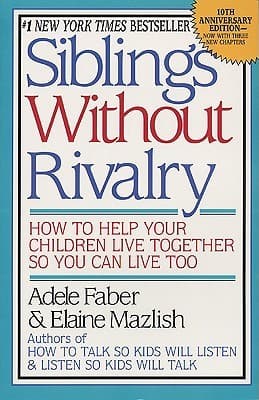
The book 'Siblings Without Rivalry' by Adele Faber and Elaine Mazlish provides parents with practical communication skills and strategies to reduce conflict and foster a more harmonious relationship between their children. It emphasizes acknowledging children's feelings and avoiding comparisons to help them develop their own identities and mutual respect.
Does 'Siblings Without Rivalry' offer practical solutions for everyday sibling conflicts?
Yes, the book is highly practical, offering specific phrases, dialogues, and scenarios that parents can adapt to real-life situations like arguments over toys, attention-seeking, and sharing. It moves beyond theoretical advice to provide actionable steps for managing disputes.
What is the 'no comparison' rule in 'Siblings Without Rivalry'?
The 'no comparison' rule advocates against comparing siblings, whether positively or negatively, as it often fuels jealousy and rivalry. Instead, the book encourages parents to describe what they see, focus on each child's individual efforts and achievements, and address their unique needs without pitting them against each other.
How does 'Siblings Without Rivalry' differ from other parenting books on sibling relationships?
'Siblings Without Rivalry' stands out by focusing heavily on communication techniques and empowering children to resolve their own conflicts, rather than parents constantly intervening as judges. It also emphasizes validating children's feelings and avoiding labels, which sets it apart from more behaviorist approaches.
Does 'Siblings Without Rivalry' suggest letting children fight it out on their own?
Not exactly. The book teaches parents how to step back and facilitate conflict resolution by equipping children with the tools to express themselves and find solutions, rather than always mediating or punishing. It's about guiding them towards independence in managing disagreements, not ignoring the conflicts.
What is the concept of 'separate but equal' treatment in the book?
The 'separate but equal' concept in the book means treating children fairly according to their individual needs, rather than treating them identically. It acknowledges that fairness isn't always about giving the exact same thing to each child, but about meeting their unique requirements and respecting their distinct personalities.
Is 'Siblings Without Rivalry' suitable for parents of children with a large age gap?
Yes, the principles of communication, empathy, and conflict resolution taught in the book are applicable across various age differences. While specific scenarios might vary, the underlying strategies for fostering respect and understanding between siblings remain relevant regardless of the age gap.
Does 'Siblings Without Rivalry' really work to eliminate all sibling rivalry?
While it's unrealistic to expect the complete elimination of all sibling rivalry, the book provides highly effective tools and strategies that significantly reduce conflict, foster stronger bonds, and equip children with better problem-solving skills. It aims to transform rivalry into a more manageable and less destructive dynamic.
What role does humor play in the 'Siblings Without Rivalry' approach?
The authors infuse the book with humor and understanding, demonstrating how a lighthearted approach can often defuse tension and make parenting challenges more manageable. They encourage parents to use humor as a tool for connection and to navigate difficult situations with less stress and more creativity.
Similar books
- The Perks of Being a Wallflower
Stephen Chbosky
4.2 (1.3M) average on GoodreadsPsychologyThrough letters, a shy high school freshman learns to navigate first love, trauma, and self-discovery, stepping off the sidelines and into life.
- Eleanor Oliphant Is Completely Fine
Gail Honeyman
4.3 (708k) average on GoodreadsLiterary FictionA lonely woman's structured life changes when an IT guy and an elderly man help her learn to open her heart.
- One Flew Over the Cuckoo's Nest
Ken Kesey
4.2 (631k) average on GoodreadsPsychologyIn a mind-bending asylum, the boisterous Randle McMurphy wages a defiant war against the tyrannical Nurse Ratched, inspiring his fellow inmates, including the seemingly catatonic Chief Bromden, to reclaim their lost humanity.
- The Bell Jar
Sylvia Plath
4.0 (591k) average on GoodreadsPsychologyIn the suffocating grip of 1950s expectations, a brilliant young woman's descent into mental illness is painted with such vivid, internal clarity that her 'insanity' feels terrifyingly rational and inevitable.
- The Subtle Art of Not Giving a F*ck: A Counterintuitive Approach to Living a Good Life
Mark Manson
3.9 (530k) average on GoodreadsBusinessEmbrace your flaws and stomach life's lemons, because true happiness isn't about relentless positivity, but about choosing what truly matters to give a f*ck about.
- Sapiens: A Brief History of Humankind
Yuval Noah Harari
4.4 (502k) average on GoodreadsPsychologySapiens tells the story of Homo sapiens, showing how our ability to create shared fictions helped us go from an ordinary ape to the planet's main species, changing Earth and our future.






Enjoyed the summary?
A summary gives you the shape of the book. The book itself has the detail, the examples and the voice.
Find Siblings Without Rivalry on AmazonAs an Amazon Associate, BookBrief earns from qualifying purchases. How we're funded