
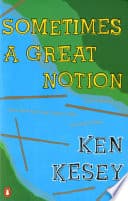
Synopsis
Covers the whole plot, including the ending.
- Difficulty
- Hard
- Pacing
- Variable
- Mood
- Gritty, Epic, Tragic, Intense, Atmospheric
- Read it if
- You enjoy sprawling, character-driven sagas with a strong sense of place, exploring themes of family conflict, defiance, and the struggle against nature, similar to Greek tragedy.
- Skip it if
- You prefer fast-paced plots with clear-cut heroes and villains, or shy away from dense prose and morally ambiguous characters.
Sometimes a Great Notion Plot Summary
Covers the whole plot, including the ending.
The Logging Strike Begins
The novel begins with a logging strike in the Oregon coastal town of Wakonda. All independent loggers and union mill workers refuse to work, hoping to make the lumber companies agree to their demands. But the Stamper family—Henry Stamper and his son Hank—refuse to join the strike. They believe they have the right to work their own timber, regardless of the union. This defiance immediately isolates them, making them outcasts. Their decision comes from a deep Stamper pride and a rejection of group action, setting them against the town and the striking loggers.
Leland's Return to Wakonda
Leland Stamper, Henry's younger, more intellectual son, returns to Wakonda from university after a breakdown. He arrives with a hidden plan: to understand and subtly undermine his family, especially his half-brother Hank and his father Henry, whom he resents. Leland is sensitive and thoughtful, a contrast to the rugged Stampers. His return is prompted by a manipulative letter from Hank's wife, Viv, inviting him back, though her true reasons are unclear. Leland's presence immediately creates tension in the already strained Stamper home. He observes his family critically, while fighting his own psychological problems.
Stamper Determination Against the River
Despite the strike, the Stampers are determined to fulfill their lumber contract. Their main challenge is a large raft of logs, stuck upstream in the Wakonda Auga River, that needs to go to the mill. The river is high and dangerous. Henry and Hank work hard, showing the Stamper way of brute force and strong will. Their fight against the powerful river is a central physical conflict, representing their larger battle against the town and nature. This hard work further isolates them but also strengthens their stubbornness in the community's eyes.
Vivian's Discontent and Affair
Vivian Stamper, Hank's wife, is increasingly unhappy with her life and marriage. She feels ignored and unappreciated, wanting a different kind of connection than Hank's stoic love. Her frustrations grow because of the strike and the intense atmosphere of the Stamper home. Leland's return offers her a perceived intellectual and emotional escape. She starts an affair with Leland, driven by a mix of revenge against Hank, a desire for intimacy, and a subconscious manipulation of family dynamics. This secret betrayal significantly deepens the emotional trouble within the Stamper family.
The Union's Escalating Tactics
The union and striking loggers, angry at the Stampers' continued work, increase their actions. They commit sabotage, trying to destroy the Stampers' equipment and logs, and openly threaten the family. The townspeople, mostly supporting the strike, shun the Stampers, refusing them supplies and help. This outside pressure raises the stakes for Henry and Hank, forcing them to be constantly alert and strengthening their 'us-against-the-world' mindset. The conflict moves beyond an economic dispute to a personal, almost tribal, feud.
Henry's Accident and Determination
During a dangerous log-moving operation, Henry Stamper has a terrible accident, losing an arm. Despite the severe injury, he remains determined. He refuses to stop, continuing to direct operations and even trying to work with his remaining hand. This incident shows Henry's legendary toughness and his refusal to give in to physical limits or hardship. His injury, instead of stopping the Stampers, seems to strengthen their resolve to finish the job, becoming a symbol of their sacrifice and stubbornness.
Leland's Internal Conflict and Breakdown
As family tensions rise and his affair with Viv continues, Leland's fragile mental state worsens. He is torn between his desire for revenge and a growing, though conflicted, sense of loyalty and a strange admiration for his family's resilience. He is both a passive observer and an active participant in the unfolding tragedy, often feeling like a detached narrator of his own life. His inner thoughts reveal deep psychological issues, including a sense of alienation and a struggle to balance his intellectual nature with his family's raw physicality. He often questions his own sanity and purpose.
The Confrontation and Revelation
The simmering tensions finally explode when Hank discovers Viv's affair with Leland. This betrayal is a deep blow to Hank's pride and his view of his family. He confronts Leland in a brutal physical fight, a stark contrast to Leland's intellectual nature. The fight is not just about the affair but is the result of years of unspoken rivalry, resentment, and different views between the two brothers. The revelation shatters the already fragile unity of the Stamper household, pushing the family closer to its tragic end.
The Final Push of the Log Raft
With Henry injured, Hank reeling from betrayal, and Leland lost in his own mental fog, the Stampers make a desperate final attempt to move their log raft downriver. The task is huge, requiring all their remaining strength and cleverness. They face not only the dangerous river but also the ongoing threat of sabotage from the striking loggers. This final push shows their strong determination and their refusal to be defeated, even against overwhelming odds. It becomes a symbolic act of defiance against the town and the forces against them.
A Tragic End and Lingering Legacy
The Stampers succeed in delivering their logs to the mill, but the victory comes at a high personal cost. The family is broken, Henry is permanently disabled, Hank is emotionally scarred, and Leland is psychologically shattered. The final scenes show the aftermath. The Stampers paid a high price for their stubborn independence. Their story is a warning, showing the destructive power of pride and the tragic results of defying an entire community. The novel ends with a sense of both triumph and deep loss, leaving the reader to consider their strong, almost mythic, struggle.
Principal Figures
Henry Stamper
Protagonist/Patriarch
The fiercely independent and unyielding patriarch of the Stamper logging family.
Henry is the embodiment of raw, untamed masculinity and an almost primal connection to the land and the logging life. He is stubborn, proud, and fiercely independent, viewing any form of collective action or dependence as weakness. His decisions are driven by an unwavering belief in his own self-reliance and the Stamper way of life, often to the detriment of his relationships. He is a man of immense physical strength and an iron will, a legendary figure in his community, revered and reviled in equal measure.
Relationships: Hank Stamper (Son and successor, often in competition for Henry's approval, but deeply loyal.); Leland Stamper (Younger son, resented and misunderstood by Henry, who sees him as weak and intellectual.); Vivian Stamper (Daughter-in-law, viewed as a woman who doesn't fully understand the Stamper way, but tolerated.)
Hank Stamper
Protagonist
Henry's eldest son, struggling to live up to his father's legacy while navigating his own identity.
Hank is a powerful, physical man, deeply loyal to his father and the Stamper logging tradition. He is driven by a need to prove himself worthy of Henry's respect, often suppressing his own desires and sensitivities. While possessing much of his father's strength and stubbornness, he is also more aware of the emotional toll their isolation takes on the family, particularly Viv. His love for Viv is genuine, but his expression of it is often overshadowed by his dedication to work and his father's expectations.
Relationships: Henry Stamper (Father, a towering figure whose approval Hank constantly seeks, leading to both loyalty and resentment.); Leland Stamper (Half-brother, a source of quiet tension and eventual violent conflict due to their differing natures and the affair.); Vivian Stamper (Wife, whom he loves deeply but struggles to connect with emotionally, leading to her discontent and betrayal.)
Leland Stamper
Antagonist/Supporting
Henry's younger, intellectual son, returning to the family with a hidden agenda of vengeance and self-discovery.
Leland is the antithesis of the other Stampers – bookish, sensitive, and prone to introspection and psychological fragility. He returns to Wakonda after a breakdown, driven by a complex mix of resentment towards his family, particularly Hank and Henry, and a desire to understand the origins of his own neuroses. He acts as a detached observer, almost a narrator within the narrative, but also becomes an active agent of destruction through his affair with Viv. He struggles with his identity, feeling alienated from both the Stamper world and the academic world he left behind.
Relationships: Henry Stamper (Father, whom he resents for his raw power and perceived neglect, but also secretly admires.); Hank Stamper (Half-brother, the object of much of Leland's envy and resentment, leading to a destructive rivalry.); Vivian Stamper (Sister-in-law and lover, a complex relationship driven by manipulation, desire, and mutual discontent.)
Vivian Stamper
Supporting
Hank's wife, a woman trapped by her circumstances and yearning for emotional connection.
Vivian is a restless and intelligent woman, initially drawn to Hank's powerful masculinity but increasingly stifled by the stoic, demanding Stamper environment. She feels neglected and unfulfilled, longing for intellectual and emotional intimacy that Hank cannot provide. Her discontent leads her to seek solace and excitement elsewhere, ultimately embarking on an affair with Leland. She is a sympathetic figure, caught between her desires and the rigid expectations of her life, and her actions are a catalyst for much of the family's internal conflict.
Relationships: Hank Stamper (Husband, whom she loves but feels emotionally distant from, leading to frustration and betrayal.); Leland Stamper (Brother-in-law and lover, a complex and destructive relationship born from mutual discontent and a search for connection.)
Joe Ben Stamper
Supporting
Henry's loyal, simple-minded brother, a quiet but integral part of the Stamper logging operation.
Joe Ben is Henry's younger brother, a gentle, somewhat slow-witted man who is deeply devoted to Henry and the Stamper way of life. He is not as outwardly strong or assertive as Henry or Hank but possesses a quiet resilience and an unwavering loyalty. He often provides comic relief but also serves as a symbol of the unthinking dedication required by the Stamper family's endeavors. His presence highlights the different facets of the Stamper character, showcasing a quieter strength amidst the more volatile personalities.
Relationships: Henry Stamper (Brother, whom he idolizes and serves with unwavering loyalty.); Hank Stamper (Nephew, whom he works alongside with quiet dedication.)
The Union Loggers
Antagonists
The collective force of the striking loggers, opposing the Stampers' independence.
The Union Loggers represent the collective will of the community and the organized labor movement. They are depicted as a powerful, sometimes violent, mob, driven by economic necessity and a sense of solidarity. Their actions, ranging from ostracism to sabotage, serve as the primary external conflict for the Stampers. While individually they might have grievances, collectively they embody the forces of conformity and the pressure to yield to the group, which the Stampers so fiercely resist. They highlight the clash between individual freedom and collective responsibility.
Relationships: Henry Stamper (Primary antagonist, representing everything they oppose.); Hank Stamper (Antagonist, seen as a chip off the old block, equally defiant.)
Themes & Insights
Individualism vs. Collectivism
This is the novel's central conflict, shown by the Stamper family's refusal to join the town-wide logging strike. Henry and Hank's decision not to join the union is not just economic but a deeply held belief: the right of the individual to work and live on their own terms, free from outside pressure. This theme is explored through the Stampers' isolation, the town's hostility, and the physical and psychological toll it takes on everyone. The river itself, the 'Wakonda Auga,' can be seen as a force of nature that only individuals can truly conquer, reflecting the Stampers' beliefs.
“Never give an inch!”
The Destructive Nature of Pride and Stubbornness
The Stamper family's legendary pride and stubbornness, while allowing their resilience, also cause their tragic isolation and internal conflict. Henry's refusal to compromise, Hank's need to prove himself, and Leland's vengeful pride all add to the family's suffering. Their inability to give in, even when it would help them, drives the plot to its painful conclusion. Henry's loss of his arm, while showing his will, also symbolizes the physical price of their unyielding nature. The emotional breaks within the family are the psychological cost.
“A man don't have to be a Stamper to have guts, but it sure helps.”
Family Legacy and Dysfunction
The novel looks closely at the complex and often destructive dynamics of the Stamper family. Henry's strength and independence cast a long shadow over Hank, who tries to both imitate and escape it. Leland's return is driven by a desire to understand and undo this legacy, leading to the affair with Viv and the family breaking apart. Loyalty within the family is strong, yet it also creates resentment, competition, and ultimately, betrayal. The family house, perched precariously, symbolizes their unstable emotional state and their isolation from the world.
“It was a family that had been born with its back against the wall, and it had stayed there.”
Man vs. Nature
The struggle against nature, especially the powerful Wakonda Auga River and the vast forests, is a constant theme. The Stampers' livelihood depends on their ability to control nature, and their battle to move the log raft is a constant, epic fight against the river's power. This conflict highlights their physical strength and resilience but also shows the ultimate impossibility of total control over nature. The river, with its unpredictable currents and dangers, mirrors the uncontrollable forces within the family and the outside world.
“The river... was a beast, and they were trying to ride it.”
Plot Devices & Literary Techniques
Multiple Perspectives and Shifting Narration
The story is told through an omniscient, often stream-of-consciousness, narrator who frequently shifts focus between characters' thoughts.
Kesey employs a highly experimental narrative style, jumping between the internal monologues of different characters (Henry, Hank, Leland, Viv) and an omniscient third-person perspective. This allows for a deep, intimate exploration of each character's motivations, fears, and resentments, providing a multi-faceted view of the unfolding tragedy. The shifting perspectives also create a sense of disorientation and subjectivity, mirroring the characters' own psychological states and making the reader question objective truth.
The Wakonda Auga River
The powerful, unpredictable river that serves as both a literal and symbolic obstacle.
The Wakonda Auga River is more than just a setting; it is a character in itself. Literally, it is the treacherous path the Stampers must navigate to deliver their logs, presenting immense physical challenges. Symbolically, it represents the untamed forces of nature, the unstoppable flow of time, and the deep, often turbulent, undercurrents of emotion and conflict within the Stamper family and the community. Its power and indifference mirror the Stampers' own stubbornness and the relentless pressure they face.
Leland's Journal/Internal Monologue
Leland's introspective, often rambling, thoughts serve as a lens through which the family's dysfunction is analyzed.
Leland's highly analytical and self-conscious internal monologues, often presented as if he is writing a journal or an academic study of his family, function as a critical commentary on the Stamper ethos. This device provides a contrasting intellectual perspective to the raw physicality of the other Stampers, highlighting the psychological underpinnings of their actions. It also reveals Leland's own fractured mental state and his complex, often contradictory, feelings towards his family, while simultaneously advancing the plot through his observations and actions.
Symbolism of the Logging Operations
The physical act of logging and moving timber symbolizes the Stampers' struggle for survival and identity.
The intricate, dangerous process of felling trees and moving massive log rafts is rich with symbolism. It represents the Stampers' heritage, their connection to the land, and their brute-force approach to life's challenges. The individual logs, often struggling against the current, mirror the Stamper family's isolated struggle against the collective. The effort required to overcome these physical obstacles reflects the immense emotional and psychological strain the family endures in their fight for independence.
Sometimes a Great Notion Quotes
“Never for the sake of peace and quiet deny your own experience or conviction.”
“He knew that the only way to get rid of a temptation is to yield to it.”
“The only thing that's worse than being blind is having sight but no vision.”
“Sometimes a great notion, an unfathomable, divine inspiration, moves a man to do something he would not ordinarily do.”
“Nobody's going to tell you how to live your life. You've got to figure it out yourself.”
“The river, it's a living thing. It breathes, it groans, it gives and it takes away.”
“You can't just stand there and let the world happen to you.”
“Family, it's a rope that ties you up, but it's also a rope that holds you together.”
“There are times when a man has to choose between what's right and what's easy.”
“The past is never dead. It's not even past.”
“It takes a certain kind of stubbornness to make a life in these woods.”
“What good is a man if he doesn't stand for something?”
“The wind was a living thing, too, a cold, indifferent breath that scoured the land.”
“Love is not a thing you can take or give; it's a place you can enter.”
Quiz
10 questions on the plot and the characters. Each answer comes with a short explanation.
Question 1
What is the primary industry of the town where the Stamper family lives?
- Fishing
- Logging
- Mining
- Farming
Show answer
B. Logging The book explicitly states that the Stamper family is an 'Oregon logging clan' and that a 'bitter strike is raging in a small lumber town.'
Question 2
Who is described as the 'fiercely vital and overpowering patriarch' of the Stamper family?
- Hank
- Leland
- Henry
- Viv
Show answer
C. Henry The description clearly identifies Henry as the patriarch: 'Henry, the fiercely vital and overpowering patriarch.'
Question 3
What is the main reason the Stamper family is 'bucking' the strike?
- They believe in the company's cause
- Out of sheer cussedness
- They cannot afford to strike
- They are unaware of the strike
Show answer
B. Out of sheer cussedness The synopsis states they are 'Bucking that strike out of sheer cussedness,' highlighting their defiant and stubborn nature.
Question 4
Which character returns to the family 'on a mission of vengeance'?
- Henry
- Hank
- Viv
- Leland
Show answer
D. Leland Leland is identified as 'Henry's bookish younger son, who returns to his family on a mission of vengeance.'
Question 5
What is Viv's current feeling about Hank's 'exuberant machismo'?
- She finds it more attractive than ever
- She is indifferent to it
- She finds it wearing thin
- She wishes he had more of it
Show answer
C. She finds it wearing thin The description notes that Viv 'fell in love with Hank's exuberant machismo but now finds it wearing thin.'
Question 6
How does Ken Kesey's novel achieve its 'mythic impact'?
- Through its futuristic setting
- Through its use of ancient Egyptian folklore
- Through the impact of Greek tragedy
- Through its focus on global politics
Show answer
C. Through the impact of Greek tragedy The synopsis explicitly states that Kesey crafted 'a novel with the mythic impact of Greek tragedy' out of the family's rivalries and betrayals.
Question 7
What kind of relationship does Hank have with his father, Henry?
- He tries to live up to his father
- He actively rebels against his father
- He is indifferent to his father's expectations
- He views his father as a rival in love
Show answer
A. He tries to live up to his father Hank is described as 'the son who has spent his life trying to live up to his father,' indicating a complex dynamic of aspiration and perhaps burden.
Question 8
Given the description of the Stamper family's actions during the strike, what core theme is immediately evident?
- The importance of community solidarity
- The destructive nature of isolation and defiance
- The benefits of corporate loyalty
- The ease of overcoming economic hardship
Show answer
B. The destructive nature of isolation and defiance Their 'sheer cussedness' in bucking a 'bitter strike' immediately sets up a theme of isolation, defiance, and potential self-destruction against a larger societal or communal force.
Question 9
How does Leland's mission of vengeance evolve, according to the description?
- He abandons it entirely upon returning home
- He fulfills it exactly as he had planned
- He finds himself fulfilling it in ways he never imagined
- He delegates his vengeance to another family member
Show answer
C. He finds himself fulfilling it in ways he never imagined Leland 'returns to his family on a mission of vengeance - and finds himself fulfilling it in ways he never imagined,' suggesting a complex and unpredictable journey of his intentions.
Question 10
Considering the novel's genres (Literary Fiction, Thriller, Mystery) and the description of family rivalries and vengeance, what narrative technique is Kesey likely employing to build tension?
- Extensive use of stream-of-consciousness from a single character's perspective
- A linear, chronological plot with minimal character introspection
- Interweaving multiple perspectives and timelines to reveal hidden truths and escalating conflicts
- Focusing solely on external action sequences without exploring psychological motivations
Show answer
C. Interweaving multiple perspectives and timelines to reveal hidden truths and escalating conflicts The combination of 'family's rivalries and betrayals,' 'mission of vengeance,' and the genres of Thriller and Mystery strongly suggests a narrative that delves into hidden motivations and escalating conflicts, often achieved through shifting perspectives and complex timelines to gradually uncover the 'mystery' and build 'thriller' suspense.
Sometimes a Great Notion FAQ
What is the central conflict driving the plot of 'Sometimes a Great Notion'?
The central conflict revolves around the Stamper family, particularly patriarch Henry and his son Hank, as they stubbornly defy a town-wide logging strike in Wakonda, Oregon. Their refusal to join the union ignites intense animosity from the striking loggers and further exacerbates deep-seated family tensions and rivalries.
Who are the main members of the Stamper family, and what are their primary roles?
The Stamper family consists of Henry, the indomitable patriarch; Hank, his eldest son, who struggles to assert his own identity against his father's will; Viv, Hank's wife, who is increasingly disillusioned; and Leland, Henry's younger, intellectual son, who returns to the family with a hidden agenda. Each character contributes to the complex web of loyalty and betrayal.
What role does the logging strike play in the narrative beyond being a plot device?
The logging strike serves as a powerful catalyst and a metaphor for the larger themes of individualism versus community, tradition versus progress, and the clash between primal will and societal pressure. It isolates the Stampers and forces their internal conflicts to a breaking point, reflecting the harsh realities of their environment.
How does Leland's return impact the Stamper family dynamics?
Leland returns to Wakonda with a conscious, albeit often subconscious, desire for revenge against Hank for past grievances, particularly regarding his mother. His presence acts as a disruptive force, stirring up old resentments, creating new tensions between Hank and Viv, and ultimately contributing to the tragic unraveling of the family unit.
What is the significance of the novel's title, 'Sometimes a Great Notion'?
The title comes from the lyrics of the folk song 'Goodnight-Irene,' specifically the line 'Sometimes I take a great notion / To jump in the river and drown.' It encapsulates the characters' often self-destructive impulses, their profound despair, and their moments of rebellious defiance against an overwhelming fate or circumstance.
What is the 'wishing tree' and its symbolic importance to the Stampers?
The 'wishing tree' is a specific, enormous log that Henry and Hank are determined to cut and deliver, symbolizing their defiant struggle against both the union and nature itself. It represents their stubborn pride, their unbreakable will, and their deep-seated connection to their logging heritage, driving them despite immense opposition.
How does the river, the Wakonda Auga, function as more than just a setting?
The Wakonda Auga River is a powerful, almost sentient force in the novel, acting as both a life source and a destructive element. It symbolizes the relentless, indifferent power of nature, the passage of time, and the inevitable flow of fate that often dictates the Stampers' struggles and ultimate tragedies.
Are there any parallels between the Stampers' isolated existence and Kesey's earlier work, 'One Flew Over the Cuckoo's Nest'?
Yes, both novels explore themes of rebellion against oppressive systems and the struggle of individuals for autonomy, though in different contexts. The Stampers, like McMurphy, defy an established order (the union/Nurse Ratched) and face severe consequences, highlighting the cost of fierce individualism.
What is the significance of the repeated motif of 'the hand' throughout the narrative?
The motif of 'the hand' often appears in descriptions of physical labor, violence, and connection, particularly between Henry and Hank. It represents the physical, primal strength of the Stampers, their connection to their work, and also the potential for both creation and destruction inherent in their nature.
How does Henry Stamper's psychological profile contribute to the family's tragedy?
Henry's overwhelming ego, stubborn pride, and inability to compromise or express vulnerability create an environment where his sons struggle to define themselves. His psychological dominance stifles Hank's independence and fuels Leland's resentment, ultimately leading to a cycle of emotional damage and destructive behaviors within the family.
What is the nature of Hank Stamper's internal conflict regarding his identity?
Hank is torn between his innate desire to please and emulate his powerful father, Henry, and his longing for an independent identity. He constantly seeks his father's approval while simultaneously resenting his overbearing presence, leading to a deep-seated insecurity and a struggle to find his own path distinct from the Stamper legacy.
How does Viv's psychological state evolve throughout the novel?
Viv initially admires Hank's strength and the Stamper's rugged individualism, but she gradually becomes deeply disillusioned by their stubbornness, emotional distance, and the oppressive atmosphere of their home. Her psychological state shifts from hope to despair, culminating in acts of desperation as she seeks escape or connection.
Explore the psychological motivations behind Leland Stamper's actions.
Leland's actions are driven by a complex mix of unresolved childhood trauma, a desire for revenge against Hank for perceived injustices (especially concerning his mother), and a yearning for acceptance and belonging within the family he simultaneously resents. His intellectualism clashes with the Stampers' physicality, creating deep internal conflict.
In what ways do the Stamper men exhibit a collective psychological resistance to change?
The Stamper men, particularly Henry and Hank, exhibit a profound psychological resistance to change, rooted in their fierce individualism and adherence to tradition. They see compromise as weakness and view any deviation from their established way of life, whether from the union or internal family dynamics, as an attack on their core identity and masculinity.
Is the ending of 'Sometimes a Great Notion' ultimately optimistic or tragic?
The ending is largely tragic, as the Stampers suffer immense losses, both physical and emotional, and the family unit is profoundly fractured. However, some interpretations suggest a glimmer of stoic resilience in their continued defiance against overwhelming odds, hinting at a bleak, but persistent, human spirit.
How does Kesey's use of shifting narrative perspectives contribute to the reader's understanding?
Kesey employs a fluid, omniscient narrative that frequently shifts perspectives, sometimes even within a single sentence, offering deep insight into the characters' inner thoughts and motivations. This technique allows for a multifaceted understanding of the complex familial dynamics and the subjective nature of truth within the story.
To what extent is 'Sometimes a Great Notion' a critique of American individualism?
The novel can be interpreted as a nuanced critique of unchecked American individualism, showcasing its potential for both strength and destructive isolation. While the Stampers' defiance is admirable, their inability to compromise or connect ultimately leads to their downfall, highlighting the heavy cost of extreme self-reliance.
Does the novel suggest any potential for redemption or reconciliation for the Stamper family?
Redemption and reconciliation are elusive in the novel. While there are moments of fleeting connection and understanding, the ingrained patterns of pride, resentment, and a lack of emotional expression often prevent lasting healing. The novel primarily focuses on the consequences of their unaddressed conflicts rather than offering clear paths to redemption.
How does the novel's non-linear structure enhance its thematic depth?
The non-linear structure, with its frequent flashbacks and shifts in time, mirrors the characters' fragmented memories and the pervasive influence of the past on the present. This narrative technique deepens thematic exploration by revealing the origins of conflicts, highlighting cyclical patterns, and emphasizing the weight of history on the Stamper family.
About the author
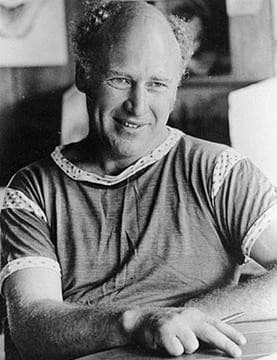
Ken Elton Kesey was an American novelist, essayist and countercultural figure. He considered himself a link between the Beat Generation of the 1950s and the hippies of the 1960s.
Similar books
- East of Eden
John Steinbeck
4.4 (429k) average on GoodreadsLiterary FictionExplores complex family dynamics, sibling rivalry, and the American West with a mythic scope.
- Lonesome Dove
Larry McMurtry
4.5 (149k) average on GoodreadsHistorical FictionA long, epic journey with larger-than-life characters and a strong sense of American frontier spirit.
- The Grapes of Wrath
John Steinbeck
4.0 (750k) average on GoodreadsHistorical FictionFocuses on a struggling family's defiance and resilience against overwhelming external forces.
- One Flew Over the Cuckoo's Nest
Ken Kesey
4.2 (631k) average on GoodreadsPsychologyWhile both novels explore themes of rebellion against oppressive systems, 'Sometimes a Great Notion' is far more ambitious in its narrative structure and thematic scope. 'Cuckoo's Nest' offers a more straightforward, albeit allegorical, narrative from a single perspective (Bromden), making it more accessible. 'Notion' delves into a more complex, multi-generational family saga and a broader societal conflict (the strike), utilizing a highly fragmented, stream-of-consciousness style that is significantly more challenging and experimental than its predecessor. As critic John Clark Pratt observes, 'Notion' represents Kesey's attempt to move beyond the allegorical simplicity of his debut into a more complex, modernist narrative form.
- The Old Man and the Sea
Ernest Hemingway
3.8 (831k) average on GoodreadsLiterary FictionA Cuban fisherman's long struggle with a giant marlin becomes a story of endurance and dignity, now retold for young adults with illustrations, phonetic guides, and writing prompts in Traditional Chinese.
- One Hundred Years of Solitude
Gabriel García Márquez
4.1 (753k) average on GoodreadsLiterary FictionThrough the multi-generational story of the Buendía family, a mythical town deals with the repeating patterns of time, love, and solitude, as the extraordinary mixes with the ordinary.





Enjoyed the summary?
A summary gives you the shape of the book. The book itself has the detail, the examples and the voice.
Find Sometimes a Great Notion on AmazonAs an Amazon Associate, BookBrief earns from qualifying purchases. How we're funded