

Synopsis
Covers the whole plot, including the ending.
- Difficulty
- Medium
- Pacing
- Moderate
- Mood
- Melancholy, Hopeful, Reflective, Evocative
- Read it if
- You enjoy poignant historical fiction about family secrets, identity, and the immigrant experience during the Great Depression.
- Skip it if
- You prefer fast-paced thrillers or stories without significant emotional depth and historical context.
Songs of Willow Frost Plot Summary
Covers the whole plot, including the ending.
A Glimpse of the Past
It's 1934, and twelve-year-old William Eng lives at the Sacred Heart Orphanage in Seattle. For his birthday, he and the other orphans are taken to the Moore Theatre to see a movie. On screen, William sees a glamorous Chinese-American actress named Willow Frost. Her face, mannerisms, and a small scar on her wrist convince him: this woman is his mother, Liu Song, who he believed had died five years earlier. The memory of his mother being taken away in a hearse has haunted him, but this discovery ignites a desperate hope. The experience leaves him restless and determined to confirm his suspicions.
Escape from Sacred Heart
Believing Willow Frost is his mother, William tells his best friend at the orphanage, Charlotte, a resourceful girl. Charlotte, also an orphan, understands William's desire for family and agrees to help him. Together, they plan their escape from Sacred Heart. One night, they slip away, navigating Seattle's dark streets. Their immediate goal is to find information about Willow Frost, starting with the movie studio or any place she might be staying, hoping to confront her and learn the truth about William's past.
Life on the Streets and First Clues
Now on their own, William and Charlotte face the realities of Depression-era Seattle. They find food, shelter in abandoned buildings, and avoid authorities. William, still driven by his quest, searches for any mention of Willow Frost in newspapers or movie posters. They eventually meet a kind, elderly Chinese woman who runs a small shop. After some questioning, she gives them a small clue about Willow Frost's past connection to a local laundry. This small lead, though vague, strengthens William's resolve and gives their search direction.
A Reunion and a Revelation
Through a series of events and some luck, William and Charlotte find Willow Frost. The meeting is tense. Willow Frost, initially guarded, is confronted by William's certainty and their undeniable resemblance. After a heartbreaking moment of recognition, she confirms William's belief: she is Liu Song, his mother. The revelation overwhelms William, but it also brings many questions about why she left him and became a movie star. This encounter is a turning point, shifting the story into the past to explain her journey.
Liu Song's Early Life in Seattle
The story moves back to the 1920s, showing Liu Song's early life. Born into a traditional Chinese family in Seattle, she experiences cultural restrictions and expectations as a young woman. Her family, struggling financially, arranges a marriage for her to an older, wealthy Chinese man she does not love. Desperate to escape this fate and wanting a different life, Liu Song decides to run away from her family home. This act of rebellion sets her on a path of independence and hardship, far from the life her parents envisioned.
The Jazz Club and a New Identity
After running away, Liu Song is alone and vulnerable in Seattle during Prohibition. She finds work as a singer in a speakeasy, a hidden jazz club. Here, she begins to leave her old identity and embrace a new, independent persona. She discovers a talent for singing and performing, captivating audiences with her voice and beauty. During this time, she starts to be known by a different name, a step toward her stage name, Willow Frost, as she transforms from a dutiful daughter into a performer.
Meeting William's Father and a Brief Happiness
While working at the speakeasy, Liu Song meets a kind and charming musician, William's father. They fall in love, finding comfort and happiness together. For a time, Liu Song experiences a sense of belonging and joy she had never known. Their love leads to the birth of their son, William. This period represents a brief but deep happiness for Liu Song as she builds a small, loving family. However, this happiness ends tragically, foreshadowing the eventual separation from her son.
Tragedy Strikes and the Forced Separation
Liu Song's happiness ends with a tragedy: William's father dies suddenly, leaving her a single mother in a difficult situation. Without his income and support, Liu Song is in dire poverty, unable to provide for herself and her young son. Facing impossible choices and fearing for William's future, she makes the agonizing decision to place him in the Sacred Heart Orphanage. The scene William remembers, of his mother being carried away, was an act of feigning death to escape further scrutiny and ensure William's placement, a sacrifice she believed was for his own good.
The Road to Hollywood
After the separation from William, Liu Song, now fully embracing the persona of Willow Frost, puts her grief and determination into her performing career. She leaves Seattle and eventually goes to Hollywood, driven by the need to earn enough money to reclaim her son. Her unique beauty and talent help her enter the film industry. She works hard, enduring Hollywood's competitive nature, all while carrying the secret burden of her past and the constant ache of separation from William. Her success as a movie star is both a triumph and a reminder of her sacrifice.
Confrontation and Reconciliation
Back in 1934, after the shock of their reunion, William deals with the truth of his mother's past. He struggles to see the glamorous movie star, Willow Frost, as the mother he remembers and the woman who seemingly abandoned him. Willow, in turn, must confront her choices and explain her sacrifice. Charlotte helps William process the complex emotions. Slowly, through difficult conversations and shared memories, a fragile understanding forms between mother and son. They begin the process of rebuilding their relationship, bridging years of secrets.
Facing the Future Together
With William reunited with her, Willow Frost faces a decision about her life and career. Hollywood's demands and public attention conflict with her desire to be a mother to William. She realizes she cannot truly have both lives at once. After much thought for William's well-being, she makes a significant choice that will affect both their futures. This decision shows her changing priorities and her commitment to making amends for the past, putting her son before her celebrity.
A New Beginning
The story ends with William, Willow Frost, and Charlotte starting a new chapter together. Willow has made sacrifices in her career to create a stable home for William. While past wounds may not fully heal, a foundation of love and understanding has been laid. William, no longer an orphan, has found his mother, and Charlotte, a loyal friend, has also found a form of family and security. They face an uncertain future, but they do so together, having navigated identity, sacrifice, and the enduring power of family love during challenging times.
Principal Figures
William Eng
Protagonist
A twelve-year-old Chinese-American orphan searching for his mother.
William is a quiet, observant, and deeply sensitive boy. Haunted by the memory of his mother's supposed death, he clings to the hope of her return. His discovery of Willow Frost on screen ignites a fierce determination within him, driving him to escape the orphanage and confront the truth. He is resilient and resourceful, navigating the harsh realities of Depression-era Seattle with his friend Charlotte. His primary motivation is to find his mother and understand why she left him, seeking a sense of belonging and family.
Relationships: Liu Song/Willow Frost (Son of Willow Frost, initially believes she abandoned him, later seeks to understand her actions.); Charlotte (Best friend and accomplice, providing loyalty and practical support.); Nuns at Sacred Heart (Caregivers, but also figures of authority from whom he seeks to escape.)
Liu Song / Willow Frost
Protagonist/William's Mother
A Chinese-American actress with a hidden past and a heartbreaking secret.
Liu Song, who reinvents herself as the glamorous movie star Willow Frost, is a woman of immense strength, resilience, and sacrifice. Born into a traditional Chinese family, she defied expectations, escaping an arranged marriage and pursuing an independent life as a singer and later an actress. She carries deep emotional scars from her past, particularly the forced separation from her son, William. Her drive to succeed in Hollywood is fueled by a desperate hope to one day reclaim him. She is complex, appearing distant and guarded due to her past trauma, but underneath lies a profound maternal love.
Relationships: William Eng (Mother, separated by circumstance and sacrifice, later reunited.); William's Father (Lover and husband, his death triggers her sacrifice.); Her family (parents) (Estranged due to her defiance of traditional expectations and arranged marriage.)
Charlotte
Supporting
William's loyal and street-smart best friend from the orphanage.
Charlotte is a pragmatic, courageous, and fiercely loyal girl. She is William's closest companion at Sacred Heart and his indispensable partner in their escape and search for Willow Frost. Growing up in the orphanage has made her self-reliant and wary, but also deeply empathetic towards William's yearning for family. She provides the practical skills and emotional support William often lacks, acting as his grounding force. Her quick thinking and determination are crucial to their survival on the streets and their progress in finding Willow Frost.
Relationships: William Eng (Best friend and confidante, a bond forged through shared orphanage experiences and their escape.); Liu Song/Willow Frost (Initially a stranger, later becomes a protective figure for Charlotte as well.)
Sister Mary Margaret
Supporting
A strict but ultimately compassionate nun at Sacred Heart Orphanage.
Sister Mary Margaret is one of the nuns responsible for the care of the children at Sacred Heart Orphanage. She is portrayed as strict and adheres to the rules of the institution, which often makes her appear cold or unfeeling to the orphans. However, beneath her stern exterior, she possesses a degree of compassion and a genuine, albeit sometimes misguided, concern for the children's welfare. She represents the rigid structure from which William and Charlotte escape, yet her actions are rooted in a desire to maintain order and provide what she believes is best for the children in her charge.
Relationships: William Eng (Authority figure, caregiver.); Charlotte (Authority figure, caregiver.)
William's Father
Mentioned
Liu Song's beloved husband and William's biological father.
William's father is a musician whom Liu Song meets and falls in love with while working in the speakeasy. He is depicted as kind, charismatic, and loving, providing Liu Song with a brief period of happiness and stability. His death is the tragic catalyst that plunges Liu Song into poverty and forces her to make the agonizing decision to place William in the orphanage. Though he appears only in flashbacks, his memory is central to understanding Liu Song's motivations and the depth of her past sacrifices. He represents the lost potential for a happy, complete family for William.
Relationships: Liu Song/Willow Frost (Loving husband and father of her child.); William Eng (Biological father, died when William was very young.)
Auntie
Supporting
An elderly Chinese woman who helps William and Charlotte on the streets.
Auntie is a kind and wise elderly Chinese woman who runs a small shop in Seattle. She is a compassionate figure who offers William and Charlotte food and a moment of respite during their escape. She is one of the first people to provide William with a small, yet significant, clue about Willow Frost's past connections in the Chinese community. She represents the supportive, communal aspect of the Chinese immigrant experience, offering a sense of cultural connection and a guiding hand when the children are most vulnerable. Her understanding gaze suggests a deeper knowledge of the world, and perhaps even of Willow Frost's past.
Relationships: William Eng (Benevolent helper and source of information.); Charlotte (Benevolent helper.)
Themes & Insights
The Search for Identity and Belonging
Both William and Liu Song seek to define themselves and find where they belong. William, as an orphan, explores his past and present, desperately seeking his mother to understand his origins and find a family. His identity depends on finding Liu Song. Liu Song creates a new identity as Willow Frost to survive and achieve her goals, but her true self, Liu Song, longs for the family she sacrificed. The novel explores how circumstances force people to create new identities and the human need for connection and a 'home,' whether a physical place or a family bond. This is clear in William's pursuit of Willow Frost and Liu Song's internal conflict between her public persona and her private grief.
“Home wasn't a place, it was a feeling; and sometimes, it was all you had.”
Sacrifice and Motherhood
A main theme is the sacrifices a mother makes for her child, especially in difficult times. Liu Song's decision to fake her death and place William in an orphanage, while seeming like abandonment, is revealed as a heartbreaking act of self-preservation and a desperate attempt to secure a better future for him. Her career as Willow Frost is driven by the hope of earning enough money to one day reclaim her son. The novel explores the complex morality of such a choice, showing the painful lengths a mother will go to protect her child, even if it means years of separation and public misunderstanding. This theme is strongly shown in the flashbacks detailing Liu Song's struggles after William's father dies.
“Sometimes, the hardest thing and the right thing are the same.”
The American Dream and Its Illusions
The novel explores the American Dream, especially for immigrants and marginalized communities during the Great Depression. Liu Song, a Chinese-American woman, faces significant barriers, yet she achieves a version of the American Dream through her success as a movie star. However, this dream comes at a great personal cost: the sacrifice of her family and her true identity. Hollywood's glamour, represented by Willow Frost, contrasts with the realities of poverty, prejudice, and the compromises needed for success. William's initial view of Willow Frost as magical is slowly replaced by understanding the sacrifices behind the illusion. The story reveals that the 'dream' often hides a more complex and painful reality.
“The movies were a lie. A beautiful, wonderful lie, but a lie nonetheless.”
Resilience and Survival
The characters, especially William and Liu Song, show resilience in the face of adversity. William and Charlotte survive on Seattle's streets, relying on their wits and bond. Liu Song navigates a difficult childhood, escapes an arranged marriage, endures poverty, and rises in Hollywood, all while carrying emotional pain. Their ability to adapt, endure, and maintain hope despite challenges shows the human spirit. The Great Depression setting further highlights the need for resilience for survival, both physically and emotionally. Each character's journey shows their will to overcome their circumstances.
“Sometimes the only way to survive was to keep moving, even when you didn't know where you were going.”
Plot Devices & Literary Techniques
Dual Narrative Structure
Alternating timelines between William's present and Liu Song's past.
The novel employs a dual narrative structure, alternating between William's 1934 quest to find Willow Frost and Liu Song's backstory in the 1920s. This device is crucial for gradually revealing the complex truth behind Willow Frost's identity and her connection to William. The past narrative provides context, explaining Liu Song's motivations and sacrifices, while the present narrative builds suspense around William's search and the eventual reunion. This interweaving allows the reader to understand the full scope of the tragedy and the love that binds them, creating a richer, more empathetic reading experience by delaying full disclosure.
Symbolism of the Silver Screen
The movie screen represents illusion, hope, and the unattainable.
The silver screen acts as a powerful symbol throughout the novel. For William, it initially represents a miraculous hope – the possibility that his mother is alive and glamorous. It embodies the idealized, often deceptive, nature of dreams and celebrity. For Liu Song, the screen is both a vehicle for her survival and a barrier, allowing her to create the illusion of Willow Frost while hiding her true self and her painful past. It highlights the stark contrast between the public persona and private reality, and the way art can both conceal and reveal truth. The screen is where William first sees his mother, but also where he sees the 'lie' she had to become.
The Orphanage as a Catalyst
The Sacred Heart Orphanage serves as a starting point for William's journey and a symbol of his displacement.
The Sacred Heart Orphanage is more than just a setting; it's a catalyst for William's entire journey. It represents his displacement, his lack of family, and the structured, often impersonal, environment he feels compelled to escape. His life within its walls fuels his longing for a mother and provides the motivation for his desperate search. The orphanage also emphasizes the harsh realities faced by children during the Great Depression, highlighting the vulnerability of those without families. By escaping it, William asserts his agency and begins his quest for identity and belonging.
The Scar
A distinctive physical mark that serves as a key identifier.
The small, distinctive scar on Willow Frost's wrist is a crucial plot device. It is the specific detail that solidifies William's conviction that Willow Frost is his mother, Liu Song, serving as an undeniable physical link to his past. This detail acts as a concrete piece of evidence that cuts through the glamour and illusion of the movie star, providing a tangible connection to the woman he remembers. It prevents the reader, and William, from dismissing his belief as mere childish fantasy, making the reunion all the more impactful and believable.
Songs of Willow Frost Quotes
“Maybe it was the grand gesture, the sweep of a hand across a room, or the way a woman could hold a man’s gaze and make him feel like the only person in the world.”
“The past was like a movie you’d already seen, but still, you had to watch it again, hoping for a different ending.”
“He knew what it was like to be an orphan, to have a hole in your heart the size of a missing mother.”
“Sometimes the greatest love story is the one you write for yourself.”
“Secrets were like ghosts; they haunted you, even if you didn't believe in them.”
“Life had a way of bringing you back to where you started, sometimes with a few more scars, but always with a little more wisdom.”
“The world was full of people who wanted to tell you who you were, but it was up to you to decide if you believed them.”
“Even in the darkest times, there was always a flicker of light, a song to be sung, a story to be told.”
“Memory was a tricky thing. It could be a comfort, a curse, or a broken record playing the same sad song.”
“He learned that sometimes, the bravest thing you could do was to simply keep going, even when every fiber of your being wanted to stop.”
“A photograph was a moment stolen from time, a whisper of a life that once was.”
“The greatest performance wasn't on a stage, but in the quiet acts of kindness that went unnoticed.”
“Family wasn't always blood. Sometimes it was the people who held your hand when you were lost.”
“Sometimes, the hardest part of letting go was realizing you never really had it in the first place.”
Quiz
10 questions on the plot and the characters. Each answer comes with a short explanation.
Question 1
What is the name of the orphanage where William Eng lives at the beginning of the story?
- St. Jude's Home
- Sacred Heart Orphanage
- Seattle Children's Home
- Our Lady of Sorrows
Show answer
B. Sacred Heart Orphanage William Eng has lived at Seattle’s Sacred Heart Orphanage for five years since his mother disappeared.
Question 2
What event leads William to believe his mother is still alive and an actress?
- He receives a letter from her.
- He sees an actress named Willow Frost at the Moore Theatre.
- A new orphan arrives who knows his mother.
- He finds an old photograph of her in a newspaper.
Show answer
B. He sees an actress named Willow Frost at the Moore Theatre. William and the other orphans are taken to the Moore Theatre, where he sees an actress named Willow Frost on screen and is convinced she is his mother.
Question 3
What is William's mother's original name?
- Willow Frost
- Charlotte
- Liu Song
- Mei-Lin
Show answer
C. Liu Song The synopsis states William is convinced the movie star is his mother, Liu Song.
Question 4
Who accompanies William when he escapes from the orphanage?
- A nun from Sacred Heart
- Another orphan named Charlotte
- A kind stranger he meets outside
- He escapes alone
Show answer
B. Another orphan named Charlotte William escapes from Sacred Heart with his friend Charlotte, as they navigate the streets of Seattle.
Question 5
In what city does the majority of William's story take place?
- Los Angeles
- New York City
- Seattle
- San Francisco
Show answer
C. Seattle William lives at Seattle’s Sacred Heart Orphanage, and he and Charlotte navigate the streets of Seattle after escaping.
Question 6
What historical period does the story primarily shift between?
- The Roaring Twenties and World War I
- The Great Depression and the 1920s
- World War II and the post-war boom
- The Jazz Age and the Cold War
Show answer
B. The Great Depression and the 1920s The book description explicitly states the story 'shifting between the Great Depression and the 1920s'.
Question 7
What is a central theme explored in 'Songs of Willow Frost'?
- The pursuit of fame and fortune
- The comforts of family and a place to call home
- The challenges of immigrant assimilation
- The rise of Hollywood cinema
Show answer
B. The comforts of family and a place to call home The synopsis concludes that the book 'will resonate with anyone who has ever longed for the comforts of family and a place to call home.'
Question 8
What is William's age at the start of the story, when he sees Willow Frost?
- Eight years old
- Ten years old
- Twelve years old
- Fourteen years old
Show answer
C. Twelve years old The first sentence states, 'Twelve-year-old William Eng, a Chinese-American boy, has lived at Seattle’s Sacred Heart Orphanage...' and he sees Willow Frost on his birthday.
Question 9
The description implies that the story of Willow Frost is more complex than William initially perceives. What does this suggest about her character?
- She is a villain manipulating William.
- Her life likely involved struggles and challenges beyond her glamorous image.
- She is not actually an actress but a look-alike.
- She is a ghost, not a living person.
Show answer
B. Her life likely involved struggles and challenges beyond her glamorous image. The text states, 'The story of Willow Frost, however, is far more complicated than the Hollywood fantasy William sees onscreen,' indicating a hidden, more difficult past for her.
Question 10
What is the primary motivation for William to escape the orphanage?
- To find a better life in a new city.
- To escape the strict rules and punishments of the nuns.
- To find Willow Frost and prove she is his mother.
- To reunite with his friend Charlotte's family.
Show answer
C. To find Willow Frost and prove she is his mother. William is 'Determined to find Willow, and prove his mother is still alive,' which directly leads to his escape from Sacred Heart.
Songs of Willow Frost FAQ
What is the central premise of 'Songs of Willow Frost'?
The novel centers on twelve-year-old William Eng, an orphan who believes a glamorous movie star named Willow Frost is his long-lost mother, Liu Song. Driven by this conviction, he escapes the Sacred Heart Orphanage with his friend Charlotte to find her and uncover the truth about his past.
Who is William Eng and what is his background?
William Eng is a Chinese-American boy who has lived at Sacred Heart Orphanage in Seattle since his mother's disappearance five years prior. He is resilient and imaginative, deeply longing for a family connection, which fuels his quest to identify Willow Frost as his mother.
Who is Charlotte and what role does she play in William's journey?
Charlotte is William's best friend and fellow orphan at Sacred Heart. She is a practical and loyal companion who accompanies William on his escape, providing support, common sense, and a grounding presence during their perilous search for Willow Frost.
What prompts William to believe Willow Frost is his mother, Liu Song?
William sees Willow Frost on screen at the Moore Theatre and is immediately struck by her resemblance to his mother, particularly her distinctive eyes and features. This strong visual connection ignites his desperate hope and sets him on his quest.
How does the novel utilize its dual timelines?
The novel shifts between William's journey in the Great Depression-era 1930s and Willow Frost's (Liu Song's) backstory in the 1920s. This dual narrative gradually reveals the complex circumstances that led to Liu Song's life as an actress and her separation from William.
What is the true identity of Willow Frost, and how does she connect to William?
Willow Frost is indeed Liu Song, William's mother, who was forced to give him up due to dire circumstances and societal pressures. Her transformation into a movie star was a path she took out of necessity and a desire for survival, making her past difficult to trace.
What were the circumstances that led to Liu Song's separation from William?
Liu Song faced extreme poverty, racial discrimination, and a lack of support as a single mother. She was coerced into giving William up, believing it was the only way for him to survive and have a better life, a decision that haunted her deeply.
How does the character of Auntie Lena factor into Liu Song's past?
Auntie Lena was a pivotal figure in Liu Song's early life, providing her with guidance and a sense of family after she was orphaned. Lena's wisdom and resilience influenced Liu Song's own strength and choices, including her eventual path to becoming Willow Frost.
Are there any symbolic objects or recurring motifs in the story?
The 'Songs of Willow Frost' themselves, often lullabies or folk songs, symbolize the enduring connection between mother and child, memory, and the longing for home. The silver screen acts as both a barrier and a mirror, reflecting idealized images while hiding painful truths.
How does William's abandonment impact his sense of identity and self-worth?
William's early abandonment leaves him with a profound sense of loss and an intense need for belonging. His quest for Willow Frost is not just about finding his mother, but about understanding his origins and validating his own existence, crucial for forming his identity.
What psychological challenges does Liu Song (Willow Frost) face throughout her life?
Liu Song grapples with immense guilt over giving up William, the trauma of her past hardships, and the emotional toll of maintaining a public persona as Willow Frost while hiding her true identity and sorrow. She experiences a deep internal conflict between her two lives.
How does the theme of resilience manifest in the characters of William and Liu Song?
Both William and Liu Song exhibit remarkable resilience. William endures orphanage life and embarks on a dangerous journey, driven by hope. Liu Song survives poverty, discrimination, and heartbreak, reinventing herself to survive, showcasing their shared inner strength.
What role does memory play in shaping the characters' perceptions and actions?
Memory is central, often unreliable yet powerful. William's fragmented memories of his mother fuel his quest, while Liu Song's suppressed memories of her past and William dictate her emotional state and carefully constructed identity as Willow Frost, showing memory's dual nature.
Is the ending of the novel ultimately hopeful or tragic for William and Liu Song?
The ending offers a bittersweet hope. While William and Liu Song are reunited and finally understand each other's pasts, the years of separation and the trauma they both endured cannot be erased. It's a reunion forged in understanding and love, but also marked by lingering pain.
How does the novel explore the concept of motherhood beyond biological ties?
The novel suggests that motherhood is complex, encompassing sacrifice, difficult choices, and enduring love, even in absence. It challenges simplistic notions by showing Liu Song's actions as driven by maternal love, despite them leading to separation, and highlights the emotional bond over mere presence.
What is the significance of the title 'Songs of Willow Frost'?
The title refers to the songs Liu Song sang to William as a child, which become a key memory for him and a link to his past. 'Willow Frost' is Liu Song's stage name, symbolizing her transformation and the beautiful yet distant persona she adopts to survive.
How does the novel comment on the American Dream and immigrant experiences during the Great Depression?
The novel critiques the harsh realities of the American Dream for Chinese immigrants during the Depression, highlighting systemic racism, poverty, and limited opportunities. Liu Song's story shows the immense struggle for survival and the often-unseen sacrifices made by those chasing a better life.
Does the novel suggest that love can truly bridge years of separation and misunderstanding?
Yes, the novel strongly suggests that love, specifically the unbreakable bond between mother and child, can endure and ultimately bridge vast chasms of time and misunderstanding. The reunion of William and Liu Song is a testament to this enduring connection, built on empathy and a desire for truth.
About the author

Jamie Ford is an American author known for his fiction that often explores themes of family and cultural identity. His notable works include "Hotel on the Corner of Bitter and Sweet," which delves into the Japanese American experience during World War II, and "Songs of Willow Frost," a story about love and loss set in the 1930s.
Similar books
- Hotel on the Corner of Bitter and Sweet
Jamie Ford
4.0 (263k) average on GoodreadsHistorical FictionExplores Chinese-American identity, historical events in Seattle, and themes of lost love and memory.
- Pachinko
Min Jin Lee
4.3 (208k) average on GoodreadsLiterary FictionMulti-generational saga of an Asian family facing hardship, prejudice, and resilience.
- Snow Flower and the Secret Fan
Lisa See
4.1 (339k) average on GoodreadsHistorical FictionWhile both novels explore complex female relationships and historical settings, See's work delves much deeper into specific cultural practices (e.g., foot-binding, nu shu) and a broader historical context of 19th-century China. Ford's focus is more on individual identity and a personal quest for connection in a more localized American historical setting.
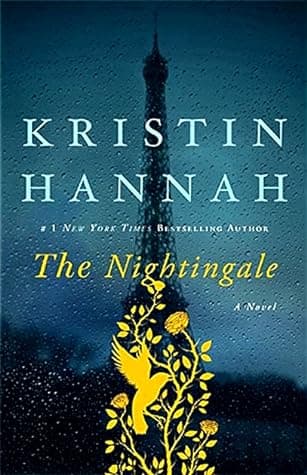
- The Nightingale
Kristin Hannah
4.6 (698k) average on GoodreadsHistorical FictionHannah's novel is a sweeping epic of female resilience and sacrifice during World War II, focusing on grand historical events and their impact on two sisters. Ford's "Songs of Willow Frost" is a more intimate and personal story, centered on one boy's search for his mother and understanding his past, with a narrower historical scope and less emphasis on wartime heroism.
- The Old Man and the Sea
Ernest Hemingway
3.8 (831k) average on GoodreadsLiterary FictionA Cuban fisherman's long struggle with a giant marlin becomes a story of endurance and dignity, now retold for young adults with illustrations, phonetic guides, and writing prompts in Traditional Chinese.
- One Hundred Years of Solitude
Gabriel García Márquez
4.1 (753k) average on GoodreadsLiterary FictionThrough the multi-generational story of the Buendía family, a mythical town deals with the repeating patterns of time, love, and solitude, as the extraordinary mixes with the ordinary.




Enjoyed the summary?
A summary gives you the shape of the book. The book itself has the detail, the examples and the voice.
Find Songs of Willow Frost on AmazonAs an Amazon Associate, BookBrief earns from qualifying purchases. How we're funded