
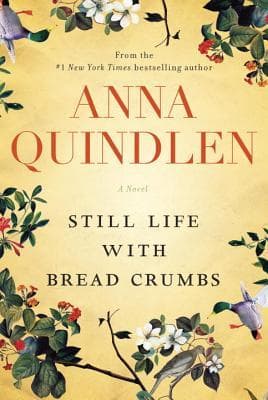
Synopsis
Covers the whole plot, including the ending.
- Difficulty
- Easy
- Pacing
- Moderate
- Mood
- Reflective, Wry, Hopeful, Romantic
- Read it if
- You enjoy character-driven stories about reinvention, unexpected romance, and the challenges of aging with grace and humor.
- Skip it if
- You prefer fast-paced plots with high stakes or want to avoid stories focused on mid-life introspection and relationships.
Still Life with Bread Crumbs Plot Summary
Covers the whole plot, including the ending.
Rebecca's Retreat to the Country
Rebecca Winter, once a known photographer for her 'Still Life with Bread Crumbs' series, finds herself low on money and ideas. She quickly rents a run-down cottage in a remote, unnamed rural town in upstate New York. She leaves her expensive Manhattan apartment after a scary incident with a perceived gunshot and her cat, Felicity. Her husband, Peter, a successful but distant lawyer, stays in the city, and their marriage is difficult. Rebecca hopes country life will bring new ideas and help her control her life again, even with the cottage's old features and isolated spot. She feels overwhelmed by the many repairs needed and her unfamiliar surroundings.
Encountering Jim Bates and the Local Quirks
Soon after arriving, Rebecca realizes the cottage needs a new roof. She hires Jim Bates, a quiet but observant local handyman and roofer. Their first meetings show the clash of their different worlds; Rebecca, a city intellectual, finds Jim's directness and lack of showiness both unsettling and interesting. She also starts to meet her new neighbors: the curious but kind Mrs. Miller, who runs the local store, and the gruff but helpful townspeople. Rebecca struggles with simple country tasks and feels out of place, often looking at her new life as if through a camera lens, a habit from her professional past she wants to stop.
The Evolution of Rebecca and Jim's Relationship
As Jim works on Rebecca's roof, they spend more time together, leading to an unexpected closeness. Rebecca finds herself drawn to Jim's quiet strength, his practical skills, and his real understanding of nature, which is very different from her intellectual, art-world friends. Jim, in turn, is interested in Rebecca's artistic feelings and her hidden sensitivity. Their talks, first about repairs, slowly move to personal stories and life views. Rebecca starts to see Jim as more than just a contractor, as a complex person, which challenges her old ideas about class and intelligence.
Rediscovering Photography and Self
Her new surroundings and talks with Jim and the local community inspire Rebecca to take photos again. Her new work is different from her famous 'Still Life with Bread Crumbs' series, which focused on home decay. Instead, she captures the real beauty of the landscape, the aged faces of her neighbors, and the details of her simple cottage life. This change in her art shows a deeper personal change; she is no longer just watching life from afar but is part of it. Her new photographs show her changing understanding of beauty and meaning.
Confronting Peter and Past Relationships
Peter, Rebecca's husband, visits the cottage sometimes, showing the growing distance between them. Their talks are polite but show a lack of real connection and understanding. Rebecca thinks about their long marriage, the compromises she made, and the emotional gap that has grown. She also thinks about her parents and her difficult relationship with her artist mother, whose career overshadowed Rebecca's childhood. These thoughts help Rebecca understand the patterns in her life and how she has defined herself through others, especially men.
The Accident and Its Aftermath
During a dangerous job, Jim falls from a roof and gets badly hurt. Rebecca quickly goes to him, showing a deep worry that even surprises her. She stays with him at the hospital, giving comfort and help, and assists him while he recovers. This event makes her feelings for Jim clear, showing their relationship is more than just casual. It makes Rebecca admit her emotional connection to him and the big effect he has had on her life, breaking down her emotional walls and showing her ability for true, selfless love.
The Revelation of Jim's Past
As Jim recovers, he tells Rebecca about his past, including the sad death of his wife years ago. He shares the pain and guilt he has carried, explaining the quiet strength and loneliness that have shaped his life since then. This story helps Rebecca understand Jim's character better, explaining his quiet resilience and his link to the land. It also shows how much he trusts her, as he rarely shares such personal details. Rebecca realizes that Jim, like her, has his own burdens and has found comfort in his work and his chosen life.
A New Artistic Direction and Exhibition
Rebecca's new photos, taken in the country and showing her changed view, start to get noticed. An exhibition opportunity comes up in a gallery, an important moment for her career. The new photographs are different from her previous work, with a sense of warmth, realness, and a less distant look at life. This exhibition marks a professional new start for Rebecca, showing she has found a new artistic voice that fits her true self, free from the pressures and expectations of her past fame.
Making a Choice and Embracing the Future
With her career revived and her feelings for Jim clear, Rebecca faces the truth about her marriage to Peter. She realizes their life together is no longer working or fulfilling. She talks with Peter, leading to the end of their marriage. This decision is not easy, but it comes with clarity and a feeling of strength. Rebecca chooses to embrace her new life in the country and her growing relationship with Jim, accepting the unknown future with a hope and self-awareness she did not have before.
A New Beginning Under a New Roof
The book ends with Rebecca fully accepting her country life with Jim. The new tin roof on her cottage, a sign of stability and protection, is finally done. She is no longer just watching life but living it fully, finding happiness in simple, everyday moments with Jim. Her artistic view has grown, her relationships are real, and she has found a deep sense of belonging and happiness in an unexpected place. The imagined gunshot from the beginning has been replaced by the comforting sounds of her new home and the promise of a future built on real connection.
Still Life with Bread Crumbs Characters
Rebecca Winter
Protagonist
A renowned photographer grappling with career decline and personal disillusionment, seeking reinvention in rural life.
Rebecca Winter is an acclaimed photographer, famous for her 'Still Life with Bread Crumbs' series, which ironically captured domestic decay. In her fifties, she finds herself at a crossroads: her career is stagnant, her finances are precarious, and her marriage to Peter is emotionally distant. She flees Manhattan for a dilapidated cottage in the country, seeking escape and inspiration. Initially, she is detached and intellectual, viewing the world through a photographic lens, but her interactions with Jim Bates and the rural community force her to shed her pretenses and reconnect with her authentic self. She is intelligent, introspective, and initially fearful of vulnerability.
Relationships: Jim Bates (Romantic partner, roofer, and source of emotional grounding); Peter (Estranged husband, a successful lawyer); Felicity (Her beloved cat, a source of comfort and a catalyst for her move); Mrs. Miller (Nosy but kind neighbor and general store owner)
Jim Bates
Love Interest / Supporting
A quiet, practical, and insightful local roofer who helps Rebecca rebuild her home and her life.
Jim Bates is a local roofer and handyman, a man of few words but deep observation and practical wisdom. He is grounded, hardworking, and deeply connected to the natural world. Jim carries the quiet grief of losing his wife years ago, which has made him somewhat solitary but also incredibly resilient. He is initially a stark contrast to Rebecca's sophisticated urban world, but his genuine nature, honesty, and quiet strength slowly break down her defenses. He sees Rebecca for who she truly is, beyond her fame and intellectual facade, and helps her find a new perspective on life and love.
Relationships: Rebecca Winter (Romantic partner, client, and emotional confidant)
Peter
Supporting
Rebecca's estranged husband, a successful lawyer who represents her past life and emotional distance.
Peter is Rebecca's husband, a successful and seemingly supportive lawyer. However, their marriage is characterized by emotional distance and a lack of genuine intimacy. Peter represents the comfortable but ultimately unfulfilling life Rebecca is trying to escape. He is polite, rational, and somewhat detached, struggling to understand Rebecca's artistic struggles or her need for a rural retreat. His visits highlight the growing chasm between them and serve as a catalyst for Rebecca to finally confront the reality of their relationship and make a definitive choice about her future.
Relationships: Rebecca Winter (Estranged husband)
Mrs. Miller
Supporting
A kind but nosy local general store owner who welcomes Rebecca into the community.
Mrs. Miller is a prominent figure in the local rural community, running the general store where Rebecca frequently shops. She is a fount of local gossip and information, often intrusive but always well-meaning. Mrs. Miller embodies the close-knit, observant nature of small-town life, initially overwhelming Rebecca with her directness but eventually becoming a symbol of the community's quiet acceptance. She represents the 'everyday' and helps ground Rebecca in her new reality, offering a sense of belonging amidst her isolation.
Relationships: Rebecca Winter (Neighbor and local acquaintance)
Felicity
Mentioned / Symbolic
Rebecca's beloved cat, whose presence is a source of comfort and a trigger for key plot points.
Felicity is Rebecca's cherished cat, a constant companion and a source of quiet comfort. The perceived gunshot incident involving Felicity in Rebecca's Manhattan apartment is a significant catalyst for Rebecca's decision to move to the country. Felicity's well-being is often a reflection of Rebecca's own state of mind. She represents Rebecca's need for connection and care, and her presence in the new cottage helps Rebecca feel less alone. Felicity is a silent observer of Rebecca's transformation.
Relationships: Rebecca Winter (Pet owner and companion)
Rebecca's Mother
Mentioned / Symbolic
A successful and demanding artist whose legacy profoundly influenced Rebecca's career and self-perception.
Rebecca's mother was a renowned and formidable artist, whose shadow loomed large over Rebecca's childhood and early career. Her mother's artistic success and critical nature instilled in Rebecca a deep-seated need for approval and a constant struggle with self-doubt. Rebecca's choice of photography, and her initial success, were partly an attempt to both emulate and escape her mother's influence. Her mother's memory serves as a key to understanding Rebecca's professional anxieties and her complex relationship with her own artistic identity.
Relationships: Rebecca Winter (Mother-daughter relationship, complex and influential)
Rebecca's Father
Mentioned / Symbolic
A supportive but often overshadowed figure in Rebecca's childhood, providing a contrast to her mother's intensity.
Rebecca's father is remembered as a gentle and supportive presence in her childhood, often overshadowed by her more dominant artist mother. He provided a balance to the artistic intensity of their home and was a source of quiet affection for Rebecca. His memory often surfaces in Rebecca's reflections, representing a simpler, more nurturing form of love and acceptance, contrasting with the critical judgment she felt from her mother. He symbolizes a lost sense of security and unconditional love that Rebecca seeks to recapture.
Relationships: Rebecca Winter (Father-daughter relationship, loving and supportive)
The Gallery Owner
Supporting
An art professional who champions Rebecca's new photographic work, signifying her artistic rebirth.
The gallery owner is a professional in the art world who recognizes the merit and unique perspective in Rebecca's new body of work. This character represents the validation and professional recognition that Rebecca still seeks, but on her own terms. The gallery owner's decision to exhibit Rebecca's new photographs from the country signifies a turning point in Rebecca's career, confirming that her artistic voice has matured and found a new, authentic direction, independent of her past iconic status.
Relationships: Rebecca Winter (Professional relationship, art representative)
Still Life with Bread Crumbs Themes
Identity and Self-Discovery
Rebecca's journey is about letting go of her old identity as a famous artist and a wife, to find out who she is without those roles. Her move to the country, her struggles with practical tasks, and her interactions with Jim and the locals make her face her weaknesses and redefine her values. She learns to value simplicity, physical work, and real connection over intellectual pursuits and surface fame. This idea is clear in her artistic change from distant observation to active experience, ending in her new photo series.
“What she saw through a camera lens was not all there was to life.”
The Nature of Love and Relationships
The novel looks at different kinds of love: the distant, intellectual love between Rebecca and Peter; the quiet, practical, and deeply felt love that grows between Rebecca and Jim; and the strong love for a pet (Felicity). Rebecca learns that love can be found in surprising places and forms, often needing vulnerability and a willingness to try new things. Her relationship with Jim challenges her old ideas of what a partner 'should' be, showing a deep connection based on shared humanity and mutual respect, rather than shared intellectual or social groups.
“It was as if she had been looking at the world through a window for fifty years, and now she'd finally stepped outside.”
Artistic Renewal and Authenticity
Rebecca's creative block and later renewal are central to the story. At first, she is defined by her past success, feeling pressure to copy her 'Still Life with Bread Crumbs' series. Her country retreat, however, lets her break free from these expectations. She finds new ideas in the raw beauty of nature, the aged faces of her neighbors, and the honest work of people like Jim. Her new photographs are less about decay and more about life, strength, and the beauty of everyday things, showing her own inner change and a new artistic truth.
“She had always photographed what was broken. Now she was photographing what was being made whole.”
The Divide Between Urban and Rural Life
The clear difference between Rebecca's fancy Manhattan life and her rustic country life shows ideas of class, intelligence, and practicality. Rebecca at first struggles with simple country tasks and finds the local customs and directness unsettling. However, she slowly starts to appreciate the simplicity, community, and groundedness of country life. The novel suggests that while city life offers intellectual stimulation, country life provides a different kind of wisdom and connection to basic human experiences, ultimately offering Rebecca a more real way of living.
“In the city, you were always somebody. Here, you just were.”
Aging and Reinvention
At fifty-four, Rebecca is dealing with the challenges of getting older, including a felt drop in her career and a reevaluation of her life choices. The novel shows aging not as an end but as a chance for deep reinvention and self-discovery. Rebecca tries new experiences, new relationships, and a new artistic path, showing that big personal growth and happiness are possible at any age. Her journey encourages readers to see later life as a time for new beginnings and pursuing true desires.
“It was never too late to begin again, to truly begin.”
Plot Devices & Literary Techniques
The Cottage
A physical space symbolizing Rebecca's emotional state and potential for renewal.
The dilapidated rural cottage serves as a powerful symbol throughout the novel. Initially, its rundown state reflects Rebecca's own feelings of disarray, financial instability, and emotional brokenness. As Rebecca works to repair and inhabit the cottage, it mirrors her internal journey of rebuilding her life and self. The eventual completion of the new tin roof symbolizes her newfound stability, protection, and the promise of a secure future. The cottage is not just a setting but an active participant in Rebecca's transformation.
'Still Life with Bread Crumbs' (The Photograph Series)
Rebecca's iconic past work, representing her former identity and artistic perspective.
Rebecca's famous photographic series, 'Still Life with Bread Crumbs,' which depicts domestic decay, serves as a significant plot device. It represents her past artistic success, but also her detached, observational approach to life and her focus on what is broken or left behind. The series acts as a benchmark against which her new, more vibrant and engaged photography is measured. Her eventual departure from this style signifies her personal and artistic growth, moving from an observer of decay to an active participant in life's creation.
The Camera Lens
A metaphor for Rebecca's initial way of seeing and her evolving perspective.
The camera lens is a recurring metaphor for Rebecca's way of perceiving the world. Initially, she views everything through a detached, artistic filter, analyzing and composing rather than simply experiencing. This artistic habit reflects her emotional distance and her tendency to intellectualize her life. As she integrates into rural life and connects with Jim, she gradually learns to put down the 'lens' and experience life directly, allowing for deeper emotional engagement and a more authentic understanding of her surroundings and herself.
The New Tin Roof
A tangible symbol of stability, protection, and a new beginning.
The need for a new tin roof on Rebecca's cottage is the initial impetus for her meeting Jim and a recurring motif. The progress of the roof's construction parallels Rebecca's emotional and personal rebuilding. Its completion at the end of the novel symbolizes the stability, security, and protection she has found in her new life and relationship with Jim. It represents a physical and emotional shelter, signifying that her journey of reinvention has culminated in a solid, lasting foundation for her future.
Felicity's 'Gunshot'
An ambiguous inciting incident that propels Rebecca's flight from the city.
The ambiguous 'gunshot' incident involving Rebecca's cat, Felicity, in her Manhattan apartment is a crucial inciting incident. Whether real or imagined, it serves as a powerful trigger for Rebecca's flight to the country. This event symbolizes Rebecca's heightened anxiety, her feeling of being unsafe or unsettled in her old life, and her subconscious desire for radical change. It is less about the actual event and more about its psychological impact, pushing her towards a necessary transformation.
Still Life with Bread Crumbs Quotes
“The thing about being a photographer, even a good one, is that you still live in the world. You’re still a person. And people get lonely.”
“You can’t go back and change the beginning, but you can start where you are and change the ending.”
“It’s not just about what you see, but what you choose to show.”
“Sometimes the most extraordinary things happen in the most ordinary places.”
“Love isn't one big thing, it's a million little things.”
“The hardest part of getting older is not the wrinkles, it’s the disappearing.”
“Maybe what you really need is not a new picture, but a new lens.”
“You spend your whole life trying to be seen, and then suddenly you just want to disappear.”
“There are always new ways to see what’s right in front of you.”
“The things you think are going to save you, often aren’t the things that do.”
“You don't just take a picture, you make it. You build it with light and shadow and intention.”
“It was amazing, she thought, how much of life was just about showing up.”
“Sometimes the greatest journey is the one you take to get back to yourself.”
“The quietest lives can hold the loudest stories.”
Quiz
10 questions on the plot and the characters. Each answer comes with a short explanation.
Question 1
What is Rebecca Winter's profession at the beginning of the story?
- A novelist
- A painter
- A photographer
- A journalist
Show answer
C. A photographer Rebecca Winter is introduced as a renowned photographer whose work resonated with many women, although her career is now in decline.
Question 2
Why does Rebecca Winter leave the city?
- To pursue a new artistic venture in nature
- To escape a scandal in her professional life
- Due to financial difficulties and a declining career
- To care for an ailing relative in the countryside
Show answer
C. Due to financial difficulties and a declining career The book states that Rebecca's career is 'descendent' and her 'bank balance shaky,' prompting her move from the city to the middle of nowhere.
Question 3
What significant event marks the beginning of the story's narrative?
- Rebecca winning a prestigious photography award
- An imagined gunshot
- Her first encounter with Jim Bates
- The discovery of a mysterious old photograph
Show answer
B. An imagined gunshot The synopsis explicitly states, 'Still Life with Bread Crumbs begins with an imagined gunshot.'
Question 4
Who is Jim Bates in relation to Rebecca Winter?
- Her estranged brother
- A fellow artist she meets in the country
- A roofer she encounters in her new rural setting
- Her former agent who tries to revive her career
Show answer
C. A roofer she encounters in her new rural setting Jim Bates is described as 'a roofer' whom Rebecca meets in a 'tree stand,' highlighting his profession and their initial interaction.
Question 5
What is one of the main themes explored through Rebecca's journey in the book?
- The challenges of urban living versus rural peace
- The rediscovery of self and unexpected love later in life
- The corrupting influence of fame and fortune
- The importance of family ties above all else
Show answer
B. The rediscovery of self and unexpected love later in life The description emphasizes 'unexpected love' and Rebecca's journey to discover 'that life is a story with many levels, a story that is longer and more exciting than she ever imagined,' pointing to self-rediscovery and later-life romance.
Question 6
How does Rebecca's perspective on life change through her experiences in the countryside?
- She becomes disillusioned with art and abandons photography.
- She realizes that what she captures through her camera lens is not the entirety of life.
- She becomes more cynical about human relationships.
- She dedicates herself to environmental activism.
Show answer
B. She realizes that what she captures through her camera lens is not the entirety of life. The text states she 'discovers... that what she sees through a camera lens is not all there is to life,' indicating a shift in her perception beyond her artistic focus.
Question 7
What physical object symbolizes the resolution or a new beginning at the end of the book?
- A restored antique camera
- A completed photography exhibition
- A new tin roof
- A painting of bread crumbs
Show answer
C. A new tin roof The synopsis explicitly states the book 'ends with a new tin roof,' serving as a concrete symbol of completion and new beginnings.
Question 8
What does the title 'Still Life with Bread Crumbs' likely allude to, considering Rebecca's profession and the book's themes?
- A literal still life painting Rebecca creates of food
- The mundane, overlooked details of life having unexpected beauty and significance
- Rebecca's struggle with poverty, leaving her with only crumbs to eat
- A specific photograph she took that became famous
Show answer
B. The mundane, overlooked details of life having unexpected beauty and significance Given Rebecca is a photographer who learns to see beyond the lens and discovers deeper meaning in life, 'Still Life with Bread Crumbs' suggests finding profundity and beauty in the ordinary, the 'crumbs' of everyday existence.
Question 9
How does the author characterize Rebecca Winter's portrayal in the book?
- As a tragic figure who never finds happiness
- As a cynical and detached observer of life
- As a wry and knowing portrait of a woman discovering life's deeper levels
- As an overly optimistic and naive character
Show answer
C. As a wry and knowing portrait of a woman discovering life's deeper levels The description explicitly calls the book 'a wry and knowing portrait of Rebecca Winter... as she discovers that life is a story with many levels.'
Question 10
The book's overall tone is described as 'wry and knowing,' 'deeply moving and often very funny.' What does this combination suggest about the narrative's approach to its themes?
- It presents a straightforward, serious exploration of love and aging.
- It uses humor and insight to explore complex emotional experiences and personal growth.
- It prioritizes comedic elements over genuine emotional depth.
- It maintains a detached, academic perspective on relationships.
Show answer
B. It uses humor and insight to explore complex emotional experiences and personal growth. The blend of 'wry and knowing' with 'deeply moving and often very funny' indicates a nuanced approach, using wit and humor to delve into the profound and emotional aspects of Rebecca's journey and her discoveries about life and love.
Still Life with Bread Crumbs FAQ
What is 'Still Life with Bread Crumbs' about?
'Still Life with Bread Crumbs' follows Rebecca Winter, a once-celebrated photographer, as she retreats from New York City to a dilapidated country cottage. Grappling with a declining career and financial woes, she unexpectedly finds love and a new perspective on life with a local roofer, Jim Bates, while rediscovering her artistic purpose.
Why should I read 'Still Life with Bread Crumbs'?
You should read this book for its insightful exploration of reinvention, unexpected love in later life, and the struggle of an artist to find new meaning. Anna Quindlen's sharp observations, witty prose, and deeply human characters offer a poignant and often humorous look at finding joy and purpose when life takes an unforeseen turn.
What is the background/setting of 'Still Life with Bread Crumbs'?
The story is primarily set in a rural, somewhat isolated country cottage that Rebecca Winter rents, a stark contrast to her former life in bustling New York City. This rustic, quieter environment becomes a crucible for her introspection and allows for new relationships and a connection to nature.
What are the most memorable quotes?
One memorable quote is, 'She had spent her life looking for the extraordinary in the ordinary, and it had made her famous.' This encapsulates Rebecca's artistic philosophy and her journey to rediscover that vision. Another is about Jim's observation that she sees things 'differently' through her lens, highlighting her unique perspective.
What writing style does Anna Quindlen use?
Anna Quindlen employs a literary fiction style characterized by its keen observational wit, lyrical prose, and deep psychological insights. Her writing is often reflective and introspective, using vivid descriptions and an accessible narrative voice to explore complex emotional landscapes and the nuances of human relationships.
What minor details add significant meaning?
The recurring motif of bread crumbs, initially used by Rebecca to mark her path in the woods but later representing the small, seemingly insignificant details that make up a life, adds significant meaning. It symbolizes her journey of self-discovery and the idea that life's richness is found in the overlooked moments.
What are some subtle foreshadowing moments?
The initial imagined gunshot in the opening sentence subtly foreshadows the dramatic shift and 'death' of Rebecca's old life, making way for her rebirth. Also, early descriptions of her cottage's disrepair hint at the need for fundamental rebuilding, both literally and metaphorically in her life.
What unexpected character connections exist?
The most unexpected connection is between the sophisticated, world-renowned photographer Rebecca Winter and the grounded, unpretentious roofer Jim Bates. Their disparate backgrounds and experiences create an initial friction that evolves into a deeply affectionate and understanding relationship, surprising both themselves and the reader.
What are unspoken character motivations?
Rebecca's unspoken motivation for moving to the country is not just financial, but a deeper, perhaps subconscious, desire to escape the pressures of her past identity and find a more authentic sense of self. Jim Bates, while seemingly simple, is motivated by a quiet longing for connection and a partner who sees beyond superficialities.
What psychological complexities do characters exhibit?
Rebecca exhibits the psychological complexity of an artist grappling with her identity after her primary source of validation wanes. She struggles with ego, vulnerability, and the fear of irrelevance, while also navigating the complexities of unexpected romantic feelings in middle age.
What are the major emotional turning points?
A major emotional turning point is Rebecca's decision to embrace her relationship with Jim Bates, despite its unconventional nature and the judgment she anticipates from her city friends. Another is her realization that her artistic vision can be applied to her everyday life, leading her to photograph the mundane beauty around her cottage.
How do relationship dynamics evolve?
The relationship dynamics between Rebecca and Jim evolve from initial curiosity and mild skepticism to a deep, comfortable, and passionate love. Her relationships with her adult children also shift, becoming more honest and less about her fulfilling their expectations, as she reclaims her own life.
Which parts remain ambiguous or open-ended?
While the ending provides a sense of resolution for Rebecca, the long-term future of her revitalized career and her precise path as an artist are left somewhat open-ended. The book focuses more on her personal transformation than on a definitive professional outcome, suggesting life's ongoing journey.
What are controversial scenes or decisions?
One potentially controversial aspect is Rebecca's decision to pursue a relationship with Jim, who is perceived by her urban peers as 'beneath' her or an unlikely match. This highlights societal judgments about class and intellectual compatibility in romance, challenging preconceived notions.
'Still Life with Bread Crumbs' ending explained: how it ends & what it means
The book ends with Rebecca having a new tin roof installed on her cottage, symbolizing her newfound stability and commitment to her life in the country with Jim. This literal 'new roof' represents the metaphorical covering and protection of her reinvented life, her rediscovered artistic purpose, and her unexpected love, signifying a complete and hopeful transformation.
About the author

Anna Quindlen is a celebrated American author and journalist known for her insightful fiction exploring themes of family, identity, and societal pressures. Her novels, including the bestseller "Black and Blue" and "Still Life with Bread Crumbs," have earned critical acclaim for their poignant storytelling and relatable characters. A former Pulitzer Prize-winning columnist for The New York Times, Quindlen brings a sharp, empathetic voice to her literary works.
Similar books
- Olive Kitteridge
Elizabeth Strout
3.8 (172k) average on GoodreadsLiterary FictionExplores the complexities of small-town life and the inner world of a strong female protagonist.
- Major Pettigrew's Last Stand
Helen Simonson
3.9 (132k) average on GoodreadsLiterary FictionFocuses on an unexpected romance between older individuals in a charming, traditional setting.
- The Interestings
Meg Wolitzer
3.6 (109k) average on GoodreadsLiterary FictionWolitzer's novel traces the lives and artistic ambitions of a group of friends over several decades, examining the long-term impacts of talent, friendship, and compromise. Quindlen's narrative is more immediate and concentrated on a specific period of mid-life reinvention for one character. Still Life with Bread Crumbs offers a gentler, more intimate scale of transformation compared to the epic scope of ambition and disillusionment in The Interestings.
- The Old Man and the Sea
Ernest Hemingway
3.8 (831k) average on GoodreadsLiterary FictionA Cuban fisherman's long struggle with a giant marlin becomes a story of endurance and dignity, now retold for young adults with illustrations, phonetic guides, and writing prompts in Traditional Chinese.
- One Hundred Years of Solitude
Gabriel García Márquez
4.1 (753k) average on GoodreadsLiterary FictionThrough the multi-generational story of the Buendía family, a mythical town deals with the repeating patterns of time, love, and solitude, as the extraordinary mixes with the ordinary.
- The Goldfinch
Donna Tartt
3.9 (720k) average on GoodreadsLiterary FictionHaunted by a tragic explosion and clutching a stolen Dutch masterpiece, a young orphan navigates the opulent drawing rooms of New York and the gritty underbelly of the art world, desperately seeking connection and redemption amidst a life spiraling into crime and obsession.




Enjoyed the summary?
A summary gives you the shape of the book. The book itself has the detail, the examples and the voice.
Find Still Life with Bread Crumbs on AmazonAs an Amazon Associate, BookBrief earns from qualifying purchases. How we're funded