
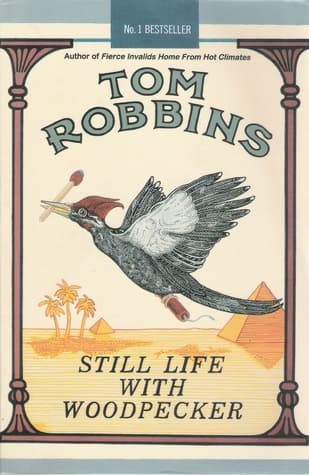
Synopsis
Covers the whole plot, including the ending.
- Difficulty
- Medium
- Pacing
- Variable
- Mood
- Whimsical, Philosophical, Humorous, Romantic, Surreal
- Read it if
- You enjoy highly philosophical, witty, and unconventional love stories with a strong sense of humor and a unique narrative voice.
- Skip it if
- You prefer straightforward plots, realistic dialogue, or stories without extensive philosophical digressions and surrealism.
Still Life with Woodpecker Plot Summary
Covers the whole plot, including the ending.
The Princess and the Pack of Camels
Princess Leigh-Cheri, removed from her fictional European kingdom, lives a life of thought in a grass shack on a Hawaiian beach. She is interested in the moon, believing it holds a key to understanding the universe, and a pack of Camel cigarettes, which she sees as a symbol for the human condition. She views the world by questioning existence, dealing with the meaning of love, freedom, and how random reality can be. Her days are spent thinking about the difference between criminals and outlaws, the appeal of what is forbidden, and the specific charm of redheads. All the while, she waits for something important to change her quiet life.
The Outlaw and the Bomb
Bernard Mickey Wrangle, a self-proclaimed outlaw and bomb expert, arrives in Hawaii with one goal: to bomb the 'International Convention of Retired and Otherwise Unemployed Royalty.' Bernard, a redhead who enjoys philosophical thoughts and distrusts authority, sees himself as someone who creates disorder, challenging the established way of things. His bomb, which he calls 'the ultimate statement,' is carefully made to send a strong message rather than cause many deaths. He believes in the power of individual rebellion and the need to question social rules, even if that means using dramatic, explosive actions.
A Royal Encounter
Leigh-Cheri, attending the royal convention as a former member of the deposed monarchy, meets Bernard Mickey Wrangle. Their meeting is intense and immediate, a clash of two unusual, deeply philosophical people. Leigh-Cheri is drawn to Bernard's rebellious nature and his unique view on life. Bernard is captivated by her royal grace and her deep, if sometimes innocent, understanding of the world. Despite their very different backgrounds and immediate goals—one seeking understanding, the other seeking to disrupt—they find a strange connection, an intellectual and emotional spark that goes beyond their first circumstances.
The Bombing and the Aftermath
Bernard's bomb goes off at the convention, but its effect is more poetic than destructive. Instead of widespread damage, the bomb mainly causes discussion and self-reflection among the gathered royalty. The aftermath is less about physical harm and more about the psychological and philosophical impact of Bernard's act. Leigh-Cheri, instead of being scared, is curious about Bernard's reasons, which leads to a deeper bond between them. The bombing becomes the starting point for their shared journey, a symbolic act that sets the stage for their unusual love story.
The Flight to Seattle
After the bombing, Leigh-Cheri and Bernard leave Hawaii and go to Seattle. Their trip is marked by constant philosophical discussions, clever jokes, and an ever-growing understanding of each other. They talk about topics from art and freedom to the importance of redheads and the meaning of existence. Seattle, with its unique people and atmosphere, provides a fitting background for their unusual romance. Bernard, still pursued by authorities, finds comfort and intellectual company in Leigh-Cheri. She, in turn, finds excitement and purpose in his rebellious nature.
The Search for the Redhead
Bernard, driven by a deep belief, becomes focused on finding the 'perfect redhead.' He believes that redheads have a special, almost mystical, meaning in the universe, representing a unique mix of passion, rebellion, and cosmic energy. This search becomes a main theme in their journey, adding another layer of oddity to their already unusual relationship. Leigh-Cheri, while sometimes amused by his obsession, supports his search, seeing it as part of his unique charm and his constant pursuit of meaning. This hunt for the ultimate redhead connects with their broader philosophical explorations.
The Arab and the Pyramid
Leigh-Cheri and Bernard's travels take them to the desert, where they meet a rich and unusual Arab sheik who is building a modern pyramid. This sheik, with his own specific philosophies and goals, shows another side of the world's diverse and often strange inhabitants. His pyramid project is a grand, symbolic gesture, showing his power and his wish to leave a lasting mark. This meeting gives Leigh-Cheri and Bernard another chance to have their typical philosophical debates, comparing the sheik's grand ambitions with their own more individual pursuits.
The Cheerleader and the Cosmic Egg
Further on their journey, Leigh-Cheri and Bernard meet a pregnant cheerleader named Judy. Judy is not just a cheerleader; she is a character with a surprisingly deep, almost cosmic, understanding of life. Her seemingly ordinary life hides a deep spiritual wisdom and an intuitive grasp of how all things connect. Her pregnancy is a symbol of new life and potential, and her insights offer a new view on existence, creation, and the magic of everyday life. She challenges some of Bernard's more cynical views and gives Leigh-Cheri a different way to see the world.
The Pursuit of the Perfect Pack
Throughout their adventures, Bernard's initial interest in the Camel cigarette pack becomes a deeper, more symbolic quest. He believes that within the pack's design and symbols lies a hidden truth, a key to understanding the universe. This pursuit mirrors Leigh-Cheri's earlier obsession with the moon, showing their shared tendency to find deep meaning in seemingly ordinary objects. The Camel pack becomes a symbol for how hard truth is to grasp, the beauty in the everyday, and the individual's search for personal meaning in a vast and often chaotic world. It represents their shared journey of discovery and thought.
The Clash of Philosophies
The story consistently explores the tension between individual freedom, shown by Bernard's rebellious nature and his pursuit of personal liberty, and social activism, shown by various characters and situations they meet. Leigh-Cheri often connects these two ideas, trying to balance her own wish for individual fulfillment with a sense of shared responsibility. The characters discuss how effective grand gestures are versus quiet thought, the individual's role in shaping society, and the ultimate goal of human effort. This philosophical conflict forms the basis of their interactions and the novel's thematic explorations.
The Resolution of the Redheads
Bernard's initial, somewhat surface-level quest for the 'perfect redhead' becomes a more complex understanding. He realizes that the importance of redheads is not about finding one ideal person, but about appreciating the unique, passionate spirit they represent—a symbol for individuality, passion, and a refusal to conform. This change in view shows his character growing, moving from a literal interpretation to a more symbolic and philosophical one. The 'problem of redheads' is thus solved not by finding one, but by a deeper, more profound understanding of their symbolic meaning in the broad scope of existence.
The Purpose of the Moon Unveiled
Leigh-Cheri's initial philosophical obsession with the moon's purpose gradually finds a new, more personal meaning. Through her experiences with Bernard and her meetings with various characters, she comes to understand that the moon's purpose is not a single, scientific answer, but rather a reflection of human perception, imagination, and the universe's constant mystery. Her journey with Bernard, full of love, laughter, and philosophical questions, helps her to see the moon not just as a celestial body, but as a symbol of romance, cyclical change, and the lasting human search for meaning. Her understanding becomes less about objective truth and more about subjective experience.
The Nature of Love and Freedom
Leigh-Cheri and Bernard's unusual love story becomes a deep look at love and individual freedom. Their relationship is marked by mutual respect for each other's quirks, intellectual debates, and a shared wish to live authentically. They challenge each other's beliefs, support each other's goals, and finally find a unique balance between their individual desires and their growing emotional bond. The novel suggests that true love does not require conformity but rather thrives on celebrating individual differences, giving each person space to be their true, free self while still being deeply connected to another.
The Art of Living
By the end of their journey, Leigh-Cheri and Bernard, along with the other characters they meet, show a philosophy of living artistically. They learn to find beauty and meaning not just in grand gestures or deep cosmic truths, but in the ordinary, the quirky, and the everyday. Their experiences highlight the idea that life itself is a work of art, to be lived with passion, curiosity, and a sense of wonder. The novel ends with a feeling of embracing life's absurdities, finding joy in pursuing personal meaning, and celebrating the individual's unique role in the grand story of life.
Still Life with Woodpecker
The seemingly puzzling title, 'Still Life with Woodpecker,' ultimately represents the novel's main philosophy. It compares static beauty (the 'still life') with active, disruptive energy (the 'woodpecker'). Just as a woodpecker constantly pecks at a tree, the characters, especially Bernard, actively engage with and disrupt the established order, bringing life and energy to otherwise 'still' concepts. The title captures the novel's celebration of both the calm and the chaotic, the beautiful and the rebellious, suggesting that true life involves an active, sometimes loud, interaction with the world, creating a unique and always changing masterpiece.
Principal Figures
Princess Leigh-Cheri
Protagonist
A deposed European princess searching for meaning and the purpose of the moon.
Leigh-Cheri is a romantic idealist, deeply introspective and prone to philosophical musings. She is an exiled European princess, gentle and elegant, but possesses a surprising resilience and curiosity. She initially grapples with existential questions, particularly regarding the moon and the nature of love. Her intelligence is sharp, though sometimes overshadowed by her idealistic worldview. She is drawn to the unconventional and seeks genuine connection and understanding in a world she perceives as often absurd.
Relationships: Bernard Mickey Wrangle (Unconventional romantic partner, intellectual sparring partner); Her deceased royal family (Source of her exile and initial sense of loss)
Bernard Mickey Wrangle
Protagonist/Love Interest
An outlaw bomber, a redhead, and a philosophical anarchist with a penchant for Camel cigarettes.
Bernard is an outlaw, a self-proclaimed 'bomb-maker' with a profound philosophical bent. He is a redhead, a detail he believes holds cosmic significance, and is deeply individualistic, rejecting societal norms and authority. He is witty, cynical yet romantic, and obsessed with the symbolic power of things, particularly Camel cigarette packs. He sees himself as an agent of change, using his explosives to make statements rather than cause widespread destruction. Beneath his rebellious exterior lies a longing for understanding and a unique brand of idealism.
Relationships: Princess Leigh-Cheri (Unconventional romantic partner, intellectual sparring partner); His 'bomb' (The Ultimate Statement) (His primary tool for expressing his philosophical views)
Judy
Supporting
A pregnant cheerleader with surprising cosmic wisdom.
Judy is a seemingly ordinary pregnant cheerleader, but she possesses an extraordinary, intuitive understanding of the universe. She represents a different kind of wisdom, one that is earthy, direct, and deeply connected to life's fundamental processes. Her insights are often profound, delivered with an unassuming grace, and she offers a grounding perspective amidst the philosophical high-flying of Leigh-Cheri and Bernard. She embodies the idea that wisdom can be found in unexpected places and that life's greatest mysteries are often revealed in its simplest forms.
Relationships: Leigh-Cheri and Bernard (Brief but impactful acquaintance, source of spiritual guidance)
The Arab
Supporting
A wealthy, eccentric sheik building a pyramid in the desert.
The Arab is a powerful and enigmatic figure, a wealthy sheik who is engaged in the colossal project of building a pyramid in the modern age. He represents monumental ambition, historical continuity, and the intersection of ancient traditions with contemporary wealth. His motivations are complex, ranging from a desire for immortality to a profound, if idiosyncratic, understanding of time and legacy. He serves as a foil to Bernard's more individualistic, disruptive approach, showcasing a different kind of power and the grand scale of human endeavor.
Relationships: Leigh-Cheri and Bernard (Brief encounter, source of philosophical debate)
King Max
Mentioned
Leigh-Cheri's deceased father, the former king.
King Max is Leigh-Cheri's deceased father, the former monarch of her fictional European kingdom. Though never physically present, his influence looms large in Leigh-Cheri's life. He represents the old order, the traditional royalty she has been exiled from, and the source of her initial aristocratic identity. His memory contributes to her sense of displacement and her search for a new purpose, acting as a historical anchor against which her modern journey unfolds.
Relationships: Princess Leigh-Cheri (Father-daughter relationship, source of her royal heritage)
The Woodpecker
Mentioned/Symbolic
A recurring symbolic image representing active engagement and disruption.
The woodpecker is not a literal character but a potent symbolic image throughout the novel, particularly in the title. It represents active engagement, persistent effort, and a disruptive force against stillness or complacency. It embodies Bernard's approach to life – a constant, focused effort to make a mark and challenge the status quo. It also suggests the vibrant, sometimes noisy, energy required to truly live and create meaning, juxtaposed against the more passive 'still life.'
Themes & Insights
Romantic Individualism vs. Social Activism
The novel always looks at the conflict between pursuing personal freedom and individual wishes (romantic individualism) and taking collective action for social change (social activism). Bernard shows extreme individualism, believing in personal rebellion and symbolic acts over organized movements. Leigh-Cheri first seeks individual spiritual understanding but is affected by Bernard's disruptive energy. The bombing of the royal convention, for example, is an individual act of protest rather than a group uprising, showing the novel's focus on personal statements over broad social reform. This theme asks whether real change comes from inside or outside.
“'There's no point in being a grown-up if you can't be childish sometimes.'”
The Search for Meaning and Purpose
Both Leigh-Cheri and Bernard search for meaning, though in very different ways. Leigh-Cheri looks for the 'purpose of the moon' and universal truths, while Bernard seeks cosmic importance in redheads and the symbols on a Camel cigarette pack. Their journeys are driven by a deep longing to understand their place in the universe and to find a guiding principle for their lives. This theme appears in their philosophical talks, their travels, and their meetings with various unusual characters who offer different views on life's big questions. In the end, they find meaning not in single answers, but in the act of searching itself and in their connection.
“'It's never too late to have a happy childhood.'”
The Power of Symbolism and Metaphor
Tom Robbins's story is rich with symbolism and comparisons, making everyday objects and ideas deeply significant. The Camel cigarette pack is not just tobacco but a small version of human existence; redheads are not just a hair color but a source of cosmic energy; the moon is not just a celestial body but a place of universal purpose. Bernard's bomb is a symbolic 'ultimate statement' rather than something meant to destroy. This theme shows how people give meaning to their world, finding deeper truths in the seemingly ordinary and using comparisons to understand complex realities. The entire novel encourages a metaphorical way of seeing the world.
“'The purpose of the moon is to make love to the earth.'”
The Nature of Love and Freedom
At its heart, the novel is a love story that challenges usual ideas of romance. Leigh-Cheri and Bernard's relationship is built on intellectual debates, shared quirks, and mutual respect for each other's freedom and individuality. Their love is not about becoming one, but about celebrating their differences. This theme explores whether true love can exist without losing personal freedom, suggesting that the most real connections allow for strong self-expression. Their journey together shows that finding a partner who understands and encourages one's unique pursuit of freedom, even if that pursuit is unusual or rebellious, is possible.
“'Love is the ultimate outlaw. It breaks every law in the book.'”
The Absurdity and Beauty of Existence
Robbins skillfully mixes the absurd with moments of deep beauty, creating a world where deposed princesses live in grass shacks and outlaw bombers are philosophical romantics. The novel embraces life's inherent strangeness, finding humor and wisdom in its illogical parts. From the convention of unemployed royalty to a pregnant cheerleader with cosmic insights, the story highlights the unexpected contrasts that make up reality. This theme encourages readers to look past the surface, to find joy in the peculiar, and to appreciate the unique, often nonsensical, beauty that fills human experience. It suggests that life's meaning often comes from embracing its inherent absurdity.
“'There are two kinds of people in this world: those who believe there are two kinds of people in this world, and those who are smart enough to know better.'”
Plot Devices & Literary Techniques
Magical Realism
Blending realistic settings with fantastical elements and philosophical whimsy.
Robbins employs magical realism by grounding the narrative in a recognizable world (Hawaii, Seattle, the desert) but infusing it with highly improbable, dreamlike, or symbolic occurrences. The most prominent example is the bomb itself, which functions more as a philosophical statement than a weapon of mass destruction, and the cosmic significance attributed to redheads or a pack of cigarettes. This device allows Robbins to explore profound philosophical questions through a lens of playful absurdity, making the abstract tangible and the mundane magical, blurring the lines between reality and imagination.
Philosophical Dialogue and Monologue
Extensive discussions and internal monologues on existential and societal issues.
Much of the novel's substance is conveyed through the characters' lengthy, witty, and often profound philosophical discussions or their internal monologues. Leigh-Cheri and Bernard constantly debate the nature of freedom, love, purpose, and society. These dialogues are not merely conversations but vehicles for exploring the novel's central themes, challenging conventional wisdom, and revealing the characters' unique worldviews. This device allows Robbins to directly engage with abstract concepts and present multiple perspectives, inviting the reader to participate in the intellectual journey alongside the characters, often with a humorous and self-aware tone.
Symbolism and Metaphor
Using objects and concepts to represent deeper, abstract meanings.
Symbolism is a pervasive plot device, where seemingly ordinary items or concepts are imbued with extraordinary significance. The Camel cigarette pack, the moon, redheads, and even the woodpecker in the title are all potent symbols that carry layers of meaning beyond their literal interpretations. These symbols are not merely decorative; they drive the plot, motivate character actions (like Bernard's quest for redheads), and serve as focal points for the novel's philosophical explorations. This device encourages readers to look beyond the surface narrative and engage with the deeper, often whimsical, allegorical layers of the story.
The Quest Motif
Characters embarking on literal and metaphorical journeys in search of specific goals or understanding.
The novel features a prominent quest motif, both literally and metaphorically. Leigh-Cheri's initial quest is for the 'purpose of the moon,' an abstract search for universal meaning. Bernard's quest is more tangible yet equally symbolic: to find the 'perfect redhead' and to make his 'ultimate statement' with a bomb. Their shared journey across different locations further embodies this motif. These quests drive the plot forward, introduce new characters and settings, and serve as frameworks for the characters' personal growth and philosophical discoveries. The fulfillment of these quests is often less about achieving a concrete goal and more about the journey of self-discovery and understanding gained along the way.
Still Life with Woodpecker Quotes
“We're here to make a dent in the universe. Otherwise, why even be here?”
“There are two kinds of people in this world: those who believe there are two kinds of people in this world and those who don't.”
“It's never too late to have a happy childhood.”
“The world is run by people who show up.”
“When the going gets weird, the weird turn pro.”
“Love is the ultimate outlaw. It breaks every law.”
“The main thing that you have to remember on this journey is, be back by six.”
“Humanity has been around for a while. We're still a beta version.”
“The only reason for time is so that everything doesn't happen at once.”
“There are those who say that life is like a book, and that we are but the characters within it. But I say that life is a book, and we are its authors.”
“Show me a man who says he's never afraid, and I'll show you a liar.”
“If you don't like the way the world is, you change it. You have an obligation to change it. You just do it one step at a time.”
“The trick is to be as free as you can possibly be, and to do it with as much style as you can possibly muster.”
“There's a good reason why nobody studies history anymore. It's because it's so depressing.”
Quiz
10 questions on the plot and the characters. Each answer comes with a short explanation.
Question 1
What is the primary physical setting described as encompassing the love story in 'Still Life with Woodpecker'?
- A luxurious Arabian palace
- A pack of Camel cigarettes
- The moon
- An abandoned royal castle
Show answer
B. A pack of Camel cigarettes The book is explicitly described as a love story that takes place 'inside a pack of Camel cigarettes,' setting a unique and whimsical tone for the narrative.
Question 2
What concept does the book claim to reveal the purpose of?
- Gravity
- Love
- The moon
- Poetry
Show answer
C. The moon The synopsis states that the book 'reveals the purpose of the moon,' indicating a philosophical or symbolic exploration of this celestial body.
Question 3
Which specific societal conflict does the book examine?
- Capitalism vs. Communism
- Social activism vs. romantic individualism
- Science vs. Religion
- Tradition vs. Modernity
Show answer
B. Social activism vs. romantic individualism The description clearly states the book 'examines the conflict between social activism and romantic individualism,' which is a central thematic element.
Question 4
The book explicitly deals with the 'problem of' which specific hair color?
- Blondes
- Brunettes
- Redheads
- Greasers
Show answer
C. Redheads The final sentence of the synopsis explicitly mentions, 'It also deals with the problem of redheads,' indicating this as a specific and unique focus.
Question 5
Beyond the love story, what type of contemporary societal figures are mentioned as being part of the portrait painted by the book?
- Ancient philosophers, legendary heroes, and mythical creatures
- Powerful Arabs, exiled royalty, and pregnant cheerleaders
- Victorian detectives, French aristocrats, and American cowboys
- Renaissance artists, medieval knights, and Roman emperors
Show answer
B. Powerful Arabs, exiled royalty, and pregnant cheerleaders The synopsis explicitly states the book 'paints a portrait of contemporary society that includes powerful Arabs, exiled royalty, and pregnant cheerleaders,' highlighting its eclectic cast.
Question 6
What distinction does the book claim to explain?
- The difference between art and craft
- The difference between prose and poetry
- The difference between criminals and outlaws
- The difference between fact and fiction
Show answer
C. The difference between criminals and outlaws The synopsis mentions the book 'explains the difference between criminals and outlaws,' suggesting a philosophical or sociological examination of these terms.
Question 7
Given the description, what literary genre best fits 'Still Life with Woodpecker'?
- Hardboiled Detective
- Historical Romance
- Literary Fiction
- Young Adult Fantasy
Show answer
C. Literary Fiction The description explicitly labels the book as 'Literary Fiction,' and its unique blend of whimsical settings, philosophical inquiries, and diverse characters aligns with this genre.
Question 8
How does the book's initial setting within a 'pack of Camel cigarettes' contribute to its overall tone and potential themes?
- It suggests a gritty, realistic portrayal of working-class life and addiction.
- It implies a surreal, whimsical, and perhaps satirical approach to a love story.
- It foreshadows a tragic ending related to health issues and societal decline.
- It grounds the narrative in a specific historical period of tobacco advertising.
Show answer
B. It implies a surreal, whimsical, and perhaps satirical approach to a love story. The extremely unconventional and metaphorical setting of a love story 'inside a pack of Camel cigarettes' strongly suggests a surreal, imaginative, and likely humorous or satirical tone, characteristic of Tom Robbins' style.
Question 9
The combination of 'powerful Arabs, exiled royalty, and pregnant cheerleaders' in the contemporary society portrait suggests what about the book's character development and scope?
- A narrow focus on specific socio-economic classes within a single geographical location.
- A diverse, eclectic, and potentially satirical exploration of various societal strata and archetypes.
- A historical drama set across multiple centuries, focusing on royal lineage.
- A cautionary tale about the dangers of unchecked power and celebrity worship.
Show answer
B. A diverse, eclectic, and potentially satirical exploration of various societal strata and archetypes. The listing of such disparate and culturally loaded figures (powerful Arabs, exiled royalty, pregnant cheerleaders) indicates a broad, perhaps satirical, and certainly eclectic approach to character and societal commentary, suggesting a rich and varied scope.
Question 10
Considering the stated themes and elements, what philosophical stance might be central to the book's 'romantic individualism' in contrast to 'social activism'?
- The belief that collective action is always superior to individual pursuits.
- An emphasis on personal freedom, self-expression, and unique identity even at the expense of communal goals.
- A rejection of all forms of social engagement in favor of solitary contemplation.
- The idea that romance itself is a form of social activism.
Show answer
B. An emphasis on personal freedom, self-expression, and unique identity even at the expense of communal goals. Romantic individualism, when contrasted with social activism, typically champions the unique journey, desires, and self-realization of the individual over the demands or goals of a collective. This suggests a focus on personal liberty and unique identity.
Still Life with Woodpecker FAQ
What is the central premise of 'Still Life with Woodpecker'?
The novel centers on the unlikely romance between Bernard Mickey Wrangle, an outlaw bomber, and Leigh-Cheri, an exiled princess. Their love story unfolds amidst philosophical musings, a pack of Camel cigarettes, and a quest for a 'perfect' bomb, challenging societal norms and individual desires.
Who are the main protagonists and what are their primary motivations?
Bernard Mickey Wrangle is an outlaw with a penchant for 'bombing for peace,' driven by a desire to awaken humanity and escape the mundane. Leigh-Cheri is a displaced princess, initially burdened by royal expectations, who seeks authentic experience and a love that transcends her aristocratic upbringing.
How does the 'pack of Camel cigarettes' metaphor function within the story?
The pack of Camel cigarettes serves as a symbolic setting, representing the confined and often toxic nature of modern society, yet also hinting at the exotic and adventurous. It's a meta-narrative device that frames the characters' existential struggles and the story's self-awareness.
What role does the moon play in the narrative, and what 'purpose' does the book reveal for it?
The moon is personified as a celestial observer and a source of mystery, often linked to Leigh-Cheri's red hair and her emotional states. The book playfully suggests the moon's purpose is to 'drive people crazy,' influencing human behavior and inspiring both madness and creativity.
What is the significance of the 'perfect bomb' that Bernard seeks to create?
Bernard's 'perfect bomb' is not meant for destruction but as a catalyst for awareness, a symbolic explosion of consciousness. It represents his desire to shake people out of their complacency and to ignite a passion for life, rather than inflict physical harm.
How does the novel differentiate between 'criminals' and 'outlaws'?
The novel posits that criminals operate within the system, breaking its rules for selfish gain, while outlaws, like Bernard, stand outside the system, challenging its very foundations with a sense of moral purpose or philosophical intent. Outlaws are often portrayed as romantic figures rebelling against societal conformity.
What is the underlying connection between redheads and the moon in the book?
Redheads, particularly Leigh-Cheri, are presented as having a mystical, almost elemental connection to the moon. Their fiery hair is linked to lunar cycles and a passionate, often volatile, nature, suggesting they are more susceptible to the moon's 'madness' and its unique influence on human spirit.
How do the 'powerful Arabs' and 'exiled royalty' contribute to the novel's themes?
The powerful Arabs, specifically Prince Ali, and the exiled royalty, represented by Leigh-Cheri, embody the clash between ancient traditions, immense wealth, and modern dilemmas. They highlight the absurdity of inherited power and the global interconnectedness of seemingly disparate worlds, often with humorous or satirical undertones.
What is the symbolic meaning of the 'woodpecker' in the title and throughout the narrative?
The woodpecker symbolizes persistence, rhythmic tapping, and the breaking through of surfaces to reveal what lies beneath. It reflects Bernard's persistent pursuit of his ideals and Leigh-Cheri's eventual breaking through her own royal conditioning, suggesting a deeper, primal rhythm to existence.
How does Leigh-Cheri's character evolve psychologically throughout her journey?
Leigh-Cheri begins as a passive princess, constrained by expectations and superficiality. Her psychological journey involves shedding her royal facade, embracing her wilder, more authentic self through her relationship with Bernard, and ultimately finding her own agency and definition of love and purpose.
What psychological need does Bernard's 'bombing for peace' fulfill for him?
Bernard's 'bombing for peace' fulfills a deep psychological need for significance and rebellion against a world he perceives as complacent and uninspired. It's an attempt to jolt humanity awake, projecting his own inner turmoil and desire for radical change onto a global scale, seeking a meaningful impact.
How does the novel explore the psychology of romantic love in an unconventional way?
The novel delves into romantic love as a chaotic, illogical, yet profoundly transformative force, often defying conventional expectations. It suggests that true love involves embracing the unique, even 'mad,' aspects of a partner, challenging the idea of a 'perfect' relationship and celebrating individuality within connection.
In what ways do the characters grapple with existential boredom and the search for meaning?
Both Bernard and Leigh-Cheri struggle with the existential void of modern life, seeking meaning beyond societal conventions. Bernard's bombing is an extreme attempt to inject meaning, while Leigh-Cheri's journey from princess to a more grounded individual reflects her quest for authentic experience and a purpose beyond her inherited status.
How does the book balance social activism with romantic individualism, and which does it ultimately favor?
The book starkly contrasts Bernard's social activism (bombing for peace) with Leigh-Cheri's initial romantic individualism. While it critiques the limitations of both, it subtly leans towards the transformative power of individual love and self-discovery as a more profound form of revolution, suggesting personal change precedes societal change.
Is the ending of the novel optimistic or pessimistic about the future of humanity?
The ending offers a nuanced optimism. While societal problems persist, the personal growth of Bernard and Leigh-Cheri, and their embrace of an unconventional, authentic love, suggests hope for individual transformation. It implies that true change begins with personal awakening, even if the world remains largely unchanged.
What is the author's message regarding the 'problem of redheads'?
The 'problem of redheads' is presented playfully, suggesting they are a unique, often misunderstood, and highly passionate group, almost a separate species within humanity. It's a whimsical exploration of otherness and the beauty found in those who don't conform to the norm, celebrating their fiery spirit.
How does the book's narrative style contribute to its overall themes and impact?
The book's highly idiosyncratic, witty, and philosophical narrative style, characterized by frequent digressions and rhetorical questions, directly reinforces its themes of questioning reality and embracing the absurd. It encourages readers to think critically and to find meaning in unconventional places, mirroring the characters' journeys.
Could Bernard's actions be justified as a form of art or philosophical statement?
Bernard's 'bombing' is framed more as a performance art piece or a philosophical statement than a malicious act. His intention is to create a 'perfect' bomb that inspires rather than destroys, making his actions an extreme form of artistic expression aimed at provoking thought and challenging the status quo.
About the author

Tom Robbins is an American author known for his distinctive style and imaginative storytelling. His notable works include "Still Life with Woodpecker," "Jitterbug Perfume," "Even Cowgirls Get the Blues," "Skinny Legs and All," "Another Roadside Attraction," and "Half Asleep in Frog Pajamas," which often blend humor and philosophical themes in a fictional context.
Similar books
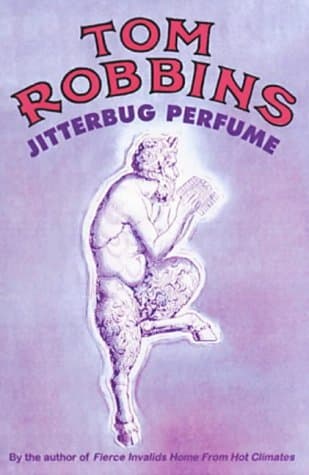
- Jitterbug Perfume
Tom Robbins
4.2 (69k) average on GoodreadsFantasyShares the same author's distinctive voice, philosophical musings, and whimsical, interconnected plotlines.
- A Confederacy of Dunces
John Kennedy Toole
3.9 (231k) average on GoodreadsLiterary FictionFeatures eccentric characters and a satirical, humorous take on society, though less overtly philosophical.
- Fear and Loathing in Las Vegas
Hunter S. Thompson
4.1 (299k) average on GoodreadsLifestyleOffers a counter-cultural perspective, a unique narrative style, and a journey filled with bizarre encounters.
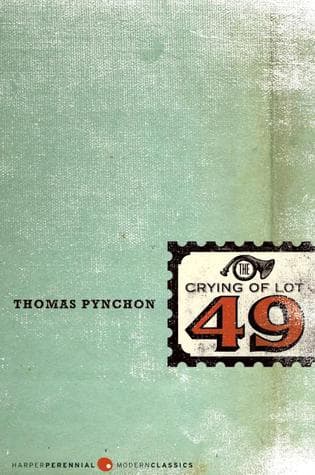
- The Crying of Lot 49
Thomas Pynchon
3.7 (71k) average on GoodreadsLiterary FictionBoth Still Life with Woodpecker and Pynchon's The Crying of Lot 49 are seminal postmodern novels that delve into themes of conspiracy, meaning-making, and the elusive nature of reality. However, Pynchon's work is significantly more dense, intellectually demanding, and overtly paranoiac, often leaving the reader in a state of unresolved ambiguity and intellectual challenge. Robbins, while complex, maintains a more optimistic, whimsical, and ultimately romantic tone. Still Life with Woodpecker invites the reader to embrace the absurdity with a smile, whereas Pynchon's novel often leaves one grappling with existential dread and the impossibility of definitive answers. Robbins's humor is more overt and celebratory, Pynchon's more satirical and darkly ironic.
- The Old Man and the Sea
Ernest Hemingway
3.8 (831k) average on GoodreadsLiterary FictionA Cuban fisherman's long struggle with a giant marlin becomes a story of endurance and dignity, now retold for young adults with illustrations, phonetic guides, and writing prompts in Traditional Chinese.
- One Hundred Years of Solitude
Gabriel García Márquez
4.1 (753k) average on GoodreadsLiterary FictionThrough the multi-generational story of the Buendía family, a mythical town deals with the repeating patterns of time, love, and solitude, as the extraordinary mixes with the ordinary.




Enjoyed the summary?
A summary gives you the shape of the book. The book itself has the detail, the examples and the voice.
Find Still Life with Woodpecker on AmazonAs an Amazon Associate, BookBrief earns from qualifying purchases. How we're funded