
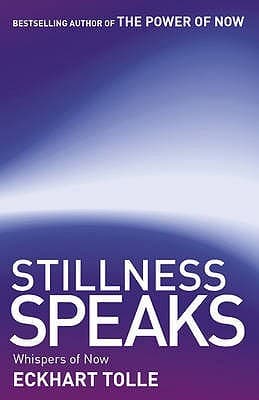
Core Idea
- Difficulty
- Easy
- Read it if
- You are seeking spiritual guidance to reduce mental suffering, quiet an overactive mind, and connect with a deeper sense of inner peace by focusing on present moment awareness.
- Skip it if
- You prefer a purely academic, scientific, or highly structured argument without spiritual or philosophical undertones, or if you are looking for practical, step-by-step external life improvement strategies rather than internal transformation.
Key Takeaways from Stillness Speaks
The Tyranny of Thought
Our incessant mental chatter is the root of most suffering and disconnects us from reality.
Tolle says our usual state is to identify with our thinking mind, a constant flow of thoughts, judgments, and ideas. This 'mind-noise' creates a false self, a conceptual 'me' that is always striving, fearing, or regretting. This endless mental activity stops us from experiencing the present moment purely. It's a basic misunderstanding, an illusion that we are our thoughts, rather than the awareness behind them. This identification is the main source of human suffering, anxiety, and unhappiness, as the mind is rarely content with 'what is' and constantly projects into the past or future.
“The mind is a superb instrument if used rightly. Used wrongly, however, it becomes very destructive. To put it more accurately, it is not so much that you use your mind wrongly – you usually don’t use it at all. It uses you.”
In the book: Tolle frequently uses the metaphor of 'the mind using you,' highlighting how often our thoughts seem to operate autonomously, dictating our emotions and perceptions without our conscious control or permission.
Try this: Begin to observe your thoughts without judgment. Recognize that you are the awareness observing the thought, not the thought itself. When a thought arises, simply acknowledge it and let it pass, like clouds in the sky, without engaging or identifying with it.
Related ideas: mind-identification, conceptual-self, mental-noise
The Power of the Present Moment
True liberation and peace are found by fully inhabiting the 'Now,' the only reality that truly exists.
Tolle stresses that the past is just a memory, and the future is an imagined idea. Neither truly exists. The only way to access life, to reality, is through the eternal present moment, the 'Now.' However, our minds constantly pull us away from this reality, dwelling on past issues or future worries. By fully accepting the present moment, we break free from the mind's control and access a deeper level of consciousness. This is where true stillness, peace, and joy reside, unaffected by outside events or mental interpretations. It's not about ignoring problems, but approaching them from a place of presence rather than mental stress.
“The past has no power over the present moment. The future is a conceptual thought in the mind, a projection. The only reality is the Now.”
In the book: Tolle often points to the direct experience of being fully present during simple activities like walking, eating, or listening, where the mind's chatter momentarily subsides, and a sense of calm and clarity emerges.
Try this: Consciously bring your attention to your current activity, no matter how mundane. Feel your breath, the sensations in your body, the sounds around you. When the mind wanders, gently bring it back to the present moment, again and again.
Related ideas: the-now, present-moment-awareness, surrender
The Pain-Body Revealed
Unresolved emotional pain accumulates into an energetic entity that feeds on negative thought and experience.
One of Tolle's most powerful ideas is the 'pain-body.' He describes it as an energy within us, made up of past emotional pain—trauma, anger, sorrow, fear, and resentment—that wasn't fully acknowledged or released. The pain-body often lies dormant but is triggered by certain situations, and once active, it tries to keep itself going by creating more pain. It does this by influencing our thoughts, creating negative stories, and even causing situations that lead to more suffering, which it then 'feeds' on. Recognizing and detaching from the pain-body is essential for breaking cycles of self-sabotage and emotional reactivity.
“The pain-body is an energy field, almost like a separate entity, that exists in most human beings. It consists of old unexpressed and unacknowledged emotion. The stronger it is, the more it will try to feed on drama.”
In the book: Tolle illustrates the pain-body's manifestation through common human behaviors: sudden irrational anger, chronic victimhood, self-pity, or the tendency to re-experience old emotional wounds in new relationships or situations.
Try this: When you feel a wave of intense negative emotion, instead of identifying with it or acting it out, observe it. Recognize, 'This is the pain-body.' Feel its energy without labeling it or letting your mind create a story around it. This act of conscious witnessing disempowers it.
Related ideas: emotional-pain, inner-suffering, conscious-witnessing
Beyond Thought: The Inner Body
Connecting with the subtle energy field of the inner body anchors us in the present and beyond the mind.
Our physical body is not just a shell; it is an energy field, an 'inner body' that we can feel and access. Tolle suggests that by bringing conscious attention to the subtle energy within our bodies—the tingling, aliveness, or vibration—we create a strong anchor in the present moment. This practice bypasses the constant stream of thoughts and connects us directly to the deeper intelligence and stillness that underlies our existence. It's a direct path to the 'Unmanifested,' the source of all life. Consistent awareness of the inner body strengthens our presence and makes us less vulnerable to the mind's pull, offering a foundation for inner peace and well-being.
“The inner body is your link with the Unmanifested. It is your root in the One Life, the 'God' within you.”
In the book: Tolle encourages readers to close their eyes and feel the aliveness in their hands, feet, or throughout their entire body. He notes that even a few minutes of this practice can bring a profound sense of calm and centeredness.
Try this: Regularly take a few moments to close your eyes and feel the energy field within your body. Feel your hands from the inside, then your feet, then your whole body. Rest in this feeling of aliveness, letting go of all thought.
Related ideas: inner-body-awareness, energy-field, unmanifested, body-consciousness
The Stillness Behind the Noise
Silence and stillness are not an absence, but a profound presence, the essence of who we are.
Tolle defines stillness and silence not just as the absence of sound or activity, but as a conscious presence. Just as the space in a room allows objects to exist, the stillness within us is the basic ground of being from which all experience comes. By noticing the silence between sounds, the gaps between thoughts, or the spaciousness within, we access a deeper part of ourselves—our true nature, which is consciousness itself. This stillness is peaceful, wise, and full of creative potential. It's the 'unmanifested' showing through the manifest world, a direct link to universal intelligence.
“Stillness is not the absence of noise, though it can seem to be that on the surface. It is the underlying space in which all noise, all sound, all thought, all sensation arises and subsides.”
In the book: Tolle points to the peace found in nature, not just its beauty, but the underlying stillness that pervades it, and how even in the midst of city noise, one can find moments of inner silence.
Try this: Listen to the silence between words when someone speaks, or the silence underlying ambient sounds. Seek the space and stillness between your thoughts. Allow yourself to rest in that spaciousness, even for a few seconds.
Related ideas: inner-silence, ground-of-being, spaciousness, consciousness
Beyond Form: The Impermanence of Life
All forms are temporary; recognizing this truth frees us from attachment and the fear of loss.
Tolle states that all manifest forms—our bodies, possessions, relationships, social roles, thoughts, and emotions—are temporary. They appear and disappear. Our suffering often comes from unconsciously identifying with these forms, leading to attachment and the fear of loss. When we cling to things, we suffer when they change or vanish. By realizing that our true essence is the formless consciousness that observes these forms, we can experience life's temporary nature without resistance. This doesn't mean we don't enjoy or appreciate forms, but that our happiness isn't dependent on their permanence, leading to a deeper sense of freedom and calm.
“Whatever you perceive, experience, think, or feel is ultimately not who you are. The essence of who you are is the timeless, formless, unmanifested consciousness.”
In the book: Tolle frequently uses the analogy of a wave (form) on the ocean (formless). The wave is temporary, but the ocean is eternal. Our identification with the wave brings suffering, while identification with the ocean brings peace.
Try this: Observe the impermanence in your daily life: the changing weather, the aging of your body, the fleeting nature of emotions. Ask yourself, 'What is the unchanging awareness that observes all these changes?'
Related ideas: impermanence, formless-consciousness, non-attachment, transience
Relationships as Spiritual Practice
Conscious relationships are powerful catalysts for spiritual awakening, revealing our unconscious patterns.
Tolle sees relationships, especially intimate ones, as spiritual practices. They reflect our deepest unconscious patterns, including the pain-body and ego identification. When we engage in relationships unconsciously, they become places for projecting our unfulfilled desires, fears, and past wounds, leading to conflict and suffering. However, when approached with presence and awareness, relationships offer opportunities for growth. By observing our reactions without judgment, by listening without the mind's interference, and by embracing the 'isness' of the other person, we can move past ego dramas and experience a deeper connection rooted in the stillness of being, supporting genuine love and acceptance.
“The primary cause of unhappiness is never the situation but your thoughts about it. Be aware of the thoughts you are thinking. Separate them from the situation, which is always neutral. There is the situation, and there is your reaction to it.”
In the book: Tolle describes how arguments often escalate not due to the initial event, but because both parties become identified with their mental positions and pain-bodies, feeding off each other's negativity.
Try this: In your interactions, particularly during moments of tension, pause and observe your own internal reactions. Listen to the other person without mentally formulating your response. Be present with their being, not just their words.
Related ideas: conscious-relationships, mirroring, egoic-patterns, unconditional-love
Death: The Doorway to the Unmanifested
Embracing the reality of death can liberate us from fear and deepen our appreciation for life.
Tolle suggests that our greatest fear is often the fear of death, which is essentially the fear of the unknown and the dissolving of our familiar form-identity. This fear, rooted in the ego, stops us from fully living. However, from a deeper spiritual view, death is not an end but a transition, a return to the 'Unmanifested'—the timeless, formless consciousness from which we all come. By accepting that all forms are temporary, including our physical body, and by consciously 'dying' to our egoic self in the present moment (letting go of identifying with thought and form), we can experience the truth that our essential being is deathless. This realization brings peace and allows us to live more fully and fearlessly.
“Death is a stripping away of all that is not you. The secret of life is to 'die before you die' – and find that there is no death.”
In the book: Tolle refers to ancient spiritual teachings that speak of 'dying before you die' as a path to enlightenment, suggesting that the letting go of ego in this life parallels the letting go of form in death.
Try this: Reflect on the impermanence of all things, including your own life. Practice letting go of attachment to outcomes, possessions, and even your self-image. Embrace the unknown and the 'not-knowing' as a gateway to deeper wisdom.
Related ideas: death-acceptance, unmanifested, ego-dissolution, fear-of-death
Beyond Good and Bad: The 'Isness' of Life
Transcending mental labels allows us to perceive reality directly, free from judgment and resistance.
Our minds constantly label experiences as 'good' or 'bad,' 'right' or 'wrong,' creating resistance to 'what is.' This mental habit causes much suffering. Tolle encourages us to move beyond these dualistic judgments and simply accept the present moment as it is. This doesn't mean approving negative situations or becoming passive; instead, it means recognizing that the situation itself is neutral, and our mental interpretation and resistance cause the pain. By dropping the labels and surrendering to the present reality, we align ourselves with the flow of life. From this place of acceptance, effective and conscious action can emerge, unclouded by mental agitation or emotional reactivity, leading to more harmonious outcomes.
“Accept – then act. Whatever the present moment contains, accept it as if you had chosen it. Always work with it, not against it.”
In the book: Tolle often uses examples of people stuck in difficult life circumstances, where their suffering is exacerbated by their mental resistance to the situation, rather than the situation itself.
Try this: When facing a challenging situation, consciously drop the mental labels of 'good' or 'bad.' Simply acknowledge 'what is' without judgment. From this place of acceptance, ask yourself what conscious action, if any, is required.
Related ideas: acceptance, non-judgment, resistance, what-is
Spiritual Awakening: A Planetary Shift
Individual transformation through stillness contributes to a collective evolution of human consciousness.
Tolle views individual spiritual awakening not just as a personal journey but as a step in a larger planetary evolution of consciousness. He argues that humanity is at a crossroads where the old, ego-driven consciousness, marked by identifying with thought and form, is causing global crises—environmental destruction, conflict, and widespread suffering. The rise of a new, awakened consciousness, rooted in presence and stillness, is necessary for our survival. Each awakened individual helps raise the collective vibration, contributing to a shift from an unconscious, reactive species to one that acts from wisdom, compassion, and interconnectedness. This collective awakening is humanity's best hope.
“Humanity is now faced with a stark choice: Evolve or die. A new consciousness is emerging, and it is needed if humanity is to survive.”
In the book: Tolle frequently alludes to the current global crises (ecological, social, political) as symptoms of an unconscious, ego-driven collective mind, contrasting this with the potential for a peaceful, sustainable future through awakened consciousness.
Try this: Recognize that your personal journey of awakening is not isolated. By cultivating presence and stillness in your own life, you are actively contributing to the elevation of collective human consciousness and helping to create a more peaceful world.
Related ideas: collective-consciousness, spiritual-evolution, planetary-awakening, new-humanity
Stillness Speaks Quotes
“The most common ego identifications are with possessions, the work you do, social status and recognition, knowledge and education, physical appearance, special abilities, relationships, person or family history, belief systems, and often even political, nationalistic, racial, religious, or other collective identifications. None of these are you.”
“Whatever you think the world is withholding from you, you are withholding from the world.”
“To complain is always nonacceptance of what is. It invariably carries an unconscious negative charge. When you complain, you make yourself a victim. When you speak up, you are in your power. So change the situation by taking action or by speaking to the person or persons involved, or stop complaining and accept what is. The rest is madness.”
“The primary cause of unhappiness is never the situation but your thoughts about it.”
“When you lose touch with inner stillness, you lose touch with yourself. When you lose touch with yourself, you lose yourself in the world.”
“Give up defining yourself—to yourself or to others. You won't die. You will come to life. And don't be concerned with how others define you. When they define you, they are defining a past you, an utterly lifeless image.”
“Don't look for peace. Don't look for any other state than the one you are in now; otherwise, you will set up inner conflict and unconscious resistance.”
“You are not your mind. Your mind is a tool. It is there to be used for a specific task, and when that task is done, you put it down.”
“The past has no power over the present moment.”
“See if you can catch yourself complaining, in speech or thought, about a situation you find yourself in, what other people do or say, your surroundings, your life situation, even the weather. To complain is always nonacceptance of what is.”
“All true artists, whether they know it or not, create from a place of no-mind, from inner stillness.”
“Life is the dancer and you are the dance.”
“The greatest obstacle to experiencing this dimension of stillness is the mind, which keeps up a continuous commentary of thought.”
“Inner peace is the absence of resistance to what is.”
Quiz
10 questions on the main ideas. Each answer comes with a short explanation.
Question 1
According to Tolle, what is the primary obstacle to experiencing the 'stillness' he describes?
- External noise and distractions
- The incessant activity of the thinking mind
- Lack of physical comfort
- Other people's judgments
Show answer
B. The incessant activity of the thinking mind Tolle emphasizes that the thinking mind, with its constant stream of thoughts, judgments, and conceptualizations, is the main barrier to accessing the deeper stillness of being.
Question 2
What does Tolle mean by 'the pain-body'?
- Physical ailments and chronic illness
- The accumulated residue of old emotional pain
- The physical sensation of discomfort during meditation
- A societal term for collective suffering
Show answer
B. The accumulated residue of old emotional pain The pain-body is described as an energetic entity consisting of old, unaddressed emotional pain that resides within us and seeks to perpetuate itself by feeding on new pain.
Question 3
Tolle suggests that true happiness and inner peace are found by:
- Achieving all of one's worldly goals
- Continuously analyzing past experiences to learn from them
- Identifying with the present moment and the spaciousness of awareness
- Strictly adhering to a specific spiritual doctrine
Show answer
C. Identifying with the present moment and the spaciousness of awareness A core teaching in 'Stillness Speaks' is that lasting peace comes from disidentifying with the constant mental stream and instead dwelling in the present moment, recognizing the stillness and awareness behind thought.
Question 4
How does Tolle advise readers to deal with negative emotions when they arise?
- Suppress them and try to think positive thoughts instead
- Analyze their origins thoroughly to understand them intellectually
- Observe them without judgment, allowing them to be without becoming them
- Distract oneself with entertainment or work until they pass
Show answer
C. Observe them without judgment, allowing them to be without becoming them Tolle advocates for a practice of presence where one observes negative emotions as they arise, without labeling, judging, or identifying with them. This conscious presence diminishes their power.
Question 5
Which of the following best describes Tolle's view on time (past and future)?
- The past is crucial for learning, and the future provides motivation
- Past and future are mental constructs that distract from the reality of the present moment
- Time is an objective reality that must be managed efficiently
- Focusing on the future is essential for spiritual growth
Show answer
B. Past and future are mental constructs that distract from the reality of the present moment Tolle argues that the past and future are largely mental projections, and that true reality and spiritual fulfillment exist only in the 'eternal now' – the present moment.
Question 6
What is the primary role of 'watching the thinker' in Tolle's teachings?
- To identify and correct logical fallacies in one's thoughts
- To create a gap between awareness and thought, leading to stillness
- To develop a stronger intellect and mental discipline
- To understand the psychological roots of one's beliefs
Show answer
B. To create a gap between awareness and thought, leading to stillness By 'watching the thinker,' one becomes aware of the stream of thoughts without being identified with it. This creates a space of awareness, a 'gap' of stillness where the true self can emerge.
Question 7
Tolle frequently uses the term 'Being.' How does he define it?
- The sum total of one's life experiences and accomplishments
- The formless, timeless, and immeasurable essence of who you are, beyond ego and thought
- One's unique personality and characteristics
- The physical body and its sensations
Show answer
B. The formless, timeless, and immeasurable essence of who you are, beyond ego and thought Being, for Tolle, is the deeper, formless dimension of life, the consciousness that underlies all phenomena, and the true essence of our identity, unconditioned by the ego or the thinking mind.
Question 8
How does Tolle suggest we transform our relationships through stillness?
- By communicating less and spending more time alone
- By focusing on changing the other person to be more agreeable
- By bringing conscious presence to interactions, dissolving egoic patterns and allowing the 'Being' of the other to emerge
- By establishing strict boundaries and avoiding emotional vulnerability
Show answer
C. By bringing conscious presence to interactions, dissolving egoic patterns and allowing the 'Being' of the other to emerge Tolle argues that by bringing conscious presence into relationships, we transcend egoic reactions and judgments, allowing us to connect with the deeper Being of the other person and foster more authentic, loving connections.
Question 9
What is the significance of 'inner body awareness' in 'Stillness Speaks'?
- It helps in achieving physical fitness and health
- It grounds one in the present moment and provides a direct portal to Being
- It is a technique for diagnosing bodily ailments
- It is a form of visualization for future well-being
Show answer
B. It grounds one in the present moment and provides a direct portal to Being Tolle teaches that directing attention to the subtle energy field within the body (inner body awareness) is a powerful way to disengage from the mind, ground oneself in the present, and connect with the deeper dimension of Being.
Question 10
Tolle states that 'Enlightenment is not a superhuman accomplishment, but a natural state of oneness with Being.' What does this imply about its accessibility?
- It is reserved for a select few who undergo extreme ascetic practices
- It is an inherent potential within everyone, obscured by the mind's activity
- It requires adherence to a specific religious doctrine
- It can only be achieved after many lifetimes of spiritual effort
Show answer
B. It is an inherent potential within everyone, obscured by the mind's activity Tolle consistently emphasizes that the state of enlightenment or conscious presence is not something to be achieved through arduous effort, but rather a rediscovery of our true nature, which is always present beneath the layers of ego and thought.
Stillness Speaks FAQ
What is the core message of Eckhart Tolle's 'Stillness Speaks'?
The core message of 'Stillness Speaks' is to transcend the incessant chatter of the thinking mind and embrace the present moment through stillness and silence. By doing so, one can connect with their true self and experience a profound sense of peace and understanding.
Does embracing stillness actually help reduce suffering?
According to Eckhart Tolle, yes, embracing stillness can significantly reduce suffering. By disidentifying from the incessant thoughts and emotional reactions of the egoic mind, individuals can detach from the source of much emotional pain and find inner peace.
What is 'the thinking mind' as described in 'Stillness Speaks'?
The thinking mind, as described by Tolle, refers to the constant stream of thoughts, judgments, and conceptualizations that often dominate our consciousness. He suggests that this mind often creates our suffering by dwelling on the past or worrying about the future, rather than focusing on the present.
How is 'Stillness Speaks' different from other self-help books focusing on mindfulness?
'Stillness Speaks' distinguishes itself by emphasizing not just mindfulness of the present, but a deeper surrender to and identification with the 'Being' or 'Presence' that underlies all thought. It's less about managing thoughts and more about transcending the thinking process itself.
Can I achieve 'stillness' even if my life is very busy and stressful?
Yes, Eckhart Tolle teaches that stillness can be accessed regardless of external circumstances. It's an inner state that can be cultivated by consciously disengaging from the mind's constant activity, even for brief moments, and bringing attention to the present.
What is the 'true self' according to Eckhart Tolle?
The 'true self' is the deeper, timeless essence of who you are, beyond your name, form, thoughts, and emotions. Tolle refers to it as 'Being' or 'Presence,' an unchanging awareness that can be accessed through stillness and a deep connection to the present moment.
How does 'Stillness Speaks' help improve relationships?
By fostering stillness within, the book suggests that individuals can approach relationships with less egoic reactivity and more presence and acceptance. This leads to deeper connections, reduced conflict, and the ability to see others more clearly beyond personal projections.
Is 'Stillness Speaks' a religious book?
No, 'Stillness Speaks' is not a religious book in the traditional sense, though it explores spiritual themes. Eckhart Tolle's teachings are universal and draw from various spiritual traditions without adhering to any specific dogma, making them accessible to people of all backgrounds.
What is the primary benefit of embracing silence as suggested in the book?
Embracing silence allows for a deeper connection to the present moment and the underlying stillness of Being. It provides a space for insight to arise, reduces mental noise, and helps in disidentifying from the ego, leading to profound inner peace and clarity.
About the author
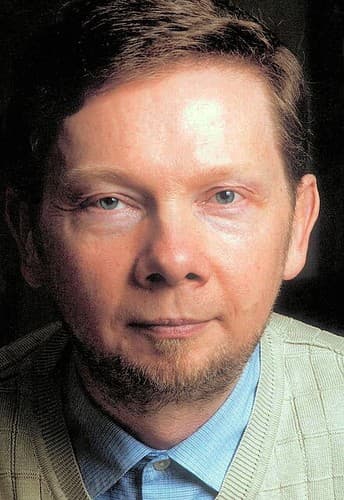
Eckhart Tolle is a spiritual teacher and author renowned for his profound insights into consciousness and personal transformation. His bestselling works, including "The Power of Now" and "A New Earth," have guided millions worldwide toward greater presence and inner peace. Tolle's teachings emphasize the importance of living in the present moment and transcending the ego for spiritual enlightenment.
Similar books
- The Power of Now: A Guide to Spiritual Enlightenment
Eckhart Tolle
4.1 (211k) average on GoodreadsPsychologyThis book is a condensed version of Tolle's core teachings found in 'The Power of Now,' offering similar concepts with a more meditative and poetic approach.
- The Perks of Being a Wallflower
Stephen Chbosky
4.2 (1.3M) average on GoodreadsPsychologyThrough letters, a shy high school freshman learns to navigate first love, trauma, and self-discovery, stepping off the sidelines and into life.
- Eleanor Oliphant Is Completely Fine
Gail Honeyman
4.3 (708k) average on GoodreadsLiterary FictionA lonely woman's structured life changes when an IT guy and an elderly man help her learn to open her heart.
- One Flew Over the Cuckoo's Nest
Ken Kesey
4.2 (631k) average on GoodreadsPsychologyIn a mind-bending asylum, the boisterous Randle McMurphy wages a defiant war against the tyrannical Nurse Ratched, inspiring his fellow inmates, including the seemingly catatonic Chief Bromden, to reclaim their lost humanity.
- The Bell Jar
Sylvia Plath
4.0 (591k) average on GoodreadsPsychologyIn the suffocating grip of 1950s expectations, a brilliant young woman's descent into mental illness is painted with such vivid, internal clarity that her 'insanity' feels terrifyingly rational and inevitable.
- The Subtle Art of Not Giving a F*ck: A Counterintuitive Approach to Living a Good Life
Mark Manson
3.9 (530k) average on GoodreadsBusinessEmbrace your flaws and stomach life's lemons, because true happiness isn't about relentless positivity, but about choosing what truly matters to give a f*ck about.






Enjoyed the summary?
A summary gives you the shape of the book. The book itself has the detail, the examples and the voice.
Find Stillness Speaks on AmazonAs an Amazon Associate, BookBrief earns from qualifying purchases. How we're funded