

Synopsis
Covers the whole plot, including the ending.
- Difficulty
- Medium
- Pacing
- Moderate
- Mood
- Reflective, poignant, historical, at times somber but ultimately resilient.
Stones from the River Plot Summary
Covers the whole plot, including the ending.
A Dwarf's Birth and Early Life
Trudi Montag is born in the small German town of Burgdorf in 1915. She is a dwarf among people of average height. Her birth shocks her parents, Bertha and August Montag, who struggle to accept her condition. August, a gentle man who runs the local library, dotes on Trudi, reading to her and encouraging her love for stories. Bertha, however, battles her own mental health issues, often withdrawing into periods of fragility, made worse by how society views Trudi. Trudi's early years are shaped by her father's kindness and her mother's sometimes distant affection. She begins to understand her difference from others, especially from the children in Burgdorf.
Childhood Friendships and Societal Gaze
As Trudi grows, her closest friend is Georg, a boy her age who lives next door. Their bond is pure and strong, offering Trudi comfort from the often-harsh world. Georg's parents, the Kellers, are religious and somewhat strict, raising Georg in ways that make him feel like a girl, which adds another layer of difficulty to his life. Trudi's dwarfism makes her a constant spectacle in Burgdorf; children stare, adults whisper, and she often feels like an outsider. Despite the pain, Trudi develops a sharp mind and a keen eye for observation, using her perspective to understand the hidden lives and secrets of the townspeople. She often finds humor and strength in her daily interactions.
The Library and the Power of Stories
August Montag's library becomes Trudi's safe place and her world. From a young age, she helps her father, organizing books, assisting patrons, and immersing herself in stories. The library offers her an escape from the physical limits and social judgments of Burgdorf, allowing her to travel through the pages of countless books. Trudi's intelligence and love for reading grow, making her exceptionally knowledgeable. She develops a deep understanding of human nature through the characters and stories she encounters. The library also serves as a central point for the town, giving Trudi a unique position from which to observe the lives and secrets of its inhabitants, further sharpening her perceptive abilities.
Bertha's Struggles and Trudi's Growing Independence
Bertha Montag's mental health continues to worsen, with more frequent periods of withdrawal and a fragile hold on reality. These episodes often leave August distraught and Trudi feeling alone, yet they also force her to mature quickly. Trudi takes on more responsibilities, both at home and at the library, showing remarkable resilience and capability despite her young age and physical limitations. Her growing independence is not just necessary but a source of quiet pride, as she proves her worth and capacity to herself and, subtly, to the town. This period solidifies Trudi's role as a dependable and intelligent person, able to handle life's challenges with courage.
The Rise of Nazism and its Shadow
As the 1930s progress, the shadow of Nazism begins to fall over Germany and, inevitably, Burgdorf. The familiar routines of town life are slowly infiltrated by propaganda, swastikas, and an increasing sense of fear and conformity. Trudi, with her sharp observations, notices the subtle shifts in attitudes, the growing intolerance, and the way some townspeople eagerly embrace the new ideas while others shrink in fear. The library, once a place of free thought, becomes a battleground for ideas, as certain books are deemed undesirable. Trudi's position as an 'outsider' gives her a clearer, less biased perspective on the unfolding political drama, showing the dangerous currents beneath the town's surface.
Persecution and Resistance
The Nazi regime's persecution of Jewish people escalates, and its impact is felt even in Burgdorf. Jewish families, once part of the community, face increasing discrimination, violence, and forced removal. Trudi and August, deeply disturbed by these injustices, begin to take quiet but brave actions. August uses the library as a subtle means of resistance, providing forbidden books and a safe space for those seeking comfort. Trudi, with her sense of justice, becomes a silent observer and, later, helps protect those targeted by the regime. Their acts, though small, show a strong moral compass in the face of widespread complicity and terror.
Georg's Secret and Confession
Georg, Trudi's lifelong friend, struggles with a secret, made worse by his parents' unusual upbringing. He has always felt different, and as he grows older, this internal conflict becomes unbearable. One night, in a moment of deep vulnerability, Georg confides in Trudi, revealing that he feels he is a girl trapped in a boy's body. Trudi, an empathetic listener, accepts him without judgment, strengthening their unbreakable bond. This confession is a significant moment, highlighting the theme of hidden identities and the courage it takes to be oneself in a world that demands conformity. Trudi's unwavering support offers Georg a rare sense of acceptance and understanding.
Hiding in the Cellar
As the war rages and the Holocaust intensifies, Trudi and August make the brave and dangerous decision to hide Jewish refugees in their cellar. This act of bravery puts their own lives at immense risk, as discovery by the Gestapo would mean certain death. Trudi, with her sharp mind and resourcefulness, handles the practicalities, ensuring the refugees are fed, kept informed, and hidden from prying eyes. The cellar becomes a small representation of the larger struggle, a place of fear, hope, and human connection in the darkest of times. This period deeply affects Trudi, solidifying her commitment to justice and compassion, even in the face of extreme danger.
Loss and Survival
The war takes a heavy toll on Burgdorf and its inhabitants, and Trudi is not spared from personal loss. These losses are deeply felt, reinforcing the brutal realities of the conflict. Despite the grief and the constant threat of danger, Trudi continues to manage the library, which remains a source of hope and knowledge. Her resilience is remarkable, as she navigates the complexities of wartime life, protecting those she can and maintaining a semblance of normalcy amidst chaos. Trudi's ability to endure and adapt, while holding onto her humanity, shows the strength of the human spirit in the face of unimaginable hardship.
Aftermath and Lingering Shadows
When the war finally ends, Burgdorf, like the rest of Germany, is left to confront its shattered past and the immense task of rebuilding. The town struggles with collective guilt, denial, and the visible scars of conflict. Trudi, having witnessed firsthand the depths of human cruelty and kindness, grapples with the lingering shadows of the war. She dedicates herself to restoring the library, which she now runs independently, ensuring that knowledge and stories remain accessible. While the physical scars of war may heal, the emotional and psychological ones run deep, shaping Trudi's perspective and her unwavering commitment to truth and memory in a community striving to move forward.
Principal Figures
Trudi Montag
Protagonist
A dwarf librarian with a sharp mind and compassionate heart.
Trudi Montag is the central protagonist of the novel, born a dwarf in the German town of Burgdorf in 1915. Despite her physical difference, which makes her an object of curiosity and sometimes cruelty, Trudi possesses an extraordinary intellect, keen observational skills, and a deeply empathetic nature. She finds solace and purpose in her father's library, becoming an avid reader and later, its dedicated librarian. Trudi is resilient, witty, and fiercely independent, capable of great courage in the face of adversity, particularly during the Nazi era when she risks her life to protect others. Her unique perspective as an outsider allows her to see the hidden truths and secrets of the townspeople.
Relationships: August Montag (Father, mentor, confidant); Bertha Montag (Mother, complex, often distant); Georg (Lifelong best friend, soulmate)
August Montag
Supporting
Trudi's gentle and intellectual father, the town librarian.
August Montag is Trudi's kind and devoted father, who runs the Burgdorf public library. He is a gentle, intellectual man who fosters Trudi's love for books and learning, providing her with unconditional love and support. August is deeply affected by his wife's mental health struggles and by the rise of Nazism. He quietly resists the regime by protecting forbidden books and later, by hiding Jewish refugees, demonstrating a quiet but profound moral courage. He serves as Trudi's mentor and closest confidant, shaping her worldview and instilling in her a strong sense of justice and compassion.
Relationships: Trudi Montag (Daughter, intellectual companion); Bertha Montag (Wife, loving but strained)
Bertha Montag
Supporting
Trudi's mother, struggling with mental illness and societal pressures.
Bertha Montag is Trudi's mother, a woman deeply affected by Trudi's dwarfism and her own fragile mental health. She loves Trudi but often struggles to cope with the societal scrutiny and her daughter's difference, frequently retreating into periods of depression and withdrawal. Bertha's internal struggles make her a complex and sometimes distant figure for Trudi. Her character highlights the societal pressures placed on women and mothers, and the devastating impact of mental illness, particularly in a time when understanding and treatment were scarce. Despite her challenges, moments of deep maternal affection shine through, revealing her underlying love for her family.
Relationships: Trudi Montag (Daughter, complex and sometimes strained); August Montag (Husband, loving and supportive)
Georg
Supporting
Trudi's best friend, grappling with his gender identity.
Georg is Trudi's lifelong best friend and closest confidant, living next door to the Montags. He is a sensitive and gentle soul, raised somewhat unusually by his devout parents, who treat him more like a girl. This upbringing, combined with his innate feelings, leads Georg to struggle profoundly with his gender identity. His secret is a heavy burden, which he eventually confides only in Trudi, who accepts him unconditionally. Georg represents the hidden struggles and non-conformity that exist beneath the surface of seemingly ordinary lives, and his bond with Trudi is a testament to the power of true friendship and acceptance.
Relationships: Trudi Montag (Lifelong best friend, soulmate, confidant)
Herr and Frau Keller
Supporting
Georg's devout and rigid parents.
Herr and Frau Keller are Georg's parents, neighbors to the Montags. They are portrayed as devoutly religious and somewhat rigid individuals, whose strict upbringing of Georg, particularly treating him more like a girl, contributes to his internal struggles with gender identity. Their characterization highlights the societal norms and expectations of the time, as well as the potential for well-intentioned but ultimately damaging parenting. They are part of the broader Burgdorf community, observing and being observed by Trudi, representing a segment of the town that adheres to conventional beliefs and practices, often without questioning deeper truths.
Relationships: Georg (Son, complex and controlling)
Frau Becker
Supporting
A gossipy and judgmental townswoman.
Frau Becker is a recurring character in Burgdorf, embodying the gossipy, judgmental, and often cruel aspects of small-town society. She is one of the many townspeople who stare at Trudi, whisper about her, and perpetuate social stigmas. Her character serves to highlight the challenges Trudi faces due to her dwarfism and the pervasive nature of conformity and intolerance in the community. Frau Becker represents the collective 'eye' of Burgdorf that Trudi constantly navigates, forcing Trudi to develop her resilience and inner strength. She is a reminder of the everyday prejudices that exist, even before the larger societal prejudices of Nazism take hold.
Pastor Johannes
Supporting
The Burgdorf pastor, a figure of moral guidance.
Pastor Johannes is the spiritual leader of Burgdorf, a figure who initially represents moral authority and community guidance. As the Nazi regime rises, his character becomes a barometer for the town's moral compass. He grapples with the pressures to conform to the new ideology versus upholding his Christian values. While he may not always take overt actions of resistance, his internal struggle and his attempts to provide solace and guidance to his congregation reflect the difficult choices faced by many during this period. He represents the institutional challenges to resistance and the moral compromises made by some.
The Refugees
Supporting
Jewish individuals hidden in the Montag cellar.
The Jewish refugees hidden in Trudi and August's cellar represent the countless victims of the Holocaust and the profound human cost of the Nazi regime. While individual names and detailed backstories may not be extensively explored, their collective presence is crucial. They symbolize the vulnerability, fear, and desperate hope of those persecuted. Their reliance on the Montags' bravery highlights the power of human connection and compassion in the face of unimaginable evil. Their stories, though often unspoken, weigh heavily on Trudi and August, deepening their commitment to resistance and justice. They embody the profound moral choices made during wartime.
Relationships: Trudi Montag (Protector, provider of solace); August Montag (Protector, provider of solace)
Themes & Insights
The Nature of Difference and Acceptance
This theme explores what it means to be 'different' in a society that values conformity, focusing on Trudi's dwarfism and Georg's gender identity. It addresses the pain of being an outsider, the societal judgments and cruelties, but also the unique perspective and resilience that difference can create. The novel suggests that true acceptance comes from within and from genuine human connection, rather than external validation. It highlights how everyone, in some way, carries a secret difference, making 'normal' an illusion. Trudi's journey is about finding strength and self-worth in her unique identity, and extending that acceptance to others.
“Every human being carries a secret, a difference, something that sets them apart. Trudi’s was just more visible.”
The Power of Stories and Literature
The library, run by August and later Trudi, is a central symbol of this theme. Stories provide escape, education, empathy, and a way to understand human nature. For Trudi, books are a sanctuary from a world that often judges her, allowing her to travel beyond Burgdorf's confines. During the Nazi era, literature becomes a form of resistance, as forbidden books are protected and shared. Reading and telling stories connect people across time and experience, preserving truth and humanity in the face of propaganda and censorship. The novel itself shows the lasting power of narrative.
“Books were Trudi’s windows to worlds beyond Burgdorf, and in their pages, she found herself, whole and limitless.”
Moral Courage and Resistance
This theme examines the different forms of courage shown by ordinary people in extraordinary times, particularly during the Nazi regime. It shows the bravery of August and Trudi in protecting Jewish refugees and forbidden books, acts that carry immense personal risk. The novel explores the range of resistance, from open defiance to quiet, everyday acts of humanity and kindness. It contrasts these acts with the complicity, fear, and indifference of others in the town, questioning what drives individuals to stand up for what is right, even when it means facing severe consequences. It celebrates the impact of even small acts of moral integrity.
“Courage wasn’t a roar, often it was the quiet voice at the end of the day, saying, 'I will try again tomorrow.'”
Memory, Truth, and History
The novel explores how individuals and communities deal with their past, particularly the difficult truths of the Nazi era. It addresses the selective nature of memory, the tendency towards denial, and the importance of remembering historical events accurately to prevent their repetition. Trudi, with her sharp memory and role in the library, becomes a keeper of stories and a witness to history. The theme questions how truth can be preserved and passed down through generations, and the responsibility of individuals to confront uncomfortable truths rather than succumb to collective amnesia. It emphasizes that understanding the past is essential for shaping a just future.
“History was not just dates and battles; it was the stories people chose to tell, and the ones they tried to forget.”
The Complexities of Family Love
This theme explores the dynamics within the Montag family, especially the relationship between Trudi and her parents. It addresses August's unconditional love for Trudi, contrasting it with Bertha's more complex, often strained affection, shaped by her mental illness and societal pressures regarding Trudi's dwarfism. The novel portrays the sacrifices made, the unspoken understandings, and the deep emotional bonds that hold a family together, even amidst personal struggles and external challenges. It highlights how love can appear in different ways, sometimes imperfectly, but remains a fundamental source of support and connection.
“Love, Trudi learned, was not always a soft blanket, sometimes it was a rough woolen coat that chafed but kept you warm.”
Plot Devices & Literary Techniques
The Library
A sanctuary, a symbol of knowledge and resistance.
The Burgdorf library, run by August and later Trudi, serves as a central symbol and plot device. It is Trudi's sanctuary, a place where she finds acceptance, education, and purpose. It represents the power of knowledge, imagination, and the enduring human spirit. During the Nazi era, the library transforms into a quiet hub of resistance, protecting forbidden books and acting as a subtle counterpoint to the regime's censorship and propaganda. It also functions as a central meeting point for the town, allowing Trudi to observe and understand the lives of Burgdorf's inhabitants, making it a crucial setting for character development and plot progression.
Trudi's Dwarfism
A physical difference that shapes perception and perspective.
Trudi's dwarfism is not just a character trait but a fundamental plot device that drives much of the narrative. It immediately sets her apart, making her an 'outsider' whose unique physical perspective allows for a sharper, less biased view of society. Her difference elicits varied responses—from cruel stares to profound empathy—highlighting themes of acceptance and prejudice. It shapes her relationships, her resilience, and her understanding of hidden truths. Her physical stature often makes her underestimated, allowing her to observe and act in ways others might not, subtly influencing events and revealing the true nature of the townspeople.
First-Person Perspective (Omniscient Narrator with Trudi's focus)
A narrative voice that provides deep insight into Trudi's world.
While the novel generally employs a close third-person omniscient narrator, it heavily filters events and observations through Trudi's unique perspective. This allows for deep insight into her thoughts, feelings, and interpretations of the world around her, particularly as an 'outsider.' This narrative choice enhances the themes of difference and observation, as the reader experiences Burgdorf through Trudi's keen, often witty, and empathetic eyes. It ensures that the emotional core of the story remains centered on her journey, making her struggles and triumphs profoundly personal and relatable, even against the backdrop of historical events.
The River
A symbolic representation of time, change, and memory.
The river that flows through Burgdorf serves as a powerful symbolic plot device. It represents the relentless passage of time, the flow of history, and the continuous changes that occur in life and within the community. Like memory, the river carries things away but also leaves traces behind. It symbolizes both continuity and transformation, witnessing the town's evolution from pre-war innocence to wartime horror and post-war reckoning. The river is a constant, enduring presence that underscores the transient nature of human lives and events, yet also the lasting impact of choices and experiences.
Quiz
10 questions on the plot and the characters. Each answer comes with a short explanation.
Question 1
What is the central theme explored in 'Stones from the River'?
- The pursuit of wealth and power.
- The struggles of fitting in and the shared nature of human differences.
- The adventures of a young woman traveling the world.
- The complexities of political intrigue during wartime.
Show answer
B. The struggles of fitting in and the shared nature of human differences. The novel focuses on Trudi Montag's journey as a dwarf, highlighting her challenges with fitting in and the discovery that everyone harbors their own 'differences.'
Question 2
What is Trudi Montag's physical characteristic that makes her different?
- She is exceptionally tall.
- She has red hair.
- She is a dwarf (Zwerg).
- She has a visible scar.
Show answer
C. She is a dwarf (Zwerg). Trudi is explicitly described as a 'Zwerg,' which translates to dwarf, and this is a central aspect of her identity and the challenges she faces.
Question 3
Who is the author of 'Stones from the River'?
- Jane Austen
- Ursula Hegi
- Toni Morrison
- Gabriel Garcia Marquez
Show answer
B. Ursula Hegi The provided text clearly states that the author is Ursula Hegi.
Question 4
What secret does Trudi eventually learn about human differences?
- That only people with physical disabilities are different.
- That differences are easily overcome with effort.
- That being different is a secret that all humans share.
- That only certain groups of people have secrets.
Show answer
C. That being different is a secret that all humans share. Trudi's journey leads her to understand that 'being different is a secret that all humans share,' implying that everyone has hidden aspects or struggles.
Question 5
The description mentions that Trudi harbors Jews in her cellar. What historical context does this likely allude to?
- The American Civil War.
- The Cold War.
- The Holocaust during World War II.
- The French Revolution.
Show answer
C. The Holocaust during World War II. The act of harboring Jews during a time of persecution strongly suggests the historical context of the Holocaust, a period of systematic genocide of Jews by Nazi Germany during World War II.
Question 6
Which of the following characters is mentioned as having parents who pretend he is a girl?
- Trudi Montag
- Georg
- Trudi's mother
- A character not named in the excerpt.
Show answer
B. Georg The text explicitly states, 'to her friend Georg whose parents pretend he's a girl.'
Question 7
The novel is described as a 'tapestry of emotional power, humanity, and truth.' What does this suggest about the tone and impact of the book?
- It is a lighthearted comedy with a simple plot.
- It is a deeply moving and impactful story that explores significant human experiences.
- It is an academic treatise on historical events.
- It is a suspenseful thriller with a focus on action.
Show answer
B. It is a deeply moving and impactful story that explores significant human experiences. Phrases like 'emotional power,' 'humanity,' and 'truth' indicate a profound and resonant narrative that delves into significant aspects of the human condition, rather than a lighthearted or action-focused story.
Question 8
What does the term 'Zwerg' signify in the context of the novel?
- A person who is exceptionally strong.
- A person who is an outsider or considered undesirable due to their size.
- A person with great wealth.
- A person who is highly educated.
Show answer
B. A person who is an outsider or considered undesirable due to their size. The text states Trudi is a 'Zwerg—a dwarf—short, undesirable, different,' directly linking the term to her physical characteristic and the social stigma associated with it.
Question 9
The description mentions Trudi's mother 'flees into madness.' What might this suggest about the mother's own struggles or the pressures she faced?
- She was simply bored with her life.
- She was unable to cope with personal or societal challenges.
- She had a pre-existing mental illness unrelated to her circumstances.
- She was a victim of a supernatural curse.
Show answer
B. She was unable to cope with personal or societal challenges. While not explicitly detailed, a character 'fleeing into madness' often implies an inability to cope with overwhelming circumstances, trauma, or societal pressures, suggesting deep internal struggles.
Question 10
Considering the themes of difference, secrets, and harboring individuals, what broader societal commentary might Ursula Hegi be making through 'Stones from the River'?
- That conformity is the ideal state for all societies.
- That prejudice and fear often lead to isolation and suffering, but humanity can also be found in acts of compassion and understanding.
- That historical events are best forgotten to move forward.
- That individuals should always prioritize their own safety above all else.
Show answer
B. That prejudice and fear often lead to isolation and suffering, but humanity can also be found in acts of compassion and understanding. The novel's exploration of individuals struggling with their differences, hiding secrets, and Trudi's act of sheltering Jews during a persecutory time, points to a commentary on how fear and prejudice create suffering, but also how compassion and understanding can emerge even in dark times.
Stones from the River FAQ
What is Stones from the River about?
Stones from the River tells the story of Trudi Montag, a dwarf living in a small German town during a time of great historical upheaval. The novel explores themes of difference, belonging, and the hidden secrets within ordinary lives.
Who is Trudi Montag?
Trudi Montag is the protagonist of Stones from the River. She is a dwarf, often seen as an outsider, and her journey is one of self-acceptance and understanding the shared human experience of feeling different.
What historical period does Stones from the River cover?
While not explicitly stated with exact dates, the novel is set in Germany during a period of significant social and political change, heavily implying the era leading up to and during World War II.
What are the main themes in Stones from the River?
The central themes include the experience of being different, the struggle to fit in, the nature of secrets and lies within families and communities, and the resilience of the human spirit.
Does Stones from the River involve World War II?
Yes, the backdrop of World War II and its impact on ordinary German citizens is a significant element of the novel, influencing the characters' lives and decisions.
Is Stones from the River a sad book?
Stones from the River deals with difficult and emotional subject matter, including prejudice and hardship. However, it is also a story of hope, connection, and the enduring strength of humanity.
What is the significance of Trudi being a dwarf in the story?
Trudi's dwarfism makes her physically different, serving as a powerful metaphor for the ways people feel like outsiders. Her journey explores how perceived imperfections can lead to profound insights about shared human vulnerability.
What kind of novel is Stones from the River?
Stones from the River is classified as literary fiction and historical fiction, known for its character development, emotional depth, and exploration of societal issues within a historical context.
Are there any real historical figures in Stones from the River?
The novel focuses on fictional characters and their personal experiences within a historical setting. While the historical context is accurate, the main characters are creations of the author.
What does Ursula Hegi explore through the characters' secrets in the book?
Through the secrets of Trudi's mother, Georg's parents, and the people Trudi hides, Ursula Hegi illustrates that everyone carries hidden aspects of themselves and that these secrets shape their lives and relationships.
Similar books
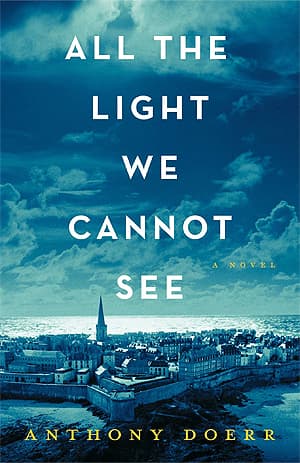
- All the Light We Cannot See
Anthony Doerr
4.3 (1M) average on GoodreadsHistorical FictionBoth "Stones from the River" and "All the Light We Cannot See" are historical fiction novels set during World War II, exploring the lives of ordinary people caught in extraordinary circumstances. Doerr's novel also features a protagonist with a unique perspective (Marie-Laure's blindness) and explores themes of resilience and humanity amidst conflict. However, Hegi's focus is more intensely on the internal life and social dynamics of a single German town, delving deeper into the complexities of complicity and quiet resistance within the German populace itself, whereas Doerr's narrative spans across different countries and perspectives, offering a broader scope of the war's impact.
- The Book Thief
Markus Zusak
4.4 (1.8M) average on GoodreadsHistorical FictionSimilar to "Stones from the River," "The Book Thief" is a powerful historical novel set in Nazi Germany, focusing on the experiences of a young German girl. Both books employ unique narrative voices (Trudi's observant perspective vs. Death as the narrator in Zusak's work) to offer fresh insights into a well-trodden historical period. While Zusak's novel uses allegory and a more fantastical element with its narrator, Hegi's work grounds itself more firmly in the psychological realism of its characters and the nuanced social fabric of a small town, providing a more direct, albeit still deeply empathetic, look at the human cost and moral compromises of the era.
- The Old Man and the Sea
Ernest Hemingway
3.8 (831k) average on GoodreadsLiterary FictionA Cuban fisherman's long struggle with a giant marlin becomes a story of endurance and dignity, now retold for young adults with illustrations, phonetic guides, and writing prompts in Traditional Chinese.
- One Hundred Years of Solitude
Gabriel García Márquez
4.1 (753k) average on GoodreadsLiterary FictionThrough the multi-generational story of the Buendía family, a mythical town deals with the repeating patterns of time, love, and solitude, as the extraordinary mixes with the ordinary.
- The Goldfinch
Donna Tartt
3.9 (720k) average on GoodreadsLiterary FictionHaunted by a tragic explosion and clutching a stolen Dutch masterpiece, a young orphan navigates the opulent drawing rooms of New York and the gritty underbelly of the art world, desperately seeking connection and redemption amidst a life spiraling into crime and obsession.
- Little Fires Everywhere
Celeste Ng
4.1 (713k) average on GoodreadsLiterary FictionIn Shaker Heights, an artist and her daughter move in, and their free-spirited lives clash with a rule-bound matriarch, revealing hidden conflicts beneath a perfect surface.




Enjoyed the summary?
A summary gives you the shape of the book. The book itself has the detail, the examples and the voice.
Find Stones from the River on AmazonAs an Amazon Associate, BookBrief earns from qualifying purchases. How we're funded