

Synopsis
Covers the whole plot, including the ending.
- Difficulty
- Medium
- Pacing
- Moderate
- Mood
- Thought-provoking, Humorous, Socially relevant, Uncomfortable
- Read it if
- You enjoy sharp social commentary on race, class, and performative allyship, with complex character dynamics.
- Skip it if
- You prefer fast-paced thrillers or stories with clear-cut heroes and villains.
Such a Fun Age Plot Summary
Covers the whole plot, including the ending.
The Incident at the Market
Late one evening, Alix Chamberlain, a successful white lifestyle blogger and entrepreneur, calls her African American babysitter, Emira Tucker, in a panic. Alix's husband, Kelley, has just had a public incident involving a dead bird, and the family is in chaos. Alix asks Emira to take her two-year-old daughter, Briar, out of the house for a distraction, even though it is late. Emira takes Briar to a high-end grocery store, where a security guard and a shopper accuse her of kidnapping the child, citing the difference in their races. Emira tries to explain, but the situation escalates until the shopper, a white man named Kelley, recognizes Alix's name from Briar's insistent calls for her mother. Kelley then offers to delete the footage, but Emira is shaken and refuses.
Alix's Initial Response and Emira's Hesitation
Alix is horrified when she learns about the incident at the market. She immediately offers Emira a raise and extra shifts, trying to make amends and show her support. Emira, however, is deeply affected by the racial profiling she experienced. She is also grappling with her own life, feeling directionless at twenty-five, working a low-paying job, and facing pressure from her friends, Zara and Catherine, to find a more stable career. Despite Alix's offers, Emira feels increasingly uncomfortable with the Chamberlain family's privileged world, sensing a disconnect between their well-meaning actions and her lived experiences as a Black woman.
Meeting 'Kelley' and a Budding Romance
Emira meets the man who filmed her at the grocery store, who introduces himself as Kelley Copeland. They begin a romantic relationship, with Kelley appearing understanding and supportive of Emira's experiences. He encourages her to process the incident and even suggests she consider using the footage to expose the injustice. Emira finds comfort and attraction in Kelley's progressive views and their shared understanding of racial issues. Unbeknownst to Emira, Kelley has a significant past connection with Alix Chamberlain, a detail he deliberately withholds, setting the stage for future complications and betrayals.
Alix's Overreaching Generosity
Alix, wanting to prove she is 'not like other white women' and to fix the market incident, becomes overly involved in Emira's life. She offers to help Emira with her career, suggests she apply for specific jobs, and even tries to set her up with a friend's son. While seemingly well-intentioned, Alix's actions often come across as intrusive and condescending, making Emira feel more like a project than an equal. Emira's friends, Zara and Catherine, notice Alix's increasing presence and warn Emira about the power dynamics at play, urging her to be careful of Alix's motives.
The Revelation of Kelley's Past
As Emira and Kelley's relationship deepens, a series of coincidences and overheard conversations begin to reveal Kelley's secret. Emira learns that Kelley Copeland is the same Kelley with whom Alix had a tumultuous romantic relationship in high school, and he was accused of stalking her. This revelation shatters Emira's trust, making her question Kelley's true intentions and the sincerity of his support. The discovery exposes a web of deceit, as Kelley had deliberately sought out Emira after the market incident, using her as a pawn in his unresolved vendetta against Alix. Emira confronts Kelley, leading to a painful breakup and a deeper sense of betrayal.
Alix's Blog and Public Image
Alix's entire brand relies on authenticity and relatability, but the underlying tensions with Emira and the re-emergence of Kelley threaten her carefully constructed public persona. She is constantly aware of how her actions might be perceived and is desperate to avoid any scandal that could tarnish her image as a progressive, supportive employer. Her attempts to 'help' Emira are often intertwined with her need to feel like a 'good' person and to prevent any negative publicity. The market incident, and her handling of it, becomes a potential problem that could expose the performative aspects of her public identity.
The Thanksgiving Dinner Confrontation
Emira attends Thanksgiving dinner at the Chamberlains', feeling increasingly out of place and resentful of Alix's overbearing presence in her life. The atmosphere is strained, with Emira observing the family's dynamics and her own uncomfortable position within it. The simmering tensions regarding Kelley's past and Alix's patronizing behavior come to a head. Emira finally confronts Alix about her manipulative tendencies and the ways in which Alix's 'help' has felt more like control. The confrontation is a crucial moment, exposing the deep-seated misunderstandings and the racial and class divides between them.
The Leaked Video and Its Aftermath
Kelley, seeking revenge against Alix, leaks the video of the market incident. The video quickly goes viral, sparking public outrage and media attention. Alix's brand is severely impacted, and she faces public scrutiny. Emira is thrust into the spotlight, becoming a reluctant symbol of racial injustice. She is approached by various media outlets and legal teams, who want her to speak out against Alix and the supermarket. Emira finds herself at a crossroads, needing to decide whether to use the moment for personal gain or to prioritize her own agency and well-being, separate from the narratives others want to impose on her.
Emira's Decision and Moving Forward
After much thought and internal struggle, Emira decides not to fully participate in the public spectacle surrounding the leaked video. She refuses to be a pawn in Kelley's revenge scheme or to be used by media outlets seeking a sensational story. She gives a brief, carefully worded statement, acknowledging the injustice but asserting her desire to move on. Emira ultimately chooses to prioritize her own peace and future, accepting a job that offers stability and a sense of purpose. She distances herself from both Alix and Kelley, recognizing the toxic dynamics that had developed and asserting her independence.
Alix's Public Reckoning
The leaked video and Emira's refusal to fully support Alix's narrative have significant repercussions for Alix. Her public image is tarnished, and her brand suffers. She is forced to confront the performative nature of her 'wokeness' and the ways in which her good intentions were often self-serving. While she attempts to do damage control, the incident is a public reckoning, forcing her to acknowledge her own blind spots and the systemic privileges she enjoys. The ending suggests that Alix will have to genuinely re-evaluate her approach to race, class, and allyship, rather than simply projecting a curated image.
Briar's Future
Some years later, Emira runs into Briar, now a young girl, at a grocery store. The encounter is brief but meaningful, showing the lasting bond they formed despite the complicated circumstances. Briar recognizes Emira, and there is a moment of genuine connection, free from the adult drama and racial tensions that surrounded their previous interactions. This final scene provides a sense of closure and hope, suggesting that while the adults navigated their complex relationships, the innocent connection between Emira and Briar remained a pure and significant aspect of the story, transcending the societal issues at play.
Principal Figures
Emira Tucker
Protagonist
A twenty-five-year-old African American woman navigating post-college life and racial injustice.
Emira is intelligent, observant, and deeply empathetic, though often indecisive about her own path. She works as a babysitter, struggling to find stable employment and a sense of direction after graduating college. She values authenticity and genuine connection, which makes her particularly sensitive to the performative aspects of Alix's 'wokeness.' Emira is fiercely loyal to her friends and protective of Briar, but also wary of being exploited or defined by others' narratives, especially after the market incident. She represents the everyday experience of racial profiling and the complexities of navigating white spaces.
Relationships: Alix Chamberlain (Employer-employee, complicated by racial and class dynamics, mentor-mentee dynamic (unsolicited)); Briar Chamberlain (Babysitter-child, deeply affectionate and genuine bond); Kelley Copeland (Romantic partner, later revealed as manipulative and deceitful); Zara (Close friend, supportive and pragmatic); Catherine (Close friend, supportive and direct)
Alix Chamberlain
Antagonist/Supporting
A successful white lifestyle blogger and entrepreneur grappling with her public image and performative allyship.
Alix is charismatic, image-conscious, and driven, having built a brand around authenticity and relatability. She genuinely believes herself to be a progressive and good person, but her actions are often tainted by her need for validation and her inability to truly understand experiences outside her privileged bubble. She struggles with guilt over the market incident and tries to 'fix' it through overcompensation, often without considering Emira's perspective. Alix is deeply concerned with how she is perceived, particularly in the context of racial issues, leading to a performative allyship that ultimately rings hollow.
Relationships: Emira Tucker (Employer-employee, complicated by racial and class dynamics, mentor-mentee dynamic (unsolicited)); Kelley Chamberlain (Husband, often distant and preoccupied); Briar Chamberlain (Daughter, often neglected due to Alix's career focus); Kelley Copeland (Ex-boyfriend from high school, source of past trauma and current conflict)
Kelley Copeland
Antagonist
The white man who filmed the market incident, with a hidden agenda connected to Alix's past.
Kelley presents himself as a progressive, understanding white man, genuinely concerned with racial injustice. He is charming and observant, which initially draws Emira to him. However, his true motivations are rooted in a long-standing grudge against Alix Chamberlain, stemming from a past high school relationship and a subsequent accusation of stalking. He manipulates Emira and the market incident to exact revenge on Alix, demonstrating a calculated and deceptive nature. His character highlights the danger of performative allyship and the ways personal vendettas can hijack important social issues.
Relationships: Emira Tucker (Romantic partner, used as a pawn in his revenge scheme); Alix Chamberlain (Ex-girlfriend from high school, object of his long-held resentment)
Briar Chamberlain
Supporting
Alix and Kelley's two-year-old daughter, who forms a deep bond with Emira.
Briar is a sweet, intelligent, and often neglected toddler. She is highly observant and forms a genuine, affectionate bond with Emira, who provides her with consistent care and attention. Briar's innocence and her simple love for Emira serve as a powerful contrast to the complex, racially charged adult world around her. She often voices Emira's name at crucial moments, inadvertently highlighting the injustice Emira faces and the depth of their connection.
Relationships: Emira Tucker (Child-babysitter, deeply affectionate and genuine bond); Alix Chamberlain (Daughter-mother, often strained due to Alix's career); Kelley Chamberlain (Daughter-father, often distant)
Zara
Supporting
One of Emira's close friends, a pragmatic and outspoken voice of reason.
Zara is a loyal and direct friend to Emira. She is often the most critical of Emira's choices, particularly regarding her relationship with Alix, and offers practical, no-nonsense advice. Zara is grounded and has a clear sense of what Emira deserves, often pushing her to demand more and to recognize the exploitative aspects of certain situations. She represents a voice of Black female solidarity and skepticism towards superficial gestures of white allyship.
Relationships: Emira Tucker (Close friend, supportive and pragmatic)
Catherine
Supporting
Another of Emira's close friends, who offers a more nuanced, but still critical, perspective.
Catherine is Emira's other close friend, providing a different, but equally supportive, perspective to Zara's. She is perhaps slightly more empathetic to Emira's confusion but still sees through the performative aspects of Alix's behavior. Catherine, like Zara, serves as a sounding board and a source of strength for Emira, helping her process the racial microaggressions and larger injustices she experiences. She reinforces the importance of Emira's self-worth and agency.
Relationships: Emira Tucker (Close friend, supportive and direct)
Kelley Chamberlain (Alix's Husband)
Supporting
Alix's husband, a local news anchor, often preoccupied with his career and public image.
Kelley Chamberlain is a local news anchor, focused on his career and maintaining a respectable public image. He is somewhat detached from the day-to-day family life and often seems unaware of the emotional complexities unfolding around him, particularly regarding Emira. His public incident with the dead bird is the catalyst for the market event, but he remains a peripheral figure in the central conflict between Alix, Emira, and Kelley Copeland.
Relationships: Alix Chamberlain (Husband, often distant); Briar Chamberlain (Father, somewhat detached)
Themes & Insights
Performative Allyship vs. Authentic Connection
The novel examines the difference between performative allyship, often driven by self-interest and a desire to appear 'good,' and genuine, empathetic connection. Alix's attempts to 'help' Emira after the market incident are initially seen as well-intentioned but gradually reveal themselves to be more about easing her own guilt and maintaining her public image as a progressive white woman. Her actions, such as offering unsolicited career advice or trying to set Emira up, often feel intrusive and condescending, lacking true understanding of Emira's needs or experiences. In contrast, Emira's bond with Briar is pure and authentic, showing how genuine connection transcends racial and class divides, free from the performative gestures of the adults.
“What Emira understood was that Alix Chamberlain wanted to be her friend. What Emira understood was that Alix Chamberlain was going to make sure that Emira knew she was her friend.”
Racial Microaggressions and Implicit Bias
The novel portrays the everyday reality of racial microaggressions and implicit bias faced by Black individuals. The central incident at the grocery store, where Emira is accused of kidnapping Briar solely based on their racial difference, is a clear example. Beyond this overt act, Emira experiences subtle slights and assumptions throughout the story. Alix's constant attempts to 'uplift' Emira, even when well-meaning, often carry an underlying assumption of Emira's need for white guidance. These moments show how racism is not always overt hatred but can appear in unconscious biases and the burden placed on Black individuals to navigate white spaces.
“This is what happens when you’re a Black woman in America, Emira thought. You get used to explaining yourself.”
Class Divide and Economic Precarity
The contrast between Emira's economic precarity and the Chamberlains' wealth is a central theme. Emira, despite having a college degree, struggles to find a stable, well-paying job, living paycheck to paycheck and feeling adrift. The Chamberlains, on the other hand, live in a lavish home, employ multiple staff, and enjoy a life of privilege where financial concerns are largely absent. This divide highlights the systemic barriers that prevent upward mobility for many, particularly Black women, and how 'good intentions' from those in power often fail to address the root causes of economic inequality. Alix's offers of 'help' often feel out of touch with Emira's financial realities.
“Emira knew that Alix was good at making things happen. But Emira also knew that Alix had never had to worry about rent.”
Motherhood and Nurturing
The novel explores different facets of motherhood and nurturing, particularly through Emira's relationship with Briar. While Alix is Briar's biological mother, her focus on her career and public image often leaves Briar feeling neglected. Emira, as the babysitter, provides consistent, loving, and attentive care, forming a deep and genuine bond with the toddler. This contrast highlights that nurturing is not solely defined by biological ties but by presence, empathy, and genuine connection. Emira's ability to connect with and care for Briar shows her fundamental goodness and emotional intelligence, standing in clear contrast to the performative aspects of the adult world.
“Emira loved Briar. She loved the way Briar smelled, the way she snuggled into her neck, the way she pronounced certain words.”
The Dangers of White Saviorship
A significant theme is the problematic nature of white saviorship, where white individuals attempt to 'save' or 'fix' Black individuals, often without truly understanding their experiences or agency. Alix embodies this, seeing Emira as a project to be managed and 'helped' rather than an independent adult with her own thoughts and desires. Her actions, though framed as benevolent, ultimately disempower Emira and strip her of her autonomy. The novel critiques the idea that white intervention is inherently good, revealing how it can perpetuate existing power imbalances and prevent true solidarity.
“Alix thought she was helping. Emira knew she was just trying to feel better about herself.”
Plot Devices & Literary Techniques
The Leaked Video
A video recording of the market incident that serves as both a catalyst for conflict and a symbol of media exploitation.
The video of Emira being racially profiled at the grocery store is a pivotal plot device. Initially, it's a source of trauma for Emira and a tool for Kelley Copeland's manipulative agenda. When it's leaked, it becomes a viral sensation, thrusting Emira into the public eye and forcing Alix to confront the consequences of her actions. The video symbolizes the power of visual evidence in exposing injustice, but also the potential for media to commodify and exploit personal trauma, raising questions about who controls the narrative and for what purpose.
Dramatic Irony
The audience is aware of information that certain characters are not, particularly regarding Kelley Copeland's past.
Dramatic irony is heavily used, especially concerning Kelley Copeland's true identity and his history with Alix. The reader quickly learns that Kelley, the man Emira is dating, is the same Kelley from Alix's past. This creates tension and suspense, as the audience anticipates the inevitable revelation and its impact on Emira. This device highlights Kelley's manipulative nature and underscores Emira's vulnerability, making her eventual discovery all the more impactful and heartbreaking.
Third-Person Limited Omniscient Narration (Alternating Perspectives)
The story is told primarily through the perspectives of Emira and Alix, offering contrasting internal experiences.
The novel primarily employs a third-person limited omniscient narration, alternating between Emira's and Alix's perspectives. This device allows the reader to delve into the inner thoughts and motivations of both main characters, providing a nuanced understanding of their differing experiences, biases, and intentions. By showing both Emira's feelings of frustration and Alix's attempts to be 'good,' the narrative effectively highlights the communication gaps, misunderstandings, and inherent power imbalances that drive the central conflicts, without explicitly siding with one character over the other.
Symbolism of Briar
Briar represents innocence, authenticity, and the potential for genuine connection across divides.
Briar, the toddler Emira babysits, acts as a powerful symbol throughout the novel. Her innocence and her pure, uncomplicated affection for Emira stand in stark contrast to the complex, racially charged, and often performative interactions of the adults. Briar's frequent calls for 'Emira' at critical moments, particularly during the market incident, serve to humanize the situation and underscore the genuine bond between them. She symbolizes the hope for authentic connection and the uncorrupted nature of childhood, untouched by the societal prejudices that plague the adult world.
Such a Fun Age Quotes
“You don't want to be the woman who tried to get free stuff just because she's black. You don't want to be that woman. You just don't.”
“Being a black woman in America was a lot like being a black woman at the grocery store: you were always on display.”
“You can't pay someone to have a relationship with you, but you can pay someone to take care of your kid, and sometimes that's the closest thing.”
“Sometimes when you're a parent, you have to choose between being a good parent and being a good person.”
“It was impossible to be truly colorblind; everyone saw color, but only some people chose to act like they didn't.”
“The world was full of good intentions, and the road to hell was paved with them.”
“Maybe what she really wanted was to be seen as the kind of person who would never do something like that.”
“She was an adult, but she wasn't an adult with a plan. She was an adult with a lot of questions.”
“The difference between being a good person and being a person who did good things was a matter of intention, not outcome.”
“You don't know what it's like to be someone else, to be looked at and judged and found wanting, just because of how you look.”
“It was easier to care about the idea of someone than the actual, messy person.”
“The world was full of people who wanted to help, but not everyone knew how to do it without making it about themselves.”
“She didn't want to be a symbol. She just wanted to be a person.”
“Sometimes the biggest acts of kindness were the ones that went unnoticed.”
Quiz
10 questions on the plot and the characters. Each answer comes with a short explanation.
Question 1
Why does Alix Chamberlain initially call Emira to take Briar to the market late one evening?
- Alix needed to go out with her husband, Kelly.
- Briar was having a meltdown due to a family crisis and needed a distraction.
- Emira had forgotten something at the market and offered to take Briar.
- Alix was feeling unwell and couldn't leave the house.
Show answer
B. Briar was having a meltdown due to a family crisis and needed a distraction. Alix calls Emira because Briar is upset and crying due to a family crisis, and Alix wants Emira to take her out for a distraction.
Question 2
What is Emira's profession at the beginning of the novel?
- A high school teacher
- A freelance graphic designer
- A babysitter
- A barista
Show answer
C. A babysitter Emira is primarily working as a babysitter for the Chamberlain family at the start of the book.
Question 3
Who records the incident between Emira, Briar, and the security guard at the market?
- Alix Chamberlain
- A random bystander
- Kelley Copeland
- The security guard himself
Show answer
C. Kelley Copeland Kelley Copeland, whom Emira later dates, is the one who records the interaction between Emira and the security guard at the market.
Question 4
What is the primary theme explored through the incident at the grocery store involving Emira and Briar?
- The complexities of modern parenting.
- The subtle and overt forms of racial prejudice and white saviorism.
- The challenges of working in the service industry.
- The importance of community support.
Show answer
B. The subtle and overt forms of racial prejudice and white saviorism. The incident at the grocery store immediately highlights the theme of racial prejudice, as Emira is wrongly accused due to assumptions based on her race, and Alix's subsequent actions touch on white saviorism.
Question 5
What significant detail about Alix and Kelley's past relationship is revealed later in the book?
- They were college roommates.
- They had a romantic relationship in high school.
- Kelley was accused of stalking Alix in high school, leading to a restraining order.
- Kelley was Alix's first intern.
Show answer
C. Kelley was accused of stalking Alix in high school, leading to a restraining order. It's revealed that Kelley and Alix knew each other in high school, and Kelley had been accused of stalking Alix, resulting in a restraining order.
Question 6
How does Alix attempt to 'help' Emira after the market incident, which Emira finds increasingly uncomfortable?
- Alix offers Emira a significant pay raise and a new car.
- Alix repeatedly tries to involve Emira in her personal life and offers unsolicited advice about Emira's future.
- Alix arranges a public apology from the grocery store management.
- Alix helps Emira secure a high-paying job in her husband's company.
Show answer
B. Alix repeatedly tries to involve Emira in her personal life and offers unsolicited advice about Emira's future. Alix's attempts to 'help' Emira often manifest as overbearing involvement in Emira's personal life, offering career advice, and trying to be her friend, which Emira finds intrusive and patronizing.
Question 7
What is Emira's biggest fear regarding her future as she approaches her mid-twenties?
- That she will never get married.
- That she will not find stable employment with health insurance.
- That she will lose touch with her friends.
- That she will have to move back in with her parents.
Show answer
B. That she will not find stable employment with health insurance. A recurring concern for Emira is her lack of a 'real' job with benefits like health insurance, highlighting the anxieties of young adulthood and economic precarity.
Question 8
How does Emira react when she learns about Alix and Kelley's past history?
- She immediately confronts Alix and ends her employment.
- She feels manipulated and betrayed by both Alix and Kelley.
- She dismisses it as old news and irrelevant to her current relationships.
- She tries to mediate a reconciliation between them.
Show answer
B. She feels manipulated and betrayed by both Alix and Kelley. Emira feels deeply betrayed and used when she discovers the past connection between Alix and Kelley, realizing she was unknowingly caught in their unresolved history.
Question 9
What does Alix ultimately do with the video of the market incident?
- She posts it online to raise awareness.
- She uses it as leverage against the grocery store.
- She attempts to use it to expose Kelley's past actions, despite Emira's wishes.
- She deletes it after Emira requests privacy.
Show answer
C. She attempts to use it to expose Kelley's past actions, despite Emira's wishes. Despite Emira's discomfort and desire for the video not to be used, Alix ultimately tries to manipulate the situation by offering the video to an online publication, with the ulterior motive of exposing Kelley's past, framing it as 'helping' Emira.
Question 10
What is the outcome for Emira by the end of the novel?
- She becomes a full-time employee for the Chamberlains.
- She moves to a new city to start fresh.
- She gets a stable job with benefits, moving towards the security she desired.
- She rekindles her relationship with Kelley.
Show answer
C. She gets a stable job with benefits, moving towards the security she desired. By the end of the book, Emira, though disillusioned by the Chamberlains and Kelley, finds a stable, full-time job with health insurance, achieving the kind of security she had been seeking.
Such a Fun Age FAQ
What is the central conflict that sets the plot in motion for Emira and Alix?
The central conflict begins when Emira, an African American babysitter, is racially profiled by a security guard at an upscale grocery store while with her white charge, Briar Chamberlain. The incident is filmed by a bystander, Kelley Copeland, who urges Emira to release the video, creating an immediate ethical dilemma for her.
Who is Alix Chamberlain and what is her public persona?
Alix Chamberlain is a successful white 'influencer' and blogger, known for her brand 'Alix, Actually' which focuses on empowering women and domestic life. She is outwardly charismatic and presents herself as progressive and relatable, though her private actions often contradict this image.
What is Emira Tucker's background and current life situation at the start of the book?
Emira Tucker is a twenty-five-year-old African American college graduate who works as a babysitter for the Chamberlain family. She is struggling to find a stable career path and health insurance, often feeling adrift and pressured by her friends to find a 'real' job.
How does Kelley Copeland become involved in Emira's life, and what is his initial motivation?
Kelley Copeland is the young white man who records the grocery store incident and offers to help Emira. He is initially motivated by a desire to expose injustice and later by a romantic interest in Emira, which complicates his intentions and history.
What is the significance of the 'Thanks for the milk' note left by Alix for Emira?
The 'Thanks for the milk' note signifies Alix's superficial attempts at connection and her inability to truly understand or address Emira's needs. It comes after a significant emotional exchange, highlighting Alix's tone-deafness and the transactional nature of their relationship from her perspective.
What is the prior connection between Alix Chamberlain and Kelley Copeland?
Alix Chamberlain and Kelley Copeland have a significant, uncomfortable past; Kelley was Alix's ex-boyfriend from high school. This revelation comes to light later in the story, revealing Kelley's hidden agenda in pursuing Emira and his desire to expose Alix.
How does Alix's relationship with her own mother inform her parenting style and interactions with Emira?
Alix's strained relationship with her own critical and emotionally distant mother contributes to her desire to be seen as a 'good' and 'woke' parent, often leading to performative actions. This insecurity also fuels her overbearing and sometimes manipulative behavior towards Emira, as she tries to project an image of maternal perfection.
Discuss the psychological impact of the grocery store incident on Emira.
The grocery store incident leaves Emira feeling deeply humiliated, exposed, and distrustful, forcing her to confront the realities of racial bias she had perhaps subconsciously navigated. It also makes her question the nature of her relationships, particularly with the Chamberlains, and her place in the world.
How does Briar Chamberlain's attachment to Emira reflect on Alix's parenting?
Briar's strong attachment to Emira, often preferring her over Alix, highlights Alix's emotional unavailability despite her efforts to be a 'perfect' parent. It suggests that Emira provides a more consistent and genuine source of comfort and emotional connection for Briar than her own mother.
What role does performative activism play in the novel, particularly through Alix and Kelley?
Performative activism is a key theme, as both Alix and Kelley are shown to engage in actions that appear progressive but are ultimately self-serving. Alix attempts to 'help' Emira to alleviate her own guilt and maintain her image, while Kelley uses the incident to settle old scores and further his personal interests, rather than genuinely supporting Emira's autonomy.
How does the novel explore the complexities of transactional relationships, especially between Alix and Emira?
The novel meticulously dissects the transactional nature of the employer-employee relationship, showing how Alix attempts to blur lines with 'friendship' while maintaining power dynamics. Emira struggles to navigate the emotional labor expected of her beyond her childcare duties, highlighting the inherent imbalance when one person holds all the social and economic capital.
What is the significance of the novel's ending for Emira's character arc?
The ending sees Emira choosing a path of self-determination, moving away from the Chamberlains and pursuing a career in early childhood education. It signifies her growth beyond the immediate crisis, finding her own agency and purpose rather than being defined by the expectations or interventions of others.
How does the author use humor to address serious themes of race and class?
Kiley Reid employs a subtle, often observational humor that arises from the awkward and misguided interactions between characters, particularly Alix's attempts to appear 'woke.' This humor serves to highlight the absurdities and hypocrisies of racial and class dynamics without trivializing the underlying serious issues.
What does the dynamic between Emira and her friends, particularly Zara and Shaunie, reveal about her identity struggles?
Emira's interactions with her friends, Zara and Shaunie, reveal her internal conflict about her career path and sense of purpose. Their practical advice and occasional judgments push Emira to confront her perceived lack of direction and the societal expectations placed upon young women of color, influencing her eventual decisions.
How does the novel challenge the notion of 'good intentions'?
The novel challenges 'good intentions' by showing how they can be deeply flawed and self-serving, particularly through Alix's character. Her attempts to 'help' Emira are often driven by her own guilt, desire for validation, and a need to maintain her image, ultimately causing more discomfort and harm than genuine support for Emira.
What is the underlying tension between Emira's desire for privacy and others' urge to make her story public?
Emira's desire for privacy stems from her discomfort with being a symbol or a cause, preferring to navigate her life on her own terms. This clashes with Kelley's immediate urge to publicize the incident and Alix's later attempts to control the narrative, highlighting how marginalized individuals can lose agency over their own stories.
What is the significance of the 'Chamberlain Effect' that Alix discusses in her blog?
The 'Chamberlain Effect' is Alix's blog-post concept about the ripple effect of small actions, intended to inspire her readers. Ironically, the actual 'Chamberlain Effect' in the novel refers to the chaotic and often negative impact Alix's 'small actions' and interventions have on Emira's life, demonstrating the gap between her public persona and private reality.
How does the novel depict the challenges faced by young adults transitioning from college to career?
The novel vividly portrays the anxieties and uncertainties of post-college life, particularly Emira's struggle to find a stable career, health insurance, and a sense of belonging. It highlights the pressure to succeed, the financial precarity, and the often-unrealistic expectations placed on young graduates in the current economy.
About the author

Kiley Reid is an American author known for her fiction, particularly her debut novel, Such a Fun Age. The book explores themes of race and privilege and has received significant attention for its insightful commentary on contemporary social issues. Reid's work has garnered critical acclaim and has been featured in various literary discussions.
Similar books
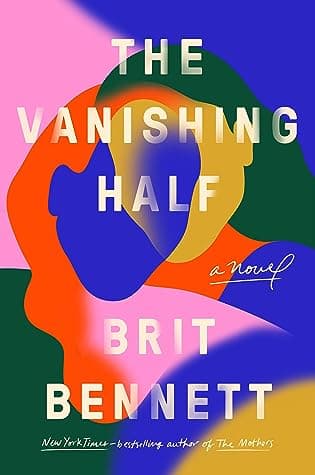
- The Vanishing Half
Brit Bennett
4.3 (132k) average on GoodreadsLiterary FictionExplores race, identity, and the complexities of human relationships in contemporary America.
- Queenie
Candice Carty-Williams
Features a young Black woman navigating professional and personal challenges, with humor and social insight.
- The Old Man and the Sea
Ernest Hemingway
3.8 (831k) average on GoodreadsLiterary FictionA Cuban fisherman's long struggle with a giant marlin becomes a story of endurance and dignity, now retold for young adults with illustrations, phonetic guides, and writing prompts in Traditional Chinese.
- One Hundred Years of Solitude
Gabriel García Márquez
4.1 (753k) average on GoodreadsLiterary FictionThrough the multi-generational story of the Buendía family, a mythical town deals with the repeating patterns of time, love, and solitude, as the extraordinary mixes with the ordinary.
- The Goldfinch
Donna Tartt
3.9 (720k) average on GoodreadsLiterary FictionHaunted by a tragic explosion and clutching a stolen Dutch masterpiece, a young orphan navigates the opulent drawing rooms of New York and the gritty underbelly of the art world, desperately seeking connection and redemption amidst a life spiraling into crime and obsession.
- Little Fires Everywhere
Celeste Ng
4.1 (713k) average on GoodreadsLiterary FictionIn Shaker Heights, an artist and her daughter move in, and their free-spirited lives clash with a rule-bound matriarch, revealing hidden conflicts beneath a perfect surface.




Enjoyed the summary?
A summary gives you the shape of the book. The book itself has the detail, the examples and the voice.
Find Such a Fun Age on AmazonAs an Amazon Associate, BookBrief earns from qualifying purchases. How we're funded