

Synopsis
Covers the whole plot, including the ending.
- Difficulty
- Medium
- Pacing
- Moderate
- Mood
- Atmospheric, Reflective, Melancholy, Resilient, Detailed
- Read it if
- You enjoy character-driven literary fiction with a strong sense of place, exploring themes of family, morality, and political corruption against a vivid historical backdrop.
- Skip it if
- You prefer fast-paced plots, lighthearted themes, or dislike detailed descriptions of everyday life and internal struggles.
Such a Long Journey Plot Summary
Covers the whole plot, including the ending.
A Day in the Life of Gustad Noble
The novel begins in Bombay, 1971, introducing Gustad Noble, a Parsi bank clerk living in Khodadad Building. He is a careful man, devoted to his family: his wife Dilnavaz, daughter Roshan, and sons Sohrab and Darius. His routine includes his morning walk, talking with his neighbors, and his work at the bank. We meet Major Bilimoria, a close friend of Gustad's, and learn about their shared past. Gustad observes the various people in his building, such as the mysterious Miss Kutpitia and the constantly arguing Tehmul, a mentally challenged man. He worries about Sohrab's school performance and Roshan's repeated illness, and is generally a man burdened by the small worries of middle-class life, yet finding comfort in his family and friends. The approaching war with Pakistan over Bangladesh is a distant background sound.
The Mysterious Letter and Major Bilimoria's Request
Gustad receives a letter from Major Bilimoria, who is now in Delhi. The letter is very unusual, telling Gustad to deposit a large sum of money into an inactive bank account, with more instructions to follow. Bilimoria emphasizes the need for secrecy and trust, hinting at a matter of national importance. Gustad is at first confused and uneasy, as the amount is large and the details are vague. He tells Dilnavaz, who, despite her initial worry and superstitious fears, agrees to support him. This request marks the start of Gustad's accidental involvement in political intrigue, disrupting his predictable life and placing a heavy responsibility on him.
Financial Strain and Sohrab's Defiance
Gustad begins the difficult task of arranging the funds as Bilimoria instructed. This involves many trips to the bank, withdrawing large sums, and depositing them into the specified account, all appearing as normal transactions. The secrecy and the sheer amount of money weigh heavily on him. At the same time, his son Sohrab says he wants to drop out of architecture college and join the army. This news upsets Gustad, who has high hopes for Sohrab's future and sees the army as a dangerous and unpromising path. The conflict between father and son grows, adding stress to Gustad's already complicated life and showing the generational difference in their hopes and understanding of duty.
Roshan's Deteriorating Health and Dilnavaz's Rituals
Roshan's health continues to worsen, with constant headaches and weakness. Gustad and Dilnavaz are deeply concerned. Dilnavaz, increasingly desperate, turns to traditional Parsi rituals and superstitions to ward off evil spirits she believes are affecting her daughter. She consults a local exorcist, Miss Kutpitia, who performs various ceremonies and suggests remedies, much to Gustad's doubt. While Gustad prefers conventional medicine, he allows Dilnavaz to pursue these spiritual methods, understanding her motherly pain. The difference between Gustad's rational approach and Dilnavaz's faith-based actions shows their different ways of coping with uncertainty and sorrow, while Roshan's suffering remains a constant worry for the family.
The Wall and the Beggar
Gustad decides to have the old wall outside Khodadad Building painted, hoping to improve its look and prevent public urination. He hires a street painter, who initially paints advertisements. However, Gustad soon notices a beggar, a starving woman with a baby, who regularly sits by the wall. He begins to give her food, forming a quiet, caring connection. Later, Gustad asks the painter to depict a bright, scenic landscape on the wall. This act of community improvement, driven by Gustad's desire for order and beauty, also shows his inherent empathy and sense of responsibility towards his surroundings and its less fortunate inhabitants, creating a small colorful spot in his increasingly troubled world.
The Truth About Bilimoria's Scheme
As the war gets worse and the financial transactions continue, Gustad becomes more suspicious of Bilimoria's reasons. He follows clues, eventually leading him to a contact who reveals the shocking truth: the money Gustad has been handling is part of a secret government operation, but not for the noble purposes Bilimoria suggested. It is a secret fund, taken from public resources, used to send money to the Prime Minister's son, who is involved in corrupt deals related to the upcoming elections. Bilimoria, caught in the political system, was forced to involve Gustad. The discovery shatters Gustad's trust in his friend and his belief in the government's integrity, leaving him feeling betrayed and used.
Confrontation and Betrayal
Devastated by the truth, Gustad travels to Delhi to confront Major Bilimoria. Bilimoria, now clearly broken and ill, confesses the entire affair. He explains how he was forced to participate in the corrupt scheme, using his friendship with Gustad to move the illegal funds without suspicion. He reveals that his own life is in danger and expresses deep regret for involving Gustad, admitting he had no other choice. The confrontation is painful, marking the end of a cherished friendship and leaving Gustad feeling deeply disappointed. Bilimoria's confession highlights the widespread corruption and the vulnerability of individuals caught in the machinery of power, even those who initially believed they were serving a greater good.
The Aftermath and Sohrab's Departure
Returning to Bombay, Gustad is consumed by anger and helplessness. He tries to warn others about the corruption but finds himself ignored. Bilimoria's betrayal leaves a deep scar. Meanwhile, the tension between Gustad and Sohrab reaches a breaking point. Despite Gustad's pleas, Sohrab remains determined to join the army. After a heated argument, Sohrab leaves home, creating a deep split in the family. Gustad is left to deal with the emotional emptiness, the lasting effects of the political scandal, and the ongoing worries about Roshan's health and the war, feeling increasingly alone and powerless in a world that seems to be falling apart around him.
War, Loss, and the Beggar's Fate
The Indo-Pakistani War over Bangladesh finally ends, with India winning. However, the end of the war does not bring peace to Gustad's life. He learns of Major Bilimoria's death, succumbing to his illness and the burden of his involvement in the political scandal. Gustad also discovers that the beggar woman, whom he had kindly fed by the wall, has died, likely from starvation or exposure. Her baby is taken away. These losses, both personal and anonymous, deepen Gustad's sorrow and highlight the widespread suffering in the world, even amid national triumph, reinforcing his feeling of helplessness in the face of larger forces.
The Wall's Transformation and Public Indifference
After the war, the beautiful landscape painted on the wall of Khodadad Building is covered with political slogans and propaganda celebrating the Prime Minister's victory. Gustad tries to erase them, but they are quickly repainted. Frustrated, he asks the painter to paint a new mural, depicting a more abstract, hopeful image. However, the public, including his neighbors, remains largely indifferent to Gustad's efforts to maintain beauty and meaning in their environment. The wall, initially a symbol of Gustad's hope and an attempt to create order, becomes a clear reflection of the prevailing political climate and society's general apathy, further isolating Gustad in his idealism.
Reconciliation and Hope
After a period away, Sohrab returns home, having not joined the army but instead finding work elsewhere. His return brings great relief and joy to Gustad and Dilnavaz. While the reasons for his change of heart are not fully detailed, his presence signals a tentative reconciliation within the family. Roshan's health also shows signs of improvement. Although the scars of the past remain, and the world outside continues to be turbulent, Sohrab's return and Roshan's improving health offer Gustad a glimmer of hope. The family begins the slow process of healing and rebuilding their relationships, finding strength in their renewed togetherness.
A New Beginning for the Wall and Gustad
In the novel's ending, Gustad reflects on his experiences and the 'long journey' he has taken. He continues his quiet acts of defiance and compassion. He notices that the political slogans on the wall are slowly fading, and he occasionally adds a touch of color to the painted landscape. He accepts life's imperfections and the world's, finding meaning in his continued efforts to bring beauty and order, however small. The novel ends with Gustad looking towards the future with renewed resilience, having navigated betrayal, loss, and disappointment, but ultimately finding strength in his moral compass and the lasting bonds of family and community, however flawed they may be.
Such a Long Journey Characters
Gustad Noble
Protagonist
A meticulous Parsi bank clerk and devoted family man caught in political intrigue.
Gustad Noble is a middle-aged Parsi man, a meticulous and principled bank clerk living in Bombay. He is devoted to his wife, Dilnavaz, and his three children, Roshan, Sohrab, and Darius. He values order, cleanliness, and intellectual pursuits, often worrying about his children's futures and the state of his community. Initially somewhat naive, his sense of duty and loyalty leads him into a dangerous political conspiracy orchestrated by his old friend, Major Bilimoria. He is a man of strong moral convictions, struggling to maintain his integrity and protect his family amidst a rapidly changing and corrupt world.
Relationships: Dilnavaz Noble (Wife; his confidante and emotional anchor); Sohrab Noble (Son; their relationship is strained by generational differences and Sohrab's rebellion); Roshan Noble (Daughter; her illness is a constant source of worry and love for Gustad); Major Bilimoria (Close friend; their bond is shattered by betrayal and political manipulation); Tehmul (Mentally challenged neighbor; Gustad shows him kindness and patience)
Dilnavaz Noble
Supporting
Gustad's superstitious but loving wife, a source of comfort and concern.
Dilnavaz is Gustad's wife, a traditional Parsi woman who deeply loves her family. She is more superstitious and prone to traditional beliefs and rituals than Gustad, especially when it comes to her children's health. She is initially hesitant about Gustad's involvement in Bilimoria's scheme but ultimately stands by him, offering emotional support and grounding. Her anxieties often manifest as nagging, but her intentions are always rooted in care for her family. She represents the domestic sphere and the emotional heart of the Noble household, balancing Gustad's more rational and outward-looking perspective.
Relationships: Gustad Noble (Husband; his emotional support and partner); Roshan Noble (Daughter; deeply concerned about her health, resorting to traditional remedies); Sohrab Noble (Son; tries to mediate between Sohrab and Gustad)
Sohrab Noble
Supporting
Gustad's eldest son, who defies his father's academic expectations.
Sohrab is Gustad's eldest son, a bright but rebellious young man. He is studying architecture but feels no passion for it, instead aspiring to join the army, much to his father's dismay. His defiance creates significant tension and conflict within the Noble household, representing the generational gap and the struggle for individual identity against parental expectations. Sohrab's actions force Gustad to confront his own ideals and the changing aspirations of the youth in 1970s India. His eventual return home, though not fully explained, signifies a tentative reconciliation and a step towards mutual understanding.
Relationships: Gustad Noble (Father; their relationship is fraught with conflict and differing expectations); Dilnavaz Noble (Mother; she tries to bridge the gap between father and son)
Roshan Noble
Supporting
Gustad's young daughter, whose recurring illness causes family distress.
Roshan is Gustad and Dilnavaz's young daughter, who suffers from a recurring, mysterious illness, primarily severe headaches. Her fragile health is a constant source of worry and a test of faith for her parents, particularly Dilnavaz. Roshan's innocence and vulnerability highlight the preciousness of life and the deep love within the Noble family, providing a stark contrast to the external corruption and political turmoil. Her eventual improvement offers a glimmer of hope amidst the family's trials, symbolizing resilience and the possibility of healing.
Relationships: Gustad Noble (Father; deeply concerned for her well-being); Dilnavaz Noble (Mother; desperate to find a cure for her daughter's illness)
Major Bilimoria
Antagonist/Supporting
Gustad's charismatic old friend who betrays him into a corrupt political scheme.
Major Bilimoria is Gustad's charismatic, once-heroic old friend, now a high-ranking officer in Delhi. He is the catalyst for Gustad's entanglement in the political conspiracy, initially portraying his request as a mission of national importance. However, he is revealed to be a victim of political coercion himself, forced to implicate Gustad in a corrupt scheme involving the Prime Minister's son. Despite his betrayal, his character evokes a complex mix of sympathy and anger, as he himself is a broken man, caught in a system far larger than himself, ultimately dying, perhaps from illness or the weight of his actions.
Relationships: Gustad Noble (Close friend turned betrayer; their friendship is central to the plot's conflict)
Tehmul
Supporting
A mentally challenged resident of Khodadad Building, often a source of both irritation and innocent observation.
Tehmul is a mentally challenged man who lives in Khodadad Building. He is often seen engaging in repetitive behaviors, such as yelling out names or arguing with himself, which can be a source of irritation for some residents, but also provides moments of innocent humor. Gustad treats him with a degree of patience and kindness, seeing beyond his condition. Tehmul serves as a poignant background character, a reminder of the diverse and sometimes challenging humanity within the building, and occasionally offers unexpected moments of insight or acts of simple loyalty.
Relationships: Gustad Noble (Neighbor; Gustad treats him with patience and understanding)
Miss Kutpitia
Supporting
A mysterious, reclusive neighbor and local exorcist.
Miss Kutpitia is an elderly, reclusive Parsi woman living in Khodadad Building, known for her spiritual practices and reputation as an exorcist. Dilnavaz consults her for remedies for Roshan's illness, much to Gustad's skepticism. Miss Kutpitia represents the traditional, spiritual, and superstitious aspects of the Parsi community, offering a contrast to Gustad's more rational worldview. Her presence highlights the blend of modern and traditional beliefs that coexist in Bombay society.
Relationships: Dilnavaz Noble (Client; Dilnavaz seeks her help for Roshan's illness)
The Beggar Woman
Mentioned
A destitute woman who sits by the building wall, a recipient of Gustad's quiet compassion.
The beggar woman is an unnamed, impoverished woman with a baby who regularly sits by the wall of Khodadad Building. Gustad quietly provides her with food, developing a silent, compassionate connection. She symbolizes the widespread poverty and suffering in Bombay, often overlooked by society. Her eventual death, likely from starvation, profoundly affects Gustad, reinforcing his sense of helplessness against larger societal ills and the fragility of life.
Relationships: Gustad Noble (Benefactor; Gustad offers her food out of compassion)
Such a Long Journey Themes
Corruption and Disillusionment
The novel clearly shows the widespread corruption in political and government systems, leading to deep disappointment for its main character. Gustad's journey from trusting his friend Major Bilimoria to discovering the truth about the illegal funds shatters his belief in integrity and justice. The scheme, designed to benefit the Prime Minister's son, shows how power can be misused and how even seemingly good people like Bilimoria can be forced into being involved. This theme is highlighted by the public's and media's indifference to these truths, leaving Gustad feeling alone in his moral outrage. The betrayal of trust and the realization of systemic decay leave Gustad with a deep sense of loss, not just for his friendship but for his faith in the system.
“A man's integrity is like a precious heirloom, to be guarded carefully. But sometimes, the world snatches it from your hands.”
Family and Duty
A central theme in the novel is family and the complex duties and expectations within it. Gustad is a devoted family man, always trying to provide for and protect his wife, Dilnavaz, and his children. His struggles with Sohrab's rebellion against his academic hopes show the generational clash of duties and individual desires. The worry over Roshan's illness further emphasizes the depth of parental love and how far parents will go for their children. Despite outside pressures and internal conflicts, the family remains Gustad's main support, and their eventual reconciliation offers a powerful message about the lasting strength of family bonds in a turbulent world.
“The family was like a ship, Gustad thought, sailing through the turbulent waters of life, sometimes battered, sometimes becalmed, but always striving to stay afloat together.”
The Search for Meaning and Order
Gustad consistently tries to create order and find meaning in a world that often feels chaotic and unfair. His careful routines, his efforts to beautify the old wall of Khodadad Building, and his attempts to understand political schemes all come from this drive. The defacement of the wall with political slogans and the public's indifference challenge his efforts, symbolizing the difficulty of maintaining beauty and integrity in a corrupt society. Despite setbacks, Gustad's persistent, quiet acts of defiance and compassion—like feeding the beggar woman or caring for the wall—represent his ongoing search for personal meaning and his creation of small areas of order and beauty amid the larger disorder.
“What was the purpose of all this? This long journey, this constant struggle, if not to find some small measure of meaning, some small corner of beauty?”
Resilience and Compassion
Despite the overwhelming betrayals, losses, and disappointments he faces, Gustad shows remarkable resilience and a constant sense of compassion. He endures the political scandal, his friend's death, his daughter's suffering, and his son's rebellion, yet he continues to care for those around him. His quiet acts of kindness towards the beggar woman and Tehmul, and his persistent efforts to maintain the wall, show his inherent goodness. The novel argues that even in the face of great hardship, the human spirit can find strength to carry on, to forgive, and to continue striving for a better, more humane existence, finding comfort in small victories and lasting connections.
“Life was a long journey, full of unexpected turns and rough patches, but one had to keep walking, one had to keep hoping.”
Social and Political Change
Set during the 1971 Indo-Pakistani War and the creation of Bangladesh, the novel explores the social and political changes sweeping through India. The war itself, while a distant event for Gustad, provides the context for the political corruption that traps him. The novel subtly criticizes post-independence India, highlighting the growing corruption and the decline of ideals. The changing aspirations of the youth, as seen in Sohrab's desire to join the army, also reflect a society in transition. The novel captures the worries and transformations of a nation dealing with its identity, its leadership, and the impact of global events on ordinary lives.
“The world was changing, Gustad thought, faster than a man could keep pace, and not always for the better.”
Plot Devices & Literary Techniques
The Wall
A physical structure outside Khodadad Building that serves as a canvas for social and political commentary.
The wall outside Gustad's building is a significant symbolic device. Initially a dilapidated structure, Gustad's decision to have it painted reflects his desire for order, beauty, and community improvement. It becomes a canvas for the street painter's art, then a site for a beggar's suffering, and later, a target for political graffiti. The wall visually manifests the changing social and political landscape of Bombay, the resilience of art, the impact of poverty, and the struggle between individual idealism and societal indifference. Its constant transformation mirrors Gustad's internal journey and the external turmoil.
The Mysterious Letter
A cryptic correspondence from Major Bilimoria that initiates the central conflict.
The letter Gustad receives from Major Bilimoria is the inciting incident of the novel. Its vague but insistent tone, demanding secrecy and trust, immediately draws Gustad into a world beyond his mundane existence. It functions as a classic 'MacGuffin' at first, driving the plot forward while its true purpose remains hidden. As Gustad unravels the mystery behind the letter's request, it transforms into a symbol of betrayal and the corrupting influence of power, fundamentally altering Gustad's perception of his friend and the world.
Superstitions and Rituals
The traditional Parsi beliefs and practices employed by Dilnavaz to cope with uncertainty.
Dilnavaz's adherence to Parsi superstitions and rituals, particularly in response to Roshan's illness, acts as a foil to Gustad's more rational approach. These practices, such as consulting Miss Kutpitia for exorcisms and performing various ceremonies, highlight the blend of tradition and modernity in Indian society. They serve to underscore Dilnavaz's maternal anxiety and her desperate search for control in the face of the unknown, contrasting with Gustad's skepticism yet his eventual acceptance of her need for such comfort. This device enriches the cultural texture of the novel and illustrates different ways of coping with hardship.
The Indo-Pakistani War of 1971
The historical backdrop that provides context for political corruption and social unrest.
The 1971 war, though largely in the background of Gustad's daily life, is a crucial historical plot device. It provides the political context for Major Bilimoria's corrupt scheme, which is ostensibly tied to national security but is actually a means of illicit enrichment. The war amplifies the sense of national anxiety and instability, making the political machinations more plausible and more dangerous. It also influences characters' decisions, such as Sohrab's desire to join the army, and serves as a reminder of the larger forces at play beyond the immediate concerns of Gustad's neighborhood, linking personal struggles to national events.
Such a Long Journey Quotes
“The past is a phantom, a whisper, a memory. It slips through your fingers even as you try to grasp it.”
“Life's a game, little fellow. You win some, you lose some. But the important thing is to keep playing.”
“Sometimes, the biggest battles are fought not with weapons, but with words, or even with silence.”
“The heart has its own reasons, which reason knows nothing of.”
“Hope is a fragile thing, easily broken, but essential for survival.”
“In a city of millions, it's still possible to feel utterly alone.”
“The world changes, but human nature, it stays the same. Greed, fear, love, hate – always there.”
“Sometimes, doing nothing is the hardest thing of all.”
“A man's dignity is all he has left when everything else is stripped away.”
“The truth is a tricky thing. Sometimes it hurts more than a lie.”
“Family is like a tree. The roots run deep, even when the branches grow apart.”
“The weight of a secret can be heavier than the weight of the world.”
“Even in the darkest times, there are small acts of kindness that keep the human spirit alive.”
“Life has a way of throwing curveballs when you least expect them.”
Quiz
10 questions on the plot and the characters. Each answer comes with a short explanation.
Question 1
What is the primary profession of the protagonist, Gustad Noble?
- A textile merchant
- A bank clerk
- A government official
- A school teacher
Show answer
B. A bank clerk Gustad Noble works as a diligent bank clerk, which is central to his modest life and how he perceives his family's financial stability.
Question 2
In what year is the novel primarily set, coinciding with a significant historical event?
- 1965
- 1971
- 1947
- 1984
Show answer
B. 1971 The story takes place in Bombay in 1971, the year India went to war over what was to become Bangladesh, providing a turbulent historical backdrop.
Question 3
What does Gustad's old friend, Major Bilimoria, ask him to do that eventually draws him into a dangerous network?
- Help him find a new job
- Invest money in a new business venture
- Handle a series of financial transactions for a 'secret mission'
- Shelter a political refugee
Show answer
C. Handle a series of financial transactions for a 'secret mission' Major Bilimoria asks Gustad to manage a series of financial transactions, initially presented as an 'heroic mission,' which later reveals itself to be a deceptive scheme.
Question 4
Which of Gustad's children defies his father's ambitions for him by pursuing a different path?
- His daughter, Roshan
- His son, Sohrab
- His daughter, Zarine
- His son, Darius
Show answer
B. His son, Sohrab Sohrab, Gustad's promising son, defies his father's wishes and ambitions, creating significant tension within the family.
Question 5
What significant health issue affects Gustad's young daughter?
- A severe respiratory illness
- A chronic heart condition
- Typhoid fever
- A debilitating bone disease
Show answer
C. Typhoid fever Gustad's young daughter falls ill with typhoid, adding to the family's woes and financial strain.
Question 6
What is the name of the Parsi colony where Gustad and his family reside?
- Firozsha Baag
- Malabar Hill
- Colaba Causeway
- Bandra Reclamation
Show answer
A. Firozsha Baag Gustad and his family live in the distinctive Parsi colony of Firozsha Baag, a setting rich in community and character details.
Question 7
What is a central theme explored through Gustad's journey and his involvement with Bilimoria's request?
- The pursuit of romantic love
- The erosion of morality and innocence in a corrupt world
- The importance of material wealth for happiness
- The triumph of individual ambition over societal norms
Show answer
B. The erosion of morality and innocence in a corrupt world The novel charts 'the journey of a moral heart in a turbulent world of change,' highlighting the erosion of Gustad's innocence and moral compass as he becomes entangled in deception.
Question 8
Which of the following is NOT a significant element contributing to Gustad's 'modest life unravelling'?
- His daughter's illness
- His son's defiance of his ambitions
- His wife's decision to leave him
- His involvement in Bilimoria's scheme
Show answer
C. His wife's decision to leave him While his daughter's illness, son's defiance, and the scheme all contribute to his life unravelling, the novel does not mention his wife leaving him.
Question 9
How does Gustad initially perceive Major Bilimoria's request for help?
- As a foolish and risky venture
- As an opportunity for personal gain
- As an heroic mission, noble and patriotic
- As a simple favour between old friends
Show answer
C. As an heroic mission, noble and patriotic The synopsis states that Bilimoria's mission 'at first seems like an heroic mission,' suggesting Gustad initially views it as something noble and important.
Question 10
What does the 'long journey' in the title primarily refer to in the context of Gustad Noble?
- His physical travels across India
- His career progression within the bank
- His moral and emotional transformation amidst personal and political turmoil
- The extended duration of the war in Bangladesh
Show answer
C. His moral and emotional transformation amidst personal and political turmoil The title refers to Gustad's internal 'journey of a moral heart in a turbulent world of change,' indicating his personal growth, disillusionment, and transformation rather than literal travel.
Such a Long Journey FAQ
What is the central premise of 'Such a Long Journey'?
The novel centers on Gustad Noble, a Parsi bank clerk in Bombay during 1971, whose ordinary life is disrupted by personal family struggles and his unwitting involvement in a clandestine political scheme orchestrated by an old friend. It explores his moral journey as he navigates these challenges amidst the backdrop of India's war with Pakistan.
Who is Gustad Noble and what are his primary concerns at the beginning of the story?
Gustad Noble is a middle-aged Parsi man, a meticulous and principled head clerk at the Central Bank of India. His primary concerns revolve around his family: his wife Dilnavaz, his sons Sohrab and Darius, and his daughter Roshan, whose mysterious illness becomes a major source of anxiety and financial strain.
What significant historical event serves as a backdrop for the novel?
The novel is set against the backdrop of the Indo-Pakistani War of 1971, which led to the creation of Bangladesh (formerly East Pakistan). This conflict is not just a distant event but directly impacts Gustad's life through the political intrigue he becomes involved in and the general atmosphere of uncertainty in Bombay.
How does Gustad's son, Sohrab, challenge his father's ambitions?
Sohrab, Gustad's eldest son, defies his father's fervent wish for him to attend an elite engineering college, instead choosing to drop out and pursue his own path, leading to a significant rift in their relationship. This decision deeply wounds Gustad, who sees it as a rejection of his sacrifices and dreams for Sohrab's future.
What role does Major Bilimoria play in Gustad's life?
Major Bilimoria is Gustad's old friend from their college days, who re-enters his life with a request to handle secret financial transactions. This request, initially presented as a patriotic endeavor, slowly draws Gustad into a dangerous web of political corruption and deception, ultimately leading to Bilimoria's disappearance and Gustad's legal troubles.
What is the significance of the wall outside Gustad's apartment building?
The wall outside Gustad's apartment is initially defaced with crude graffiti, causing him great distress. His efforts to have it cleaned or painted lead to an unexpected artistic transformation by a street artist, painting religious figures. This becomes a symbol of beauty, faith, and community resilience, drawing people together and offering solace, before its eventual re-degradation.
How does the character of Tehmul, the mentally challenged boy, contribute to the narrative?
Tehmul, a simple-minded boy who assists Gustad, serves as a poignant symbol of innocence and vulnerability in a complex world. His tragic death, a result of being run over by a truck, highlights the harsh realities and random cruelties of life in Bombay, further deepening Gustad's sense of loss and the fragility of existence.
What is the 'package' Gustad is asked to handle for Major Bilimoria, and what does it represent?
The 'package' Gustad handles for Major Bilimoria consists of large sums of money, which Gustad believes are for a covert national security operation. It is later revealed to be part of a vast corruption scheme involving powerful politicians, representing the betrayal of public trust and the deep-seated moral decay within the political system.
How does Gustad's Parsi identity influence his worldview and actions?
Gustad's Parsi identity grounds him in a strong sense of community, tradition, and moral rectitude, which informs his meticulous nature and his desire for his children to succeed. However, it also contributes to his feelings of being an outsider in the broader Indian society, and his adherence to Parsi values often clashes with the pragmatic or corrupt realities he faces.
Analyze the psychological impact of Major Bilimoria's betrayal on Gustad.
Major Bilimoria's betrayal shatters Gustad's trust and deeply wounds him, leading to feelings of anger, disillusionment, and a profound sense of foolishness for being manipulated. This betrayal forces Gustad to confront the harsh reality of corruption and the moral compromises even seemingly good people can make, challenging his naive worldview.
How does the novel explore the theme of father-son relationships through Gustad and Sohrab?
The novel explores the complex dynamics of love, expectation, disappointment, and eventual reconciliation between Gustad and Sohrab. Gustad's inability to accept Sohrab's choices stems from his own unfulfilled ambitions and a desire for his son's success, while Sohrab struggles for independence, leading to a profound emotional distance that slowly begins to heal towards the end.
What role does superstition and faith play in the lives of the characters, particularly Dilnavaz?
Superstition and faith are integral to the characters' lives, providing comfort and a means of coping with uncertainty. Dilnavaz, Gustad's wife, frequently consults a fortune-teller and performs rituals, reflecting a common human need to find meaning and control in a world often beyond their understanding, especially when facing illness or misfortune.
What is the significance of the title 'Such a Long Journey'?
The title 'Such a Long Journey' refers to both the literal and metaphorical journeys undertaken by Gustad. It encompasses his daily commute, the long process of dealing with family issues and political intrigue, and most importantly, his moral and emotional growth as he navigates betrayal, loss, and the shifting landscape of his world, ultimately finding a measure of peace.
How does the novel portray the concept of 'justice' in a corrupt society?
The novel portrays justice as often elusive and distorted in a corrupt society. Gustad's attempts to seek justice for Bilimoria's actions and his own involvement are met with bureaucratic indifference and political cover-ups. True justice, for Gustad, ultimately comes not through the legal system but through his personal integrity, resilience, and the healing of his family relationships.
Is Gustad Noble a tragic hero or an everyman figure?
Gustad Noble can be seen as both. He embodies the 'everyman' through his ordinary struggles, but his unwavering moral compass and the profound personal and political betrayals he endures elevate him to a tragic figure. His journey highlights the vulnerability of the common person against systemic corruption, yet his resilience and eventual peace are heroic.
What is the ultimate fate of Gustad and his family at the end of the novel?
By the novel's end, Gustad has found a degree of peace and reconciliation. His daughter Roshan recovers, and he begins to mend his relationship with Sohrab. While the political corruption remains largely unpunished, Gustad has navigated his personal trials with integrity, emerging with a stronger sense of self and family, despite the lingering scars.
How does the novel use humor to balance its darker themes?
The novel deftly employs humor, often through the eccentricities of Gustad's neighbors and the absurdities of daily life in Bombay, to lighten the pervasive themes of corruption, illness, and despair. This humor, often observational or situational, provides moments of levity and human connection, preventing the narrative from becoming overly bleak and highlighting the resilience of the human spirit.
What is the significance of the Parsi community's role in the narrative?
The Parsi community serves as a microcosm of tradition, community support, and occasionally, insularity. It highlights Gustad's cultural roots, providing both comfort and constraint. The depiction of Parsi customs, language, and social dynamics enriches the novel's cultural tapestry and underscores Gustad's identity within a specific cultural context.
Similar books
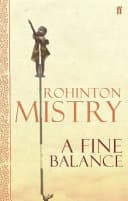
- A Fine Balance
Rohinton Mistry
4.3 (129k) average on GoodreadsLiterary FictionShares Mistry's signature style, exploring resilience and human connection amidst socio-political turmoil in India.
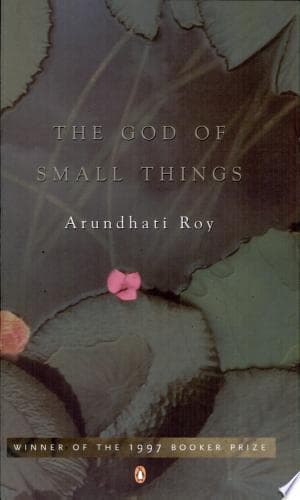
- The God of Small Things
Arundhati Roy
3.9 (244k) average on GoodreadsLiterary FictionOffers a rich, immersive portrayal of family life and societal issues in India, with beautiful prose.
- The Old Man and the Sea
Ernest Hemingway
3.8 (831k) average on GoodreadsLiterary FictionA Cuban fisherman's long struggle with a giant marlin becomes a story of endurance and dignity, now retold for young adults with illustrations, phonetic guides, and writing prompts in Traditional Chinese.
- One Hundred Years of Solitude
Gabriel García Márquez
4.1 (753k) average on GoodreadsLiterary FictionThrough the multi-generational story of the Buendía family, a mythical town deals with the repeating patterns of time, love, and solitude, as the extraordinary mixes with the ordinary.
- The Goldfinch
Donna Tartt
3.9 (720k) average on GoodreadsLiterary FictionHaunted by a tragic explosion and clutching a stolen Dutch masterpiece, a young orphan navigates the opulent drawing rooms of New York and the gritty underbelly of the art world, desperately seeking connection and redemption amidst a life spiraling into crime and obsession.
- Little Fires Everywhere
Celeste Ng
4.1 (713k) average on GoodreadsLiterary FictionIn Shaker Heights, an artist and her daughter move in, and their free-spirited lives clash with a rule-bound matriarch, revealing hidden conflicts beneath a perfect surface.




Enjoyed the summary?
A summary gives you the shape of the book. The book itself has the detail, the examples and the voice.
Find Such a Long Journey on AmazonAs an Amazon Associate, BookBrief earns from qualifying purchases. How we're funded