
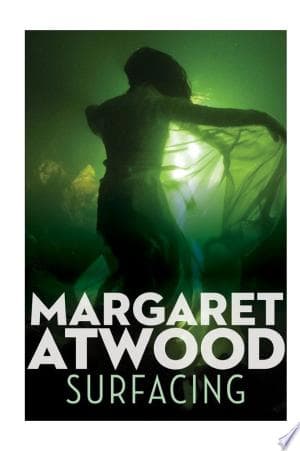
Synopsis
Covers the whole plot, including the ending.
- Difficulty
- Medium
- Pacing
- Slow
- Mood
- Atmospheric, Psychological, Meditative, Disquieting
- Read it if
- You enjoy introspective literary fiction with a psychological mystery and themes of nature, identity, and gender.
- Skip it if
- You prefer fast-paced thrillers or clear-cut resolutions, or are sensitive to themes of mental distress and animal cruelty.
Surfacing Plot Summary
Covers the whole plot, including the ending.
The Journey North
The unnamed narrator, a commercial artist, travels from Montreal to a remote island in northern Quebec with her lover, Joe, and their friends, David and Anna. Her father, a botanist and intellectual who lived alone, has gone missing from his cabin on the island. The narrator's brother, who usually visits their father, cannot go, so she investigates. The group takes a seaplane to the isolated lake, where the pilot tells them that the narrator's father's boat is still tied up, meaning he has not left by water. The narrator feels increasingly uneasy and distant from her companions, especially as she thinks about her past and the artificiality of her current life.
First Impressions and Growing Discomfort
Upon arriving at her father's cabin, the narrator finds it mostly as expected, but with some upsetting changes. Her father's large library and scientific equipment are there, but there are also strange, childlike drawings on the walls, including figures with fish-like heads. The group searches the immediate area, including the outhouse and the lake shore, but finds no trace of the father. The narrator remembers her childhood on the island, her mother's presence, and the strict, intellectual environment her father created. The dynamic between Joe, David, and Anna becomes more strained, marked by passive aggression and sexual tension, which further isolates the narrator.
The Drowned Man Story
During their stay, the narrator thinks about her past, especially an event involving a drowned man. She tells her companions a made-up story about being married and having a child that died. This is a partial truth hiding a more painful reality. In fact, she had an abortion years ago, a memory she has suppressed and reframed as a stillbirth to cope. This traumatic event is tied to the end of her short marriage and her subsequent emotional numbness. The island's isolation and her search for her father begin to bring these buried memories to the surface, challenging her carefully constructed identity.
The Search Intensifies
The search for the father extends to the lake. Using the father's old boat, they explore the many small islands and coves. The narrator finds more of her father's disturbing drawings, showing figures submerged in water, some with what look like gill-like features or webbed hands. These images connect with her own fragmented memories and anxieties about life and death. The group's interactions become more volatile; David often abuses Anna, and Joe struggles to connect with the narrator, who feels increasingly distant from him and their shared life. The wilderness begins to have a powerful, unsettling effect on her.
Encounter with the Americans
While on the lake, the group meets two American tourists who are fishing. David, driven by anti-American feelings and a desire to show dominance, confronts them about their fishing, accusing them of being destructive and disrespectful to the environment. The confrontation is tense and awkward, highlighting the group's own internal conflicts and projections. The narrator watches this interaction with a growing sense of alienation, seeing the artificiality and aggression in human behavior. This encounter further strengthens her feeling that modern civilization, represented by her companions and the Americans, is flawed and disconnected from nature.
The Underwater Drawing
Following a hint from her father's drawings, the narrator decides to dive into the lake near a specific rock formation. She believes her father, interested in ancient rock paintings and the area's spiritual meaning, may have left a message there. Underwater, she discovers a series of crude, unsettling drawings etched onto the rock face. These images, more primitive and disturbing than those in the cabin, show human-like figures with animalistic features, some seemingly trapped or drowning. This discovery deeply affects her, changing her view of her father's state of mind and suggesting a deeper, more primal understanding of his disappearance.
The Vision of the Drowned Baby
During another dive, prompted by the unsettling underwater drawings, the narrator experiences a powerful and disturbing hallucination. She sees what she believes is the body of a drowned infant floating in the lake. This vision is a direct sign of her repressed trauma: the memory of her abortion, which she has long reinterpreted as a stillbirth. The vision shatters her carefully built psychological defenses, forcing her to confront the reality of her past actions and the deep guilt and grief she has carried. This moment is a turning point, beginning her descent into a more primal, unstable state.
The Departure of Companions
The tension among the group reaches a breaking point. After a particularly violent and degrading sexual encounter involving David, Anna, and Joe, which the narrator watches with increasing detachment, she decides she cannot continue with them. She feels a deep disconnect from their human interactions, seeing them as artificial and destructive. David and Anna leave first, their marriage broken. Joe, confused and hurt by the narrator's growing distance and erratic behavior, eventually leaves as well, unable to understand or help her. The narrator is left alone on the island, free to pursue her increasingly primitive quest.
Descent into Primal State
Alone on the island, the narrator begins a radical change. She sheds her clothes, her possessions, and her civilized restraints. She stops speaking, communicating only through primal sounds and gestures. She forages for food, eats raw plants, and lives off the land, trying to reconnect with a more basic, animalistic existence. She believes she is shedding the layers of artificiality and societal conditioning that have separated her from her true self and from nature. This period is marked by intense sensory experiences and a blurring of the lines between human and animal, reality and hallucination.
Visions and Rebirth
In her wild state, the narrator experiences powerful visions. She sees her parents not as the intellectual figures she knew, but as primal, animalistic spirits, deeply connected to the wilderness. Her father appears as a nature god, her mother as a guardian spirit. She believes these visions are leading her to a deeper understanding of her own origins and her connection to the earth. She feels she is undergoing a rebirth, shedding her past and becoming a new, more integrated being. This intense spiritual and psychological journey ends with a deep, though unsettling, sense of peace and belonging to the natural world.
The Return of Joe
Just as the narrator feels she has fully integrated with nature, Joe returns to the island, having been unable to completely abandon her. He finds her naked, silent, and living in a feral state. His presence breaks her primal peace, reminding her of the human world and the limits of civilization. She faces a choice: to fully embrace her animalistic existence and reject humanity, or to try to rejoin society, though on her own terms. Joe's return forces her to acknowledge her humanity and the possibility of a different kind of connection, one that is not purely animalistic.
A Glimmer of Hope
Confronted by Joe, the narrator slowly begins to re-engage with her human self. While still deeply affected by her wilderness experience, she realizes that complete isolation is not her final path. She recognizes Joe's genuine concern and his willingness to accept her in her changed state. She decides to return with him, not out of submission, but out of a new, more authentic understanding of herself and her relationship with him. The ending is ambiguous but suggests a careful step towards reintegration, carrying the lessons of her primal journey into a more conscious and self-aware existence, potentially allowing for a more genuine connection with another human being.
Principal Figures
The Narrator
Protagonist
A commercial artist searching for her missing father and her fragmented identity.
The unnamed narrator is a detached and emotionally numb commercial artist, skilled at creating illusions. She carries a profound, unacknowledged trauma from an abortion she has reframed as a stillbirth. Her relationships are superficial, and she feels alienated from modern society and her own body. She is intelligent and observant but struggles with authenticity and connection, often retreating into internal monologues. Her journey to the island becomes a quest for self-discovery, forcing her to confront her past and her relationship with nature.
Relationships: Joe (Her live-in lover, whom she feels increasingly distant from and views with a mix of affection and anthropological curiosity.); Father (Her missing father, a reclusive intellectual and botanist whose disappearance triggers her journey and whose legacy profoundly shapes her identity.); Mother (Her deceased mother, whose memory represents a connection to nature and a more authentic femininity that the narrator seeks.); David (A superficial, aggressive friend who embodies the patriarchal and destructive aspects of modern masculinity.); Anna (A friend who is a victim of David's abuse and represents the subjugation of women in modern relationships.)
Joe
Supporting
The narrator's lover, a well-meaning but emotionally inarticulate man.
Joe is the narrator's live-in lover, a kind but somewhat ineffectual man who struggles to understand her increasing detachment. He works as a teacher, attempting to maintain a semblance of normalcy and civility amidst the group's deteriorating dynamics. He genuinely cares for the narrator but lacks the emotional tools to connect with her on a deeper level, often resorting to physical gestures or simple statements. He represents the more conventional, albeit flawed, aspects of human connection and loyalty, ultimately returning to the island to find her.
Relationships: The Narrator (Her live-in lover, whose increasing distance he struggles to comprehend but remains devoted to.); David (A friend whom he tolerates but is increasingly uncomfortable with due to David's aggressive behavior.)
David
Supporting/Antagonist
A superficial, aggressive friend who embodies patriarchal and destructive tendencies.
David is a friend of the narrator and Joe, married to Anna. He is a filmmaker, obsessed with superficial appearances and projecting a tough, masculine image. He is verbally and emotionally abusive towards Anna, embodying the destructive aspects of patriarchy and modern masculinity. His anti-American sentiments and environmental posturing are hypocritical, revealing his own insecurities and aggression. He acts as a foil to the narrator's quest for authenticity, representing the artificiality and violence she seeks to escape.
Relationships: Anna (His wife, whom he constantly degrades and abuses.); The Narrator (A friend whom he finds intriguing but cannot understand, often attempting to assert dominance over.)
Anna
Supporting
David's wife, a vulnerable woman trapped in an abusive relationship.
Anna is David's wife and a friend of the narrator. She is portrayed as vulnerable, insecure, and largely defined by her relationship with David. She is constantly subjected to his verbal and emotional abuse, leading her to seek solace in cosmetics and superficial distractions. She represents the subjugation of women in patriarchal relationships and the societal pressures to maintain appearances. Her gradual breakdown mirrors, in a more conventional way, the narrator's own unraveling, highlighting different responses to psychological distress.
Relationships: David (Her husband, who is verbally and emotionally abusive towards her.); The Narrator (A friend, whom she sometimes confides in but largely remains distant from due to her own issues.)
The Father
Mentioned/Catalyst
The narrator's missing, reclusive father, an intellectual and botanist.
The narrator's father is a reclusive intellectual, botanist, and philosopher who chose to live in isolation on the Quebec island. He educated his children with a rigorous, secular, and scientific approach, instilling in the narrator a keen observational mind but perhaps also contributing to her emotional detachment. His disappearance is the catalyst for the entire plot, and his cryptic drawings and writings suggest a late-life shift towards a more mystical or primal understanding of the world, influencing the narrator's own transformation.
Relationships: The Narrator (His daughter, whose intellectual development he greatly influenced, and whose search for him becomes a search for herself.); The Mother (His deceased wife, who provided a more grounding, natural presence in their family life.)
The Mother
Mentioned/Symbolic
The narrator's deceased mother, a more grounded figure than her father.
The narrator's deceased mother is remembered as a more grounded, practical, and nurturing figure compared to her intellectual father. She held a deeper, more intuitive connection to nature and the island's folklore. Her memory serves as a symbolic counterpoint to the father's purely rational approach, representing a lost connection to natural cycles and feminine wisdom. The narrator's visions and her longing for a more authentic existence often invoke her mother's presence, suggesting a desire to reclaim a part of herself that was suppressed.
Relationships: The Narrator (Her daughter, who seeks to understand her mother's connection to the land and to a more authentic femininity.); The Father (Her husband, whose intellectual pursuits she complemented with a more practical and intuitive approach to life.)
Themes & Insights
Search for Identity and Authenticity
The main theme is the narrator's search to shed her fragmented, artificial identity and find her true self. Her journey to find her missing father becomes a metaphorical descent into her own mind, forcing her to confront suppressed traumas and societal conditioning. She removes layers of artificiality, from her commercial art career to her made-up personal history, seeking a more genuine connection to herself and the world. This is clear in her rejection of her former life and her embrace of a primal existence, as seen when she discards her clothes and language to reconnect with her raw, instinctual nature.
“I was not an animal, not a goddess, I was a woman. I was not a tree, I was a woman. I was not a killer. I was a woman.”
Man vs. Nature / The Wilderness Within
The novel explores the conflict between human civilization and the natural world, suggesting that modern society has separated individuals from their basic, primal selves. The remote Quebec wilderness is both a physical setting and a metaphor for the narrator's inner world. As she goes deeper into the wild, she sheds the constraints of civilization, embracing an animalistic existence to find a deeper connection to the earth. This theme is powerfully shown by her father's late-life change, his strange drawings, and her own descent into a feral state, where she experiences visions and tries to communicate with nature on its own terms.
“The lake was a mirror, but it was not reflecting me. It reflected nothing. It was not a mirror.”
Trauma, Memory, and Repression
The story focuses on the impact of past trauma, especially the narrator's suppressed memory of an abortion, which she has reframed as a stillbirth. This act of repression has fragmented her identity and caused her emotional numbness. The island's isolation and the search for her father bring these buried memories to the surface, leading to a mental breakdown and eventual confrontation with her past. The repeated image of drowned figures and underwater visions directly symbolizes this hidden trauma, showing how unaddressed pain can distort perception and prevent true self-understanding.
“The word you can't say. The word you can't hear. The word that will kill you.”
Femininity, Motherhood, and Patriarchy
Atwood examines societal expectations for women, especially concerning femininity and motherhood, and the oppressive nature of patriarchy. The narrator's abortion and her subsequent emotional emptiness are central to this theme, representing a woman's struggle with choice and the deep impact of denying her own body. The relationships between David and Anna, and the narrator and Joe, expose the power dynamics and subtle aggressions within heterosexual partnerships. The narrator's eventual embrace of a primal, feminine wildness can be seen as a rejection of patriarchal norms and a reclaiming of an authentic, instinctual female power, separate from traditional roles of wife or mother.
“I used to think that when I got older, I would be able to make myself up, like a character in a book. But I'm just me.”
The Failure of Language and Communication
The novel explores how human language fails to convey true meaning or create real connection. The narrator often feels alienated by her companions' superficial conversations and struggles to express her own internal experiences. Her commercial art, which creates illusions, further emphasizes this theme. As she descends into her primal state, she gradually abandons language entirely, seeking a more basic, non-verbal form of communication with the natural world. This suggests that authentic understanding might lie beyond words, in intuition, instinct, and a direct engagement with existence.
“Words were no protection; they were only a disguise. I had to learn to live without them.”
Plot Devices & Literary Techniques
First-Person Unreliable Narrator
The story is told through the subjective, often distorted perspective of the protagonist.
The unnamed narrator recounts the events through her highly subjective and increasingly fragmented lens. Her unreliability stems from her repressed trauma (the abortion) and her emotional detachment, which leads her to misremember or fabricate details about her past. As she descends into a more primal state, her perceptions blur the lines between reality and hallucination, making the reader question the veracity of her experiences. This device immerses the reader in her psychological journey, creating suspense and challenging conventional notions of truth.
Symbolism of Water and Drowning
Water represents the subconscious, memory, and the boundary between life and death.
Water, particularly the lake, is a pervasive symbol throughout the novel. It represents the narrator's subconscious mind, where repressed memories and traumas (like the abortion) are submerged. Her father's cryptic drawings of drowned figures and her own underwater visions directly link water to death, rebirth, and the confrontation of her past. The act of diving into the lake is a metaphorical descent into her inner self, seeking to surface the hidden truths. It also acts as a boundary between the civilized world and the primal, untamed wilderness.
The Wilderness as a Mirror
The remote island environment reflects and amplifies the narrator's internal state.
The isolated Quebec wilderness is more than just a setting; it functions as a psychological mirror for the narrator's internal landscape. As she becomes increasingly detached from her companions and society, the wildness of the island amplifies her own sense of alienation and her desire to shed her civilized self. The untamed nature provides a space for her to explore her primal instincts and confront her fragmented identity. The natural world becomes a catalyst for her transformation, allowing her to 'surface' her true self from beneath layers of societal conditioning.
Cryptic Drawings and Messages
The father's artwork serves as clues and foreshadowing for the narrator's journey.
The father's strange, childlike drawings found in the cabin and etched underwater are crucial plot devices. Initially unsettling, they act as a breadcrumb trail, guiding the narrator's investigation into his disappearance and, by extension, into her own psyche. These images, depicting figures with animalistic features or submerged in water, foreshadow the narrator's own descent into a primal state and her confrontation with her repressed memories. They suggest a shift in the father's own understanding of reality, influencing the narrator's perception of him and her own path.
Animal Imagery
Animals and animalistic behavior reflect primal instincts and the shedding of humanity.
Animal imagery is used extensively to highlight the narrator's gradual shedding of her human identity and her embrace of a more primal existence. From the fish-headed figures in her father's drawings to her own observations of wildlife and her eventual adoption of animalistic behaviors (eating raw, moving on all fours, losing language), animals symbolize instinct, raw nature, and a connection to a pre-human state. This imagery underscores the theme of man's alienation from nature and the narrator's attempt to bridge that gap, finding authenticity in the non-human world.
Surfacing Quotes
“I can't believe I'm on this road again, twisting along past the lake where the fish are dying, the trees are dying, the animals are dying. I can't believe I'm going back to the place where I was born, the place I've been trying to forget.”
“The trouble is, I can't remember. I'm not sure how much of this I made up.”
“To be a victim is to have a destiny, but to be a survivor is to have a story.”
“We are the animals that make stories, and we tell them to each other, and we live inside them.”
“This above all, to refuse to be a victim. Unless I can do that I can do nothing.”
“The animals have their own kind of language, but it's not made of words.”
“I look at myself in the mirror and I'm not there. I'm just a space.”
“The forest is like a language I don't know yet.”
“If I could see myself, I would know what I am.”
“I feel as if I'm being pulled apart, as if I'm a puppet and someone else is pulling the strings.”
“The animals have a right to live. They have a right to their own shapes, their own skins.”
“I am not a tree, I am not a stone, but I am not human either.”
“It was not a question of choosing, but of being chosen.”
“I can walk out of here. I can go anywhere. I can be free.”
Quiz
10 questions on the plot and the characters. Each answer comes with a short explanation.
Question 1
What is the narrator's primary reason for returning to the remote island in northern Quebec?
- To escape a troubled relationship in the city.
- To search for her missing father.
- To find inspiration for her next art project.
- To revisit her childhood home and memories.
Show answer
B. To search for her missing father. The narrator travels to the island specifically to find her father, who has disappeared from his cabin.
Question 2
Which two characters accompany the narrator and her lover, Joe, on the trip to the island?
- Anna and David
- Clara and Peter
- Marie and Paul
- Sarah and Tom
Show answer
A. Anna and David The narrator's group consists of herself, Joe, and the married couple Anna and David.
Question 3
What does the narrator initially believe happened to her father, based on the notes he left?
- He went on a fishing trip and got lost.
- He chose to live permanently in the wilderness.
- He likely drowned or suffered an accident.
- He was kidnapped by local poachers.
Show answer
C. He likely drowned or suffered an accident. Her father's notes, particularly the maps and drawings, suggest he was looking for ancient cave paintings, leading her to believe he might have drowned or had an accident while diving.
Question 4
What significant personal memory does the narrator initially repress and later recall about her past?
- A traumatic childhood accident involving her mother.
- An abortion she had undergone.
- A failed marriage to a controlling artist.
- Being abandoned by her mother at a young age.
Show answer
B. An abortion she had undergone. The narrator initially believes she was married and had a child that was taken away, but later confronts the memory of having an abortion.
Question 5
What visual element does the narrator repeatedly associate with the 'Americans' or 'tourists' who visit the island?
- Expensive cameras and binoculars.
- Matching bright yellow raincoats.
- Red life jackets and fishing gear.
- Large, noisy motorboats.
Show answer
C. Red life jackets and fishing gear. The narrator frequently observes the 'Americans' wearing red life jackets, which she views with suspicion and as a symbol of their intrusive presence.
Question 6
What is the primary theme explored through the narrator's increasing connection to nature and rejection of human society?
- The superiority of primitive life over civilization.
- The search for authenticity and spiritual renewal.
- The dangers of isolation and madness.
- The inevitable decline of the natural world.
Show answer
B. The search for authenticity and spiritual renewal. As the narrator sheds her societal conditioning and embraces the wilderness, she seeks a more authentic existence and a connection to ancient, primal energies, culminating in a form of spiritual rebirth.
Question 7
What happens to the narrator's father's body?
- It is found by the local police and returned to the family.
- The narrator discovers it underwater near ancient drawings.
- It is never explicitly found, leaving his fate ambiguous.
- He reappears, having been lost but alive.
Show answer
B. The narrator discovers it underwater near ancient drawings. The narrator eventually dives and finds her father's body submerged in the lake, near the rock paintings he was searching for.
Question 8
What is the significance of the 'surfacing' motif throughout the novel?
- It refers to the act of fishing and catching prey.
- It symbolizes the narrator's repressed memories and true self emerging.
- It represents the rising water levels in the lake.
- It describes the act of mapping the lake's bottom.
Show answer
B. It symbolizes the narrator's repressed memories and true self emerging. The title and motif 'surfacing' are central to the narrator's journey, representing the emergence of her true, unadulterated self, and the return of her repressed memories and primal instincts.
Question 9
How does the narrator's perception of Joe, her lover, change by the end of the novel?
- She realizes she loves him deeply and wants to marry him.
- She sees him as a symbol of the superficial, 'false' human world she is rejecting.
- She views him as a strong, protective figure she can rely on.
- She becomes indifferent to him, focusing solely on her father's fate.
Show answer
B. She sees him as a symbol of the superficial, 'false' human world she is rejecting. As the narrator descends further into her primal state, she views Joe as a representative of the artificial, rational human world, seeing him as an 'animal' but also as a connection to the human species she is both part of and rejecting.
Question 10
What specific act does the narrator perform that signifies her complete surrender to a more primal, animalistic state?
- She burns all her clothing and possessions.
- She attempts to communicate with the local wildlife.
- She smears her body with clay and goes naked into the wilderness.
- She carves primitive symbols into the trees around her cabin.
Show answer
C. She smears her body with clay and goes naked into the wilderness. Towards the end of her transformation, the narrator sheds her clothes, smears herself with clay, and lives naked in the wilderness, signifying her complete rejection of human artifice and embrace of a primal existence.
Surfacing FAQ
What is the central premise of 'Surfacing'?
The protagonist, an unnamed female artist, travels to a remote island in northern Quebec with her lover, Joe, and another couple, David and Anna, to find her missing father. Her father, a reclusive botanist, has mysteriously disappeared from his cabin, prompting a search that uncovers more than just his whereabouts.
Who are the main characters accompanying the protagonist on her search?
The protagonist is accompanied by her emotionally distant lover, Joe, a potter who largely avoids deep conversation. Also present are David, a pretentious and misogynistic filmmaker, and his wife Anna, who is insecure and constantly seeks validation through her appearance and David's approval.
What is the significance of the island setting in the story?
The isolated island, where the protagonist grew up, serves as a crucial catalyst for her psychological unraveling and reconnection with nature. Its wilderness and lack of modern distractions force her to confront suppressed memories and primal instincts, ultimately leading to a profound transformation.
What kind of relationship does the protagonist have with her lover, Joe?
Their relationship is marked by emotional detachment and a lack of genuine communication. Joe is generally passive and avoids conflict, while the protagonist feels a growing sense of alienation from him, viewing him as just another 'man' and a part of the oppressive societal structures she begins to reject.
What specific clues do the characters find regarding the father's disappearance?
They find his cabin in disarray, a partially drawn map, and a collection of his detailed drawings of local flora and fauna, including some unusual, almost monstrous, illustrations. The most significant clue is a series of cryptic, seemingly nonsensical drawings and notes that suggest a profound mental shift or discovery on his part.
What is the 'abortion' the protagonist frequently refers to, and how does it impact her?
The protagonist initially claims to have had an abortion, but it is later revealed to be a fabricated memory; she actually gave birth to a child she gave up for adoption. This suppressed truth deeply affects her, manifesting as emotional numbness, a disconnect from her own body, and a profound sense of loss and guilt that she must eventually confront.
How do the 'rock paintings' found on the island connect to the protagonist's past and transformation?
The 'rock paintings' are not ancient indigenous art but rather the father's own final artistic expressions, depicting submerged figures and a 'child' figure. These images directly relate to the protagonist's repressed memory of her lost child and her father's own descent into a more primal, nature-bound state, guiding her toward her own 'surfacing' of truth.
What is the significance of the drowned figures the protagonist sees in the lake?
The drowned figures, particularly the one she initially believes is her father, are a manifestation of her psychological state and her re-engagement with her own trauma. They symbolize her lost child, her father's spiritual 'drowning' in nature, and the submerged truths she is struggling to bring to the surface.
How does the protagonist's perception of animals change throughout the novel?
Initially, she sees animals as separate from humans, but as she descends into a more primal state, she begins to identify with them, seeing them as pure and uncorrupted. She even feels a connection to the 'murdered' heron and eventually seeks to become more animalistic herself, rejecting human constructs.
Describe the psychological journey the protagonist undergoes on the island.
The protagonist experiences a profound psychological regression, shedding layers of societal conditioning and confronting suppressed memories. She moves from emotional numbness and dissociation to a primal, almost feral state, shedding her clothes and embracing a non-verbal, instinctual existence to achieve a form of spiritual rebirth.
How does the protagonist's relationship with her body evolve during her time on the island?
Initially, she feels disconnected from her body, viewing it as a separate entity, especially after her traumatic experience with her child. As she embraces the wilderness, she sheds her clothes and societal inhibitions, reconnecting with her physical self and experiencing a raw, unmediated sense of embodiment, culminating in a desire to conceive naturally.
What role does the theme of 'victimhood' play in the novel, particularly concerning Anna?
Anna embodies a conventional form of female victimhood, constantly seeking male approval and defining herself through her husband, David. Her obsession with makeup and appearance highlights her vulnerability to male gaze and societal pressures, reflecting the oppressive dynamics women face in the patriarchal society depicted.
Is the protagonist's final state a triumph or a tragic descent into madness?
This is highly debatable. Some interpret it as a triumph, a necessary shedding of societal constructs to achieve true self-discovery and connection with nature. Others view it as a tragic descent into madness, a complete break from reality that leaves her isolated and unable to function in human society, highlighting the dangers of extreme withdrawal.
How does 'Surfacing' explore the themes of environmentalism and humanity's relationship with nature?
'Surfacing' critiques humanity's destructive impact on nature through the protagonist's observations of pollution and the 'murdered' heron. Her eventual embrace of a more primal, animalistic state suggests a yearning for a harmonious, non-exploitative relationship with the natural world, contrasting with the destructive tendencies of modern society.
What is the significance of the protagonist's decision to get pregnant at the end of the novel?
Her desire to conceive, potentially with Joe or even through a more primal act, symbolizes her rebirth and acceptance of her own fertility and female power. It's an attempt to reclaim her body and create a new life free from the societal and psychological burdens of her past, a true 'surfacing' of her reproductive agency.
How does the novel challenge traditional gender roles and patriarchy?
The novel critiques patriarchy through the protagonist's internal monologue and her interactions with Joe and David, who represent different facets of male dominance. Her journey involves rejecting traditional female roles, shedding her dependence on men, and embracing a fierce, independent, and primal femininity, ultimately transcending patriarchal expectations.
What does the ending suggest about the possibility of returning to 'civilization' after such a profound transformation?
The ending leaves this ambiguous, implying that a full return to her former life or 'civilization' might be impossible or undesirable. While she acknowledges Joe's presence, her profound shift suggests a permanent alteration of her perception and being, making reintegration a challenging, if not impossible, prospect without compromising her newfound self.
How does the father's own journey parallel or foreshadow the protagonist's transformation?
The father's retreat into the wilderness, his rejection of modern society, and his final, cryptic drawings foreshadow the protagonist's own psychological unraveling and reconnection with nature. He, too, sought a deeper truth beyond human constructs, and his 'surfacing' into a more primal state guides his daughter toward her similar, albeit more intense, transformation.
About the author
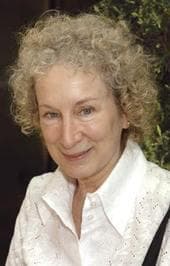
Margaret Eleanor Atwood is a Canadian poet, novelist, literary critic, essayist, teacher, environmental activist, and inventor. Since 1961, she has published eighteen books of poetry, eighteen novels, eleven books of non-fiction, nine collections of short fiction, eight children's books, two graphic novels, and a number of small press editions of both poetry and fiction. Atwood has won numerous awards and honors for her writing, including two Booker Prizes, the Arthur C. Clarke Award, the Governor General's Award, the Franz Kafka Prize, Princess of Asturias Awards, and the National Book Critics and PEN Center USA Lifetime Achievement Awards. A number of her works have been adapted for film and television.
Similar books
- The Bell Jar
Sylvia Plath
4.0 (591k) average on GoodreadsPsychologyExplores a woman's descent into mental illness and search for identity.
- Ariel
Sylvia Plath
4.2 (54k) average on GoodreadsPsychologyPoetic and intense exploration of self, nature, and female experience.
- Alias Grace
Margaret Atwood
4.0 (111k) average on GoodreadsLiterary FictionPsychological depth, exploration of female identity, and a sense of mystery.
- A House for Mr Biswas
V. S. Naipaul
3.8 (18k) average on GoodreadsLiterary FictionWhile seemingly disparate, Surfacing and Naipaul's A House for Mr Biswas (1961) both explore the protagonist's struggle for self-definition and autonomy, albeit through very different lenses. Naipaul's novel chronicles Mr. Biswas's lifelong quest for a house and independence against the backdrop of colonial Trinidadian society, focusing on external societal pressures and the search for a tangible place in the world. Surfacing, in contrast, shifts the focus inward, with the narrator's quest for her father becoming a catalyst for an internal, psychological unearthing of repressed memories and a rejection of modern civilization. Both novels, however, depict characters grappling with their place in a complex world, with Naipaul using humor and social realism, and Atwood employing psychological suspense and symbolic naturalism.
- The Old Man and the Sea
Ernest Hemingway
3.8 (831k) average on GoodreadsLiterary FictionA Cuban fisherman's long struggle with a giant marlin becomes a story of endurance and dignity, now retold for young adults with illustrations, phonetic guides, and writing prompts in Traditional Chinese.
- One Hundred Years of Solitude
Gabriel García Márquez
4.1 (753k) average on GoodreadsLiterary FictionThrough the multi-generational story of the Buendía family, a mythical town deals with the repeating patterns of time, love, and solitude, as the extraordinary mixes with the ordinary.






Enjoyed the summary?
A summary gives you the shape of the book. The book itself has the detail, the examples and the voice.
Find Surfacing on AmazonAs an Amazon Associate, BookBrief earns from qualifying purchases. How we're funded