

Synopsis
Covers the whole plot, including the ending.
- Difficulty
- Medium
- Pacing
- Moderate
- Mood
- Epic, Chivalrous, Melancholy, Grand
- Read it if
- You want a classic tale of knights and chivalry retold with modern accessibility, while retaining the gravitas and rhythm of the original legends.
- Skip it if
- You prefer fast-paced, action-driven fantasy or a completely fresh take on Arthurian legends, as this is a faithful reinterpretation rather than a reinvention.
The Acts of King Arthur and His Noble Knights Plot Summary
Covers the whole plot, including the ending.
Merlin's Prophecy and Arthur's Concealed Birth
The story starts with King Uther Pendragon wanting Igraine, the Duchess of Tintagil, who is married to Duke Gorlois. Merlin uses magic to make Uther look like Gorlois. Uther then sleeps with Igraine, and Arthur is conceived. Duke Gorlois dies in battle that night. Merlin, in return for his help, asks for the child at birth. Arthur is then raised by Sir Ector, unaware of his royal family. Merlin makes sure Arthur has a simple upbringing, preparing him for a future he does not yet know. After Uther's death, the kingdom has no clear heir, leading to problems.
The Sword in the Stone and Arthur's Revelation
After King Uther's death, England is in disorder. Merlin arranges for a magical sword to appear, stuck in a stone, with words saying only the true king can pull it out. At a tournament in London, young Arthur, looking for a sword for his foster brother Kay, pulls the sword from the stone without knowing its meaning. At first, the nobles do not believe him and try to pull the sword themselves, but fail. With Merlin's help and the clear proof of the sword, Arthur's right to the throne is slowly accepted, though many lords still resent him.
The Establishment of Camelot and the Round Table
Arthur, now king, faces many challenges from rebellious lords and foreign attackers. He defeats them all with help from Merlin and loyal knights. He strengthens his power and sets up his court at Camelot. Merlin advises him to marry Guinevere, King Leodegrance's daughter, who brings the Round Table and one hundred knights as a gift. This table has no head, showing that all knights are equal. It creates a group committed to justice and supporting Arthur's rule. The Round Table becomes the main part of Arthur's great age.
The Adventures of Sir Launcelot
Sir Launcelot, the greatest knight of the Round Table, goes on many quests. He shows his strength, skill, and honor. He saves women, defeats strong enemies, and always lives up to the ideals of knighthood, bringing fame to Camelot. His loyalty to Arthur is clear in his actions. However, a deep liking starts to grow between Launcelot and Queen Guinevere. Their relationship, which begins as innocent admiration, slowly becomes a deep and dangerous love. This hints at future sadness and tests the very foundations of Arthur's court.
The Tale of Sir Gareth, the Kitchen Knight
A young man arrives at Camelot, asking for only food and lodging for a year, then a favor. Sir Kay makes fun of him and calls him 'Beaumains,' forcing him to work in the kitchens. When a woman, Lynet, comes asking for a knight to save her sister from the Red Knight of the Red Lands, Beaumains asks for this quest as his favor. Arthur grants it, despite Kay's objections. Beaumains, with Lynet, defeats a series of strong knights, each one harder than the last, proving his courage and skill. His real identity as Sir Gareth, son of King Lot and Gawain's brother, is eventually revealed. He earns his knighthood and Lynet's respect and love.
The Prophecy of the Holy Grail
As the Round Table thrives, Merlin, seeing the future, suggests a spiritual quest that will go beyond earthly knighthood. He speaks of the Holy Grail, a sacred object that will appear and require the purest knights to seek it. This prophecy adds a new dimension to the knights' purpose, moving from physical skill and courtly love to spiritual purity and divine grace. The Grail quest is the ultimate test. Many knights will try it, but few will succeed. This marks a turning point in Camelot's glory days and hints at its future decline.
The Quest for the Holy Grail
The Holy Grail appears at Camelot. Most cannot see it clearly, but it inspires many knights to promise to find it. This quest is not for everyone. Many brave knights, including Launcelot, fail because of their worldly sins. Only the purest, like Sir Galahad (Launcelot's son), Sir Percival, and Sir Bors, truly see the Grail. Their journey involves spiritual tests and discoveries, showing the limits of earthly knighthood when faced with divine purpose. The quest breaks up the Round Table, weakening Arthur's court as many knights die or are lost.
The Exposure of Launcelot and Guinevere's Affair
The long-standing, forbidden affair between Sir Launcelot and Queen Guinevere, though known to some, is finally revealed. Mordred, Arthur's son, and his brother Agravaine, plan to catch Launcelot and Guinevere together. They ambush Launcelot in Guinevere's room. Launcelot fights his way out, killing several knights, including Agravaine, but must run away. Guinevere is sentenced to be burned for treason. This event permanently destroys the trust and unity of the Round Table, turning former friends into enemies and setting the stage for Camelot's fall.
The Siege of Joyous Gard and the War with Launcelot
Arthur, bound by honor and law, attacks Launcelot's castle, Joyous Gard. Launcelot took Guinevere there for safety after saving her from the fire. Sir Gawain, driven by the deaths of his brothers at Launcelot's hand during the rescue, pushes Arthur to pursue Launcelot. Despite Launcelot's attempts to avoid fighting his former king, war starts. The Pope eventually steps in, forcing Launcelot to return Guinevere to Arthur. However, Launcelot refuses to return to court, retreating to his lands in France. This conflict further divides the kingdom and uses up Arthur's resources.
Mordred's Treachery and Arthur's Final Battle
While Arthur is fighting Launcelot in France, Mordred, left in charge of the kingdom, betrays his father. He falsely says Arthur is dead and tries to take the throne, even attempting to marry Guinevere. Arthur returns to England to face Mordred. The two armies fight in the Battle of Camlann. Almost all the knights of the Round Table are killed. Arthur confronts Mordred and, in a final, deadly fight, kills his son but is himself mortally wounded. Camelot's glory ends in this bloody war between family.
Arthur's Departure to Avalon
After the Battle of Camlann, the dying King Arthur tells Sir Bedivere, the last loyal knight, to throw his sword Excalibur back into the lake. After hesitating, Bedivere obeys and sees a mysterious hand catch it. Arthur is then placed on a boat with three crying queens, who promise to take him to the island of Avalon to heal his wounds. England's future is unclear, but there is hope that Arthur will return. His departure marks the end of an era, leaving England without its legendary king and the dream of Camelot broken.
The Acts of King Arthur and His Noble Knights Characters
King Arthur
Protagonist
The legendary king of Camelot, destined to unite England and establish the Round Table.
Arthur is presented as a just and noble king, initially unaware of his royal birth, who rises to power through divine right. He is driven by a vision of a unified, righteous kingdom, symbolized by the Round Table. He is a strong leader, a formidable warrior, and a wise ruler, but also a man capable of human emotions, including love, loyalty, and eventually, profound sorrow. His greatest flaw lies in his inability to fully control the human passions and treachery within his own court, particularly the affair between Launcelot and Guinevere, and the betrayal of Mordred. He embodies the ideal king, yet his reign ends in tragedy.
Relationships: Uther Pendragon (Biological father); Igraine (Biological mother); Sir Ector (Foster father); Merlin (Mentor and advisor); Guinevere (Wife); Sir Launcelot (Most trusted knight, friend, and rival in love); Mordred (Illegitimate son and ultimate betrayer)
Merlin
Supporting
The powerful sorcerer and Arthur's wise, mystical advisor.
Merlin is Arthur's primary mentor and protector, a figure of immense magical power and foresight. He orchestrates Arthur's birth, his ascension to the throne, and the establishment of the Round Table. His wisdom is unparalleled, and he often foresees the tragic events that will befall Camelot, though he is powerless to prevent the inevitable human choices that lead to its downfall. He represents a connection to the ancient, mystical forces of Britain, guiding Arthur with both practical advice and prophetic warnings. His eventual disappearance or imprisonment marks a turning point, leaving Arthur without his most crucial counsel.
Relationships: King Arthur (Mentor, protector, and advisor); Uther Pendragon (Aided in conceiving Arthur)
Queen Guinevere
Supporting
Arthur's beautiful queen, whose love for Launcelot ultimately contributes to Camelot's downfall.
Guinevere is a woman of great beauty, grace, and noble bearing, but also of profound human desire and vulnerability. She is a devoted queen to Arthur in many respects, bringing the Round Table as her dowry and presiding over the court. However, her heart belongs to Sir Launcelot, and their forbidden love becomes the tragic flaw that undermines Arthur's reign. She is caught between her duty as queen and her passion, leading to her condemnation and the ultimate civil war. Steinbeck portrays her with a degree of sympathy, highlighting the complexities of her position.
Relationships: King Arthur (Husband); Sir Launcelot (Lover); Mordred (Antagonist, attempts to marry her)
Sir Launcelot
Supporting
The greatest and most chivalrous knight of the Round Table, whose love for Guinevere leads to tragedy.
Launcelot is the epitome of chivalry, unmatched in strength, courage, and skill among all knights. He is deeply loyal to Arthur and performs countless heroic deeds for Camelot. His profound love for Guinevere, however, becomes his tragic flaw, leading him to betray his king and friend. He is torn between his honor and his passion, resulting in immense internal conflict. Despite his sins, he remains a noble figure, capable of great remorse and ultimately choosing a path of penance. His actions, both heroic and sinful, are central to the rise and fall of Arthur's kingdom.
Relationships: King Arthur (Friend, king, rival); Queen Guinevere (Lover); Sir Galahad (Son); Sir Gawain (Former friend, later bitter enemy)
Sir Gawain
Supporting
Arthur's nephew, a valiant knight whose pursuit of vengeance fuels the war with Launcelot.
Sir Gawain is one of Arthur's most prominent and loyal knights, known for his strength, courage, and courtesy. He is Arthur's nephew and a key member of the Round Table. However, he is also characterized by a fierce sense of family loyalty and a relentless drive for vengeance, especially after Launcelot accidentally kills his brothers, Gareth and Gaheris, during Guinevere's rescue. His insistence on war with Launcelot, despite Arthur's reluctance, plays a crucial role in the kingdom's downfall. He embodies the destructive power of personal vendetta within the chivalric code.
Relationships: King Arthur (Uncle); Mordred (Brother); Sir Gareth (Brother (killed by Launcelot)); Sir Gaheris (Brother (killed by Launcelot)); Sir Launcelot (Former friend, later bitter enemy)
Mordred
Antagonist
Arthur's illegitimate son and ultimate betrayer, who brings about the final destruction of Camelot.
Mordred is Arthur's illegitimate son, conceived incestuously with his half-sister Morgause. He is a cunning, ambitious, and treacherous figure, representing the dark side of Arthur's lineage and the internal rot within the kingdom. He schemes to usurp Arthur's throne, ultimately seizing power while Arthur is abroad fighting Launcelot. His betrayal leads directly to the Battle of Camlann, where he kills Arthur but is also killed himself. Mordred embodies the forces of chaos and destruction that ultimately overwhelm the order and ideals of the Round Table.
Relationships: King Arthur (Biological father, enemy); Morgause (Biological mother); Sir Gawain (Half-brother); Queen Guinevere (Attempts to marry her)
Sir Gareth (Beaumains)
Supporting
A noble knight who proves his worth despite humble beginnings and earns his true identity.
Gareth initially appears at Arthur's court disguised as a kitchen boy, seeking to prove his inherent nobility and chivalry through deeds rather than birthright. He endures the scorn of Sir Kay but demonstrates immense courage, skill, and courtesy during his quest to save Lady Lynet's sister. His character arc is a classic tale of the underdog proving himself worthy, embodying the ideal that true nobility comes from character and action, not just lineage. His story provides a moment of pure chivalric romance amidst the growing complexities and tragedies of the court.
Relationships: King Arthur (Uncle, king); Sir Kay (Antagonist (initially)); Lynet (Damsel he aids, later his love interest); Sir Gawain (Brother)
Sir Percival
Supporting
One of the pure knights who achieves a vision of the Holy Grail.
Sir Percival is presented as a knight whose innocence and purity allow him to embark successfully on the quest for the Holy Grail. He is initially naive and somewhat unworldly, but his sincere faith and unwavering devotion make him worthy of spiritual enlightenment. Unlike many of the more worldly knights, Percival's journey is less about earthly glory and more about spiritual growth and understanding. He represents the ideal of spiritual chivalry that the Grail quest demands, contrasting with the more earthly and flawed virtues of other knights.
Relationships: Sir Galahad (Companion on the Grail Quest); Sir Bors (Companion on the Grail Quest)
Sir Galahad
Supporting
Launcelot's son, the most pure and perfect knight, destined to achieve the Holy Grail.
Sir Galahad is introduced as the epitome of purity and spiritual perfection, destined from birth to achieve the Holy Grail. He is the son of Sir Launcelot, but unlike his father, he is untouched by sin or earthly desires. His arrival at Camelot and his ability to sit in the Siege Perilous (a seat at the Round Table reserved for the knight who will achieve the Grail) signify the beginning of the Grail quest. Galahad represents the ultimate spiritual ideal of knighthood, a figure almost divine in his righteousness, whose success in the Grail quest highlights the spiritual shortcomings of other knights.
Relationships: Sir Launcelot (Biological father); Sir Percival (Companion on the Grail Quest); Sir Bors (Companion on the Grail Quest)
The Acts of King Arthur and His Noble Knights Themes
The Ideal vs. Reality of Chivalry
Steinbeck shows the high ideals of chivalry—honor, courage, justice, courtesy—that Arthur tries to teach his knights and establish in Camelot. But he often contrasts these ideals with human nature: jealousy, ambition, lust, and revenge. The Round Table's perfection is always weakened by the human flaws of its members, especially in Launcelot and Guinevere's affair, and Gawain's desire for revenge. This theme looks at the tension between a society's noble goals and the imperfect people in it.
“For good things, when they are not well kept, turn to ill.”
Fate vs. Free Will
The story often discusses fate, especially through Merlin's predictions and Arthur becoming king. Events like Arthur pulling the sword from the stone are shown as being meant to happen. Yet, characters often make choices that go against or speed up their fated outcomes. Launcelot and Guinevere's affair, Mordred's betrayal, and Gawain's revenge are all results of free will that lead to the tragic downfall, even if Merlin saw them coming. This theme explores whether characters are just part of destiny or if they actively cause their own destruction.
“And it was the will of God that brought him to the sword. But it was the will of men that destroyed the kingdom.”
Love and Betrayal
Love, in its various forms—romantic, friendly, and family—is a strong force in the book. It often leads to both good things and great sadness. The deep, forbidden love between Launcelot and Guinevere, despite their loyalty to Arthur, causes betrayal and breaks up the Round Table. Family love, like Gawain's for his brothers, turns into a destructive search for revenge. Mordred's betrayal of his father, Arthur, is the clearest example of this theme, showing how the bonds meant to strengthen the kingdom become its ruin.
“Here began the sorrow and the ruin of the Round Table.”
The Search for Spiritual Purity
The Holy Grail quest marks a change from earthly knighthood to spiritual search. The Grail requires a level of purity and devotion that most knights, caught up in worldly achievements and sins, cannot reach. Characters like Launcelot, despite his greatness, fail because of his forbidden love, while Galahad, Percival, and Bors succeed because of their spiritual innocence. This theme explores the limits of physical skill and worldly honor when faced with divine grace. It also highlights a desire for something beyond, and humanity's spiritual destiny beyond earthly kingdoms.
“For this quest is not of earthly things, but of heavenly.”
The Cycle of Rise and Fall
Arthur's entire reign is a cycle of creation and destruction. From the chaos after Uther's death, Arthur establishes a great age of unity and justice, symbolized by Camelot and the Round Table. However, this peak naturally leads to decline, caused by internal conflicts, moral failures, and outside threats. The story ends with the tragic breakup of the Round Table and Arthur's final battle, meaning the end of an era. This theme suggests that even the greatest achievements do not last forever, as human efforts are always temporary.
“Thus was the glory of the world brought to an end.”
Plot Devices & Literary Techniques
The Sword in the Stone / Excalibur
Symbol of divine right and Arthur's legitimate authority.
The sword in the stone is the primary symbol of Arthur's rightful kingship, acting as a magical test that only the true heir can pass. It legitimizes Arthur's claim to the throne, which is initially questioned by the nobility. Excalibur, later given to Arthur by the Lady of the Lake, represents his power and the divine blessing on his reign. Its return to the lake at the end of the story signifies the end of Arthur's era and the passing of his authority, closing the cycle of his rule and hinting at his eventual return.
The Round Table
Symbol of equality, fellowship, and Arthur's ideal kingdom.
The Round Table is a central symbol of Arthur's vision for a just and unified kingdom. Its circular shape signifies equality among the knights, with no one holding a superior position. It represents the fellowship, honor, and shared purpose of Arthur's court, dedicated to upholding justice and protecting the weak. The breaking of the Round Table, both literally through the dispersal of knights and metaphorically through internal strife and betrayal, directly mirrors the disintegration of Arthur's kingdom and the collapse of his ideals.
Merlin's Prophecies
Foreshadowing future events and emphasizing the role of fate.
Merlin's prophecies serve as a crucial narrative device, often foreshadowing major plot points and the ultimate tragic downfall of Camelot. They establish a sense of destiny and inevitability, highlighting that many of the kingdom's woes are foreseen, even if individual choices contribute to their unfolding. His warnings, often unheeded by Arthur or his knights, underscore the tragic irony of their situation and add a layer of dramatic tension, reminding the reader that the golden age is ultimately fragile and predetermined to end.
The Holy Grail
A spiritual quest representing ultimate purity and divine grace.
The Holy Grail is a powerful symbolic object that introduces a spiritual dimension to the narrative. It represents the ultimate test of purity and faith, shifting the focus of chivalry from earthly deeds to divine salvation. The quest for the Grail distinguishes between knights driven by worldly ambition and those capable of true spiritual devotion. Its achievement by the purest knights (Galahad, Percival, Bors) highlights the moral failings of others and signifies a move beyond the earthly glory of Camelot, ultimately contributing to the fragmentation of the Round Table.
The Love Triangle (Arthur-Guinevere-Launcelot)
A central conflict driving the plot towards tragedy.
The love triangle between King Arthur, Queen Guinevere, and Sir Launcelot is a pivotal plot device that drives much of the conflict and tragedy in the latter half of the book. It creates an insoluble moral dilemma, pitting loyalty, honor, and duty against forbidden passion. This personal betrayal within Arthur's most trusted circle directly leads to the exposure of the affair, the division of the Round Table, civil war, and ultimately, the destruction of Camelot. It is the human flaw that brings down the greatest of kingdoms.
The Acts of King Arthur and His Noble Knights Quotes
“For a man to achieve all that is in him, he must be able to like himself. And if he is to like himself, he must be able to like himself in all his manifestations, not only in his good.”
“The good king and the bad king are equally good in their intentions, but the bad king is bad because he is a bad judge of men.”
“It is a strange thing to be a king. To have all power and yet to be powerless in the face of destiny.”
“There are no whole truths, there are only partial truths. To say that something is true is to say that it is true for a given purpose, in a given context.”
“The greatest good you can do for another is not just to share your riches but to reveal to him his own.”
“A man is a king in his own house, and a king in his own heart.”
“It is not the strength of the body that counts, but the strength of the spirit.”
“The world is full of magic things, patiently waiting for our senses to grow sharper.”
“No man really knows what he can do until he tries.”
“The true knight is one who fights for justice, not for glory.”
“The most dangerous animal in the world is a man who is afraid.”
“And it is a true thing that no man may tell what will be after his days.”
“The test of a first-rate intelligence is the ability to hold two opposed ideas in mind at the same time and still retain the ability to function.”
“And so it was that Arthur, who had been a boy of no account, became a king of great renown.”
Quiz
10 questions on the plot and the characters. Each answer comes with a short explanation.
Question 1
Which specific work by Sir Thomas Malory did John Steinbeck primarily reinterpret for 'The Acts of King Arthur and His Noble Knights'?
- Le Morte d'Arthur
- Idylls of the King
- The History of the Kings of Britain
- Gawain and the Green Knight
Show answer
A. Le Morte d'Arthur Steinbeck's 'The Acts of King Arthur and His Noble Knights' is explicitly stated as a reinterpretation of tales from Malory's 'Morte d'Arthur', making it the primary source.
Question 2
What was one of Steinbeck's main goals in reinterpreting Malory's work?
- To introduce new characters and plotlines not found in the original.
- To create a children's version of the Arthurian legends.
- To render Malory into Modern English while retaining its original rhythm and tone.
- To critique the historical inaccuracies of the original tales.
Show answer
C. To render Malory into Modern English while retaining its original rhythm and tone. The description highlights that Steinbeck's goal was 'to render Malory into Modern English' and that he 'recreated the rhythm and tone of the original Middle English'.
Question 3
How does Steinbeck's version typically compare to other modern retellings in terms of its fidelity to Malory?
- It takes significant liberties, often changing major plot points.
- It focuses exclusively on the historical aspects, removing all fantasy elements.
- It aims for a close, respectful adaptation, attempting to capture the spirit of the original.
- It is a highly critical and deconstructive re-evaluation of the Arthurian myth.
Show answer
C. It aims for a close, respectful adaptation, attempting to capture the spirit of the original. The description notes it was a 'highly successful attempt to render Malory into Modern English' and that Steinbeck 'recreated the rhythm and tone of the original Middle English', indicating a close and respectful adaptation rather than a radical departure.
Question 4
What was the publication status of 'The Acts of King Arthur and His Noble Knights'?
- It was Steinbeck's debut novel.
- It was published during his lifetime and received critical acclaim.
- It was Steinbeck's first posthumously published work.
- It remained unfinished and was only published in fragments.
Show answer
C. It was Steinbeck's first posthumously published work. The book is explicitly identified as 'Steinbeck's first posthumously published work,' meaning it was released after his death.
Question 5
While the book is a reinterpretation, what aspect of Malory's original text did Steinbeck particularly strive to maintain?
- Its complex allegorical structure.
- Its original Middle English vocabulary.
- The rhythm and tone.
- The specific historical figures mentioned.
Show answer
C. The rhythm and tone. The description states Steinbeck 'recreated the rhythm and tone of the original Middle English,' indicating this was a key stylistic goal.
Question 6
Which of the following is NOT a characteristic of Steinbeck's approach to the Arthurian legends in this work?
- Modernizing the language for contemporary readers.
- Maintaining the narrative integrity of Malory's stories.
- Introducing extensive psychological analysis of the characters' motivations.
- Attempting to convey the original's oral storytelling feel.
Show answer
C. Introducing extensive psychological analysis of the characters' motivations. While Steinbeck modernized the language and maintained the original's rhythm and tone, the prompt doesn't suggest he introduced extensive psychological analysis, which is more characteristic of later, more interpretive retellings.
Question 7
What primary literary genre does 'The Acts of King Arthur and His Noble Knights' fall under, according to the description?
- Science Fiction
- Mystery
- Fantasy, Historical Fiction
- Biography
Show answer
C. Fantasy, Historical Fiction The genre is explicitly stated as 'Fantasy, Historical Fiction' in the book's description.
Question 8
How might Steinbeck's background as an American novelist influence his approach to the British Arthurian legends?
- He might inject themes of American individualism and frontier spirit.
- He might focus more on the common people rather than just the nobility.
- He might bring a fresh, less traditional perspective to a deeply ingrained British myth.
- He would likely emphasize the political intrigue over the romantic elements.
Show answer
C. He might bring a fresh, less traditional perspective to a deeply ingrained British myth. As an American writer approaching a classic British myth, Steinbeck would inherently bring an outsider's perspective, potentially allowing for a fresh interpretation free from some traditional British literary constraints, even while respecting the original.
Question 9
Which of the following describes the general reception of Steinbeck's reinterpretation?
- It was largely ignored by critics and readers alike.
- It was met with controversy due to its radical departures from Malory.
- It was considered a highly successful attempt.
- It was praised for its scholarly accuracy but lacked popular appeal.
Show answer
C. It was considered a highly successful attempt. The description explicitly states it was a 'highly successful attempt' to render Malory into Modern English.
Question 10
If a reader is looking for a book that profoundly alters the core narrative of King Arthur, would Steinbeck's 'The Acts' be a good choice?
- Yes, it's known for its radical reimagining of the Arthurian canon.
- No, it primarily aims to modernize the language while preserving the original's essence.
- Possibly, depending on which specific tales from Malory it chose to omit.
- Only if they are interested in a strictly historical, non-fantasy version.
Show answer
B. No, it primarily aims to modernize the language while preserving the original's essence. Steinbeck's primary goal was to render Malory into Modern English and recreate its rhythm and tone, suggesting a fidelity to the original narrative rather than a profound alteration of its core plot. It's an adaptation, not a radical reimagining.
The Acts of King Arthur and His Noble Knights FAQ
What is 'The Acts of King Arthur and His Noble Knights' about?
John Steinbeck's 'The Acts of King Arthur and His Noble Knights' is a reinterpretation of Sir Thomas Malory's 'Le Morte d'Arthur', translating the classic tales of King Arthur, Lancelot, Guinevere, Merlin, and the Knights of the Round Table into modern English. Steinbeck aimed to make these foundational stories of chivalry, betrayal, and destiny accessible to contemporary readers while preserving the original's essence and tone. It covers key events from Arthur's rise to power through the tragic unraveling of his court.
Why should I read 'The Acts of King Arthur and His Noble Knights'?
You should read this book for Steinbeck's unique voice and his deep appreciation for Malory's original text. It offers a fresh yet faithful perspective on the Arthurian legends, presenting complex characters like Lancelot and Guinevere with nuanced psychological depth often missed in simpler retellings. Steinbeck's prose is both elegant and approachable, making these ancient tales feel immediate and profoundly human.
What is the background/setting of 'The Acts of King Arthur and His Noble Knights'?
The book is set in legendary medieval Britain, a time of castles, quests, and emerging Christian influence clashing with older pagan traditions. It primarily takes place at Camelot, King Arthur's fabled court, and various mythical landscapes where knights embark on their adventures. The historical context, though legendary, evokes a period of nascent nation-building and moral codes of chivalry.
What writing style does the author use?
Steinbeck employs a masterful blend of archaic elegance and modern clarity, meticulously recreating the rhythm and tone of Malory's Middle English while making it fully comprehensible to a modern audience. His style is evocative, rich in descriptive detail, and deeply empathetic towards the characters, often interjecting with his own interpretive insights as a scholar and storyteller. He manages to sound ancient yet entirely fresh.
What minor details add significant meaning?
Steinbeck's personal annotations and interpretive essays, included in the posthumous publication, provide invaluable insight into his creative process and understanding of Malory. For example, his reflections on Lancelot's internal struggles or Guinevere's agency add layers of psychological depth that might be overlooked in a straight retelling. These meta-narrative elements reveal Steinbeck's profound engagement with the source material.
What are some subtle foreshadowing moments?
The initial warnings from Merlin about Arthur's eventual downfall and the tragic consequences of Lancelot and Guinevere's love are subtly woven throughout the early tales. For instance, Merlin's cryptic pronouncements about the instability of Arthur's realm, even in its golden age, hint at the inevitable betrayals and civil strife that will ultimately destroy the Round Table. The perfection of Camelot is always presented with an underlying fragility.
What unexpected character connections exist?
While the core connections like Arthur, Guinevere, and Lancelot are central, Steinbeck emphasizes the complex web of loyalties and bloodlines that bind even minor knights. For instance, the intricate familial ties among the knights, often revealed through duels or quests, underscore the tragic irony that many who fight for Arthur are also related to those who will eventually betray him. These connections highlight the cyclical nature of loyalty and vengeance.
What are unspoken character motivations?
Steinbeck delves into the unspoken motivations, particularly for characters like Guinevere, whose love for Lancelot isn't merely illicit passion but a desperate search for a connection Arthur, as king, cannot fully provide. Similarly, Lancelot's near-perfect chivalry is driven by an internal conflict between his knightly vows and his profound, inescapable love for the Queen, a struggle that defines his entire character arc.
What psychological complexities do characters exhibit?
Lancelot is a prime example of psychological complexity, torn between his unwavering loyalty to Arthur and his consuming love for Guinevere, leading to profound guilt and self-loathing. Arthur himself struggles with the burden of kingship, often appearing more human and less mythical, grappling with the ideals of his court versus the harsh realities of human nature and betrayal. Guinevere is portrayed with a fierce independence and a deep capacity for both love and regret.
What are the major emotional turning points?
Key emotional turning points include Lancelot's first true acknowledgment of his love for Guinevere, which sets the tragedy in motion. Another is Arthur's growing awareness of the affair, marking the beginning of the end for the Round Table and his personal heartbreak. The moment Modred's treachery is fully exposed and the realm plunges into civil war represents the ultimate emotional collapse of the Arthurian ideal.
How do relationship dynamics evolve?
The central relationship between Arthur, Guinevere, and Lancelot evolves from an ideal of noble friendship and marital bliss into a devastating love triangle that shatters the Round Table. The dynamic between Arthur and Merlin shifts from mentor-protegé to Arthur's increasing self-reliance. Relationships among the knights, initially bound by shared ideals, fragment under the weight of jealousy, betrayal, and conflicting loyalties, leading to the ultimate civil war.
Which parts remain ambiguous or open-ended?
While Steinbeck's adaptation is faithful, the ultimate fate of Arthur after the Battle of Camlann, particularly the 'once and future king' prophecy, retains its legendary ambiguity. The exact nature of the Holy Grail's power and its impact on those who sought it also remains somewhat mystical and undefined. Steinbeck leaves room for the reader to ponder the true meaning of Arthur's legacy and the cyclical nature of human ambition and failure.
What are controversial scenes or decisions?
The affair between Lancelot and Guinevere is the most controversial element, as it directly violates the chivalric code and Arthur's trust, leading to the kingdom's downfall. Steinbeck's portrayal emphasizes the human frailty and irresistible nature of their love, making it a sympathetic yet ultimately destructive force. Arthur's initial decision to ignore the rumors, or his later reluctant condemnation of Guinevere, also presents a moral dilemma.
The book's ending explained: how it ends & what it means
Steinbeck's 'The Acts of King Arthur' does not provide a definitive 'ending' in the sense of completing Malory's entire narrative. He completed only about a third of Malory's work before his death, focusing on Arthur's early life, the establishment of the Round Table, and the rise of Lancelot. The extant work concludes before the full tragedy of the Grail Quest and the final battles of Camlann. Thus, it ends with a profound sense of potential unfulfilled and foreshadowed doom, capturing the 'golden age' just before its inevitable collapse, leaving the reader with the poignant beauty of what was, and the dread of what is to come.
About the author
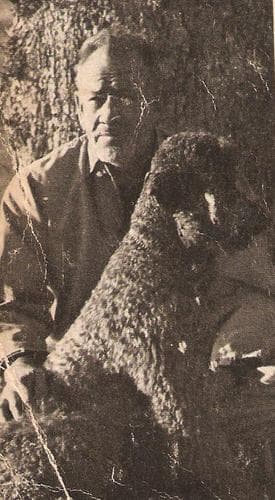
John Ernst Steinbeck was an American writer. He won the 1962 Nobel Prize in Literature "for his realistic and imaginative writings, combining as they do sympathetic humor and keen social perception". He has been called "a giant of American letters."
Similar books
- The Mists of Avalon
Marion Zimmer Bradley
4.1 (192k) average on GoodreadsFantasyBradley's work offers a significant revisionist perspective, retelling the legends from the viewpoint of its female characters and exploring themes of paganism vs. Christianity. Steinbeck's, while adding psychological depth, largely maintains the traditional narrative structure and male-centric perspective of Malory, without such a radical reinterpretation of character roles or religious themes.
- Harry Potter and the Sorcerer's Stone
J.K. Rowling
4.5 (7M) average on GoodreadsFantasyRescued from a miserable life under the stairs, an orphaned boy discovers he's a wizard destined for a magical school, where he uncovers a dangerous secret tied to the dark wizard who murdered his parents.
- The Hunger Games
Suzanne Collins
4.3 (6.4M) average on GoodreadsFantasyIn a future where children fight to the death on live television, Katniss Everdeen volunteers for the arena, turning a death sentence into a fight for survival and a spark of rebellion.
- 1984
George Orwell
4.2 (3.1M) average on GoodreadsPoliticsIn a future where surveillance and thought control are absolute, a man's search for truth clashes with the Party, showing that hope can be a form of rebellion.
- Divergent
Veronica Roth
4.2 (2.9M) average on GoodreadsFantasyIn a society divided by virtues, a sixteen-year-old's difference from the norm starts a rebellion that threatens her world.
- The Hobbit, or There and Back Again
J.R.R. Tolkien
4.3 (2.9M) average on GoodreadsFantasyA comfort-loving hobbit named Bilbo Baggins is whisked away by a mischievous wizard and a band of dwarves on an unexpected journey to reclaim stolen treasure from a fearsome dragon, discovering courage and a magical ring along the way.






Enjoyed the summary?
A summary gives you the shape of the book. The book itself has the detail, the examples and the voice.
Find The Acts of King Arthur and His Noble Knights on AmazonAs an Amazon Associate, BookBrief earns from qualifying purchases. How we're funded