

Synopsis
Covers the whole plot, including the ending.
- Difficulty
- Easy
- Pacing
- Moderate
- Mood
- Intriguing, Classic, Deductive
- Read it if
- You enjoy classic Sherlock Holmes mysteries with clever deductions and a satisfying resolution.
- Skip it if
- You prefer modern, fast-paced thrillers or stories with ambiguous endings.
The Adventure of the Beryl Coronet Plot Summary
Covers the whole plot, including the ending.
A Midnight Visitor
Alexander Holder, a senior partner in the banking firm Holder & Stevenson, arrives at 221B Baker Street in distress, carrying a beryl coronet with three missing beryls. He explains he was entrusted with the coronet, a national treasure, as collateral for a loan of fifty thousand pounds to a prominent, unnamed client. Fearing theft, Holder brought the coronet home, locking it in his personal desk. That night, he was woken by a noise and found his son, Arthur, in his study, holding the damaged coronet. Arthur refused to explain himself, leading to his immediate arrest. Holder, though convinced of Arthur's guilt, seeks Sherlock Holmes's help to recover the missing jewels and understand the motive.
Initial Investigation at Holder's Home
Holmes and Dr. Watson accompany Mr. Holder back to his house in Streatham. Holmes meticulously examines the study, the window, the snow outside, and Arthur's room. He notes the lack of footprints in the fresh snow leading to Arthur's window, but finds evidence of a struggle outside the study window, including a woman's footprint and a man's larger footprint. Holmes interviews the household staff, including the maid, Lucy Parr, and Holder's niece, Mary Harrison. Mary is beautiful but reserved, and Arthur is deeply in love with her. Holmes observes the strained relationships and emotional turmoil in the household, beginning to suspect Arthur's arrest might be a convenient, but incorrect, conclusion.
Arthur's Silence and Mary's Distress
Despite his father's pleas and the seriousness of the situation, Arthur Holder refuses to explain his presence in the study with the damaged coronet. His silence further implicates him in his father's eyes. Meanwhile, Mary Harrison, who had seemed distant, shows signs of distress. Holmes observes her furtive movements and her unusual interest in the investigation. He notices her looking out the window towards the street with a worried expression and later sees her in deep conversation with a young man, seemingly a stranger, near the house. These observations lead Holmes to believe that Mary, despite her reserved manner, holds a key piece of the puzzle.
The Clue of the Snow and the Window
Holmes returns to the study window, which Mr. Holder had claimed was securely fastened. He re-examines the snow outside, noting that while there are no clear footprints directly beneath Arthur's window, there are distinct impressions beneath the study window. He deduces that the window, though seemingly closed, had been forced open from the outside. The snow, falling after the initial entry, had partially obscured the evidence. Holmes also finds a small, peculiar indentation in the snow, consistent with the heel of a woman's shoe, distinct from Lucy Parr's. This discovery, combined with the lack of a clear escape path for Arthur, strengthens Holmes's conviction that the story of Arthur's sole guilt is flawed.
A Secret Rendezvous
Holmes's investigation into Mary Harrison's movements leads him to follow her. He observes her meeting secretly with a man known to him as Sir George Burnwell, a notorious gambler and dissolute character with a reputation for blackmail and shady dealings. This secret meeting, along with Mary's earlier distress and her interest in the coronet, immediately raises Holmes's suspicions about her involvement. He realizes that Mary is likely being manipulated or is complicit in the theft. The connection to Burnwell, a man capable of such a crime, provides a strong lead, suggesting a more complex conspiracy than Mr. Holder initially imagined.
The Confrontation and Partial Confession
Holmes confronts Mary Harrison, presenting the evidence he has gathered about her secret meetings with Sir George Burnwell. Faced with Holmes's deductions, Mary breaks down and confesses. She admits that Burnwell, with whom she had a past connection, blackmailed her into helping him steal the coronet. She opened the study window for him, and Burnwell attempted to remove the jewels. However, Arthur, hearing the noise, intervened. In the struggle, Burnwell broke off three beryls and escaped, leaving Arthur to be discovered by his father with the damaged coronet. Mary's confession clears Arthur's name but reveals Burnwell's villainy and her own tragic complicity.
Arthur's Noble Sacrifice
Mary's confession finally explains Arthur's puzzling silence. He had seen Mary and Burnwell at the window and had intervened to stop the theft. When his father discovered him, Arthur, realizing Mary's involvement and fearing the ruin of her reputation and his father's distress, chose to remain silent. His love for Mary was so strong that he was willing to bear the accusation of theft and disgrace rather than expose her. This sacrifice highlights Arthur's character and his deep affection for his cousin, making his earlier arrest and his father's condemnation even more tragic.
The Recovery of the Beryls
With Mary's confession, Holmes knows his target is Sir George Burnwell. He immediately sets out to track the villain down. Holmes locates Burnwell and, through cunning and intimidation, recovers two of the three missing beryls. Burnwell, a desperate man, had already sold the third beryl to a fence. Holmes, recognizing the urgency and importance of the coronet, pays Burnwell a thousand pounds of his own money to secure the return of the two remaining jewels. Burnwell, having secured some money, escapes, while Holmes focuses on the immediate task of restoring the coronet to Mr. Holder.
Justice and Resolution
Holmes returns to Mr. Holder's house, presenting him with the mostly restored coronet and explaining the true sequence of events. Arthur is immediately freed and cleared of all charges, his reputation restored. Mr. Holder is overcome with relief and remorse for misjudging his son. While two beryls are recovered, the third remains lost, a permanent reminder of the night's events and Burnwell's escape. Mary Harrison, her complicity revealed, leaves the household in disgrace. The family is left to grapple with the emotional fallout, but the truth has been revealed, and Arthur's honor is salvaged, thanks to Holmes's brilliant deductions.
Principal Figures
Sherlock Holmes
Protagonist
The brilliant consulting detective of Baker Street.
Sherlock Holmes is a master of deductive reasoning, observation, and disguise. He possesses an encyclopedic knowledge of various subjects, particularly crime and toxicology, and an uncanny ability to connect seemingly disparate clues. His methods often involve meticulous examination of crime scenes, psychological profiling, and the use of logical inference to reconstruct events. He is driven by a profound sense of justice and an intellectual curiosity that makes him relish complex puzzles. In this case, he demonstrates his ability to see beyond the obvious and uncover the hidden truths within a convoluted family drama.
Relationships: Dr. John Watson (Confidant, chronicler, and assistant); Alexander Holder (Client seeking justice and truth)
Dr. John Watson
Supporting
Holmes's loyal friend, chronicler, and assistant.
Dr. Watson is Holmes's steadfast companion and the narrator of many of his adventures. A former army surgeon, he provides a grounded, empathetic perspective, often acting as a foil to Holmes's more detached intellect. While not possessing Holmes's deductive genius, Watson is observant and loyal, offering practical assistance and a moral compass. He is often the first to express the emotional impact of the cases, providing a human element to the often cold world of crime. In this story, he accompanies Holmes, observes his methods, and records the unfolding events, marveling at his friend's insight.
Relationships: Sherlock Holmes (Close friend and professional associate); Alexander Holder (Witness to his distress and the unfolding events)
Alexander Holder
Client/Victim
A reputable banker, distraught by the theft and his son's perceived guilt.
Alexander Holder is a senior partner in a prominent banking firm, a man of wealth and social standing. He is initially presented as a responsible and honorable individual, entrusted with a national treasure. However, he is also quick to judgment, particularly concerning his own son, Arthur. His distress over the stolen coronet and his son's presumed guilt is profound, bordering on hysterical. He represents the common man's inability to see beyond the surface, relying on Holmes to uncover the deeper truth. His character highlights the theme of misjudgment and the devastating impact of family betrayal.
Relationships: Arthur Holder (Father and initially accuser); Mary Harrison (Uncle and guardian); Sherlock Holmes (Client seeking aid)
Arthur Holder
Victim/Protagonist's Client's Son
Mr. Holder's son, wrongly accused of theft due to his noble silence.
Arthur Holder is a young man deeply in love with his cousin, Mary Harrison. He is characterized by his strong moral compass and his capacity for self-sacrifice. When discovered with the damaged coronet, he maintains a steadfast silence, choosing to bear the accusation of theft rather than expose Mary's complicity and bring further disgrace to his family. His actions, though initially baffling, are revealed to be a testament to his profound love and loyalty. He is the innocent victim of a convoluted plot, whose honor is ultimately restored by Holmes.
Relationships: Alexander Holder (Son, initially estranged by accusation); Mary Harrison (Cousin and object of his unrequited love)
Mary Harrison
Supporting/Complicit
Mr. Holder's niece, blackmailed into aiding in the theft.
Mary Harrison is a beautiful but reserved young woman, described as having a quiet demeanor. She is the object of Arthur's affection. Beneath her calm exterior, she harbors a secret past connection with the villainous Sir George Burnwell, who exploits this connection to blackmail her into assisting in the theft of the beryl coronet. Her actions are driven by fear and manipulation, making her a tragic figure caught between her past and the present crisis. Her confession is crucial to unraveling the mystery, revealing her as a complicit, yet ultimately remorseful, participant.
Relationships: Alexander Holder (Niece and ward); Arthur Holder (Cousin and recipient of his love); Sir George Burnwell (Past acquaintance and blackmailer)
Sir George Burnwell
Antagonist
A notorious gambler and blackmailer responsible for the theft.
Sir George Burnwell is the true villain of the story, a character described as a dissolute and unscrupulous gambler with a bad reputation. He is cunning, manipulative, and entirely self-serving. He uses his past connection with Mary Harrison to blackmail her into assisting him in his attempt to steal the beryl coronet. His actions are driven by greed and a disregard for the law and the well-being of others. He represents the corrupting influence of vice and the destructive power of blackmail. He manages to escape justice with one beryl, highlighting the imperfect nature of resolution.
Relationships: Mary Harrison (Blackmailer and accomplice); Sherlock Holmes (Adversary)
Lucy Parr
Mentioned
A maid in the Holder household.
Lucy Parr is a maid in Mr. Holder's household. She is a minor character, mentioned primarily as part of the domestic staff. Holmes briefly considers her as a potential suspect due to the presence of a woman's footprint, but she is quickly ruled out as her movements and character do not align with the crime. She serves to illustrate Holmes's thoroughness in examining all possibilities, no matter how remote.
Relationships: Alexander Holder (Employer)
Themes & Insights
Misjudgment and False Appearances
The story shows how easily appearances can deceive and lead to serious misjudgments. Alexander Holder immediately condemns his son, Arthur, based on circumstantial evidence, unable to see past the surface. Arthur's noble silence, meant to protect Mary, is mistaken for an admission of guilt. Conversely, Mary Harrison's quiet demeanor hides a secret past and current complicity due to blackmail. Holmes's genius is his ability to see through these facades, showing that truth often lies beneath layers of misconception and emotional bias, as seen when he examines the footprints in the snow, revealing a different story than Holder believes.
“The lowest and vilest alleys in London do not present a more dreadful record of sin than does the smiling and beautiful countryside.”
Love and Sacrifice
A central theme is Arthur Holder's selfless love and sacrifice. His deep affection for Mary Harrison leads him to endure public disgrace and his father's condemnation rather than expose her involvement with Sir George Burnwell. This act of silent suffering highlights his character and the powerful, sometimes destructive, nature of love. His sacrifice not only protects Mary's reputation, however briefly, but also underscores the emotional turmoil within the family. His willingness to take the blame shows that love can sometimes compel individuals to make difficult choices.
“My son, Arthur, was arrested. He would say nothing. Oh, for God's sake, sir, do something!”
The Corrupting Influence of Vice
Sir George Burnwell embodies the corrupting influence of vice, especially gambling and a dissolute lifestyle. His desperate need for money drives him to blackmail Mary Harrison and attempt to steal a national treasure. His actions show how unchecked greed and moral decay can lead individuals to commit crimes, disregarding the devastating impact on others. Burnwell's escape, though with only one beryl, also suggests the pervasive nature of such corruption and the challenges in fully eradicating it, leaving a lingering sense of injustice despite the recovery of most of the coronet.
“He is a man of evil reputation, a notorious gambler and a dissolute, worthless fellow.”
The Imperfection of Justice
While Holmes solves the mystery, recovers most of the coronet, and clears Arthur's name, the story also touches on the imperfection of justice. Sir George Burnwell, the main antagonist, escapes with one of the beryls, never fully facing legal repercussions for his crime. Mary Harrison, though remorseful, is also implicated and leaves in disgrace, her future uncertain. This outcome suggests that even with the most brilliant detective, complete justice is not always achievable, and some wounds, like the missing beryl, may remain unhealed, serving as a permanent reminder of the crime.
“Two of the beryls I have recovered. The third, alas, is gone forever.”
Plot Devices & Literary Techniques
The Red Herring
Arthur Holder's apparent guilt distracts from the true culprit.
Arthur Holder's presence with the damaged coronet, his bloodied hand, and his subsequent silence serve as a classic red herring. This misdirection immediately leads Mr. Holder and initially the police to believe Arthur is the thief, diverting attention from the true circumstances and the actual perpetrator, Sir George Burnwell. Holmes must meticulously peel back these layers of assumption and circumstantial evidence to reveal Arthur's noble motive for silence and the real villain's involvement. This device effectively heightens the mystery and underscores the theme of misjudgment.
The Unreliable Witness/Narrator (Alexander Holder)
Mr. Holder's emotional state and bias cloud his perception of events.
Alexander Holder, as the initial narrator of the events to Holmes, is an emotionally compromised and unreliable witness. His profound distress, his immediate conviction of his son's guilt, and his inability to see beyond the surface facts lead him to present a biased and incomplete account of the crime. This device allows Holmes to demonstrate his superior observational and deductive skills by identifying the gaps and inconsistencies in Holder's narrative, forcing him to look beyond the obvious and reconstruct the true sequence of events. It highlights the subjective nature of perception when under duress.
The Clue of the Footprints
Footprints in the snow provide crucial evidence of external involvement.
The footprints in the fresh snow outside the study window are a pivotal plot device. The absence of clear footprints leading to Arthur's window, combined with the presence of a woman's and a man's larger footprint beneath the study window, directly contradicts Mr. Holder's initial assumptions. Holmes's meticulous examination and interpretation of these impressions provide irrefutable physical evidence that another party, specifically Sir George Burnwell and Mary Harrison, was involved in the crime, thus clearing Arthur and pointing towards the true culprits. It's a classic example of Holmes's scientific approach to detection.
The Adventure of the Beryl Coronet Quotes
“I beg that you will not interrupt me. Have you any idea how difficult it is to get a man to talk about a thing that he would rather forget?”
“Data! Data! Data! I can't make bricks without clay.”
“As a rule, the more bizarre a thing is the less mysterious it proves to be. It is your commonplace, featureless crimes which are really puzzling, just as a plain face is more difficult to identify than a striking one.”
“The lowest and vilest alleys of London do not present a more dreadful record of sin than does the smiling and beautiful countryside.”
“It is a capital mistake to theorize before one has data. Insensibly one begins to twist facts to suit theories, instead of theories to suit facts.”
“A client is a client, and it is my business to play the game according to the rules.”
“There is nothing more deceptive than an obvious fact.”
“My dear Watson, you are the fixed point in a changing age.”
“It is of the first importance not to allow your judgment to be biased by personal qualities. A client is to me a mere unit, a factor in a problem.”
“What is the meaning of it all, Watson? What object is served by this circle of misery and violence and fear? It must tend to some end, or else our universe is ruled by chance, which is unthinkable.”
“He has, I am sure, a most complete and detailed knowledge of the history of crime. He is, in fact, a walking criminal encyclopaedia.”
“Depend upon it, there is nothing so unnatural as the commonplace when you approach it from the right angle.”
“I can see that you are an honest man, Mr. Holder. I can also see that you are a man with a great deal of trouble.”
“Mediocrity knows nothing higher than itself; but talent instantly recognizes genius.”
Quiz
10 questions on the plot and the characters. Each answer comes with a short explanation.
Question 1
Which specific item is stolen from Alexander Holder's bank, leading him to consult Sherlock Holmes?
- A diamond necklace
- A beryl coronet
- A ruby ring
- A golden locket
Show answer
B. A beryl coronet The central mystery revolves around the theft of the Beryl Coronet, a valuable item entrusted to Alexander Holder for safekeeping.
Question 2
What is the profession of Alexander Holder, the man who brings the case of the Beryl Coronet to Sherlock Holmes?
- A lawyer
- A pawnbroker
- A banker
- A jeweler
Show answer
C. A banker Alexander Holder is a well-known banker in London, which explains why such a valuable item as the Beryl Coronet was entrusted to his care.
Question 3
Who is initially suspected by Alexander Holder of damaging the Beryl Coronet?
- His son, Arthur
- His niece, Mary
- His butler, Jenkins
- His maid, Sarah
Show answer
A. His son, Arthur Alexander Holder finds his son, Arthur, holding the coronet with three beryls missing, leading to his strong suspicion and despair.
Question 4
What is the primary reason the Beryl Coronet is in Alexander Holder's possession?
- It is a family heirloom he inherited.
- He purchased it as an investment.
- It was given to him as collateral for a loan.
- He is repairing it for a client.
Show answer
C. It was given to him as collateral for a loan. The coronet was given to Holder as collateral for a substantial loan he made to a prominent client, whose identity he initially keeps secret.
Question 5
What evidence does Holmes use to deduce that Arthur Holder was not the only person involved in the theft and damage of the coronet?
- Footprints in the garden that don't match Arthur's.
- A note left near the coronet mentioning another person.
- Arthur's inconsistent alibi.
- Testimony from a servant who saw someone else.
Show answer
A. Footprints in the garden that don't match Arthur's. Holmes meticulously examines the snow outside the window and finds footprints, including one belonging to a woman, which are crucial to his investigation.
Question 6
Who is the true culprit responsible for stealing and damaging the Beryl Coronet?
- Arthur Holder
- Mary, Alexander Holder's niece
- George Burnwell
- A disgruntled servant
Show answer
C. George Burnwell Holmes uncovers that George Burnwell, a notorious criminal and suitor to Mary, was the one who conspired with Mary to steal the beryls.
Question 7
What is the relationship between Mary and Arthur Holder?
- They are siblings.
- They are cousins.
- Mary is Arthur's fiancée.
- Mary is Arthur's cousin and Alexander Holder's niece.
Show answer
D. Mary is Arthur's cousin and Alexander Holder's niece. Mary is Alexander Holder's niece and Arthur's cousin, and she plays a pivotal, albeit unwilling, role in the crime due to her involvement with Burnwell.
Question 8
What is the significance of the broken coronet for Alexander Holder beyond its monetary value?
- It was a gift from his late wife.
- His reputation as an honest banker is at stake.
- He was planning to sell it to save his business.
- It held sentimental value from his youth.
Show answer
B. His reputation as an honest banker is at stake. Holder's anguish is deeply tied to the fact that he promised to return the coronet intact, and its damage severely threatens his professional integrity and honor.
Question 9
How does Holmes ultimately recover the missing beryls?
- He finds them hidden in Arthur's room.
- He confronts George Burnwell and forces him to return them.
- Mary confesses and reveals their hiding place.
- He discovers them buried in the garden.
Show answer
B. He confronts George Burnwell and forces him to return them. Holmes tracks down Burnwell and, after a physical confrontation, recovers the three missing beryls from him, completing the coronet once more.
Question 10
What is the primary motivation behind George Burnwell's actions in stealing the beryls?
- Revenge against Alexander Holder.
- To frame Arthur Holder out of jealousy.
- Financial gain from selling the valuable gems.
- To prove his cleverness as a criminal.
Show answer
C. Financial gain from selling the valuable gems. Burnwell is a known criminal, and his motive is purely mercenary, seeking to profit from the sale of the valuable beryls.
The Adventure of the Beryl Coronet FAQ
What is the central mystery Sir George Burnwell presents to Sherlock Holmes regarding the Beryl Coronet?
Sir George Burnwell, a prominent banker, brings the Beryl Coronet, a priceless national treasure, to Holmes after three of its beryls were seemingly stolen from his study. He suspects his son, Arthur, because Arthur was found holding the coronet with a missing gem and appeared guilty, though he refuses to confess or explain himself.
Who are the primary suspects in the theft of the Beryl Coronet, and what are their initial roles?
Initially, Arthur Holder, Sir George's son, is the prime suspect due to circumstantial evidence and his uncooperative demeanor. However, Holmes quickly expands his investigation to include Lucy Parr, Sir George's niece, and a mysterious gentleman who has been courting her, eventually revealing their deeper involvement.
How does Sherlock Holmes deduce the actual number of missing beryls, correcting Sir George's initial assessment?
Holmes carefully examines the coronet and the marks on it, noticing that while Sir George reported three missing gems, there were actually four beryls detached. He deduces that two were taken by one person and two by another, indicating a struggle or multiple culprits, rather than a simple theft by one individual.
What key piece of evidence does Holmes find in the snow outside Sir George's window that points to the true culprit?
Holmes discovers distinct footprints in the snow outside Sir George's study window. He notes a specific, unusual heel mark and the impression of a crutch, which leads him to realize that a person with a particular gait, not Arthur, was involved in the crime and climbed out the window.
What is the motive behind the theft of the beryls, and who orchestrated the plan?
The motive was financial gain, orchestrated by the notorious criminal, Baron Adelbert Gruner, who was courting Lucy Parr. He manipulated Lucy into helping him steal the beryls, promising to marry her, intending to sell the gems and abandon her, with Lucy taking the fall.
How does Holmes use the footprints to reconstruct the sequence of events and clear Arthur Holder?
Holmes meticulously analyzes the footprints, noting two distinct sets: Arthur's and another's, along with the tell-tale crutch mark. He deduces that Arthur struggled with the second person, recovering two beryls, while the other person escaped with the remaining two through the window, thus showing Arthur was trying to prevent the theft, not commit it.
What specific detail about Lucy Parr's actions confirms her complicity in the crime?
Lucy Parr's guilt is revealed when Holmes, after examining the garden, finds a 'woman's light footmark' and a 'small indentation' where she knelt, consistent with her having handed the coronet to the Baron from the window, as well as her later emotional breakdown and confession.
How does Holmes's interaction with the stable-boy provide a crucial clue about the 'tall, elegant' man?
The stable-boy mentions a 'tall, elegant' man who had visited Lucy Parr frequently, often arriving in the dead of night. This consistent detail, combined with the unique footprint found in the snow, allows Holmes to identify the mysterious visitor as the true mastermind, Baron Adelbert Gruner.
What is the significance of the missing beryl that Arthur Holder refuses to discuss?
Arthur's refusal to discuss the fourth missing beryl is a crucial detail. He had recovered two beryls from Gruner during their struggle but had given one to Lucy Parr, believing she was innocent and needing to protect her, not realizing she was complicit in the theft. This act of chivalry, though misguided, highlights his character.
Analyze Arthur Holder's psychological state throughout the investigation, particularly his silence.
Arthur Holder displays immense psychological distress, driven by a misguided sense of chivalry and loyalty. He remains silent to protect Lucy Parr, whom he loves and initially believes is innocent, even as his silence implicates him directly. His suffering is profound, torn between filial duty and his personal code of honor.
Discuss Lucy Parr's psychological manipulation by Baron Adelbert Gruner.
Lucy Parr is a victim of psychological manipulation by Baron Gruner, who exploits her affections and vulnerability. Gruner uses promises of marriage and a better life to coerce her into assisting with the theft, preying on her desires and ultimately leaving her to face the consequences alone, demonstrating classic predatory behavior.
How does Sir George Holder's initial judgment of his son reflect parental bias and distress?
Sir George's immediate and unwavering conviction that Arthur is guilty reflects a parent's profound distress and a tendency to interpret circumstantial evidence through a lens of fear and disappointment. His inability to consider other possibilities, despite Arthur's character, highlights the emotional toll of the situation.
What psychological impact does the attempted theft have on the Holder family, particularly Sir George?
The attempted theft and the ensuing scandal have a devastating psychological impact on the Holder family. Sir George suffers immense shame and distress, feeling his reputation and family honor are ruined. Arthur endures severe emotional and physical strain, nearly succumbing to brain fever due to the injustice and his self-imposed silence.
Is Lucy Parr a purely villainous character, or is there room for a more nuanced interpretation of her actions?
While Lucy Parr is complicit in the crime, her actions allow for a nuanced interpretation. She is manipulated by Baron Gruner, suggesting she may be more of a victim of his cunning than a purely malevolent individual. Her eventual breakdown and confession imply remorse, indicating a complex moral landscape rather than outright villainy.
How does this case highlight the dangers of trusting appearances and initial judgments, even for astute individuals?
The case strongly emphasizes the danger of trusting appearances. Sir George's immediate conviction of Arthur's guilt, based on compelling but misleading evidence, demonstrates this. Even Holmes initially considers Arthur, but his methodical approach of seeking corroborating evidence beyond the obvious ultimately reveals the truth, showcasing the flaws in hasty judgment.
What is the moral implication of Holmes's decision to allow Baron Gruner to escape justice for a time, retrieving the final beryl through his own means?
Holmes's decision to allow Gruner to escape, only to later retrieve the beryl through a personal confrontation, raises moral questions about operating outside the strict confines of the law. It suggests a pragmatic approach where justice for the victim (Sir George) and recovery of the property take precedence over immediate legal prosecution for the villain, reflecting Holmes's unique ethical code.
Could Arthur Holder have acted differently to avoid his near-fatal illness and the family's distress?
Arthur Holder could have avoided much distress by immediately confiding in his father or Holmes about his struggle with Gruner and Lucy's involvement. His misguided chivalry, while noble in intent, led to severe personal suffering and almost cost him his life. This highlights the dangers of withholding information, even for honorable reasons.
What societal commentary does the story offer regarding reputation and social standing in Victorian England?
The story offers commentary on the paramount importance of reputation and social standing in Victorian England. Sir George's overwhelming concern for his family's honor and his immediate despair over the scandal highlight how deeply personal and public identity were intertwined, and how quickly a family's standing could be jeopardized by perceived disgrace.
About the author
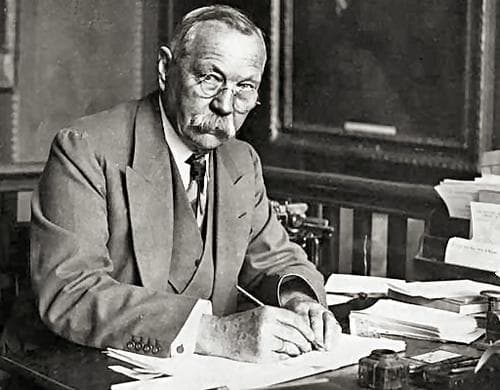
Sir Arthur Ignatius Conan Doyle was a British writer and physician. He created the character Sherlock Holmes in 1887 for A Study in Scarlet, the first of four novels and fifty-six short stories about Holmes and Dr. Watson. The Sherlock Holmes stories are milestones in the field of crime fiction.
Similar books
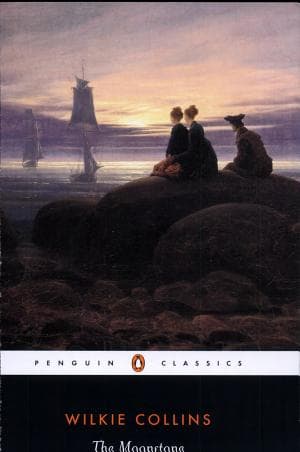
- The Moonstone
Wilkie Collins
3.9 (79k) average on GoodreadsHistorical Fiction"The Beryl Coronet" is more focused on Holmes's singular deductive brilliance and a linear investigation, whereas The Moonstone employs a multi-perspective narrative and extensive character development to unravel its mystery, making Collins's work broader in scope and character-driven.
- And Then There Were None
Agatha Christie
4.3 (822k) average on GoodreadsThrillerWhile both are mysteries, "The Beryl Coronet" emphasizes the logical reconstruction of past events and motives. And Then There Were None focuses more on psychological tension, misdirection through character interactions, and identifying a killer from a closed, isolated group, creating a different kind of suspense and intellectual challenge.
- To Kill a Mockingbird
Harper Lee
4.3 (4.5M) average on GoodreadsHistorical FictionIn the 1930s Jim Crow South, Harper Lee writes about racial injustice, moral growth, and the quiet courage of a lawyer father, Atticus Finch, as seen through his young daughter's eyes.
- The Great Gatsby
F. Scott Fitzgerald
3.9 (3.8M) average on GoodreadsHistorical FictionIn the opulent Roaring Twenties, a mysterious millionaire's lavish parties hide his desperate, tragic pursuit of a lost love, exposing the emptiness within the American Dream.
- Pride and Prejudice
Jane Austen
4.3 (3M) average on GoodreadsHistorical FictionIn a society focused on status and money, Elizabeth Bennet navigates love and pride, challenging Mr. Darcy and social expectations to find true affection.
- Angels & Demons
Dan Brown
3.9 (2.7M) average on GoodreadsThrillerA Harvard symbologist races through Rome's ancient sites, deciphering cryptic clues to unmask the Illuminati and stop a vengeful plot to destroy the Vatican with a stolen antimatter weapon.





Enjoyed the summary?
A summary gives you the shape of the book. The book itself has the detail, the examples and the voice.
Find The Adventure of the Beryl Coronet on AmazonAs an Amazon Associate, BookBrief earns from qualifying purchases. How we're funded