
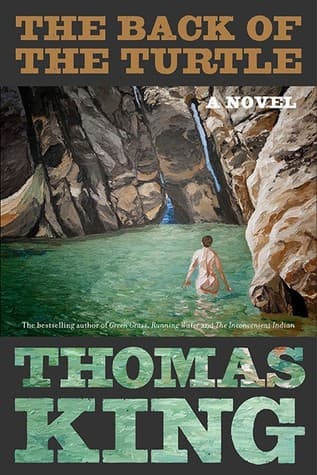
Synopsis
Covers the whole plot, including the ending.
- Difficulty
- Medium
- Pacing
- Moderate
- Mood
- Thought-provoking, Melancholy, Hopeful, Mythic, Witty
- Read it if
- You enjoy complex literary fiction that blends environmental themes, Indigenous mythology, and sharp social commentary with a touch of the fantastical. Fans of Thomas King's previous work will find his signature wit and storytelling.
- Skip it if
- You prefer straightforward narratives without allegorical elements or are looking for a light, quick read. Those sensitive to themes of environmental destruction and corporate malfeasance might find it heavy.
The Back of the Turtle Plot Summary
Covers the whole plot, including the ending.
Gabriel's Return to Smoke River
Gabriel, a scientist who developed GreenSweep, a toxic defoliant, arrives at the abandoned Smoke River reserve. This land, his mother's ancestral home, suffered an environmental disaster linked to GreenSweep, which killed the entire population, including his mother and sister, and most local wildlife. Overwhelmed by guilt, Gabriel plans to commit suicide by walking into the ocean. He has spent years in exile, working for DowSanto, and now seeks a final accounting for the destruction he caused. The desolate land and the silence of the once-busy community remind him of his failure and the irreversible damage his creation caused.
A Mysterious Appearance and Unexpected Rescue
Just as Gabriel is about to walk into the sea, he sees a young girl, Kimi, struggling in the waves. His instinct to save her stops his suicide attempt, and he pulls her to shore. Soon after, more people appear from the ocean—first a man, then an older woman, and then a whole group, all with long black hair and almond eyes. Gabriel, despite his shock, repeatedly dives into the water to rescue them, bringing them to the beach. These mysterious arrivals force Gabriel to confront life and responsibility instead of giving in to despair, changing his plans for self-destruction.
The Community Reborn
The rescued individuals, whom Gabriel first calls 'Others,' and later learns are 'Protectors,' are disoriented and speak an unknown language. Led by a silent, strong woman named Mara, and an elder known as the 'Old Woman,' they start a camp on the beach. They find food and shelter, showing a quiet, almost otherworldly determination. Gabriel, despite his inner struggles, finds himself helping their survival efforts, offering practical help and watching their unique ways. These mysterious people, who seem to embody renewal, challenge Gabriel's view of the world and his place in it, suggesting a deeper reason for their sudden appearance.
DowSanto's Arrival and Investigation
Meanwhile, at DowSanto, the CEO, Christian, sends a team to the Smoke River site. Led by the ambitious executive Nicolas and the corporate lawyer, Dorian, their mission is two-fold: to assess the environmental damage, especially the GreenSweep contamination, and to find Gabriel. DowSanto wants to control the story and limit liability, fearing a public relations crisis and large lawsuits. Nicolas sees this as a chance for career advancement, while Dorian focuses on legal strategy. Their arrival brings a threat to the fragile community Gabriel is helping to build, as DowSanto's corporate interests will clash with the well-being of the land and its new inhabitants.
The Interlopers and Their Intentions
Nicolas and Dorian set up a base near the deserted reserve, with a private investigator, Duane. Their investigation quickly finds unusual things: the 'Others' on the beach, local wildlife thriving despite the GreenSweep contamination, and rumors of supernatural events. Duane, a cynical but observant man, gathers information and watches Gabriel. Nicolas, driven by corporate greed and a desire to hide damaging evidence, sees the 'Others' as a problem or a distraction, while Dorian focuses on legal options. Their presence creates a tense atmosphere, as the corporate world's pursuit of profit and control intrudes on the quiet, resilient existence of the mysterious community.
The Protectors' Purpose Revealed
As Gabriel spends more time with the 'Others,' especially Mara and the Old Woman, he starts to understand their true nature. They are 'Protectors,' sent from another realm, or perhaps the spirit world, to heal the damaged earth. Their appearance from the sea and their ability to bring life back to the barren land are not random; they are part of a larger, ancient mission. They communicate through gestures, shared experiences, and an almost telepathic understanding. Gabriel sees their healing touch on the environment and on himself, realizing they have a deep connection to the natural world, a contrast to DowSanto's destructive forces.
Gabriel's Transformation and Alliance
Gabriel's despair slowly turns into a sense of purpose. He lets go of his self-pity and guilt, dedicating himself to helping the Protectors. He becomes their link to the human world, explaining their needs and protecting them from the DowSanto team. A deep, unspoken bond forms between Gabriel and Mara, a connection beyond language and culture. He recognizes the wisdom and strength in her silent leadership. His scientific mind, once used for destruction, now seeks to understand and support the Protectors' restorative mission. This change is important, as Gabriel moves from an agent of ecological ruin to a guardian of the natural world, aligning himself with forces greater than corporate power.
Christian's Manipulation and the Media Circus
Christian, DowSanto's CEO, arrives at Smoke River, staging a media event. He brings journalists and film crews, creating a story that absolves DowSanto of responsibility while subtly blaming Gabriel. He presents the company as a benevolent entity investigating and helping in recovery, despite their direct fault. Christian's main goal is to deflect blame, protect the company's image, and prevent financial ruin. He uses his charisma and corporate power to twist public perception, turning the ecological disaster into a public relations battle. His presence makes the conflict more intense, pitting the spiritual resilience of the Protectors against the manipulative, profit-driven agenda of the corporate giant.
The Confrontation and the Protectors' Stand
The tension ends in a direct confrontation between the DowSanto team and the Protectors, with Gabriel as an intermediary. Nicolas tries to assert corporate authority, threatening the Protectors with legal action and removal. However, the Protectors, led by Mara and the Old Woman, remain firm. They do not argue but stand as a silent, powerful presence, embodying the ancient spirit of the land. Their resilience and connection to the earth challenge DowSanto's technology and legal maneuvers. This clash is not just about land ownership or corporate liability; it is a symbolic battle between a worldview that exploits nature for profit and one that respects and protects it.
The Turtle's Intervention and Resolution
As the conflict peaks, a giant turtle, an ancient symbol of creation and resilience, emerges from the ocean. Its appearance is a powerful, almost mythical intervention, representing the earth's response to the desecration. The turtle's presence disrupts DowSanto's carefully built narrative and corporate agenda, making their power and influence seem small compared to the forces of nature. The corporate team, including Christian, Nicolas, and Dorian, are bewildered and defeated, their plans dissolving in the face of this inexplicable phenomenon. The Protectors, their mission complete, begin to return to the sea, leaving Gabriel to continue his journey of healing and guardianship of the revitalized Smoke River. The land, once poisoned, begins its slow, natural recovery.
Principal Figures
Gabriel
Protagonist
Brilliant but guilt-ridden scientist, seeking redemption after causing an ecological disaster.
Gabriel is a highly intelligent scientist who developed GreenSweep, the defoliant responsible for the devastation at Smoke River. Initially driven by a profound sense of guilt and despair, he returns to the deserted reserve intending to commit suicide. His journey is one of transformation, as he moves from a self-destructive individual to a protector of the land and the mysterious 'Others.' He is observant, intelligent, and deeply affected by the consequences of his actions. His scientific background initially disconnects him from the natural world, but his experiences with the Protectors re-establish his connection to the earth and his own humanity.
Relationships: Mara (Deep, unspoken connection and mutual respect); Christian (Former employer, manipulative antagonist); Nicolas (Corporate adversary); Kimi (First person he rescues, symbolic of new life)
Mara
Supporting
Silent, powerful leader of the Protectors, embodying ancient wisdom and resilience.
Mara is one of the first 'Others' rescued by Gabriel, and quickly emerges as their silent, powerful leader. She communicates primarily through gestures and an almost telepathic understanding, embodying a profound connection to the natural world. Her presence is calming yet authoritative, and she guides the Protectors in their mission to heal the land. She represents ancient Indigenous wisdom and the enduring spirit of the earth, contrasting sharply with the destructive forces of modern industry. Her interactions with Gabriel are crucial to his transformation, as she teaches him, without words, about responsibility and respect for nature.
Relationships: Gabriel (Deep, unspoken connection and mutual respect); Old Woman (Collaborative leadership, shared wisdom); Protectors (Leader and guide)
Christian
Antagonist
Ruthless and manipulative CEO of DowSanto, prioritizing corporate image over ethics.
Christian is the CEO of DowSanto, the corporation responsible for GreenSweep. He is a charismatic but utterly ruthless businessman, driven by profit and the protection of his company's image. He is adept at manipulating public perception and controlling narratives, using the media to deflect blame from DowSanto. He embodies the destructive, exploitative aspects of corporate power, seeing the ecological disaster as a problem to be managed rather than a tragedy to be atoned for. His interactions with Gabriel and the Protectors highlight the stark contrast between corporate greed and environmental responsibility.
Relationships: Gabriel (Former employee, scapegoat, and adversary); Nicolas (Subordinate, instrument of corporate will); Dorian (Corporate lawyer, legal strategist)
Nicolas
Supporting
Ambitious DowSanto executive, eager to advance his career by managing the Smoke River crisis.
Nicolas is a high-ranking DowSanto executive dispatched to Smoke River to manage the crisis. He is ambitious, opportunistic, and completely loyal to the corporate agenda. He sees the ecological disaster not as a tragedy, but as a challenge to overcome and an opportunity for career advancement. He is focused on controlling information, minimizing liability, and removing any obstacles, including the Protectors. His interactions with Gabriel are marked by condescension and a complete lack of empathy for the environmental damage. He represents the bureaucratic and unfeeling aspects of corporate power.
Relationships: Christian (Boss, mentor in corporate ruthlessness); Dorian (Colleague, legal advisor); Duane (Private investigator, subordinate)
Dorian
Supporting
Pragmatic DowSanto corporate lawyer, focused on legal strategy and risk mitigation.
Dorian is DowSanto's corporate lawyer, accompanying Nicolas to Smoke River. She is pragmatic, detail-oriented, and solely focused on legal strategy and protecting the company from lawsuits. Unlike Nicolas, she is less concerned with public image and more with legal precedents and minimizing financial risk. She often acts as a voice of caution and reason within the DowSanto team, though her reasoning is always in service of corporate interests. She represents the legalistic and risk-averse side of corporate power, highlighting how corporations use legal frameworks to avoid accountability.
Relationships: Christian (Client, ultimate authority); Nicolas (Colleague, legal advice recipient)
Duane
Supporting
Cynical private investigator hired by DowSanto, observing and reporting on the mysterious events.
Duane is a private investigator hired by DowSanto to gather information and monitor the situation at Smoke River. He is cynical, observant, and initially dismissive of anything he can't logically explain. He reports directly to Nicolas and Dorian, providing a ground-level perspective on the strange occurrences, including the appearance of the 'Others.' While he remains largely detached, his observations provide an external, somewhat jaded, commentary on the unfolding events. He represents the 'ordinary' person's struggle to comprehend the extraordinary, and his skepticism eventually gives way to grudging acknowledgement of the inexplicable.
Relationships: Nicolas (Employer, client); Dorian (Employer, client)
Old Woman
Supporting
Elder of the Protectors, embodying ancient wisdom and a deep connection to the land.
The Old Woman is a revered elder among the Protectors, radiating a quiet strength and profound wisdom. She often sits silently, observing, and her presence is deeply significant. She represents the continuity of Indigenous knowledge and the enduring spirit of the ancestors. While she speaks little, her actions and presence guide the Protectors and subtly influence Gabriel. She embodies the spiritual connection to the land that the corporate world has lost, serving as a powerful counterpoint to DowSanto's destructive practices. Her ancient wisdom is a source of strength and guidance for the community.
Relationships: Mara (Collaborative leadership, shared wisdom); Protectors (Respected elder and guide)
Kimi
Mentioned
The first 'Other' rescued by Gabriel, symbolizing renewed life and hope.
Kimi is the young girl Gabriel sees struggling in the waves, prompting his first act of rescue and diverting him from suicide. She is the initial catalyst for Gabriel's transformation and the arrival of the Protectors. While not a central character in terms of dialogue or direct action, her presence is deeply symbolic. She represents innocence, the future, and the possibility of new life emerging from devastation. Her rescue signifies Gabriel's shift from despair to purpose, and her continued presence among the Protectors reinforces the theme of renewal.
Relationships: Gabriel (Rescued by, initial connection); Protectors (Member of the community)
Themes & Insights
Environmental Devastation and Healing
The novel shows the catastrophic impact of human industry on the environment, seen in the GreenSweep disaster at Smoke River. It portrays the barren land and loss of life, but also explores the possibility of healing through the Protectors. The theme highlights the tension between destructive human innovation and the earth's ability to renew itself. Gabriel's journey from destroyer to protector shows how individuals can help environmental recovery, while the Protectors' actions demonstrate a spiritual approach to ecological restoration.
“The wind had cleared the air, but the smell of death still clung to the trees and the ground.”
Guilt, Redemption, and Responsibility
Gabriel's character change is key to this theme. Overwhelmed by guilt for creating GreenSweep, he first plans suicide. His encounters with the Protectors force him to face his responsibility and find a path to redemption, not through self-punishment, but through helping heal the land and protecting others. The novel suggests that true redemption comes from acknowledging past wrongs and working for a better future, rather than giving in to despair. This theme contrasts with DowSanto's lack of accountability, showing different responses to guilt.
“He had come to die, but life, in its mysterious way, had other plans for him.”
Indigenous Knowledge and Connection to Land
The novel explores the contrast between Western scientific and corporate views of land and Indigenous understandings. The Smoke River reserve, an ancestral Indigenous territory, is ruined by a product of Western science. The Protectors, with their deep, intuitive connection to the earth and their quiet, restorative methods, embody Indigenous knowledge systems that prioritize harmony and balance with nature. Their arrival and ability to heal the land highlight the wisdom in Indigenous perspectives, suggesting that true sustainability means respecting and living with the natural world. The novel criticizes the disregard for Indigenous ways of knowing.
“They spoke a language not of words, but of earth and water, of wind and sky.”
Corporate Greed vs. Environmental Ethics
DowSanto, led by Christian and Nicolas, represents unchecked corporate greed, prioritizing profit and public image over environmental and human well-being. Their manipulative tactics, legal actions, and attempts to control the narrative oppose the ethical need to protect the environment. The novel criticizes the destructive nature of capitalism when it operates without moral limits, showing how corporations can cause great harm and then try to avoid responsibility. This theme is seen in the direct conflict between the DowSanto team and the Protectors, a clash of opposing values.
“For DowSanto, the disaster was a public relations problem, not a moral failing.”
The Power of Storytelling and Myth
Thomas King weaves Indigenous mythology and storytelling into the narrative, especially through the Protectors' appearance and the giant turtle's emergence. These mythical elements challenge Western rationalism and scientific explanations, suggesting deeper, older truths are at play. The novel itself acts as a modern myth, using fantastical elements to convey messages about humanity's relationship with nature. The oral tradition of storytelling is honored, providing a framework for understanding events that defy conventional logic and connecting the narrative to a rich cultural heritage.
“The world, they knew, rested on the back of a turtle, and if the turtle moved, so did everything else.”
Plot Devices & Literary Techniques
The Protectors (The Others)
Mysterious, semi-mythological beings who emerge from the sea to heal the land.
The Protectors serve as a central plot device, embodying both Indigenous spiritual connection to the land and a fantastical element that challenges Western rationality. Their sudden appearance from the ocean, their unique communication, and their ability to seemingly restore life to the devastated landscape drive much of the narrative. They represent the earth's resilience and a force beyond human comprehension, forcing Gabriel to re-evaluate his scientific worldview and providing a catalyst for his redemption. They are a symbol of hope and the enduring power of nature and ancient wisdom, directly contrasting with DowSanto's destructive technology.
The Giant Turtle
A powerful, mythical symbol of creation and the earth's ultimate authority.
The giant turtle is a potent symbol rooted in many Indigenous creation myths, where the world rests on its back. Its emergence from the ocean at the climax of the story serves as a powerful, almost divine, intervention. It represents the ultimate authority of nature, dwarfing human conflicts and corporate machinations. The turtle's appearance signifies a shift in power dynamics, rendering DowSanto's efforts futile and confirming the Protectors' mission. It reinforces the theme of Indigenous knowledge and the idea that the earth itself has agency and will respond to desecration, transcending scientific explanation.
GreenSweep
The toxic defoliant that causes the ecological disaster, a symbol of destructive human innovation.
GreenSweep is the chemical compound developed by Gabriel that directly leads to the devastation of Smoke River. It functions as a concrete symbol of humanity's destructive technological prowess and the unforeseen, catastrophic consequences of prioritizing profit over environmental safety. It is the catalyst for Gabriel's guilt and the central conflict of the novel. The lingering contamination of GreenSweep throughout the narrative highlights the long-term impact of environmental damage and the challenge of true ecological recovery, even in the face of natural healing forces.
The Abandoned Smoke River Reserve
The setting for the entire novel, a symbol of environmental devastation and potential renewal.
The Smoke River reserve itself acts as a significant plot device and symbol. Initially a desolate, lifeless landscape, it represents the full extent of environmental catastrophe and human neglect. As the story progresses, it becomes a canvas for the Protectors' healing efforts and a site of potential renewal. Its emptiness at the beginning underscores Gabriel's isolation and guilt, while its gradual re-animation reflects his personal transformation and the larger theme of ecological recovery. The reserve serves as a battleground for opposing ideologies – corporate exploitation versus Indigenous stewardship.
The Back of the Turtle Quotes
“The world is a story, and we are the tellers.”
“We are all refugees from something.”
“The past is a river that never stops flowing.”
“Sometimes the only way to heal is to return to the wound.”
“The land remembers what we choose to forget.”
“We are not separate from the earth; we are the earth dreaming.”
“Guilt is a heavy stone that sinks the heart.”
“In the silence, you can hear the truth whispering.”
“Every ending is a beginning in disguise.”
“The turtle carries its home on its back, and so do we.”
“Forgiveness is not forgetting; it is letting go of the weight.”
“Stories are the maps that guide us through the dark.”
“The river does not apologize for its path.”
“We are all connected, like roots beneath the soil.”
“To save the world, you must first save yourself.”
Quiz
10 questions on the plot and the characters. Each answer comes with a short explanation.
Question 1
What is the name of the environmental disaster that devastated the Smoke River reserve?
- The Great Spill
- The GreenSweep crisis
- The DowSanto leak
- The Smoke River flood
Show answer
B. The GreenSweep crisis The environmental disaster is referred to as the GreenSweep crisis, caused by the chemical GreenSweep created by Gabriel while working for DowSanto, which killed the population and wildlife of Smoke River.
Question 2
Why does Gabriel initially return to Smoke River?
- To visit his surviving family members
- To conduct environmental research for DowSanto
- To see the damage and commit suicide in the sea
- To help rebuild the reserve community
Show answer
C. To see the damage and commit suicide in the sea Gabriel returns to Smoke River to witness the devastation caused by GreenSweep and intends to kill himself in the sea out of guilt and despair over his role in the disaster.
Question 3
What interrupts Gabriel's plan to kill himself in the sea?
- He sees a pod of whales that need saving
- He receives an urgent call from DowSanto
- He sees a young girl in the waves and saves her
- He encounters a group of protestors on the shore
Show answer
C. He sees a young girl in the waves and saves her As Gabriel prepares to let the water take him, he spots a young girl in the waves, plunges in to rescue her, and this act of saving her disrupts his suicide plan.
Question 4
Which company did Gabriel work for when he created GreenSweep?
- GreenTech Industries
- Smoke River Corp
- DowSanto
- Environmental Solutions Inc.
Show answer
C. DowSanto Gabriel was a brilliant scientist working for DowSanto, where he developed the chemical GreenSweep that led to the environmental crisis at Smoke River.
Question 5
What is a key characteristic of the people Gabriel starts saving after the young girl?
- They have long black hair and almond eyes
- They are all scientists from DowSanto
- They speak multiple languages fluently
- They are survivors from the original reserve population
Show answer
A. They have long black hair and almond eyes The novel describes these mysterious people as having 'long black hair and almond eyes,' who seem to have 'fallen from the sky,' tying into native myth and storytelling elements.
Question 6
How does the novel incorporate Thomas King's writing style as mentioned in the description?
- Through complex scientific jargon and data analysis
- By using trademark wit, wordplay, and native myth
- With extensive historical footnotes and references
- Through a strict chronological narrative structure
Show answer
B. By using trademark wit, wordplay, and native myth The description notes that the novel is filled with King's trademark wit, wordplay, and a thorough knowledge of native myth and storytelling, which are hallmarks of his literary style.
Question 7
What is the significance of Smoke River in Gabriel's personal history?
- It is where he was born and raised
- It is the reserve where his mother grew up and where his family died
- It is his current workplace for environmental cleanup
- It is a mythical place from native stories he studied
Show answer
B. It is the reserve where his mother grew up and where his family died Smoke River is the reserve where Gabriel's mother grew up and returned to with Gabriel's sister; his family died there in the GreenSweep disaster, making it central to his guilt and return.
Question 8
Which of Thomas King's previous works is noted as a contemporary Canadian classic in the description?
- The Inconvenient Indian
- Truth and Bright Water
- Green Grass, Running Water
- The Back of the Turtle
Show answer
C. Green Grass, Running Water The description states that 'Green Grass, Running Water is widely considered a contemporary Canadian classic,' highlighting its significance in King's body of work and Canadian literature.
Question 9
What broader theme is explored through Gabriel's creation of GreenSweep and its consequences?
- The inevitability of technological progress
- Corporate greed and environmental destruction
- The superiority of scientific innovation over tradition
- The benefits of chemical agriculture for indigenous communities
Show answer
B. Corporate greed and environmental destruction The novel delves into themes of corporate greed (via DowSanto) and environmental destruction, as Gabriel's work on GreenSweep leads to ecological and human tragedy at Smoke River, prompting reflection on responsibility and redemption.
Question 10
How does the novel's use of native myth and storytelling enhance its narrative?
- By providing accurate historical records of the reserve
- Through literal interpretations of ancient prophecies
- By blending mythical elements with real-world environmental issues
- As a framework for scientific explanations of the disaster
Show answer
C. By blending mythical elements with real-world environmental issues King integrates native myth and storytelling to blend mythical elements (like people 'falling from the sky') with contemporary environmental crises, enriching the narrative with cultural depth and symbolic meaning beyond mere realism.
The Back of the Turtle FAQ
What is 'The Back of the Turtle' about?
The novel follows Gabriel, a scientist who created the toxic herbicide GreenSweep for DowSanto, which caused an environmental disaster that wiped out the Smoke River reserve population including his own family. Returning to the deserted reserve to commit suicide, he instead rescues mysterious people appearing from the ocean, forcing him to confront his guilt and responsibility while exploring themes of Indigenous myth, environmental destruction, and redemption.
Why should I read 'The Back of the Turtle'?
This novel masterfully blends contemporary environmental issues with Indigenous storytelling traditions, offering both sharp social commentary and profound mythological depth. King's trademark wit and wordplay make the heavy themes accessible, while the mysterious appearance of the ocean people creates a magical realist element that transforms a story of guilt into one of unexpected hope and connection.
What is the background/setting of 'The Back of the Turtle'?
The primary setting is the deserted Smoke River reserve after an environmental catastrophe caused by GreenSweep contamination. This fictional disaster mirrors real-world Indigenous community impacts from corporate pollution, with the empty landscape serving as both physical and psychological space where Gabriel confronts his role in the destruction while Indigenous myths manifest through the mysterious arrivals.
What writing style does Thomas King use in this novel?
King employs his signature blend of literary fiction with Indigenous oral storytelling traditions, incorporating wordplay, irony, and mythological elements into contemporary narrative. The style shifts between Gabriel's guilt-ridden realism and the magical realism of the ocean people's appearance, creating a unique fusion that makes profound themes accessible through both humor and haunting imagery.
What minor details add significant meaning to the story?
The description of the deserted reserve's physical details—empty houses, absent wildlife, contaminated land—subtly emphasizes the scale of loss beyond just human life. Gabriel's scientific background contrasts with the mythological explanations offered by the mysterious arrivals, highlighting the tension between Western and Indigenous ways of understanding the world and responsibility.
What are some subtle foreshadowing moments?
Early references to turtles in Indigenous creation myths foreshadow the novel's title and the eventual appearance of the ocean people. Gabriel's scientific detachment when first arriving at Smoke River gradually breaks down as he encounters living beings there, hinting at his transformation from someone seeking death to someone preserving life.
What unexpected character connections exist?
The mysterious people Gabriel saves from the ocean—with their long black hair and almond eyes—connect to Indigenous creation stories rather than being conventional survivors. Their appearance creates a symbolic rather than literal connection to the dead community, suggesting mythological intervention in Gabriel's journey rather than straightforward human rescue.
What are Gabriel's unspoken motivations beyond his stated suicide plan?
Beneath his expressed intention to die where his family perished lies a deeper need for atonement and connection to his Indigenous heritage through his mother's community. His immediate rescue of the girl in the waves reveals an unconscious desire for redemption that contradicts his conscious death wish, showing how survival instincts and moral responsibility override his planned self-destruction.
What psychological complexities do characters exhibit?
Gabriel embodies the conflict between scientific achievement and moral responsibility, his brilliance in creating GreenSweep directly contradicting his Indigenous values and community ties. The mysterious ocean people represent collective trauma and cultural memory, appearing not as individuals with conventional psychology but as mythological manifestations that challenge Gabriel's Western rationalism.
What are the major emotional turning points?
The pivotal moment occurs when Gabriel sees the girl in the waves and instinctively saves her, transforming his suicide mission into a rescue mission. Each subsequent rescue further commits him to preserving life rather than ending it, culminating in his acceptance of responsibility for both the disaster and the unexpected chance at redemption through these mysterious arrivals.
How do relationship dynamics evolve throughout the story?
Gabriel's relationship with the deserted land shifts from seeing it as a gravesite for his suicide to recognizing it as a place where life—however mysterious—persists. His connection to the ocean people evolves from rescuer to someone being spiritually rescued by them, as their presence reconnects him to Indigenous worldviews that offer meaning beyond his guilt and scientific rationalism.
Which parts remain ambiguous or open-ended?
The exact nature and origin of the ocean people remain deliberately ambiguous—whether they're mythological beings, survivors, hallucinations, or symbols. The novel doesn't definitively explain how they 'fell from the sky' or why they appear specifically to Gabriel, leaving their reality open to interpretation as either magical realism or psychological manifestation.
What are controversial scenes or decisions in the novel?
Gabriel's initial plan to commit suicide at the site of the disaster he caused could be seen as selfish rather than redemptive. The corporate responsibility of DowSanto versus individual scientist responsibility presents ethical dilemmas about environmental destruction, particularly through the lens of Indigenous communities disproportionately affected by such corporate actions.
The Back of the Turtle ending explained: how it ends & what it means
The novel concludes with Gabriel continuing to rescue the mysterious ocean people rather than completing his suicide, suggesting that redemption comes through preserving life rather than ending his own. The ending implies that Indigenous myths and stories offer a path forward that corporate science cannot, with the turtle of the title symbolizing both creation and resilience despite environmental devastation.
What are the most memorable quotes from the novel?
While specific quotes vary by edition, key thematic lines include Gabriel's reflections on responsibility ('I made the poison that killed this place') and the novel's engagement with Indigenous storytelling traditions. King's descriptions of the deserted reserve ('empty houses staring like blind eyes') and the mysterious arrivals ('people falling from the sky with hair like black water') create haunting imagery that lingers with readers.
About the author
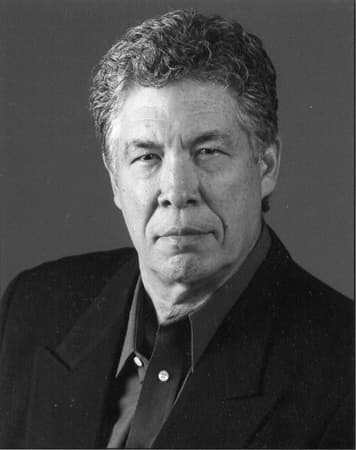
Thomas King is a Canadian author known for his contributions to contemporary fiction, particularly in exploring Indigenous themes and narratives. His novel "The Back of the Turtle" delves into the complexities of environmental issues and cultural identity. King's work often reflects his background and experiences as a member of the Cherokee Nation.
Similar books
- Ceremony
Leslie Marmon Silko
3.8 (18k) average on GoodreadsLiterary FictionA foundational work of Indigenous literature dealing with trauma, healing, and cultural identity through myth.
- The Overstory
Richard Powers
4.1 (73k) average on GoodreadsLiterary FictionBoth The Back of the Turtle and The Overstory are seminal works of environmental fiction. Powers' novel is lauded for its intricate scientific detail and its epic scope, exploring the interconnectedness of human lives and trees through a more realistic, albeit complex, narrative structure. King's novel, by contrast, employs magical realism and Indigenous spiritual frameworks to explore similar themes of human impact on nature, offering a more allegorical and cosmologically informed perspective. While Powers grounds his narrative in scientific fact and diverse human perspectives, King integrates myth and Indigenous ways of knowing as central to understanding and responding to environmental crises, providing a distinctly different lens.
- The Old Man and the Sea
Ernest Hemingway
3.8 (831k) average on GoodreadsLiterary FictionA Cuban fisherman's long struggle with a giant marlin becomes a story of endurance and dignity, now retold for young adults with illustrations, phonetic guides, and writing prompts in Traditional Chinese.
- One Hundred Years of Solitude
Gabriel García Márquez
4.1 (753k) average on GoodreadsLiterary FictionThrough the multi-generational story of the Buendía family, a mythical town deals with the repeating patterns of time, love, and solitude, as the extraordinary mixes with the ordinary.
- The Goldfinch
Donna Tartt
3.9 (720k) average on GoodreadsLiterary FictionHaunted by a tragic explosion and clutching a stolen Dutch masterpiece, a young orphan navigates the opulent drawing rooms of New York and the gritty underbelly of the art world, desperately seeking connection and redemption amidst a life spiraling into crime and obsession.
- Little Fires Everywhere
Celeste Ng
4.1 (713k) average on GoodreadsLiterary FictionIn Shaker Heights, an artist and her daughter move in, and their free-spirited lives clash with a rule-bound matriarch, revealing hidden conflicts beneath a perfect surface.





Enjoyed the summary?
A summary gives you the shape of the book. The book itself has the detail, the examples and the voice.
Find The Back of the Turtle on AmazonAs an Amazon Associate, BookBrief earns from qualifying purchases. How we're funded