

Synopsis
Covers the whole plot, including the ending.
- Difficulty
- Medium
- Pacing
- Slow
- Mood
- Melancholy, Introspective, Tragic, Subtle
- Read it if
- You appreciate psychological depth, intricate prose, and explorations of unlived lives and the nature of self-deception.
- Skip it if
- You prefer fast-paced plots, clear external conflicts, or stories with a traditional 'happy' ending.
The Beast in the Jungle Plot Summary
Covers the whole plot, including the ending.
A Fateful Reacquaintance
At a country house in England, John Marcher meets May Bartram, whom he vaguely remembers from a decade earlier in Rome. May remembers him clearly and hints at a significant secret he once told her. Marcher had forgotten the details, only recalling a general sense of an impending, unique destiny. May, however, remembers his exact secret: a belief that an extraordinary, perhaps terrible, fate awaits him, which he calls 'the beast in the jungle.' This meeting begins their unusual, lifelong relationship.
The Burden of Expectation
Marcher, surprised by May's memory and understanding, tells her the full extent of his obsession. He explains his strong belief that he is marked for a singular experience, a 'beast' that will one day spring from the 'jungle' of his life. He lives in constant anticipation, unable to fully engage with normal life. May Bartram, instead of dismissing him, shows deep sympathy and an unusual willingness to share his vigil. She states her intention to stay by his side, to watch and wait with him for this strange destiny, effectively dedicating her life to his burden.
A Shared Vigil
For many years, John Marcher and May Bartram continue their unique companionship. They spend countless hours together, often in quiet conversation, their lives centered on Marcher's preoccupation. May, through her steady presence, becomes the only confidante and witness to Marcher's inner drama. They travel, visit galleries, and attend social events, but always with the unspoken understanding that their main purpose is to observe and interpret signs of the approaching 'beast.' Marcher often discusses his theories with May, analyzing potential omens and dismissing ordinary events as not grand enough for his fate. May, always patient, listens and offers subtle observations, becoming an essential part of his life, though he remains unaware of the depth of her sacrifice.
May's Fading Health
As time passes, May Bartram's health declines. She grows weaker, but continues her vigil with Marcher. During this time, their dynamic subtly shifts. May, perhaps sensing her own end, tries to guide Marcher toward understanding what his 'beast' might truly be. She repeatedly questions his perception, hinting that he might be missing the very thing he waits for. Her words become more direct, urging him to look beyond the dramatic and consider that his fate might relate to his own inner life and his relationship with her. Marcher, however, remains fixed on his original, dramatic interpretation.
The Unsprung Beast
As May's condition worsens, she makes one last attempt to make Marcher see the truth. In a conversation, she tells him she knows what his 'beast' is, and that it has already sprung—or rather, failed to spring. She implies he has missed it, that it was something he failed to experience or recognize. She speaks of 'the real thing' that has passed him by. Marcher, self-absorbed, sees her words as a sign of her weakening mind or a cryptic future prediction. He remains convinced his great fate is yet to come, failing to grasp the deep meaning of her words about his wasted life and missed chances for human connection. Soon after this conversation, May Bartram dies, leaving Marcher alone.
Marcher's Solitude
After May Bartram's death, John Marcher finds himself completely alone. Her constant, patient presence leaves a void. He travels extensively, but his journeys are aimless, and his mind remains fixed on his original obsession. He continues to wait for the 'beast,' convinced its grand arrival is still imminent, perhaps even hastened by May's departure. He reflects on their shared past, but primarily through the lens of his own anticipation, never fully understanding the depth of May's devotion or her sacrifice. His solitude deepens, and his life becomes even more hollow without the one person who shared his burden.
A Visit to May's Grave
Months after May's death, John Marcher returns to England and visits her grave. He stands before her tombstone, still consumed by self-pity and unfulfilled expectation. While there, he observes another mourner at an adjacent grave—a man visibly overcome with deep grief, his face showing raw, inconsolable sorrow. This stranger's anguish strikes Marcher forcefully. He watches the man intently, perhaps for the first time truly seeing the depth of human suffering and loss outside his own inner drama. This encounter plants a seed of unease and a new emotion within him.
The Revelation at the Tomb
The sight of the grieving stranger becomes a catalyst for Marcher's ultimate, devastating realization. He understands, with sudden, horrifying clarity, that the stranger's capacity for such intense sorrow is precisely what has been missing from his own life. The 'beast' meant to spring upon him was not a dramatic external event, but the simple, profound human experience of love, loss, and the capacity for deep feeling. He realizes he has been a man to whom nothing has ever happened because he has never truly lived or loved. His fate was to be the man on whom nothing was to happen, the man incapable of passion, the man who let love and life pass him by. May had loved him, and he had failed to return it, failed to even recognize it until it was too late.
The Beast Springs
The realization hits Marcher like a physical blow, a 'leap' of the beast from the jungle of his own mind. His unique fate was not to suffer some extraordinary trauma, but to be the man incapable of suffering, loving, or living fully. He allowed the one person who truly cared for him, May Bartram, to dedicate her life to his delusion, never returning her affection, never truly seeing her beyond her role as his confidante. The horror is not in what happened to him, but in what did not happen, what he prevented. He wasted his entire existence waiting for a dramatic external event, while true, profound human experience passed him by, leaving him utterly empty. This emptiness, this realization of his emotional barrenness, is the terrible beast he awaited.
Despair and Emptiness
Overwhelmed by this devastating realization, John Marcher collapses on May Bartram's grave. The full weight of his wasted life, his emotional sterility, and his failure to love or be loved crushes him. He finally understands May's last, cryptic words and her immense sacrifice. His unique destiny was to experience the most profound human emptiness: to have lived without truly living, to have been loved without truly loving, and to have let the one chance for genuine connection slip away. The 'beast' has indeed sprung, but it is the beast of his own colossal ego and his tragically missed life, leaving him with unbearable, eternal regret and absolute, desolate solitude.
Principal Figures
John Marcher
Protagonist
A man obsessed with the belief that a unique, terrible fate awaits him.
John Marcher is a man of independent means, intelligent and outwardly refined, but deeply self-absorbed. He is consumed by a peculiar conviction that some extraordinary, perhaps catastrophic, event—'the beast in the jungle'—is destined to befall him. This obsession prevents him from engaging fully with life, forming genuine connections, or pursuing any meaningful endeavor beyond his internal vigil. He views himself as unique and special, marked for a singular destiny, which ultimately blinds him to the true nature of human experience and the love offered to him.
Relationships: May Bartram (Confidante, unrequited lover, and silent witness to his obsession.)
May Bartram
Supporting
A compassionate woman who dedicates her life to waiting with Marcher for his fate.
May Bartram is a woman of quiet strength, profound empathy, and unwavering loyalty. She is the only person to whom Marcher fully confides his secret, and she commits herself to sharing his unique burden, effectively dedicating her life to his vigil. May possesses a deeper understanding of human nature than Marcher, subtly attempting to guide him towards the truth of his situation. Her love for Marcher is unrequited and goes largely unacknowledged, yet she remains steadfast, serving as his emotional anchor and the tragic victim of his self-absorption.
Relationships: John Marcher (His closest companion, unrequited love, and the object of her life's devotion.)
The Grieving Stranger
Mentioned
A man at an adjacent grave whose profound sorrow triggers Marcher's epiphany.
This unnamed character appears only briefly at the story's climax, yet his presence is pivotal. He is depicted as a man consumed by raw, unconcealed grief at a nearby tomb. His visceral display of sorrow contrasts starkly with Marcher's emotional barrenness and self-pity. The stranger serves as a mirror, reflecting back to Marcher the profound capacity for human suffering and, by extension, love, that Marcher has utterly lacked throughout his life. His grief is a tangible manifestation of the 'real thing' that May had tried to make Marcher understand.
Themes & Insights
The Tragedy of Unlived Life
The main theme is John Marcher's failure to live because of his overwhelming obsession. By constantly waiting for an extraordinary external event, he becomes passive and detached, missing the richness of everyday experience and chances for real human connection. His life is a long wait that ends in the devastating realization that he has only existed, not lived. This is clear when May, on her deathbed, hints that his 'beast' has already 'not sprung,' meaning he failed to experience the essence of life (love, connection, suffering) he supposedly waited for.
“He had been the man of his time, the man to whom nothing was to have happened.”
Self-Absorption and Emotional Blindness
Marcher's deep self-absorption makes him emotionally blind to May Bartram's love and sacrifice. He is so consumed by his own unique destiny that he cannot see the devotion and suffering of the woman who dedicates her life to him. He uses May as a listener and witness, but never truly sees her as an individual with her own needs and feelings. This blindness is the true 'beast' that stops him from experiencing love and connection. His inability to 'see' May's love until after her death, when he sees the stranger's grief, highlights the tragic results of his self-centered view.
“The real thing, the thing that was to happen to him, was to be a man to whom nothing on earth was to have happened.”
The Nature of Fate vs. Free Will
The story explores whether Marcher's 'beast' is a predetermined fate or a self-fulfilling prophecy from his own choices. While Marcher believes he merely waits for an inevitable external event, the story suggests his fate is a result of his inaction and emotional paralysis. His 'destiny' to be a man to whom nothing happens is made by his refusal to engage with life and his inability to embrace love. The 'beast' is not an external force but an internal void, a result of his choice to remain detached and anticipate rather than participate.
“He had been at his post, an object himself, at last, of the wonder and horror that had kept him for ever incredibly standing.”
Love and Sacrifice
May Bartram embodies selfless love and deep sacrifice. She dedicates her entire adult life to Marcher's obsession, offering him steady companionship, understanding, and unrequited love. Her sacrifice is made without expectation of return, and her devotion ultimately leads to Marcher's late and agonizing realization. Her love, though ignored by Marcher, is the most real and profound element in the story, highlighting the tragedy of Marcher's inability to recognize or return such a precious gift.
“She had lived for him, and for him alone, and she had died for him, and for him alone.”
Plot Devices & Literary Techniques
The 'Beast in the Jungle' Metaphor
A central metaphor for Marcher's anticipated, unique fate.
The 'beast in the jungle' serves as the story's dominant and evolving metaphor. Initially, it represents Marcher's vague but powerful premonition of some extraordinary, perhaps terrible, event destined to befall him. It functions as a symbol of his perceived uniqueness and the dramatic climax he anticipates. As the story progresses, the metaphor subtly shifts, becoming a symbol of Marcher's unlived life, his emotional barrenness, and the profound tragedy of his self-absorption. Its 'spring' is ultimately revealed to be an internal, psychological collapse rather than an external event, making it a powerful symbol of psychological revelation.
Dramatic Irony
The reader understands Marcher's true fate before he does.
Dramatic irony is a key device, enhancing the tragic impact of the story. From early on, the reader, often guided by May's subtle hints and the narrator's commentary, understands that Marcher's 'beast' is not an external event but rather his own emotional paralysis and inability to love or live fully. Marcher's prolonged ignorance, despite May's increasingly desperate attempts to enlighten him, creates a sense of suspense and pathos. This gap in understanding between Marcher and the reader (and May) heightens the tragedy of his eventual, belated epiphany.
The Encounter at the Grave
A pivotal scene that triggers Marcher's ultimate epiphany.
The scene at May Bartram's grave, where Marcher observes the grieving stranger, functions as a powerful turning point and a classic example of epiphany. The stranger's raw, uninhibited display of sorrow acts as a mirror, forcing Marcher to confront his own emotional void. This external manifestation of profound grief allows Marcher to finally understand the 'real thing' May had tried to convey: the capacity for deep human feeling, love, and loss, which he has tragically lacked. It is the catalyst that transforms his abstract fear into concrete, devastating self-knowledge.
Unreliable Narration (Limited Third-Person)
The story is primarily told from Marcher's limited, biased perspective.
The narrative is primarily delivered through a limited third-person perspective, closely aligned with John Marcher's consciousness. While not strictly unreliable in the sense of deliberately misleading, Marcher's profound self-absorption and emotional blindness mean that the 'reality' presented is filtered through his skewed perception. This forces the reader to interpret events and May's actions, often understanding their true significance long before Marcher does. It highlights his isolation and inability to see beyond himself, making his eventual realization all the more impactful when his own internal world finally shatters.
The Beast in the Jungle Quotes
“What was it to be, what was it to be? He had been for years so markedly aware of himself and of the knowledge that he had been an object of some special—how should he say it?—demonstration.”
“The fact of the matter was that he had been born with a peculiar sensibility, one which made him feel that he was marked out for some strange and singular fate.”
“He had the sense of being a man to whom something was to happen; it might be good or bad, but it would be something.”
“He was a man of a single secret, a secret that was not his own.”
“The beast in the jungle, always in ambush, was a strange, an insidious, an unspeakable thing.”
“The only thing he was a master of was the sense of a doom that was to come.”
“He had lived to see the day when his fate, his beast, had sprung.”
“The escape would have been to love her; then, in the light of that, he would have seen it.”
“He had been the man of his time, the man to whom nothing was to happen.”
“The real truth was that he had missed his life.”
“He had been the man of the world, the man of taste, the man of feeling. He had been all that, and yet he had been nothing.”
“The only thing that had happened to him was that he had been in love with her, and had not known it.”
“He had seen the beast in his jungle, and it was himself.”
“The escape from the cage of his life was to have been through her, and he had not known it.”
Quiz
10 questions on the plot and the characters. Each answer comes with a short explanation.
Question 1
What unique 'beast' does John Marcher believe is lying in wait for him?
- A literal wild animal in the jungle
- A phantom of consciousness, a symbolic monster
- A wealthy rival determined to ruin him
- A recurring nightmare he experiences nightly
Show answer
B. A phantom of consciousness, a symbolic monster The story explicitly states that the 'beast' is a phantom of consciousness, a symbolic monster, not a literal one.
Question 2
Who is the only other character Marcher confides in about his peculiar premonition?
- His distant cousin, Mrs. Gereth
- His old friend, Winterbourne
- May Bartram
- His family lawyer
Show answer
C. May Bartram May Bartram is the only character with whom John Marcher shares the secret of his 'beast' and who remains by his side through the years.
Question 3
What is the primary characteristic of John Marcher's life as he awaits the 'beast'?
- He lives a life of extravagant adventures and risks.
- He dedicates himself to profound academic study.
- He lives a life of passive waiting, avoiding deep engagement.
- He actively seeks out the 'beast' in various dangerous locales.
Show answer
C. He lives a life of passive waiting, avoiding deep engagement. Marcher's life is defined by his passive waiting for the 'beast,' which prevents him from truly living or engaging with the world around him.
Question 4
What does May Bartram do for Marcher throughout their relationship, despite his self-absorption?
- She constantly tries to convince him his premonition is false.
- She encourages him to pursue other romantic interests.
- She patiently waits with him and observes his life.
- She actively investigates the nature of his 'beast' on her own.
Show answer
C. She patiently waits with him and observes his life. May Bartram's role is one of immense patience and silent companionship, dedicating her life to waiting with Marcher for his prophesied event.
Question 5
What is the ultimate 'jump' or manifestation of the 'beast' Marcher experiences?
- A sudden financial ruin that leaves him destitute.
- The realization that his great fate was simply to have missed out on life and love.
- A literal attack by a dangerous animal during a trip abroad.
- He is struck by a fatal illness he had always feared.
Show answer
B. The realization that his great fate was simply to have missed out on life and love. The 'beast's' final 'jump' is Marcher's crushing realization, after May Bartram's death, that his unique fate was simply to be the man to whom nothing ever happened, meaning he missed the chance for love and a full life.
Question 6
What specific event triggers Marcher's final, profound realization about the 'beast'?
- Reading an old letter from May Bartram.
- Visiting May Bartram's grave and seeing a stranger's profound grief.
- A sudden vision of the 'beast' in a dream.
- A conversation with a philosopher who challenges his worldview.
Show answer
B. Visiting May Bartram's grave and seeing a stranger's profound grief. His epiphany occurs at May Bartram's grave, where the sight of another mourner's genuine, deep grief contrasts sharply with his own emotional emptiness, making him realize what he had lost and what the 'beast' truly represented.
Question 7
How does Henry James use the concept of the 'beast in the jungle' to ironically reinterpret 'gothic' prose and adventure literature?
- By featuring a traditional haunted house and a literal monster.
- By replacing a tangible threat with an internal, psychological phantom.
- By setting the entire story in a literal, dangerous jungle.
- By having the protagonist embark on a perilous quest to hunt the beast.
Show answer
B. By replacing a tangible threat with an internal, psychological phantom. The story's irony lies in substituting the traditional 'gothic' ghost or 'adventure' beast with a 'phantom of consciousness,' making the danger internal and psychological rather than external and physical.
Question 8
What specific quality does Marcher lack, which May Bartram possesses in abundance, making her sacrifice all the more poignant?
- Financial stability
- Physical beauty
- The capacity for deep, selfless love and emotional engagement
- Intellectual curiosity
Show answer
C. The capacity for deep, selfless love and emotional engagement May Bartram's profound capacity for love and her selfless dedication to Marcher highlight his own emotional barrenness and inability to reciprocate, which is ultimately the 'beast' that consumes his life.
Question 9
How does Marcher's perception of his 'extraordinary fate' contribute to his ultimate tragedy?
- It drives him to achieve great successes in life, but at the cost of personal relationships.
- It leads him to constantly seek out and confront danger, resulting in his early demise.
- It paralyzes him, preventing him from living a normal life or recognizing true love when it is offered.
- It makes him overly cautious, causing him to miss out on lucrative business opportunities.
Show answer
C. It paralyzes him, preventing him from living a normal life or recognizing true love when it is offered. Marcher's obsession with his unique fate prevents him from engaging with life, forming genuine connections, and recognizing the profound love May Bartram offers him, thus leading to his tragic realization of a life unlived.
Question 10
What is the most significant 'loss' Marcher experiences, which is only fully understood after it is irrevocably gone?
- His inherited fortune
- His reputation in society
- The opportunity for love and a shared life with May Bartram
- His physical health and vitality
Show answer
C. The opportunity for love and a shared life with May Bartram The greatest loss for Marcher is the love and companionship of May Bartram, which he only comprehends as the 'beast' after her death, realizing he had been loved and had failed to respond.
The Beast in the Jungle FAQ
What is the central premise of 'The Beast in the Jungle'?
The story follows John Marcher, a man convinced he is destined for some extraordinary, unique fate – a 'beast' waiting to spring from the jungle of his life. He shares this profound secret with May Bartram, a woman who commits herself to waiting with him for this mysterious event.
Who are the main characters in the story?
The two primary characters are John Marcher, the protagonist obsessed with his impending unique destiny, and May Bartram, the compassionate woman who becomes his confidante and companion throughout his life, sharing his vigil.
What is the 'Beast in the Jungle' that Marcher anticipates?
The 'Beast' is a metaphorical, symbolic event that Marcher believes will befall him, setting him apart from all others. It's never explicitly defined but represents a profound, life-altering experience, whether tragic or triumphant, that he feels uniquely marked for.
How does May Bartram become involved in Marcher's peculiar obsession?
May Bartram first learns of Marcher's secret many years after their initial acquaintance, when he confides in her. She then dedicates herself to his cause, offering him companionship and understanding, choosing to wait with him for the 'Beast' to spring.
What is the ultimate 'Beast' that Marcher experiences?
The ultimate 'Beast' that springs upon Marcher is the realization, after May Bartram's death, that his unique fate was to have been the one man to whom nothing significant ever happened, and that he completely failed to live or love, missing the profound experience of human connection.
Are there any subtle hints about the 'Beast's' true nature before the climax?
Yes, May Bartram repeatedly tries to subtly prompt Marcher to recognize the value of their shared life and her affection, hinting that the 'Beast' might be his inability to perceive the present. Her dying plea for him to 'live' is a direct clue.
What is the significance of the repeated motif of 'waiting'?
The pervasive motif of 'waiting' highlights Marcher's passivity and his profound detachment from life. He is so consumed by the future event that he fails to engage with the present, effectively waiting away his entire existence and missing genuine human experience.
How does the setting of the story, particularly the 'jungle,' contribute to its meaning?
The 'jungle' symbolizes the intricate, often chaotic and unpredictable nature of life itself, from which Marcher expects something extraordinary to emerge. His expectation of a 'beast' within this 'jungle' reflects his romanticized, yet ultimately sterile, view of existence.
What is the role of the unnamed 'stranger' at May's grave?
The unnamed 'stranger,' a mourner at an adjacent grave, inadvertently provides Marcher with the catalyst for his final realization. His profound grief and engagement with his own loss starkly contrast with Marcher's detached observation, making Marcher confront his own emptiness.
How does Marcher's narcissism contribute to his tragic fate?
Marcher's profound narcissism blinds him to the genuine love and companionship offered by May Bartram. His self-absorption in his unique destiny prevents him from seeing the 'Beast' not as an external event, but as his own internal flaw: an inability to truly connect or feel.
Analyze May Bartram's psychological motivations for staying with Marcher.
May Bartram's motivations are complex, rooted in deep affection, compassion, and perhaps a tragic sense of loyalty or even self-sacrifice. She genuinely cares for Marcher and perhaps hopes to awaken him to life's possibilities, even at the cost of her own fulfillment.
How does Marcher's fear of the 'Beast' paradoxically define his identity?
Marcher's fear and anticipation of the 'Beast' become the sole defining feature of his identity, consuming his thoughts and actions. This obsession, rather than the 'Beast' itself, is what truly sets him apart, ironically making him unique only in his profound inaction and self-delusion.
What psychological impact does May's death have on Marcher?
May's death initially leaves Marcher feeling lost and empty, but it also removes the last anchor connecting him to potential human experience. It creates the void that ultimately allows him, through a stark contrast with another's grief, to finally perceive his own profound lack and the true nature of his 'Beast'.
Is May Bartram a victim of Marcher's obsession, or a willing participant in her own right?
This is debatable. While she certainly sacrifices her own life and potential for Marcher, she does so willingly and out of genuine affection. One could argue she is a victim of his self-absorption, but also a tragic figure making her own choices, however misguided or selfless.
Could the 'Beast' be interpreted as a metaphor for a specific missed opportunity, rather than a general failure to live?
Yes, many interpret the 'Beast' specifically as Marcher's failure to recognize and reciprocate May Bartram's love. The 'spring' of the beast occurs when he realizes he missed the most profound human experience available to him – deep connection and love – with the one person who truly cared.
Does the story offer any hope or redemption for Marcher, even after his realization?
The story ends with Marcher's horrified realization and prostration over May's grave, implying a profound and devastating sense of loss and regret. While he finally understands, the narrative doesn't suggest any path to redemption or a changed future for him, only the crushing weight of his past failures.
How does James's narrative style, particularly free indirect discourse, enhance the story's themes?
James's use of free indirect discourse allows readers deep access into Marcher's deluded consciousness, blurring the line between narrator and character. This immerses the reader in Marcher's subjective reality, making his eventual epiphany more impactful and tragic as we've experienced his long-held illusions firsthand.
Is 'The Beast in the Jungle' a critique of self-absorption, or a broader commentary on the human condition?
It functions as both. While directly critiquing Marcher's extreme self-absorption and detachment, it also offers a broader commentary on how individuals can become so consumed by internal narratives or expectations that they fail to engage with the richness and reality of human existence and connection.
About the author
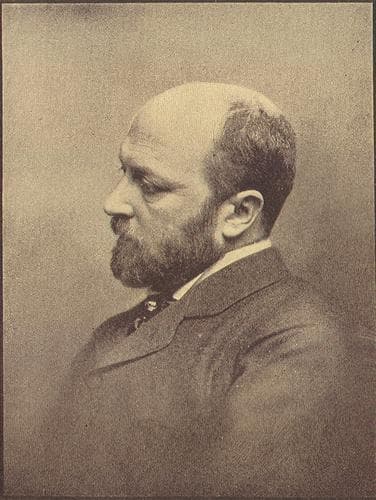
Henry James was an American-British author. He is regarded as a key transitional figure between literary realism and literary modernism, and is considered by many to be among the greatest novelists in the English language. He was the son of Henry James Sr. and the brother of philosopher and psychologist William James and diarist Alice James.
Similar books
- The Turn of the Screw
Henry James
3.4 (104k) average on GoodreadsMysteryExplores psychological tension and ambiguous realities through a subtle narrative.
- Heart of Darkness
Joseph Conrad
3.4 (415k) average on GoodreadsHistorical FictionWhile both works explore psychological descent, Conrad's focuses on an external journey into colonial horror and the moral corruption of civilization, whereas James's delves almost entirely into the internal landscape of self-deception and the tragedy of inaction. Conrad's narrative is more visceral and action-driven, while James's is meditative and introspective.
- Mrs Dalloway
Virginia Woolf
3.8 (361k) average on GoodreadsFictionWoolf's novel, though also a psychological study of a single day and character, celebrates the richness of subjective experience, social connections, and the fleeting beauty of life, even amidst melancholia. In contrast, James's novella portrays a life unlived, highlighting Marcher's profound isolation and his failure to engage with the present, offering a stark counterpoint to Woolf's embrace of lived moments.
- The Old Man and the Sea
Ernest Hemingway
3.8 (831k) average on GoodreadsLiterary FictionA Cuban fisherman's long struggle with a giant marlin becomes a story of endurance and dignity, now retold for young adults with illustrations, phonetic guides, and writing prompts in Traditional Chinese.
- One Hundred Years of Solitude
Gabriel García Márquez
4.1 (753k) average on GoodreadsLiterary FictionThrough the multi-generational story of the Buendía family, a mythical town deals with the repeating patterns of time, love, and solitude, as the extraordinary mixes with the ordinary.
- The Goldfinch
Donna Tartt
3.9 (720k) average on GoodreadsLiterary FictionHaunted by a tragic explosion and clutching a stolen Dutch masterpiece, a young orphan navigates the opulent drawing rooms of New York and the gritty underbelly of the art world, desperately seeking connection and redemption amidst a life spiraling into crime and obsession.






Enjoyed the summary?
A summary gives you the shape of the book. The book itself has the detail, the examples and the voice.
Find The Beast in the Jungle on AmazonAs an Amazon Associate, BookBrief earns from qualifying purchases. How we're funded