

Synopsis
Covers the whole plot, including the ending.
- Difficulty
- Hard
- Pacing
- Slow
- Mood
- Atmospheric, Philosophical, Melancholy, Introspective, Surreal
- Read it if
- You enjoy complex literary mysteries, philosophical explorations of identity, and rich, atmospheric portrayals of Istanbul. Perfect for readers who appreciate a slow burn and intricate narrative layers.
- Skip it if
- You prefer fast-paced thrillers, straightforward plots, or clear-cut resolutions.
The Black Book Plot Summary
Covers the whole plot, including the ending.
The Disappearance of Rüya
Galip, a lawyer in Istanbul, wakes to find his wife, Rüya, gone. He first thinks she's just out, but as hours pass, he grows worried. He checks her usual places, calls friends, and visits family, including his cousin Celâl Salik, a famous columnist. No one has seen her. Rüya left no note, just an empty space. Galip's life, centered on Rüya and his respect for Celâl's columns, starts to fall apart as he deals with her sudden absence.
Following Celâl's Trail
As Galip's search for Rüya fails, he thinks more and more about his cousin, Celâl Salik. Rüya read Celâl's columns, and Galip himself always admired Celâl's view of Istanbul. Galip starts to see strange links between Celâl's old columns and his own life, as if Celâl is writing about him. He rereads Celâl's articles, looking for clues, sure that Celâl knows something about Rüya or is involved in her leaving. This obsession leads Galip to copy Celâl's habits, visit places Celâl writes about, and even use his mannerisms to understand his cousin.
The Apartment of the Blind Man
Galip's search leads him to an old apartment building where Celâl Salik supposedly has a secret place. Posing as a friend, Galip gets in and finds a well-kept apartment belonging to a blind man, who is also missing. This apartment, full of odd items, books, and newspaper clippings, seems to hold the essence of Celâl's life and work. Galip spends days there, lost in Celâl's world, trying to connect the blind man, Celâl, and Rüya. The apartment becomes both a refuge and a trap for Galip, where his identity further merges with Celâl's.
Assuming Celâl's Identity
Driven to understand Celâl and maybe find Rüya through him, Galip decides to impersonate his cousin. He starts writing Celâl's newspaper column, copying his style and voice with great accuracy. The editor, at first doubtful, eventually accepts it, and the columns continue under Celâl's name. Galip moves into Celâl's apartment, follows his routines, and talks to people who knew Celâl, further blurring his own identity. This change is not just a disguise but a deep mental shift, as Galip deals with becoming the person he believes holds the answer to his lost wife.
Encounters with Celâl's Past
As Celâl, Galip meets various people from his cousin's past. Each meeting adds to the mystery of Celâl Salik. He meets former lovers, unhappy colleagues, and loyal fans, all offering different views of the columnist. These encounters are often unsettling, as Galip tries to keep up the act while learning about Celâl's complex nature and secret life. He learns about Celâl's thoughts, his politics, and his often-lonely life, realizing that Celâl himself was a master of disguise. These interactions make Galip question not only Celâl's true self but also his own.
The Search for the Master
Through his imitation of Celâl and his deep study of his cousin's writings, Galip finds mentions of a mysterious 'Master.' This person, often hinted at in Celâl's more obscure columns, seems to have greatly influenced Celâl's ideas. Galip also remembers Rüya's interest in certain mystical texts and symbols, suggesting she too might have been drawn to this 'Master' or similar ideas. This discovery adds a new layer to his search, changing it from a simple hunt for a missing person to a quest for a deeper, hidden truth about identity, belief, and reality in Istanbul.
The City as a Mirror
Galip's journey through Istanbul's streets, markets, and hidden spots mirrors his inner search. The city itself becomes a character, a complex place full of past and present echoes, much like Celâl's columns. As Galip travels, he sees the city through Celâl's eyes, experiencing the familiar in a new way. Istanbul's historical layers, with its Ottoman grandeur and modern complexities, reflect the layers of identity Galip uncovers, both his own and Celâl's. The city's sadness, its mix of East and West, becomes important to Galip's understanding of his situation and the elusive nature of truth.
The Revelation of Celâl's Motives
As Galip goes deeper into Celâl's writings and his adopted role, he starts to understand Celâl's complex views on life, identity, and the writer's role. Celâl, it seems, was not just a columnist but a man focused on personal authenticity and the roles people play. Galip begins to suspect that Celâl's disappearance, like Rüya's, might not be a simple abduction but a deliberate act of self-erasure or change, a philosophical statement itself. This realization complicates Galip's search, moving his focus from finding someone to understanding what it means to truly disappear.
A Clue from the Past
While living as Celâl, Galip uncovers a forgotten childhood memory involving himself, Rüya, and Celâl. This memory, perhaps a game, a shared story, or a secret place, gives a crucial, though unclear, clue. It suggests a deeper, older connection between Rüya and Celâl than Galip had known, hinting at a long-standing understanding or secret predating their adulthood. This memory forces Galip to rethink his marriage and his relationship with his cousin, adding a layer of personal betrayal to his ongoing quest.
The Confrontation with the Editor
The newspaper editor, at first impressed by the continued columns, eventually grows suspicious of Galip's odd behavior and changes in the column's style. A confrontation happens, where Galip must explain his reasons and the strange facts of Celâl's disappearance. This moment of truth is important, as Galip must explain his obsession and the ideas behind his impersonation. The editor, representing the practical world, struggles to grasp Galip's deeper search, showing the gap between Galip's inner world and outer reality. The meeting makes Galip think about the rightness of his actions.
The Puppet Master Revealed
Galip's search for the 'Master' leads him to an older, reclusive man in traditional Istanbul. This man, a former teacher to Celâl, greatly influenced Celâl's views and his interest in identity and disappearance. The Master tells old stories and shares philosophical ideas, especially from Sufi tradition about 'passing through' or 'shedding' one's identity. He speaks in puzzles, guiding Galip towards a more spiritual understanding of his quest, suggesting that both Celâl and Rüya might be changing themselves rather than just being physically absent.
Rüya's Philosophical Choice
Through his journey and talks with the Master, Galip starts to understand that Rüya's disappearance might not be a tragedy but a deliberate choice. She, like Celâl, was interested in identity and escaping one's set self. Galip begins to see her absence as an act of self-discovery or self-ending, a search for a more real life beyond their shared one. This realization is both sad and freeing, making Galip face the intellectual depth and independence of his wife, which he may have undervalued.
The Final Column
As his impersonation ends, Galip writes a final, personal column under Celâl's name. This column brings together his search for Rüya, his time as Celâl, his philosophical thoughts, and his new understanding of Istanbul. It reflects on identity, memory, love, and loss, showing the deep change he has gone through. The column is both a goodbye to Celâl's role and a sign of Galip's own changing self, a public statement of what he has learned, even if others cannot fully grasp his experience.
The Elusive Return
After his journey, Galip returns to his apartment, to what remains of his old life. Rüya's fate is unclear; she is never truly found or returned. Galip, however, is changed. He has lived another man's life, seen the world differently, and faced deep questions of self. The search has taken his old innocence and given him a sad wisdom. He is left with the lingering presence of Rüya and Celâl, forever affected by their absence and the complex web of identity he uncovered. His quest ends not with an answer, but with a deeper understanding of the human experience.
Principal Figures
Galip
Protagonist
A melancholic lawyer searching for his missing wife and, in doing so, his own identity.
Galip is a quiet, somewhat introspective lawyer in Istanbul, deeply in love with his wife, Rüya, and an admirer of his cousin Celâl's newspaper columns. He is initially conventional, preferring a stable, predictable life. His search for Rüya transforms him from a passive observer into an active participant in a complex identity game. He is driven by a profound sense of loss and a desperate need to understand the people he loves, even if it means losing himself in the process. His intelligence and sensitivity allow him to absorb and mimic Celâl's persona with remarkable skill.
Relationships: Rüya (Wife, object of his obsessive search, catalyst for his transformation.); Celâl Salik (Cousin, admired columnist, rival, and the persona Galip eventually adopts.)
Rüya
Catalyst/Mystery
Galip's beautiful, enigmatic wife whose disappearance sets the plot in motion.
Rüya is Galip's beautiful and somewhat mysterious wife. She is intelligent, well-read, and has a keen interest in philosophy, literature, and the esoteric, particularly Celâl Salik's columns. Her disappearance is the central mystery of the novel, but as the story unfolds, it becomes clear that she is not merely a passive victim but an individual with her own complex inner life and perhaps a philosophical reason for her absence. She represents an elusive ideal for Galip, a combination of love, beauty, and intellectual curiosity that he desperately seeks to reclaim.
Relationships: Galip (Husband, her disappearance profoundly impacts him.); Celâl Salik (Cousin-in-law, admired writer, possibly a deeper connection hinted at.)
Celâl Salik
Antagonist/Mentor/Symbol
Galip's famous journalist cousin, whose identity Galip assumes.
Celâl Salik is a renowned newspaper columnist in Istanbul, known for his insightful, often philosophical, and sometimes provocative writings about the city and its inhabitants. He is charismatic, intelligent, and a master of observation and self-reinvention. Celâl is a complex figure who seems to embody the spirit of Istanbul itself—a blend of modern and traditional, personal and universal. He is both an admired mentor and a mysterious rival to Galip, and his disappearance, simultaneous with Rüya's, suggests a deeper, intertwined fate. His writings and life serve as a blueprint for Galip's own transformation.
Relationships: Galip (Cousin, admired by Galip, then impersonated by him.); Rüya (Cousin-in-law, admired by Rüya, possibly a deeper philosophical connection.)
The Editor
Supporting
Celâl's newspaper editor, who unknowingly publishes Galip's impersonations.
The Editor is a pragmatic and astute man who manages Celâl Salik's column. He represents the practical, commercial side of the literary world, concerned with deadlines, readership, and public perception. Initially, he is impressed by Galip's ability to seamlessly continue Celâl's work, but as Galip's impersonation grows more eccentric, the Editor becomes suspicious. He serves as a grounding force, a voice of skepticism and common sense that contrasts with Galip's increasingly metaphysical journey. His interactions with Galip highlight the tension between objective reality and subjective experience.
Relationships: Celâl Salik (Employer, publisher of his columns.); Galip (Unwittingly employs him as Celâl's ghostwriter.)
The Master
Supporting/Mentor
A reclusive, philosophical figure who influenced Celâl and provides guidance to Galip.
The Master is an elderly, reclusive figure living in a traditional part of Istanbul. He is a profound philosopher and a keeper of ancient wisdom, particularly concerning Sufi mysticism and the nature of identity. He was a significant mentor to Celâl Salik and, indirectly, to Rüya. He speaks in parables and allegories, guiding Galip towards a deeper, more spiritual understanding of his quest. The Master represents the timeless, mystical wisdom of the East, offering an alternative perspective to the modern, Westernized worldview. His insights are crucial for Galip's eventual understanding of Rüya and Celâl's disappearances.
Relationships: Celâl Salik (Former mentor and philosophical guide.); Galip (Spiritual guide and source of revelation.)
The Blind Man
Supporting/Symbolic
The mysterious owner of the apartment Celâl used, who is also missing.
The Blind Man is the mysterious, unseen owner of the apartment where Galip discovers Celâl's hidden life. He is also missing, paralleling Rüya and Celâl's disappearances. His apartment is a repository of Celâl's thoughts, clippings, and observations, serving as a physical manifestation of Celâl's inner world. The Blind Man symbolizes hidden knowledge, introspection, and perhaps the idea of seeing beyond the visible world. His absence reinforces the theme of disappearance and the elusive nature of truth, as Galip tries to piece together his story through his possessions.
Relationships: Celâl Salik (His apartment was used by Celâl, suggesting a close, perhaps secret, connection.)
Alâeddin
Mentioned
A childhood friend of Galip and Celâl, often referenced in their shared past.
Alâeddin is a childhood friend of Galip, Rüya, and Celâl, often appearing in their shared memories and nostalgic reflections. He represents a simpler, perhaps more innocent past before the complexities of adulthood and identity crises set in. While not a direct participant in the main narrative, his memory serves as a touchstone for Galip, reminding him of the foundations of his relationships and the passage of time. He highlights the contrast between the clarity of childhood and the ambiguity of adult life.
Relationships: Galip (Childhood friend.); Rüya (Childhood friend.); Celâl Salik (Childhood friend.)
Themes & Insights
Identity and Self-Transformation
The novel explores how identity changes and is hard to grasp. Galip's search for Rüya leads him to become his cousin, Celâl Salik, blurring who he is and who he pretends to be. This change is not just a disguise but a deep mental shift, questioning if identity is fixed or made up. Celâl himself often changed who he was, and Rüya's disappearance suggests her own search for a different self. The characters want to escape their lives and become someone else, showing a deeper human desire.
“Perhaps my life was nothing but a long preparation for this moment: to become Celâl.”
The Search for Meaning and Truth
Galip's search for Rüya changes from a simple missing persons case to a search for meaning, truth, and understanding. He looks into Celâl's writings, Istanbul's history, and old philosophies, seeking answers not just about Rüya but about life itself. Truth remains hard to find, often hidden by stories, interpretations, and personal experiences. The novel suggests that the search itself, the act of questioning and exploring, is more important than any final answer, mirroring the human condition.
“What is true and what is not? Perhaps there is no truth, only stories.”
The City of Istanbul as a Palimpsest
Istanbul is more than just a place; it is a living character in the novel, a mix of history, culture, and memory. Galip's journey through its streets, old alleys, and modern roads reflects his inner search. The city's layers—Ottoman, Byzantine, and modern—mirror the layers of identity and meaning Galip tries to uncover. Celâl's columns are tied to Istanbul's spirit, and Galip's adoption of Celâl's role means adopting his way of seeing the city, making it a mirror for his own changes.
“Istanbul was a city of secrets, a city of veiled women, veiled words, veiled meanings.”
Love, Loss, and Obsession
At its core, the novel explores love and loss, and how far someone might go to get back what is lost. Galip's love for Rüya starts his journey, but his obsession quickly grows to include Celâl and the mysteries he represents. His love has a sense of ownership and a desire for full understanding, leading him to live Celâl's life. The novel looks at the destructive yet changing power of obsession, showing how it can both undo and redefine a person.
“My love for Rüya was so vast, so encompassing, it contained everything: my life, my city, my future.”
The Nature of Storytelling and Authorship
The Black Book constantly thinks about storytelling, authorship, and the power of narrative. Celâl Salik is a columnist, a professional storyteller, and Galip literally takes over his writing voice. The novel questions who truly owns a story, how stories shape our view of reality, and the unclear line between fiction and truth. It examines the writer's role in making meaning and the reader's role in understanding it, suggesting that life itself is a big, unfolding story where characters can be written, rewritten, or even disappear.
“Every story is a story about stories.”
Plot Devices & Literary Techniques
Unreliable Narrator
The story is told from Galip's subjective and increasingly deluded perspective.
Galip serves as the primary narrator, but as he immerses himself in Celâl's identity, his perception of reality becomes increasingly blurred. He experiences hallucinations, vivid dreams, and philosophical musings that intertwine with his search for Rüya. This narrative choice makes the reader question the veracity of events, forcing them to piece together what is 'real' versus what is Galip's internal projection or philosophical interpretation. The unreliable narration enhances the novel's themes of identity and the subjective nature of truth.
Intertextuality and Metafiction
The novel incorporates Celâl's columns and constantly references its own nature as a story.
The novel is rich in intertextuality, particularly through the inclusion of Celâl Salik's fictional newspaper columns, which often comment on the events of the main narrative or offer philosophical insights relevant to Galip's journey. This metafictional element draws attention to the act of storytelling itself, blurring the lines between the 'story' of Galip's search and the 'stories' Celâl writes. It allows the novel to comment on its own construction, raising questions about authorship, interpretation, and the way narratives shape our understanding of life and identity.
Doppelgänger Motif
Galip's assumption of Celâl's identity creates a profound sense of duality and mirroring.
The doppelgänger motif is central to the novel, with Galip literally becoming Celâl Salik. This isn't just a disguise but a deep psychological merging of identities. Galip not only dresses like Celâl and lives in his apartment but also adopts his thoughts, mannerisms, and even his memories. This motif explores the idea of a 'double' self, the hidden aspects of one's personality, and the desire to escape or transform one's identity by assuming another's. It highlights the profound connection and rivalry between the two cousins.
Labyrinthine Structure
The plot's meandering, non-linear progression mirrors Istanbul's complexity and Galip's internal state.
The narrative structure of 'The Black Book' is often labyrinthine, mirroring the winding streets of Istanbul and Galip's confused mental state. The plot does not follow a straightforward linear progression but instead circles back on itself, dives into philosophical digressions, incorporates historical anecdotes, and integrates Celâl's columns. This non-linear, fragmented approach reflects Galip's obsessive, non-rational search and the elusive nature of the truth he seeks, making the reader experience the same sense of disorientation and discovery as the protagonist.
The Black Book Quotes
“The world was a museum of the past, and we were its curators.”
“Perhaps I wanted to be someone else, or perhaps I wanted to find myself.”
“To read a book is to be someone else for a while.”
“Every object in Istanbul was a fragment of a forgotten story.”
“The city was a great black book, and I was trying to read its secrets.”
“We are all characters in stories we don't fully understand.”
“To forget is also a kind of remembering, a way of keeping the past at bay.”
“The greatest mystery was not who Celal was, but who I was when I tried to be him.”
“Istanbul was a city of mirrors, reflecting not only itself but also the souls of those who walked its streets.”
“Perhaps all stories are just different ways of telling the same secret.”
“Every secret contains another secret, just as every story contains another story.”
“The true Istanbul was not in its buildings or its history, but in the dreams of its people.”
“We are all searching for a lost paradise, a forgotten self.”
“The most beautiful stories are those that are never fully told.”
Quiz
10 questions on the plot and the characters. Each answer comes with a short explanation.
Question 1
What is the name of Galip's missing wife?
- Rüya
- Şehrazat
- Zeynep
- Ayşe
Show answer
A. Rüya Galip's wife, whose disappearance sets the central mystery in motion, is named Rüya.
Question 2
Who is Celâl Salik, the columnist Galip believes his wife might be with?
- Galip's childhood friend and cousin
- Rüya's former lover
- A famous detective Galip hires
- Galip's rival at his law firm
Show answer
A. Galip's childhood friend and cousin Celâl Salik is not only a prominent columnist but also Galip's childhood friend and cousin, creating a complex personal connection to the disappearance.
Question 3
What profession does Galip hold at the beginning of the novel?
- Lawyer
- Journalist
- Professor
- Antiquarian
Show answer
A. Lawyer Galip is a lawyer, which contrasts with his later immersion into the world of journalism and identity searching.
Question 4
Which historical and cultural elements of Istanbul are most prominently explored through Galip's wanderings?
- Ottoman architecture, Sufi mysticism, and Westernization
- Byzantine mosaics, ancient Greek philosophy, and modern art
- Roman ruins, early Christian theology, and contemporary politics
- Hellenistic sculptures, Islamic calligraphy, and socialist movements
Show answer
A. Ottoman architecture, Sufi mysticism, and Westernization The novel deeply delves into Istanbul's layered identity, exploring its Ottoman past, the influence of Sufi thought, and the ongoing tension with Westernization.
Question 5
What significant action does Galip take to try and understand Celâl and find Rüya?
- He begins to live in Celâl's apartment and write his column
- He hires a private investigator to track Celâl's movements
- He publishes an advertisement in the newspaper asking for information
- He interviews all of Celâl's former acquaintances and sources
Show answer
A. He begins to live in Celâl's apartment and write his column Galip's most profound action is to assume Celâl's identity, moving into his apartment and even writing his column, blurring the lines between himself and his cousin.
Question 6
What is a recurring motif or literary device used throughout the novel to highlight themes of identity and reality?
- Mirrors and reflections
- Clocks and timepieces
- Maps and cartography
- Musical instruments
Show answer
A. Mirrors and reflections Mirrors and reflections are frequently used to symbolize the fractured and shifting identities of the characters, particularly Galip's attempts to see himself in Celâl.
Question 7
Which specific historical event or period is frequently referenced or alluded to in the context of Istanbul's changing identity?
- The transition from the Ottoman Empire to the Turkish Republic
- The Byzantine period and the fall of Constantinople
- The Crusades and their impact on the city
- The Greek War of Independence
Show answer
A. The transition from the Ottoman Empire to the Turkish Republic The novel is deeply concerned with the cultural and societal shifts that occurred with the collapse of the Ottoman Empire and the establishment of the modern Turkish Republic, and how this affects identity.
Question 8
What is the primary philosophical question 'The Black Book' grapples with regarding personal identity?
- Can one truly become another person, or is identity fundamentally fixed?
- Is happiness achievable through material wealth or spiritual enlightenment?
- Does fate predetermine one's life path, or is free will dominant?
- Is objective truth attainable, or is all knowledge subjective?
Show answer
A. Can one truly become another person, or is identity fundamentally fixed? The core of the novel, particularly through Galip's efforts to embody Celâl, explores the fluidity and stability of personal identity and the possibility of truly 'becoming' someone else.
Question 9
How does the structure of the novel reflect its themes of mystery and identity?
- It interweaves Galip's narrative with Celâl's columns and dreamlike sequences, blurring reality and fiction.
- It follows a strict chronological order, slowly revealing clues to Rüya's whereabouts.
- It is presented as a series of police reports and witness testimonies, mimicking a detective novel.
- It uses a fixed, omniscient narrator who provides all answers definitively.
Show answer
A. It interweaves Galip's narrative with Celâl's columns and dreamlike sequences, blurring reality and fiction. The novel's fragmented structure, combining Galip's search with excerpts from Celâl's enigmatic columns and surreal dream passages, directly mirrors its exploration of fragmented identities and elusive truths.
Question 10
What is the metaphorical significance of the 'black book' in the title?
- It represents the hidden, forgotten, or suppressed narratives and identities of Istanbul and its people.
- It is a literal diary kept by Rüya, containing clues to her disappearance.
- It symbolizes a book of curses or dark magic, influencing the characters' fates.
- It refers to a secret government dossier on Celâl Salik's activities.
Show answer
A. It represents the hidden, forgotten, or suppressed narratives and identities of Istanbul and its people. The 'black book' is a powerful metaphor for the untold stories, the submerged histories, and the mysterious, often dark, aspects of human and national identity that lie beneath the surface.
The Black Book FAQ
What is the central premise of 'The Black Book'?
The novel follows Galip, a lawyer in Istanbul, whose wife, Rüya, suddenly disappears. His quest to find her leads him on a journey through the city, often blurring the lines between his own identity and that of his cousin, Celâl, a prominent columnist who has also gone missing.
Who are the main characters and their relationships?
The main characters are Galip, the protagonist; Rüya, his enigmatic wife and cousin; and Celâl, Rüya's half-brother and a famous newspaper columnist. Galip is deeply in love with Rüya, who seems to harbor an unexpressed longing for Celâl, whose writings become central to Galip's search.
What role does Istanbul play in Galip's search?
Istanbul is more than just a setting; it's a character in itself, reflecting Galip's internal state and serving as a labyrinth through which he navigates. Its historical layers, hidden passages, and diverse inhabitants mirror the complexities of identity and memory Galip encounters during his quest.
Is 'The Black Book' primarily a mystery novel?
While it begins with the mystery of Rüya's disappearance, the novel quickly transcends traditional mystery tropes. It becomes a philosophical exploration of identity, authorship, and the nature of reality, using the detective structure as a framework rather than its ultimate goal.
What is the significance of Celâl's newspaper columns?
Celâl's columns are interwoven throughout the narrative, offering fragmented insights into Istanbul's history, culture, and the lives of its inhabitants. Galip believes these columns hold clues to Rüya's whereabouts and Celâl's own disappearance, leading him to meticulously analyze their hidden meanings and connections.
How does Galip's identity begin to merge with Celâl's?
As Galip delves deeper into Celâl's life and writings, he starts to adopt Celâl's mannerisms, wear his clothes, and even live in his apartment. This transformation is fueled by Galip's desire to understand Celâl and perhaps become him, believing it will lead him closer to Rüya or reveal the truth behind their absence.
What are some of the recurring symbols or motifs in the book?
Recurring symbols include mannequins, representing artificiality and hidden lives; mirrors, reflecting fragmented identities and self-deception; and the very act of writing, which blurs the lines between reality and fiction. The concept of 'being seen' or 'not being seen' is also a powerful underlying motif.
Are there any allusions to Sufism or mystical traditions?
Yes, there are subtle allusions to Sufi mysticism, particularly through the themes of searching for a beloved, the annihilation of the self (fana), and the journey towards spiritual truth. The labyrinthine structure of the search and the blurring of identities echo Sufi allegories about the seeker's path.
How does Galip's obsession with Rüya impact his mental state?
Galip's obsession leads him into a state of increasing psychological instability, where his perceptions of reality become distorted. He begins to project his desires and fears onto the world, blurring the lines between memory, imagination, and the present, which contributes to his identity crisis.
What psychological forces drive Galip's transformation into Celâl?
Galip's transformation is driven by a complex mix of longing for Rüya, admiration for Celâl's celebrity, and a profound sense of his own unfulfilled potential. He believes that by becoming Celâl, he might not only find Rüya but also inhabit a more significant, recognized version of himself.
How does the novel explore the concept of 'melancholy' (hüzün)?
The novel deeply explores 'hüzün,' the particular melancholy associated with Istanbul's past and its fading Ottoman glory. Galip's personal sorrow over Rüya's absence is intertwined with this broader cultural sadness, suggesting that individual grief can echo collective historical melancholy.
What is the role of memory and nostalgia in Galip's journey?
Memory and nostalgia are central, constantly shaping Galip's perceptions and fueling his search. He frequently revisits childhood memories shared with Rüya and Celâl, idealizing the past. This longing for what was, or what he imagines was, often obscures his ability to confront the present reality.
What is the ultimate fate of Rüya and Celâl? Is it ever explicitly revealed?
The ultimate fate of Rüya and Celâl remains ambiguous, a deliberate choice by Pamuk. Their physical whereabouts are never definitively confirmed, leaving their disappearance open to multiple interpretations – as a literal flight, a symbolic vanishing, or even a figment of Galip's imagination.
Is Galip's transformation a success or a failure?
This is debatable. While Galip does inhabit Celâl's persona, gaining a degree of public recognition and understanding of his cousin's worldview, he doesn't necessarily find happiness or resolution. His individual identity seems lost in the process, leaving the 'success' of his transformation ambiguous.
How does the novel comment on the nature of authorship and storytelling?
The novel deeply questions the nature of authorship, particularly through Galip's attempts to write like Celâl and the blurring of their voices. It suggests that stories, once written, take on a life of their own, often surpassing or even consuming their creators, and that identity itself can be a narrative we construct.
What is the 'black book' referred to in the title?
The 'black book' is multi-layered: it refers to the actual notebook Celâl keeps, filled with his observations and ideas; it symbolizes the hidden, often dark, truths and secrets of Istanbul; and it can also represent the subconscious mind or the unknown aspects of identity that Galip confronts.
Does the ending offer any definitive answers or closure?
The ending deliberately avoids providing definitive answers or conventional closure. Instead, it leaves the reader with a profound sense of ambiguity regarding the characters' fates and the nature of reality. It challenges the reader to grapple with the unresolved mysteries, mirroring Galip's own journey.
How does 'The Black Book' reflect Turkish identity and its relationship with the West?
The novel subtly explores the tensions within Turkish identity, particularly the pull between traditional Ottoman culture and Western modernity. Characters like Celâl navigate these dualities, and the city of Istanbul itself embodies this historical crossroads, reflecting a nation grappling with its past and future.
About the author

Ferit Orhan Pamuk is a Turkish novelist, screenwriter, academic, and recipient of the 2006 Nobel Prize in Literature. One of Turkey's most prominent novelists, he has sold over 13 million books in 63 languages, making him the country's best-selling writer.
Similar books
- The Name of the Rose
Umberto Eco
4.1 (301k) average on GoodreadsHistorical FictionShares a blend of mystery, intellectual depth, and a rich historical/cultural setting.
- Austerlitz
W.G. Sebald
4.0 (14k) average on GoodreadsHistorical FictionFeatures a reflective, meandering narrative style focused on memory, identity, and the search for a lost past.
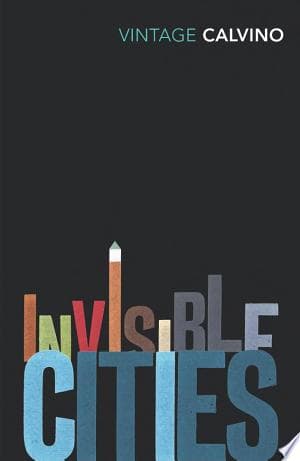
- Invisible Cities
Italo Calvino
4.1 (62k) average on GoodreadsFantasyExplores the relationship between a city's physical form and its psychological impact on its inhabitants, with a lyrical, philosophical tone.
- The Old Man and the Sea
Ernest Hemingway
3.8 (831k) average on GoodreadsLiterary FictionA Cuban fisherman's long struggle with a giant marlin becomes a story of endurance and dignity, now retold for young adults with illustrations, phonetic guides, and writing prompts in Traditional Chinese.
- One Hundred Years of Solitude
Gabriel García Márquez
4.1 (753k) average on GoodreadsLiterary FictionThrough the multi-generational story of the Buendía family, a mythical town deals with the repeating patterns of time, love, and solitude, as the extraordinary mixes with the ordinary.
- The Goldfinch
Donna Tartt
3.9 (720k) average on GoodreadsLiterary FictionHaunted by a tragic explosion and clutching a stolen Dutch masterpiece, a young orphan navigates the opulent drawing rooms of New York and the gritty underbelly of the art world, desperately seeking connection and redemption amidst a life spiraling into crime and obsession.





Enjoyed the summary?
A summary gives you the shape of the book. The book itself has the detail, the examples and the voice.
Find The Black Book on AmazonAs an Amazon Associate, BookBrief earns from qualifying purchases. How we're funded