

Synopsis
Covers the whole plot, including the ending.
- Difficulty
- Medium
- Pacing
- Moderate
- Mood
- Somber, Reflective, Intense, Philosophical
- Read it if
- You're interested in the ethical dilemmas of war and resistance, existentialist philosophy applied to historical events, or character-driven stories exploring responsibility and commitment.
- Skip it if
- You prefer fast-paced action over introspective thought, or are looking for a lighthearted read without deep moral questioning.
The Blood of Others Plot Summary
Covers the whole plot, including the ending.
The Vigil and the Weight of Choice
The novel begins with Jean Blomart at Hélène Bertrand's hospital bedside. She is dying from injuries from a Resistance mission. Throughout the night, as Hélène weakens, Jean struggles with his responsibility. He leads a Resistance network and personally assigned Hélène to the dangerous mission. This vigil makes him confront the ethical problems of his role: the need to sacrifice individuals for a group cause, and the personal cost of such choices. His thoughts show his struggle to balance his love for Hélène with his commitment to the Resistance. This sets up a deep look at freedom, responsibility, and the justification of violence.
A Past of Privilege and Disillusionment
Flashbacks show Jean's privileged but emotionally empty childhood. Born into a wealthy family, he felt distant from their values of comfort. His father, a factory owner, represented everything Jean wanted to avoid. As a young man, Jean chose a path of poverty and manual labor, working in his father's factory and later as a printer. He wanted to understand ordinary people's lives and create an identity free from expected roles. This period shows his early attempts to define himself through action, rather than by passively accepting his circumstances, which hints at his later dedication to the Resistance.
The Emergence of Political Consciousness
Jean's factory experiences show him the harsh realities of class inequality and worker exploitation. He sees the struggles of his fellow laborers and starts to develop a strong sense of social justice. His intellectual pursuits and talks with friends who shared similar socialist and anti-fascist views further increase this awareness. He comes to believe that individual freedom connects to collective liberation and that not acting against injustice is a form of complicity. This period marks his move from personal rebellion to a political commitment, recognizing how individual lives connect within a larger society.
Meeting Hélène and the Burden of Love
Jean meets Hélène Bertrand, a young, somewhat lighthearted woman, through mutual friends. Hélène is first drawn to Jean's intensity and commitment, though she struggles to fully understand his deep existential and political concerns. Their relationship grows, marked by Jean's wish for Hélène to find her own real commitment, not just copy his. He wants her to choose freely, but his love for her creates a conflict with his belief in a cause that goes beyond individual happiness. This dynamic highlights the clash between personal affection and the demands of a larger struggle.
The Shadow of War and the Call to Resistance
As World War II begins and France is occupied by Germany, Jean's political beliefs become a firm resolve to act. He sees the occupation as a clear threat to freedom and human dignity, requiring active opposition. He gets involved in the early Resistance movement, seeing this as the ultimate test of his commitment to others and to his chosen values. The abstract philosophical questions he once considered now have real, life-or-death consequences. He dedicates himself to organizing and leading a Resistance cell, accepting the personal risks and moral compromises such a struggle involves.
Hélène's Awakening and Her Choice
Hélène, initially more focused on personal happiness and less political than Jean, slowly starts to understand the seriousness of the situation and the importance of the Resistance. Jean encourages her to make her own free choice, not to follow him without thinking. By seeing the oppression and the bravery of those around her, and perhaps driven by her love for Jean, Hélène decides to join the Resistance. Her commitment is a deep act of self-definition, moving past her earlier passivity to embrace a cause bigger than herself. This decision, though freely made, ultimately leads to her fatal mission.
The Mission and Its Tragic Aftermath
As a leader, Jean must make difficult decisions, including assigning people to very dangerous tasks. He assigns Hélène to a mission to distribute Resistance propaganda, a task with significant risk. During the mission, Hélène is caught by the Gestapo, captured, and severely wounded. This event is why she is in the hospital, and it is the main focus of Jean's painful thoughts throughout the novel. His direct role in sending her to her death forces him to face the full effects of his leadership and the sacrifices the Resistance demands.
The Interrogation of Responsibility
As Hélène's life ends, Jean has an intense internal debate about his responsibility. He acknowledges that he sent her, but he also recognizes Héléne's own free choice to accept the mission. He thinks about how every person's actions, or lack of action, contribute to the shared experience of existence and suffering. He understands that in a world with oppression, no one can be completely innocent; even choosing not to act is a choice with consequences. This philosophical idea underlies his struggle to justify the 'blood of others' shed for a cause he believes in, and the inherent sadness of human freedom.
The Weight of Future Choices
The night is not just about Hélène's death; it is also about the ongoing struggle. Jean learns that another important Resistance operation is planned for the morning, requiring him to send more people into danger. This immediate demand for more sacrifice increases his internal conflict. He knows that Hélène's death is not an isolated event but a grim example for the choices he must keep making. The novel ends with him having to decide whether to proceed with the next mission, fully aware that he is sending others to a fate potentially as tragic as Hélène's, thus extending the chain of responsibility and sacrifice.
A Future of Unceasing Commitment
As morning nears and Hélène finally dies, Jean finds a grim resolution. He accepts that the fight against oppression continues and requires constant commitment, even at great personal cost. He decides to keep leading the Resistance, understanding that the 'blood of others' will be shed, and that he will carry the burden of those deaths. His decision is not an easy justification but a tragic necessity, a recognition that true freedom and responsibility involve choosing to act in a world where perfect solutions do not exist. The novel ends with Jean returning to the fight, forever changed by his choices.
The Blood of Others Characters
Jean Blomart
Protagonist
Resistance leader grappling with the ethical dilemmas of sacrifice and responsibility.
Jean is a complex and intense intellectual, initially from a bourgeois background, who deliberately rejects his class to seek an authentic existence through manual labor and political commitment. He is driven by a profound sense of justice and a belief in collective liberation, becoming a leader in the French Resistance. His internal struggle throughout the novel centers on the moral implications of his choices, particularly his responsibility for the deaths of others, most notably Hélène. He is a man who seeks to live authentically and take full responsibility for his freedom, even when it leads to tragic outcomes.
Relationships: Hélène Bertrand (Lover, whose death forces his moral reckoning); Marcel (Fellow Resistance member, comrade-in-arms); His Father (Represents the bourgeois values Jean rejects)
Hélène Bertrand
Supporting
Jean's lover, whose journey from frivolity to committed Resistance member ends in tragedy.
Hélène is initially portrayed as a somewhat superficial young woman, more concerned with personal happiness and less with political ideals. She is drawn to Jean's intensity and commitment but struggles to fully understand his existential anxieties. Her character arc is one of awakening, as she gradually comes to understand the gravity of the occupation and freely chooses to join the Resistance, influenced by Jean and her own growing awareness. Her death, resulting from a mission Jean assigned her, serves as the central catalyst for Jean's profound moral introspection.
Relationships: Jean Blomart (Lover, catalyst for her political awakening); Marcel (Acquaintance through Jean)
Marcel
Supporting
Loyal Resistance comrade and friend to Jean, representing the collective struggle.
Marcel is a fellow Resistance member and a trusted comrade of Jean. He represents the practical, day-to-day commitment of the Resistance movement. While Jean grapples with the philosophical and moral complexities of their actions, Marcel embodies the unwavering dedication to the cause, often providing a more grounded perspective. He delivers updates on operations and news, reminding Jean of the immediate demands of the fight. His presence highlights the collective nature of the Resistance, contrasting with Jean's isolated internal struggle.
Relationships: Jean Blomart (Fellow Resistance member, trusted friend); Hélène Bertrand (Acquaintance through the Resistance)
Jean's Father
Mentioned
Wealthy factory owner, symbolizing the bourgeois world Jean rejects.
Jean's father represents the comfortable, conventional, and morally compromised bourgeois world that Jean actively rebels against. He is a factory owner, a figure of authority and privilege, whose values Jean finds stifling and inauthentic. Though not an active character in the present narrative, his influence is significant in shaping Jean's early disillusionment and his subsequent search for a life of meaning and commitment outside of inherited wealth and status. He is a symbol of the 'other' that Jean defines himself against.
Relationships: Jean Blomart (Father, whose values Jean rejects)
Madame Blomart (Jean's Mother)
Mentioned
Jean's mother, a figure of passive bourgeois comfort.
Like Jean's father, his mother is primarily a figure from his past, representing the emotional sterility and passive comfort of his bourgeois upbringing. She embodies the traditional, sheltered role of a wealthy woman, disconnected from the harsh realities of the world. Her presence in Jean's flashbacks reinforces his decision to break away from that life and seek a more engaged and responsible existence. She symbolizes the kind of unexamined life that Jean believes leads to complicity in injustice.
Relationships: Jean Blomart (Mother, representing a past he rejects)
Paul
Supporting
A fellow Resistance member and a friend of Jean.
Paul is another member of Jean's Resistance cell, mentioned as a comrade involved in the dangerous operations. He represents the broader network of individuals who are risking their lives for the cause. While not as central as Marcel, his inclusion emphasizes the collective effort and the shared danger faced by all involved. He is one of the 'others' whose blood might be shed, adding to Jean's burden of responsibility.
Relationships: Jean Blomart (Fellow Resistance member, friend)
Suzanne
Mentioned
A Resistance contact or victim, whose fate contributes to the moral landscape.
Suzanne is mentioned in the context of Resistance activities and the dangers involved. She might be a contact, a victim of the Gestapo, or someone whose situation further illustrates the brutal realities of the occupation and the sacrifices demanded. Her mention serves to broaden the scope of the 'blood of others' beyond just Hélène, reminding Jean and the reader of the many anonymous individuals whose lives are intertwined with the Resistance.
Relationships: Jean Blomart (Resistance associate)
The Blood of Others Themes
Freedom and Responsibility
The novel's main theme explores the burden of human freedom. Jean struggles with the idea that every choice, even inaction, affects himself and others. He believes true freedom means making real choices and taking full responsibility for their results, even when those results are tragic. Hélène's decision to join the Resistance, and Jean's decision to send her on a mission, show the existentialist view that people must be free and must create meaning through their actions, accepting the 'blood of others' as a consequence of commitment.
“One is responsible for everything, even for one's desertions.”
The Ethics of Sacrifice and Violence
The novel directly addresses the moral problems of sacrificing individuals for a greater good. Jean's role as a Resistance leader forces him to send people, including his lover, to their possible deaths. He agonizes over whether such actions can ever be truly justified, looking at the tension between useful outcomes and individual human value. The 'blood of others' refers not only to those killed by the enemy but also to those sacrificed by the Resistance itself, raising questions about the moral purity of any cause that demands such a price. It is a deep examination of means and ends in wartime.
“How many others will I send to their death before morning?”
Authenticity and Commitment
Jean's journey is a search for a real existence, one defined by his own choices and commitments rather than by inherited status or passive acceptance. He rejects his wealthy background to engage directly with the world and its injustices. Both Jean and Hélène find authenticity by actively committing to the Resistance, moving beyond self-interest to embrace a cause bigger than themselves. The novel suggests that true selfhood is created through action and solidarity with others, even when that commitment leads to suffering and loss.
“To be free is to choose, to invent, to commit oneself.”
Solidarity and the Other
The idea of 'the other' is central, emphasizing how human lives connect and the ethical duty towards fellow beings. Jean's political awakening comes from recognizing the suffering of others and his responsibility to act. The title, 'The Blood of Others,' stresses that individual lives are not separate but connected, and that one's actions always affect others. The Resistance movement is shown as an act of solidarity, where people unite against oppression, accepting shared risks and responsibilities for humanity, even as it forces difficult personal sacrifices.
“There are no others. We are all others.”
Love and Ideology
The relationship between Jean and Hélène shows the conflict between personal love and ideological commitment. Jean loves Hélène deeply but believes that individual happiness must sometimes be less important than a greater cause. He wants Hélène to choose her commitment freely, not just to follow him, which complicates their bond. Their story explores whether love can exist with, or even be strengthened by, shared sacrifice for an ideal, or if it must be compromised by the harsh demands of political struggle. Hélène's death represents the ultimate tragic clash of these two forces.
“I wanted her to commit herself freely, not for my sake.”
Plot Devices & Literary Techniques
Interior Monologue/Stream of Consciousness
Narrative technique revealing Jean's deep philosophical and moral struggles.
The novel is largely driven by Jean Blomart's internal thoughts and reflections as he waits by Hélène's deathbed. This allows the reader direct access to his existential angst, his ethical deliberations, and his philosophical inquiries into freedom, responsibility, and the justification of violence. It blurs the line between past and present, as his memories and present anxieties intertwine, creating a deeply immersive and introspective narrative experience that focuses on the character's moral landscape rather than external action.
Flashbacks
Used to provide Jean's backstory and contextualize his present moral dilemma.
Interspersed throughout the vigil, flashbacks reveal Jean's privileged upbringing, his rejection of bourgeois values, his early search for authenticity, and his political awakening. These provide crucial context for understanding his current commitment to the Resistance and the profound weight of his decisions. They show his journey from personal rebellion to collective action, illustrating how his past choices and experiences have shaped the man who now grapples with sending others to their deaths, making his present moral crisis more resonant.
Symbolism of 'The Blood of Others'
Represents the human cost and moral burden of collective action.
The title itself is a central symbolic device. It refers not only to the literal blood shed by victims of the occupation and Resistance fighters but also to the moral stain and heavy responsibility borne by those who make decisions that lead to such sacrifices. It symbolizes the tragic necessity of human suffering and death in the pursuit of freedom, and the inescapable interconnectedness of individual lives. It encapsulates the core ethical dilemma of the novel: the justification of violence and sacrifice for a greater cause, and the indelible mark it leaves on the conscience of the decision-maker.
The Vigil
A framing device that intensifies the moral and philosophical introspection.
The entire novel is framed by Jean's all-night vigil at Hélène's deathbed. This confined, time-limited setting creates intense psychological pressure and forces Jean into a profound period of introspection. The impending death of his lover, directly caused by a mission he assigned, serves as a powerful catalyst for his moral reckoning. The vigil isolates him, allowing for deep philosophical exploration without external distractions, making the internal conflict the primary 'action' of the story and highlighting the timelessness of his ethical questions.
The Blood of Others Quotes
“One is not born, but rather becomes, a woman.”
“Man is a being for whom being is in question insofar as this being is for itself its own being.”
“To be free is not to have the power to do anything you like; it is to be able to surpass the given toward an open future.”
“The oppressor would not be so strong if he did not have accomplices among the oppressed.”
“Existence precedes essence.”
“Every man has to invent his own way.”
“One's life has value so long as one attributes value to the life of others, by means of love, friendship, indignation and compassion.”
“The meaning of an action is not determined by its result but by the intention that animates it.”
“Every time a man chooses, he chooses for all men.”
“We are condemned to be free.”
“The present is not a potential past; it is the moment of choice and action.”
“One does not love a woman because she is beautiful, but she is beautiful because one loves her.”
“The root of all evil is the belief that one is separate from all others.”
“Authenticity consists in living one's own truth, in being what one is.”
Quiz
10 questions on the plot and the characters. Each answer comes with a short explanation.
Question 1
What is Jean Blomart grappling with as he waits for Hélène to die?
- Whether he should surrender to the German forces to save Hélène.
- The moral dilemma of sacrificing individuals for the greater good of the resistance.
- His personal guilt over an affair he had while Hélène was on her mission.
- How to escape the city before the Gestapo captures him.
Show answer
B. The moral dilemma of sacrificing individuals for the greater good of the resistance. Jean's central conflict throughout the book, particularly as Hélène dies, is the existential and ethical weight of his decisions as a resistance leader, where he must choose to send others to their potential deaths for the cause, mirroring Hélène's fate.
Question 2
What role did Jean play in Hélène's fatal mission?
- He was supposed to accompany her but was delayed.
- He directly sent her on the mission that led to her death.
- He unknowingly provided information that compromised her mission.
- He tried to dissuade her from going, but she insisted.
Show answer
B. He directly sent her on the mission that led to her death. The synopsis explicitly states, 'He is the one who sent her on the mission that led to her death,' highlighting his direct responsibility and the source of his profound moral struggle.
Question 3
What is the primary setting for Jean's internal monologue and reflections in the book?
- A secret resistance hideout during a meeting.
- His apartment, preparing for a raid.
- By Hélène's bedside as she is dying throughout the night.
- A prison cell after being captured by the Germans.
Show answer
C. By Hélène's bedside as she is dying throughout the night. The book's premise centers around Jean waiting 'throughout an endless night for his lover, Helene, to die,' making her bedside the primary backdrop for his deep introspection and moral reckoning.
Question 4
Which philosophical concept is most strongly explored through Jean Blomart's character and choices?
- Utilitarianism, focusing on the greatest good for the greatest number.
- Existentialism, particularly the burden of freedom, responsibility, and choice.
- Nihilism, the belief that life is without objective meaning or purpose.
- Stoicism, emphasizing self-control and detachment from external events.
Show answer
B. Existentialism, particularly the burden of freedom, responsibility, and choice. As a work by Simone de Beauvoir, a prominent existentialist philosopher, the novel delves deeply into the themes of individual responsibility, the weight of choices, and the freedom to act, even when those actions lead to the suffering or death of others—core tenets of existentialism.
Question 5
What is the 'blood of others' in the title primarily referring to?
- The literal blood spilled by German soldiers during the occupation.
- The sacrifices and deaths of individuals made in the name of a collective cause.
- The inherited guilt passed down through generations.
- The shared lineage of those involved in the resistance movement.
Show answer
B. The sacrifices and deaths of individuals made in the name of a collective cause. The title refers to the moral and existential burden of being responsible for the suffering and death of others, particularly those Jean sends on dangerous missions. It highlights the inescapable interconnectedness of human actions and their consequences.
Question 6
Beyond Hélène, what other critical decision must Jean make before morning?
- Whether to accept a new leadership position in the resistance.
- How many more people to send to potentially similar fates as Hélène.
- If he should reveal his identity to the Germans to save his comrades.
- Where to bury Hélène to avoid detection.
Show answer
B. How many more people to send to potentially similar fates as Hélène. The synopsis explicitly states that 'before morning, he must ultimately decide how many others to send to a similar fate,' emphasizing his ongoing, agonizing responsibility as a leader.
Question 7
How does the historical context of the German occupation influence Jean's moral struggles?
- The occupation provides a clear, unambiguous enemy, simplifying moral choices.
- It creates a heightened state of emergency where ordinary moral rules are suspended, forcing impossible choices.
- It allows Jean to justify his actions as purely self-defense, absolving him of guilt.
- The occupation's brutality makes Jean question the value of all human life, including his own.
Show answer
B. It creates a heightened state of emergency where ordinary moral rules are suspended, forcing impossible choices. The extreme conditions of war and occupation force characters into situations where traditional morality is insufficient, leading to tragic choices between terrible options. Jean's struggle is intensified by the necessity of sacrificing individuals to fight a greater evil.
Question 8
Which of the following best describes Jean Blomart's character as presented in the synopsis?
- A ruthless and detached leader focused solely on strategic victory.
- A conflicted patriot deeply burdened by the moral cost of his leadership.
- A hesitant follower who is forced into a leadership role against his will.
- A romantic idealist who believes in the inherent goodness of all people.
Show answer
B. A conflicted patriot deeply burdened by the moral cost of his leadership. The description 'patriot leader' combined with his internal struggle over sending Hélène to her death and deciding 'how many others to send to a similar fate' clearly portrays him as deeply conflicted and burdened, rather than ruthless or merely hesitant.
Question 9
What kind of 'freedom' is implicitly questioned or explored through Jean's predicament?
- The freedom from political oppression.
- The freedom to act without consequences.
- The freedom of choice, even when all choices are terrible and carry immense responsibility.
- The freedom to pursue personal happiness above all else.
Show answer
C. The freedom of choice, even when all choices are terrible and carry immense responsibility. In existentialist thought, freedom is not merely the absence of constraint but the burden of choice and responsibility. Jean's situation highlights this: he is free to choose, but every choice has profound, often tragic, consequences for himself and others, emphasizing the heavy weight of 'condemned to be free.'
Question 10
How does the 'endless night' motif contribute to the novel's atmosphere and themes?
- It signifies a period of rest and recuperation for the resistance fighters.
- It represents a temporary pause in the conflict, allowing for strategic planning.
- It amplifies the sense of isolation, dread, and the protracted agony of decision-making.
- It symbolizes the hope for a new dawn and the eventual liberation.
Show answer
C. It amplifies the sense of isolation, dread, and the protracted agony of decision-making. The 'endless night' creates a claustrophobic and timeless setting, intensifying Jean's internal torment. It underscores the profound personal suffering, the existential dread, and the agonizing, drawn-out nature of his moral calculations, rather than offering respite or hope.
The Blood of Others FAQ
What is 'The Blood of Others' about?
'The Blood of Others' explores the moral dilemmas faced by Jean Blomart, a leader in the French Resistance during World War II, as he grapples with the responsibility of sending others, including his lover Helene, to their deaths for the cause. The narrative unfolds as Jean waits for Helene to die from injuries sustained on a mission he assigned her, forcing him to confront the ethical implications of his choices and the value of individual lives versus collective action.
Why should I read 'The Blood of Others'?
You should read 'The Blood of Others' for its profound exploration of existentialist themes, particularly responsibility, freedom, and the 'other.' It offers a gripping historical backdrop of the French Resistance while delving deep into the psychological and philosophical struggles of its characters, making readers question the nature of sacrifice and the justifications for violence, even in a just war.
What is the background/setting of 'The Blood of Others'?
The book is set in German-occupied Paris during World War II, specifically focusing on the activities and internal conflicts of the French Resistance movement. The grim atmosphere of occupation, the constant threat of capture, and the clandestine nature of their operations form a critical backdrop to Jean Blomart's moral quandaries and the ultimate sacrifices made by characters like Helene.
What are the most memorable quotes?
While the book doesn't have widely recognized, pithy quotes like some others, its most memorable lines often revolve around the weight of choice and the 'other.' A recurring sentiment is Jean's internal struggle with the idea that 'the blood of others' is on his hands, encapsulating his profound guilt and the ultimate responsibility he bears for the lives he impacts, directly reflecting the book's title.
What writing style does the author use?
Simone de Beauvoir employs a reflective and introspective writing style, often shifting between Jean Blomart's present anguish and flashbacks that reveal his past relationships and philosophical development. The prose is analytical and detailed, focusing heavily on internal monologues and the complex interplay of ideas and emotions, rather than fast-paced action.
What minor details add significant meaning?
The seemingly minor detail of Jean's early life, particularly his estrangement from his bourgeois family and his initial desire to live a life free from responsibility, adds significant meaning. It highlights the profound transformation he undergoes, from an individualist seeking personal freedom to a leader burdened by collective responsibility, underscoring the existentialist journey of embracing one's freedom through action and its consequences.
What are some subtle foreshadowing moments?
Early conversations between Jean and Helene about the nature of commitment and sacrifice subtly foreshadow Helene's eventual fate. Helene's passionate embrace of the Resistance, even more so than Jean's initial philosophical detachment, hints at her willingness to take extreme risks, which ultimately leads to her fatal mission.
What unexpected character connections exist?
An unexpected connection is the way various Resistance members, initially seen as mere cogs in the machine, become deeply intertwined with Jean's personal moral fabric. While not 'unexpected' in a plot twist sense, the way Jean's philosophical musings about the 'other' transform into profound, personal responsibility for specific individuals like Helene and his fellow fighters, creates a potent and deeply felt connection.
What are unspoken character motivations?
Helene's unspoken motivation, beyond patriotism, seems to be a desperate desire for meaning and validation, perhaps stemming from a perceived lack of purpose in her earlier, more frivolous life. Her eagerness to prove herself and embrace the Resistance, even at great personal risk, suggests a yearning to transcend her former self and achieve a profound sense of 'being' through action.
What psychological complexities do characters exhibit?
Jean Blomart exhibits immense psychological complexity, torn between his philosophical ideals of individual freedom and the crushing weight of his practical responsibilities as a Resistance leader. His guilt over Helene's impending death, coupled with his resolve to continue the fight, showcases a deep internal conflict between love, duty, and the existential burden of choice, constantly questioning if the ends justify the means.
What are the major emotional turning points?
The most significant emotional turning point is Jean's realization, as Helene lies dying, that his philosophical detachment from 'others' is no longer tenable. Her suffering and impending death force him to confront the concrete, agonizing reality of his choices and the irreversible impact they have, moving him from abstract thought to raw, personal anguish and acceptance of his interconnectedness with humanity.
How do relationship dynamics evolve?
The relationship between Jean and Helene evolves from a somewhat detached, intellectual affair into a profound bond forged in shared danger and mutual sacrifice. Initially, Jean struggles to fully commit, viewing Helene partly as 'the other,' but as they become deeply entangled in the Resistance, their relationship transforms into one of deep love and shared purpose, culminating in Helene's ultimate sacrifice for the cause Jean leads.
Which parts remain ambiguous or open-ended?
The precise moral 'answer' to Jean's dilemma remains ambiguous. De Beauvoir doesn't offer a simple resolution to whether his actions are unequivocally 'right' or 'wrong,' or if the sacrifices are truly worth it. The ending leaves readers to ponder the enduring burden of responsibility and the inherent tragedy of human choice in extreme circumstances, rather than providing a clear judgment.
What are controversial scenes or decisions?
Jean's decision to send Helene on the mission that leads to her death is highly controversial within the narrative, not just for him but for the reader. While justified by the demands of the Resistance, it forces a direct confrontation with the ethics of sacrificing loved ones for a greater cause, highlighting the brutal cost of war and the moral compromises leaders are forced to make.
'The Blood of Others' ending explained: how it ends & what it means
The book ends with Helene's death and Jean's resolute, albeit agonizing, decision to continue the fight and send more 'others' to similar fates. He chooses to embrace his responsibility, accepting the burden of the 'blood of others' on his hands, not as a sign of guilt that paralyzes him, but as a testament to his freedom and commitment to the collective cause. It means that true freedom is found not in avoiding responsibility, but in actively choosing it, even when it entails immense personal suffering and the sacrifice of others, thereby affirming the existentialist notion of 'condemned to be free.'
About the author
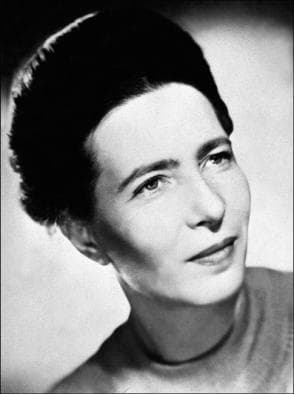
Simone Lucie Ernestine Marie Bertrand de Beauvoir was a French existentialist philosopher, writer, social theorist, and feminist activist. Though she did not consider herself a philosopher, nor was she considered one at the time of her death, she had a significant influence on both feminist existentialism and feminist theory.
Similar books
- The Plague
Albert Camus
4.0 (171k) average on GoodreadsLiterary FictionExplores human solidarity, moral responsibility, and existential choices in the face of an overwhelming crisis.
- Man's Fate
André Malraux
A philosophical novel about revolution, commitment, and the tragic choices individuals make in political struggle.
- The Mandarins
Simone de Beauvoir
4.2 (4k) average on GoodreadsPhilosophyAnother de Beauvoir novel examining the moral and political struggles of French intellectuals post-WWII, though with a broader scope.
- Nausea
Jean-Paul Sartre
3.9 (86k) average on GoodreadsPhilosophySartre's work explores alienation and the absurdity of existence on a largely internal, psychological plane. Beauvoir's The Blood of Others grounds these existentialist anxieties firmly within the concrete, brutal reality of war and occupation, forcing characters to confront the external consequences of their freedom in a more direct and visceral way.
- To Kill a Mockingbird
Harper Lee
4.3 (4.5M) average on GoodreadsHistorical FictionIn the 1930s Jim Crow South, Harper Lee writes about racial injustice, moral growth, and the quiet courage of a lawyer father, Atticus Finch, as seen through his young daughter's eyes.
- The Great Gatsby
F. Scott Fitzgerald
3.9 (3.8M) average on GoodreadsHistorical FictionIn the opulent Roaring Twenties, a mysterious millionaire's lavish parties hide his desperate, tragic pursuit of a lost love, exposing the emptiness within the American Dream.






Enjoyed the summary?
A summary gives you the shape of the book. The book itself has the detail, the examples and the voice.
Find The Blood of Others on AmazonAs an Amazon Associate, BookBrief earns from qualifying purchases. How we're funded