

Core Idea
- Difficulty
- Medium
- Read it if
- You are seeking a philosophical work that encourages introspection, embraces ambiguity, and celebrates the beauty of unanswerable questions through poetic expression.
- Skip it if
- You prefer linear arguments, definitive answers, or a prose style that prioritizes logical coherence over evocative imagery and existential pondering.
Key Takeaways from The Book of Questions
Embrace the Unanswerable
The true wisdom lies not in answers, but in the profound act of questioning.
Neruda's 'Book of Questions' does not seek definite answers; it invites us to enjoy the mystery of life itself. The book's main idea is that our natural desire for resolution often stops imagination and limits what we see. By giving us 316 unanswerable questions, Neruda frees the reader from needing certainty, encouraging a more intuitive and imaginative way of engaging with the world. This acceptance of the unknown creates a deeper sense of wonder, like a child's pure curiosity, allowing us to experience reality in a richer, less restricted way. It is a strong argument for valuing the process of asking questions more than finding answers.
“living in a state of visionary surrender to the elemental questions, free of the quiet desperation of clinging too tightly to answers, may be our greatest act of faith.”
In the book: The entire structure of 'The Book of Questions' is its evidence: 316 questions, none with explicit answers provided. The translator, William O'Daly, explicitly states this core idea in his introduction.
Try this: Consciously pause throughout your day to ask unanswerable questions about mundane things. Instead of seeking immediate solutions, allow the questions to linger and inspire new perspectives. For example, when looking at a flower, ask 'Is the rose naked or is that her only dress?' rather than simply identifying its species.
Childlike Wonder, Adult Experience
Integrate the innocent curiosity of a child with the depth of adult life.
Neruda skillfully combines the wide-eyed surprise of a child seeing the world for the first time with the complex understanding and deep emotions of an adult. His questions, though seemingly simple, often carry deep philosophical weight, reflecting years of observation and feeling. This mix creates a unique view where everyday things—like trees or colors—are looked at with fresh eyes, yet resonate with an adult's accumulated wisdom. It reminds us that true insight often comes from letting go of learned assumptions and approaching reality with both innocence and experience, preventing cynicism from dulling our ability to feel awe.
“These poems integrate the wonder of a child with the experiences of an adult.”
In the book: Questions like 'Who shouted with glee when the color blue was born?' or 'Why does the earth grieve when the violets appear?' exemplify this blend, taking simple observations and infusing them with deep, imaginative personification and emotional depth.
Try this: When facing a familiar situation or object, try to articulate five questions about it that a child might ask, then five questions that an elder might ponder. Compare the two sets and see how they enrich your understanding.
Beyond Reason, Into Intuition
Liberate the mind from logic to access deeper imaginative and intuitive truths.
The 'Book of Questions' helps us move past the limits of rational thought. Neruda's questions are designed to be unanswerable by logic, making the reader engage with them on a more personal, imaginative, and intuitive level. This process activates parts of the mind that might be unused in our answer-focused culture, creating a different kind of understanding—one that is felt and imagined rather than logically figured out. It encourages us to trust our instincts and subconscious connections, recognizing that not all truths can be easily categorized or explained with linear reasoning. This approach can unlock creativity and a richer emotional connection to life.
“Neruda's questions lead the reader beyond reason into the realms of intuition and pure imagination.”
In the book: Many questions are inherently surreal or defy scientific explanation, such as 'Why doesn't Thursday talk itself into coming after Friday?' or 'What did the rubies say standing before the juice of pomegranates?' These questions push the reader past logical analysis.
Try this: Before making a decision or trying to understand a complex issue, spend five minutes free-associating questions about it without trying to answer them. Pay attention to any feelings or images that arise, rather than just facts.
The Power of Poetic Imagery
Visual metaphors and surrealism unlock deeper layers of meaning and emotion.
Neruda's skill lies in writing questions that are very visual and often dreamlike. These images affect the reader emotionally and aesthetically before they are understood logically. This 'mildly dazzling' effect creates a unique way to find meaning, where the subconscious processes the beauty and strangeness of the imagery, bypassing the analytical mind. It shows how poetry can communicate truths that are too complex or subtle for direct prose. By painting vivid mental pictures, Neruda invites us into a dreamlike state where imagination rules, allowing us to experience deep insights not through logical argument, but through imaginative immersion.
“Neruda's questions evoke pictures that make sense on a visual level before the reader can grasp them on a literal one.”
In the book: Examples like 'Is there anything in the world sadder than a train standing in the rain?' or 'Why do trees conceal the splendor of their roots?' create immediate, evocative images that resonate emotionally.
Try this: When trying to understand a complex emotion or idea, try to describe it using only visual metaphors or surreal imagery, rather than direct explanations. See how this shift in language alters your perception.
Vulnerability as Strength
Unanswered questions reveal a deeper, more honest connection to existence.
The 'Book of Questions' represents a later, more open phase in Neruda's career. By presenting questions without answers, he shows not only his own curiosity but also a willingness to admit the limits of human knowledge and control. This openness is not a weakness; it is a strength, allowing for a more real and open engagement with the universe's mysteries. It encourages readers to drop their pretense of knowing and embrace the humbling, yet freeing, experience of not having all the answers. This openness leads to a deeper connection to the human condition and the natural world, as we realize we are all fellow travelers in a vast, unknown cosmos.
“In it, Neruda achieves a deeper vulnerability and vision than in his earlier work.”
In the book: The very act of publishing a book of pure questions, rather than declarative statements or resolved narratives, demonstrates a profound artistic vulnerability and a trust in the reader's capacity for introspection.
Try this: In a personal journal, dedicate a section to 'Unanswered Questions.' Write down things you genuinely don't know or understand, without feeling the need to research or resolve them. Practice sitting with the discomfort or peace of the unknown.
Re-enchanting the Mundane
Discover extraordinary wonder in the ordinary elements of daily life.
Neruda's questions consistently take common objects and events—roses, trees, colors, days of the week—and give them a magical and deep quality. He challenges us to look beyond their practical or scientific definitions and see their inherent mystery and poetic meaning. This making the mundane special again is important in a world that often reduces everything to data or usefulness. By asking questions that personify or elevate the everyday, Neruda reminds us that wonder is not just for grand spectacles but is woven into our very existence, waiting to be found again through a change in perspective.
“Tell me, is the rose naked or is that her only dress?”
In the book: Questions like 'Why do trees conceal the splendor of their roots?' or 'Who shouted with glee when the color blue was born?' take simple natural elements and imbue them with hidden life and emotion.
Try this: Choose one everyday object (e.g., a coffee cup, a doorknob, a cloud) and spend five minutes writing down as many imaginative, unanswerable questions about it as you can. Try to see it anew.
The Universal Language of Mystery
Questions transcend cultural and linguistic barriers, uniting humanity in shared wonder.
Neruda's global appeal, even in translation, shows how universal his questions are. The basic questions about existence, beauty, time, and emotion are not limited by culture or language. By focusing on what cannot be answered, Neruda touches on a shared human experience of wonder and confusion, creating common ground for self-reflection across different audiences. His questions, whether in Spanish or English, connect with people because they address the core mysteries that all humans consider, regardless of their background. This universality highlights that our shared capacity for curiosity and imagination is a strong force for connection, bridging divides through collective engagement with the unknown.
“Pablo Neruda is one of the world's most popular and famous poets...”
In the book: The book's success as a best-selling bilingual edition demonstrates its cross-cultural resonance. The questions themselves, dealing with fundamental elements like earth, sky, colors, and emotions, are universally relatable.
Try this: Engage in a 'question exchange' with someone from a different background. Instead of discussing opinions, share three unanswerable questions about life or nature and discuss what feelings or images they evoke for each of you.
Time as a Fluid Concept
Challenge linear perceptions of time through imaginative inquiry.
Neruda often plays with the idea of time, giving human qualities to days of the week and questioning their fixed order. This imaginative approach encourages us to break free from strict, linear views of time and consider its more fluid, personal, and even emotional aspects. By asking why Thursday cannot follow Friday, he playfully challenges our ingrained understanding of chronology, opening up possibilities for alternative realities and perspectives. This reminds us that many of our perceived 'rules' of existence are made up, and by questioning them, we can discover new ways of experiencing and relating to the passage of time, making it less of a constant march and more of a flexible, poetic journey.
“Why doesn't Thursday talk itself into coming after Friday?”
In the book: The question 'Why doesn't Thursday talk itself into coming after Friday?' directly challenges the fixed order of the week, hinting at a more sentient or negotiable flow of time.
Try this: For one day, consciously try to observe time not as a clock, but as a series of unfolding moments, each with its own character. Ask yourself, 'What 'day' does this moment feel like?' regardless of the actual calendar.
The Poetic Act of Being
Life itself is a continuous poem, best lived through open-ended inquiry.
Ultimately, 'The Book of Questions' is more than just a collection of poems; it is a guide for a way of living. Neruda, a Nobel laureate and political figure, could have left behind definite statements or grand declarations. Instead, he left a legacy of questions, suggesting that artistic and human experience is an ongoing process of inquiry, not a series of finished answers. This view elevates the act of questioning to a fundamental way of existing, implying that to live fully is to constantly engage with the unknown, to marvel, and to wonder. It shows that life itself is a continuous, unfolding poem, best appreciated when we remain open to its many mysteries.
“this unique book is a testament to everything that made Neruda an artist.”
In the book: The fact that this was one of eight unpublished manuscripts on his desk when he died, representing a 'deeper vulnerability and vision,' indicates its significance as a final artistic statement on the nature of being.
Try this: Adopt a daily practice of writing down one new, unanswerable question about your life or the world before bed. Let it be the last thought you engage with, fostering a sense of ongoing wonder.
The Book of Questions Quotes
“¿Y qué es lo que ríe en el plátano: su cáscara o su carne?”
“¿Qué cosa dijo la cereza al agua para no hundirse?”
“¿Es la misma rosa la que florece en mi jardín o la que pasa en el viento?”
“¿Por qué los árboles ocultan el esplendor de sus raíces?”
“¿Es verdad que las lágrimas no pueden verse si no se lloran?”
“¿Quién le dio el nombre a la luna sin que nadie se lo pidiera?”
“¿Qué le dijo el volcán al aire para que se detuviera?”
“¿Por qué la primavera es verde si el invierno es blanco?”
“¿Qué hace la golondrina en el cielo cuando no está volando?”
“¿Es el mar una campana o un cristal que se rompe?”
“¿Cuántas preguntas tiene un gato en sus ojos?”
“¿Por qué la araña teje su telaraña en el aire y no en el agua?”
“¿Qué color tiene un beso que no se ha dado?”
“¿Es verdad que las hormigas tienen un corazón de piedra?”
Quiz
10 questions on the main ideas. Each answer comes with a short explanation.
Question 1
According to the introduction by William O'Daly, what is our greatest act of faith in relation to 'The Book of Questions'?
- Finding definitive answers to all of Neruda's questions.
- Living in a state of visionary surrender to elemental questions, free from clinging to answers.
- Translating the poems into as many languages as possible.
- Analyzing the political undertones of each question.
Show answer
B. Living in a state of visionary surrender to elemental questions, free from clinging to answers. William O'Daly states that 'living in a state of visionary surrender to the elemental questions, free of the quiet desperation of clinging too tightly to answers, may be our greatest act of faith,' emphasizing the importance of embracing the questions themselves.
Question 2
How many unanswerable questions compose 'The Book of Questions'?
- Approximately 100
- Exactly 316
- Over 500
- A fluctuating number across editions
Show answer
B. Exactly 316 The book is explicitly described as being 'composed of 316 unanswerable questions,' a key structural detail.
Question 3
What literary prize did Pablo Neruda receive?
- The Pulitzer Prize
- The Man Booker Prize
- The Nobel Prize in Literature
- The National Book Award
Show answer
C. The Nobel Prize in Literature The text explicitly states that Pablo Neruda 'was the recipient of the Nobel Prize in Literature,' highlighting his significant recognition.
Question 4
Before its publication, 'The Book of Questions' was among several manuscripts found on Neruda's desk at the time of his death. How many unpublished poetry manuscripts were there?
- Three
- Five
- Eight
- Twelve
Show answer
C. Eight The text states, 'When Neruda died in 1973, The Book of Questions was one of eight unpublished poetry manuscripts that lay on his desk,' providing a specific number.
Question 5
What is a primary characteristic of Neruda's questions in this collection, as described by the text?
- They primarily seek scientific explanations for natural phenomena.
- They integrate the wonder of a child with the experiences of an adult.
- They are designed to provoke political debate and social commentary.
- They offer straightforward philosophical arguments for contemplation.
Show answer
B. They integrate the wonder of a child with the experiences of an adult. The description highlights that the poems 'integrate the wonder of a child with the experiences of an adult,' capturing the unique blend of innocence and depth in Neruda's questioning.
Question 6
How does 'The Book of Questions' differ from Neruda's earlier work, according to the description?
- It features more explicit political statements.
- It demonstrates a deeper vulnerability and vision.
- It is written exclusively in prose rather than poetry.
- It focuses solely on romantic love.
Show answer
B. It demonstrates a deeper vulnerability and vision. The text states, 'In it, Neruda achieves a deeper vulnerability and vision than in his earlier work,' indicating a significant evolution in his artistic approach.
Question 7
What effect do Neruda's questions evoke on a visual level, even before literal comprehension, according to Publishers Weekly?
- They create confusion and disorientation.
- They evoke pictures that make sense, resulting in a mildly dazzling effect.
- They primarily stimulate auditory imagery.
- They require extensive background knowledge to visualize.
Show answer
B. They evoke pictures that make sense, resulting in a mildly dazzling effect. Publishers Weekly notes, 'Neruda's questions evoke pictures that make sense on a visual level before the reader can grasp them on a literal one. The effect is mildly dazzling,' highlighting the immediate visual impact.
Question 8
Which of the following questions is NOT included in the provided excerpts from 'The Book of Questions'?
- Why do trees conceal the splendor of their roots?
- What is the sound of one hand clapping?
- Is there anything in the world sadder than a train standing in the rain?
- Who shouted with glee when the color blue was born?
Show answer
B. What is the sound of one hand clapping? The question 'What is the sound of one hand clapping?' is a famous Zen koan, not a question from the provided excerpts of Neruda's 'Book of Questions.' The other options are direct quotes.
Question 9
How does 'The Book of Questions' guide the reader, according to the description?
- It leads the reader towards definitive philosophical conclusions.
- It provides a clear framework for logical problem-solving.
- It leads the reader beyond reason into the realms of intuition and pure imagination.
- It encourages a purely academic and analytical approach to poetry.
Show answer
C. It leads the reader beyond reason into the realms of intuition and pure imagination. The text explicitly states, 'Neruda's questions lead the reader beyond reason into the realms of intuition and pure imagination,' emphasizing its non-rational approach.
Question 10
Considering Neruda's background as an ambassador and his political activity, how does 'The Book of Questions' primarily engage with these aspects of his life?
- It directly poses questions about specific political events and figures.
- It uses abstract and surreal questions to subtly critique political systems.
- It largely transcends explicit political engagement, focusing on universal wonder and imagination.
- It serves as a veiled manifesto for his political ideology.
Show answer
C. It largely transcends explicit political engagement, focusing on universal wonder and imagination. While Neruda led a life 'charged with poetic and political activity,' the description of 'The Book of Questions' emphasizes its integration of 'the wonder of a child with the experiences of an adult' and leading 'beyond reason into the realms of intuition and pure imagination,' suggesting a departure from overt political themes in this particular work. It 'refuses to be corralled by the rational mind,' which includes direct political discourse.
The Book of Questions FAQ
What is 'The Book of Questions' by Pablo Neruda about?
'The Book of Questions' is a unique collection of 316 unanswerable poetic questions by Pablo Neruda. It encourages readers to embrace wonder and intuition over rational answers, blending the innocence of a child with adult experiences.
Does 'The Book of Questions' offer answers to its questions?
No, the book intentionally presents questions without providing answers. Its purpose is to invite readers into a state of visionary surrender and imagination, emphasizing the value of inquiry over definitive solutions.
What is the significance of the questions in Neruda's 'The Book of Questions'?
The questions are designed to challenge conventional thought and lead readers beyond reason into realms of intuition and pure imagination. They evoke vivid imagery and encourage a deeper, more vulnerable engagement with the mysteries of life.
How is 'The Book of Questions' different from Neruda's other poetry collections?
While still poetic, this work distinguishes itself by its singular focus on unanswerable questions, showcasing a deeper vulnerability and a unique structure compared to his more narrative or politically charged earlier works. It was also one of his final, unpublished manuscripts.
Is 'The Book of Questions' suitable for readers new to poetry?
Yes, its accessible yet profound questions can be very engaging for new readers, as they spark curiosity and imagination without requiring deep poetic analysis. The dual-language format also offers a unique entry point.
Who translated 'The Book of Questions' into English?
The complete translation of Pablo Neruda's 'El libro de las preguntas' into English was done by William O'Daly, who has translated eight volumes of Neruda's poetry.
What themes are explored in 'The Book of Questions'?
The book explores themes of wonder, the natural world, human experience, time, and the ungraspable aspects of existence, all through the lens of open-ended inquiry. It touches on the Orphic, comic, surreal, and poignant.
How does 'The Book of Questions' encourage imagination and intuition?
By posing questions that defy logical answers, the book prompts readers to move beyond rational thought and engage their intuition and imagination to find personal meaning or simply revel in the beauty of the unknown.
Does 'The Book of Questions' reflect Pablo Neruda's political views?
While Neruda was known for his political activity, 'The Book of Questions' primarily focuses on philosophical and existential inquiries rather than overt political statements. It represents a more introspective and vulnerable side of his artistry.
About the author

Pablo Neruda (born Ricardo Eliécer Neftalí Reyes Basoalto; 12 July 1904 – 23 September 1973) was a Chilean poet-diplomat and politician who won the 1971 Nobel Prize in Literature. Neruda became known as a poet when he was 13 years old, and wrote in a variety of styles, including surrealist poems, historical epics, political manifestos, a prose autobiography, and passionate love poems such as the ones in his collection Twenty Love Poems and a Song of Despair (1924).
Similar books
- Leaves of Grass
Walt Whitman
4.1 (90k) average on GoodreadsPhilosophyExplores existential themes and the human experience through expansive, free-verse poetry.
- Meditations
Marcus Aurelius
4.2 (124k) average on GoodreadsLeadershipOffers profound philosophical reflections on life, death, and the universe, albeit in a more direct, less poetic style.
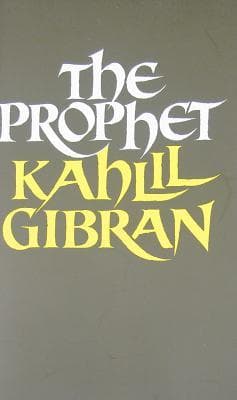
- The Prophet
Kahlil Gibran
4.2 (235k) average on GoodreadsSpiritualityGibran's The Prophet provides aphoristic wisdom and answers to life's major questions through the words of a central, enlightened figure, offering a sense of closure and moral direction. Neruda's The Book of Questions, in stark contrast, deliberately avoids providing answers, instead reveling in the mystery and ambiguity of existence, leaving the reader in a state of perpetual inquiry rather than resolution.
- Brave New World
Aldous Huxley
4.0 (1.4M) average on GoodreadsFantasyIn a future where happiness comes from chemicals and individuality is gone, one man's desire for real experience threatens the calm, controlled society.
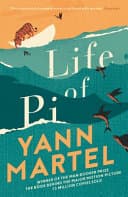
- Life of Pi
Yann Martel
3.9 (1.3M) average on GoodreadsFantasyStranded in the vast Pacific, a young Indian boy forms an unlikely bond with a Bengal tiger, questioning belief and survival.
- The Picture of Dorian Gray
Oscar Wilde
4.1 (966k) average on GoodreadsFantasyA beautiful young man's soul decays within a cursed portrait, mirroring the grotesque cost of his hedonistic pursuit of eternal youth and illicit pleasure.




Enjoyed the summary?
A summary gives you the shape of the book. The book itself has the detail, the examples and the voice.
Find The Book of Questions on AmazonAs an Amazon Associate, BookBrief earns from qualifying purchases. How we're funded