“Your children are not your children. They are the sons and daughters of Life's longing for itself.”
— On Children

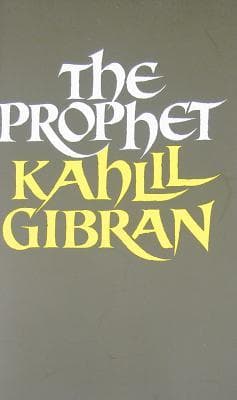
Kahlil Gibran (2023)
Goodreads Rating
4.22/ 5(234,894 reviews)
Genre
Summary Read
14 min
Book Length
127 min
Sign in to track this book
Through the timeless wisdom of the prophet Almustafa, Kahlil Gibran explores human existence, offering poetic insights on love, joy, sorrow, and self-discovery.
Ask anything about The Prophet and get instant answers grounded in the summary.
“Your children are not your children. They are the sons and daughters of Life's longing for itself.”
— On Children
“For in the dew of little things the heart finds its morning and is refreshed.”
— On Joy and Sorrow
“Love possesses not nor would it be possessed; for love is sufficient unto love.”
— On Love
“You give but little when you give of your possessions. It is when you give of yourself that you truly give.”
— On Giving
“And ever has it been that love knows not its own depth until the hour of separation.”
— On Love
“Your joy is your sorrow unmasked. And the selfsame well from which your laughter rises was oftentimes filled with your tears.”
— On Joy and Sorrow
“And when you crush an apple with your teeth, say in your heart, 'Thy seeds shall live in my body.'”
— On Eating and Drinking
“For what is it to die but to stand naked in the wind and to melt into the sun?”
— On Death
“The soul walks not upon a line, neither does it grow like a reed. The soul unfolds itself, like a lotus of countless petals.”
— On Self-Knowledge
“You are good when you are one with yourself. Yet when you are not one with yourself you are not evil.”
— On Good and Evil
“Work is love made visible.”
— On Work
“The timeless in you is aware of life's timelessness. And knows that yesterday is but today's memory and tomorrow is today's dream.”
— On Time
“And if you would know God, be not therefore a solver of riddles. Rather look about you and you shall see Him playing with your children.”
— On Religion
“The deeper that sorrow carves into your being, the more joy you can contain.”
— On Joy and Sorrow
Ready to see how well you understood this book? Take our interactive quiz with 10 questions.
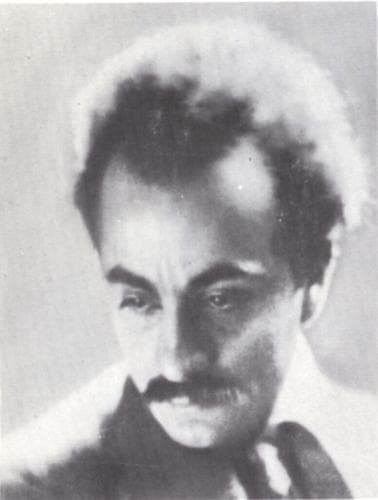
Kahlil Gibran was a Lebanese-American writer and philosopher known for his poetic prose and philosophical themes. His notable works include "The Prophet," a collection of poetic essays, "The Broken Wings," a tale of love and sacrifice, and "The Madman," which explores the nature of existence. Gibran's writings often reflect his spiritual and mystical beliefs.
Thomas Sowell
4.4

Stormie Omartian
4.3
Jerry Bridges
4.3
Walter Brueggemann
4.3

Brother Lawrence
4.3

George S. Clason
4.3
Joseph Campbell
4.3
Unknown
4.3
Support the author — grab the full book.
As an Amazon Associate, BookBrief earns from qualifying purchases, at no extra cost to you. How we're funded.