
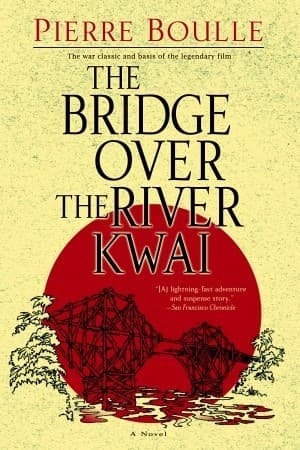
Synopsis
Covers the whole plot, including the ending.
- Difficulty
- Medium
- Pacing
- Moderate
- Mood
- Thought-provoking, Ironical, Intense, Tragic
- Read it if
- You enjoy classic historical fiction about the psychological toll of war, the complexities of duty, and the absurdities of pride and honor amidst extreme circumstances.
- Skip it if
- You prefer fast-paced action thrillers or stories with clear-cut heroes and villains, as this book delves into moral ambiguities and character-driven conflict.
The Bridge Over the River Kwai Plot Summary
Covers the whole plot, including the ending.
Arrival at Camp 16 and Clash of Wills
In 1942, British prisoners of war, led by Colonel Nicholson, arrive at a Japanese prison camp in the Siamese jungle. Colonel Saito commands the camp. Saito immediately announces that all prisoners, regardless of rank, will work on building a railway bridge over the River Kwai, a key part of the Japanese war effort. Nicholson, following the Geneva Convention, says that officers cannot be forced to do manual labor. This starts a conflict between the two colonels. Saito, angry at Nicholson's defiance, orders all officers, including Nicholson, into 'the oven' – a small, hot punishment hut – while the enlisted men go to work in harsh conditions.
The Officers' Ordeal and Saito's Dilemma
Colonel Nicholson and his officers spend days in 'the oven,' suffering from heat, hunger, and sickness. Their spirits remain strong. Nicholson keeps strict discipline among his men. Meanwhile, bridge construction goes slowly under the Japanese engineers and the discouraged British enlisted men. Saito faces a strict deadline for the bridge's completion and the threat of ritual suicide for failure, becoming more desperate. His Japanese engineers are not good at their job, and the British enlisted men sabotage and work slowly, further delaying progress. The bridge project falls behind schedule, making Saito's position difficult.
Saito's Concession and Nicholson's New Purpose
Because the bridge project is failing and Nicholson remains unyielding, Colonel Saito eventually gives in. He releases Nicholson and his officers from 'the oven,' acknowledging Nicholson's success in defending the officers' rights. However, Nicholson, upset by the poor work and lack of discipline among the British enlisted men and Japanese engineers, offers his officers and himself to oversee the bridge's construction. For Nicholson, the bridge becomes a symbol of British skill, efficiency, and morale, showing his men's ability even while captive. He sees it as a way to restore pride and purpose to his discouraged troops.
Building the 'Perfect' Bridge
Under Colonel Nicholson's careful supervision, the British prisoners, now motivated by purpose and professionalism, begin to build a bridge. Nicholson works constantly, designing, planning, and overseeing every detail, from choosing timber to the angles of the supports. He pushes his men hard but fairly, demanding excellence and efficiency. The bridge becomes a symbol of their skill and resilience, a monument to British engineering despite the difficulties. Colonel Saito is impressed by the speed and quality of the work; his deadline is now reachable. The British officers and men find renewed dignity and friendship in their shared effort.
The Allies' Mission: Operation Green
Unknown to the prisoners in Camp 16, an Allied commando unit is forming to destroy the bridge Nicholson is building. Major Shears, an American who escaped from a different Japanese camp and is pretending to be an officer, is persuaded by Major Warden to join 'Operation Green.' The mission is important to cut Japanese supply lines. Shears, along with Warden and two Siamese agents, Saiyok and Khun Yai, parachute into the jungle near the Kwai River. Their goal is to reach the bridge, plant explosives, and detonate it as the first train crosses, stopping the Japanese war effort and preventing the transport of troops and supplies.
The Commandos' Treacherous Journey
Major Warden, Major Shears, and their Siamese operatives travel through the dense, difficult jungle. They face many problems, including tough terrain, snakes, and the constant threat of Japanese patrols. One of the Siamese agents dies during their journey, showing the mission's extreme danger. Warden, suffering from an old shrapnel wound, becomes increasingly unable to move, forcing Shears to take more leadership. Despite the problems and fewer numbers, the remaining commandos continue, driven by the strategic importance of their goal. Their determination is important as they race against time to reach the bridge before it is finished.
Completion and Celebration
The bridge over the River Kwai is finished on time, a feat of engineering and human endurance. Colonel Saito holds a celebration, recognizing the British prisoners' work. He even gives a commendation to Colonel Nicholson, which satisfies Nicholson's sense of professional pride. The British prisoners, despite being captive, feel a sense of accomplishment and pride in their creation. They have built a strong structure. For Nicholson, the bridge represents a triumph of order, discipline, and British spirit, even if it helps the enemy's war machine. He is very happy seeing the completed structure.
The Plan to Destroy and Nicholson's Discovery
The commando team, now Shears, Warden (badly injured), and Khun Yai, finally reaches the bridge area. Under cover of darkness, they carefully place explosives on the bridge's main parts, connecting them to a detonator. Their plan is to detonate the charges as the first train, carrying Japanese officials and troops, crosses the bridge at dawn. However, as the sun rises, Colonel Nicholson, taking a final walk over his bridge, finds the wires connecting the explosives. His professional pride is shattered by the thought of his perfect bridge being destroyed; he is unaware of why it needs to be destroyed.
The Climax: Conflict and Betrayal
After finding the wires, Colonel Nicholson, still unaware of the full reason for the commandos' mission, immediately begins to dismantle the detonating mechanism, seeing it as senseless damage to his creation. He even gets a Japanese guard to help him. Major Shears, realizing Nicholson's misplaced loyalty to the bridge, comes out of hiding, trying to reason with him and stop him from revealing their position. A tense confrontation follows. Colonel Saito, alerted to the noise, also arrives. The first train, loaded with Japanese troops and officials, approaches, marking the critical moment for detonation.
The Final Act: Destruction and Sacrifice
In a struggle, Nicholson, still determined to save his bridge, fights with Shears. Major Warden, despite his injuries, crawls toward the detonator but is shot by a Japanese guard. As the train begins to cross, Nicholson, in his fight with Shears, falls onto the plunger, accidentally detonating the explosives. The bridge, along with the train and its occupants, explodes. Nicholson, fatally wounded, realizes the irony of his actions before he dies. Shears is also killed by Japanese fire. The only survivor, Khun Yai, sees the destruction. The camp doctor, Clipton, who watched Nicholson's growing obsession, says the final words, 'Madness! Madness!'
The Bridge Over the River Kwai Characters
Colonel Nicholson
Protagonist
Proud and principled British POW commander, obsessed with duty and perfection.
Colonel Nicholson is a rigid, disciplined, and utterly principled British officer. His defining characteristic is his unwavering adherence to military regulations, even in the face of brutal captivity. He initially clashes with Colonel Saito over the Geneva Convention regarding officers' labor, enduring severe punishment to uphold his principles. Paradoxically, once he 'wins' this battle, he becomes obsessed with building the best possible bridge for the Japanese, viewing it as a testament to British engineering and morale, a distorted sense of duty overriding his patriotism. His pride in his work ultimately blinds him to its strategic implications for the Allied war effort. He is meticulous, a natural leader, but tragically flawed by his professional vanity.
Relationships: Colonel Saito (Antagonistic at first, evolving into a grudging respect/collaboration); Major Clipton (Subordinate and concerned observer); Major Shears (Antagonistic in the climax, representing opposing objectives)
Colonel Saito
Antagonist
Japanese camp commander, driven by honor and fear of failure.
Colonel Saito is the Japanese commander of Camp 16, a man under immense pressure to complete the bridge on schedule. He is initially portrayed as brutal and unyielding, resorting to torture and harsh conditions to enforce his will. His sense of honor and fear of ritual suicide (hara-kiri) for failing his superiors are powerful motivators. Despite his cruelty, he is not entirely devoid of a sense of fairness, eventually conceding to Nicholson's demands regarding officers' labor when his own project falters. He develops a grudging respect for Nicholson's engineering skill and leadership, even though they represent opposing forces. His character highlights the cultural differences in military duty and honor.
Relationships: Colonel Nicholson (Antagonistic, then collaborative and respectful); Japanese High Command (Subordinate, fears their disapproval)
Major Shears
Supporting/Secondary Protagonist
American escapee and commando, initially cynical but committed to the mission.
Major Shears is an American who initially escaped from a Japanese POW camp, only to be forced back into the war effort by the Allies. He is cynical and resourceful, having learned to survive by his wits. He initially pretends to be an officer to gain better treatment but is exposed and then coerced into 'Operation Green,' the mission to destroy the Kwai bridge. Shears is pragmatic and focused on the mission, contrasting sharply with Nicholson's idealistic view of duty. He finds Nicholson's obsession with the bridge's construction baffling and infuriating. He represents the direct action needed to win the war, willing to make sacrifices for strategic objectives.
Relationships: Major Warden (Commando team leader/partner); Colonel Nicholson (Opponent in the climax); Khun Yai (Fellow commando)
Major Warden
Supporting
British commando leader, driven by a fierce dedication to his mission.
Major Warden is the determined and experienced leader of the commando team assigned to destroy the Kwai bridge. He is a professional soldier, wholly committed to his mission and willing to take extreme risks. His character is defined by his unwavering resolve and strategic mindset. He has a previous shrapnel wound that progressively incapacitates him during the jungle trek, forcing him to rely more on Shears. Despite his physical limitations, his mind remains sharp, and he pushes himself to the very end, demonstrating immense courage and dedication. He views the bridge as a purely military target, devoid of the personal pride Nicholson attaches to it.
Relationships: Major Shears (Commando team member/partner); Khun Yai (Fellow commando)
Major Clipton
Supporting
British medical officer and detached observer of Nicholson's actions.
Major Clipton is the British medical officer in Camp 16. He serves as a voice of reason and a detached observer, often commenting on the unfolding events with a sense of weary realism. He is empathetic towards the suffering of the men but also capable of critical judgment, particularly concerning Colonel Nicholson's increasingly obsessive behavior regarding the bridge. Clipton is pragmatic and humanitarian, trying to alleviate suffering where he can. His final exclamation, 'Madness! Madness!', encapsulates the tragic irony and futility of the climax, highlighting the moral ambiguities of war and misplaced duty.
Relationships: Colonel Nicholson (Subordinate, concerned observer and commentator)
Khun Yai
Supporting
Siamese agent and commando, skilled in jungle warfare.
Khun Yai is one of the Siamese agents who assists Major Warden and Major Shears on 'Operation Green.' He is highly skilled in navigating the jungle terrain and provides crucial local knowledge and support to the commando team. He is loyal and brave, demonstrating resilience and commitment to the Allied cause. Khun Yai represents the local resistance and the broader international effort against the Japanese. He is a silent but vital member of the team, fulfilling his dangerous role without complaint. He is the sole survivor of the commando team after the bridge's destruction, witnessing the tragic end of the mission.
Relationships: Major Warden (Commando team member); Major Shears (Commando team member)
Captain Reeves
Supporting
British officer, Nicholson's loyal subordinate and engineering assistant.
Captain Reeves is one of Colonel Nicholson's officers, serving as a loyal and capable subordinate. He is instrumental in the engineering aspects of the bridge's construction, working closely with Nicholson to ensure its quality and timely completion. Reeves embodies the professionalism and dedication that Nicholson instills in his men. He follows Nicholson's orders diligently, sharing in the pride of building the bridge, even though they are POWs. He is a testament to the British military's ability to maintain discipline and excellence under extreme duress.
Relationships: Colonel Nicholson (Subordinate and engineering partner)
Lieutenant Joyce
Mentioned
British officer, one of the first to die in 'the oven'.
Lieutenant Joyce is one of the British officers imprisoned with Colonel Nicholson. He is among the officers who endure the harsh conditions of 'the oven' for refusing to work. His death from illness and exhaustion in the punishment hut underscores the brutality of Colonel Saito's camp and the severe physical toll of the officers' defiance. His sacrifice highlights the initial moral stand taken by Nicholson and his men, even though it is later overshadowed by Nicholson's obsession with the bridge.
Relationships: Colonel Nicholson (Subordinate, fellow prisoner)
The Bridge Over the River Kwai Themes
Duty, Honor, and Obsession
The novel explores different ideas of duty and honor. Colonel Nicholson's strict adherence to the Geneva Convention is initially honorable, but his later obsession with building a 'perfect' bridge for his captors, even though it hurts the Allied cause, shows a warped sense of duty. His professional pride overrides his patriotism. Colonel Saito is also driven by duty and honor, fearing ritual suicide for failure. The commandos, conversely, act out of a practical duty to their country's war effort, even if it means destroying a masterpiece. The theme suggests that duty, when taken too far or misdirected, can become a dangerous obsession, making people blind to the wider results of their actions, as seen in Nicholson's tragic end.
“'Madness! Madness!'”
The Absurdity and Irony of War
Boulle uses irony to show the absurdity of war. The most striking example is Colonel Nicholson, a British officer, carefully building a bridge for the Japanese war machine, a bridge the Allies are trying to destroy. His pride in his engineering blinds him to the strategic importance, creating a situation where the 'enemy' within (Nicholson's misplaced loyalty) is as much a threat to the Allied mission as the Japanese themselves. The climax, where Nicholson accidentally triggers the destruction of his own bridge, is the ultimate ironic twist, showing the chaotic and often illogical nature of conflict where individual efforts can be tragically misaligned.
“'He was a man whose sense of duty was so perfect that it became a fault.'”
Professional Pride vs. Patriotism
A main conflict in the novel is the tension between professional pride and national loyalty. Colonel Nicholson, a skilled engineer, finds great satisfaction and purpose in building a well-made bridge. This professional pride, however, eventually overshadows his patriotism. He sees the bridge as a monument to British skill and discipline, showing his men's capabilities, even if it helps the enemy. This internal conflict leads him to try and prevent the bridge's destruction by his own side. The commandos, especially Major Shears and Major Warden, represent the opposite: their only focus is patriotism and strategic victory, even if it means destroying a beautiful structure. The book makes the reader question which loyalty is more important in wartime.
“'You're talking about a bridge. I'm talking about a war.'”
Survival and Resilience
Despite the harsh conditions of the POW camp and the brutal treatment by their captors, the British soldiers, especially under Nicholson's leadership, show resilience. They endure hunger, sickness, and forced labor, yet keep their morale and discipline, finding new purpose in building the bridge. This theme shows how people can adapt and find meaning even in the worst situations. The commandos also show great resilience, surviving the dangerous jungle trek and overcoming injuries to complete their mission. The novel shows how individuals and groups try to survive, both physically and mentally, during wartime.
“'The bridge, in its way, was a victory for the British, a monument to their professional pride, even if it was for the enemy.'”
The Nature of Command and Leadership
The book shows different leadership styles. Colonel Saito leads through fear and brutality, yet he is also affected by pressure from his superiors and his own code of honor. Colonel Nicholson, on the other hand, leads through principle, discipline, and professional excellence. His leadership initially saves his officers' dignity and later inspires his men to achieve an engineering feat. The commandos, led by Major Warden, show a more practical, mission-focused leadership. The novel examines how effective and moral these different leadership approaches are in extreme situations, showing how a leader's character affects their subordinates and the results of their efforts.
“'Discipline, gentlemen, is the backbone of the army.'”
Plot Devices & Literary Techniques
Symbolism of the Bridge
The physical bridge represents conflicting ideals and human endeavors.
The bridge over the River Kwai is the central symbolic element of the novel. For Colonel Nicholson, it symbolizes British engineering prowess, discipline, and a triumph of morale and purpose over adversity, even if built for the enemy. It becomes his 'masterpiece' and a source of immense professional pride. For Colonel Saito, it represents the fulfillment of his duty and the avoidance of ritual suicide. For the Allied commandos, it is a crucial strategic target, a symbol of Japanese military expansion that must be destroyed. Its destruction ultimately symbolizes the clash of these ideals and the tragic irony of war, where human achievements can be rendered meaningless or even destructive by larger conflicts.
Dramatic Irony
The audience knows more than Colonel Nicholson, creating tension and tragedy.
Dramatic irony is heavily employed throughout the narrative, particularly concerning Colonel Nicholson's actions. The reader is aware of the Allied mission to destroy the bridge, while Nicholson remains completely ignorant of it. This creates a powerful sense of tension and foreboding as Nicholson pours his heart and soul into building a structure that his own side intends to annihilate. His eventual discovery of the explosives and his desperate attempt to save the bridge, believing it to be mere vandalism, is a tragic culmination of this irony, highlighting his misguided loyalty and the profound disconnect between his personal pride and the realities of the war.
Clash of Ideologies/Cultures
The conflict between British and Japanese military codes drives much of the initial plot.
The novel vividly portrays a clash between British and Japanese military ideologies and cultural norms. Colonel Nicholson represents the rigid adherence to the Geneva Convention and a sense of professional dignity, even in captivity. Colonel Saito embodies the Japanese bushido code, emphasizing honor, absolute obedience, and the concept of ritual suicide for failure. This cultural collision is the catalyst for the initial conflict over officers' labor and dictates their interactions. It highlights the vast differences in how duty, honor, and warfare are perceived, leading to misunderstandings, brutality, and ultimately, a strange, grudging respect born out of shared professional diligence in building the bridge.
The Unreliable Narrative of Duty
The story questions the true meaning and morality of duty in wartime.
The narrative consistently questions the nature of duty. While characters like Major Warden clearly act out of a conventional sense of patriotic duty, Colonel Nicholson's 'duty' becomes increasingly self-serving and detached from the Allied cause. His initial, principled stand for officers' rights is commendable, but his subsequent dedication to building the bridge for the enemy, viewing it as a matter of professional honor, is presented as a tragic flaw. The book suggests that duty, when unexamined or taken to an extreme, can lead to absurd and self-destructive outcomes. Major Clipton's final 'Madness!' serves as a commentary on the corrupted or misdirected sense of duty that ultimately leads to tragedy.
The Bridge Over the River Kwai Quotes
“The bridge must be built. It is a matter of honor.”
“A soldier's first duty is to obey orders, but a man's first duty is to his conscience.”
“We are not here to win the war for the Japanese. We are here to survive with dignity.”
“Madness is sometimes the only sane response to an insane situation.”
“The bridge is a symbol of our endurance, not our submission.”
“In war, the line between hero and fool is often blurred.”
“We build not for them, but for ourselves—to prove we are still men.”
“The river does not care for bridges or wars; it flows on indifferent.”
“Sometimes the greatest victory is in refusing to be broken.”
“A bridge can be a monument to folly as easily as to genius.”
“We are all prisoners here, even those who hold the keys.”
“The true battle is not over the river, but within our own minds.”
“Honor without humanity is a hollow thing.”
“In the end, the bridge will stand as a testament to our stubbornness.”
Quiz
10 questions on the plot and the characters. Each answer comes with a short explanation.
Question 1
What is the primary reason the Japanese need the railway bridge built over the River Kwai?
- To transport troops and supplies between Burma and Thailand
- To connect Japan directly to its Asian colonies
- To provide a symbolic victory over the Allies
- To establish a trade route for post-war reconstruction
Show answer
A. To transport troops and supplies between Burma and Thailand The Japanese need the railway to supply their forces in Burma, as part of their strategic advance through Asia during World War II, making it a crucial military logistics project.
Question 2
What principle does Colonel Nicholson insist upon that leads to his initial conflict with Colonel Saito?
- That officers should not perform manual labor according to the Geneva Convention
- That the bridge design must be approved by British engineers
- That prisoners should receive better food rations
- That work should stop on Sundays for religious observance
Show answer
A. That officers should not perform manual labor according to the Geneva Convention Nicholson cites the Geneva Convention to argue that officers should not engage in manual labor, which Saito rejects, leading to Nicholson's punishment in the 'oven' (a small metal box).
Question 3
What motivates Colonel Nicholson to take over and improve the bridge construction?
- A desire to prove British engineering superiority and restore prisoner morale
- A secret plan to sabotage the bridge from within
- Pressure from Colonel Saito to meet deadlines
- A bribe from the Japanese to ensure better treatment
Show answer
A. A desire to prove British engineering superiority and restore prisoner morale Nicholson's distorted sense of duty and pride leads him to see the bridge as a testament to British skill and a way to boost the prisoners' spirits, even though it aids the enemy.
Question 4
Who leads the Allied commando mission to destroy the bridge?
- Major Warden
- Lieutenant Shears
- Major Clipton
- Major Warden and Lieutenant Shears
Show answer
D. Major Warden and Lieutenant Shears Major Warden is the commander, and Lieutenant Shears (an American who escaped the camp earlier) is a key member of the team sent to blow up the bridge.
Question 5
What event causes Colonel Nicholson to realize the bridge must be destroyed?
- He discovers the commando team's explosives
- He sees the first Japanese train crossing the bridge
- He learns from Major Clipton that the bridge aids the enemy war effort
- He intervenes to stop the detonation, then sees a dead commando and changes his mind
Show answer
D. He intervenes to stop the detonation, then sees a dead commando and changes his mind In the climax, Nicholson initially tries to prevent the sabotage but, upon seeing the dead body of a commando (Lieutenant Joyce), has a moment of clarity and helps trigger the explosion, sacrificing himself.
Question 6
What symbolic role does the bridge come to represent for Colonel Nicholson?
- A monument to British resilience and engineering pride
- A tool for prisoner rebellion against the Japanese
- A peace offering between the British and Japanese
- A religious symbol of sacrifice and redemption
Show answer
A. A monument to British resilience and engineering pride Nicholson becomes obsessed with building a perfect bridge, seeing it as a reflection of British honor and discipline, which blinds him to the fact that it serves the enemy.
Question 7
How does Colonel Saito initially try to break Colonel Nicholson's resistance?
- By threatening to execute all the officers
- By placing him in a small metal box in the sun (the 'oven')
- By withholding food and water from the entire camp
- By forcing him to watch other prisoners be tortured
Show answer
B. By placing him in a small metal box in the sun (the 'oven') Saito confines Nicholson to a cramped metal hut exposed to the tropical heat, a brutal punishment meant to force his submission, but Nicholson endures it steadfastly.
Question 8
What is the ultimate fate of the bridge at the end of the novel?
- It is destroyed by the commando team, with Nicholson's help
- It remains standing as a symbol of Japanese achievement
- It is captured intact by Allied forces
- It collapses due to poor construction by the prisoners
Show answer
A. It is destroyed by the commando team, with Nicholson's help The bridge is blown up during the commando raid, and Nicholson is killed in the process, resolving the conflict between his pride and patriotism.
Question 9
Which character serves as a voice of reason, criticizing Nicholson's obsession with the bridge?
- Major Clipton
- Colonel Saito
- Lieutenant Shears
- Major Warden
Show answer
A. Major Clipton As the camp doctor, Clipton repeatedly questions Nicholson's actions, pointing out the irony and danger of helping the enemy for the sake of pride.
Question 10
What historical reality does the novel critique through Nicholson's actions?
- The blind adherence to military duty and honor at the expense of common sense
- The inefficiency of Japanese prison camps during World War II
- The technological superiority of British engineering in wartime
- The ethical dilemmas faced by commando units in sabotage missions
Show answer
A. The blind adherence to military duty and honor at the expense of common sense The book explores themes of absurdity and the conflict between rigid principles (like Nicholson's pride and duty) and practical morality in war, highlighting how such ideals can be twisted.
The Bridge Over the River Kwai FAQ
What is 'The Bridge Over the River Kwai' about?
The novel follows British POWs in a Japanese prison camp in 1942, forced to build a railway bridge over the River Kwai in Burma. Colonel Nicholson, a proud British officer, becomes obsessed with constructing a perfect bridge as a symbol of British engineering, while Allied commandos plan to destroy it, creating a moral conflict between duty and pride.
Why should I read 'The Bridge Over the River Kwai'?
It's a gripping exploration of wartime morality, examining how rigid principles like duty and honor can become distorted under extreme pressure. The psychological duel between Nicholson and Saito, combined with the suspense of the sabotage mission, makes it a timeless study of human complexity in conflict.
What is the background/setting of 'The Bridge Over the River Kwai'?
Set in 1942 during World War II, the story takes place in a Japanese prison camp in the jungles of Burma (now Myanmar). The historical context involves Japan's urgent need for a railway route from Burma to Thailand to supply its forces, leading to the brutal forced labor of Allied prisoners.
What are the most memorable quotes?
Notable quotes include Nicholson's declaration, 'A soldier's first duty is to his men, but his highest duty is to his honor,' and Saito's threat, 'Be happy in your work.' These lines encapsulate the central themes of pride, duty, and the dehumanizing nature of the camp.
What writing style does the author use?
Pierre Boulle employs a concise, ironic prose style that blends historical detail with psychological depth. The narrative shifts between the camp's claustrophobic tensions and the external sabotage mission, using understated irony to highlight the absurdity of war and misplaced ideals.
What minor details add significant meaning?
Details like Nicholson's insistence on using proper British engineering standards for the bridge, despite it aiding the enemy, symbolize his distorted pride. The contrast between the prisoners' meticulous work and the jungle's decay underscores the futility of their efforts in the larger war.
What are some subtle foreshadowing moments?
Early scenes where Nicholson prioritizes discipline over prisoner welfare hint at his later obsession with the bridge. The mention of Allied reconnaissance planes subtly foreshadows the eventual sabotage plot, while Saito's initial brutality foreshadows the escalating conflict over control.
What unexpected character connections exist?
Nicholson and Saito, though enemies, develop a twisted mutual respect through their shared focus on the bridge. This connection blurs the lines between collaboration and resistance, as Nicholson's drive for perfection inadvertently aids Saito's goals while undermining Allied efforts.
What are unspoken character motivations?
Nicholson is driven by an unspoken need to assert British superiority and personal legacy through the bridge, masking his collaboration as duty. Saito's harshness stems from fear of failure and dishonor in the Japanese military hierarchy, not just cruelty.
What psychological complexities do characters exhibit?
Nicholson displays a complex mix of honor, pride, and self-deception, believing his bridge-building upholds British values while actually serving the enemy. Saito shows a paradoxical blend of brutality and desperation, as his own career depends on the bridge's completion.
What are the major emotional turning points?
Key moments include Nicholson's defiance during Saito's initial punishment, his decision to take over the bridge project, and the climax when he discovers the sabotage and must choose between protecting his creation or aiding the Allies, leading to his tragic intervention.
How do relationship dynamics evolve?
The Nicholson-Saito relationship shifts from hostile confrontation to a tense, cooperative rivalry centered on the bridge. Among the prisoners, initial unity fractures as some question Nicholson's motives, while the Allied saboteurs' mission creates external pressure that ultimately forces a confrontation.
Which parts remain ambiguous or open-ended?
The novel leaves ambiguous whether Nicholson's final actions are driven by patriotism, pride, or madness. The moral outcome of the bridge's destruction and the cost in lives are presented without clear judgment, inviting readers to ponder the futility of war and personal sacrifice.
What are controversial scenes or decisions?
Nicholson's decision to improve the bridge for the Japanese is highly controversial, as it blurs the line between duty and treason. His last-minute intervention to prevent the sabotage, potentially saving the bridge, sparks debate over whether he betrays his country or acts on a warped sense of honor.
'The Bridge Over the River Kwai' ending explained: how it ends & what it means
The bridge is destroyed in the sabotage attempt, but Nicholson is killed while trying to stop it, realizing too late his folly. The ending suggests that rigid adherence to principles like pride and duty can lead to tragic irony, as Nicholson's obsession ultimately serves neither side and highlights the absurdity of war.
About the author
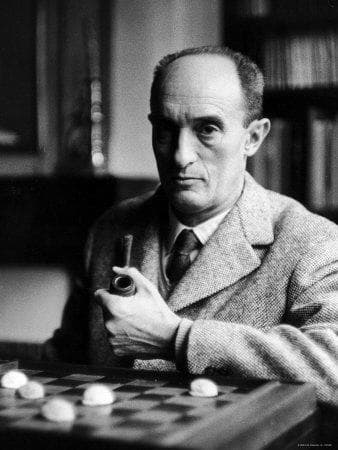
Pierre Boulle was a French author known for his contributions to fiction, particularly in the science fiction and war genres. He is best known for his novels "Planet of the Apes," which explores themes of evolution and society, and "The Bridge Over the River Kwai," which depicts the experiences of prisoners of war during World War II.
Similar books
- King Rat
James Clavell
3.5 (8k) average on GoodreadsFantasyDepicts the harsh realities and social dynamics within a Japanese POW camp during WWII.
- A Town Like Alice
Nevil Shute
4.1 (49k) average on GoodreadsHistorical FictionFeatures British civilians enduring forced marches and brutal conditions under Japanese captivity.
- The Naked and the Dead
Norman Mailer
3.9 (23k) average on GoodreadsHistorical FictionMailer's The Naked and the Dead is another seminal WWII novel, but it focuses on the American invasion of a fictional Pacific island. While both novels explore the psychological toll of war and the hierarchical structures of the military, Mailer's work is a sprawling, multi-perspective epic that dissects class, power, and individual ambition within a combat unit. Boulle's narrative is much more contained and focused on the internal conflict of a single, deeply flawed protagonist, making it a more concentrated study of specific ethical dilemmas rather than a broad sociological examination of war.
- To Kill a Mockingbird
Harper Lee
4.3 (4.5M) average on GoodreadsHistorical FictionIn the 1930s Jim Crow South, Harper Lee writes about racial injustice, moral growth, and the quiet courage of a lawyer father, Atticus Finch, as seen through his young daughter's eyes.
- The Great Gatsby
F. Scott Fitzgerald
3.9 (3.8M) average on GoodreadsHistorical FictionIn the opulent Roaring Twenties, a mysterious millionaire's lavish parties hide his desperate, tragic pursuit of a lost love, exposing the emptiness within the American Dream.
- Pride and Prejudice
Jane Austen
4.3 (3M) average on GoodreadsHistorical FictionIn a society focused on status and money, Elizabeth Bennet navigates love and pride, challenging Mr. Darcy and social expectations to find true affection.




Enjoyed the summary?
A summary gives you the shape of the book. The book itself has the detail, the examples and the voice.
Find The Bridge Over the River Kwai on AmazonAs an Amazon Associate, BookBrief earns from qualifying purchases. How we're funded