

Synopsis
Covers the whole plot, including the ending.
- Difficulty
- Medium
- Pacing
- Moderate
- Mood
- Epic, Melancholy, Grand, Historical, Dramatic
- Read it if
- You enjoy sprawling historical sagas, complex character studies, and tales of family conflict set against significant societal change.
- Skip it if
- You prefer fast-paced plots, lighthearted themes, or stories with clear-cut heroes and villains.
The Brothers Ashkenazi Plot Summary
Covers the whole plot, including the ending.
The Birth of the Ashkenazi Brothers
The story begins in industrial Lodz, Poland, with the birth of the Ashkenazi brothers. Max, the firstborn, shows sharp intellect and cunning from childhood. He is the son of Abraham Ashkenazi, a religious but struggling textile merchant. Years later, his younger brother, Jacob, is born. Jacob is strong, handsome, and charming, but lacks Max's intellect and drive. Their early lives differ greatly. Max first studies religion but quickly turns to business and wealth. Jacob, in contrast, enjoys simpler pleasures, often using his looks and friendly nature to get by. This sets the stage for their different paths and future conflicts within the family and Lodz's growing industrial society.
Max's Rise and Marriage
Driven by ambition, Max Ashkenazi quickly leaves religious studies for commerce. He shows a ruthless and smart business sense, making investments and taking opportunities in Lodz's booming textile industry. His ambition extends to his personal life; he arranges a marriage with Hindele, the daughter of a rich and powerful textile manufacturer, Reb Gedalye. This marriage secures Max's financial future and gives him social standing and access to powerful networks. Despite no real affection, Hindele is a good wife, and Max continues to gain wealth and power, becoming a strong figure in the city's economy, often at others' expense.
Jacob's Indulgences and Early Struggles
While Max builds his business, Jacob Ashkenazi lives without much ambition, drawn to easy living and women. He gets involved with Leah, a beautiful but unrefined woman, much to his family's dismay, especially his religious father, Abraham. Jacob's lack of discipline and focus on pleasure leads to various problems and financial instability. He tries different ventures but lacks his brother's drive, often using his charm to survive. This period highlights the sharp contrast between the brothers' natures and values, with Jacob showing the more indulgent and less calculating side of human nature, making him vulnerable to the harsh realities of fast-changing Lodz society.
The Textile Empire and Family Tensions
Max Ashkenazi, now established, expands his textile factory into a large business, becoming one of Lodz's most powerful industrialists. His success, however, feeds his arrogance and widens the gap with Jacob. Jacob, after several failures, gets a subservient position in Max's factory, meant to keep him under Max's control. This power dynamic worsens the hidden jealousy and resentment between them. Max often belittles Jacob, while Jacob secretly dislikes Max's cruelty and greed. The family, especially their father Abraham, tries to bring the brothers together, but Max's domineering nature and Jacob's hurt pride make it hard, reflecting broader societal shifts away from traditional family structures.
Jacob's Flight and New Beginnings
Unable to stand Max's control and feeling trapped in Lodz, Jacob Ashkenazi eventually leaves the city. He travels to another Polish city, where he reinvents himself. There, away from his brother's influence, Jacob's charm and natural charisma find success. He establishes a new business, though smaller than Max's. More importantly, he falls in love with Shifra and marries her, finding happiness that eluded him in Lodz. This period marks a turning point for Jacob, allowing him to mature and find purpose independent of his brother, even as Lodz and Max still loom in his past.
The Return to Lodz and Renewed Conflict
After some years, Jacob Ashkenazi, having found success and happiness with Shifra, returns to Lodz. His return restarts the old rivalry with Max, who sees Jacob's new independence with suspicion. The city itself is a place of change, with growing labor unrest, political radicalism, and increasing ethnic tensions among Poles, Germans, and Jews. The brothers' personal feud mixes with these larger societal conflicts. Max, always an opportunist, uses the political situation to his advantage, while Jacob, more empathetic, finds himself caught between the old world and the new, struggling to find his place amid the rising chaos and his brother's continued hostility. Their reunion is not one of peace but of renewed, unspoken conflict.
Social Unrest and Economic Turmoil
Lodz becomes a small example of the larger societal and political changes in Eastern Europe. The city experiences strikes, socialist movements, and revolutionary passion, especially among exploited factory workers. Max Ashkenazi, as a prominent factory owner, is a target of these movements, but he skillfully manages the situation, often using force or bribes to keep control. Jacob, with his more compassionate nature, is bothered by the workers' struggles but can do little. World War I further destabilizes the region, bringing economic hardship, conscription, and rising anti-Semitism. These external pressures test the Ashkenazi family and the community, showing how fragile their lives are against historical forces.
The Decline of Max's Empire
Despite his cleverness, Max Ashkenazi eventually sees his business decline. The changing political scene, new economic systems, and social unrest begin to reduce his power and wealth. His ruthless methods, once effective, become less so in a world increasingly hostile to uncontrolled capitalism. He struggles to adapt to the post-war environment and the growing influence of socialist ideas. His personal life also suffers, marked by loneliness and a lack of real connection, despite his riches. Max, once seemingly unbeatable, finds his control slipping, showing that even the most ambitious can be overwhelmed by history and society's collective will.
Jacob's Spiritual Awakening and Loss
As his world collapses and his personal life suffers tragedy—especially the loss of his wife, Shifra—Jacob Ashkenazi undergoes a spiritual change. He questions the material pursuits that defined his brother's life and, to some extent, his own earlier years. He seeks comfort and meaning in traditional Jewish mysticism and ethics, moving away from the secular, industrial world. This period involves self-reflection and a desire for something beyond earthly possessions and power. Jacob's journey reflects a broader search for spiritual meaning in a world ravaged by war and social upheaval, showing the lasting human need for faith and community in times of crisis.
The Final Confrontation and Aftermath
The novel ends with a final, brief, and poignant meeting between Max and Jacob Ashkenazi. Their lives have diverged completely, with Max holding onto his fading business and Jacob embracing a more spiritual path, yet their brotherly tension remains. However, their world has changed forever. The story then follows their ultimate fates. Max, stripped of his wealth and power, becomes a shadow of his former self, a victim of the forces he once tried to control. Jacob, having found peace and spiritual understanding, navigates the post-war world with a different kind of resilience. Their story becomes a symbol for the end of an era, the collapse of old certainties, and the lasting, often tragic, nature of human ambition and faith.
Principal Figures
Max Ashkenazi
Protagonist/Antagonist
The fiercely intelligent, ambitious, and ruthless firstborn brother.
Max is the elder son of Abraham Ashkenazi, characterized by his sharp intellect, cunning, and insatiable ambition. From a young age, he prioritizes material success above all else, quickly abandoning religious studies for the world of business. He is a shrewd and often ruthless industrialist, driven by a desire for power and wealth, often at the expense of others, including his own family. Max is a master manipulator, capable of strategic planning and exploitation, making him a dominant figure in Lodz's textile industry. Despite his outward success, he is often isolated and lacks genuine emotional connection.
Relationships: Jacob Ashkenazi (Rivalry, animosity, and deep-seated jealousy); Abraham Ashkenazi (Son, often defying and disappointing his pious father); Hindele (Wife, a strategic marriage of convenience, lacking affection)
Jacob Ashkenazi
Protagonist
The handsome, charming, but initially aimless younger brother who seeks spiritual meaning.
Jacob is the younger brother of Max, possessing a striking physical appearance and a charming, genial demeanor. In contrast to Max, he is less intellectually driven and more inclined towards pleasure and easy living in his youth. He struggles to find his purpose, often making impulsive decisions and relying on his charisma. Jacob is more empathetic and compassionate than Max, but also more vulnerable to the world's harsh realities. He represents a struggle between worldly desires and a latent yearning for spiritual depth, eventually finding solace in faith.
Relationships: Max Ashkenazi (Object of his brother's contempt and jealousy, later a source of spiritual contrast); Abraham Ashkenazi (Son, often a source of concern but also a recipient of his father's love); Leah (Early romantic entanglement, a youthful indiscretion); Shifra (Beloved wife, a source of genuine love and happiness)
Abraham Ashkenazi
Supporting
The pious, traditional patriarch of the Ashkenazi family.
Abraham is the father of Max and Jacob, a devout and traditional textile merchant in Lodz. He embodies the old world's piety and values, struggling to reconcile his religious beliefs with the rapid secularization and industrialization of the city. He is a loving but often bewildered father, distressed by the growing animosity between his sons and their deviation from traditional Jewish life. Abraham represents the fading generation, trying to hold onto faith and family unity amidst overwhelming societal changes. His presence serves as a moral compass, often highlighting the spiritual costs of his sons' materialistic pursuits.
Relationships: Max Ashkenazi (Son, a source of pride for his success but also profound disappointment for his ruthlessness and lack of piety); Jacob Ashkenazi (Son, a source of concern for his aimlessness but also affection and hope for his potential)
Hindele
Supporting
Max's wealthy, dutiful, but unloved wife.
Hindele is the daughter of Reb Gedalye, a wealthy textile manufacturer, and Max Ashkenazi's wife. Their marriage is a strategic alliance orchestrated by Max to secure his financial and social standing. Hindele is a dutiful and respectable wife, fulfilling her societal role, but she is never truly loved or cherished by Max. She represents the societal expectations placed upon women in that era, particularly those of wealth, and the often loveless nature of arranged marriages. Her quiet suffering and her practical nature are a stark contrast to Max's ambition and Jacob's romantic entanglements.
Relationships: Max Ashkenazi (Husband, a marriage of convenience and power, devoid of affection)
Leah
Supporting
Jacob's early, passionate, but ill-fated love interest.
Leah is a beautiful, spirited, but unrefined young woman from Lodz with whom Jacob Ashkenazi has an early, passionate affair. She represents the allure of forbidden love and the temptations that distract Jacob from a more conventional path. Their relationship is marked by intense emotional and physical attraction but lacks the stability and societal approval that Jacob's family desires for him. Leah's character highlights Jacob's early impulsiveness and his struggle to conform to societal expectations, ultimately contributing to his temporary departure from Lodz. She embodies a more earthly, sensual aspect of life.
Relationships: Jacob Ashkenazi (Lover, an intense but ultimately unsustainable romantic entanglement)
Shifra
Supporting
Jacob's beloved and stabilizing wife in his new life.
Shifra is the woman Jacob Ashkenazi meets and marries after leaving Lodz. She is a kind, loving, and stabilizing presence in Jacob's life, offering him genuine affection and a sense of purpose that was missing with Leah. Shifra helps Jacob mature and establish himself, providing the emotional support he craves. Her character represents the possibility of true love and contentment, contrasting sharply with the transactional nature of Max's marriage. Her eventual loss deeply impacts Jacob, serving as a catalyst for his spiritual awakening and search for deeper meaning.
Relationships: Jacob Ashkenazi (Beloved wife, a source of profound love and partnership)
Reb Gedalye
Supporting
Hindele's wealthy and influential father, Max's father-in-law.
Reb Gedalye is a powerful and affluent textile manufacturer in Lodz, and Hindele's father. He is a figure of established wealth and influence, whose daughter's marriage to Max Ashkenazi significantly boosts Max's social and economic standing. Reb Gedalye represents the established Jewish elite of Lodz, whose traditional background is contrasted with Max's more aggressive and modern business practices. He is a pragmatic man, valuing financial security and status, and serves as a gatekeeper to the upper echelons of Lodz society.
Relationships: Max Ashkenazi (Son-in-law, a business alliance); Hindele (Father)
The Workers
Mentioned
The exploited labor force in Lodz's factories.
The workers of Lodz, though not individual characters, collectively play a crucial role as a social force. They represent the exploited masses in the burgeoning industrial city, enduring harsh working conditions, low wages, and poverty. Their growing unrest, leading to strikes and revolutionary movements, forms a significant backdrop to the Ashkenazi brothers' story. They are a constant threat to Max's capitalist empire and a source of both fear and, for Jacob, empathy. Their collective struggle highlights the class divisions and social injustices inherent in the industrial era.
Relationships: Max Ashkenazi (Employer/exploiter, antagonist to their collective interests); Jacob Ashkenazi (Employer, but with a more sympathetic view of their plight)
Themes & Insights
Ambition vs. Morality
This theme is central to Max Ashkenazi. His ambition for wealth and power often overrides moral concerns. His strategic marriage to Hindele and ruthless business tactics, often involving exploitation, show this. The novel contrasts Max's pursuit of success with his father Abraham's traditional values and Jacob's later search for spiritual meaning. Max's downfall suggests that unchecked ambition and material gain without morality lead to an empty existence, seen in his isolation despite his riches.
“Money was not merely a means to an end for Max, but an end in itself, a tangible measure of his superiority and control.”
Tradition vs. Modernity
Lodz itself symbolizes this conflict, moving from a traditional Jewish community to an industrial city. The Ashkenazi family shows this struggle: Abraham represents the fading piety of the old world, while Max embraces the capitalism and secularism of modernity. Jacob, initially aimless, finds comfort in spiritual traditions after experiencing the emptiness of modern life. The novel explores how industrialization, capitalism, and socialist movements challenge old religious and social norms, forcing people to adapt or be swept away, often causing internal and external conflicts.
“The old ways were crumbling like dry earth, and new seeds, strange and potent, were being sown in the streets of Lodz.”
Brotherhood and Rivalry
The novel's core is the complex and often destructive relationship between Max and Jacob Ashkenazi. Their different natures—Max's ambition versus Jacob's charm and later spirituality—fuel a lifelong rivalry. This theme explores how sibling dynamics are shaped by inherent differences, perceived favoritism, and societal pressures. Max's constant need to dominate Jacob, and Jacob's resentment, drive much of the plot, showing how personal relationships can be consumed by jealousy and power struggles, preventing real connection and leading to mutual destruction.
“Between the two brothers, there was a bond forged not of love, but of an unspoken, bitter competition that gnawed at their very souls.”
The Impact of Historical Forces
The Ashkenazi brothers' lives are tied to the historical changes in Eastern Europe, including industrialization, capitalism, labor movements, and World War I. The novel shows how individual destinies are shaped and often overwhelmed by these larger forces. Max's business rises and falls with economic cycles and political shifts, while Jacob's search for meaning is intensified by societal chaos. The story highlights how vulnerable people are to historical events, showing how personal ambitions and struggles are ultimately small compared to the tides of history, leading to a sense of fate.
“They were but small ships on a vast and stormy ocean, tossed by currents far greater than their own wills.”
The Search for Meaning
While Max seeks meaning through wealth and power, Jacob searches for deeper spiritual meaning, especially after personal tragedies and the collapse of the material world. This theme explores the human need for purpose beyond survival or wealth. Jacob's turn to mysticism and traditional piety reflects a desire for transcendence in a world increasingly defined by secularism and violence. The novel suggests that true fulfillment may not be in external achievements but in internal spiritual growth and connection, contrasting with Max's emptiness despite his vast riches.
“What good was all the gold and factories if the soul remained a barren wasteland?”
Plot Devices & Literary Techniques
Social Realism
Depicts society and characters as they are, without idealization.
Singer employs social realism to vividly portray the harsh realities of industrial Lodz, including the exploitation of workers, the cutthroat nature of capitalism, and the struggles of immigrant communities. This device is evident in the detailed descriptions of factory life, the poverty of the working class, and the moral compromises made by characters like Max Ashkenazi. It grounds the narrative in a believable, historically accurate setting, allowing the personal stories of the Ashkenazi brothers to reflect broader societal issues and conditions, enhancing the novel's depth and impact by showing life 'as it is' rather than 'as it should be'.
Foil Characters
Max and Jacob serve as direct contrasts to highlight each other's traits.
The brothers Max and Jacob Ashkenazi are classic foil characters. Max's cunning, ambition, and ruthlessness are sharply contrasted with Jacob's charm, emotionality, and later, spiritual introspection. This device is crucial for developing both characters, as their opposing qualities illuminate each other's strengths and weaknesses. Max's success highlights Jacob's initial aimlessness, while Jacob's eventual spiritual peace underscores the emptiness of Max's material achievements. Their dynamic creates tension and allows the novel to explore different pathways through life and different value systems within the same family and societal context.
Bildungsroman (of a collective)
A coming-of-age story, not just of individuals but of the city and a generation.
While the novel follows the individual developments of Max and Jacob, it also functions as a 'bildungsroman' for the city of Lodz and, by extension, a generation of Eastern European Jews. It traces their transformation from a traditional, pious community to a modern, industrial, and secular society grappling with new ideologies and conflicts. The city's growth, struggles, and eventual decline parallel the lives of its inhabitants, showing how a collective identity evolves and adapts (or fails to adapt) to rapid historical change. This device gives the narrative a broader scope, making the Ashkenazi family saga representative of a larger historical epoch.
Symbolism of Lodz
The city of Lodz symbolizes industrialization, change, and societal upheaval.
The city of Lodz itself serves as a powerful symbol throughout the novel. Initially, it represents the promise and peril of industrialization, a place where fortunes are made and lost, and traditional values clash with modern ambition. As the narrative progresses, Lodz becomes a microcosm of the larger historical forces at play in Eastern Europe – economic boom and bust, labor unrest, ethnic tensions, and the impact of world wars. Its transformation, from a vibrant industrial hub to a place scarred by conflict and change, mirrors the fates of the Ashkenazi brothers and the broader Jewish community, embodying the end of an era.
The Brothers Ashkenazi Quotes
“Money does not stink, but it often smells of blood.”
“The world is like a ladder; some go up and some go down, and the top is never as high as one imagines, nor the bottom as low.”
“Man plans, and God laughs.”
“A man without a past is like a tree without roots.”
“Every man carries his own Lodz within him.”
“Love is a fire that burns not only the heart but also the mind.”
“The synagogue is not merely a place of prayer; it is the heart of the community.”
“Poverty sharpens the mind, but it also dulls the soul.”
“To forget is to die a second death.”
“There are two kinds of people in the world: those who build and those who destroy.”
“A good name is better than riches, but riches can buy a good name.”
“The past is a foreign country; they do things differently there.”
“Even a small candle can light a great darkness.”
“God gives us trials not to break us, but to make us stronger.”
Quiz
10 questions on the plot and the characters. Each answer comes with a short explanation.
Question 1
Which Polish city serves as the primary setting for 'The Brothers Ashkenazi'?
- Warsaw
- Krakow
- Lodz
- Gdansk
Show answer
C. Lodz The book is explicitly set in the Polish city of Lodz, detailing the lives of the Ashkenazi brothers there.
Question 2
What is Max Ashkenazi's primary driving force and ambition?
- Spiritual enlightenment and piety
- Financial success and wealth accumulation
- Political power and influence
- Artistic expression and recognition
Show answer
B. Financial success and wealth accumulation Max is described as 'fiercely intelligent and conniving, determined to succeed financially by any means necessary,' highlighting his ambition and greed.
Question 3
How does Jacob Ashkenazi's temperament generally contrast with Max's?
- Jacob is equally ambitious and driven as Max.
- Jacob is more spiritual and pious than Max.
- Jacob is drawn to easy living and decadence, lacking Max's fierce purpose.
- Jacob is a skilled laborer, while Max is a merchant.
Show answer
C. Jacob is drawn to easy living and decadence, lacking Max's fierce purpose. The description states, 'While Max is driven by ambition and greed... Jacob is drawn to easy living and decadence,' showing their contrasting temperaments.
Question 4
What significant historical and economic forces are described as flooding the city and impacting the Ashkenazi family?
- Waves of war and political revolution
- Waves of industrialism and capitalism
- Waves of famine and plague
- Waves of immigration and cultural exchange
Show answer
B. Waves of industrialism and capitalism The text explicitly mentions, 'As waves of industrialism and capitalism flood the city, the brothers and their families are torn apart.'
Question 5
What conflicting impulses tear apart the brothers and their families in the novel?
- Rural simplicity versus urban complexity
- Old piety and new skepticism, traditional ways and burgeoning appetites
- Scientific progress versus religious dogma
- Loyalty to family versus loyalty to country
Show answer
B. Old piety and new skepticism, traditional ways and burgeoning appetites The novel explores the 'clashing impulses of old piety and new skepticism, traditional ways and burgeoning appetites,' which cause conflict within the family.
Question 6
What kind of novel did I. J. Singer bring to Yiddish literature by breaking away from introspective shtetl tales?
- A minimalist, stream-of-consciousness narrative
- A detective story with a single protagonist
- A multilayered plot, large cast of characters, and narrative sweep of the traditional European novel
- A collection of interconnected short stories
Show answer
C. A multilayered plot, large cast of characters, and narrative sweep of the traditional European novel Singer 'brought to Yiddish literature the multilayered plots, large casts of characters, and narrative sweep of the traditional European novel,' departing from earlier Yiddish styles.
Question 7
Despite their attempts to control their destinies, what forces are the brothers ultimately caught up by?
- Their own free will and moral choices
- The wisdom of their elders and community leaders
- Forces of history, love, and fate
- Their individual talents and hard work
Show answer
C. Forces of history, love, and fate The text states, 'Despite all attempts to control their destinies, the brothers are caught up by forces of history, love, and fate, which shape and, ultimately, break them.'
Question 8
Which literary masters is I. J. Singer compared to, suggesting the style and scope of 'The Brothers Ashkenazi'?
- Kafka, Joyce, and Woolf
- Zola, Flaubert, and Tolstoy
- Hemingway, Faulkner, and Fitzgerald
- Dostoevsky, Chekhov, and Turgenev
Show answer
B. Zola, Flaubert, and Tolstoy Singer is described as 'Walking alongside such masters as Zola, Flaubert, and Tolstoy,' indicating his style and the novel's scope.
Question 9
What is a central theme regarding the relationship between the brothers, Max and Jacob?
- Unwavering fraternal loyalty and mutual support
- A shared spiritual journey that unites them
- Hatred and rivalry driven by ambition and contrasting lifestyles
- A mentorship dynamic with Max guiding Jacob
Show answer
C. Hatred and rivalry driven by ambition and contrasting lifestyles The summary notes the 'hatred that grows between faiths, citizens, and classes,' and specifically mentions Max's drive 'to be more successful than his brother,' implying significant rivalry and animosity.
Question 10
What distinguished 'The Brothers Ashkenazi' from classic nineteenth-century Yiddish literature at the time of its publication?
- Its focus on urban life rather than rural shtetls
- Its modernist experimental narrative techniques
- Its departure from introspective shtetl tales to a broad, multilayered social novel
- Its exclusive focus on non-Jewish characters and themes
Show answer
C. Its departure from introspective shtetl tales to a broad, multilayered social novel The text states Singer 'Breaking away from the introspective shtetl tales of classic nineteenth-century writers, I. J. Singer brought to Yiddish literature the multilayered plots... of the traditional European novel.'
The Brothers Ashkenazi FAQ
What is the central conflict driving the narrative of 'The Brothers Ashkenazi'?
The central conflict revolves around the divergent paths and clashing temperaments of the Ashkenazi brothers, Max and Jacob, set against the backdrop of rapid industrialization and societal upheaval in Lodz. Max's relentless ambition and desire for financial dominance constantly clash with Jacob's more easygoing, yet ultimately self-destructive, pursuit of pleasure and comfort, creating a deep-seated rivalry that shapes their lives and the lives of those around them.
How do Max and Jacob Ashkenazi embody the changing values of Lodz in the late 19th and early 20th centuries?
Max embodies the new capitalist spirit, driven by ambition, shrewd business dealings, and a willingness to abandon traditional piety for material success. Jacob, while less ambitious, represents the allure of modern decadence and the loosening of old moral strictures, drawn to easy living and pleasure rather than the spiritual devotion of earlier generations. Their lives illustrate the tension between traditional Jewish values and the burgeoning appetites of industrial society.
What role does the city of Lodz play in the novel beyond being a mere setting?
Lodz is a dynamic character in itself, embodying the forces of industrialism, capitalism, and social change that profoundly impact the Ashkenazi family and the city's inhabitants. Its rapid growth, influx of diverse populations, and the rise of factories and financial institutions serve as a constant backdrop and catalyst for the brothers' ambitions, failures, and the broader societal transformations depicted in the story.
How does the novel explore the theme of fate versus free will?
Despite Max's meticulous planning and Jacob's impulsive choices, both brothers are ultimately swept up by historical forces, societal changes, and personal relationships that often seem beyond their control. The novel suggests that while individuals can make choices, larger currents of history, love, and predetermined circumstances frequently dictate their ultimate destinies, shaping and breaking them regardless of their efforts to control their lives.
Can you describe the evolution of the relationship between Max and Jacob?
Their relationship begins with a natural sibling rivalry, exacerbated by their vastly different personalities and talents. It evolves into a bitter competition for wealth, status, and even the same woman (Fanny), fueled by Max's envy and Jacob's passive resistance. This rivalry ultimately consumes them, leading to mutual resentment and the erosion of any familial bond, culminating in their respective downfalls.
What is the significance of the character Fanny, and how does she connect to both brothers?
Fanny represents both a prize and a point of contention between the brothers. Initially Max's wife, she is a shrewd and strong-willed woman who eventually becomes entangled with Jacob, highlighting the brothers' rivalry not just in business but in personal relationships. Her presence underscores the deep-seated competition and desire for what the other possesses, complicating their already fraught bond.
How do the 'hidden' religious or spiritual undertones manifest despite the focus on materialism?
Despite the brothers' embrace of materialism, the lingering influence of traditional piety and the spiritual struggles of characters like Nissan or even the internal conflicts within Max himself, reveal the enduring tension. The narrative often contrasts the emptiness of purely material pursuits with the moral vacuum left by abandoning spiritual foundations, even if explicit religious observance wanes for many.
Are there any subtle allusions to the impending historical tragedies of the 20th century within the text?
While not explicit prophecies, the novel's depiction of escalating class tensions, inter-ethnic hatreds, the fragility of economic booms, and the widespread social unrest in Lodz can be seen as foreshadowing the larger conflicts and tragedies that would engulf Europe, including the World Wars and the Holocaust. The breakdown of societal order and moral norms hints at deeper impending crises.
How does Max Ashkenazi's childhood influence his adult personality and motivations?
Max's intelligence and initial perception of being overshadowed by Jacob's charm, coupled with the family's modest beginnings, fuel his lifelong ambition and ruthless drive for financial success. His early experiences instill in him a deep-seated desire for control and a determination to overcome any perceived disadvantage, leading to his calculating and conniving nature.
What psychological factors contribute to Jacob Ashkenazi's ultimate downfall?
Jacob's psychological makeup is characterized by a lack of genuine purpose, a reliance on his physical attractiveness and charm, and a susceptibility to immediate gratification. His inability to resist easy pleasures, coupled with a fundamental lack of discipline and a tendency towards self-indulgence, makes him vulnerable to exploitation and ultimately leads to his personal and financial ruin.
How does the novel explore the concept of envy and its destructive power?
Envy is a primary psychological driver, particularly for Max, who constantly measures his success against Jacob's, even when he is objectively more prosperous. This corrosive emotion fuels his relentless ambition and ruthless actions, preventing him from finding true satisfaction. Jacob, in turn, envies Max's business acumen, further deepening the brothers' animosity and contributing to their mutual destruction.
In what ways do the female characters in the novel challenge or conform to the societal norms of the era?
Characters like Fanny challenge norms through their assertiveness, business acumen, and willingness to pursue their own desires, demonstrating agency in a patriarchal society. Other female characters, however, often conform to traditional roles, their lives largely dictated by marriage, family, and the expectations of their community, reflecting the diverse experiences of women during that period.
Is the novel primarily a critique of capitalism, or a broader humanistic exploration of ambition and its consequences?
While the novel vividly depicts the harsh realities and moral compromises brought about by unbridled capitalism in Lodz, its scope extends beyond a mere economic critique. It's a profound humanistic exploration of ambition, greed, envy, and the internal and external forces that shape human lives, using capitalism as a powerful lens through which to examine universal human flaws and aspirations.
How does the novel's 'premodernist' style differ from the introspective shtetl tales that preceded it?
Singer's 'premodernist' style breaks from the introspective, often spiritually focused narratives of traditional shtetl literature by embracing a broad, panoramic view. It features a large cast of characters, multilayered plots, and a sweeping narrative scope akin to European realist novels, focusing on societal forces, economic changes, and the external lives of characters rather than solely their inner spiritual worlds.
What is the ultimate message or moral of 'The Brothers Ashkenazi' regarding the pursuit of success and happiness?
The novel suggests that the relentless pursuit of material success, driven by greed and envy, often leads to spiritual emptiness, moral corruption, and personal ruin, as exemplified by Max. Similarly, a life devoted solely to easy living and decadence, like Jacob's, also ends in destruction. True happiness and fulfillment remain elusive when individuals are consumed by external desires and fail to find purpose beyond material gain.
To what extent does the novel suggest that individuals are powerless against the tides of history?
The novel strongly emphasizes the overwhelming power of historical forces. Despite their personal ambitions and struggles, both Max and Jacob, along with many other characters, are ultimately swept up and broken by the massive societal, economic, and political changes occurring in Lodz and beyond. Their individual destinies are depicted as inextricably linked to, and often dictated by, these larger historical currents.
How does the ending of the novel reflect the broader themes of the book?
The ending, often depicting the downfall or disillusionment of the main characters, reinforces the novel's central themes: the destructive nature of unchecked ambition and envy, the ephemeral quality of material wealth, and the inescapable influence of historical forces. It suggests that despite human efforts to control destiny, life's larger currents often lead to tragic or unfulfilled outcomes, leaving a poignant sense of the characters' ultimate powerlessness.
Similar books
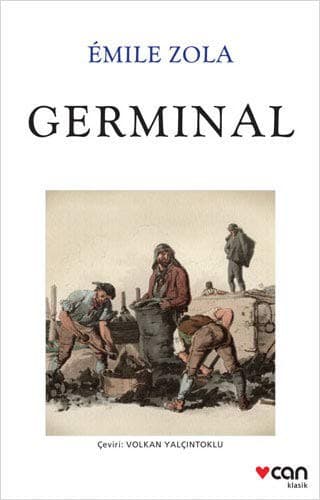
- Germinal
Emile Zola
4.2 (29k) average on GoodreadsHistorical FictionA social novel depicting the harsh realities of industrial life and class struggle.
- The Magician of Lublin
Isaac Bashevis Singer
3.9 (2k) average on GoodreadsHistorical FictionWhile both brothers explore Jewish identity, Isaac Bashevis Singer's work often leans more into the mystical, folkloric, and allegorical aspects of Jewish life. 'The Brothers Ashkenazi' is more firmly grounded in socio-economic realities and historical events, offering a less fantastical and more direct historical lens on the struggles of the time. Israel J. Singer's characters are shaped by industrial capitalism and class struggle, whereas I.B. Singer's often grapple with spiritual temptation and the supernatural.
- The Chosen
Chaim Potok
3.9 (253) average on GoodreadsFantasyChaim Potok's novels, including 'The Chosen,' primarily focus on intellectual and religious dilemmas within specific Orthodox Jewish communities, often exploring intergenerational conflict through the lens of scholarly and spiritual debates. 'The Brothers Ashkenazi,' in contrast, casts a wider net, encompassing broader social classes, political movements (like socialism), and the brutal realities of industrialization, with characters driven more by raw ambition, sensuality, and economic survival rather than primarily intellectual or theological conflicts.
- The Old Man and the Sea
Ernest Hemingway
3.8 (831k) average on GoodreadsLiterary FictionA Cuban fisherman's long struggle with a giant marlin becomes a story of endurance and dignity, now retold for young adults with illustrations, phonetic guides, and writing prompts in Traditional Chinese.
- One Hundred Years of Solitude
Gabriel García Márquez
4.1 (753k) average on GoodreadsLiterary FictionThrough the multi-generational story of the Buendía family, a mythical town deals with the repeating patterns of time, love, and solitude, as the extraordinary mixes with the ordinary.
- The Goldfinch
Donna Tartt
3.9 (720k) average on GoodreadsLiterary FictionHaunted by a tragic explosion and clutching a stolen Dutch masterpiece, a young orphan navigates the opulent drawing rooms of New York and the gritty underbelly of the art world, desperately seeking connection and redemption amidst a life spiraling into crime and obsession.



Enjoyed the summary?
A summary gives you the shape of the book. The book itself has the detail, the examples and the voice.
Find The Brothers Ashkenazi on AmazonAs an Amazon Associate, BookBrief earns from qualifying purchases. How we're funded