
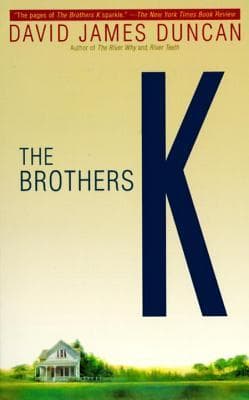
Synopsis
Covers the whole plot, including the ending.
- Difficulty
- Medium
- Pacing
- Variable
- Mood
- Epic, Reflective, Humorous, Melancholy, Profound
- Read it if
- You enjoy sprawling, character-driven family sagas with a blend of humor, tragedy, and deep philosophical or spiritual introspection, set against a rich historical backdrop.
- Skip it if
- You prefer fast-paced plots, short novels, or are not interested in detailed explorations of baseball, religion, or the Vietnam War's impact on a family.
The Brothers K Plot Summary
Covers the whole plot, including the ending.
The Chance Family and the Shadow of Baseball
The novel begins with Kincaid Chance, the youngest of six children, introducing his family in the Pacific Northwest during the Eisenhower years. His father, Hugh Chance, was a talented minor-league baseball pitcher whose career ended when a mill accident cost him a finger. This unfulfilled potential influences the family, especially his sons. His mother, Laura Chance, initially a typical wife, begins to convert to Seventh-Day Adventism, a faith that increasingly guides the family's life and causes conflict with Hugh's more secular, baseball-focused views. The four older brothers, Everett, Peter, Irwin, and Wallace, each deal with their father's legacy and their mother's growing faith in their own ways, setting the stage for their different lives.
Baseball, Religion, and Early Conflicts
Hugh Chance trains his sons in baseball, hoping to see his own lost dreams come true through them. The boys spend many hours on the family's homemade baseball field, developing good skills. However, Laura's Seventh-Day Adventist beliefs set strict rules, especially about the Sabbath, which often conflicts with baseball games and other activities. This tension is constant in their early lives, with Everett, the oldest, often rebelling against both parents. Peter, the most athletic, feels the weight of his father's expectations most strongly. Irwin and Wallace handle these pressures with their own coping methods, as Kincaid, the youngest, watches and learns the family dynamics.
Peter's Rise and Fall in Baseball
Peter Chance becomes the most skilled baseball player among the brothers, inheriting his father's pitching talent. His fastball is well-known in their community, and he seems headed for a professional career. Yet, the conflict between his love for baseball and his mother's increasingly strict religious beliefs grows. Laura believes baseball, especially playing on the Sabbath, is a sin. Peter, torn between pleasing his father and obeying his mother, feels great internal conflict. This leads to a key moment where, during an important game, Peter purposely throws a wild pitch, seemingly ending his own career. This decision greatly affects the entire family and marks a turning point in his life.
Everett's Rebellion and Intellectual Pursuit
Everett Chance, the oldest and most rebellious brother, rejects both his father's baseball obsession and his mother's religious rules. He is an intellectual and a free spirit, interested in philosophy, literature, and social justice. His sharp mind often puts him at odds with his parents and siblings. Everett's path takes him away from common expectations as he seeks meaning outside his family home and community. He explores counter-cultural ideas, challenges social norms, and advocates for his own radical individualism, which further strains his relationship with his more traditional family.
Irwin and Wallace's Divergent Paths
Irwin Chance, one of the middle brothers, struggles with his identity and sexuality, feeling like an outsider in his own family. He is sensitive and artistic, often misunderstood by his more athletic or religious siblings. His difficulties are made worse by the strict expectations of masculinity and religion in the Chance household. Wallace Chance, the other middle brother, takes a more practical approach to life. While influenced by his mother's faith, he finds a way to fit it into a more conventional life, often acting as a mediator between the family's more extreme personalities. His path is less dramatic but equally important in the family's story.
Kincaid's Observational Role and Childhood
Kincaid Chance, the narrator, spends his childhood mostly observing, taking in his family's complex dynamics. He looks up to his older brothers, especially Peter and Everett, and tries to understand the deep conflicts between his parents. Kincaid's early experiences are shaped by his parents' opposing influences: his father's love for baseball and storytelling, and his mother's strong religious teachings. He develops a keen sense of empathy and a desire to make sense of the family's often-troubled history, a drive that later fuels his narration. His innocence offers a unique perspective through which the reader experiences the unfolding drama as he tries to piece together the fragmented stories of his siblings and parents.
The Vietnam War and Its Impact
As the boys grow older, the Vietnam War becomes a major issue. The war is a significant cause of conflict and change within the Chance family, revealing their different ideas and moral stances. Everett, a strong pacifist and anti-war activist, refuses to fight, leading to legal problems and further separation from mainstream society. Peter, driven by guilt, duty, and a desire for redemption, chooses to enlist, a decision that deeply affects his family and his own future. Irwin and Wallace also deal with the war's effects, each making choices that reflect their characters and the pressures of the time, while Kincaid observes the heavy toll the war takes on his brothers.
Peter's War Experience and Return
Peter's experience in Vietnam is difficult and life-changing. He sees the harsh realities of war, which challenge his faith and his understanding of the world. He returns from the war deeply traumatized, suffering from what would later be called PTSD. His once-bright spirit is dimmed, and he struggles to return to civilian life and reconnect with his family. His experiences in Vietnam leave him with deep emotional scars and a cynical view, creating a gap between his pre-war self and the man he becomes. This period marks his struggle to find meaning and healing, and his family's attempts to understand and support him.
Everett's Activism and Consequences
Everett's commitment to anti-war activism grows during the Vietnam era. He becomes a vocal critic of the war, participating in protests and civil disobedience. His refusal to conform to societal expectations and his strong pacifism lead to legal consequences and social isolation. Despite the difficulties, Everett remains firm in his beliefs, representing the counter-cultural spirit of the time. His actions, while often upsetting his parents, strengthen his identity as an intellectual and a moral guide, though one who often points in a direction opposite to the family's more traditional values. His journey highlights the personal cost of standing up for one's beliefs.
The Family's Fragmentation and Reconciliation
The different paths of the Chance brothers, driven by their choices regarding faith, baseball, and the war, lead to times of deep division within the family. Relationships are strained, and misunderstandings are common. However, despite the distances – both physical and emotional – there are repeated attempts at understanding and reconciliation. Kincaid, as the narrator looking back, often thinks about these moments of connection and missed chances. The novel explores the lasting bonds of family, even when tested by strong ideological differences and personal traumas, showing how love, however imperfect, tries to bridge the gaps.
Laura's Unwavering Faith and Hugh's Despair
Laura Chance's Seventh-Day Adventist faith continues to be a central, steady force in her life, often giving her comfort but also contributing to the family's divisions. Her beliefs deepen over time, and she remains committed to her spiritual path, even as her sons make choices she disapproves of. Hugh Chance, on the other hand, continues to carry the burden of his unfulfilled baseball career and his sons' later struggles. He deals with despair and a feeling of helplessness as he sees his family break apart, often retreating into his own world of memories and quiet suffering. Their different coping methods show the profound impact of their individual histories.
Kincaid's Role as Chronicler
As an adult, Kincaid Chance fully takes on his role as the family's storyteller. He carefully gathers the stories of his parents and brothers, trying to understand their reasons, their struggles, and their successes. His narration is filled with deep empathy and a desire to present a complete, detailed picture of the Chance family, even when their actions are contradictory or painful. Kincaid's narrative voice is thoughtful and philosophical, moving between past and present, offering insights into the human condition and the lasting power of family. He aims to honor their shared history, acknowledging the beauty and tragedy in their lives.
The Twins' Perspective and Influence
Catherine and Caroline Chance, the identical twin sisters, hold a unique and often mysterious place within the family story. They are shown as deeply connected, sharing a bond that often goes beyond normal understanding. Their presence, though sometimes secondary to the main conflicts, acts as a grounding force and a source of wonder. They represent a different kind of spiritual connection, distinct from their mother's organized religion. Their insights and perspectives, often expressed in cryptic or intuitive ways, add another layer of depth to Kincaid's understanding of his family, contributing to the novel's themes of connection and the mysterious parts of human existence.
Themes of Forgiveness and Redemption
Through various difficulties, the novel ultimately explores forgiveness and redemption. The brothers, and the parents, must come to terms with past choices, perceived failures, and the pain they have caused each other. Forgiveness is not easy, but it is a constant pursuit, necessary for healing. The possibility of redemption, especially for characters like Peter who carry significant burdens, is explored with detail and compassion. Kincaid's narration highlights the long process of accepting one's past and finding a way forward, suggesting that true redemption comes from understanding, acceptance, and the lasting power of love.
The Enduring Legacy of the K's
In the final sections, Kincaid Chance reflects on his family's lasting legacy, the 'K's,' a nickname from their shared initial. He acknowledges that their story involves not only conflict and tragedy, but also deep love, resilience, and a search for meaning. He brings together the various parts of their lives – baseball, religion, war, and individual quests – into a single story. Kincaid's final thoughts offer a sense of closure, not necessarily in solving all conflicts, but in accepting their complex, intertwined destinies. He emphasizes the lessons learned about belief, human connection, and the many ways families shape individual lives.
Principal Figures
Kincaid Chance
Narrator/Protagonist
The youngest son and the family's chronicler, seeking to understand his complex heritage.
Kincaid is the youngest of the six Chance children, and the primary narrator of the novel. He often feels like an outsider, observing the turbulent lives of his parents and older brothers. He possesses a keen intellect, empathy, and a deep desire to comprehend the forces that shaped his family. As an adult, he meticulously reconstructs their story, striving for honesty and understanding, even when faced with painful truths. His narrative voice is philosophical, poetic, and often humorous, providing a unique lens through which the reader experiences the Chance family's saga.
Relationships: Hugh Chance (Son, observing his father's unfulfilled dreams and quiet despair.); Laura Chance (Son, grappling with his mother's fervent faith and its impact.); Peter Chance (Admires his brother's athletic prowess and later struggles to understand his trauma.); Everett Chance (Admires his brother's intellect and rebellious spirit.); Irwin Chance (Brother, observing his struggles with identity.); Wallace Chance (Brother, observing his more pragmatic approach to life.); Catherine and Caroline Chance (Younger brother, observing their unique bond and mystical presence.)
Hugh Chance
Supporting
A former minor-league baseball pitcher whose career was cut short, leaving him with unfulfilled dreams.
Hugh Chance is the patriarch of the family, a man haunted by a lost dream. Once a promising minor-league pitcher, an industrial accident cost him a finger and his career. He channels his unfulfilled ambitions into his sons' baseball training, creating a legacy of expectation. He is largely secular, clashing with his wife's religious fervor, and often retreats into quiet despair as his family fragments. Hugh is a man of few words but deep emotions, his love for baseball a metaphor for his lost potential and a source of both joy and sorrow for his sons.
Relationships: Laura Chance (Husband, with a strained relationship due to their conflicting worldviews (baseball vs. religion).); Peter Chance (Father, projecting his baseball dreams onto Peter, creating immense pressure.); Everett Chance (Father, often at odds with Everett's intellectual and rebellious nature.)
Laura Chance
Supporting
The devout Seventh-Day Adventist mother whose fervent faith shapes much of the family's life and conflict.
Laura Chance is the matriarch, whose life becomes increasingly dominated by her fervent Seventh-Day Adventist faith. Initially a more conventional wife, her conversion leads to strict adherence to religious doctrines, particularly regarding the Sabbath and secular activities like baseball. Her unwavering belief provides her with strength but also creates significant tension and division within the family, particularly with her husband and sons. She is driven by a deep conviction in God's will, often placing spiritual purity above worldly success or familial harmony, believing she is guiding her family toward salvation.
Relationships: Hugh Chance (Wife, with a strained relationship due to their conflicting worldviews (baseball vs. religion).); Peter Chance (Mother, whose religious demands directly clash with Peter's baseball career.); Everett Chance (Mother, often disapproving of Everett's secular and rebellious path.)
Peter Chance
Protagonist/Supporting
The most talented baseball player among the brothers, torn between his father's dreams and his mother's faith.
Peter Chance is the second eldest son and the family's athletic prodigy, possessing a legendary fastball. He carries the heaviest burden of his father's unfulfilled baseball dreams, yet is also deeply affected by his mother's fervent religious beliefs. This internal conflict leads him to sabotage his own baseball career and later to enlist in the Vietnam War, driven by a complex mix of guilt, duty, and a desperate search for meaning. His experiences in war leave him profoundly traumatized, transforming him into a cynical and haunted figure, struggling to find peace and reintegration.
Relationships: Hugh Chance (Son, bearing the weight of his father's projected dreams.); Laura Chance (Son, deeply conflicted by his mother's religious demands.); Kincaid Chance (Older brother, admired by Kincaid, whose struggles Kincaid tries to understand.)
Everett Chance
Protagonist/Supporting
The intellectual and rebellious eldest son, a staunch pacifist and anti-war activist.
Everett Chance is the eldest brother, an intellectual, a philosopher, and a rebel. He rejects both his father's baseball obsession and his mother's religious dogma, forging his own path based on critical thought and social justice. He is a passionate pacifist and anti-war activist, particularly during the Vietnam era, which leads him into conflict with authority and alienates him from some family members. Everett is articulate, opinionated, and fiercely independent, often serving as the family's moral compass, albeit one that consistently challenges conventional wisdom.
Relationships: Hugh Chance (Son, often clashing with his father's traditional views.); Laura Chance (Son, whose secular intellectualism clashes with his mother's faith.); Kincaid Chance (Older brother, admired for his intellect and courage.)
Irwin Chance
Supporting
The sensitive and artistic middle brother, grappling with identity and feeling like an outsider.
Irwin Chance is one of the middle brothers, a sensitive and artistic soul who often feels misunderstood within his athletic, religiously charged family. He struggles with his identity and sexuality, experiencing feelings of alienation and not quite fitting into the family's established roles. Irwin's path is less outwardly dramatic than Peter's or Everett's, but his internal struggles are profound, reflecting the challenges of self-discovery in a restrictive environment. He represents a different kind of strength, found in introspection and the quiet pursuit of personal truth.
Relationships: Kincaid Chance (Older brother, whose struggles Kincaid observes with empathy.)
Wallace Chance
Supporting
The pragmatic middle brother, who finds a more conventional path while still influenced by family and faith.
Wallace Chance is the other middle brother, often portrayed as more pragmatic and grounded than his siblings. He finds a way to integrate the influences of his mother's faith and the family's values into a more conventional life. While not as rebellious as Everett or as burdened as Peter, Wallace plays a crucial role in the family dynamic, often acting as a mediator or a steady presence. He represents the possibility of finding a stable existence amidst the family's turbulent history, embodying a quieter strength and resilience.
Relationships: Kincaid Chance (Older brother, providing a contrasting, more grounded perspective.)
Catherine and Caroline Chance
Supporting/Mentioned
The identical twin sisters, possessing a unique, often mystical, bond and perspective.
Catherine and Caroline are the identical twin sisters, the youngest of the children alongside Kincaid. They share a profound, almost mystical connection that sets them apart. Their presence in the narrative is often symbolic, representing a different form of spiritual understanding or intuition, distinct from their mother's organized religion. They are observant and empathetic, offering a unique, sometimes ethereal, perspective on the family's unfolding drama. Their bond highlights themes of interconnectedness and the mysterious aspects of human experience within the family unit.
Relationships: Kincaid Chance (Younger siblings, sharing a unique bond and often offering intuitive insights.)
Themes & Insights
The Burden of Unfulfilled Dreams
This theme appears mainly through Hugh Chance's unfulfilled baseball career, which becomes a heavy legacy for his sons, especially Peter. Hugh's inability to achieve his professional baseball dreams creates high expectations that his sons struggle to meet. Peter's self-sabotage on the mound, driven by immense pressure and conflict with his mother's faith, directly comes from this burden. The theme also extends to the brothers' struggles to find their own paths, separate from their father's hopes, showing how parental ambitions can both inspire and hinder. The entire family deals with the idea of what could have been, shaping their individual choices and collective future.
“A man's life, Kincaid, is not just his own; it's the sum of all the dreams he didn't quite catch, and the ones he passed on to his boys.”
Faith vs. Secularism / Organized Religion vs. Individual Spirituality
A central conflict in the novel is the clash between Laura Chance's strong Seventh-Day Adventism and Hugh's more secular, baseball-focused views. This leads to many family arguments, particularly over Sabbath observance and whether baseball is 'sinful.' Beyond this direct conflict, the theme examines different kinds of spirituality: Laura's strict beliefs, Everett's philosophical search for meaning outside religion, Peter's quest for redemption through war and a personal spiritual awakening, and Kincaid's empathetic attempt to understand all these paths. The novel questions if true faith can exist with worldly pursuits and how individuals form their own spiritual identities.
“Mother always said baseball was an idol. Father always said it was the closest thing to God he knew.”
The Impact of War and Trauma
The Vietnam War is a major test for the Chance brothers, deeply shaping their lives and beliefs. Peter's difficult experiences in combat leave him traumatized, dealing with PTSD and a loss of innocence and faith. Everett's principled anti-war activism leads to personal sacrifice and a lasting commitment to peace, showing another way to respond to conflict. The war affects not only those who fight but also those who stay behind, dividing the family and challenging their ideas of duty, patriotism, and morality. The novel carefully details the long-term psychological and emotional scars left by combat, highlighting the difficulty of healing and returning to normal life.
“The war took the best of us, Kincaid, and left us with ghosts we couldn't bury.”
Family Bonds and Fragmentation
Despite the strong ideological differences, personal traumas, and physical distances that pull the Chance family apart, the novel consistently explores the lasting, though complex, nature of family bonds. The brothers' different paths—baseball, religion, war, intellectualism—lead to periods of separation and misunderstanding. However, Kincaid's narration emphasizes the underlying love and connection that remain, even through conflict. There are repeated attempts at reconciliation, moments of shared memory, and a deep desire to understand and forgive. The division shows the challenges of staying united when faced with individual growth and societal pressures, while the lingering connections speak to the strength of family love.
“We were a family of fiercely separate orbits, Kincaid, but always, always, pulled by the same sun.”
The Art of Storytelling and Memory
Kincaid Chance's role as the narrator is key to this theme. The novel itself is an act of storytelling, a careful reconstruction of his family's history from fragmented memories, anecdotes, and perspectives. Kincaid deals with the subjective nature of memory, the need to piece together different stories, and the responsibility of the storyteller. He acknowledges that his story is his version, shaped by his own experiences and empathy. This meta-narrative aspect highlights how families create their own myths and histories, and how telling these stories can lead to understanding, healing, and preserving a legacy. The novel suggests that through storytelling, even painful truths can gain meaning.
“To tell a story, Kincaid, is to try and make sense of the chaos, to find the patterns in the unraveling.”
Plot Devices & Literary Techniques
First-Person Retrospective Narration
Kincaid Chance narrates the entire story as an adult, looking back on his family's history.
This device allows for a deeply personal and reflective account of the Chance family. Kincaid, as the youngest son, provides an empathetic yet often detached perspective, having observed much of the key conflicts from a distance. His adult voice provides philosophical insights and foreshadowing, enriching the narrative with wisdom gained from hindsight. This perspective also allows for the integration of various family members' stories and interpretations, as Kincaid pieces together the complex tapestry of their lives, sometimes acknowledging the limitations or biases of his own memory.
Baseball as Metaphor
The sport of baseball symbolizes dreams, destiny, rules, and the American ideal.
Baseball is not merely a pastime in 'The Brothers K'; it is a potent symbol. For Hugh, it represents lost dreams and a path to vicarious fulfillment through his sons. For Peter, it embodies the conflict between personal ambition and religious duty. The rules of baseball, its rituals, and its demand for discipline mirror the structured world Hugh desires, contrasting sharply with the 'unpredictable' nature of life and faith. It also represents a fading American ideal, increasingly challenged by the changing social and political landscape, particularly the Vietnam War. Its presence underscores themes of legacy, pressure, and the search for meaning.
The Seventh-Day Adventist Faith
Laura's devout religion serves as a source of both spiritual guidance and family conflict.
The Seventh-Day Adventist faith functions as a major plot device by introducing a strict moral and behavioral code that directly clashes with the Chance family's more secular pursuits, especially baseball. Laura's unwavering adherence to its tenets, such as Sabbath observance and dietary restrictions, creates constant tension with Hugh and influences the choices of her sons. This device explores themes of dogma, sacrifice, and the search for spiritual truth, forcing characters to confront their beliefs and make difficult decisions about loyalty to family versus loyalty to God. It highlights the divisive power of strongly held convictions.
The Vietnam War
The war acts as an external catalyst that forces the brothers to confront their values and destinies.
The Vietnam War is a crucial external force that propels much of the latter half of the plot. It serves as a stark moral and political backdrop against which the Chance brothers must make life-altering decisions. Peter's enlistment and subsequent trauma, and Everett's anti-war activism and draft resistance, are direct consequences of the war. This device allows the novel to explore themes of duty, patriotism, pacifism, trauma, and the societal impact of conflict, effectively reflecting the turbulent era and testing the core values of each family member, leading to profound personal and familial fragmentation.
Interwoven Narratives and Flashbacks
Kincaid frequently shifts between different time periods and incorporates the perspectives of other family members.
Kincaid's narration is not linear; he frequently jumps between childhood memories, the tumultuous Vietnam era, and his present-day reflections. He also incorporates direct quotes, letters, and imagined conversations from his siblings and parents. This technique creates a rich, multi-layered narrative tapestry, allowing for a comprehensive exploration of complex characters and events from various angles. It emphasizes the subjective nature of memory and the way individual stories contribute to a collective family history, giving the reader a more complete and nuanced understanding of the Chance family's journey.
The Brothers K Quotes
“Every time one of us fell, we fell in love. Every time we rose, we rose in love. Every time we were hurt, we hurt in love. Every time we hurt others, we hurt them in love. Every time we died, we died in love. Every time we were born, we were born in love. Every time we were, we were in love. Every time we weren't, we weren't in love.”
“The secret to happiness, I'm finding, is to learn to love the questions.”
“Baseball is a game of faith, hope, and charity. You have to have faith that your team will win, hope that your favorite player will hit a home run, and charity for the umpire when he makes a bad call.”
“Most men lead lives of quiet desperation, but some, like my father, lead lives of noisy, joyful desperation.”
“It's a strange thing, but the more you love, the more you have to give.”
“The world is full of miracles, if you just know where to look, and how to see.”
“Every family is a religion, and every religion is a family.”
“There are two kinds of suffering: the suffering that makes you bitter, and the suffering that makes you better.”
“You can't catch a fish if you don't put your line in the water.”
“What we call the past is just the present in disguise.”
“The only way to keep a secret is to never have one.”
“Some things you just have to believe in, even if you can't see them.”
“Life is a gift, and it's up to us to unwrap it.”
“The greatest victories are often won not by strength, but by endurance.”
Quiz
10 questions on the plot and the characters. Each answer comes with a short explanation.
Question 1
Which sport is central to the early life and dreams of Hugh Chance, the patriarch of the Chance family?
- Basketball
- Baseball
- Football
- Boxing
Show answer
B. Baseball Hugh Chance was a promising minor-league baseball player whose career was cut short, making baseball a significant theme in the family's history.
Question 2
Who is the main narrator of 'The Brothers K'?
- Hugh Chance
- Laura Chance
- Kincaid Chance
- Everett Chance
Show answer
C. Kincaid Chance The novel is mainly narrated by Kincaid Chance, the youngest son in the family.
Question 3
Which religious denomination does Laura Chance, the mother, become increasingly fanatical about?
- Methodist
- Seventh-Day Adventist
- Catholic
- Baptist
Show answer
B. Seventh-Day Adventist Laura Chance is depicted as an increasingly fanatical Seventh-Day Adventist, which is a major source of tension in the family.
Question 4
What significant historical event in American history frames the latter half of the family's story, particularly impacting the Chance brothers?
- World War II
- The Korean War
- The Vietnam War
- The Civil Rights Movement
Show answer
C. The Vietnam War The plot traces the family's fate 'through the traumas of Vietnam,' indicating its significant impact on the brothers and the family.
Question 5
How many sons are there in the Chance family, besides the identical twin girls?
- Two
- Three
- Four
- Five
Show answer
C. Four The description states the family consists of 'four boys and identical twin girls.'
Question 6
What event prematurely ended Hugh Chance's promising minor-league baseball career?
- A severe illness
- A scandal
- An industrial accident
- A disagreement with his coach
Show answer
C. An industrial accident Hugh Chance's career was 'curtained by an industrial accident,' a pivotal moment for his character and the family's trajectory.
Question 7
What is a prominent thematic tension explored in the novel, arising from the parents' differing worldviews?
- Urban vs. Rural life
- Science vs. Superstition
- Secularism vs. Religious fanaticism
- Wealth vs. Poverty
Show answer
C. Secularism vs. Religious fanaticism The contrast between Hugh's discouraged secularism (after his baseball dreams are crushed) and Laura's 'increasingly fanatical Seventh-Day Adventist' beliefs creates a central tension around spirituality and faith.
Question 8
The novel's formal inventiveness is highlighted in its structure. Besides Kincaid's narration, what other elements contribute to its 'complex tapestry'?
- Exclusively third-person omniscient narration for all chapters
- It is written entirely as a collection of letters and diary entries
- Incorporation of diverse narrative voices, interjections, and philosophical digressions
- A linear, minimalist plot without any flashbacks or flashforwards
Show answer
C. Incorporation of diverse narrative voices, interjections, and philosophical digressions The novel is known for its 'highly inventive formally,' going beyond a simple first-person account to include other voices, philosophical reflections, and a non-linear approach to weave its complex story.
Question 9
Beyond being a family saga, what larger American socio-political context does 'The Brothers K' primarily cover, starting from the 'Eisenhower years'?
- The Great Depression and World War II era
- The Cold War, cultural shifts, and the Vietnam War era
- The Reconstruction era and industrialization
- The Gilded Age and the Progressive era
Show answer
B. The Cold War, cultural shifts, and the Vietnam War era The novel 'traces the working-out of the family's fate from the beginning of the Eisenhower years through the traumas of Vietnam,' firmly placing it within the Cold War and tumultuous 1960s/70s American context.
Question 10
What is the overarching tone of 'The Brothers K' as described, despite its serious themes?
- Consistently bleak and cynical
- Predominantly detached and academic
- By turns hilariously funny and agonizingly sad
- Exclusively sentimental and nostalgic
Show answer
C. By turns hilariously funny and agonizingly sad The description highlights the novel's emotional range, stating it is 'by turns hilariously funny and agonizingly sad,' indicating a complex and varied tone.
The Brothers K FAQ
Who narrates "The Brothers K" and what is his relationship to the main family?
The novel is primarily narrated by Kincaid Chance, the youngest son in the large Chance family. He offers a retrospective account of his family's life, providing an intimate, often humorous, and deeply personal perspective on their struggles and triumphs.
What significant historical period does the novel span?
The narrative of "The Brothers K" traces the Chance family's journey from the optimistic beginning of the Eisenhower years through the tumultuous and divisive traumas of the Vietnam War era. This historical backdrop deeply influences the characters' experiences and choices.
Describe the patriarch, Hugh Chance, and his past.
Hugh Chance is a discouraged former minor-league baseball player whose once-promising professional career was tragically cut short by an industrial accident. This unfulfilled potential and his enduring love for baseball significantly shape his identity and his relationship with his sons.
What role does religion play in the Chance family, particularly for Laura Chance?
Religion is a central and often divisive force within the Chance family, primarily through Laura Chance, who becomes an increasingly fanatical Seventh-Day Adventist. Her fervent faith creates tension and conflict, especially as her children grapple with their own beliefs and the secular world.
How does baseball function as more than just a sport within the novel?
Baseball serves as a powerful metaphor for life, fate, and the American dream within the novel. It represents lost potential for Hugh, a source of connection and conflict among the brothers, and a framework through which they understand competition, failure, and spiritual striving.
Are there specific real-world baseball players or events referenced that deepen the narrative's themes?
Yes, the novel frequently references real-world baseball players and historical games, intertwining the Chance family's personal narrative with the broader mythology of American baseball. These details root the story in a specific cultural context and amplify themes of heroism, decline, and the passage of time.
What is the significance of the 'K' in the title "The Brothers K"?
The 'K' in the title refers to both the Chance family's last name, 'Kincaid' (as in Kincaid Chance), and to the baseball scoring symbol for a strikeout. It subtly foreshadows themes of failure, struggle, and the ultimate 'striking out' that some characters experience in their lives, while also hinting at the brothers' shared identity.
How do the identical twin girls, Caroline and Katrina, contribute to the family dynamic beyond their youth?
Caroline and Katrina, though younger, provide a unique perspective and often serve as a grounding force or a source of innocent wisdom. Their parallel existence sometimes highlights the divergent paths of their older brothers and underscores the novel's exploration of identity and connection.
Are there literary allusions beyond the obvious Dostoevsky reference in the title?
Yes, while the Dostoevsky connection is prominent, the novel also weaves in allusions to other literary works, biblical narratives, and philosophical texts. These references enrich the thematic complexity, adding layers of intertextual meaning to the Chance family's saga.
How does Hugh Chance's unfulfilled baseball career psychologically impact his sons?
Hugh's truncated career casts a long shadow, creating a complex psychological dynamic where his sons feel both pressure to achieve what he couldn't and a desire to forge their own paths. It instills in them a deep love for the game but also a subconscious burden of inherited dreams and disappointments.
What are the psychological effects of Laura Chance's escalating religious fundamentalism on her children?
Laura's intense Seventh-Day Adventist faith creates significant psychological strain on her children, fostering guilt, rebellion, and a search for their own spiritual identities. It forces them to confront questions of belief, dogma, and personal freedom, often leading to deep internal conflict and alienation.
How do the individual brothers (Everett, Peter, Gussie, Kincaid) cope with the pressures of family expectations and societal change?
Each brother develops distinct coping mechanisms: Everett embraces activism and intellectualism, Peter pursues spiritual and physical discipline, Gussie struggles with conformity and identity, and Kincaid observes and narrates. Their varied responses highlight the diverse ways individuals navigate family legacies and historical upheaval.
In what ways does the Vietnam War specifically alter the psychological landscape of the Chance family?
The Vietnam War profoundly alters the family's psychological landscape, introducing fear, moral dilemmas, and deep divisions, especially regarding military service and pacifism. It forces characters to confront mortality, patriotism, and personal conviction, leaving lasting emotional scars and reshaping their relationships.
Is the novel ultimately optimistic or pessimistic about the human condition?
The novel presents a nuanced view of the human condition, balancing profound tragedy and suffering with moments of grace, humor, and enduring love. While acknowledging life's pain and injustice, it ultimately suggests a hopeful resilience and the possibility of spiritual meaning amidst chaos.
How does the author use humor to balance the often-sad and tragic elements of the story?
Duncan masterfully employs humor, often through Kincaid's witty narration, sharp dialogue, and absurd situations, to provide crucial emotional relief and deepen characterization. This comedic counterpoint prevents the narrative from becoming solely grim, allowing moments of joy and lightness to underscore the resilience of the human spirit.
What is the novel's stance on organized religion versus individual spirituality?
The novel critically examines the rigidities and potential harms of organized religion, particularly through Laura's fanaticism, while simultaneously celebrating and exploring the profound depth of individual spirituality. It suggests that true faith often lies beyond dogma, in personal experience, compassion, and connection to something larger than oneself.
How does the narrative structure, with Kincaid as narrator, influence our understanding of the events?
Kincaid's retrospective narration allows for a blend of youthful immediacy and adult reflection, providing both an intimate, subjective view of events and later insights. His voice shapes our understanding by filtering experiences through his particular blend of humor, wisdom, and personal bias, making the story deeply personal and reflective.
What is the enduring message or theme that David James Duncan seems to convey through the Chance family's journey?
Duncan conveys a profound message about the interconnectedness of family, faith, and fate, and the enduring search for meaning in a complex world. He explores how love, loss, and belief shape identity, suggesting that even amidst profound suffering and societal upheaval, human connection and spiritual quest remain vital.
Similar books
- East of Eden
John Steinbeck
4.4 (429k) average on GoodreadsLiterary FictionA multi-generational family epic exploring good, evil, and legacy in America.
- Lonesome Dove
Larry McMurtry
4.5 (149k) average on GoodreadsHistorical FictionA long, character-rich journey with a blend of humor, tragedy, and Americana.
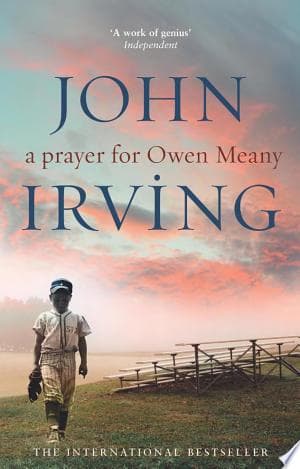
- A Prayer For Owen Meany
John Irving
4.2 (286k) average on GoodreadsLiterary FictionFeatures a unique narrative voice, spiritual themes, and a blend of humor and pathos.
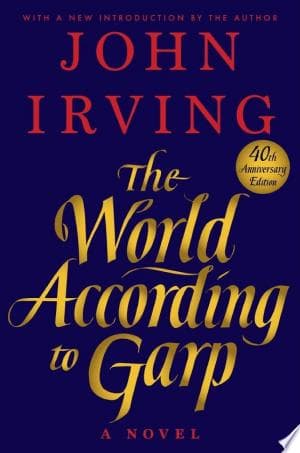
- The World According to Garp
John Irving
4.1 (205k) average on GoodreadsLiterary FictionAnother John Irving novel that shares thematic and stylistic similarities. Both The Brothers K and The World According to Garp explore the lives of eccentric families over multiple generations, examining the interplay between personal desires and societal pressures. Both novels also feature a strong sense of place and time, creating vivid portraits of American life, and employ a narrative voice that is both engaging and often philosophical, albeit with Irving's characteristic darkly comedic edge.
- The Old Man and the Sea
Ernest Hemingway
3.8 (831k) average on GoodreadsLiterary FictionA Cuban fisherman's long struggle with a giant marlin becomes a story of endurance and dignity, now retold for young adults with illustrations, phonetic guides, and writing prompts in Traditional Chinese.
- One Hundred Years of Solitude
Gabriel García Márquez
4.1 (753k) average on GoodreadsLiterary FictionThrough the multi-generational story of the Buendía family, a mythical town deals with the repeating patterns of time, love, and solitude, as the extraordinary mixes with the ordinary.



Enjoyed the summary?
A summary gives you the shape of the book. The book itself has the detail, the examples and the voice.
Find The Brothers K on AmazonAs an Amazon Associate, BookBrief earns from qualifying purchases. How we're funded