
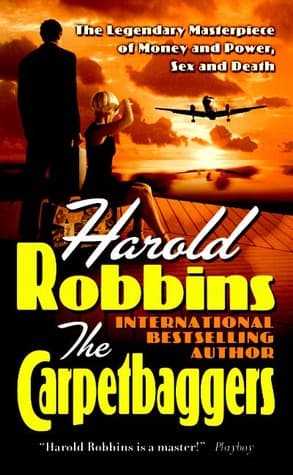
Synopsis
Covers the whole plot, including the ending.
- Difficulty
- Medium
- Pacing
- Fast
- Mood
- Dramatic, Intense, Sensual, Tragic
- Read it if
- You enjoy sweeping historical sagas with complex, morally ambiguous characters, explicit romance, and a focus on the rise and fall of powerful individuals in the early to mid-20th century.
- Skip it if
- You prefer lighthearted stories, are sensitive to themes of manipulation and tragedy, or dislike graphic descriptions of sex and violence.
The Carpetbaggers Plot Summary
Covers the whole plot, including the ending.
The Inheritance of a Tycoon
The novel opens with the death of Jonas Cord Sr., a powerful and ruthless industrialist. His estranged son, Jonas Cord Jr., returns to take control of the family's immense holdings, which include oil, aviation, and various other industries. Jonas Jr. is a driven and emotionally scarred young man, haunted by his past and deep resentment towards his father. He quickly asserts his authority, demonstrating similar ruthlessness, but also visionary ambition. His immediate goal is to consolidate power and expand the empire, often clashing with established board members and his father's former associates. He also harbors a complex and almost obsessive desire for his stepmother, Rina Marlowe, a beautiful and famous film star.
A Volatile Marriage and Hollywood Aspirations
Jonas Cord Jr. marries Rina Marlowe, a move driven by desire, control, and a need to defy his father's memory. Their marriage is tempestuous, marked by intense passion, power struggles, and mutual manipulation. Rina, a celebrated actress, is fiercely independent and equally ambitious, using her allure to navigate the cutthroat world of Hollywood. Jonas, seeing the potential in the film industry, decides to invest heavily, buying a major studio. This plunges him directly into the glamorous yet morally ambiguous world of movie-making, where he encounters a colorful cast of characters, including directors, producers, and aspiring stars, all vying for power and fame.
Navigating the Studio System
As the new head of a major studio, Jonas Cord Jr. quickly makes his mark, often with an iron fist. He introduces innovative production methods and challenges the old guard, aiming to revolutionize the industry. This inevitably leads to conflicts with established figures like Nevada Smith, a legendary and rugged stuntman and actor, who represents a more traditional, hands-on approach to filmmaking. Jonas's business acumen, coupled with his ruthless determination, allows him to overcome obstacles and expand his studio's influence. However, his personal life remains chaotic, with his marriage to Rina constantly on the brink, fueled by infidelity and a deep lack of emotional connection.
Rina's Rise and Fall
Rina Marlowe's career reaches new heights under Jonas's ownership of the studio, though she often struggles against his controlling nature. She becomes an even bigger star, captivating audiences with her beauty and talent. However, Rina is plagued by her own insecurities and a destructive streak. Her past, including a troubled childhood and a history of tumultuous relationships, constantly threatens to unravel her carefully constructed public image. She engages in numerous affairs, seeking validation and escape, further straining her already fragile marriage to Jonas, who is equally unfaithful and consumed by his own ambitions.
Nevada Smith's Loyalty and Tragedies
Nevada Smith, a man of integrity and deep loyalty, finds himself entangled in Jonas Cord's orbit, initially as an adversary but later becoming an ally and friend. Nevada is a skilled pilot and a man of action, representing a different kind of masculinity than Jonas. He experiences personal tragedies, including the loss of his family, which further hardens him but also reveals his deep capacity for love and resilience. His relationship with Jonas is complex, marked by mutual respect despite their differing worldviews. Nevada often acts as a moral compass, or at least a grounded presence, in the extravagant and often immoral world Jonas inhabits.
The Aviation Empire and Personal Obsessions
Beyond Hollywood, Jonas Cord Jr. dedicates significant resources to expanding the family's aviation interests. This pursuit is personal, stemming from his father's legacy in the industry and Jonas's own fascination with flight and technological advancement. He invests in cutting-edge aircraft design and manufacturing, pushing boundaries and taking significant risks. This venture brings him into contact with engineers, test pilots, and other visionaries in the field. His relentless drive for innovation mirrors his personal life, where he constantly seeks to conquer new frontiers, whether in business or in his increasingly complex and destructive relationships.
The Downward Spiral of Rina and Jonas
The marriage between Jonas and Rina spirals further into dysfunction. Their love-hate relationship is characterized by public displays of affection interspersed with brutal private arguments, infidelities, and emotional warfare. Rina's addiction to pills and alcohol intensifies, fueled by her insecurities and Jonas's often cruel and controlling behavior. Jonas, in turn, uses his power and wealth to exert control over Rina, even as he pursues other women. Their relationship becomes a destructive force, consuming both of them and leaving a trail of emotional devastation in its wake, impacting everyone around them.
The Price of Power and Revenge
Jonas Cord Jr.'s ruthless business practices and personal vendettas begin to catch up with him. He makes powerful enemies and faces legal challenges and public scrutiny. Despite his immense wealth, he finds himself increasingly isolated. His desire for power and revenge, particularly against those he perceives as having wronged him or his father, drives him to extreme measures. He manipulates people and situations, often without regard for the collateral damage. This relentless pursuit of dominance, however, does not bring him happiness or peace, instead leaving him feeling hollow and unfulfilled.
Rina's Tragic End
Rina Marlowe's life ends tragically, a victim of her own self-destructive tendencies and the pressures of her tumultuous life. Overdosing on pills and alcohol, her death is a culmination of years of emotional pain, addiction, and her inability to escape the toxic dynamics of her relationship with Jonas. Her passing leaves Jonas with a sense of loss and regret, forcing him to confront the devastating consequences of his own actions and his inability to truly connect with or save the woman he both loved and tormented. Her death is a stark reminder of the destructive power of ambition and unchecked passion.
Jonas's Reckoning and Continued Journey
In the aftermath of Rina's death and other personal losses, Jonas Cord Jr. undergoes a period of introspection. While he remains a driven and powerful figure, the tragedies he has endured force him to confront the emptiness of his relentless pursuit of wealth and power without genuine human connection. He continues to expand his empire, but there is a sense of melancholy and a deeper understanding of the costs of his ambition. The novel concludes with Jonas, still formidable, but perhaps a little more weary and reflective, continuing his journey, forever shaped by the people he loved and lost, and the empire he built at such a high personal price.
Principal Figures
Jonas Cord Jr.
Protagonist
A ruthless and ambitious industrialist, haunted by his past and driven by an insatiable need for power and control.
Jonas Cord Jr. is the central figure, inheriting his father's vast industrial empire. Scarred by a traumatic childhood and a complex relationship with his powerful, distant father, Jonas is emotionally stunted but possesses a brilliant mind for business and a relentless drive. He is capable of great vision and innovation, particularly in aviation and film, but also exhibits extreme ruthlessness, manipulation, and a controlling nature in his personal relationships. His desire for Rina Marlowe is a mix of genuine passion and a need to possess what his father once had, leading to a destructive marriage.
Relationships: Jonas Cord Sr. (Father, deeply resented and idolized); Rina Marlowe (Wife, object of obsession and torment); Nevada Smith (Friend and loyal employee, initially rival); Jennie Denton (Lover, brief solace)
Rina Marlowe
Antagonist/Supporting
A beautiful and celebrated film star, fiercely independent yet tragically self-destructive.
Rina Marlowe is Jonas Cord Sr.'s young widow and later Jonas Jr.'s wife. A captivating and sensual actress, she uses her beauty and talent to navigate the treacherous world of Hollywood. Despite her fame, Rina is deeply insecure, haunted by a difficult past, and prone to self-destructive behavior, including addiction. She is strong-willed and independent but often falls victim to her own desires and the manipulative power dynamics of her marriage to Jonas. Her search for love and validation often leads her to fleeting, unsatisfying affairs.
Relationships: Jonas Cord Sr. (Husband, source of wealth and status); Jonas Cord Jr. (Husband, complex and destructive love-hate relationship); Nevada Smith (Friend, occasional confidante); David Woolf (Director, professional relationship and brief affair)
Nevada Smith
Supporting
A rugged and honorable stuntman, pilot, and actor, who becomes a loyal friend to Jonas Cord Jr.
Nevada Smith is a man of integrity, loyalty, and quiet strength. He begins as a stuntman and actor, a symbol of the old Hollywood and a foil to Jonas's corporate ruthlessness. A skilled pilot and a resourceful individual, he earns Jonas's respect and becomes a trusted confidant and friend. Nevada endures personal tragedies, including the loss of his family, which shapes his stoic nature. He often serves as a moral anchor in the often amoral world of the Cord empire and Hollywood, offering Jonas a rare glimpse of genuine human connection.
Relationships: Jonas Cord Jr. (Friend and employer, complex but loyal bond); Rina Marlowe (Friend, offers her support); Jennie Denton (Lover, later wife)
Jennie Denton
Supporting
A compassionate woman who provides solace and stability to both Jonas and Nevada.
Jennie Denton is a kind and empathetic woman who initially works for the Cord organization. She offers a stark contrast to the cynical and ruthless characters around her. Jennie becomes a lover to Jonas Cord Jr. for a period, providing him with a rare moment of tenderness and understanding, though their relationship is ultimately unsustainable due to Jonas's emotional unavailability. She later finds love and stability with Nevada Smith, offering him comfort and a chance at a new life after his tragedies. She represents warmth and genuine affection amidst the cold ambition of the Cord empire.
Relationships: Jonas Cord Jr. (Lover, brief and tender); Nevada Smith (Lover, later wife)
Jonas Cord Sr.
Mentioned
The deceased, powerful patriarch whose legacy and ghost haunt his son.
Jonas Cord Sr. is the deceased father of Jonas Cord Jr. and the original founder of the vast Cord empire. Though he never appears alive in the novel, his presence is profoundly felt through his legacy, his will, and the lasting psychological impact he had on his son. He was a ruthless, driven, and emotionally distant man, whose marriage to Rina Marlowe was primarily one of convenience and status. His shadow looms large over Jonas Jr.'s actions, driving much of his ambition, resentment, and desire for both revenge and validation.
Relationships: Jonas Cord Jr. (Son, complex and damaging relationship); Rina Marlowe (Wife, largely a trophy wife)
David Woolf
Supporting
A talented and ambitious film director, often at odds with Jonas's control.
David Woolf is a highly regarded film director working within Jonas Cord Jr.'s studio. He is passionate about filmmaking and artistic integrity, often clashing with Jonas's purely business-driven approach. Woolf is a complex character, capable of both artistic brilliance and personal failings. He has a close professional relationship with Rina Marlowe and briefly becomes her lover, further complicating the dynamics within the studio and with Jonas. He represents the creative, often volatile, heart of Hollywood, navigating the demands of art and commerce.
Relationships: Jonas Cord Jr. (Employer, often adversary); Rina Marlowe (Director/actress, brief affair)
Bernard B. Norman
Supporting
A seasoned and shrewd Hollywood producer, representing the old guard of the studio system.
Bernard B. Norman is an experienced and cunning Hollywood producer, a veteran of the studio system. He initially serves as a foil to Jonas Cord Jr.'s fresh, ruthless approach, representing the established power structures and traditional ways of doing business in the film industry. Norman is pragmatic and self-serving, always looking out for his own interests but also possessing a deep understanding of how Hollywood truly works. He is adept at navigating the political landscape of the studios and often clashes with Jonas over creative and financial control, though he ultimately adapts to the new regime.
Relationships: Jonas Cord Jr. (Employer, often adversary); Rina Marlowe (Professional relationship)
Mabel
Supporting
Rina Marlowe's loyal and long-suffering personal assistant and confidante.
Mabel is Rina Marlowe's devoted personal assistant, acting as her shadow, manager, and emotional support. She is privy to Rina's deepest secrets, insecurities, and self-destructive tendencies. Mabel often tries to protect Rina from herself and from the predatory nature of Hollywood and Jonas Cord Jr., though her efforts are often in vain. She represents unwavering loyalty and a grounded perspective amidst the glamour and chaos, providing a quiet, observant presence throughout Rina's tumultuous life.
Relationships: Rina Marlowe (Assistant and confidante)
Themes & Insights
The Corrupting Influence of Power and Wealth
The novel explores how immense wealth and unchecked power can corrupt individuals and relationships. Jonas Cord Jr.'s pursuit of empire, inherited and expanded, drives him to ruthless actions, emotional manipulation, and an inability to form healthy connections. His wealth buys him control and influence but isolates him, leading to a hollow existence. Similarly, Rina Marlowe's fame and the lavish lifestyle it affords cannot shield her from her inner demons or the destructive nature of her marriage, ultimately contributing to her tragic downfall. The book illustrates that while money and power can achieve anything materially, they often destroy the human spirit.
“He had achieved everything a man could want, and yet, he felt nothing but a vast, echoing emptiness.”
Destructive Love and Obsession
The central relationship between Jonas Cord Jr. and Rina Marlowe is an example of destructive love fueled by obsession, control, and deep-seated psychological issues. Jonas's desire for Rina is intertwined with his need to conquer and possess what his father had, while Rina seeks validation and escape from her own insecurities through tumultuous affairs and a volatile bond with Jonas. Their marriage is a cycle of passionate highs and brutal lows, marked by infidelity, emotional abuse, and an inability to truly love or respect one another. Their relationship ultimately consumes both of them, leading to Rina's tragic end.
“Their love was a battlefield, strewn with the wreckage of their souls, each victory a defeat for the other.”
The Illusion vs. Reality of Hollywood
The novel portrays Hollywood as a world of dazzling glamour and immense opportunity, but one that is ultimately built on illusion, exploitation, and ruthless ambition. From screen goddesses like Rina Marlowe to powerful studio heads like Jonas Cord Jr. and shrewd producers like Bernard B. Norman, everyone is playing a part, both on and off screen. The pursuit of fame and fortune often comes at the cost of integrity, personal happiness, and even life itself, as seen in Rina's tragic addiction and eventual death. The book exposes the dark underbelly of the dream factory, revealing the emotional wreckage behind the silver screen.
“Hollywood was a beautiful lie, a glittering promise that devoured its most devoted believers.”
Identity and Legacy
Jonas Cord Jr.'s entire life is a struggle with identity, deeply intertwined with the legacy of his powerful father. He constantly battles to define himself apart from Jonas Cord Sr., even as he replicates his father's ruthlessness and expands his empire. His actions are often driven by a need to prove himself, to surpass his father, or to avenge perceived wrongs from his past. This theme explores how inherited wealth and a dominant paternal figure can shape a child's destiny, forcing them into a continuous cycle of emulation and rebellion, forever searching for their own authentic self amidst the shadow of a powerful predecessor.
“He was his father's son, cursed with his ambition, blessed with his vision, and forever trapped in his shadow.”
Plot Devices & Literary Techniques
The Anti-Hero Protagonist
Jonas Cord Jr. embodies complex morality and questionable actions.
Jonas Cord Jr. functions as a classic anti-hero. While he drives the narrative and achieves immense success, his methods are often ruthless, manipulative, and morally ambiguous. He lacks conventional heroic virtues, being emotionally distant, vengeful, and prone to destructive behavior in his personal life. This device allows the author to explore the darker aspects of ambition and power, challenging readers to empathize with a character who is deeply flawed yet undeniably compelling. His internal conflicts and external conquests are central, but his 'heroism' lies in his sheer will and impact, not his virtue.
The Femme Fatale
Rina Marlowe's allure and destructive nature drive key plot points.
Rina Marlowe perfectly embodies the femme fatale archetype. She is beautiful, seductive, and fiercely independent, capable of captivating men and commanding attention. However, her allure is intertwined with a destructive, self-serving nature and a troubled past. She uses her sexuality and charm to navigate the male-dominated world of Hollywood and to manipulate those around her, including Jonas. Her presence brings both immense passion and profound chaos into Jonas's life, ultimately leading to tragic consequences, highlighting the perilous nature of her seductive power.
Parallel Lives and Contrasting Ideals
Jonas Cord Jr. and Nevada Smith represent different paths to manhood and success.
The narrative often contrasts the lives and ideals of Jonas Cord Jr. and Nevada Smith. Jonas represents the corporate, ruthless, and emotionally detached path to power through wealth and manipulation. Nevada, on the other hand, embodies integrity, loyalty, and a more grounded, hands-on approach to life, valuing personal connection and honor over sheer acquisition. This device highlights the different forms of 'success' and 'manhood' explored in the novel, allowing for thematic depth as Jonas's material victories are often juxtaposed with Nevada's more human triumphs and resilience in the face of tragedy.
Symbolism of Aviation
Planes and flight symbolize ambition, escape, and technological progress.
Aviation plays a significant symbolic role throughout the novel. For Jonas Cord Jr., his father's legacy in the aviation industry and his own expansion into it represent ambition, technological prowess, and the desire to transcend limitations. Planes symbolize freedom, escape from earthly constraints, and the relentless pursuit of new frontiers, mirroring Jonas's own sky-high aspirations in business and his attempts to escape his past. The dangers of flight also echo the risks and destructive potential inherent in Jonas's unchecked ambition and his volatile personal life.
The Carpetbaggers Quotes
“Money isn't everything, but it's way ahead of whatever is in second place.”
“You can't buy love, but you can rent it for a hell of a long time.”
“The only thing that matters is what you want and how bad you want it.”
“In this world, you're either a hammer or a nail.”
“Success is the best revenge.”
“Never let them see you sweat.”
“The bigger the risk, the bigger the reward.”
“You make your own luck in this life.”
“A man's word is only as good as the money behind it.”
“Love is a luxury for those who can afford it.”
“The past is just a story we tell ourselves.”
“Power isn't given, it's taken.”
“In the end, we all answer to ourselves.”
“Dreams are for those who sleep; the rest of us work.”
Quiz
10 questions on the plot and the characters. Each answer comes with a short explanation.
Question 1
What is Jonas Cord's primary motivation at the beginning of the novel?
- To become a famous Hollywood actor
- To inherit and surpass his father's wealth, fame, and possessions
- To start his own airline company from scratch
- To escape his family's legacy and start a new life
Show answer
B. To inherit and surpass his father's wealth, fame, and possessions The book opens with Jonas Cord coveting his father's fame, fortune, and even his young wife, Rina Marlow. After his father's death, Jonas swears to possess all of these, driving his initial ambitions.
Question 2
What industry does Jonas Cord expand into beyond Hollywood?
- The automobile industry
- The oil industry
- The airplane industry
- The shipping industry
Show answer
C. The airplane industry Jonas and Rina take Hollywood and the airplane industry by storm, as mentioned in the book's description, showing his diversification into aviation alongside his entertainment ventures.
Question 3
How is Rina Marlow described in terms of her public persona?
- A reclusive and mysterious actress
- A celebrated screen goddess with sizzling sensuality
- A talented but modest stage performer
- A business-savvy film producer
Show answer
B. A celebrated screen goddess with sizzling sensuality Rina Marlow is portrayed as a celebrated screen goddess whose sensuality inflames and enthralls millions, highlighting her iconic Hollywood status and public allure.
Question 4
What do Jonas and Rina ultimately learn about their pursuits of money and power?
- That these pursuits bring them lasting happiness and fulfillment
- That they are not enough, and their ambitions grow darker and deadlier
- That they should abandon them for a simple life together
- That they can achieve everything through legal means alone
Show answer
B. That they are not enough, and their ambitions grow darker and deadlier The book describes how Jonas and Rina learn that money, power, revenge, and renown were not enough, and as they soar higher, their passions become darker and deadlier, indicating the emptiness and corruption of their ambitions.
Question 5
What is a key characteristic of Rina Marlow's personal relationships?
- She is loyal and devoted to one partner at a time
- She consumes her lovers on the fiery rack of her burning desires
- She avoids romantic entanglements to focus on her career
- She seeks platonic friendships over romantic ones
Show answer
B. She consumes her lovers on the fiery rack of her burning desires Rina's personal boudoir is described as no Hollywood fantasy; she consumes her lovers with intense, burning desires, showing her passionate and potentially destructive approach to relationships.
Question 6
How do Jonas and Rina build their empire according to the book's description?
- Through careful planning and ethical business practices
- By brawling, lusting, and carving it out, blazoned in banner headlines and their enemies' blood
- By inheriting wealth from distant relatives
- Through quiet investments in real estate
Show answer
B. By brawling, lusting, and carving it out, blazoned in banner headlines and their enemies' blood The description states they brawled, lusted, and carved out an empire in a dramatic and violent manner, highlighted by media attention and conflict, reflecting the ruthless and sensational nature of their rise.
Question 7
What geographical scope do Jonas and Rina's activities cover in the novel?
- Primarily Hollywood and Los Angeles
- New York to Los Angeles, impacting America itself
- Europe and Asia exclusively
- Rural areas of the United States
Show answer
B. New York to Los Angeles, impacting America itself They take Hollywood, the airplane industry, and America itself by storm, with activities spanning from New York to LA, indicating a broad national influence across key American cities.
Question 8
What does the phrase 'the higher they soared, the more their ambition demanded' imply about Jonas and Rina?
- They become more content with their achievements as they succeed
- Their success fuels insatiable and increasingly dangerous ambitions
- They decide to scale back their efforts to enjoy life
- They focus on philanthropic endeavors after gaining wealth
Show answer
B. Their success fuels insatiable and increasingly dangerous ambitions This phrase suggests a cycle where greater success leads to even higher demands, culminating in darker and deadlier passions, illustrating the novel's theme of ambition's corrupting and endless nature.
Question 9
In what way is Rina Marlow's personal life contrasted with her Hollywood image?
- Her personal life is more glamorous and fantastical than her films
- Her personal boudoir is no Hollywood fantasy, involving intense and consuming relationships
- She leads a simple and private life away from the spotlight
- She uses her image to promote charitable causes secretly
Show answer
B. Her personal boudoir is no Hollywood fantasy, involving intense and consuming relationships While her public persona is that of a sensual screen goddess, her private life is described as real and intense, 'consuming her lovers on the fiery rack of her burning desires,' showing a stark, passionate reality behind the fantasy.
Question 10
What overarching theme is highlighted by the description of Jonas and Rina's empire being 'blazoned in banner headlines and their enemies' blood'?
- The importance of family loyalty in business
- The role of media in shaping public perception
- The violent and sensational nature of their pursuit of power and revenge
- The ethical dilemmas of industrial innovation
Show answer
C. The violent and sensational nature of their pursuit of power and revenge This phrase emphasizes how their rise to power is marked by public spectacle and violence, underscoring themes of ruthlessness, revenge, and the high-stakes, often bloody, conflicts involved in building their empire.
The Carpetbaggers FAQ
What is 'The Carpetbaggers' about?
The novel follows Jonas Cord, who inherits his father's fortune and becomes consumed by ambition to dominate Hollywood, the aviation industry, and America itself. His tumultuous relationship with screen goddess Rina Marlow drives much of the plot as they build an empire through ruthless business deals, sexual conquests, and public scandals, ultimately discovering that their insatiable desires lead to self-destruction.
Why should I read 'The Carpetbaggers'?
It's a sweeping epic of ambition, power, and decadence that captures the glamour and ruthlessness of mid-20th century America. Robbins' unflinching portrayal of sexual politics, corporate warfare, and psychological manipulation makes it both a page-turning drama and a sharp critique of the American Dream gone awry.
What is the background/setting of 'The Carpetbaggers'?
The story spans from the 1920s through the 1950s, moving between New York, Los Angeles, and various industrial centers. It immerses readers in Hollywood's golden age, the birth of commercial aviation, and the cutthroat world of corporate expansion during America's postwar boom.
What are the most memorable quotes?
Key lines include Jonas declaring 'I'll take what's mine' after his father's death, and Rina's warning that 'the boudoir is where empires are won and lost.' The novel's closing reflection—'Too much would never be enough'—encapsulates its central theme of insatiable ambition.
What writing style does the author use?
Harold Robbins employs a fast-paced, cinematic prose style with sharp dialogue and vivid sensory details. His narrative shifts between third-person omniscient and tight character perspectives, creating a propulsive rhythm that mirrors the characters' relentless drive.
What minor details add significant meaning?
The repeated imagery of fire—Rina's 'fiery rack of burning desires,' Jonas' factory furnaces—subtly underscores how their passions consume everything they touch. Small moments, like Jonas studying his father's portrait, reveal his unresolved Oedipal complex driving his actions.
What are some subtle foreshadowing moments?
Early scenes where Jonas coldly calculates inheritances foreshadow his later corporate ruthlessness. Rina's first affair ending in the lover's ruin hints at her destructive pattern. The novel's opening epigram about 'enemies' blood' previews the violent consequences of their ascent.
What unexpected character connections exist?
Minor characters like business rivals or discarded lovers often reappear as pivotal figures in later corporate takeovers or scandals. Rina's early studio contacts become Jonas' aviation investors, showing how their worlds deliberately intertwine to consolidate power.
What are unspoken character motivations?
Jonas is driven not just by greed but by a deep-seated need to surpass his father's legacy, making every conquest a symbolic patricide. Rina uses sexual power as armor against her traumatic past in Hollywood's exploitative system, though she never admits this vulnerability.
What psychological complexities do characters exhibit?
Jonas displays narcissistic traits, viewing people as assets, yet shows flashes of loneliness when his manipulations isolate him. Rina embodies contradictory impulses—craving control yet being addicted to chaotic passion, wanting genuine connection but sabotaging it with games.
What are the major emotional turning points?
Jonas' realization after a failed merger that money can't buy respect marks his first crack in confidence. Rina's breakdown when a younger star eclipses her reveals her fear of obsolescence. Their final confrontation, where they admit mutual destruction, is the emotional climax.
How do relationship dynamics evolve?
Jonas and Rina begin as adversaries using sex as warfare, evolve into co-conspirators building an empire, then become mutually dependent addicts to power. Their bond deepens in toxicity, moving from physical lust to a shared psychosis of ambition that isolates them from everyone else.
Which parts remain ambiguous or open-ended?
The novel never clarifies whether Jonas truly loves Rina or sees her as his ultimate trophy. The fates of secondary characters after the main empire crumbles are left unresolved, suggesting the cycle of ambition continues beyond the central drama.
What are controversial scenes or decisions?
Jonas' calculated seduction of his father's widow sparks debate about whether it's revenge or genuine attraction. Rina's manipulation of lovers into ruin raises questions about agency versus victimhood. Their collaborative destruction of business rivals blurs lines between savvy strategy and amorality.
'The Carpetbaggers' ending explained: how it ends & what it means
The novel concludes with Jonas and Rina atop their crumbling empire, physically together but emotionally hollow, realizing 'too much would never be enough.' This suggests the American Dream of limitless success is ultimately self-defeating, and that their fiery passions have burned away everything meaningful.
What deeper themes does the book explore beyond its plot?
Robbins critiques how postwar America commodified relationships and ambition, showing how Jonas and Rina internalize capitalist values until they can't distinguish business from intimacy. The title 'Carpetbaggers' itself implies their rootless, exploitative approach to people and industries.
About the author

Harold Robbins was an American author known for his works of fiction, particularly in the mid-20th century. His notable book, The Carpetbaggers, explores themes of ambition and the entertainment industry, reflecting the era's cultural dynamics. Robbins's writing often delves into the lives of complex characters navigating wealth and power.
Similar books
- Valley of the Dolls
Jacqueline Susann
3.8 (50k) average on GoodreadsRomanceExplores the dark side of Hollywood fame, ambition, and destructive relationships.
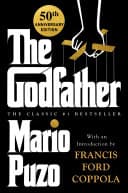
- The Godfather
Mario Puzo
4.4 (335k) average on GoodreadsThrillerFeatures a powerful, ruthless protagonist building an empire and the moral compromises involved.
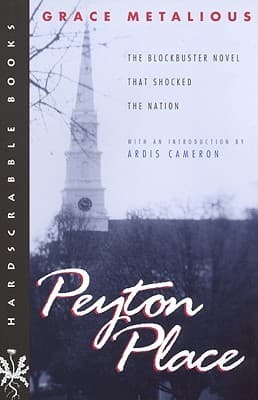
- Peyton Place
Grace Metalious
3.8 (10k) average on GoodreadsHistorical FictionBoth The Carpetbaggers and Peyton Place (1956) are landmark mid-century novels known for their scandalous content and commercial success. While Robbins focuses on the high-stakes world of Hollywood and corporate power, Metalious dissects the hidden secrets and hypocrisies of a seemingly idyllic New England town. Both challenged contemporary notions of propriety and revealed the darker sides of human nature. However, Peyton Place is often seen as having a slightly more nuanced social commentary on gender roles and small-town repression, whereas Robbins leans more heavily into pure spectacle and the hedonistic pursuits of his protagonist.
- To Kill a Mockingbird
Harper Lee
4.3 (4.5M) average on GoodreadsHistorical FictionIn the 1930s Jim Crow South, Harper Lee writes about racial injustice, moral growth, and the quiet courage of a lawyer father, Atticus Finch, as seen through his young daughter's eyes.
- The Great Gatsby
F. Scott Fitzgerald
3.9 (3.8M) average on GoodreadsHistorical FictionIn the opulent Roaring Twenties, a mysterious millionaire's lavish parties hide his desperate, tragic pursuit of a lost love, exposing the emptiness within the American Dream.
- Pride and Prejudice
Jane Austen
4.3 (3M) average on GoodreadsHistorical FictionIn a society focused on status and money, Elizabeth Bennet navigates love and pride, challenging Mr. Darcy and social expectations to find true affection.




Enjoyed the summary?
A summary gives you the shape of the book. The book itself has the detail, the examples and the voice.
Find The Carpetbaggers on AmazonAs an Amazon Associate, BookBrief earns from qualifying purchases. How we're funded