

Synopsis
Covers the whole plot, including the ending.
- Difficulty
- Medium
- Pacing
- Moderate
- Mood
- Somber, Reflective, Hopeful, Atmospheric
- Read it if
- You appreciate poignant literary fiction about the human spirit's resilience during wartime, with a focus on character and atmosphere.
- Skip it if
- You prefer fast-paced, action-driven war stories or are sensitive to bleak settings and the psychological toll of conflict.
The Cellist of Sarajevo Plot Summary
Covers the whole plot, including the ending.
The Mortar Attack and the Cellist's Vow
The novel opens in besieged Sarajevo, where a mortar shell hits a bread line, killing twenty-two people. From his apartment, an unnamed cellist sees the aftermath. Affected by the loss, he vows to sit at the explosion site in Veliki Park for twenty-two days and play Albinoni's Adagio in G Minor once a day, dedicating each performance to one of the victims. This act of defiance becomes a focal point for the city, even as it draws the attention of those who want to stop it.
Kenan's Perilous Water Run
Kenan, a middle-aged husband and father, faces daily terror as he goes on his weekly search for water. His journey requires him to cross sniper-infested streets to reach the brewery on the other side of the city. He carries several large plastic bottles, and their weight, combined with the constant threat, makes the trip hard and scary. Kenan struggles with the loss of his old life, the loss of trust, and the fear that paralyzes many. He avoids eye contact and conversation, focusing only on survival and providing for his family.
Dragan's Struggle with Memory and Humanity
Dragan, an older man whose wife and son have left Sarajevo, tries to navigate the dangerous streets to reach a bakery for food. He struggles with the siege's psychological toll, finding it hard to recognize familiar places or connect with people. The war has taken away his sense of community, leaving him isolated. He avoids the bridges, which are sniper targets, and tries to reconcile the city he knew with the war-torn place it has become. His journey is a quiet battle against despair and the normalization of violence.
Arrow's Assignment: Protecting the Cellist
Arrow, a young woman who uses a different name to distance herself from her past as a university student, is a skilled sniper for the Bosnian resistance. Her superior, Nermin, assigns her to protect the cellist playing in Veliki Park. Intelligence suggests a sniper in the hills plans to target the cellist. Arrow meticulously scouts the area, identifies enemy positions, and prepares to eliminate the threat, all while dealing with the morality of her role and the constant threat to her own life.
Kenan's Encounter at the Brewery
On one of his water runs, Kenan reaches the brewery and sees a woman he knew before the war. They share a brief moment of recognition. As he fills his bottles, a mortar shell lands nearby, shaking the building and causing panic. Kenan and others narrowly escape injury, showing the constant danger. This incident strengthens his fear and his resolve to finish his task, pushing aside the desire for connection in favor of survival.
Dragan's Bridge Encounter
Dragan, trying to cross an exposed bridge, sees a man shot by a sniper. The man falls, and Dragan, along with others, is paralyzed by fear, unable to help. The man dies on the bridge. This event affects Dragan deeply, forcing him to confront his passivity and the moral decay of the siege. He struggles with the memory of the dead man and the collective failure to help, questioning what remains of their shared humanity. The incident reinforces his isolation and the burden of his fear.
Arrow's Vigil and the Enemy Sniper
Arrow spends her days on rooftops, observing the hills and buildings around Veliki Park. She identifies the enemy sniper's likely position, a small window in a distant building. She recognizes the enemy's patience and skill. As the cellist plays daily, Arrow maintains her vigil, finger on the trigger, ready to act when the enemy shows himself. She feels responsible for the cellist's life, a symbol of defiance she must protect.
Kenan's Act of Kindness
During another water run, Kenan sees an elderly neighbor, Mrs. Ristovski, struggling with her water containers. Initially, his instinct is to avoid getting involved, driven by self-preservation. But he overcomes his fear and offers to help her carry her heavy bottles back to her apartment. This small act of kindness shows a momentary win over the fear and isolation in Sarajevo. It reminds him of the possibility of connection and the human spirit, even if briefly.
Dragan's Reconnection
Dragan, on his way to the bakery, meets an old friend, Emina, and her family. The meeting is awkward and painful, as they struggle to talk amid their current lives. Emina's daughter asks about Dragan's missing wife, bringing on grief and regret. This encounter forces Dragan to confront the emotional walls he has built and the changes war has made. It is a difficult but important step toward acknowledging the past and the humanity he has tried to suppress.
Arrow's Deadly Encounter
On the twenty-second day of the cellist's performance, as he begins to play, Arrow sees movement in the enemy's position. A deadly game of cat and mouse begins as both snipers try to gain an advantage. Arrow, using her knowledge of the terrain and her skill, outmaneuvers and eliminates the enemy sniper. The shot is precise and swift, ensuring the cellist's safety on his final day. This act shows Arrow's role as a protector, a necessary force in a world of violence.
The Cellist's Last Performance
With Arrow's successful intervention, the cellist finishes his twenty-second and final performance of Albinoni's Adagio. His act of musical defiance, a constant presence for almost a month, has become a symbol of resilience and hope for the people of Sarajevo. His music has resonated through the shattered streets, offering beauty and remembrance amid the destruction. Although the siege continues, his performance leaves a mark, reminding citizens of their shared humanity and art's power.
Life Continues Amidst the Ruins
After the cellist's final performance, life in Sarajevo continues under siege. Kenan still makes his dangerous water runs, but perhaps with a slightly renewed purpose. Dragan continues to navigate the city, carrying his memories but also with a faint hope for reconnection. Arrow, having done her duty, remains a silent guardian, showing the brutal necessities of war. The novel ends with the understanding that while the cellist's specific act has ended, the struggle for humanity, dignity, and survival in Sarajevo persists, changed by their experiences.
Principal Figures
The Cellist
Supporting
An unnamed musician who performs a daily memorial for twenty-two days.
The Cellist is an unnamed professional musician living in Sarajevo. He is deeply affected by the mortar attack on the bread line, which kills twenty-two people. In response, he makes a vow to play Albinoni's Adagio in G Minor at the site of the attack for twenty-two consecutive days, one for each victim. He represents the enduring power of art, resilience, and the human spirit in the face of immense suffering. His act is a silent, yet profound, protest against the violence and a symbol of hope for the city's inhabitants. He is a catalyst for the other characters' reflections and actions.
Kenan
Protagonist
A family man who risks his life daily to fetch water for his family.
Kenan is a husband and father struggling to survive and provide for his family during the siege. His primary objective is to make the perilous journey to the brewery for water, a task fraught with the constant threat of snipers and mortar shells. He is initially consumed by fear and isolation, avoiding interaction with others and focusing solely on his survival and his family's needs. His internal struggle involves battling the dehumanizing effects of war and reclaiming small acts of humanity.
Relationships: His family (He is a husband and father, providing for them)
Dragan
Protagonist
An elderly man grappling with the psychological toll of the siege and lost connections.
Dragan is an older man whose wife and son have left Sarajevo, leaving him feeling isolated and adrift. He struggles with the psychological impact of the siege, finding it hard to recognize his city or connect with people. He battles against the erosion of his memory and humanity, trying to hold onto a sense of the past. His journey to the bakery for food is as much a quest for meaning and connection as it is for sustenance, forcing him to confront the collective trauma and his own passivity.
Relationships: Emina (Old friend from before the war); His wife and son (Family members who have left Sarajevo)
Arrow
Protagonist
A highly skilled female sniper tasked with protecting the Cellist.
Arrow is a young, exceptionally skilled female sniper working for the Bosnian resistance. Her real name is Alisa, but she adopted 'Arrow' to separate her wartime identity from her former life as a university student. She is cold, efficient, and lethal, driven by a deep sense of justice and a desire to protect her city. She is tasked with safeguarding the Cellist from an enemy sniper, a mission that requires immense focus and precision. Despite her hardened exterior, she grapples with the moral weight of her actions and the loss of her former self.
Relationships: Nermin (Her superior officer and mentor)
Nermin
Supporting
Arrow's superior officer, who assigns her to protect the Cellist.
Nermin is Arrow's commanding officer within the Bosnian resistance. He is a pragmatic and experienced leader who recognizes Arrow's exceptional talent as a sniper. He gives Arrow the crucial assignment of protecting the Cellist, understanding the symbolic importance of the musician's act. Nermin represents the organized resistance and the strategic efforts to defend Sarajevo. He trusts Arrow implicitly and provides her with the necessary resources and intelligence.
Relationships: Arrow (Her superior officer)
Mrs. Ristovski
Mentioned
An elderly neighbor Kenan helps with water.
Mrs. Ristovski is an elderly woman whom Kenan encounters struggling to carry her water containers. Her presence provides Kenan with an opportunity to overcome his fear and perform an act of kindness. She represents the vulnerable population of Sarajevo and the quiet suffering endured by many. Her brief interaction with Kenan highlights the small but significant moments of human connection that still exist amidst the widespread desolation.
Relationships: Kenan (Neighbor who helps her)
Emina
Mentioned
An old friend of Dragan's, encountered at the bakery.
Emina is an old friend of Dragan's from before the war. He encounters her with her family at the bakery. Their interaction is strained and filled with unspoken grief, as they both struggle to reconcile their past friendship with the harsh realities of their present. Emina's presence forces Dragan to confront his emotional detachment and the painful memories of his pre-war life, serving as a catalyst for his slow return to connection.
Relationships: Dragan (Old friend)
Themes & Insights
The Resilience of the Human Spirit
This theme is central to the novel, shown through characters' daily struggles and acts of defiance. The Cellist's commitment to playing Albinoni's Adagio for twenty-two days is the most prominent example. It symbolizes art's power to go beyond violence and offer hope. Kenan's decision to help Mrs. Ristovski with her water, overcoming his fear, and Dragan's painful re-engagement with old friends, all show the human capacity for connection even under extreme pressure. The characters, though scarred, find ways to persist and assert their dignity.
“He will not allow them to make him like them. He will not allow them to take away his humanity. He will not allow them to make him afraid.”
The Dehumanizing Effects of War
The novel shows how war takes away identity, community, and empathy. Dragan's struggle to recognize his city and connect with people, his numbness to suffering, and his initial inability to help the man shot on the bridge, all show this. Kenan's fear, which isolates him and makes him avoid eye contact, shows how self-preservation can erode social bonds. Arrow, while effective, deals with the moral cost of her actions; her adopted name signifies the loss of her former self. The constant threat of death reduces individuals to mere survivors.
“He has learned that the world doesn't end, but that a new world is created in its place. One in which fear and hatred are the only common currency.”
The Power of Art and Memory
Art, specifically the Cellist's music, counters the violence and destruction. His daily performance of Albinoni's Adagio is an act of remembrance, mourning, and defiance, reminding citizens of their shared culture and the beauty that still exists. The music, despite its tragic origins, offers a message of renewal. Memory, both personal and collective, is also a force, with Dragan dealing with the past and Kenan reflecting on life before the siege, trying to hold onto what defines them beyond the war.
“The music, like the city, was a creation of man, and like the city, it could be destroyed. But it could also be rebuilt.”
Fear and Courage
Fear is a constant force in the characters' lives. Kenan's every step on his water run is driven by it, and Dragan is often paralyzed by it, leading to inaction. However, the novel also explores different forms of courage. The Cellist's courage is quiet and artistic, a defiant act of peace. Arrow's courage is active and lethal, a necessary violence to protect. Kenan's courage is found in small, personal acts of kindness that push back against his fear, showing that courage is not the absence of fear, but the decision to act despite it.
“He is afraid, but he walks. He is afraid, but he goes on. This is what it means to be alive.”
Plot Devices & Literary Techniques
Multiple Perspectives (Third-Person Limited)
Narrative shifts between three main characters to offer diverse experiences of the siege.
The novel employs a third-person limited omniscient perspective, primarily focusing on the internal thoughts and experiences of Kenan, Dragan, and Arrow. This allows the reader to deeply understand the individual psychological and physical tolls of the siege from varied viewpoints – a family man, an elderly loner, and a soldier. This structure highlights the universal nature of suffering and resilience while showcasing the different ways people cope with extreme adversity, creating a rich, multifaceted portrait of Sarajevo under siege.
The Cellist's Performance as a Central Symbol
The cellist's daily music acts as a unifying symbol of hope, defiance, and remembrance.
The Cellist's twenty-two-day performance of Albinoni's Adagio serves as the narrative's anchor and a powerful symbol. It represents the enduring human spirit, the power of art to transcend brutality, and a defiant act of remembrance against senseless death. His music is a constant, almost mythic, presence that influences and connects the other characters, even if they never meet him directly. It provides a focal point for the city's collective grief and hope, a beautiful, fragile counterpoint to the surrounding destruction.
The Unnamed Protagonists (Except Arrow's Alias)
Many characters are referred to by roles or aliases, emphasizing the universal experience of war.
The Cellist is never named, and Kenan and Dragan are only given their first names, which could be common. Arrow uses a pseudonym, 'Arrow.' This narrative choice universalizes the characters' experiences, suggesting they represent not just individuals but the countless citizens enduring the siege. It emphasizes that their struggles are shared, making their humanity relatable beyond specific identities. It also highlights the way war can strip away personal identity, reducing people to their roles in survival.
The Adagio in G Minor
A real musical piece with a history of destruction and reconstruction, mirroring Sarajevo's fate.
Albinoni's Adagio in G Minor is a real musical piece, famously reconstructed from fragments after the Dresden Music Library was firebombed during WWII. This historical context is crucial to the novel. The Adagio's history of destruction and rebirth directly mirrors the destruction of Sarajevo and the hope for its eventual reconstruction. It symbolizes the resilience of culture and humanity, suggesting that even from ruins, something beautiful and meaningful can be rebuilt. The Cellist's choice of this specific piece is therefore deeply symbolic and intentional.
The Cellist of Sarajevo Quotes
“He would play Albinoni's Adagio. Because it was the most beautiful thing he could think of.”
“It's not a question of whether you'll die. It's a question of when and how.”
“She is Arrow because she has to be. She is Arrow because she chooses to be.”
“The men on the hills don't care if you're a good person. They just want you dead.”
“He will play for twenty-two days, one day for each of the dead.”
“It's not about being brave. It's about not letting them win.”
“The city is a living thing, and it's dying.”
“She has become what she hates to fight what she hates.”
“Hope is a dangerous thing. It makes you forget how to be careful.”
“Music is the one thing that can't be taken from you.”
“You don't get to decide what you remember. You only get to decide what you do with it.”
“Sometimes the only way to stay human is to do something inhuman.”
“The water doesn't care who you are. It just flows.”
“They are trying to erase us, but we are still here.”
“Every day is a choice to live, not just to exist.”
Quiz
10 questions on the plot and the characters. Each answer comes with a short explanation.
Question 1
What event prompts the cellist to begin playing Albinoni's Adagio daily in the streets of Sarajevo?
- The destruction of his own home by a shell
- A mortar attack that kills twenty-two people in a bread line
- The death of his family members in the siege
- A sniper attack on a group of children
Show answer
B. A mortar attack that kills twenty-two people in a bread line The cellist witnesses a shell land in a bread line from his window, killing twenty-two people. This tragedy inspires him to play Albinoni's Adagio once a day for each victim in the hollow where the mortar fell, as a memorial.
Question 2
What is the primary reason Kenan risks his life weekly during the siege?
- To deliver messages for the resistance
- To collect water for his family and neighbors
- To search for food in abandoned buildings
- To protect the cellist from snipers
Show answer
B. To collect water for his family and neighbors Kenan makes a dangerous weekly journey across Sarajevo to fetch water from a brewery for his family and an elderly neighbor, highlighting the basic survival struggles during the siege.
Question 3
What is the significance of Albinoni's Adagio in the context of the novel?
- It was composed by the cellist himself during the siege
- It symbolizes hope as it was rebuilt from a fragment after being destroyed in a firebombing
- It is a traditional Bosnian folk song played at funerals
- It was banned by the snipers targeting the city
Show answer
B. It symbolizes hope as it was rebuilt from a fragment after being destroyed in a firebombing The Adagio was reconstructed from a fragment after its original score was destroyed in the Dresden Music Library firebombing. This act of rebuilding into something new gives the cellist hope, mirroring the novel's themes of resilience and renewal.
Question 4
Why does Dragan avoid talking to his old friends about life before the siege?
- He fears they have become informants for the enemy
- He is ashamed of his current impoverished state
- He is unwilling to acknowledge the divisions that have torn their city apart
- He believes it will bring bad luck to reminisce
Show answer
C. He is unwilling to acknowledge the divisions that have torn their city apart Dragan, like many characters, is paralyzed by fear and the trauma of the siege. He avoids conversations about the past because it forces him to confront how ethnic and political divisions have destroyed the former unity of Sarajevo, a key theme in the book.
Question 5
What task is Arrow specifically assigned in relation to the cellist?
- To deliver food and supplies to him daily
- To protect him from a hidden sniper trying to kill him
- To convince him to stop playing and seek safety
- To document his performances for propaganda purposes
Show answer
B. To protect him from a hidden sniper trying to kill him Arrow, a skilled female sniper, is asked by the resistance to protect the cellist from an enemy sniper who is targeting him as he plays his memorial. This assignment forces her to confront her own morality and purpose in the war.
Question 6
How does the novel primarily explore the theme of human dignity under duress?
- By depicting characters engaging in heroic battles against the enemy
- Through acts of kindness, resilience, and maintaining humanity in everyday survival
- By focusing on political negotiations to end the siege
- Through graphic descriptions of violence and suffering
Show answer
B. Through acts of kindness, resilience, and maintaining humanity in everyday survival The novel emphasizes dignity through small, persistent acts: the cellist's music as a memorial, Kenan's water-fetching for others, Dragan's cautious humanity, and Arrow's protective role. These actions show how characters retain their generosity and spirit despite extreme fear and danger.
Question 7
What internal conflict does Arrow face as a sniper assigned to protect the cellist?
- She struggles with jealousy over the cellist's public recognition
- She questions her identity and morality, having previously only killed enemy soldiers
- She fears being discovered as a woman in a male-dominated role
- She debates whether to abandon her post to search for her family
Show answer
B. She questions her identity and morality, having previously only killed enemy soldiers Arrow, who uses a pseudonym to distance herself from her actions, grapples with her role as a killer. Protecting the cellist—a non-combatant engaged in a peaceful act—forces her to reevaluate her purpose and the loss of her former self, adding depth to her character arc.
Question 8
In what way does the setting of the Siege of Sarajevo influence the characters' actions and mindsets?
- It leads them to embrace violent retaliation as the only solution
- It creates a constant state of fear and paralysis, affecting even simple daily tasks
- It encourages them to form large, organized community groups for safety
- It makes them indifferent to the suffering of others
Show answer
B. It creates a constant state of fear and paralysis, affecting even simple daily tasks The siege traps characters in a landscape of random violence (e.g., sniper fire on bridges). This pervasive danger causes fear and hesitation in actions like Kenan's water trips or Dragan's walks, illustrating how war disrupts normal life and psychology.
Question 9
What symbolic role does the cellist's music play for the other characters in the novel?
- It serves as a direct call to arms for the resistance movement
- It acts as a momentary reprieve and a reminder of beauty and humanity amid destruction
- It is largely ignored by the citizens as an irrelevant distraction
- It functions as a secret code for coordinating survival efforts
Show answer
B. It acts as a momentary reprieve and a reminder of beauty and humanity amid destruction The cellist's daily performances of Albinoni's Adagio create a fragile space of art and memory in the war-torn city. For characters like Kenan and Dragan, it symbolizes hope and the persistence of human spirit, offering a contrast to the surrounding violence and despair.
Question 10
How does the novel's structure, intertwining the stories of Kenan, Dragan, and Arrow, enhance its thematic impact?
- It provides a comprehensive military strategy of the siege
- It shows how individual struggles collectively portray the broader human experience of the siege
- It creates suspense by revealing that all three characters are secretly related
- It emphasizes the political divisions between different ethnic groups in Sarajevo
Show answer
B. It shows how individual struggles collectively portray the broader human experience of the siege By following Kenan (a family man fetching water), Dragan (a former baker navigating streets), and Arrow (a sniper protecting the cellist), the novel weaves together diverse perspectives on survival. This mosaic approach highlights universal themes of fear, dignity, and resilience without reducing the siege to a single narrative, enriching the portrayal of communal suffering and hope.
The Cellist of Sarajevo FAQ
What is 'The Cellist of Sarajevo' about?
The novel follows four characters during the 1990s Siege of Sarajevo: a cellist who vows to play Albinoni's Adagio for 22 days to honor victims of a mortar attack; Kenan, who risks his life weekly to fetch water for his family; Dragan, who navigates dangerous streets for a meal; and Arrow, a sniper tasked with protecting the cellist from an enemy marksman.
Why should I read 'The Cellist of Sarajevo'?
It offers a profound exploration of human resilience, dignity, and morality during wartime, blending historical context with intimate character studies. The novel's universal themes of hope, fear, and compassion resonate beyond its specific setting, making it a moving and thought-provoking read.
What is the background/setting of 'The Cellist of Sarajevo'?
Set during the Siege of Sarajevo in the 1990s, the story unfolds in a city under constant sniper fire and shelling, where basic survival is a daily struggle. The historical backdrop of the Bosnian War adds urgency and realism to the characters' experiences of fear and division.
What are the most memorable quotes?
Key quotes include the cellist's reflection on Albinoni's Adagio: 'It had been rebuilt by a different composer into something new and worthwhile,' symbolizing hope. Arrow's internal conflict is captured in: 'She will not become what they are,' highlighting her struggle to retain humanity.
What writing style does the author use?
Steven Galloway employs a spare, lyrical prose style that emphasizes the stark reality of war while infusing moments of beauty and introspection. The narrative alternates between the perspectives of Kenan, Dragan, and Arrow, creating a mosaic of survival and moral ambiguity.
What minor details add significant meaning?
The cellist's choice of Albinoni's Adagio—a piece reconstructed from a fragment after a firebombing—mirrors Sarajevo's own destruction and potential for rebirth. Kenan's meticulous water-collection routine underscores the fragility of daily life under siege.
What are some subtle foreshadowing moments?
Early descriptions of Arrow's precision as a sniper foreshadow her eventual role in protecting the cellist. Kenan's fear of crossing bridges hints at the constant threat of sniper attacks that pervades the novel's tension.
What unexpected character connections exist?
Though Kenan and Dragan never meet, their parallel journeys through the city—one for water, one for food—highlight shared vulnerabilities. Arrow's anonymous protection of the cellist creates an indirect bond between all characters, united by the cellist's act of defiance.
What are unspoken character motivations?
Kenan's water trips are driven by guilt and a need to prove his worth to his family. Dragan's avoidance of old friends stems from shame over his survival instincts. Arrow's acceptance of the protection mission masks her desire to reclaim a sense of purpose beyond killing.
What psychological complexities do characters exhibit?
Arrow grapples with dehumanization, using a pseudonym to distance herself from her sniper role. Kenan battles paralyzing fear yet pushes forward out of duty. Dragan's isolation reflects the war's erosion of trust and community bonds.
What are the major emotional turning points?
The cellist's decision to play after the mortar attack ignites a chain of hope. Arrow's moment of hesitation when targeting the enemy sniper questions her morality. Kenan's realization that his family's survival depends on his courage marks a personal breakthrough.
How do relationship dynamics evolve?
Kenan's relationship with his wife shifts from tension to mutual dependence as they face scarcity. Dragan's alienation from friends deepens, symbolizing the war's social fractures. Arrow's internal conflict with her commanders highlights the tension between duty and conscience.
Which parts remain ambiguous or open-ended?
The novel leaves the cellist's fate ambiguous—whether he survives the 22 days or is killed. Arrow's ultimate decision after her mission is unresolved, reflecting the ongoing moral uncertainties of war. The broader resolution of Sarajevo's siege is not detailed, focusing instead on personal endurance.
What are controversial scenes or decisions?
Arrow's role as a sniper, including her kills, sparks debate on the morality of violence in self-defense. The cellist's public performances, which risk drawing more attacks, raise questions about the value of art versus safety in wartime.
'The Cellist of Sarajevo' ending explained: how it ends & what it means
The novel concludes with the cellist completing his 22-day memorial, while Kenan, Dragan, and Arrow continue their struggles. The ending emphasizes resilience and the small acts of humanity that persist amid destruction, suggesting hope can endure even without clear resolution.
About the author

Steven Galloway is a Canadian author known for his fiction, particularly "The Cellist of Sarajevo," which explores themes of war and humanity. His work often delves into the impact of conflict on individual lives and has garnered attention for its poignant storytelling. Galloway has received various accolades for his writing throughout his career.
Similar books
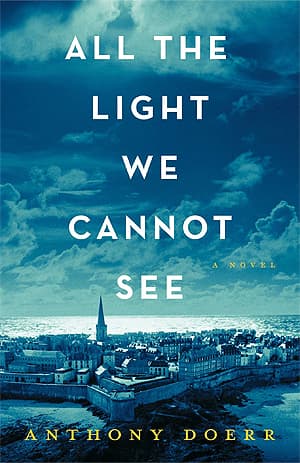
- All the Light We Cannot See
Anthony Doerr
4.3 (1M) average on GoodreadsHistorical FictionFeatures intertwined lives and the search for humanity amidst the devastation of war.
- The Book Thief
Markus Zusak
4.4 (1.8M) average on GoodreadsHistorical FictionPresents a unique perspective on life during wartime, emphasizing small acts of resistance and beauty.
- Austerlitz
W.G. Sebald
4.0 (14k) average on GoodreadsHistorical FictionWhile both novels explore the profound psychological impact of historical trauma, Sebald's Austerlitz employs a more melancholic, associative, and fragmented narrative style, often blending fiction with documentary elements and photographic inserts to create a meditation on memory and identity. Galloway's approach is more direct and character-driven, focusing on immediate survival and moral choices within a defined conflict, whereas Sebald delves into the long shadow of past events and the difficulty of historical retrieval.
- The Old Man and the Sea
Ernest Hemingway
3.8 (831k) average on GoodreadsLiterary FictionA Cuban fisherman's long struggle with a giant marlin becomes a story of endurance and dignity, now retold for young adults with illustrations, phonetic guides, and writing prompts in Traditional Chinese.
- One Hundred Years of Solitude
Gabriel García Márquez
4.1 (753k) average on GoodreadsLiterary FictionThrough the multi-generational story of the Buendía family, a mythical town deals with the repeating patterns of time, love, and solitude, as the extraordinary mixes with the ordinary.
- The Goldfinch
Donna Tartt
3.9 (720k) average on GoodreadsLiterary FictionHaunted by a tragic explosion and clutching a stolen Dutch masterpiece, a young orphan navigates the opulent drawing rooms of New York and the gritty underbelly of the art world, desperately seeking connection and redemption amidst a life spiraling into crime and obsession.



Enjoyed the summary?
A summary gives you the shape of the book. The book itself has the detail, the examples and the voice.
Find The Cellist of Sarajevo on AmazonAs an Amazon Associate, BookBrief earns from qualifying purchases. How we're funded