
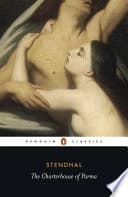
Synopsis
Covers the whole plot, including the ending.
- Difficulty
- Medium
- Pacing
- Variable
- Mood
- Romantic, Political, Introspective, Tragic
- Read it if
- You enjoy classic historical fiction with a focus on political intrigue, complex character relationships, and passionate romance set against the backdrop of post-Napoleonic Italy.
- Skip it if
- You prefer fast-paced plots and straightforward narratives without extensive political and social commentary or a protagonist whose moral compass is often questionable.
The Charterhouse of Parma Plot Summary
Covers the whole plot, including the ending.
Fabrizio's Napoleonic Fervor and Waterloo's Reality
The story begins with the French occupation of Milan in 1796, which greatly affects the young Fabrizio del Dongo. Born into a wealthy, noble family with strong royalist views, Fabrizio secretly admires Napoleon. When Napoleon returns from Elba in 1815, Fabrizio, then seventeen, decides to run away from his family's castle, Grianta, to join the emperor's army. He travels to France, full of romantic ideas of glory. He finds himself in the chaos of the Battle of Waterloo. His experience is not the heroic one he imagined; he is confused and sees the brutality of war without really understanding what is happening. He is arrested as a spy, escapes, and returns to Italy, disappointed by the reality of battle but still impulsive.
Return to Grianta and Political Persecution
After his unremarkable time at Waterloo, Fabrizio returns to Grianta. His family, especially his father and older brother Ascanio, view his actions with great suspicion. They fear he has harmed their standing with the Austrian authorities who now control Lombardy. Fabrizio's mother, the Marchesa del Dongo, and his aunt, Gina Sanseverina, are fiercely protective of him. Count Mosca, the Prime Minister of Parma and Gina's lover, tells Fabrizio to disappear for a while to avoid arrest. Gina, now the Duchess Sanseverina and a powerful figure in the court of Parma, uses her influence to help Fabrizio escape. She shows deep affection for her nephew, bordering on romantic.
Life in Parma and Ecclesiastical Career
Gina, the Duchess Sanseverina, brings Fabrizio to Parma, where she is important at the court of Prince Ranuccio-Ernesto IV. To protect him from political trouble and secure his future, she and Count Mosca arrange for Fabrizio to join the Church, even though he has no real religious calling. Fabrizio quickly moves up the church ranks, becoming an Archpriest and coadjutor with a future claim to the Archbishopric. However, his good looks and charm make him popular with the women of Parma. He struggles to follow the rules of his new job, often having romantic adventures that complicate his position and worry his aunt.
Clerics and Courtesans: Fabrizio's First Scandal
During his studies and church duties, Fabrizio starts an affair with an actress named Marietta. This leads to a fight with Giletti, a jealous actor who sees Marietta as his property. The encounter becomes a violent duel, and Fabrizio kills Giletti in self-defense. This causes a major scandal and gives Fabrizio's enemies at court, especially Prince Ranuccio-Ernesto IV and his favorite, Prime Minister Rassi, a chance to prosecute him. Fabrizio has to flee Parma to avoid arrest, again relying on the Duchess Sanseverina and Count Mosca to help him avoid justice and navigate the difficult political world.
Imprisonment in the Farnese Tower
Despite the Duchess's efforts to protect him, Fabrizio is eventually tricked into returning to Parma and arrested on false charges about Giletti's death. He is imprisoned in the Farnese Tower, a state prison. There, he meets and falls in love with Clelia Conti, the beautiful daughter of General Fabio Conti, the prison governor. They communicate in clever ways, including an alphabet using birds and gestures. Clelia, despite her strong religious beliefs and her father's loyalty to the Prince, is drawn to Fabrizio. Their love story grows during his captivity.
Gina's Vengeance and Fabrizio's Escape
Angry about Fabrizio's imprisonment and the Prince's refusal to pardon him, the Duchess Sanseverina vows revenge. She uses her political influence and charm to manipulate the Prince, subtly threatening to leave Parma, which would hurt his social standing. At the same time, she plans a complex escape for Fabrizio with help from Clelia, who gives him tools and information. Clelia is torn between her love for him and her duty to her father. Fabrizio successfully escapes the Farnese Tower, but Clelia, fearing punishment, promises the Madonna she will never see Fabrizio again if he returns to Parma.
Exile and Reconciliation Attempts
After his escape, Fabrizio hides, first in Bologna and then in Florence, always pursued by the Prince's agents. The Duchess Sanseverina, still in Parma, works tirelessly with Count Mosca to get Fabrizio a pardon. Her negotiations involve political maneuvering and personal sacrifices. Eventually, a deal is made, but it requires Fabrizio to pretend to be sick and return to the Farnese Tower for a short time, supposedly to recover. This creates a problem for Fabrizio, as it means he will be near Clelia again, but her vow means she cannot look at him, creating an emotional barrier between them despite their continued love.
The Prince's Death and Fabrizio's Return to Favor
Prince Ranuccio-Ernesto IV, a petty and vengeful ruler, suddenly dies, possibly poisoned. His son, Ernesto V, a more forgiving and easily swayed monarch, takes the throne. This change in power immediately improves Fabrizio's situation. The new Prince, advised by Count Mosca and the Duchess Sanseverina, grants Fabrizio a full pardon. Fabrizio returns to Parma and quickly becomes a popular and influential preacher, admired by the public despite his past scandals. He becomes the Archbishop of Parma, gaining power in the Church and at court, though his personal life remains complicated by his love for Clelia.
Clelia's Marriage and Secret Love
After Fabrizio's escape and her vow, Clelia marries the wealthy Marchese Crescenzi, a marriage arranged by her father. Despite her commitment to her husband and her religious beliefs, Clelia's love for Fabrizio remains strong. They continue their secret communication, often meeting in the dark so Clelia can keep her vow not to 'see' him. This secret affair leads to the birth of their son, Sandrino, whom they keep hidden. Clelia lives with constant guilt, torn between her love for Fabrizio, her marriage duties, and her religious conscience.
Tragedy and Renunciation
The secret life of Clelia and Fabrizio turns tragic when their son, Sandrino, gets sick and dies. The stress of keeping their affair secret, combined with the grief over their child's death, is too much for Clelia. She becomes very ill and dies, her last moments filled with regret and love for Fabrizio. Devastated by the loss of both Clelia and Sandrino, Fabrizio loses all interest in his worldly goals and the Parma court. He gives up his titles and retreats to the Charterhouse of Parma, a monastery, seeking solitude. He lives there for about a year, dying soon after, his life showing the mix of love, ambition, and fate.
Principal Figures
Fabrizio del Dongo
Protagonist
A naive and impulsive young Italian aristocrat, driven by romantic ideals and a constant search for love and glory.
Fabrizio is a handsome, charming, and headstrong young man from a noble Lombard family. Initially driven by a romanticized ideal of Napoleon, he experiences the disillusioning reality of Waterloo. Throughout the novel, he navigates the treacherous political landscape of Parma, often falling into trouble due to his impetuous nature and numerous love affairs. Despite entering the Church, he lacks genuine religious conviction, using his position more as a shield and a means to social standing. His deepest affections are for his aunt, Gina, and later, for Clelia Conti, with whom he shares a tragic love story. He is more a creature of passion than intellect, often guided by emotion.
Relationships: Gina Sanseverina (Devoted aunt and protector, with an unspoken, intense romantic affection for him.); Clelia Conti (His true love and the mother of his child, bound by a tragic and secret affair.); Count Mosca (Protector and political mentor, though often exasperated by Fabrizio's imprudence.); Marietta (A mistress, leading to his first major scandal.)
Gina Sanseverina (Duchess Sanseverina)
Supporting
Fabrizio's fiercely intelligent, devoted, and politically astute aunt, who manipulates the court of Parma for his benefit.
Gina del Dongo, initially Countess Pietranera, then Duchess Sanseverina, is a woman of extraordinary beauty, intelligence, and force of will. She is deeply devoted to her nephew, Fabrizio, with an affection that borders on the romantic and shapes her every action. After the death of her first husband, she forms a powerful alliance with Count Mosca, becoming his mistress and a central figure at the Parma court. She uses her charm, wit, and political acumen to protect Fabrizio from his enemies and advance his career, often at great personal cost. Her love for Fabrizio is the driving force of her life, leading her to extreme measures of manipulation and vengeance.
Relationships: Fabrizio del Dongo (Nephew, whom she loves with an intense, almost maternal and romantic devotion.); Count Mosca (Her lover and political partner, whom she respects but often uses for Fabrizio's benefit.); Prince Ranuccio-Ernesto IV (Her sovereign, whom she despises and manipulates.)
Count Mosca della Rovere
Supporting
The astute and cynical Prime Minister of Parma, deeply in love with Gina and a constant protector of Fabrizio.
Count Mosca is the Prime Minister of Parma, a highly intelligent, pragmatic, and cynical statesman. He is deeply in love with Gina Sanseverina and is willing to sacrifice much for her happiness and to protect Fabrizio, despite his own political ambitions and moral reservations. He is a master of political maneuvering and intrigue, constantly working to maintain his position and navigate the treacherous court. Though he often disapproves of Fabrizio's impulsive actions, he consistently uses his influence and power to shield him from the consequences. His love for Gina is the anchor of his life, and he endures her devotion to Fabrizio with a degree of resignation.
Relationships: Gina Sanseverina (His mistress and the love of his life, for whom he makes significant sacrifices.); Fabrizio del Dongo (Gina's nephew, whom Mosca protects out of love for Gina, often against his better judgment.); Prince Ranuccio-Ernesto IV (His sovereign, whom he serves but also manipulates.)
Clelia Conti
Supporting
The virtuous daughter of the prison governor, who falls tragically in love with Fabrizio while he is imprisoned.
Clelia Conti is the beautiful, intelligent, and deeply religious daughter of General Fabio Conti, the governor of the Farnese Tower. She is a woman of strong moral character and deep convictions, initially torn between her duty to her father and her burgeoning love for Fabrizio. Her love for Fabrizio leads her to betray her father and her principles, assisting in his escape. After his escape, she makes a vow to the Madonna never to 'see' Fabrizio again, a vow that dictates the tragic nature of their later secret relationship. She embodies the conflict between religious duty, family loyalty, and passionate love, ultimately succumbing to the emotional strain.
Relationships: Fabrizio del Dongo (The love of her life and father of her child, with whom she shares a tragic, secret affair.); General Fabio Conti (Her father, whom she betrays out of love for Fabrizio.); Marchese Crescenzi (Her husband, whom she marries out of duty.)
Prince Ranuccio-Ernesto IV
Antagonist
The petty, vain, and vindictive ruler of Parma, whose insecurities drive much of the court intrigue.
Prince Ranuccio-Ernesto IV is the sovereign of Parma, a character defined by his vanity, insecurity, and vindictiveness. He is deeply suspicious of anyone who might overshadow him, particularly the charismatic Duchess Sanseverina. His jealousy and desire to assert his authority often lead him to make arbitrary and cruel decisions, especially concerning Fabrizio's imprisonment. He is easily swayed by flattery and fear, making him a pawn in the larger game of court politics, despite his absolute power. His death ultimately clears the way for Fabrizio's rise.
Relationships: Gina Sanseverina (His most prominent courtier, whom he alternately admires and fears, and ultimately persecutes by imprisoning Fabrizio.); Count Mosca (His Prime Minister, whom he relies on but constantly suspects.); Fabrizio del Dongo (A target of his jealousy and vindictiveness.)
General Fabio Conti
Supporting
The loyal but vain governor of the Farnese Tower and Clelia's father, whose pride is easily manipulated.
General Fabio Conti is the governor of the Farnese Tower, the state prison, and Clelia's father. He is a man of immense pride in his position and the impregnability of his fortress, often to the point of vanity and foolishness. He is fiercely loyal to Prince Ranuccio-Ernesto IV and his duty, which places him in direct opposition to Fabrizio. His pride in the Farnese Tower makes him susceptible to manipulation by Gina, who exploits his vanity to aid Fabrizio's escape. He is ultimately a tragic figure, unknowingly betrayed by his own daughter.
Relationships: Clelia Conti (His daughter, whom he loves but whose actions he cannot control.); Prince Ranuccio-Ernesto IV (His sovereign, to whom he is fiercely loyal.)
Marchese Crescenzi
Supporting
Clelia's respectable and wealthy husband, a good man unknowingly caught in a tragic love triangle.
The Marchese Crescenzi is a wealthy and well-respected nobleman whom Clelia marries after Fabrizio's escape, largely out of duty and a desire to honor her father's wishes. He is presented as a good, kind, and devoted husband, entirely unaware of his wife's continued secret affair with Fabrizio. His character highlights Clelia's internal conflict and the moral compromises she makes. He represents the societal expectations and conventional life that Clelia attempts to embrace while her heart remains with Fabrizio.
Relationships: Clelia Conti (His wife, whom he loves and respects, unaware of her secret affair.); Fabrizio del Dongo (His rival in love, though he never knows it.)
Ernesto V
Mentioned
The young, more lenient successor to Prince Ranuccio-Ernesto IV, whose reign brings a change of fortune for Fabrizio.
Ernesto V is the son of Prince Ranuccio-Ernesto IV and his successor to the throne of Parma. Unlike his petty and vindictive father, Ernesto V is portrayed as a younger, less experienced, and more easily influenced ruler. His ascension to power, largely guided by Count Mosca and the Duchess Sanseverina, marks a significant turning point for Fabrizio, leading to his pardon and subsequent rise within the Church. He serves as a catalyst for the resolution of Fabrizio's political troubles, though his personality is less developed than his predecessor's.
Relationships: Count Mosca (His Prime Minister, who guides his early reign.); Gina Sanseverina (An influential courtier who advises him.)
Prime Minister Rassi
Antagonist
The Prince's sycophantic and cruel Minister of Justice, a tool for the court's vindictive actions.
Prime Minister Rassi is a key figure in Prince Ranuccio-Ernesto IV's court, serving as his Minister of Justice. He is depicted as a sycophantic, ambitious, and utterly unprincipled man, willing to carry out the Prince's every arbitrary and cruel command, especially regarding Fabrizio's prosecution and imprisonment. Rassi is a master of legal manipulation, twisting laws to suit the Prince's vendettas. He represents the corrupt and oppressive nature of the despotic court of Parma and serves as a direct antagonist to Fabrizio and the Duchess Sanseverina.
Relationships: Prince Ranuccio-Ernesto IV (His sovereign, whom he slavishly serves and flatters.); Fabrizio del Dongo (His legal adversary, whom he relentlessly persecutes.)
Themes & Insights
Love and Passion vs. Duty and Convention
This theme is central to the novel, especially in the lives of Fabrizio, Gina, and Clelia. Fabrizio's passionate nature often conflicts with his church vows and society's expectations. Clelia's deep love for Fabrizio directly opposes her religious vows and her duty as a wife, causing great guilt and ultimately her death. Gina's all-consuming, almost romantic love for Fabrizio drives her political schemes, often at the cost of her own happiness with Count Mosca. The characters often make choices based on strong emotion rather than social rules or moral duties, showing the power of uncontrolled passion.
“Love is like a fever; it comes and goes without the will having any part in the matter.”
Political Intrigue and Despotism
The novel clearly shows the corrupt and random nature of small Italian courts after Napoleon. The Parma court, under Prince Ranuccio-Ernesto IV, is full of jealousy, betrayal, and flattery. Power is used based on personal whims, not justice, and careers are made and broken by favor and manipulation. Count Mosca and Gina Sanseverina are experts at this game, always working to protect Fabrizio and keep their own positions. Fabrizio's imprisonment on false charges is a clear example of the oppressive power structure, where justice is a tool for the ruler's personal grudges.
“Politics in a small court is like a fly in a bottle; it buzzes and buzzes and never gets out.”
The Illusion vs. Reality of Glory
This theme starts with Fabrizio's romantic view of Napoleon and war. He rushes to Waterloo expecting glory but finds only chaos, confusion, and fear, without even understanding the battle's importance. This early disappointment sets a pattern for his life; his church career, though outwardly respected, is empty for him. He constantly seeks a romantic ideal, whether in war, love, or the Church, only to find reality more ordinary, brutal, or limiting. The novel questions the idea of heroism and the pursuit of grand ideals in a world run by minor power and self-interest.
“He had never understood the Battle of Waterloo; he had not seen it, and he had not heard it.”
Fate, Chance, and Free Will
The story often highlights how chance encounters and unexpected events shape the characters' lives. Fabrizio's presence at Waterloo, his fight with Giletti, and his imprisonment all happen because of a series of coincidences and sudden decisions. While characters like Gina and Count Mosca try to control things with careful planning, their efforts are often stopped or changed by unpredictable circumstances. This suggests a world where people are largely affected by forces beyond their control, even as they try to use their own will. The characters' lives show the unpredictable nature of fate.
“A man of genius is like a fish, he can only live in the sea of his own talent.”
Religion and Hypocrisy
Fabrizio's forced entry into the Church shows the theme of religious hypocrisy. He becomes an Archbishop without real faith, using his position for protection and social status. The religious institutions in Parma are linked with political power, often serving as a tool for control and advancement rather than spiritual guidance. Clelia, initially devout, finds her faith severely tested and compromised by her love for Fabrizio, leading to her tragic vow and later guilt. The novel critiques the superficiality of religious practice in a society where outward piety often hides worldly ambition and moral compromise.
“The Church, in Parma, was a career like any other, only more profitable and less dangerous.”
Plot Devices & Literary Techniques
The Farnese Tower
A symbolic prison representing the despotic power of the state and a catalyst for true love.
The Farnese Tower is not merely a physical prison for Fabrizio; it serves as a potent symbol. It represents the oppressive and arbitrary power of the Parma regime, designed to crush individual freedom. Ironically, within its confines, Fabrizio experiences genuine love for the first time with Clelia Conti. The tower, an instrument of suppression, becomes the setting for their passionate, illicit courtship, making it a place of both confinement and profound connection. Its 'impregnability' is a point of pride for General Conti, which Gina cleverly exploits.
Epistolary Communication (Written Notes and Secret Alphabets)
A narrative technique used to convey secret affections and advance clandestine plots.
Throughout the novel, secret messages, notes, and even an alphabet spelled out with fingers or birds are crucial for advancing the plot and developing relationships. Fabrizio and Clelia's courtship in the Farnese Tower relies entirely on these clandestine forms of communication, highlighting the intensity and forbidden nature of their love. Gina also uses notes and letters to orchestrate Fabrizio's escape and conduct her political intrigues. This device underscores the pervasive atmosphere of secrecy, danger, and manipulation within the Parma court and within the characters' personal lives.
The Battle of Waterloo
A historical event serving as an anti-climactic initiation into the harsh realities of life.
Stendhal's depiction of the Battle of Waterloo is highly unconventional. Instead of a grand, heroic tableau, Fabrizio experiences it as a confusing, disorienting, and largely meaningless event. He is a passive observer, witnessing chaos and brutality without understanding the larger strategic context. This anti-heroic portrayal serves as Fabrizio's brutal initiation into reality, shattering his romantic illusions of glory and setting the stage for his subsequent disillusionment with the world. It is a pivotal moment that defines his naive character and foreshadows the gap between his ideals and reality.
The Role of the Church
A societal institution used as a means of political protection and social advancement rather than spiritual devotion.
In 'The Charterhouse of Parma,' the Church is presented primarily as a secular institution, a career path, and a political tool. Fabrizio enters the Church not out of faith, but for protection from his enemies and to secure a prestigious position, orchestrated by Gina and Count Mosca. His rapid ascent to Archbishop, despite his numerous scandalous affairs and lack of piety, exposes the hypocrisy and worldliness of the ecclesiastical hierarchy. The Church provides a facade of respectability and power, allowing characters to navigate the treacherous political landscape of Parma while their true motivations remain entirely secular.
The Charterhouse of Parma Quotes
“The first duty of a man is to be ambitious; the second, to conceal it.”
“Politics in a literary work are a pistol shot in the middle of a concert, something loud and vulgar, and yet a thing to which it is not possible to refuse one's attention.”
“Love is the miracle of civilization.”
“To be happy, one must have a certain amount of ignorance and a good deal of courage.”
“The only way to be happy is to love. If you don't know how to love, you'll never be happy.”
“In Italy, one is punished for the good actions as well as for the bad.”
“A great passion is a great misfortune.”
“The art of pleasing is the art of deceiving.”
“One must never despair; one never knows what the next day may bring.”
“The heart has its reasons which reason knows nothing of.”
“To govern is to choose.”
“The greatest happiness is to be loved for oneself.”
“Life is a comedy to those who think, a tragedy to those who feel.”
“In love, everything is true, everything is false; it is the only subject on which one cannot express an absurdity.”
Quiz
10 questions on the plot and the characters. Each answer comes with a short explanation.
Question 1
What historical event does Fabrizio del Dongo enthusiastically but naively participate in at the beginning of the novel?
- The French Revolution
- The Battle of Waterloo
- The Italian Unification
- The Napoleonic invasion of Russia
Show answer
B. The Battle of Waterloo Fabrizio, driven by youthful idealism and defiance of his conservative father, travels to join Napoleon's forces and stumbles into the Battle of Waterloo, though he is ill-prepared for the reality of war.
Question 2
Who is Fabrizio's aunt who becomes a central figure in his life and the political intrigues of the novel?
- Countess Mosca
- Gina
- Clelia
- Marietta
Show answer
B. Gina Gina, also known as the Duchess of Sanseverina, is Fabrizio's aunt who uses her influence and romantic entanglements, particularly with Count Mosca, to navigate the treacherous court politics of Parma and protect Fabrizio.
Question 3
After Waterloo, where does Fabrizio return to, leading to his involvement in amorous and political adventures?
- Rome
- Paris
- Milan
- Naples
Show answer
C. Milan Following the advice to retreat from the chaos of war, Fabrizio sneaks back to Milan, where his impulsive nature and connections plunge him into romantic exploits and the political machinations orchestrated by his aunt Gina.
Question 4
What is the primary setting for the political intrigues involving Fabrizio, Gina, and Count Mosca in the latter part of the novel?
- The French court in Paris
- The Austrian Empire
- The Italian court of Parma
- The Papal States in Rome
Show answer
C. The Italian court of Parma Much of the novel's drama unfolds in the small, autocratic court of Parma, where Gina and Count Mosca wield influence, and Fabrizio becomes entangled in its corrupt and dangerous politics.
Question 5
Which character is described as Gina's 'wily lover' and plays a key role in the political chicanery of the court?
- Prince Ernesto
- Fabrizio del Dongo
- Count Mosca
- General Pietranera
Show answer
C. Count Mosca Count Mosca is Gina's lover and a shrewd political operator in the court of Parma. He uses his position and cunning to manipulate events, often to protect or advance Fabrizio's interests.
Question 6
What major theme in the novel is highlighted by Fabrizio's disillusionment after the Battle of Waterloo?
- The corruption of the clergy
- The clash between idealism and reality
- The importance of family loyalty
- The inevitability of fate
Show answer
B. The clash between idealism and reality Fabrizio's naive enthusiasm for war and glory contrasts sharply with the chaotic and grim reality of Waterloo, illustrating the novel's exploration of how youthful ideals are often shattered by harsh experiences.
Question 7
Why does Fabrizio's father oppose his decision to fight for Napoleon?
- He fears Fabrizio will be killed in battle
- He is a staunch supporter of the Austrian Empire
- He is a right-wing conservative who despises Napoleon's liberal ideals
- He wants Fabrizio to focus on his religious studies
Show answer
C. He is a right-wing conservative who despises Napoleon's liberal ideals Fabrizio's father is a right-wing aristocrat who views Napoleon as a revolutionary threat to the old order. This political opposition fuels Fabrizio's rebellious desire to join Napoleon's cause.
Question 8
Which famous author praised 'The Charterhouse of Parma' as the most important French novel of its time?
- Victor Hugo
- Gustave Flaubert
- Honoré de Balzac
- Émile Zola
Show answer
C. Honoré de Balzac Honoré de Balzac, a contemporary and fellow novelist, wrote a famous review hailing Stendhal's work as a masterpiece, which helped establish its reputation in French literature.
Question 9
How does the novel blend genres, as suggested by its description?
- It combines science fiction with historical drama
- It merges court intrigues with the romance and excitement of youth
- It integrates horror elements into a political thriller
- It fuses mystery with philosophical treatise
Show answer
B. It merges court intrigues with the romance and excitement of youth The novel is noted for its rich blend of the political machinations in the Italian court (intrigues) and the personal, often impulsive, romantic and adventurous experiences of the young protagonist Fabrizio.
Question 10
What aspect of Fabrizio's character primarily drives the plot forward after his return from Waterloo?
- His religious devotion and desire for penance
- His impetuous nature and series of amorous exploits
- His ambition to become a powerful political leader
- His scholarly pursuit of historical knowledge
Show answer
B. His impetuous nature and series of amorous exploits Fabrizio's headstrong and impulsive behavior leads him into numerous romantic entanglements, which, combined with the political schemes of Gina and Count Mosca, form the core of the novel's narrative development.
The Charterhouse of Parma FAQ
What is 'The Charterhouse of Parma' about?
The novel follows the young Italian aristocrat Fabrizio del Dongo, who defies his conservative father to fight for Napoleon at the Battle of Waterloo. After his disillusioning war experience, he returns to Milan and becomes entangled in romantic adventures and political intrigues orchestrated by his aunt Gina and her lover, navigating the treacherous courts of post-Napoleonic Italy.
Why should I read 'The Charterhouse of Parma'?
Balzac called it the most important French novel of its time for its masterful blend of historical realism, psychological depth, and romantic adventure. It offers a vivid portrayal of post-Napoleonic Italian politics, complex character studies, and a critique of idealism versus reality, all wrapped in Stendhal's engaging, fast-paced narrative.
What is the background/setting of 'The Charterhouse of Parma'?
Set primarily in post-Napoleonic Italy during the early 19th century, the novel moves from the Battle of Waterloo in 1815 to the courts of Milan and Parma. It depicts the political turmoil of the Restoration era, where Austrian influence clashes with Italian nationalism, and aristocratic intrigue dominates small states like Parma.
What are the most memorable quotes?
Notable quotes include Fabrizio's reflection on war: 'What! Is this all there is to a battle?' after Waterloo, and Stendhal's narrator remarking on politics: 'Politics in a literary work are a pistol-shot in the middle of a concert.' These capture the novel's themes of disillusionment and the intrusion of reality into romantic ideals.
What writing style does the author use?
Stendhal employs a brisk, ironic, and psychologically acute style, blending historical detail with romantic adventure. His narration is often detached and analytical, using free indirect discourse to delve into characters' inner thoughts while maintaining a satirical edge toward political and social hypocrisy.
What minor details add significant meaning?
Fabrizio's initial enthusiasm for war, symbolized by his naive purchase of a fine horse before Waterloo, contrasts sharply with his later disillusionment. Similarly, the recurring motif of prison imagery—from Fabrizio's imprisonment in the Farnese Tower to his eventual retreat to the Charterhouse—underscores themes of confinement and spiritual escape.
What are some subtle foreshadowing moments?
Early scenes where Fabrizio impulsively falls in love foreshadow his later romantic entanglements that lead to political danger. His aunt Gina's manipulative skills, shown in minor court intrigues, hint at her larger role in orchestrating his fate. The chaotic, confusing depiction of Waterloo prefigures the novel's overall theme of life's unpredictability.
What unexpected character connections exist?
Fabrizio's love interest, Clelia Conti, is the daughter of General Conti, the governor of the prison where Fabrizio is held, creating a tense dynamic between romance and authority. Additionally, Gina's lover, Count Mosca, is a powerful minister who becomes both a protector and a rival to Fabrizio, weaving personal and political loyalties tightly together.
What are unspoken character motivations?
Fabrizio's quest for glory masks a deeper search for identity and purpose beyond his aristocratic upbringing. Gina's manipulations are driven not just by political ambition but by a repressed maternal love for Fabrizio and a desire to control his destiny. Count Mosca's support for Fabrizio stems from his love for Gina and a pragmatic need to maintain influence.
What psychological complexities do characters exhibit?
Fabrizio evolves from naive idealism to weary disillusionment, grappling with the clash between romantic dreams and harsh realities. Gina displays a mix of cunning, vulnerability, and possessive affection, while Clelia struggles between duty to her father and passion for Fabrizio, reflecting the novel's exploration of inner conflict and societal constraints.
What are the major emotional turning points?
Key moments include Fabrizio's shocking realization at Waterloo that war is chaotic and unheroic, his imprisonment in the Farnese Tower where he falls in love with Clelia, and the death of his child with Clelia, which leads to his spiritual crisis. Gina's orchestration of Fabrizio's escape from prison also marks a pivotal shift in their relationship dynamics.
How do relationship dynamics evolve?
Fabrizio and Gina's relationship shifts from aunt-nephew affection to a complex bond where Gina acts as a surrogate mother and political schemer. Fabrizio's romance with Clelia grows from forbidden love during his imprisonment to a tragic union overshadowed by guilt and loss. Count Mosca's role evolves from Gina's lover to a father figure for Fabrizio, balancing loyalty and rivalry.
Which parts remain ambiguous or open-ended?
The novel's ending, where Fabrizio retreats to the Charterhouse after Clelia's death, leaves his spiritual redemption ambiguous—is it genuine peace or mere escape? Additionally, Gina's ultimate motivations and happiness are unresolved, as she remains entangled in court politics despite her sacrifices for Fabrizio.
What are controversial scenes or decisions?
Fabrizio's impulsive decision to fight for Napoleon, despite his family's opposition, sparks debate on idealism versus recklessness. Gina's manipulation of the court to free Fabrizio from prison raises ethical questions about means versus ends. The tragic outcome of Fabrizio and Clelia's secret relationship, leading to their child's death, is often critiqued for its bleak realism.
'The Charterhouse of Parma' ending explained: how it ends & what it means
The novel ends with Fabrizio withdrawing to the Charterhouse (a Carthusian monastery) after Clelia's death, seeking spiritual solace. This conclusion symbolizes his rejection of worldly ambitions and political intrigue, representing a retreat into asceticism as a response to life's disillusionments. It reflects Stendhal's theme that true peace may lie outside society's corrupting influences.
About the author
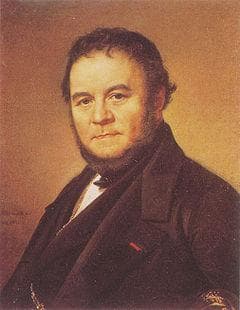
Marie-Henri Beyle, better known by his pen name Stendhal, was a 19th-century French writer. Best known for the novels Le Rouge et le Noir and La Chartreuse de Parme, he is highly regarded for the acute analysis of his characters' psychology and considered one of the early and foremost practitioners of realism. A self-proclaimed egotist, he coined the same characteristic in his characters' "Beylism".
Similar books
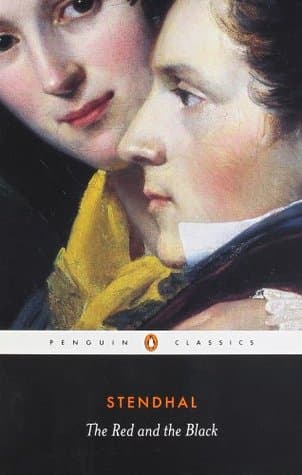
- The Red and the Black
Stendhal
3.9 (57k) average on GoodreadsHistorical FictionExplores ambition, social climbing, and romantic entanglements in post-Napoleonic France with a similar psychological depth.
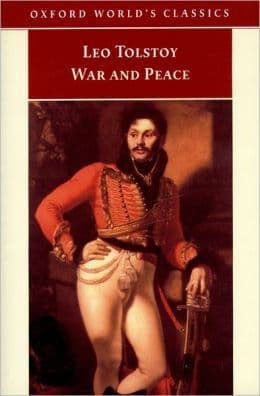
- War and Peace
Leo Tolstoy
4.1 (265k) average on GoodreadsHistorical FictionFeatures a young protagonist's journey through the Napoleonic Wars and subsequent societal challenges, blending historical epic with personal drama.
- Les Misérables
Victor Hugo
4.2 (683k) average on GoodreadsHistorical FictionOffers a grand narrative of love, politics, and social justice in 19th-century France, with a focus on individual destinies amidst broader historical events.
- Waverley
Walter Scott
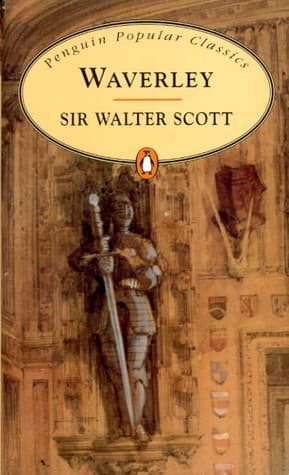
3.4 (5k) average on GoodreadsHistorical FictionThe Charterhouse of Parma can be seen as a direct counterpoint to Scott's historical novels like Waverley (1814). While Scott meticulously reconstructs historical periods with broad strokes and detailed settings, Stendhal prioritizes the subjective experience of history. Fabrizio's bewildered participation in Waterloo is a stark contrast to Scott's often more romanticized and detailed depictions of battles and historical figures. Stendhal focuses on the psychological impact of history on individuals, rather than history as a grand, external force.
- To Kill a Mockingbird
Harper Lee
4.3 (4.5M) average on GoodreadsHistorical FictionIn the 1930s Jim Crow South, Harper Lee writes about racial injustice, moral growth, and the quiet courage of a lawyer father, Atticus Finch, as seen through his young daughter's eyes.
- The Great Gatsby
F. Scott Fitzgerald
3.9 (3.8M) average on GoodreadsHistorical FictionIn the opulent Roaring Twenties, a mysterious millionaire's lavish parties hide his desperate, tragic pursuit of a lost love, exposing the emptiness within the American Dream.


Enjoyed the summary?
A summary gives you the shape of the book. The book itself has the detail, the examples and the voice.
Find The Charterhouse of Parma on AmazonAs an Amazon Associate, BookBrief earns from qualifying purchases. How we're funded