
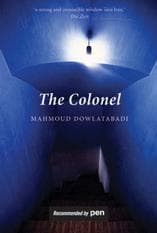
Synopsis
Covers the whole plot, including the ending.
- Difficulty
- Hard
- Pacing
- Slow
- Mood
- Dark, Melancholic, Philosophical, Intense, Disillusioned
- Read it if
- You are interested in a deeply philosophical and politically charged narrative about the aftermath of revolution, profound grief, and the disillusionment of an individual caught in historical upheaval.
- Skip it if
- You prefer fast-paced plots, lighthearted themes, or narratives with clear-cut heroes and villains, or find extensive internal monologues challenging.
The Colonel Plot Summary
Covers the whole plot, including the ending.
The Summons
On a torrential, pitch-black night in a small Iranian town, an aging Colonel is lost in agonizing memories. He recalls his deceased wife, the tragic fates of historical patriots, and the fractured political allegiances of his five children who joined the 1979 Iranian Revolution. The oppressive silence of his house is shattered by a knock. Two young policemen stand at his door. They inform the Colonel that his youngest daughter, Parvaneh, has been killed. He must come to collect her tortured body from the morgue and bury her before dawn. The revolution, once a beacon of hope, has turned on its own, demanding a grim sacrifice from his family.
The Morgue and the Burial
The Colonel, accompanied by his surviving son, Amir, makes the somber journey through the rain-soaked streets to the morgue. There, he confronts the horrific reality of Parvaneh's death: her body bears signs of brutal torture. The authorities, cold and indifferent, pressure him to bury her swiftly and silently, minimizing any public display of dissent or mourning. The Colonel and Amir are forced to carry out the burial themselves, digging a grave in the pre-dawn darkness. The act shows their grief and the oppressive atmosphere that stifles even basic human rights, stripping them of dignity in their sorrow.
Amir's Confession and Political Tensions
As they bury Parvaneh, Amir confesses to his father that he, too, was involved with revolutionary groups, though he has now distanced himself. This revelation deepens the Colonel's despair, showing how much his children were consumed by political fervor. He reflects on his other children: Hossein, a communist; Faezeh, an Islamist; and two other sons, one a leftist, the other a nationalist. The family, once a cohesive unit, has been torn apart by the ideologies they embraced, mirroring the broader societal divisions that the revolution both exposed and worsened. The burial becomes a physical symbol of their fractured lives.
Memories of the Past and the Wife
Throughout the night, the Colonel's mind often returns to his deceased wife, a woman he deeply loved and respected. He recalls their life together, a time when their children were young and full of promise, before the revolution changed their paths. He remembers his wife's quiet strength and her attempts to hold the family together amidst his own military career and the growing political unrest. These memories are tinged with both nostalgia and regret, as he grapples with the 'what ifs' and the feeling that he failed to protect his loved ones from the encroaching political storm that ultimately claimed their lives and ideals. Her absence is a constant ache.
The Colonel's Political Education
The Colonel's internal monologue delves into his own past as a military officer and his disillusionment with various political movements throughout Iranian history. He recalls his youthful idealism, his military training, and the numerous coups, counter-coups, and political betrayals that have plagued the nation. He is a man who has witnessed the cyclical nature of revolutionary zeal and its subsequent descent into repression. His reflections are not just personal but also a broader critique of the Iranian left's historical missteps, their infighting, and their inability to forge a lasting, stable, and just society. He questions the very idea of 'revolution' and its inevitable cost.
The Fate of Hossein
The Colonel's thoughts are heavily preoccupied with his son, Hossein, a communist who dedicated his life to the cause. He remembers Hossein's intellectual rigor, his conviction, and his ultimate demise at the hands of the revolutionary regime he initially supported. Hossein's story embodies the tragic irony of the revolution destroying its own, as those who fought for change often became its first victims. The Colonel grapples with the futility of Hossein's sacrifice, questioning whether his son's idealism was a naive dream leading to destruction, or a necessary, though doomed, struggle for justice. His son's death haunts him deeply.
Faezeh's Devotion and Disillusionment
Faezeh, the Colonel's daughter who embraced the Islamic revolutionary ideals, also occupies his thoughts. He understands her initial fervor and devotion to what she believed was a righteous cause. However, he also senses her eventual disillusionment as the revolution became something more rigid and oppressive than she might have envisioned. While her fate is not explicitly detailed as Parvaneh's or Hossein's, the Colonel's contemplation suggests a similar tragic trajectory, either through imprisonment, execution, or a profound loss of self within the new order. Her story represents another facet of his children's revolutionary entanglement and its devastating aftermath.
The Meaning of Sacrifice
As the night progresses and the burial concludes, the Colonel is consumed by the question of what his children's sacrifices truly achieved. He sees the revolution's promise dissolve into a new form of tyranny, and the ideals his children fought for seemingly betrayed. He struggles to find meaning in their deaths, particularly Parvaneh's brutal end, and wonders if their lives were merely pawns in a larger, destructive political game. This existential crisis extends beyond his personal grief, encompassing a broader critique of the cyclical violence and unfulfilled promises that have characterized Iran's modern history. He seeks a reason, but finds only despair.
The Colonel's Internal Trial
Amidst his grief and anger, the Colonel conducts an internal trial, examining his own role in the unfolding tragedy. He questions whether his own political detachment, his military background, or his inability to steer his children away from radical ideologies contributed to their fates. He grapples with a deep sense of guilt, wondering if he could have done more to protect them or to guide them towards a different path. This self-recrimination is a central emotional current, highlighting his struggle not only with external political forces but also with his personal failures as a father and a citizen in a turbulent nation.
The Dawn and Lingering Despair
As the first rays of dawn pierce the dark, rainy sky, the burial is complete. The Colonel returns to his desolate home, carrying the weight of his profound loss and the bitter realization that the revolution, which promised liberation, has instead brought only more suffering and death to his family and his nation. The physical act of burying Parvaneh is over, but the emotional and psychological burial of his hopes and dreams for his children, and for Iran, continues. He is left alone with his memories, his grief, and the chilling understanding that the cycle of violence and betrayal shows no sign of abating, leaving him in an unending state of despair.
Principal Figures
The Colonel
Protagonist
An aging, disillusioned former military officer haunted by his family's revolutionary sacrifices.
The Colonel is an unnamed, elderly former military officer, a patriarch burdened by an immense personal and historical tragedy. He is a man of deep intellect and reflection, constantly analyzing the political landscape of Iran and its cyclical failures. His memories are a torrent of historical events, personal losses, and philosophical musings. He embodies the disillusioned intellectual, critical of both the Shah's regime and the subsequent Islamic Revolution, and deeply pained by the fate of his five children, all of whom were swept up in the revolutionary fervor. His stoicism masks profound grief and a relentless self-interrogation.
Relationships: His Wife (Deceased, deeply loved and respected, a symbol of lost domestic peace.); Parvaneh (Youngest daughter, brutally murdered by the regime, her death is the catalyst for the narrative.); Amir (Surviving son, somewhat disillusioned but still involved, shares the burden of burial.); Hossein (Deceased communist son, a source of pride and profound grief for his idealism and tragic end.); Faezeh (Daughter who embraced Islamism, her fate is uncertain but equally tragic in the Colonel's eyes.)
Parvaneh
Mentioned/Catalyst
The Colonel's youngest daughter, a victim of revolutionary violence.
Parvaneh is the Colonel's youngest daughter, whose brutal torture and death at the hands of the Islamic Revolutionary regime serve as the inciting incident for the entire narrative. Though she appears only as a corpse, her presence is profoundly felt. She represents the innocent victims, the 'children' devoured by the revolution they may or may not have fully understood or supported. Her death is not just a personal tragedy for the Colonel but a symbolic indictment of the revolution's brutality and its betrayal of its own ideals. Her body tells a silent, horrific story of state-sanctioned violence.
Relationships: The Colonel (Her father, who must bury her and grapple with her death.); Amir (Her brother, who assists in her burial.)
Amir
Supporting
The Colonel's surviving son, who aids in the burial and shares his father's disillusionment.
Amir is one of the Colonel's surviving sons, who accompanies his father to retrieve and bury Parvaneh's body. He reveals his own past involvement with revolutionary factions, though he has now retreated from active participation. Amir represents a generation that experienced the revolution's initial fervor and subsequent disillusionment firsthand. He is weary, somber, and shares his father's quiet despair, though perhaps less burdened by historical context. His presence provides a tangible connection for the Colonel to the present tragedy, and his confession highlights the pervasive reach of political ideologies into every family.
Relationships: The Colonel (His father, with whom he shares the burden of grief and burial.); Parvaneh (His deceased sister.)
Hossein
Mentioned
The Colonel's communist son, a fervent revolutionary who died for his ideals.
Hossein is the Colonel's deceased communist son, a figure of intellectual rigor and unwavering conviction. He represents the passionate, ideologically driven youth who genuinely believed in the revolutionary cause and were willing to die for it. His story embodies the tragic irony of the revolution consuming its own, as he likely perished at the hands of the very forces he helped bring to power. For the Colonel, Hossein is a symbol of both noble idealism and profound, wasted sacrifice, prompting his father to question the ultimate efficacy and cost of revolutionary struggle.
Relationships: The Colonel (His father, who deeply mourns his loss and questions his sacrifice.)
Faezeh
Mentioned
The Colonel's daughter who embraced Islamic revolutionary ideals.
Faezeh is the Colonel's daughter who, unlike her leftist brothers, embraced the tenets of the Islamic Revolution. She represents the other side of the revolutionary coin, a segment of society equally driven by conviction but aligned with the ultimately victorious faction. Her fate is left somewhat ambiguous, but the Colonel's contemplation suggests a similar trajectory of disillusionment or suffering within the new order, perhaps through ideological rigidity or the suppression of individual thought. She highlights the family's deep ideological divisions and the all-encompassing nature of the political upheaval.
Relationships: The Colonel (Her father, who reflects on her choices and likely fate.)
His Wife
Mentioned
The Colonel's deceased wife, a symbol of lost domestic harmony and resilience.
The Colonel's deceased wife appears only in his memories, yet her presence is vital. She represents a bygone era of domestic peace, stability, and quiet strength. She was the anchor of the family, attempting to maintain normalcy amidst the Colonel's military career and the growing political unrest that would eventually tear their family apart. Her memory is a source of both comfort and profound regret for the Colonel, as he laments her absence and the peace she represented. She is a symbol of what was lost to the revolution.
Relationships: The Colonel (Her husband, who deeply mourns her and reflects on their shared past.)
The Policemen
Supporting
Representatives of the new revolutionary authority.
The two young policemen who summon the Colonel are faceless, nameless representatives of the new revolutionary regime's cold authority. They embody the impersonal, bureaucratic brutality of the state, delivering devastating news with an air of detached efficiency. Their youthfulness contrasts sharply with the Colonel's age and experience, highlighting the generational shift in power and the revolution's complete takeover of societal control. They are agents of repression, enforcing the swift, silent disposal of 'undesirables,' and their presence underscores the pervasive fear and control exerted by the new government.
Relationships: The Colonel (They are the bearers of bad news and enforcers of the state's will upon him.)
Themes & Insights
The Revolution Devouring Its Children
This theme is central to the novel, appearing most starkly in the death of Parvaneh and Hossein. Revolutionary ideals, initially embraced by many, turn into a brutal system that persecutes and executes those who once championed it or those who simply do not conform. The Colonel's children, representing different facets of the Iranian left and even Islamism, are all consumed by the very movement they believed in. This theme highlights the betrayal and cyclical violence often found in revolutions, where the pursuit of a new order leads to the destruction of its own proponents.
“The Islamic Revolution, like every other revolution in history, is devouring its own children.”
Disillusionment and Betrayal of Ideals
The novel is steeped in the disillusionment felt by the Colonel and implicitly by his children as the revolution's promise of freedom and justice devolves into repression and tyranny. The ideals of communism, nationalism, and even early Islamism are shown to be corrupted or co-opted, leading to a profound sense of betrayal. The Colonel's historical reflections show a pattern of unfulfilled promises and the cyclical nature of political failure in Iran, where each new movement ultimately fails to deliver on its grand visions, leaving only a trail of suffering and broken dreams.
“Whose fault is that?”
The Burden of History and Memory
The Colonel is constantly immersed in his memories, both personal and historical. The narrative is fragmented, jumping between the present act of burying Parvaneh and the Colonel's recollections of his wife, his children's political awakenings, and the broader sweep of Iranian political history. This constant interplay between past and present illustrates how history is not merely a backdrop but an active, oppressive force shaping individual lives. The Colonel's inability to escape his memories signifies the enduring burden of Iran's tumultuous past and the way it continues to haunt the present.
“Memories are storming in. Memories of his wife. Memories of the great patriots of the past, all of them assassinated or executed.”
Paternal Grief and Guilt
At its core, the novel is an exploration of a father's grief and his self-questioning. The Colonel's sorrow over the loss of his children, particularly Parvaneh, is raw. This grief is compounded by a deep sense of guilt, as he questions his own role in their fates. Did he adequately protect them? Did his own political detachment contribute to their radicalization? This personal tragedy is linked to the political, showing how grand historical events inflict immense, intimate suffering on families and individuals, leaving parents to grapple with the unbearable cost of their children's choices.
“He tried to recall the last time he had truly spoken to Parvaneh, truly seen her, before the revolution claimed her.”
Plot Devices & Literary Techniques
Non-linear Narrative
The story jumps between the present burial and the Colonel's past memories.
The novel employs a non-linear narrative structure, constantly shifting between the immediate present — the Colonel's journey to collect and bury Parvaneh's body — and his extensive internal monologues and flashbacks. These flashbacks delve into his personal history, his family's story, and the broader political history of Iran. This device effectively mirrors the Colonel's fragmented state of mind, his inability to escape the past, and emphasizes how historical events directly shape the present tragedy. It allows for a deeper exploration of themes like memory, history's burden, and the cyclical nature of political violence.
Internal Monologue
The Colonel's thoughts dominate the narrative, revealing his reflections and analyses.
The majority of the novel unfolds through the Colonel's intricate and often philosophical internal monologue. This device provides direct access to his consciousness, revealing his profound grief, his critical analysis of Iranian political history, his self-recrimination, and his memories of his family. The monologue is rich with historical references, literary allusions, and personal reflections, making the Colonel a complex and unreliable narrator whose perspective is shaped by his unique experiences. It allows the reader to experience his mental anguish and intellectual grappling with the catastrophic events surrounding him.
The Unnamed Colonel
The protagonist is never explicitly named, universalizing his experience.
The protagonist is referred to only as 'The Colonel,' rather than by a specific name. This deliberate choice by the author serves to universalize his experience. By stripping him of a personal name, the Colonel becomes an archetypal figure representing a generation of Iranians who witnessed decades of political upheaval, experienced profound loss, and grappled with the unfulfilled promises of various movements. His story, while deeply personal, thus transcends individual identity to speak to the collective trauma and disillusionment of an entire nation caught in the throes of revolutionary change.
Pathetic Fallacy (Rain and Darkness)
The weather reflects the somber and oppressive mood of the story.
The novel opens and is steeped in a 'pitch black, rainy night.' This pervasive use of pathetic fallacy immediately establishes a somber, oppressive, and tragic atmosphere that mirrors the Colonel's internal state and the grim reality of the political situation. The unrelenting rain symbolizes tears, purification, and renewal, yet in this context, it feels more like a relentless washing away of hope and a deepening of despair. The darkness underscores the moral and political obscurity, the hidden atrocities, and the Colonel's own mental anguish, making the setting an active participant in the story's emotional landscape.
The Colonel Quotes
“There are some things in life that you cannot change, no matter how much you want to. And the only thing you can do is to accept them and move on.”
“We are all prisoners of our own pasts, chained to the memories that haunt us.”
“The weight of the world is not on your shoulders, but on your heart.”
“In a country where truth is a luxury, silence becomes a weapon.”
“Every revolution devours its own children, one way or another.”
“What good is freedom if you have nothing left to live for?”
“The dead speak louder than the living, if only you listen closely enough.”
“Hope is a dangerous thing in times like these, but what else is there?”
“A man's worth is not measured by his victories, but by the scars he carries.”
“The past is not a story we tell, but a wound that never heals.”
“To be a father in this land is to be a witness to endless sorrow.”
“There are many ways to die, but the slowest is to lose your soul.”
“The silence of God is sometimes the loudest sound of all.”
“We build our lives on sand, and the wind always comes to blow it away.”
Quiz
10 questions on the plot and the characters. Each answer comes with a short explanation.
Question 1
On what kind of night does the novel 'The Colonel' begin?
- A clear, starry night
- A pitch black, rainy night
- A cold, snowy night
- A warm, breezy night
Show answer
B. A pitch black, rainy night The book explicitly states the beginning is on 'A pitch black, rainy night in a small Iranian town.'
Question 2
What significant event in Iranian history serves as a backdrop for the novel's events?
- The 1953 Iranian coup d'état
- The Iran-Iraq War
- The 1979 Islamic Revolution
- The Constitutional Revolution of 1906
Show answer
C. The 1979 Islamic Revolution The book mentions the Colonel's children joining 'different factions of the 1979 revolution,' clearly indicating this historical event.
Question 3
Who arrives at the Colonel's door to summon him?
- Two of his surviving children
- A group of revolutionary guards
- Two young policemen
- A neighbor seeking help
Show answer
C. Two young policemen The text states, 'There is a knock on the door. Two young policemen have come to summon the Colonel.'
Question 4
What is the immediate reason the Colonel is summoned by the police?
- To be interrogated about his past political activities
- To collect and bury the tortured body of his youngest daughter
- To inform him about the arrest of another one of his children
- To ask for his assistance in a local investigation
Show answer
B. To collect and bury the tortured body of his youngest daughter The policemen 'have come to summon the Colonel to collect the tortured body of his youngest daughter and bury her before sunrise.'
Question 5
Beyond his children's involvement, what other type of memories storm the Colonel's mind at the beginning of the novel?
- Memories of his military campaigns and victories
- Memories of his wife and assassinated/executed patriots
- Memories of his own tortures during previous regimes
- Memories of his childhood and village life
Show answer
B. Memories of his wife and assassinated/executed patriots The text states, 'Memories of his wife. Memories of the great patriots of the past, all of them assassinated or executed.'
Question 6
The description 'The Islamic Revolution, like every other revolution in history, is devouring its own children' suggests which of the following themes?
- The cyclical nature of political change and violence
- The importance of family loyalty in times of upheaval
- The inevitable triumph of revolutionary ideals
- The unique brutality of the Iranian Revolution
Show answer
A. The cyclical nature of political change and violence The phrase 'like every other revolution in history' emphasizes the recurring pattern of revolutions turning on their own supporters, a key theme of cyclical violence and betrayal.
Question 7
The novel is described as a 'shocking diatribe against the failures of the Iranian left over the last fifty years'. What does this imply about the author's critical stance?
- The author is a staunch supporter of the current Iranian government.
- The author is critical of the left-wing factions for their role in the revolution's outcome.
- The author believes the Iranian left was the sole victim of the revolution.
- The author is celebrating the achievements of the Iranian left.
Show answer
B. The author is critical of the left-wing factions for their role in the revolution's outcome. A 'diatribe against the failures' clearly indicates a strong critical stance towards the Iranian left, attributing blame for certain outcomes.
Question 8
The statement 'And whose fault is that? This shocking diatribe against the failures of the Iranian left over the last fifty years does not leave one taboo unbroken' suggests what about the novel's narrative approach?
- It avoids sensitive political topics to ensure wider appeal.
- It is a bold and uncompromising critique that challenges established narratives.
- It offers a balanced, objective historical account.
- It focuses primarily on the personal grief of the Colonel, devoid of political commentary.
Show answer
B. It is a bold and uncompromising critique that challenges established narratives. The phrase 'does not leave one taboo unbroken' signifies an unflinching and provocative approach, directly challenging sensitive or controversial subjects related to the Iranian left.
Question 9
Considering the Colonel's memories and the fate of his children, what central conflict does the character embody regarding the revolution?
- The conflict between personal ambition and national duty.
- The tragic disillusionment of a generation caught between revolutionary ideals and their brutal realities.
- The struggle between religious fundamentalism and secular modernism.
- The generational gap between traditional values and youth rebellion.
Show answer
B. The tragic disillusionment of a generation caught between revolutionary ideals and their brutal realities. The Colonel's children joined 'different factions of the 1979 revolution' and his youngest daughter is tortured and killed, illustrating the tragic consequences and disillusionment faced by those who believed in and participated in the revolution.
Question 10
The setting of the story on a 'pitch black, rainy night' in a 'small Iranian town' at the outset likely serves to establish what kind of atmosphere?
- A hopeful and optimistic atmosphere for new beginnings.
- A serene and contemplative atmosphere for reflection.
- A somber, foreboding, and oppressive atmosphere mirroring the Colonel's internal state and external events.
- A neutral, unremarkable setting to highlight the characters' internal struggles.
Show answer
C. A somber, foreboding, and oppressive atmosphere mirroring the Colonel's internal state and external events. The 'pitch black, rainy night' combined with the Colonel's grim memories and the immediate news of his daughter's death creates a strong sense of impending doom, sorrow, and oppression, aligning with the dark themes of the novel.
The Colonel FAQ
What is the central premise of 'The Colonel'?
'The Colonel' centers on an aging, disillusioned former military officer in a small Iranian town during a single, rain-swept night. He is forced to confront the tragic consequences of the 1979 Islamic Revolution as he is summoned to collect the tortured body of his youngest daughter, Mohtaram, a victim of the very movement his children embraced. The narrative delves into his memories of family, political figures, and the fractured loyalties that tore his family apart.
Who are the key members of the Colonel's family and what roles did they play in the revolution?
The Colonel's family is deeply intertwined with the revolution's factions. His sons, Esmail and Hossein, joined differing revolutionary groups, likely communist or Islamist, leading to their own tragic fates. His daughters, Pari and Mohtaram, also became involved, with Mohtaram's death being the immediate catalyst for the night's events, highlighting the revolution's brutality against its own participants.
What specific historical period does the novel cover, and how does it relate to the Iranian Revolution?
The novel is primarily set during the immediate aftermath of the 1979 Islamic Revolution, specifically focusing on the period when the new regime began consolidating power and purging perceived enemies, including various leftist and opposition groups. The Colonel's memories, however, span a longer historical arc, reflecting on fifty years of Iranian political struggle and the intellectual currents that led to the revolution.
What is the significance of the 'pitch black, rainy night' setting?
The 'pitch black, rainy night' setting serves as a powerful metaphor for the Colonel's internal state and the dark, oppressive atmosphere of post-revolutionary Iran. The rain symbolizes cleansing but also sorrow and the ceaseless flow of tragedy, while the darkness reflects the moral ambiguity, the hidden cruelties, and the intellectual and political obscurity that has descended upon the nation.
How does the Colonel's past military career influence his perspective on the revolution?
The Colonel's past as a military officer provides him with a unique, albeit jaded, perspective. He understands discipline, command structures, and the brutal realities of power, which allows him to critically observe the revolution's descent into violence and internal purges. His military background also connects him to a lineage of 'great patriots' and their tragic ends, shaping his fatalistic view of Iranian history.
What 'taboos' does the novel break regarding the Iranian left?
The novel breaks taboos by directly criticizing the Iranian left's role in the revolution's failures, rather than solely blaming the new Islamist regime or external forces. It implicates the left's ideological divisions, naivete, and perhaps their own contributions to the cycle of violence and betrayal, suggesting their complicity in the revolution 'devouring its own children.'
How do the 'memories of the great patriots of the past' connect to the Colonel's personal tragedy?
The memories of assassinated or executed patriots serve as a recurring historical parallel to the Colonel's personal tragedy. They highlight a cyclical pattern of idealism leading to violent suppression in Iranian history, suggesting that his children's fates are not isolated incidents but part of a larger, tragic national narrative where revolutionary fervor consistently consumes its proponents.
Are there any specific literary or historical allusions embedded in the narrative?
The phrase 'the revolution, like every other revolution in history, is devouring its own children' is a direct allusion to the French Revolution and Saturn devouring his children, a well-known historical and mythological motif. This alludes to the universal pattern of revolutionary movements turning on their own, grounding the Iranian experience within a broader historical context of political violence and betrayal.
What is the significance of the Colonel being summoned by 'two young policemen'?
The 'two young policemen' symbolize the new, often zealous and ruthless, face of the post-revolutionary state. Their youth contrasts sharply with the Colonel's age and experience, highlighting the generational shift in power and the impersonal, bureaucratic nature of the new regime's violence. They represent the unthinking instruments of a system that has consumed his family.
How does grief manifest in the Colonel throughout this single night?
The Colonel's grief is not overtly expressed through tears or wailing, but through a profound, internalized anguish manifested in his 'immersed in thought' state and the storm of memories. His grief is intellectualized and historical, a deep sorrow intertwined with political disillusionment, reflecting a man too weary and traumatized for conventional displays of emotion, instead experiencing a silent, existential despair.
What psychological impact does the repeated loss of his children have on the Colonel?
The repeated loss of his children, each to a different faction or consequence of the revolution, has left the Colonel profoundly scarred, leading to a deep sense of futility and despair. It has likely solidified his fatalistic worldview, making him believe that history is an inescapable cycle of violence and betrayal, robbing him of hope and personal agency.
How does the novel explore the psychology of disillusionment?
The novel deeply explores the psychology of disillusionment through the Colonel's character. His memories juxtapose youthful idealism with brutal reality, revealing how fervent hope can curdle into bitter cynicism and despair when revolutionary promises fail. His internal monologue is a testament to the emotional and intellectual toll of witnessing a grand political project turn monstrous, leaving him emotionally hollowed.
What role does memory play in the Colonel's psychological state?
Memory is central to the Colonel's psychological state, acting as both a tormentor and a means of processing his trauma. His 'storming' memories of his wife, patriots, and children are not just recollections but active re-experiencing of loss and disillusionment, shaping his perception of the present and preventing him from escaping the past's crushing weight. They are the lens through which he interprets the night's events.
Is the Colonel meant to be seen as a sympathetic character, despite his critical perspective?
Yes, the Colonel is undeniably meant to be seen as a deeply sympathetic character. Despite his critical, often bitter, perspective on the revolution and the left, his profound personal losses—the death of his wife, the sacrifice of his children—make him a tragic figure. His intellectual critique is born from immense suffering, inviting reader empathy for his plight as a witness to and victim of historical forces.
What is the overarching message about revolution that the book conveys?
The book conveys a deeply pessimistic message about revolution, portraying it as an inherently destructive force that often devours its own children and fails to deliver on its promises. It suggests that revolutionary fervor, regardless of ideology, frequently leads to cycles of violence, betrayal, and ultimately, a tragic repeat of historical patterns, rather than genuine liberation or progress.
How does the book's title, 'The Colonel,' encapsulate its themes?
The title 'The Colonel' encapsulates themes of authority, duty, and the tragic fate of a military figure caught in a civilian revolution. It highlights his past role as a man of order and discipline now rendered powerless and anachronistic by the chaotic new regime. The title focuses on a singular, emblematic figure whose personal suffering mirrors the nation's profound disillusionment and loss of direction.
Does the novel offer any hope for the future of Iran, or is it entirely bleak?
The novel is overwhelmingly bleak and offers very little, if any, explicit hope for the future of Iran. It focuses on the devastating consequences of the revolution and the cyclical nature of political violence. While it doesn't explicitly state there is no hope, the Colonel's profound despair and the tragic fates of his children suggest a deeply pessimistic outlook on the immediate aftermath of the revolution.
What is the significance of the question, 'And whose fault is that?'
The question 'And whose fault is that?' is central to the novel's interpretive core. It directly challenges readers to consider the complex web of responsibility for the revolution's tragic turn, particularly implicating the Iranian left, rather than assigning blame solely to one entity. This rhetorical question forces a deeper, more nuanced examination of historical agency and collective failure.
About the author
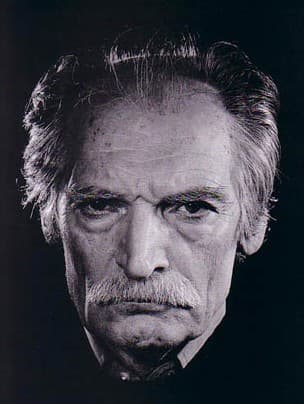
Mahmoud Dowlatabadi is an Iranian author known for his contributions to contemporary fiction. His notable work, "The Colonel," explores themes of power and oppression in a politically charged environment. Dowlatabadi's writing often reflects the complexities of Iranian society and history.
Similar books
- One Hundred Years of Solitude
Gabriel García Márquez
4.1 (753k) average on GoodreadsLiterary FictionExplores the cyclical nature of history, political upheaval, and family tragedy within a specific cultural context, with a rich, albeit different, narrative style.
- The Stranger
Albert Camus
4.1 (3k) average on GoodreadsFantasyFeatures an alienated protagonist grappling with existential themes and the absurdity of life, delivered through a powerful, introspective narrative.
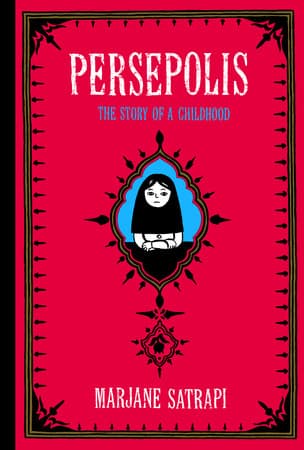
- Persepolis: The Story of a Childhood
Marjane Satrapi
4.3 (158k) average on GoodreadsBiographyPersepolis offers a more accessible and personal coming-of-age narrative, using the graphic novel format to depict the Iranian Revolution and its aftermath through the eyes of a young girl. While both deal with the same historical period, Persepolis focuses more on societal impact and individual experiences with a lighter, albeit still critical, tone, contrasting with The Colonel's intense, internal, and often bleak psychological focus.
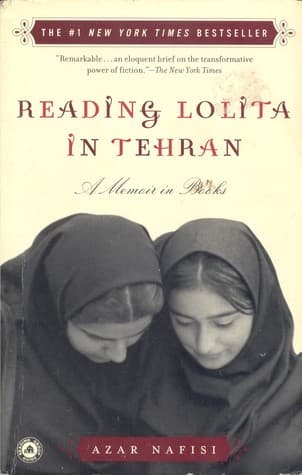
- Reading Lolita in Tehran: A Memoir in Books
Azar Nafisi
3.6 (118k) average on GoodreadsBiographyNafisi's work is a memoir and literary criticism that explores the power of literature and intellectual resistance in post-revolutionary Iran. It provides an academic and reflective lens on the cultural and political climate, focusing on the role of fiction in understanding reality. In contrast, The Colonel is a work of literary fiction that directly immerses the reader in the raw, visceral agony and psychological breakdown of a family caught in the revolution's wake, offering a more fictionalized and internal perspective on the human cost.
- The Old Man and the Sea
Ernest Hemingway
3.8 (831k) average on GoodreadsLiterary FictionA Cuban fisherman's long struggle with a giant marlin becomes a story of endurance and dignity, now retold for young adults with illustrations, phonetic guides, and writing prompts in Traditional Chinese.
- The Goldfinch
Donna Tartt
3.9 (720k) average on GoodreadsLiterary FictionHaunted by a tragic explosion and clutching a stolen Dutch masterpiece, a young orphan navigates the opulent drawing rooms of New York and the gritty underbelly of the art world, desperately seeking connection and redemption amidst a life spiraling into crime and obsession.




Enjoyed the summary?
A summary gives you the shape of the book. The book itself has the detail, the examples and the voice.
Find The Colonel on AmazonAs an Amazon Associate, BookBrief earns from qualifying purchases. How we're funded