
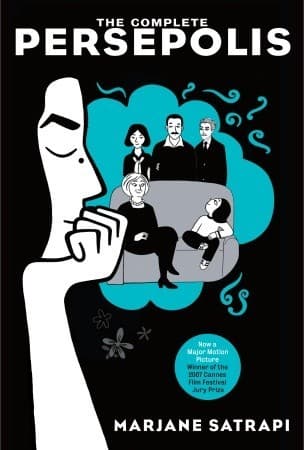
Core Idea
- Difficulty
- Easy
- Read it if
- You want to understand the human experience of the Iranian Revolution and war through a deeply personal, accessible, and often humorous lens; you appreciate graphic novels as a powerful medium for serious topics; you're interested in themes of identity, exile, and resilience.
- Skip it if
- You prefer traditional prose memoirs and dislike the graphic novel format; you are looking for a purely objective historical account rather than a personal narrative.
Key Takeaways from The Complete Persepolis
Childhood in Revolution
Political upheaval profoundly shapes personal identity, even from a young age.
Satrapi's early life in Tehran connects to the big changes of the Islamic Revolution. From daily life to school, the revolution controls everything, making children face political realities beyond their years. Marjane's early idea of God and her role as a prophet quickly changes to a growing political awareness, helped by her intellectual, Marxist-leaning family. This period shows how early years, especially during big societal change, can create a strong sense of justice, rebellion, and an understanding of power, even as innocence is lost to the realities of war and oppression.
“In life you'll meet a lot of jerks. If they hurt you, it's because they're stupid. Don't react to them. There are two things in life for which you may fight: independence and justice.”
In the book: Marjane's early desire to be a prophet, her participation in street protests with her maid, Mehri, and the execution of family friends like Anoosh, all demonstrate how political events directly impacted her childhood worldview and emotional development.
Try this: Reflect on how your own early environment, particularly any societal or political shifts, shaped your core values and understanding of the world. Engage children in age-appropriate discussions about current events to foster critical thinking and empathy.
Related ideas: political-identity, childhood-trauma, islamic-revolution
The Hypocrisy of Theocracy
The stark contrast between public religious dogma and private life reveals systemic hypocrisy.
Satrapi shows the widespread hypocrisy of the Islamic regime, where public religious displays and strict adherence to laws often hid a rebellious private life. Women had to wear veils and follow dress codes, yet privately, parties, alcohol, and forbidden music happened. This created a society living a double life, where fear of the Guardians of the Revolution controlled public behavior, while a defiant spirit grew in secret. This duality is not just a way to cope but a form of subtle resistance, showing the human need for freedom and expression even under oppressive rule.
“The regime became more and more repressive. As in any country, when the population is afraid, it makes a pact with the devil.”
In the book: The Satrapi family's secret parties, complete with homemade alcohol and forbidden Western music, directly contradict the public image the regime tried to enforce. The scene where Marjane's parents risk their lives to bring back posters of Iron Maiden and a denim jacket for her exemplifies this private defiance.
Try this: Identify areas in your life where you might be conforming outwardly while holding different beliefs internally. Consider how to align your public actions more closely with your private values, or how to safely challenge hypocritical systems.
Related ideas: theocratic-regime, social-hypocrisy, cultural-resistance
Exile and Identity Crisis
Leaving one's homeland can lead to a profound struggle with self-definition and belonging.
Marjane's move to Vienna as a teenager, meant for her safety and education, causes a deep identity crisis. Away from her family and culture, she struggles to fit into a new society that often misunderstands her Iranian background. She tries to fit in, sometimes denying her heritage, only to feel alone. This time includes loneliness, drug use, homelessness, and a strong feeling of not belonging anywhere. It shows the psychological cost of exile, where finding oneself mixes with finding a true home, often leading to feeling like a constant outsider.
“I was a Westerner in Iran, an Iranian in the West. I had lost my identity. There was nothing to do: I was a monster of the East and West.”
In the book: Marjane's attempts to blend in with Austrian youth, her lying about her origins, and her eventual period of homelessness and depression in Vienna all exemplify her struggle with identity and belonging.
Try this: If you're an immigrant or expatriate, acknowledge and process the complexities of your dual identity. For others, cultivate empathy for those navigating cultural transitions by learning about their experiences and challenges.
Related ideas: exile-experience, cultural-assimilation, identity-formation
The Burden of Freedom
Unrestricted freedom can be overwhelming without a strong sense of self and purpose.
When Marjane returns to Iran after her difficult years in Vienna, she feels a different kind of burden: the weight of perceived freedom. While she wanted the freedom of the West, the complete lack of external limits in Vienna, combined with her internal struggles, led to self-destruction and aimlessness. This suggests that true freedom is not just the absence of oppression, but requires an internal guide, resilience, and a sense of belonging. Without these, too much choice can be paralyzing, leading to alienation and despair instead of empowerment. Her return to Iran, despite its rules, offered structure and a familiar culture that, strangely, helped her start to rebuild herself.
“I really didn't know what to do with myself anymore. I was a Westerner in Iran, an Iranian in the West. I had lost my identity.”
In the book: Marjane's descent into drug addiction, homelessness, and depression during her time in Vienna, despite the 'freedom' from the Iranian regime's strictures, illustrates how external freedom without internal stability can be destructive.
Try this: Understand that true freedom involves self-discipline and purpose, not just the absence of external rules. Cultivate internal resilience and a strong sense of self before seeking drastic external changes in your life.
Related ideas: personal-freedom, existential-crisis, self-destruction
The Power of Family Roots
Family provides an anchor and moral compass amidst personal and political storms.
Throughout Marjane's chaotic life, her family — especially her parents and grandmother — is a constant source of love, intellectual stimulation, and moral guidance. They are her first teachers of justice and defiance, her confidantes during adolescence, and her safe place during despair. Their progressive values and willingness to defy the regime, even risking themselves, give Marjane a strong sense of integrity and resilience. The unconditional love and support from her family, especially her grandmother's wisdom, help her navigate her identity and find her path, showing that strong family bonds are important for dealing with personal and political trouble.
“My grandmother was my only comfort. She was always there for me, always understood me.”
In the book: Her grandmother's pearls of wisdom, her parents' consistent support and sacrifices (like sending her to Vienna and risking their lives for her posters), and their unwavering belief in justice are constant threads throughout the narrative.
Try this: Prioritize and nurture your family relationships. Recognize the valuable role family can play in shaping your moral compass and providing emotional support during challenging times.
Related ideas: family-bonds, moral-guidance, resilience
Trauma and Humor
Humor serves as a vital coping mechanism for processing trauma and maintaining humanity.
Despite war, repression, and personal sadness, Satrapi fills Persepolis with humor. This is not just for laughs; it is a way to cope. The dark humor her family uses, the ironic comments about the regime's absurdities, and Marjane's youthful irreverence allow them to process trauma, stay sane, and assert their humanity in the face of dehumanizing forces. Humor becomes a form of resistance, a way to regain control and perspective when so much is out of control, showing its important role in psychological survival.
“Laughter is the only way to bear the pain.”
In the book: The darkly humorous anecdotes about the 'Keys to Paradise' given to child soldiers, Marjane's sarcastic comments about her teachers, and the family's ability to joke even amidst bombings and political arrests all highlight the role of humor.
Try this: Cultivate a sense of humor, especially during difficult times. Find ways to laugh at absurdities or use dark humor as a healthy coping mechanism to process stress and maintain perspective.
Related ideas: coping-mechanisms, gallows-humor, psychological-resilience
The Universality of Coming of Age
Despite unique circumstances, the struggles of adolescence are universally relatable.
While set against the Iranian Revolution and a difficult exile, Marjane's coming-of-age story connects with common adolescent experiences. Her struggles with fitting in, first crushes, rebellion against authority (parents or government), body image issues, and finding identity are familiar to anyone who has been a teenager. This commonality shows Satrapi's storytelling, proving that even extreme personal circumstances cannot erase the basic human experiences of growing up, learning who you are, and finding your place in the world.
“My story is not so different from yours. It is merely set in a different time and place.”
In the book: Marjane's first love interest (Enrique), her experiments with fashion and makeup, her defiance of school rules, and her anxieties about her appearance are all classic adolescent struggles, albeit magnified by her unique environment.
Try this: Recognize the shared human experience in others' stories, even those from vastly different backgrounds. This fosters empathy and connection, reminding us of our common humanity.
Related ideas: adolescent-development, universal-experience, identity-search
The Personal is Political
Individual lives are inherently shaped by the political landscape, making personal choices political acts.
Satrapi shows how the political situation affects every part of personal life. From the clothes Marjane wears, to the music she listens to, to her friends, every choice is a potential act of defiance or conformity. Her family's intellectual discussions, their protests, and their existence as educated, secular individuals are political statements. The book shows that in oppressive regimes, there is no real separation between the personal and the political; simply living an authentic life can be a radical act, forcing individuals to constantly manage their identity in a political environment.
“Everywhere in the world, people are oppressed, and it's up to us to fight for our freedom.”
In the book: The regime's control over dress codes, the banning of Western music, the execution of political prisoners, and Marjane's own decision to speak out against injustice illustrate how personal freedoms are constantly under political threat.
Try this: Consider how broader political decisions impact your daily life and personal choices. Engage in informed civic participation to advocate for policies that align with your values and protect individual freedoms.
Related ideas: political-activism, personal-autonomy, social-justice
The Weight of Witnessing
Bearing witness to injustice carries a profound responsibility to share one's truth.
Satrapi's decision to write Persepolis is an act of witnessing. She carries the experiences of her family, the suffering of her people, and her own difficult journey, knowing that her view offers a counter-narrative to official histories. By sharing her story, she processes her own trauma and gives a voice to those silenced by the regime. This highlights the need to witness injustice and to use one's platform, however personal, to show difficult truths, making sure history is remembered from different perspectives and that suffering is not forgotten.
“I told myself that I had to tell my story, for all the people who couldn't tell theirs.”
In the book: Satrapi explicitly states her motivation for creating the graphic novel: to combat Western stereotypes of Iran and to honor the sacrifices and struggles of her people, particularly those who were oppressed or killed.
Try this: Consider what truths you have witnessed in your own life or community that deserve to be shared. Find appropriate and impactful ways to tell those stories, whether through personal narrative, art, or advocacy.
Related ideas: historical-memory, truth-telling, narrative-power
The Cost of Survival
Survival in oppressive environments often necessitates difficult compromises and sacrifices.
Marjane's journey through revolution, war, and exile shows the will to survive, but it also reveals the costs. She makes compromises, sometimes denies her identity, and endures personal suffering. Her family's sacrifices, who eventually send her away for her safety, show the painful choices people make to protect loved ones. Survival is not always heroic; it is often messy, full of moral dilemmas, and leaves lasting scars. This takeaway emphasizes the realities of living under pressure and the complex, often sad, decisions needed to keep going.
“Life is a series of blows. You're going to get hit a lot. But you have to keep getting up.”
In the book: Her parents sending her to Vienna alone, Marjane's own period of homelessness and drug use, and her ultimate self-imposed exile from Iran, all represent significant sacrifices and difficult compromises made for survival.
Try this: Reflect on the compromises you've made for survival or security. Acknowledge the emotional toll of such decisions and practice self-compassion for the difficult paths you've had to navigate.
Related ideas: survival-guilt, moral-dilemmas, personal-sacrifice
The Complete Persepolis Quotes
“I wanted to be a prophet because our maid did not eat with us. Because my father had a Cadillac. And, above all, because my grandmother's knees always ached.”
“In a country where half the population is illiterate, you cannot unite the people around Marx. The only thing that can really unite them is nationalism or a religious ethic.”
“The revolution is like a bicycle. When the wheels don't turn, it falls.”
“I was born with religion. At the age of six I was already sure I was the last prophet.”
“Freedom always has a price.”
“One can forgive but one should never forget.”
“The regime had understood that one person leaving her house while asking herself: 'Are my trousers long enough? Is my veil in place? Can my makeup be seen? Are they going to whip me?' no longer asks herself: 'Where is my freedom of thought? Where is my freedom of speech? My life, is it livable?'”
“I finally understood what my grandmother meant. She had said that in life you'll meet a lot of jerks. If they hurt you, tell yourself that it's because they're stupid. That will help keep you from reacting to their cruelty. Because there is nothing worse than bitterness and vengeance... Always keep your dignity and be true to yourself.”
“To die a martyr is to inject blood into the veins of society.”
“I was a Westerner in Iran, an Iranian in the West. I had no identity.”
“The only way I can describe the feeling is that it was like being in a bubble. You could see everything, but you couldn't touch anything.”
“We found ourselves veiled and separated from our friends.”
“You have to learn to defend your rights as a woman from now on.”
“I realized then that I didn't understand anything. I read all the books I could.”
Quiz
10 questions on the main ideas. Each answer comes with a short explanation.
Question 1
What major historical event serves as the backdrop for Marjane's childhood in Tehran?
- The Iran-Iraq War
- The Islamic Revolution
- The fall of the Shah's monarchy
- The rise of the Taliban
Show answer
B. The Islamic Revolution The book centers on Marjane's childhood during the Islamic Revolution in Iran, which transformed the country's political and social landscape, directly impacting her family and daily life.
Question 2
Why does Marjane's family send her to Vienna for high school?
- To pursue better educational opportunities
- To escape the dangers of the Iran-Iraq War
- To protect her from the oppressive regime and political risks
- To join relatives living abroad
Show answer
C. To protect her from the oppressive regime and political risks Marjane's parents send her to Vienna to keep her safe from the increasing political repression and risks in Iran, especially after she becomes outspoken and faces trouble at school.
Question 3
What is a key theme illustrated by Marjane's experiences with Western culture in Iran, such as listening to punk music?
- The universality of teenage rebellion
- The clash between private desires and public restrictions
- The superiority of Western values
- The importance of family traditions
Show answer
B. The clash between private desires and public restrictions Marjane's secret enjoyment of Western music and fashion highlights the tension between her personal freedoms and the strict Islamic laws imposed publicly, a central theme in the memoir.
Question 4
How does Marjane's relationship with her uncle Anoosh impact her understanding of politics?
- He teaches her to avoid political involvement
- He inspires her with stories of his activism and sacrifice
- He discourages her from questioning authority
- He provides financial support for her education
Show answer
B. He inspires her with stories of his activism and sacrifice Anoosh, a political prisoner and Marxist, shares his experiences with Marjane, deepening her political awareness and reinforcing her family's legacy of resistance, which shapes her own identity.
Question 5
What does Marjane's 'homecoming' to Iran after Vienna symbolize in the narrative?
- A complete rejection of her Western experiences
- A triumphant return to her roots
- A struggle with identity and belonging in a changed homeland
- An escape from academic failure abroad
Show answer
C. A struggle with identity and belonging in a changed homeland Marjane's return is bittersweet; she feels out of place in Iran after adapting to Western life, highlighting themes of exile, cultural dislocation, and the difficulty of reintegration.
Question 6
Which event marks a turning point in Marjane's adolescence, leading to her increased political awareness?
- Her first romantic relationship
- The execution of her uncle Anoosh
- Her parents' divorce
- Moving to a new school in Tehran
Show answer
B. The execution of her uncle Anoosh Anoosh's execution by the regime is a traumatic event that hardens Marjane's resolve against the government and deepens her engagement with political issues, marking a loss of innocence.
Question 7
How does Satrapi use the graphic novel format to enhance the memoir's impact?
- By simplifying complex historical events
- By combining visual symbolism with personal narrative
- By focusing exclusively on humorous anecdotes
- By avoiding emotional depth for objectivity
Show answer
B. By combining visual symbolism with personal narrative The black-and-white illustrations convey emotions, cultural details, and political satire visually, making the personal and historical layers more accessible and poignant, as seen in scenes like Marjane's imaginative conversations with God.
Question 8
What role does Marjane's grandmother play in her development throughout the memoir?
- She provides strict religious guidance
- She serves as a moral compass and source of wisdom
- She arranges Marjane's marriage
- She discourages political discussion
Show answer
B. She serves as a moral compass and source of wisdom Marjane's grandmother offers practical advice, emotional support, and ethical lessons, such as the importance of integrity and remembering one's roots, which help shape Marjane's character amid turmoil.
Question 9
In what way does Marjane's experience in Vienna reflect the book's exploration of identity?
- It shows her complete assimilation into Austrian culture
- It highlights her struggle as an outsider navigating between Iranian and Western identities
- It proves that political exile is always liberating
- It emphasizes the superiority of European education systems
Show answer
B. It highlights her struggle as an outsider navigating between Iranian and Western identities In Vienna, Marjane faces isolation, racism, and confusion about her place in the world, illustrating the complex negotiation of identity for immigrants and the lasting impact of her Iranian heritage.
Question 10
Why does Marjane ultimately choose self-imposed exile from Iran at the end of the book?
- To pursue a career as a graphic artist in Europe
- Due to economic opportunities abroad
- To escape the oppressive regime and find personal freedom
- Because her family forces her to leave
Show answer
C. To escape the oppressive regime and find personal freedom After returning to Iran, Marjane feels stifled by the social and political constraints, leading her to leave voluntarily to preserve her individuality and creative expression, a painful but necessary decision for her growth.
The Complete Persepolis FAQ
What is 'The Complete Persepolis' about?
'The Complete Persepolis' is Marjane Satrapi's acclaimed graphic memoir that chronicles her childhood and adolescence in Tehran during the Islamic Revolution, her teenage years in Vienna, and her eventual return to Iran and self-imposed exile. It explores the intersection of personal life with political upheaval, blending history with universal coming-of-age experiences.
Is 'Persepolis' a true story?
Yes, 'Persepolis' is a memoir based on Marjane Satrapi's own life experiences growing up in Iran during the Islamic Revolution and her time abroad. It is a personal account that combines historical events with her family's story, presented in a graphic novel format.
How is 'Persepolis' different from other memoirs?
'Persepolis' stands out as a graphic memoir, using black-and-white illustrations to tell Satrapi's story, which makes it accessible and visually engaging. Unlike traditional memoirs, it blends autobiography with historical narrative, offering a unique perspective on Iran's political changes through a personal lens.
Does 'Persepolis' work as an educational tool?
Yes, 'Persepolis' is widely used in educational settings to teach about Iranian history, the Islamic Revolution, and themes like identity and exile. Its graphic format helps readers engage with complex topics, making it effective for both students and general audiences.
What is the significance of the title 'Persepolis'?
The title 'Persepolis' refers to the ancient capital of the Persian Empire, symbolizing Iran's rich history and cultural heritage. It contrasts with the modern political turmoil depicted in the book, highlighting the tension between past glory and present struggles.
How different is 'Persepolis' from other graphic novels like 'Maus'?
While both 'Persepolis' and Art Spiegelman's 'Maus' are graphic memoirs dealing with historical trauma, 'Persepolis' focuses on the Islamic Revolution in Iran and personal exile, whereas 'Maus' addresses the Holocaust. Stylistically, 'Persepolis' uses simpler, more expressive black-and-white art to convey emotion and narrative.
Is 'The Complete Persepolis' suitable for young readers?
'The Complete Persepolis' is often recommended for teens and adults due to its mature themes, including war, political oppression, and personal conflict. Parents and educators should review it first, as it provides valuable insights but contains content that may be intense for younger audiences.
What are the main themes in 'Persepolis'?
Key themes in 'Persepolis' include identity, exile, family, political rebellion, and the clash between public and private life. It explores how historical events shape personal growth, with a focus on resilience and humor amidst adversity.
Does 'Persepolis' have a movie adaptation?
Yes, 'Persepolis' was adapted into an animated film in 2007, co-directed by Marjane Satrapi. The movie retains the book's black-and-white style and covers much of the memoir's story, receiving critical acclaim and an Academy Award nomination.
How does 'Persepolis' portray Iranian culture?
'Persepolis' portrays Iranian culture through Satrapi's family life, traditions, and daily experiences, showing both its richness and the challenges under political repression. It humanizes Iranians, countering stereotypes by highlighting universal aspects of love, humor, and struggle.
About the author

Marjane Satrapi is an Iranian graphic novelist and filmmaker known for her autobiographical works. Her notable books include "Persepolis: The Story of a Childhood" and "The Complete Persepolis," which depict her experiences growing up during and after the Islamic Revolution in Iran. Satrapi's work has received significant recognition for its poignant exploration of identity and cultural conflict.
Similar books
- Fun Home: A Family Tragicomic
Alison Bechdel
4.1 (130k) average on GoodreadsBiographyA graphic memoir exploring family dynamics, sexuality, and self-discovery, utilizing the medium for complex storytelling.
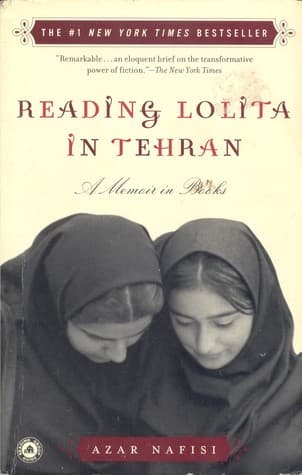
- Reading Lolita in Tehran: A Memoir in Books
Azar Nafisi
3.6 (118k) average on GoodreadsBiographyWhile both explore life in post-revolutionary Iran and 'The Personal is Political,' Nafisi's work is a traditional prose memoir focusing on literature as resistance among a group of women. Satrapi's graphic memoir offers greater immediacy and accessibility through visual storytelling, drawing a broader audience to complex history.
- The Kite Runner
Khaled Hosseini
4.3 (2.4M) average on GoodreadsHistorical FictionBoth are coming-of-age stories set against political upheaval (Afghanistan vs. Iran). Hosseini uses a conventional novelistic structure with intricate plots, while Satrapi leverages sequential art to compress history and emotion into impactful panels, excelling at showing 'Trauma and Humor' and the 'Universality of Coming of Age' through visual narrative.
- The Diary of a Young Girl
Anne Frank
4.2 (2.7M) average on GoodreadsBiographyDuring the Nazi occupation, a teenage girl's diary, written from a secret annex, shares observations on humanity, hope, and the wait for freedom.
- Eat, Pray, Love
Elizabeth Gilbert
3.6 (1.5M) average on GoodreadsLifestyleA heartbroken writer leaves her conventional life for a year-long global search for pleasure in Italy, spiritual devotion in India, and unexpected love and balance in Bali.
- Night
Elie Wiesel
4.3 (970k) average on GoodreadsBiographyIn the darkness of Auschwitz and Buchenwald, a teenage Elie Wiesel faces the extermination of his family, the loss of his faith, and the lasting scars of humanity's deepest cruelty.





Enjoyed the summary?
A summary gives you the shape of the book. The book itself has the detail, the examples and the voice.
Find The Complete Persepolis on AmazonAs an Amazon Associate, BookBrief earns from qualifying purchases. How we're funded