
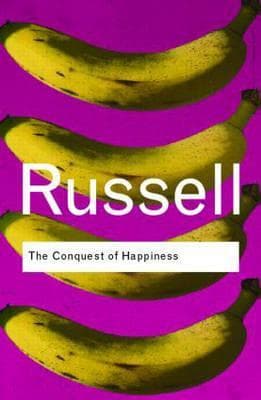
Core Idea
- Difficulty
- Medium
- Read it if
- You feel perpetually dissatisfied, struggle with envy or boredom, or are looking for a philosophical yet practical guide to cultivating lasting contentment by shifting focus from self to the world.
- Skip it if
- You prefer modern, actionable self-help with quick fixes, or are looking for a spiritual or therapeutic approach to happiness rather than a rational, philosophical one.
Key Takeaways from The Conquest of Happiness
Escape Self-Absorption
Happiness lies in outward focus, not inward rumination.
Russell says that much unhappiness comes from being too focused on oneself. Whether it is the 'sinner' thinking about guilt, the 'narcissist' wanting admiration, or the 'megalomaniac' wanting power, an inward focus separates people and makes them see reality wrongly. He thinks real happiness needs a shift from looking inward to engaging with the outside world—people, ideas, nature, and causes beyond oneself. This outward focus creates purpose and connection that self-focus prevents, leading to a richer, more stable contentment. It is not about ignoring personal problems, but understanding that solutions often exist outside one's own mind.
“The man who is unhappy will, as a rule, be happy if he can be cured of his unhappiness; and, conversely, the man who is happy will, as a rule, be unhappy if he can be cured of his happiness. This is a paradox, but it is true.”
In the book: Russell uses the archetypes of the 'sinner,' the 'narcissist,' and the 'megalomaniac' to illustrate how different forms of self-absorption lead to distinct types of unhappiness, from guilt and vanity to isolation and delusion.
Try this: Actively seek hobbies, volunteer work, or intellectual pursuits that direct your attention away from your own anxieties and towards external objects or causes. Consciously practice empathy and engage in conversations that focus on others rather than exclusively on your own experiences.
The Pitfalls of Envy
Envy is a corrosive force, a secret sorrow that poisons joy.
Russell says envy is a big barrier to happiness. He describes it as a deep human emotion that, if not controlled, can ruin peace of mind. Envy makes people compare themselves to others, creating endless dissatisfaction because someone will always seem to have more. This emotion not only stops one from appreciating their own good things but also causes resentment towards others, leading to isolation. Russell suggests that overcoming envy means focusing on one's own path and finding joy in one's own achievements, instead of comparing success to what others seem to have.
“Envy is, I should say, one of the most potent causes of unhappiness. The envious man is not merely made unhappy by his envy, but is led to inflict unhappiness upon others in the hope of thereby mitigating his own; and so he becomes a rival of others, and not merely a rival, but a potential enemy.”
In the book: Russell discusses how envy manifests in various social classes and even among nations, arguing it's a universal human frailty that underlies much societal discontent and individual misery.
Try this: Practice gratitude daily by listing things you appreciate in your own life. When you feel envy arising, consciously shift your focus to your own progress and unique strengths, rather than dwelling on what others possess. Limit exposure to social media that triggers comparison.
The Tyranny of Boredom
A capacity for intelligent boredom is a prerequisite for a fulfilling life.
Russell says that not being able to handle boredom causes a lot of modern unhappiness. In a world with constant stimulation and instant rewards, many people have lost the ability for quiet thought and developing inner resources. He thinks some 'fruitful boredom' is needed for creativity, deep thinking, and enjoying simple things. Constant stimulation leads to a shallow life, where people are always chasing quick excitement and cannot find contentment in everyday things. Developing a rich inner life makes one less dependent on outside thrills and more able to have lasting happiness.
“The secret of happiness is to be able to enjoy the common things, and not to be too dependent upon the exceptional things.”
In the book: Russell contrasts the lives of those constantly seeking new sensations with those who find satisfaction in more routine or intellectual pursuits, illustrating how the former often leads to a cycle of escalating desires and eventual ennui.
Try this: Regularly schedule periods of unstructured time where you intentionally avoid distractions like phones or television. Engage in activities that require sustained attention and patience, such as reading a long book, gardening, or a complex hobby. Embrace moments of quiet reflection.
The Importance of External Interests
A wide range of impersonal interests is the bedrock of lasting happiness.
Russell strongly suggests having many 'impersonal interests'—passions and activities outside one's immediate personal life like work or family. These interests, whether intellectual, artistic, or practical, offer an escape from self-focus and give ongoing satisfaction. When one part of life has problems, other interests can provide comfort and purpose, preventing complete despair. A person with many interests is less affected by bad luck and has a richer, more stable inner world. It is about building a strong mental system that can handle life's unavoidable difficulties.
“Happiness is a state of mind, and it is largely a matter of having a wide range of interests and of being able to take a genuine delight in them.”
In the book: Russell observes that individuals who are deeply engaged in hobbies, scientific research, or community work often exhibit a greater resilience to personal misfortune and a more consistent cheerfulness.
Try this: Identify at least two new hobbies or intellectual subjects you've always wanted to explore. Dedicate specific time each week to these pursuits, regardless of immediate results or external validation. Join a club or group related to an interest.
The Role of Affection
Giving and receiving affection is crucial for human contentment and security.
Russell emphasizes how important affection is for happiness. He says that real affection, both giving and receiving, provides a basic sense of security and belonging that people need to be well. Unlike just admiration, affection comes from a deeper connection and mutual respect, creating a place where one feels valued for who they are, not for what they achieve. A life without affection leads to a constant feeling of isolation and a desperate search for outside approval, which is rarely satisfying. He warns against being too careful with emotions, saying that the risks of opening oneself to love are much smaller than the rewards.
“Of all the forms of caution, caution in love is perhaps the most fatal to true happiness.”
In the book: Russell discusses how a child's sense of security is built upon parental affection and how this need for warm, reciprocal relationships extends into adulthood, influencing social interactions and overall happiness.
Try this: Actively cultivate and express affection in your close relationships. Be vulnerable and open to giving and receiving love without excessive caution. Make time for genuine connection with friends and family, prioritizing quality interaction over superficial engagement.
Work and Purpose
Meaningful work provides structure, purpose, and a sense of achievement.
While he knows not all work is fun, Russell highlights its important role in a happy life. Beyond just money, work gives structure, a routine, and a way to use skills and creativity. The satisfaction from finishing a task, especially a hard one, adds a lot to self-esteem and a feeling of purpose. Even simple work, if done carefully, can give a sense of accomplishment. Not having meaningful work can lead to idleness, boredom, and a feeling of having no direction, all bad for happiness. It is about feeling like you contribute and are capable, no matter the field.
“The greatest happiness comes from doing something that is difficult and that you know you can do well.”
In the book: Russell contrasts the 'man of leisure' who, despite having no financial need to work, often falls into ennui, with the craftsman or professional who derives deep satisfaction from their skilled labor.
Try this: Seek to find aspects of your current work that you can approach with a sense of craftsmanship or purpose. If your work feels completely devoid of meaning, actively explore ways to gain new skills or transition to a role that offers more personal satisfaction. Pursue challenging projects, even outside your main job.
The Balance of Effort and Resignation
Recognizing what can and cannot be changed is key to peace of mind.
Russell suggests a practical way to deal with life's problems, recommending a good balance between strong effort and wise acceptance. It is important to work hard where change is possible and helpful, but equally important to calmly accept parts of life that cannot be controlled. Fighting against what is unavoidable only leads to frustration, bitterness, and wasted energy. This does not mean passively accepting all bad luck, but instead wisely knowing what needs action and what needs acceptance. This way of thinking frees up mental and emotional energy for better things.
“Much unhappiness is due to the fact that men are either too obstinate to admit defeat or too lazy to make efforts.”
In the book: He gives examples of people who cling to lost causes or impossible desires, contrasting their misery with those who learn to adapt and find new paths when faced with insurmountable obstacles.
Try this: When facing a problem, clearly distinguish between factors you can influence and those you cannot. Focus your energy exclusively on the former. For unchangeable circumstances, practice mindfulness and acceptance, redirecting your emotional energy towards more constructive activities.
Conquering Fear
Rationality and courage are essential tools against paralyzing anxieties.
Russell says fear is a basic barrier to happiness, often showing up as anxiety, worry, or superstition. He thinks many fears are irrational and made worse by an overactive imagination, leading to inaction and not being able to fully live life. Overcoming fear needs both rational thought and bravery. By facing what one fears, either by thinking about it or doing something about it, one can often lessen its power. He suggests that some courage is needed not just for big heroic acts but for the daily challenges that might otherwise overwhelm us. Developing a strong inner life and an outward focus helps reduce the inner space where fears can grow.
“Fear is the main source of superstition, and one of the main sources of cruelty. To conquer fear is the beginning of wisdom.”
In the book: Russell discusses how irrational fears often stem from childhood conditioning or societal pressures, and how a rational examination of these fears can often reveal their baselessness.
Try this: Identify a specific fear that holds you back. Rationally analyze its likelihood and potential consequences. Gradually expose yourself to the feared situation (if safe) or challenge the negative thoughts associated with it. Cultivate a mindset of intellectual curiosity to demystify unknowns.
The Value of an Open Mind
Dogmatism and rigid beliefs stifle growth and true understanding.
Russell champions having an open mind as a foundation for happiness and intellectual well-being. Being too set in one's beliefs, whether religious, political, or personal, leads to intellectual stagnation and not being able to adapt to new information or changing situations. A closed mind causes intolerance, fear of the unknown, and resistance to correcting oneself, all of which are bad for personal growth and getting along with others. By accepting doubt, curiosity, and being willing to change one's beliefs, people can handle life's complexities with more wisdom and strength, finding joy in the ongoing process of learning and discovery.
“The trouble with the world is that the stupid are cocksure and the intelligent are full of doubt.”
In the book: While not a specific study, Russell's entire philosophical approach, including his critiques of various forms of dogma and unexamined beliefs, serves as evidence for the benefits of intellectual flexibility.
Try this: Actively seek out perspectives that challenge your own. Engage in respectful debate, prioritizing understanding over winning. Regularly question your own assumptions and be willing to admit when you are wrong. Cultivate intellectual humility.
The Happy Man: A Synthesis
Happiness is a byproduct of outward engagement and integrated living.
Russell's 'happy man' is not someone who actively tries to be happy, but someone for whom happiness naturally comes from living a good life. This person has many outside interests, is not too focused on themselves, and experiences real affection, both given and received. They find satisfaction in meaningful work, accept what cannot be changed calmly, and face fears with reason. Such a person is part of the world, getting joy from engaging with it, and in turn, becomes a source of happiness for others. It is a complete view where contentment comes from a balanced, outwardly focused life, not a frantic internal search.
“The happy man is the man who lives objectively, who has free affections and wide interests, who secures his happiness through these interests and affections and through the fact that they, in turn, make him a source of happiness to others.”
In the book: This takeaway synthesizes Russell's arguments throughout the book, drawing on his various examples of both unhappy and potentially happy individuals to construct a composite picture of the ideal state.
Try this: Regularly assess your life across Russell's suggested dimensions: are you overly self-absorbed? Do you have sufficient external interests? Are your affections free? Continuously strive for balance and outward engagement, understanding that happiness is cultivated indirectly through purposeful living.
The Conquest of Happiness Quotes
“The secret of happiness is this: let your interests be as wide as possible, and let your reactions to things and persons that interest you be as far as possible friendly rather than hostile.”
“To be without some of the things you want is an indispensable part of happiness.”
“Boredom is a vital problem for the moralist, since at least half the sins of mankind are caused by the fear of it.”
“One of the symptoms of an approaching nervous breakdown is the belief that one's work is terribly important.”
“If a man is to be happy, he must not feel that his life is a pointless march towards the grave.”
“The man who is unhappy will, as a rule, adopt an unhappy creed, whereas the man who is happy will adopt a happy creed; each man finds the cosmogony that suits his temperament.”
“Many people, especially those who have been at college, have a contempt for happiness as a thing only fit for pigs.”
“The greatest joy of life is to be able to forget.”
“Of all the forms of caution, caution in love is perhaps the most fatal to true happiness.”
“The kind of happiness that requires an expensive income is not the best kind.”
“The man who pursues happiness in a spirit of egoism is likely to be foiled by boredom.”
“Envy is, of course, a form of misery, and one of the most widespread and potent.”
“Happiness is not a gift of the gods, but a conquest.”
Quiz
10 questions on the main ideas. Each answer comes with a short explanation.
Question 1
According to Russell in 'The Conquest of Happiness', what is often the primary cause of unhappiness in modern individuals?
- Lack of material wealth
- Too much self-absorption and introspection
- External political oppression
- Insufficient intellectual stimulation
Show answer
B. Too much self-absorption and introspection Russell argues that much unhappiness stems from excessive introspection and preoccupation with one's own feelings and failures, rather than outward engagement with the world.
Question 2
Russell suggests that one antidote to unhappiness is to cultivate what kind of interests?
- Solely professional interests to achieve career success
- Only intensely passionate, all-consuming interests
- Impersonal interests that direct attention outwards
- Interests focused on personal spiritual enlightenment
Show answer
C. Impersonal interests that direct attention outwards Russell emphasizes the importance of developing impersonal interests, such as science, art, or public affairs, as these draw individuals out of their self-centered concerns and provide sources of joy independent of personal circumstances.
Question 3
Which emotion does Russell identify as a significant barrier to happiness, often linked to envy?
- Joy
- Pity
- Boredom
- Competition (when it becomes excessive)
Show answer
D. Competition (when it becomes excessive) Russell dedicates a chapter to 'Envy', arguing that it is a powerful source of unhappiness, leading individuals to resent others' successes rather than find contentment in their own lives. He discusses how competition fuels this.
Question 4
Russell argues against the idea that happiness is best achieved through:
- Engaging in meaningful work
- Pursuing pleasure at all costs without moderation
- Having a loving family
- Developing a rational outlook on life
Show answer
B. Pursuing pleasure at all costs without moderation Russell is critical of the 'Byronic hero' and those who seek intense, unbridled pleasure as a primary goal, suggesting it often leads to disillusionment and unhappiness. He advocates for a more balanced approach.
Question 5
What role does 'work' play in Russell's conception of happiness?
- It is a necessary evil that detracts from true happiness.
- It is primarily a means to acquire wealth, which brings happiness.
- It is a fundamental source of satisfaction and structure, especially when it involves skill and construction.
- Only creative or artistic work can contribute to happiness.
Show answer
C. It is a fundamental source of satisfaction and structure, especially when it involves skill and construction. Russell views work, particularly when it is constructive, skillful, or serves a purpose beyond mere income, as a vital component of happiness, providing routine, purpose, and a sense of accomplishment.
Question 6
Russell contrasts the 'sinner' (unhappy person) with the 'happy man'. What is a key characteristic of the 'happy man'?
- He is perpetually engaged in intense self-analysis.
- He is often unaware of the specific reasons for his happiness.
- He meticulously plans every aspect of his happiness.
- He avoids all forms of suffering and discomfort.
Show answer
B. He is often unaware of the specific reasons for his happiness. Russell suggests that the truly happy man is often so engaged with the world that he doesn't constantly analyze his own happiness; it's a byproduct of his outward-directed life, rather than a direct object of pursuit.
Question 7
In discussing the causes of unhappiness, Russell criticizes the 'sense of sin' prevalent in some societies, arguing it leads to:
- A healthy respect for moral codes.
- Excessive guilt, self-reproach, and inhibition.
- Increased empathy for others' suffering.
- A stronger desire for societal improvement.
Show answer
B. Excessive guilt, self-reproach, and inhibition. Russell views an ingrained 'sense of sin' as a significant psychological burden inherited from certain moralistic upbringings, leading to irrational guilt and a diminished capacity for joy and spontaneous action.
Question 8
Russell advises against seeking happiness through the constant pursuit of 'excitement'. Why?
- Excitement is inherently immoral.
- It leads to a jaded palate and an inability to appreciate simpler pleasures.
- It is too expensive for most people.
- It requires too much social interaction, which is draining.
Show answer
B. It leads to a jaded palate and an inability to appreciate simpler pleasures. Russell argues that an insatiable craving for excitement leads to a dulling of the senses, making ordinary life seem boring and preventing the development of deeper, more sustainable sources of contentment.
Question 9
What is Russell's view on the importance of 'affection' for happiness?
- Affection is largely irrelevant to individual happiness.
- It is one of the most vital ingredients, providing security, joy, and a sense of being valued.
- It is only important for children, not adults.
- It often leads to jealousy and possessiveness, thus hindering happiness.
Show answer
B. It is one of the most vital ingredients, providing security, joy, and a sense of being valued. Russell strongly emphasizes the fundamental human need for affection, seeing it as crucial for emotional security, joy, and overcoming self-centeredness. He dedicates a section to its importance in happy living.
Question 10
Russell suggests that one must achieve a balance between 'effort and resignation'. What does he mean by 'resignation' in this context?
- Giving up on all personal goals and ambitions.
- Accepting certain unchangeable facts of life and the limitations of human power.
- A passive submission to external authority.
- Ignoring problems in the hope they will resolve themselves.
Show answer
B. Accepting certain unchangeable facts of life and the limitations of human power. Russell advocates for a wise 'resignation' in the face of things that cannot be changed, such as death or certain personal limitations, allowing one to conserve energy and avoid futile suffering, while still striving where change is possible.
The Conquest of Happiness FAQ
What is the main idea of Bertrand Russell's 'The Conquest of Happiness'?
'The Conquest of Happiness' by Bertrand Russell offers a systematic approach to overcoming unhappiness and achieving a fulfilling life. Russell dissects common causes of misery and then presents practical, philosophical pathways to cultivate joy and contentment through balanced engagement with the world.
Does Bertrand Russell's advice on happiness still apply today?
Yes, despite being published in 1930, Russell's observations on human nature, societal pressures, and the pursuit of happiness remain remarkably relevant. His focus on overcoming self-absorption, cultivating external interests, and finding balance offers timeless wisdom for modern readers.
What does Russell identify as the primary causes of unhappiness?
Russell identifies several key causes of unhappiness, including self-absorption, envy, competition, boredom, and a sense of sin. He argues that excessive introspection and a lack of outward-looking interests often lead to misery.
How does 'The Conquest of Happiness' differ from modern self-help books?
Unlike many modern self-help books that focus on quick fixes or individualistic solutions, Russell's work offers a more philosophical and intellectual framework for happiness. It encourages critical thinking, a broader perspective on life, and a recognition of societal influences rather than solely personal psychology.
What is 'the happy man' according to Bertrand Russell?
According to Russell, 'the happy man' is someone who has found a balance between personal well-being and engagement with the external world. This individual is not excessively introspective but finds joy in a wide range of interests, work, and affectionate relationships, free from overwhelming envy or self-pity.
Does Russell suggest that happiness is entirely within one's control?
Russell acknowledges external factors and luck play a role, but he strongly emphasizes that a significant portion of happiness is within one's control through conscious effort and a change in perspective. He provides strategies for cultivating habits and attitudes that foster contentment regardless of circumstances.
What practical steps does Russell recommend for achieving happiness?
Russell recommends cultivating a wide range of impersonal interests, finding satisfaction in work, overcoming envy, managing boredom, and fostering affectionate relationships. He also advises against excessive self-concern and encourages an outward-looking perspective on life.
Is 'The Conquest of Happiness' a difficult book to read?
While it deals with philosophical concepts, Russell's writing style is known for its clarity and accessibility, making it relatively easy to read for a layperson. He uses relatable examples and avoids overly academic jargon, making complex ideas understandable.
What is Russell's view on the role of passion in happiness?
Russell believes that a certain degree of passion and zest for life is crucial for happiness, but it should be directed outwards towards interests and activities rather than consumed by internal struggles. He advocates for a healthy enthusiasm that is balanced and not self-destructive.
About the author

Bertrand Russell was a Nobel Prize-winning philosopher, logician, and social critic. A prolific writer, his works spanned logic, epistemology, metaphysics, ethics, and political philosophy. Notable books include 'The Problems of Philosophy,' 'A History of Western Philosophy,' and 'The Conquest of Happiness.' His contributions significantly influenced analytic philosophy and mathematics.
Similar books
- Meditations
Marcus Aurelius
4.2 (124k) average on GoodreadsLeadershipOffers a philosophical approach to inner peace and rational living, though from a Stoic perspective.
- Man's Search for Meaning
Viktor E. Frankl
4.4 (401k) average on GoodreadsBiographyExplores finding purpose and meaning in life, emphasizing an outward focus despite extreme adversity.
- The Perks of Being a Wallflower
Stephen Chbosky
4.2 (1.3M) average on GoodreadsPsychologyThrough letters, a shy high school freshman learns to navigate first love, trauma, and self-discovery, stepping off the sidelines and into life.
- Eleanor Oliphant Is Completely Fine
Gail Honeyman
4.3 (708k) average on GoodreadsLiterary FictionA lonely woman's structured life changes when an IT guy and an elderly man help her learn to open her heart.
- One Flew Over the Cuckoo's Nest
Ken Kesey
4.2 (631k) average on GoodreadsPsychologyIn a mind-bending asylum, the boisterous Randle McMurphy wages a defiant war against the tyrannical Nurse Ratched, inspiring his fellow inmates, including the seemingly catatonic Chief Bromden, to reclaim their lost humanity.
- The Bell Jar
Sylvia Plath
4.0 (591k) average on GoodreadsPsychologyIn the suffocating grip of 1950s expectations, a brilliant young woman's descent into mental illness is painted with such vivid, internal clarity that her 'insanity' feels terrifyingly rational and inevitable.






Enjoyed the summary?
A summary gives you the shape of the book. The book itself has the detail, the examples and the voice.
Find The Conquest of Happiness on AmazonAs an Amazon Associate, BookBrief earns from qualifying purchases. How we're funded