
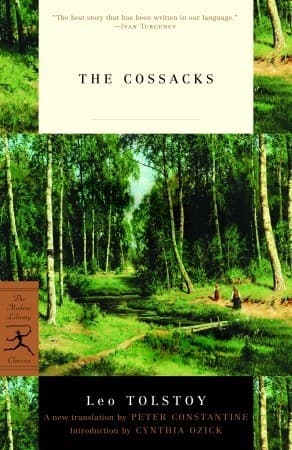
Synopsis
Covers the whole plot, including the ending.
- Difficulty
- Medium
- Pacing
- Slow
- Mood
- Reflective, Atmospheric, Melancholy, Philosophical
- Read it if
- You want to explore early works of a literary giant, enjoy character-driven stories about self-discovery, or are fascinated by cultural clashes and the search for an authentic life.
- Skip it if
- You prefer fast-paced plots, complex political intrigue, or a definitive, happy resolution to romantic conflicts.
The Cossacks Plot Summary
Covers the whole plot, including the ending.
Moscow Farewell
Dmitri Olenin, a wealthy young Russian nobleman, is unhappy with his extravagant and pointless life in Moscow. Having spent much of his inheritance and tired of social obligations, he decides to join the army as a Junker, seeking a fresh start and purpose in the Caucasus. He believes escaping city life might bring him happiness. Before leaving, he thinks about his past mistakes and holds romantic ideas about the simple life he expects to find among the Cossacks, hoping to change and live more authentically.
Journey to the Caucasus
Olenin travels to the Caucasus with his loyal servant, Gerasim. During the long journey, Olenin's initial excitement is mixed with discomfort, but he remains hopeful. He observes the stark beauty of the Caucasian landscape, a contrast to Moscow's sophisticated but stifling environment. This journey helps Olenin detach from his past and prepare for the wild world he is about to enter among the Terek Cossacks, strengthening his desire for a simpler, more natural life.
Arrival in Novomlinskaya
Arriving in the Cossack village of Novomlinskaya, Olenin is stationed with his regiment. He lodges in a simple hut and begins to learn about the Terek Cossacks' daily life and culture. At first, he feels like an outsider, watching the villagers with a mix of fascination and judgment. He is struck by their health, their connection to nature, and their apparent lack of the moral problems that plagued his Moscow life. He rents a room in the house of Eroshka, an old, cheerful Cossack hunter, who quickly becomes a guide to the Cossack way of life for Olenin.
Meeting Maryanka and Lukashka
Olenin soon notices Maryanka, a young, beautiful Cossack girl known for her independent spirit and grace. He is captivated by her natural beauty and strength. At the same time, he meets Lukashka, a brave young Cossack who recently distinguished himself by killing a Chechen raider and taking his horse, earning him admiration and a medal. Olenin observes the growing relationship between Maryanka and Lukashka, noticing their unspoken affection and the expectation that they will marry, which sparks a complex mix of admiration and jealousy in him.
Eroshka's Influence
Old Eroshka, an experienced and thoughtful Cossack hunter, takes Olenin under his wing. Eroshka embodies the free spirit of the Cossacks, living simply, hunting, drinking, and embracing nature. He shares his knowledge of the wilderness, the importance of living in the present, and the Cossack disregard for conventional morality. Eroshka's lessons influence Olenin, encouraging him to shed his aristocratic inhibitions and embrace a more natural existence. He often takes Olenin hunting, teaching him practical skills and sharing his deep connection to the land, further separating Olenin from his former life.
The First Skirmish
Olenin, eager to prove himself and fully join military life, volunteers for a patrol. He experiences the real dangers and tensions of the Caucasian frontier for the first time. On patrol, he sees the constant threat of Chechen raids and the Cossacks' readiness to defend their territory. This experience, though not involving direct combat for Olenin, is serious. It contrasts sharply with his romantic ideas of military life and makes him face the harsh realities soldiers and Cossacks face daily, deepening his understanding of their resilience.
Olenin's Attempts at Integration
Driven by his desire to fit in and his growing affection for Maryanka, Olenin tries to adopt Cossack customs. He tries to live more simply, participate in their activities, and even attempts to learn their dialect. He begins to give Maryanka gifts, hoping to win her over, but she remains distant and wary of his advances. Her initial indifference and clear preference for Lukashka frustrate Olenin, who struggles to reconcile his aristocratic background with Cossack values of self-sufficiency and community loyalty, feeling increasingly caught between two worlds.
Lukashka's Injury
During a fight with Chechen raiders, Lukashka is severely wounded. This event causes concern throughout the village, highlighting the constant danger and close-knit nature of the community. Maryanka is deeply affected by Lukashka's injury, strengthening her bond with him and showing the depth of her affection. Olenin, while feeling genuine concern for Lukashka, also sees a potential chance to pursue Maryanka, a thought that immediately fills him with shame and internal conflict, exposing his lingering self-centeredness despite his attempts at change.
Maryanka's Rejection
Encouraged by Lukashka's injury and his own growing passion, Olenin finally tells Maryanka he loves her and proposes marriage, offering her a life of comfort. However, Maryanka firmly rejects his proposal. Her loyalty to Lukashka, her connection to her Cossack heritage, and her suspicion of Olenin's 'soft' aristocratic ways make her unwilling to leave her community for him. She sees him as an outsider, fundamentally different from her and her people. Her rejection forces Olenin to confront the cultural and social gap between them.
Olenin's Departure
Maryanka's clear rejection and his inability to truly fit into Cossack life leave Olenin deeply disappointed. He realizes that his romantic vision of a simple, natural existence was impossible, and that he cannot shed his identity as a Russian nobleman. He acknowledges that he tried in vain to force himself into a world where he does not belong and where his values are not understood. Realizing he failed to find the happiness and purpose he sought, Olenin decides to leave Novomlinskaya and the Cossacks, accepting that his search for an authentic life there has ended.
Farewell to Eroshka
Before leaving, Olenin says goodbye to old Eroshka. The old Cossack, with his characteristic wisdom, expresses sadness at Olenin's departure but understands his reasons. He gives Olenin a final, touching piece of advice, urging him to live freely and enjoy life, just as the Cossacks do. Eroshka's farewell reminds Olenin of the simple existence he longed for but could not fully embrace. This parting highlights the impact Eroshka had on Olenin's worldview, even if Olenin could not fully adopt his lifestyle.
Reflections on the Journey
As Olenin rides away from the Cossack village, he thinks about his time there. He acknowledges the lessons he learned about nature, courage, and the simple beauty of an unburdened life, mostly from Eroshka. However, he also recognizes his own limits and the differences that kept him from truly becoming one with the Cossacks. He leaves with a sense of sadness, understanding that while he failed to find personal happiness or Maryanka's love, the experience has changed him, giving him a deeper understanding of himself and life's complexities, though his internal conflicts remain largely unresolved.
The Cossacks Characters
Dmitri Olenin
Protagonist
A disillusioned Russian nobleman seeking meaning in the Caucasus.
Olenin is a wealthy, educated, but aimless young man from Moscow. He is intelligent and introspective, but suffers from existential ennui, having squandered his youth on superficial pleasures. He seeks a 'true' life, believing it lies in simplicity and nature, away from the artificiality of society. He is prone to romantic idealization and introspection, often overthinking his experiences. His desire for authenticity clashes with his ingrained aristocratic habits and self-consciousness, making true assimilation difficult. He yearns for love and purpose but struggles with self-sacrifice and genuine connection.
Relationships: Maryanka (Unrequited love interest, object of his idealized affection.); Eroshka (Mentor and friend, representing the natural Cossack way of life.); Lukashka (Rival for Maryanka's affection, embodying the ideal Cossack warrior.)
Maryanka
Love Interest
A beautiful, independent Cossack girl.
Maryanka is a striking young Cossack woman, known for her natural beauty, strength, and proud independence. She embodies the untamed spirit of the Cossack people. She is practical, grounded, and deeply connected to her community and traditions. Uninfluenced by Olenin's wealth or status, she values strength, loyalty, and a shared way of life. Her affections are naturally drawn to Lukashka, a man of her own people. She is wary of outsiders and sees Olenin's attempts to win her over as foreign and somewhat presumptuous, ultimately rejecting his advances based on cultural incompatibility and true affection.
Relationships: Dmitri Olenin (Object of his unrequited love; she sees him as an outsider.); Lukashka (Her betrothed and true love, a respected Cossack.)
Eroshka
Supporting
An old, wise, and jovial Cossack hunter.
Eroshka is an elderly Cossack, a seasoned hunter, and a philosophical figure. He is a man of the earth, living by instinct and experience rather than societal rules. He is jovial, uninhibited, and deeply connected to nature and the simple pleasures of life: hunting, drinking, and storytelling. Eroshka serves as a mentor to Olenin, offering him an authentic glimpse into the Cossack way of life and a philosophy of living in the present, free from worry and ambition. He embodies the 'natural man' Olenin idealizes, but also highlights the impossibility of Olenin truly adopting this lifestyle.
Relationships: Dmitri Olenin (Mentor and friend, sharing his wisdom and lifestyle.)
Lukashka
Supporting
A brave and respected young Cossack warrior.
Lukashka is a young, strong, and courageous Cossack, admired by his community for his bravery and skill, particularly after killing a Chechen raider. He embodies the ideal Cossack warrior: fearless, proud, and deeply loyal to his people and their traditions. He is Maryanka's chosen suitor and a natural leader among his peers. Lukashka represents the authentic Cossack life that Olenin both admires and envies, a life of action, community, and straightforward purpose, contrasting sharply with Olenin's introspective and often indecisive nature. His injury affects the village and solidifies his bond with Maryanka.
Relationships: Maryanka (Her betrothed and true love, a respected Cossack.); Dmitri Olenin (Rival for Maryanka's affection, though largely unaware of Olenin's depth of feeling.)
Gerasim
Supporting
Olenin's loyal and practical servant.
Gerasim is Olenin's faithful and practical servant who accompanies him from Moscow to the Caucasus. He represents the voice of common sense and the comforts of the familiar, often contrasting with Olenin's romantic idealism. He is less interested in the philosophical aspects of Cossack life and more concerned with practicalities and the well-being of his master. His presence reminds Olenin of the aristocratic world he is trying to escape, yet Gerasim's loyalty is unwavering. He provides a grounded perspective and a link to Olenin's past life.
Relationships: Dmitri Olenin (Loyal servant and companion.)
Uncle Eroshka's Daughter-in-law (Ulitka)
Supporting
The pragmatic Cossack woman who owns the hut Olenin rents.
Ulitka is the pragmatic and hardworking Cossack woman who rents a room to Olenin. She is a typical Cossack woman, managing her household and observing the community's customs. She is initially wary of Olenin, the wealthy outsider, but gradually accepts him as a paying tenant. She represents the practical, everyday life of the Cossack women, grounded in their duties and traditions, contrasting with Olenin's romanticized views. She is a background character who helps ground Olenin's experience in the reality of Cossack domestic life.
Relationships: Dmitri Olenin (Landlady to Olenin.)
The Cossacks Themes
The Search for Authenticity and Meaning
Olenin's main goal is to escape Moscow society and find a 'true' life. He believes this authenticity is in the simple, natural existence of the Cossacks, free from social rules. His journey is a search for self-discovery and purpose, hoping to leave his past behind. However, he finds he cannot simply adopt another way of life, and his own internal struggles prevent him from fully fitting in. This theme is clear from his departure from Moscow, his thoughts on the Cossacks' free nature, and his eventual realization that authenticity must come from within.
“Happiness lies in living for others.”
Nature vs. Civilization
The novel contrasts the 'natural' life of the Cossacks, who live in harmony with the wild Caucasian landscape, with the 'civilized' but stifling existence of Russian aristocratic society. The Cossacks, especially Eroshka, show a connection to nature, living by instinct and simple needs, free from the moral problems that trouble Olenin. Olenin is drawn to this untamed world, seeing it as pure and free. However, his attempts to embrace this natural life fail due to his civilized upbringing and intellectual distance, showing the tension between these two ways of life.
“All the world is God's, and all the world is beautiful; live and be glad.”
Love and Cultural Divide
Olenin's love for Maryanka highlights the cultural gap between him and the Cossacks. His aristocratic background, his intellect, and his romantic ideals are foreign to Maryanka's practical, grounded, and community-focused worldview. Maryanka's rejection is not just personal; it is a rejection of a whole way of life Olenin represents. She is loyal to her people and to Lukashka, a man who shares her culture and values. This theme explores how deep cultural differences can prevent real connection, even when one person genuinely desires it.
“He realized that he was a stranger here, an alien, and that he would remain one.”
The Ideal vs. Reality
Olenin arrives in the Caucasus with romantic ideas of military life, Cossack bravery, and the simplicity of nature. He idealizes the Cossacks as noble savages, free from the moral decay of his own society. However, the reality he finds is more complex: constant danger from raids, the practical brutality of frontier life, and the unromantic truth of human relationships. His idealization of Maryanka as a pure, natural woman clashes with her practical nature and loyalty to her people. The novel consistently shows the difference between Olenin's intellectual ideals and the harsh, plain reality of life in the Cossack village.
“He had come to the Caucasus with the definite intention of throwing off his past, but the past remained stubbornly with him.”
Courage and Manhood
The novel explores different kinds of courage and what it means to be a man, especially through the contrast between Olenin and Lukashka. Lukashka embodies the traditional Cossack ideal of manhood: physical bravery, skill in hunting and warfare, and loyalty to his community. His killing of a Chechen and taking of a horse are celebrated acts of courage. Olenin, despite wanting to be brave and participate in military life, struggles with a more internal, intellectual form of courage, often feeling inadequate compared to the Cossacks' straightforward heroism. Eroshka also shows a different kind of courage—the courage to live freely and authentically.
“The feeling of self-sacrifice, the feeling of love for others, was his rule of life.”
Plot Devices & Literary Techniques
Foil Characters
Characters who highlight the protagonist's traits by contrast.
Lukashka and Eroshka serve as foils to Olenin. Lukashka, the brave, decisive, and naturally integrated Cossack warrior, highlights Olenin's indecisiveness, intellectualism, and outsider status. Eroshka, the wise, uninhibited, and nature-bound old hunter, contrasts with Olenin's aristocratic upbringing and his struggle to shed societal conventions. These characters underscore Olenin's internal conflicts and the cultural chasm he tries to bridge, making his journey of self-discovery more poignant by showing him what he is not and what he cannot become.
Symbolism of Nature
The Caucasian landscape represents freedom, authenticity, and untamed life.
The wild, majestic Caucasian mountains, the Terek River, and the surrounding forests are not merely backdrops but active symbols. They represent the untamed, authentic life that Olenin yearns for, a stark contrast to the artificiality of Moscow. The river symbolizes the flow of life and the boundary between the Cossacks and the Chechens. The wilderness embodies freedom and a primal existence, influencing Olenin's desire to shed his civilized self. The Cossacks' connection to this nature further emphasizes their 'natural' state, which Olenin struggles to emulate.
Internal Monologue
Olenin's extensive inner thoughts reveal his complex psychology and struggles.
Tolstoy frequently employs Olenin's internal monologues to delve into his protagonist's mind, revealing his philosophical musings, self-doubt, romantic ideals, and the constant introspection that characterizes him. These inner thoughts highlight Olenin's struggle to reconcile his abstract ideas about life, happiness, and purpose with the concrete realities he encounters. This device allows the reader deep insight into Olenin's psychological state, showcasing his intellectual struggles and the chasm between his intentions and his actions, making his journey of self-discovery more nuanced and relatable.
Cultural Immersion (Attempted)
The protagonist's deliberate effort to adopt a new culture, leading to conflict.
Olenin's conscious attempt to immerse himself in Cossack life—adopting their customs, learning their language, participating in their activities, and even trying to love one of their own—is a central plot device. This attempted cultural immersion drives much of the narrative and creates the core conflict. It allows Tolstoy to explore themes of identity, belonging, and the limitations of shedding one's background. Olenin's ultimate failure to fully integrate highlights the deep-seated differences between cultures and the difficulty of purely intellectual aspiration overriding inherent identity.
The Cossacks Quotes
“Happy is he who is happy at home.”
“And the farther he went, the more beautiful grew the Caucasus, the warmer the sun, the more cheerful the air.”
“The feeling of youth is a feeling of hope, and hope is always for the future.”
“He felt that his whole life, which had been so useless and aimless, was now beginning to acquire a definite meaning.”
“He had a presentiment that this simple, patriarchal life, this nature, these people, would now be his life.”
“Happiness is in living for others.”
“Love is the only solution.”
“Man is a part of nature, and should live as nature lives.”
“The older he grew, the more he felt that his true calling was to live a simple, natural life, close to the earth.”
“He understood that Marianka did not need him at all, and that she was as happy without him as with him.”
“But it was too late. He had already broken with his past, and the new life had not yet begun.”
“The beauty of nature, like that of a woman, is not appreciated by him who does not love it.”
“There is no happiness in life, there is only its mirage on the horizon.”
“He gazed at the mountains, at the sky, at the river, and thought how wonderful it would be to be a part of it all.”
Quiz
10 questions on the plot and the characters. Each answer comes with a short explanation.
Question 1
What is the name of the young man-about-town who is the hero of 'The Cossacks'?
- Olenin
- Lukashka
- Eroshka
- Vanyusha
Show answer
A. Olenin Dmitri Olenin is the central character, a young Russian nobleman who seeks a new life among the Cossacks.
Question 2
Where does the hero's regiment get stationed in 'The Cossacks'?
- On the Steppe
- In a Siberian outpost
- In mountainous Cossack country
- Near the Black Sea coast
Show answer
C. In mountainous Cossack country The synopsis explicitly states the regiment is stationed 'in mountainous Cossack country'.
Question 3
What is the name of the beautiful Cossack girl with whom the hero falls in love?
- Ulitka
- Maryanka
- Fekla
- Marfa
Show answer
B. Maryanka The synopsis mentions 'his love for the beautiful Maryanka'.
Question 4
What philosophical conflict does Olenin's passion for Maryanka precipitate?
- Between duty to the Tsar and personal freedom
- Between urban sophistication and rural simplicity
- Between 'Happiness lies in living for others' and a passion that sweeps self-abnegation aside
- Between military discipline and the wildness of nature
Show answer
C. Between 'Happiness lies in living for others' and a passion that sweeps self-abnegation aside The synopsis directly states this conflict: 'his love for the beautiful Maryanka precipitates a conflict between the belief that "Happiness lies in living for others" and a passion that sweeps self-abnegation aside.'
Question 5
How does Olenin initially describe his life before joining the regiment?
- Prosperous and fulfilling
- One where he had squandered half his fortune and his life
- Focused on academic pursuits
- Dedicated to public service
Show answer
B. One where he had squandered half his fortune and his life The synopsis states Olenin is 'a young man-about-town who has squandered half his fortune - and his life'.
Question 6
Which earlier work by Tolstoy is mentioned as exploring the nature of courage, a theme central to 'War and Peace'?
- Childhood
- The Raid
- Boyhood
- Youth
Show answer
B. The Raid The introduction states, 'In The Raid Tolstoy explores the nature of courage itself, a theme central to War and Peace.'
Question 7
According to the provided text, what does 'The Cossacks' set forth regarding Tolstoy's future work?
- His complete philosophy of non-violence
- All the motifs of his whole future life and his work
- A detailed historical account of the Caucasus region
- His definitive stance on serfdom
Show answer
B. All the motifs of his whole future life and his work The text states: 'In The Cossacks he sets forth all the motifs of his whole future life and his work.'
Question 8
What aspect of Tolstoy's writing does Romain Roland specifically praise in 'The Cossacks'?
- His innovative narrative structure
- His profound psychological analysis of children
- His full force of descriptive powers and realism in depicting human nature
- His groundbreaking use of stream of consciousness
Show answer
C. His full force of descriptive powers and realism in depicting human nature Romain Roland is quoted as saying, 'The full force of Tolstoy's descriptive powers is already expressed in this splendid [novel] and Tolstoy's realism shows itself with equal force in depicting human nature.'
Question 9
How does Olenin's existence in the Cossack village compare to his previous life?
- It is more luxurious and extravagant.
- It is a return to his aristocratic roots.
- It is a 'desultory existence' where he takes part in daily life, contrasting with his squandered fortune.
- It is a highly structured and disciplined military life.
Show answer
C. It is a 'desultory existence' where he takes part in daily life, contrasting with his squandered fortune. He 'retires to the desultory existence of a regiment stationed in mountainous Cossack country, where he takes part in the daily life of a Cossack village,' which is a stark contrast to 'squandered half his fortune - and his life'.
Question 10
What overarching idea is suggested by the phrase 'to enter the workshop of a great writer and thinker' when reading Tolstoy's early works like 'The Raid' and 'The Cossacks'?
- That these books were unfinished drafts.
- That they demonstrate Tolstoy's formative period, revealing themes and stylistic elements he would develop later.
- That they are primarily instructional guides for aspiring writers.
- That they contain detailed blueprints for actual workshops.
Show answer
B. That they demonstrate Tolstoy's formative period, revealing themes and stylistic elements he would develop later. The phrase implies seeing the foundational elements and developing ideas that would characterize his later, more famous works, making them crucial for understanding his evolution as a writer and thinker.
The Cossacks FAQ
What is the central conflict in 'The Cossacks'?
The central conflict revolves around the protagonist, Olenin, and his internal struggle between two opposing philosophies: the belief that 'Happiness lies in living for others' and the powerful, self-centered passion he develops for the Cossack girl, Maryanka. This internal battle is exacerbated by the stark contrast between his sophisticated, urban upbringing and the simple, untamed life of the Cossacks.
Who is Dmitry Olenin and what brings him to the Caucasus?
Dmitry Olenin is a young, disillusioned Russian nobleman from Moscow who has squandered a significant portion of his fortune and feels his life lacks purpose. Seeking a fresh start and escape from his dissipated past, he joins a regiment stationed in the mountainous Cossack country, hoping to find meaning and a simpler existence.
Describe the character of Maryanka.
Maryanka is a beautiful young Cossack woman, initially portrayed as wild, independent, and deeply rooted in her village's traditions and way of life. She embodies the natural, uncorrupted spirit of the Caucasus, fascinating Olenin with her simplicity and lack of the artificiality he despises in his own society.
How does Lukashka represent the ideal Cossack man?
Lukashka is a young, brave, and skilled Cossack warrior, embodying the traditional virtues of his people: courage in battle, pride in his heritage, and a practical, unreflective approach to life. He is a natural hunter and fighter, respected by his community, and serves as a foil to Olenin's introspective and often indecisive nature.
What role does Uncle Eroshka play in Olenin's journey?
Uncle Eroshka is an old, experienced Cossack hunter and a mentor figure to Olenin, though an unconventional one. He teaches Olenin about the local flora and fauna, the Cossack way of life, and shares his own philosophical musings on nature and existence, often influencing Olenin's evolving perspective on happiness and freedom.
How does 'The Raid' foreshadow themes explored in 'The Cossacks'?
'The Raid' directly foreshadows 'The Cossacks' by exploring the nature of courage, the allure of the military life, and the contrast between perceived heroism and the stark realities of war. It introduces the Caucasus setting and the initial fascination with its inhabitants, preparing the ground for Olenin's deeper immersion and internal conflicts.
Are there autobiographical elements from Tolstoy's life in Olenin's character?
Yes, Olenin's character is heavily autobiographical, mirroring Tolstoy's own experiences as a young nobleman who squandered his fortune, sought meaning in military service in the Caucasus, and grappled with philosophical questions about life's purpose. Tolstoy's personal disillusionment and search for a simpler, more authentic existence are clearly reflected in Olenin's journey.
How does the description of nature in the Caucasus contribute to the novel's themes?
The vivid descriptions of the Caucasian landscape are not merely backdrop; they serve as a powerful symbol of untamed freedom, purity, and the raw, uncorrupted existence that Olenin idealizes. The majestic mountains, forests, and rivers reflect Olenin's inner turmoil and his yearning for a life closer to nature, contrasting sharply with the artificiality of his former urban life.
What is the significance of the Cossack community's relationship with the mountains and Chechens?
The Cossack community's relationship with the mountains and Chechens is one of constant vigilance, respect, and occasional conflict. The mountains represent both a source of danger and a boundary for their unique way of life, while the Chechens are their traditional adversaries, defining much of the Cossack identity through skirmishes and a shared, rugged existence.
Analyze Olenin's initial idealization of the Cossack way of life.
Olenin initially idealizes the Cossack way of life as a perfect antidote to his own disillusionment, seeing it as pure, free, and authentic, devoid of the hypocrisy and superficiality of Russian high society. He projects his desire for simplicity and connection to nature onto the Cossacks, believing their existence holds the key to true happiness and meaning.
How does Olenin's 'love' for Maryanka evolve, and what does it reveal about his psychological state?
Olenin's 'love' for Maryanka evolves from an initial aesthetic appreciation and idealization into a passionate, almost obsessive desire, revealing his profound loneliness and yearning for genuine connection. His psychological state is marked by a conflict between his intellectual desire for self-abnegation and the overwhelming, instinctual pull of passion, which ultimately he cannot reconcile with Maryanka's pragmatic nature.
What psychological barriers prevent Olenin from fully integrating into the Cossack community?
Olenin faces significant psychological barriers to integration, primarily his ingrained intellectualism, his self-consciousness, and his inability to shed his aristocratic upbringing. He cannot fully embrace the Cossacks' unreflective, action-oriented existence, constantly analyzing, idealizing, and projecting his own desires onto them, rather than simply living their life.
How does Olenin's internal conflict between 'living for others' and personal passion manifest?
This internal conflict manifests as Olenin's oscillation between noble intentions of self-sacrifice and his powerful, often selfish, desires for Maryanka. He attempts to convince himself that his love for her is a form of 'living for others,' but his actions are driven by personal gratification, creating a deep psychological dissonance that he struggles to resolve.
Is Olenin's journey ultimately a failure or a necessary learning experience?
Olenin's journey, while ending in his departure and unfulfilled desires, can be interpreted as a necessary, albeit painful, learning experience. He gains a deeper understanding of himself, the limitations of his ideals, and the complexities of human nature, which, though not leading to immediate happiness, contributes to his maturation and future philosophical development.
How does Maryanka's rejection of Olenin serve as a critique of his romanticism?
Maryanka's rejection serves as a stark critique of Olenin's romanticism and his inability to see her as anything other than a projection of his own desires. She is pragmatic and rooted in her world, seeking a partner who understands and participates in her life, not an outsider who idealizes her from a distance. Her refusal shatters his illusions about love and integration.
What is the significance of the novel's ending for Olenin's future?
The novel's ending, with Olenin leaving the Cossack village, signifies his ultimate failure to find the simple, authentic life he sought and to win Maryanka's love. It suggests that true happiness and integration cannot be found through idealization or escape, but must be forged through genuine connection and understanding, setting the stage for his continued philosophical quest in later works.
Could Olenin have successfully integrated into the Cossack community under different circumstances?
It is debatable whether Olenin could have truly integrated. His inherent intellectualism, his aristocratic upbringing, and his tendency to idealize rather than simply live, created a fundamental chasm between him and the Cossacks. Even with more time or different circumstances, his internal nature and psychological barriers would likely have prevented full assimilation into their unreflective, practical way of life.
In what ways does 'The Cossacks' foreshadow Tolstoy's later philosophical and artistic concerns?
'The Cossacks' foreshadows Tolstoy's later concerns with the search for meaning, the critique of artificial society, the idealization of simple peasant life, the nature of love and passion, and the internal struggle between egoism and altruism. These motifs become central to his major works like 'War and Peace' and 'Anna Karenina', and his later religious and philosophical writings.
About the author

Count Lev Nikolayevich Tolstoy, usually referred to in English as Leo Tolstoy, was a Russian writer who is regarded as one of the greatest authors of all time. He received nominations for the Nobel Prize in Literature every year from 1902 to 1906 and for the Nobel Peace Prize in 1901, 1902, and 1909; the fact that he never won is a major controversy.
Similar books
- A Hero of Our Time
Mikhail Lermontov
4.1 (48k) average on GoodreadsLiterary FictionExplores a disillusioned Russian officer in the Caucasus, grappling with existential questions and romantic entanglements.
- To Kill a Mockingbird
Harper Lee
4.3 (4.5M) average on GoodreadsHistorical FictionIn the 1930s Jim Crow South, Harper Lee writes about racial injustice, moral growth, and the quiet courage of a lawyer father, Atticus Finch, as seen through his young daughter's eyes.
- The Great Gatsby
F. Scott Fitzgerald
3.9 (3.8M) average on GoodreadsHistorical FictionIn the opulent Roaring Twenties, a mysterious millionaire's lavish parties hide his desperate, tragic pursuit of a lost love, exposing the emptiness within the American Dream.
- Pride and Prejudice
Jane Austen
4.3 (3M) average on GoodreadsHistorical FictionIn a society focused on status and money, Elizabeth Bennet navigates love and pride, challenging Mr. Darcy and social expectations to find true affection.
- Angels & Demons
Dan Brown
3.9 (2.7M) average on GoodreadsThrillerA Harvard symbologist races through Rome's ancient sites, deciphering cryptic clues to unmask the Illuminati and stop a vengeful plot to destroy the Vatican with a stolen antimatter weapon.
- The Kite Runner
Khaled Hosseini
4.3 (2.4M) average on GoodreadsHistorical FictionIn pre-Taliban Afghanistan, a wealthy boy's betrayal of his servant's son during a kite-running tournament starts a lifelong journey for amends as his country collapses.





Enjoyed the summary?
A summary gives you the shape of the book. The book itself has the detail, the examples and the voice.
Find The Cossacks on AmazonAs an Amazon Associate, BookBrief earns from qualifying purchases. How we're funded