

Synopsis
Covers the whole plot, including the ending.
- Difficulty
- Medium
- Pacing
- Variable
- Mood
- Witty, Melancholy, Mysterious, Philosophical
- Read it if
- You enjoy complex family sagas with a strong sense of place, dark humor, and a compelling mystery at their heart.
- Skip it if
- You prefer fast-paced thrillers without philosophical digressions or character-driven narratives.
The Crow Road Plot Summary
Covers the whole plot, including the ending.
The Grandmother's Explosion and Prentice's Return to Gallanach
The novel starts with Prentice McHoan at his grandmother's funeral, where he says, 'It was the day my grandmother exploded.' This draws him back to Gallanach, the family estate in Argyll, Scotland, a place he has mixed feelings about. Prentice, a philosophy student, thinks a lot about death, sex, and his unusual family's mysteries. His Uncle Hamish, a historian focused on the McHoan family history, is there, as are other family members. Prentice is particularly bothered by his Uncle Rory's disappearance eight years earlier, and his Aunt Janice's equally mysterious vanishing decades ago. These unsolved mysteries weigh heavily on the family gathering and Prentice's thoughts.
Early Encounters and Lingering Questions
When he returns, Prentice sees his cousin Verity again, with whom he has a complicated, almost romantic history, and his brother Lewis, who is successful but distant. He also meets Ashley, Rory's second wife, now a widow, and her daughter, Chloe. Prentice's father, Kenneth, a cynical and intellectual writer, contrasts with Prentice's youthful worries. As Prentice settles back into Gallanach, the family's past is often mentioned in conversations, old letters, and Uncle Hamish's historical talks. The questions about Rory's and Janice's disappearances are always on people's minds, creating tension and unresolved sadness in the family.
Prentice's Love Life and Academic Distractions
Prentice's personal life involves many romantic pursuits and school problems. He is dating Judith, a fellow student, but his feelings for Verity are returning. He also has a short, awkward meeting with Ashley. His philosophy studies, especially his interest in reality and death, often connect with his thoughts on his family's past. He spends time in Glasgow and Edinburgh, trying to focus on his thesis, but his mind always goes back to Gallanach and the family secrets. These distractions, both academic and romantic, show his youthful indecision and how he tries to escape or understand his life and heritage.
Verity's Confession and a New Clue
During a talk, Verity tells Prentice that Rory had an affair with a local woman named Fiona and had a child with her. This adds more to Rory's mysterious character and suggests a reason for his disappearance or for him to have gone into hiding. Verity also mentions Rory's unfinished manuscript, which he was working on before he vanished, suggesting it might have clues to his fate. This information makes Prentice more determined to find the truth, changing his focus from just thinking to actively investigating.
The Search for Rory's Manuscript
Prentice, now pushed by Verity's information, starts a more focused search for Rory's manuscript. He asks his Uncle Hamish, who, despite being unusual, knows a lot about the McHoan family and its history, including the layout of Gallanach. Hamish's research, especially his family trees and notes on local stories, gives Prentice hints about possible hiding places. Their talks often become philosophical, adding to the story's look at knowledge and discovery. Prentice searches through different parts of the old house, believing Rory intentionally hid the manuscript as a key to his disappearance.
The Discovery of the Manuscript and a Dark Revelation
Prentice eventually finds Rory's manuscript hidden in the house. The manuscript is not a travelogue, as expected, but a personal and troubling confession. In it, Rory describes the murder of his first wife, Janice, decades ago. The manuscript reveals that Janice, who had mental health issues, was accidentally killed by Kenneth, Prentice's father, during an argument. Rory, out of misguided loyalty and love for his brother, helped Kenneth get rid of Janice's body and cover up the crime. This discovery shatters Prentice's view of his father and his family, turning the long-standing mystery into a horrifying truth.
The Truth Behind Rory's Disappearance
The manuscript continues to tell the whole story. Rory, troubled by his part in Janice's death and the cover-up, could no longer live with the secret. He carefully planned his own disappearance, intending to eventually reveal the truth about Janice's fate and Kenneth's involvement. His goal was to confess, not to avoid justice, but to finally relieve himself and expose the dark secret that had affected his family for so long. The manuscript is his confession after death, showing his guilt and his eventual wish for the truth to come out, even at a great personal cost.
Confrontation and Confession
With Rory's manuscript, Prentice confronts his father, Kenneth. The confrontation is emotional, with Kenneth first denying, then slowly admitting, his role in Janice's accidental death. He describes the argument, the struggle, and the panic that made him think she was dead, and his decision to dispose of the body with Rory's help. Kenneth expresses his deep regret and the guilt that has bothered him for decades. This confession fills in the missing details, confirming the manuscript's truth and bringing the long-unsolved mystery to a painful, but clear, end for Prentice.
The Aftermath and Loose Ends
The revelation of Janice's murder and Kenneth's and Rory's involvement shocks the McHoan family. While some members are devastated, others, like Hamish, find their long-held suspicions confirmed. The family must now deal with the truth and what it means for their legacy and relationships. Prentice, having revealed the truth, is left to process the impact of these discoveries on his understanding of his family and himself. The novel shows how each character reacts to the long-hidden secret finally coming out, showing different levels of denial, acceptance, and grief.
Moving Forward: A New Beginning for Prentice
After the confessions and revelations, Prentice finds some peace. The weight of the family's secrets, which had always affected him, starts to lift. He makes up with Verity, and their relationship grows stronger as they deal with the shared trauma and understanding. The novel ends with Prentice accepting the complexities of his family and his own life, facing the future with new maturity. He continues his studies, but with a different outlook, having faced the darkness in his own history. His journey finishes with hope and the promise of a future with Verity, showing his change from a troubled youth to a man ready to live fully, despite the 'crow road' of death and loss.
The Crow Road Characters
Prentice McHoan
Protagonist
A philosophy student obsessed with death, sex, and his family's dark past.
Prentice is the central character, a young man in his early twenties studying philosophy. He is intelligent, introspective, and prone to existential musings, particularly about death and the meaning of life. He is deeply curious about the mysterious disappearances of his Uncle Rory and Aunt Janice, which drive much of the plot. Prentice's journey is one of self-discovery as he grapples with the complex, often dark, history of his family and his own place within it. He is a sensitive observer, often using humor and cynicism as coping mechanisms.
Relationships: Kenneth McHoan (Father, complex and intellectual); Verity McHoan (Cousin and love interest); Rory McHoan (Missing uncle, whose mystery he investigates); Hamish McHoan (Eccentric uncle, family historian); Judith (Girlfriend at university)
Kenneth McHoan
Supporting/Antagonist
Prentice's cynical, intellectual father, burdened by a terrible secret.
Kenneth is Prentice's father, a writer and an intellectual with a sharp wit and a cynical worldview. He is a complex character, seemingly detached but deeply affected by the family's past. He carries the heavy burden of having accidentally caused the death of his first wife, Janice, and his complicity in covering it up with Rory. His intelligence and dry humor mask a profound guilt and sorrow, which are only fully revealed towards the end of the novel. He represents the hidden darkness and moral compromise within the family.
Relationships: Prentice McHoan (Son); Janice McHoan (Deceased first wife, whom he accidentally killed); Rory McHoan (Brother, who helped him cover up the crime)
Rory McHoan
Supporting/Mystery Figure
Prentice's adventurous uncle, whose disappearance sparks the central mystery.
Rory is Prentice's charismatic and adventurous uncle, a travel writer who disappeared eight years prior to the novel's opening. He is initially presented as a romantic, free-spirited figure, but his character is gradually revealed to be far more complex and morally conflicted. He was complicit in helping his brother Kenneth cover up Janice's death and carried that guilt for decades. His hidden manuscript serves as the key to unraveling the central mystery, revealing his torment and his eventual decision to expose the truth through his own staged disappearance.
Relationships: Prentice McHoan (Nephew, who seeks to understand him); Kenneth McHoan (Brother, with whom he shared a dark secret); Janice McHoan (First wife, whose death he helped cover up); Ashley (Second wife); Verity McHoan (Niece, whom he confided in about his affair)
Verity McHoan
Supporting/Love Interest
Prentice's cousin and romantic interest, who holds crucial information about Rory.
Verity is Prentice's cousin and his primary love interest throughout the novel. She is intelligent, independent, and shares a deep, complicated bond with Prentice, marked by both affection and sibling-like rivalry. Verity is more grounded than Prentice but also carries her own family burdens. She provides key information about Rory's affair and his manuscript, helping to propel Prentice's investigation. Her relationship with Prentice evolves from youthful infatuation to a more mature and understanding partnership, offering him stability amidst the family's chaos.
Relationships: Prentice McHoan (Cousin and love interest); Rory McHoan (Uncle, whom she was close to and received a confession from)
Hamish McHoan
Supporting
Prentice's eccentric uncle, a historian obsessed with the McHoan family's past.
Hamish is Prentice's eccentric and often comical uncle, a historian who lives at Gallanach and is obsessed with the McHoan family's convoluted history, including its various feuds and scandals. He provides much of the exposition about the family's background and the local lore. Despite his peculiar habits and rambling monologues, Hamish possesses a shrewd intellect and an uncanny ability to connect disparate pieces of information, proving invaluable to Prentice's investigation. He represents the enduring, slightly mad spirit of the McHoan clan.
Relationships: Prentice McHoan (Nephew, with whom he shares historical insights); Kenneth McHoan (Brother); Rory McHoan (Brother, whose disappearance he has theories about)
Lewis McHoan
Supporting
Prentice's older brother, a successful but somewhat distant figure.
Lewis is Prentice's older brother, a successful businessman who is more conventional and less prone to existential angst than Prentice. He serves as a contrast to Prentice's more introspective nature, representing a different path within the McHoan family. While he cares for his family, he often seems more focused on practical matters and less directly involved in the emotional turmoil surrounding the family's secrets. His presence highlights the diversity of personalities within the McHoan clan.
Relationships: Prentice McHoan (Brother); Kenneth McHoan (Father)
Ashley
Supporting
Rory's second wife and a grieving widow, unaware of the full truth.
Ashley is Rory's second wife and the mother of Chloe. She is a grieving widow, initially believing Rory simply abandoned her or met with an accident. Her presence at Gallanach adds to the emotional complexity, as she represents the immediate human cost of Rory's disappearance and the subsequent revelations. She is initially unaware of the true, darker circumstances surrounding Rory and Janice, making her an innocent bystander in the McHoan family's tangled web of secrets. Her character highlights the broader impact of the family's hidden truths.
Relationships: Rory McHoan (Deceased husband); Chloe (Daughter)
Janice McHoan
Mentioned/Catalyst
Rory's first wife, whose mysterious disappearance is a long-standing family secret.
Janice is Rory's first wife, whose disappearance decades before the main narrative sets the stage for the novel's central mystery. She is described as having struggled with mental health issues. Her fate is the key secret that Kenneth and Rory have guarded for so long. Though she is never seen alive in the novel, her presence is felt throughout, as the unresolved questions surrounding her vanishing haunt the McHoan family and drive Prentice's investigation. Her accidental death and the subsequent cover-up are the foundational trauma of the family.
Relationships: Rory McHoan (First husband); Kenneth McHoan (Brother-in-law, who accidentally killed her)
The Crow Road Themes
Identity and Self-Discovery
Prentice's journey is about understanding who he is in relation to his family's complex and often dark past. He deals with his own worries about death, sex, and purpose, while finding the hidden truths that define his family line. The revelations about Kenneth and Rory make him rethink how he sees himself and his place in the world, leading to a more mature understanding of identity as something shaped by both personal choices and inherited past. His philosophical thoughts are an attempt to build a clear self amid the chaos.
“It was the day my grandmother exploded. I sat in the crematorium, listening to my Uncle Hamish quietly snoring in harmony to Bach's Mass in B Minor, and I reflected that it always seemed to be death that drew me back to Gallanach.”
The Weight of the Past and Family Secrets
The novel shows that the past is never truly forgotten, especially in a family. Rory's and Janice's disappearances cast a long shadow over the McHoan family, creating unspoken tension and many half-truths. The secrets kept by Kenneth and Rory deeply affect generations, shaping relationships and individual minds. Prentice's search for these secrets is an attempt to break free from their heavy influence, showing how unresolved family traumas can continue to bother the living until they are revealed.
“The past, after all, is a foreign country. You can't live there, though it's always there inside you.”
Death, Grief, and Mortality
From the first line about his grandmother's explosion, death is always present in Prentice's thoughts and the story. He often thinks about mortality, existence, and how people cope with loss. The novel looks at different kinds of grief – the shock of a funeral, the long pain of an unexplained disappearance, and the decades-long suffering of hidden guilt. The 'crow road' itself is a term for death, representing the journey we all take. These explorations are both philosophical and personal, reflecting the human experience.
“The crow road. The road to death. We all go down the crow road. Some sooner than others.”
Truth vs. Illusion
A main theme is the unclear line between truth and illusion, and how hard it is to know reality, especially in a family full of secrets and unusual people. Prentice first creates his own ideas about Rory and Janice, which are far from the shocking truth. The manuscript itself, while a confession, is a carefully made story. The novel questions how much we truly know about those closest to us and how easily we accept comforting stories over uncomfortable truths. It explores the psychological effect of living with a lie and the eventual, often painful, need to face reality.
“Lies, like secrets, were things that could come back to haunt you. And sometimes, they brought others with them.”
Love, Loyalty, and Betrayal
The complex mix of love, loyalty, and betrayal is clear in the McHoan family. Rory's loyalty to Kenneth, from brotherly love, leads him to betray Janice's memory and the truth. Prentice's love for Verity and his family drives his search for answers, even when those answers are painful. The novel looks at the moral compromises made for love and loyalty, and the bad results of such betrayals. It shows how these strong emotions can lead people to both good and terrible acts, shaping an entire family's future.
“Sometimes love just wasn't enough. Sometimes it was the cause of all the trouble.”
Plot Devices & Literary Techniques
The Unreliable Narrator
Prentice's subjective and often speculative narration shapes the reader's understanding.
Prentice McHoan serves as the primary narrator, and his youthful perspective, philosophical musings, and emotional biases subtly influence the reader's perception of events and characters. His early theories about Rory's disappearance are proven false, highlighting the subjective nature of his narration. The reader experiences the mystery alongside Prentice, piecing together clues through his eyes, which adds to the suspense and surprise when the truth is finally revealed. His internal monologues, filled with humor and angst, color the narrative significantly.
The Manuscript as a Found Document
Rory's hidden confession drives the plot and reveals the central mystery.
Rory's hidden manuscript functions as a crucial plot device. It is a 'found document' that directly reveals the long-buried truth about Janice's death and Rory's and Kenneth's complicity. The search for this manuscript creates the primary investigative thrust of the novel, and its discovery marks the turning point in the plot. It allows Rory, a character who has been absent for years, to speak directly to the reader and to Prentice, providing a powerful and intimate confession that unravels all the preceding mysteries.
Non-Linear Narrative / Flashbacks
The story jumps between Prentice's present and past events, revealing history gradually.
The narrative frequently shifts in time, moving between Prentice's present-day investigations and flashbacks to earlier periods, particularly those involving Rory and Janice. This non-linear structure gradually reveals layers of family history and character motivations, building suspense and allowing the reader to connect the dots alongside Prentice. The past is not simply recounted but actively re-experienced through memory and revelation, mirroring how Prentice himself pieces together the fragmented story of his family.
The Crow Road Metaphor
A recurring symbol representing death and the journey towards it.
The 'crow road' is a central metaphor, explicitly defined as the road to death. This phrase appears throughout the novel, serving as a constant reminder of mortality and the inevitability of loss. It encapsulates Prentice's preoccupation with death and acts as a symbolic thread connecting the various deaths and disappearances within the McHoan family. The metaphor grounds the philosophical musings in a tangible, if symbolic, image, and gives the novel its title, emphasizing its core thematic concerns.
The Eccentric Family
The quirky McHoan clan provides both comic relief and a rich backdrop for dark secrets.
The McHoan family itself functions as a significant plot device and a narrative engine. Their collective eccentricities, intellectualism, and long-standing feuds provide a vibrant and often humorous backdrop against which the darker secrets unfold. Each family member, from Hamish's historical obsession to Kenneth's cynical wit, contributes to the unique atmosphere and provides different pieces of the puzzle. The family's dynamic creates a microcosm of human nature, where love, loyalty, and betrayal are magnified within a tightly knit, yet deeply flawed, unit.
The Crow Road Quotes
“It was the day my grandmother exploded.”
“The past is a foreign country; they do things differently there.”
“I was not a little in love with her, but then I was a little in love with everybody.”
“The only way to deal with an unfree world is to become so absolutely free that your very existence is an act of rebellion.”
“We are all ghosts, we are all haunted.”
“The truth is rarely pure and never simple.”
“Life is a series of collisions with the future; it is not the sum of what we have been, but what we yearn to be.”
“You can't go home again, but you can try to understand why you left.”
“The dead are never really gone; they live on in the stories we tell about them.”
“Love is not a victory march, it's a cold and it's a broken hallelujah.”
“We are all just walking each other home.”
“The mystery of life isn't a problem to solve, but a reality to experience.”
“In the end, we are all just stories in the end.”
Quiz
10 questions on the plot and the characters. Each answer comes with a short explanation.
Question 1
What is the famous opening line of 'The Crow Road'?
- "It was a dark and stormy night."
- "It was the day my grandmother exploded."
- "Call me Ishmael."
- "Happy families are all alike; every unhappy family is unhappy in its own way."
Show answer
B. "It was the day my grandmother exploded." The novel begins with the memorable line, "It was the day my grandmother exploded," which immediately sets a darkly humorous and mysterious tone, drawing readers into Prentice McHoan's world of family secrets and death.
Question 2
Who is the protagonist and narrator of 'The Crow Road'?
- Uncle Hamish
- Prentice McHoan
- Kenneth McHoan
- Ashley Watt
Show answer
B. Prentice McHoan Prentice McHoan is the central character who returns to his Scottish family in Gallanach and grapples with themes of death, family history, and personal identity throughout the novel.
Question 3
What major event draws Prentice back to Gallanach at the start of the novel?
- His wedding
- A family reunion
- His grandmother's funeral
- A business opportunity
Show answer
C. His grandmother's funeral Prentice returns for his grandmother's funeral, which is humorously described with her cremation (the 'explosion' in the opening line), setting the stage for his reflections on death and family.
Question 4
What is Prentice preoccupied with, as mentioned in the book's description?
- Money, fame, and power
- Death, sex, drink, God, and illegal substances
- Politics, art, and science
- Travel, food, and music
Show answer
B. Death, sex, drink, God, and illegal substances The book highlights Prentice's deep preoccupations with existential themes like death, sex, drink, God, and illegal substances, reflecting his youthful angst and search for meaning.
Question 5
What is the 'Crow Road' in the context of the novel?
- A literal road in Scotland where crows gather
- A metaphor for the journey through life and death
- A secret path used by smugglers
- A nickname for Prentice's family estate
Show answer
B. A metaphor for the journey through life and death The 'Crow Road' symbolizes the path to death or the afterlife, tying into the novel's themes of mortality, family history, and the mysteries Prentice uncovers.
Question 6
Which character is known for snoring during the grandmother's funeral in the opening scene?
- Prentice's father
- Uncle Hamish
- Prentice's brother
- A family friend
Show answer
B. Uncle Hamish Uncle Hamish is described as snoring quietly in harmony to Bach's Mass in B Minor during the funeral, adding a touch of dark humor to the solemn occasion.
Question 7
What genre best describes 'The Crow Road' based on its elements?
- Pure romance
- Historical fiction
- Literary fiction with thriller and mystery elements
- Science fiction
Show answer
C. Literary fiction with thriller and mystery elements The book is categorized as literary fiction but incorporates thriller and mystery elements, particularly in Prentice's investigation into family secrets and disappearances.
Question 8
What key mystery does Prentice investigate in the novel?
- The theft of a family heirloom
- The disappearance of his uncle, Rory McHoan
- A murder in Gallanach
- A government conspiracy
Show answer
B. The disappearance of his uncle, Rory McHoan Prentice becomes obsessed with uncovering the truth behind the disappearance of his uncle, Rory McHoan, which drives much of the plot and reveals deeper family dynamics.
Question 9
How does the novel blend humor with serious themes?
- Through slapstick comedy scenes
- By using witty dialogue and dark humor in situations involving death and family
- With frequent jokes unrelated to the plot
- Through a comedic narrator who avoids serious topics
Show answer
B. By using witty dialogue and dark humor in situations involving death and family Iain Banks employs dark humor and witty prose, such as in the opening funeral scene, to explore heavy themes like mortality and family conflict, creating a poignant yet engaging narrative.
Question 10
What role does the setting of Gallanach play in the story?
- It is merely a backdrop with no significance
- It represents a utopian society
- It symbolizes escape from family obligations
- It grounds the family saga in a specific Scottish locale, influencing characters and events
Show answer
D. It grounds the family saga in a specific Scottish locale, influencing characters and events Gallanach, as the McHoan family's home in Scotland, is integral to the novel, shaping the characters' identities, the family history, and the atmospheric blend of rural life with dark secrets.
The Crow Road FAQ
What is 'The Crow Road' about?
The novel follows Prentice McHoan, a university student who returns to his Scottish hometown of Gallanach after his grandmother's death. He becomes obsessed with uncovering the mysterious disappearance of his uncle Rory, who vanished years earlier while researching a book about the McHoan family history. The story intertwines Prentice's investigation with flashbacks to Rory's life, exploring themes of family, mortality, and truth.
Why should I read 'The Crow Road'?
It's considered Iain Banks' masterpiece, blending literary fiction with mystery and dark humor. The novel features rich character development, a compelling multi-generational family saga, and a cleverly constructed plot that keeps readers engaged. Its exploration of existential themes through Prentice's philosophical musings adds depth beyond a typical thriller.
What is the background/setting of 'The Crow Road'?
The story is primarily set in the fictional Scottish town of Gallanach and its surrounding areas, with some scenes in Glasgow. The McHoan family's history is deeply rooted in this Scottish landscape, which becomes almost a character itself. The timeline shifts between the present (early 1990s) and flashbacks to the 1960s and 1970s, creating a rich temporal tapestry.
What are the most memorable quotes?
The famous opening line: 'It was the day my grandmother exploded.' Another significant quote is Rory's definition of the 'crow road' as a Scottish expression meaning 'to die.' Prentice's reflection 'I had been to university; I had read books; I had thought... and still I knew nothing' captures his existential crisis. Uncle Hamish's observation 'The past is a foreign country: they do things differently there' (though this is actually a L.P. Hartley quote that characters reference).
What writing style does the author use?
Banks employs a sophisticated, literary style with dark humor and philosophical depth. The narrative shifts between Prentice's first-person perspective in the present and third-person omniscient flashbacks. Banks skillfully weaves multiple timelines, incorporates Scottish dialect naturally, and balances complex themes with accessible storytelling. The prose is both witty and poignant, characteristic of Banks at his best.
What minor details add significant meaning?
The recurring motif of explosions (from the grandmother's cremation to Rory's experiments) symbolizes sudden revelations and the destructive nature of truth. The various versions of family stories that characters tell differently highlight how memory and narrative shape identity. The 'Crow Road' manuscript itself, which Prentice discovers piece by piece, serves as both plot device and thematic anchor about how we construct meaning from fragments.
What are some subtle foreshadowing moments?
Early references to Rory's fascination with explosives and dangerous experiments hint at his eventual fate. Prentice's constant philosophical questioning about death and meaning foreshadows his obsession with solving Rory's disappearance. The tension between Prentice and his father Kenneth about religion and belief systems subtly sets up their eventual reconciliation. Descriptions of the Scottish landscape often carry ominous undertones that mirror the story's darker revelations.
What unexpected character connections exist?
The revelation that Uncle Fergus had a hidden relationship with Rory's wife that contributed to Rory's disappearance. The complex web of affairs and secrets among the McHoan family members that Prentice uncovers shows how interconnected their lives and tragedies are. The way minor characters like hotel owner Mrs. McSpadden hold crucial information about Rory's last days. The connection between Prentice's romantic entanglements and his father's past relationships creates unexpected parallels across generations.
What are unspoken character motivations?
Prentice's investigation into Rory's disappearance is driven not just by curiosity but by his need to rebel against his father Kenneth's rationalism and establish his own identity. Kenneth's atheism and intellectualism mask deep grief and a fear of emotional vulnerability. Rory's disappearance was motivated by both professional frustration with his book and personal despair about his marriage. Uncle Hamish's apparent detachment and humor conceal his role as the family's emotional anchor.
What psychological complexities do characters exhibit?
Prentice embodies the confusion of young adulthood, torn between intellectual pretension and genuine searching, between family loyalty and rebellion. Kenneth represents the conflict between rational certainty and emotional need, particularly in how he processes grief. Rory's character shows how creative ambition can become self-destructive obsession. The grandmother's posthumous influence through her explosive funeral sets the tone for how the living grapple with the dead's legacy.
What are the major emotional turning points?
Prentice discovering Rory's manuscript fragments and realizing the depth of his uncle's despair. The confrontation between Prentice and his father where they finally communicate honestly about Rory and their differing worldviews. Prentice's realization about Verity's true feelings and his own emotional immaturity. The climax where Prentice pieces together what happened to Rory, leading to both resolution and new questions. The final scenes showing Prentice's matured perspective on family and mortality.
How do relationship dynamics evolve?
Prentice and Kenneth's relationship moves from antagonistic opposition to grudging respect and eventual understanding as they both confront Rory's legacy. Prentice's romantic relationships with Ashley and Verity show his emotional growth from selfishness to greater awareness. The McHoan family as a whole transitions from fragmented individuals bound by obligation to a more authentic, if imperfect, unit that acknowledges its shared history and pain.
Which parts remain ambiguous or open-ended?
The exact circumstances of Rory's death are never definitively resolved - whether it was accident, suicide, or something else. The ultimate meaning of the 'Crow Road' manuscript and whether Rory intended it to be found. Whether Prentice truly achieves the maturity and understanding he seeks, or if he's destined to repeat family patterns. The novel leaves open how much truth families can actually bear about their pasts versus what must remain mysterious.
What are controversial scenes or decisions?
The graphic description of the grandmother's explosive cremation sets a tone some readers find irreverent. Prentice's often selfish treatment of women, particularly his relationship with Ashley, shows unflattering aspects of his character. Kenneth's rigid atheism and dismissal of Prentice's spiritual questioning create tension about whether certainty or doubt is more valuable. Rory's abandonment of his family for his research raises questions about artistic responsibility versus personal obligation.
'The Crow Road' ending explained: how it ends & what it means
The novel ends with Prentice having pieced together much of Rory's story but accepting that some mysteries remain unsolved. He achieves a tentative reconciliation with his father and a more mature perspective on his family's complexities. The ending suggests that understanding comes not from definitive answers but from embracing life's ambiguities. Prentice's final reflections indicate he has moved from obsessive searching to a more balanced engagement with both the living and the dead, symbolized by his continued but less desperate investigation into the crow road's meaning.
What is the significance of the title 'The Crow Road'?
The title refers to a Scottish expression meaning 'to die' or 'to go on the crow road,' which becomes the central metaphor of the novel. Rory was writing a book with this title about family history and mortality. The phrase represents the journey all characters take in confronting death - both literal deaths in the family and metaphorical deaths of relationships, beliefs, and illusions. Prentice's investigation becomes his own 'crow road' of facing mortality and family legacy.
How does Banks handle the mystery element alongside family drama?
Banks masterfully integrates the mystery of Rory's disappearance with the McHoan family saga by making each clue about Rory reveal something about family dynamics. The investigation serves as the engine that drives Prentice to confront uncomfortable truths about his relatives. Rather than a conventional thriller with clear villains and resolutions, the mystery becomes a vehicle for exploring how families construct and conceal their histories. The suspense comes from emotional revelations as much as plot developments.
What role does Scottish identity play in the novel?
Scottish culture, language, and landscape are integral to the story's texture. The McHoan family's identity is deeply rooted in their Scottish heritage, which influences their values, conflicts, and worldview. The use of Scottish dialect in dialogue grounds the characters in their specific cultural context. The political and social changes in Scotland during the periods depicted provide backdrop to the personal stories. The landscape itself - from Gallanach to Glasgow - shapes the characters' experiences and the novel's atmosphere.
How does Banks explore themes of belief and doubt?
Through the central conflict between Prentice's spiritual searching and his father Kenneth's militant atheism, Banks examines different approaches to life's big questions. Rory's disappearance becomes a test case for how different characters cope with uncertainty. The novel suggests that both absolute certainty (Kenneth's rationalism) and complete doubt are inadequate, advocating instead for a more nuanced engagement with mystery. Prentice's journey represents a middle path between his father's and uncle's extremes.
About the author

Iain Banks was a Scottish author, writing mainstream fiction as Iain Banks and science fiction as Iain M. Banks, adding the initial of his adopted middle name Menzies. After the success of The Wasp Factory (1984), he began to write full time. His first science fiction book, Consider Phlebas, appeared in 1987, marking the start of the Culture series. His books have been adapted for theatre, radio, and television. In 2008, The Times named Banks in their list of "The 50 greatest British writers since 1945".
Similar books
- The Wasp Factory
Iain Banks
3.8 (83k) average on GoodreadsThrillerShares Banks' distinctive voice, dark humor, and exploration of eccentric families and dark secrets.
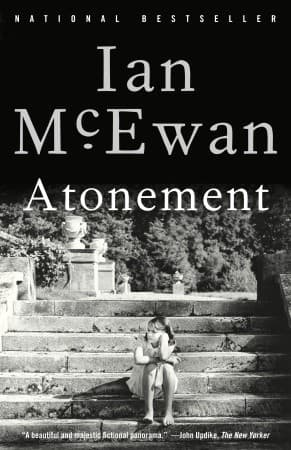
- Atonement
Ian McEwan
4.4 (70) average on GoodreadsFeatures a complex narrative structure, a central mystery, and themes of memory and secrets within a family context.
- Case Histories
Kate Atkinson
3.8 (88k) average on GoodreadsThrillerOffers a blend of literary fiction and mystery, with intricate plots and a focus on lingering past events.
- The Secret Place
Tana French
3.9 (63k) average on GoodreadsThrillerWhile both use complex narrative structures to unravel mysteries within specific communities, French's focus is more intensely psychological and less overtly whimsical. Banks embraces a broader, more darkly comedic view of human nature and mortality, rooted in a specific sense of place.
- The Old Man and the Sea
Ernest Hemingway
3.8 (831k) average on GoodreadsLiterary FictionA Cuban fisherman's long struggle with a giant marlin becomes a story of endurance and dignity, now retold for young adults with illustrations, phonetic guides, and writing prompts in Traditional Chinese.
- One Hundred Years of Solitude
Gabriel García Márquez
4.1 (753k) average on GoodreadsLiterary FictionThrough the multi-generational story of the Buendía family, a mythical town deals with the repeating patterns of time, love, and solitude, as the extraordinary mixes with the ordinary.



Enjoyed the summary?
A summary gives you the shape of the book. The book itself has the detail, the examples and the voice.
Find The Crow Road on AmazonAs an Amazon Associate, BookBrief earns from qualifying purchases. How we're funded