

Synopsis
Covers the whole plot, including the ending.
- Difficulty
- Medium
- Pacing
- Moderate
- Mood
- Satirical, observing, critical, somewhat melancholic
The Custom of the Country Plot Summary
Covers the whole plot, including the ending.
The Spraggs Arrive in New York
Undine Spragg, a beautiful, ambitious young woman from Apex City, arrives in New York with her parents, eager to climb the social ladder. Her father, a successful businessman, has made a fortune, but her mother is socially awkward. This leaves Undine to navigate the complex world of old New York society mostly on her own. She quickly meets the Marvell family, especially Ralph Marvell, a cultured, intellectual young man from an old New York family, and his cousin, Peter Van Degen, a wealthy, crude socialite. Undine is drawn to the glamour and sophistication of this new world. She immediately plans to marry into one of its established families, seeing marriage as her main way to advance socially and escape her small-town origins.
The Engagement to Ralph Marvell
Undine skillfully wins over Ralph Marvell, who is initially attracted to her beauty and fresh, unconventional charm. This charm contrasts sharply with the more reserved women in his social circle. Despite his family's quiet concerns about her background and lack of social polish, Ralph becomes deeply in love. Undine, while not deeply in love herself, sees Ralph as a step up in New York society. She believes his name and connections will give her the prestige she wants. Their engagement is announced, to the quiet dismay of Ralph's mother and sister, who worry about Undine's superficiality and unsuitability for their traditional, intellectual family. Undine, however, ignores their concerns, focused only on the excitement of marrying into an "old money" family.
Marriage and Disillusionment
Undine and Ralph marry. At first, Undine enjoys being Mrs. Ralph Marvell. But her excitement soon fades when she discovers that Ralph's family, while prestigious, does not have the immense wealth she desires. Ralph's intellectual pursuits and his family's understated life bore her; she wants extravagant parties, lavish clothes, and constant social activity. She finds their circle too quiet and thoughtful, which clashes with her own materialistic goals. Her unhappiness grows, fueled by her inability to understand Ralph's values or appreciate his world's cultural richness. She begins to see their marriage as a restriction rather than a success, and her attention starts to move toward richer, more exciting prospects, especially Peter Van Degen.
Affair with Peter Van Degen
Driven by her strong desire for wealth and social standing, Undine starts an affair with Peter Van Degen, Ralph's crude but extremely rich cousin. Peter, though unrefined, offers Undine the lavish life she wants: expensive gifts, grand entertainments, and endless social events. She is drawn to his power and his open disregard for social rules, which matches her own ambition. The affair becomes an open secret in their social circle, causing great pain and humiliation to Ralph, who is devoted to Undine and their young son, Paul. Undine, however, is unaffected by Ralph's suffering, focused only on the material benefits and excitement Peter provides, seeing him as her next step up the ladder.
Divorce and Move to Europe
Undine, determined to secure her future with Peter Van Degen, begins divorce proceedings against Ralph, causing a scandal in conservative New York society. Ralph, devastated by her betrayal and public humiliation, struggles. After the divorce is final, Undine moves to Europe, where she believes she can pursue Peter more freely and escape New York's social disapproval. She expects Peter to marry her immediately, but he avoids commitment, enjoying her company but unwilling to marry, especially after his own wife refuses to divorce him. Undine finds herself in a difficult spot, having sacrificed her first marriage for a promise that seems unlikely to happen, leaving her socially adrift and financially dependent on her parents.
Meeting Raymond de Chelles
While in Paris, on the edges of European high society, Undine meets Raymond de Chelles, a French count from an old, aristocratic family. Though Raymond is poor and his ancestral castle is crumbling, his title and lineage represent a new, even higher form of social prestige to Undine. She is captivated by the idea of becoming a countess, a symbol of ultimate social success that even New York could not offer. Raymond, initially charmed by Undine's exotic American beauty and energy, eventually gives in to her persistent pursuit, seeing her as a potential source of funds to restore his family's estate. They marry, and Undine believes she has finally achieved her ultimate social ambition, becoming part of the European aristocracy, a world far grander than Apex City or even New York.
Life as a Countess
Life as the Comtesse de Chelles quickly proves to be another disappointment for Undine. She discovers that the old French aristocracy values tradition, thrift, and social rigidity over the lavish displays of wealth she wants. Her husband, Raymond, is conservative and expects her to follow his family's and class's strict customs. The crumbling château, without modern conveniences, and the staid social life bore her. She struggles with the language, the unfamiliar customs, and the lack of chances for showing off wealth. Undine realizes that her title, while prestigious, does not give her the freedom or the material comforts she connects with happiness. She feels trapped and misunderstood, wanting the excitement and material abundance of American life.
Ralph's Sacrifice and Death
Back in New York, Ralph Marvell, despite his lingering bitterness, remains devoted to his son, Paul. When Undine tells him she needs a large sum of money to secure her French divorce (a legal move to marry Raymond, as her American divorce was not recognized in France), Ralph, out of duty and a desire to see Paul settled, makes a drastic financial sacrifice. He sells his family home and a valuable book collection, depleting his inheritance, to give Undine the funds. Overwhelmed by financial strain, social exclusion, and the deep sorrow of his failed marriage and separation from his son, Ralph tragically takes his own life. His death is a shock and a devastating loss for his family, but Undine remains largely unaffected, focused only on her next social conquest.
Divorce from Raymond and Marriage to Moffatt
After Ralph's death, Undine uses the funds he provided to secure her divorce from Raymond de Chelles, who is relieved to be rid of his demanding and expensive American wife. Undine then makes a surprising move: she marries Elmer Moffatt, the wealthy and powerful businessman from Apex City whom she had secretly married and divorced years ago. This was a secret she had kept from all her later husbands. Moffatt, now a business leader and immensely rich, offers Undine the ultimate material comfort and social power she has always wanted. Their reunion shows Undine's lasting ambition and Moffatt's continued fascination with her, despite her past betrayals. This marriage brings Undine full circle, returning to her origins but now with immense wealth and a strong social position.
The Price of Success
As Mrs. Elmer Moffatt, Undine finally achieves the height of material wealth and social influence she has pursued throughout her life. She commands a vast fortune, lives in opulent mansions, and travels widely, surrounded by luxury. However, despite her apparent success, Undine remains unfulfilled. She is still restless, always seeking the 'next big thing,' unable to appreciate what she has. Her son, Paul, now a young man, is a quiet disappointment; he is cultured and sensitive, much like his father, Ralph, and largely separate from his mother's materialistic world. Undine's ultimate victory is empty; she has gained everything she thought she wanted, but she has lost the ability for real connection and deep satisfaction, forever trapped by her desires and the 'custom of the country' that shaped her.
Principal Figures
Undine Spragg
Protagonist
A beautiful, ambitious, and relentlessly materialistic young woman.
Undine Spragg is the central figure of the novel, a strikingly beautiful woman from the Midwestern 'new money' town of Apex City. She is driven by an insatiable desire for social advancement, wealth, and recognition, seeing marriage as the primary means to achieve these goals. Undine is charming, captivating, and possesses a raw vitality, but she is also deeply superficial, self-centered, and utterly devoid of cultural appreciation, intellectual curiosity, or genuine empathy. She views people as stepping stones and relationships as transactions. Her moral compass is entirely dictated by her own desires, and she is incapable of understanding or valuing the traditions, intellectual pursuits, or emotional complexities of others.
Relationships: Ralph Marvell (First New York husband, intellectual, victim of her ambition); Peter Van Degen (Lover, wealthy socialite, briefly a potential second husband); Raymond de Chelles (Second husband, French aristocrat, source of a title); Elmer Moffatt (First (secret) husband, later third husband, source of ultimate wealth); Paul Marvell (Son, neglected and misunderstood)
Ralph Marvell
Supporting
Undine's first New York husband, a sensitive and cultured intellectual.
Ralph Marvell is a scion of an old, distinguished New York family, embodying the traditional values of culture, intellect, and social responsibility. He is sensitive, artistic, and deeply rooted in his family's history and traditions. Ralph is initially drawn to Undine's exotic beauty and vitality, seeing in her a refreshing departure from the conventional women of his circle. He is deeply devoted to her and to their son, Paul, and strives to understand and provide for Undine, even when she continuously disappoints him. His tragic flaw is his inability to comprehend Undine's profound materialism and her fundamental lack of empathy, leading to his ultimate despair and demise.
Relationships: Undine Spragg (Wife, source of both joy and profound suffering); Paul Marvell (Son, deeply loved and cherished); Mrs. Marvell (mother) (Devoted mother, concerned about Undine); Laura Fairford (sister) (Supportive sister, critical of Undine)
Elmer Moffatt
Supporting
Undine's first (secret) and final husband, a powerful and self-made millionaire.
Elmer Moffatt is a shrewd, ruthless, and immensely successful businessman from Apex City, representing the burgeoning 'new money' class that challenges traditional society. He is Undine's first, secret husband, whom she divorced early in her life. Moffatt embodies raw power, ambition, and a keen understanding of the new American economic landscape. Despite Undine's previous abandonment, he remains fascinated by her and is ultimately the one who can provide her with the boundless wealth and social influence she craves. Moffatt is a pragmatic figure who understands Undine's nature better than any of her other husbands, and their final marriage is a union of two formidable, materialistic forces.
Relationships: Undine Spragg (First (secret) and final wife, a mutual understanding of ambition)
Peter Van Degen
Supporting
A wealthy, boorish socialite and Undine's lover.
Peter Van Degen is Ralph Marvell's cousin, a man of immense wealth but crude manners and questionable morals. He represents the decadent and pleasure-seeking side of New York's elite, indulging in lavish spending and extramarital affairs without consequence. Undine is drawn to his money and his ability to provide her with the extravagant lifestyle she craves, seeing him as a more suitable partner for her material ambitions than Ralph. Peter, however, is unwilling to commit to marriage, enjoying Undine's company but ultimately prioritizing his own convenience and avoiding scandal. He is a catalyst for Undine's divorce from Ralph, but ultimately another stepping stone in her relentless pursuit of greater wealth.
Relationships: Undine Spragg (Lover, temporary provider of wealth and excitement); Ralph Marvell (Cousin, whom he betrays by having an affair with Undine)
Raymond de Chelles
Supporting
Undine's second husband, an impoverished but aristocratic French count.
Raymond de Chelles is a French count from an ancient, prestigious but financially struggling aristocratic family. He embodies the rigid traditions and cultural refinement of old European nobility. Raymond is initially charmed by Undine's American vivacity and beauty, but he is deeply committed to his family's honor, his ancestral home, and the conservative customs of his class. He marries Undine partly in the hope that her American wealth will help restore his estate, but he quickly becomes disillusioned by her materialism and her inability to adapt to French aristocratic life. He represents a different kind of social prestige than Undine is used to, one based on lineage and tradition rather than ostentatious wealth.
Relationships: Undine Spragg (Second husband, source of a prestigious title but ultimately a mismatch)
Paul Marvell
Supporting
Undine and Ralph's son, sensitive and artistic.
Paul Marvell is the son of Undine and Ralph. He is a sensitive, artistic, and thoughtful child who inherits his father's cultured sensibilities. Largely neglected by his mother, who views him as an inconvenience or an accessory, Paul is deeply loved and cared for by the Marvell family. As he grows older, he becomes increasingly alienated from his mother's materialistic world, gravitating towards art and intellectual pursuits. Paul represents the enduring values of the old New York aristocracy and the potential for genuine human connection, standing in stark contrast to Undine's superficiality. His quiet suffering and his eventual distance from his mother highlight the emotional cost of Undine's relentless ambition.
Relationships: Undine Spragg (Mother, distant and uncomprehending); Ralph Marvell (Father, deeply loved and mourned); Mrs. Marvell (grandmother) (Caring grandmother); Laura Fairford (aunt) (Supportive aunt)
Mrs. Marvell
Supporting
Ralph's mother, the matriarch of the old New York Marvell family.
Mrs. Marvell is the dignified and traditional matriarch of the Marvell family, representing the refined values and social customs of old New York. She is cultured, intelligent, and deeply devoted to her family's heritage and reputation. From the outset, she harbors reservations about Undine's suitability for her son, sensing her superficiality and lack of understanding for their way of life. She tries to guide Ralph and maintain the family's standards but is ultimately powerless against Undine's determined ambition. Her quiet disapproval and eventual sorrow over Ralph's fate underscore the clash between traditional values and the new, materialistic 'custom of the country.'
Relationships: Ralph Marvell (Son, deeply loved); Undine Spragg (Daughter-in-law, viewed with distrust and concern); Paul Marvell (Grandson, cherished)
Laura Fairford
Supporting
Ralph's sister, perceptive and critical of Undine.
Laura Fairford is Ralph Marvell's intelligent and perceptive sister, who shares her mother's concerns about Undine but is more outspoken in her criticism. She is a loyal and supportive sister to Ralph, recognizing Undine's self-serving nature from early on. Laura tries to protect her brother and later her nephew, Paul, from Undine's detrimental influence. She embodies a more modern yet still principled female perspective within the old New York society, observing the social changes with a keen, often critical, eye. Her efforts to intervene are largely futile, highlighting the irresistible force of Undine's ambition and the changing social landscape.
Relationships: Ralph Marvell (Brother, deeply caring and protective); Undine Spragg (Sister-in-law, viewed with disdain and suspicion); Paul Marvell (Nephew, caring aunt)
Themes & Insights
The Custom of the Country
This central theme refers to early 20th-century American society, where divorce and remarriage became common, especially among the wealthy. It shows how marriage was often a transaction for social and financial gain, particularly for women like Undine. The 'custom' also implies a culture of constant pursuit of new things, materialism, and external approval, where old traditions and inherited wealth are always challenged by new money and changing social norms. Wharton criticizes this custom as ultimately unfulfilling and damaging to real human connection and deeper values.
“The custom of the country was for women to get their way, and to get it at any cost.”
Materialism vs. Culture
The novel sharply contrasts Undine Spragg's endless materialism and the 'new rich' with the refined culture, intellectual pursuits, and inherited traditions of 'old money' families like the Marvells. Undine's inability to appreciate art, literature, or history, and her sole focus on gaining wealth and social status, drives the main conflict. Her journey shows how a society that increasingly values superficial display over real substance leads to spiritual emptiness and destroys those who hold onto older, more meaningful values. The theme explores the clash between two opposing views of the world.
“Her mind was like a dry leaf, blown about by every gust of luxury.”
The Role of Women in Society
The novel explores the limited and often transactional roles available to women of a certain class in early 20th-century America. For Undine, marriage is not about love or partnership but a strategic move for social and financial advancement. She uses her beauty and charm as assets in a market where men hold the wealth and power. The theme criticizes a society that forces women into such a position, but also condemns Undine's ruthless use of this system. It highlights the double standards and social pressures that define female identity and ambition, often at the cost of personal integrity and genuine connection.
“A woman's only business was to get married, or, if she wasn't married, to look as if she might be.”
The Decline of Old New York
Wharton shows the decline of 'Old New York's' established social order and moral values, represented by the Marvell family. Their world of inherited wealth, cultural refinement, and discreet traditions is vulnerable and eventually overcome by the aggressive materialism and lack of ethics embodied by Undine and the 'new rich.' The novel laments the loss of a certain kind of integrity and intellectual depth, as the old guard cannot adapt to or compete with the relentless ambition and superficiality of the emerging social scene. Ralph's tragic fate symbolizes this decline.
“He belonged to a generation that had made a religion of not talking about its feelings.”
Plot Devices & Literary Techniques
Foreshadowing
Hints at future events and character fates.
Wharton frequently employs foreshadowing to hint at the tragic consequences of Undine's actions and the eventual fates of characters like Ralph. Early descriptions of Undine's restlessness and her parents' struggles with her 'temperament' suggest her future marital instability. Ralph's initial unease about Undine's background and his family's subtle reservations foreshadow the incompatibility that will destroy their marriage. The recurring motif of Undine's insatiable desire for 'more' continually signals that no amount of wealth or status will ever truly satisfy her, hinting at her ultimate, hollow triumph. This device builds dramatic tension and underscores the inevitability of the narrative's tragic elements.
Social Satire
Critique of social customs through exaggeration and irony.
The novel is a sharp social satire, particularly aimed at the superficiality, materialism, and transactional nature of American high society in the early 20th century. Wharton uses irony and exaggeration to expose the absurdity of social climbing, the emptiness of conspicuous consumption, and the moral bankruptcy of characters like Undine and Peter Van Degen. The contrast between the 'old money' values and the 'new money' aggression is often presented satirically, highlighting the hypocrisy and shallowness of both worlds, though with a clear preference for the cultural depth of the former. This device allows Wharton to critique societal flaws without direct moralizing.
Symbolism
Objects and places represent deeper meanings.
Wharton uses various symbols to deepen the novel's themes. The Marvell's ancestral home, with its old books and quiet dignity, symbolizes the dying values of 'Old New York' and its cultural heritage. Conversely, Undine's ever-changing residences, from the provincial Apex City to lavish New York apartments, a crumbling French château, and finally opulent mansions, symbolize her restless ambition and her pursuit of external validation. Clothes and jewelry also serve as powerful symbols of Undine's social currency and her constant need for outward display. Even Undine's name, derived from a mythical water spirit, hints at her elusive, restless, and ultimately soulless nature.
Dramatic Irony
The audience knows more than the characters.
Dramatic irony is frequently used, particularly in relation to Undine's perceptions and ambitions. The reader understands Undine's true motivations and her fundamental lack of empathy, even as characters like Ralph remain devoted or try to understand her. For instance, the reader knows Undine's marriage to Ralph is a strategic move, while Ralph believes it's based on genuine affection. Similarly, the reader recognizes the hollowness of Undine's 'triumphs' even as she perceives them as ultimate successes. This device highlights Undine's self-deception and the tragic blindness of those around her, intensifying the critique of her character and the society that enables her.
Quiz
10 questions on the plot and the characters. Each answer comes with a short explanation.
Question 1
What is the primary focus of "The Custom of the Country"?
- A historical account of World War I.
- A satiric examination of American society and social ambitions.
- A spiritual journey of self-discovery.
- A romantic comedy set in modern-day New York.
Show answer
B. A satiric examination of American society and social ambitions. The description explicitly states it's a "satiric anatomy of American society" and follows the protagonist's "schemes and social ambitions."
Question 2
Who is the central character whose "career" the novel follows?
- Edith Wharton
- Undine Spragg
- A disillusioned socialite
- A critical reviewer
Show answer
B. Undine Spragg The text clearly states, "It follows the career of Undine Spragg."
Question 3
In what time period is "The Custom of the Country" set?
- The present day.
- The late nineteenth century.
- The first decade of the twentieth century.
- The mid-twentieth century.
Show answer
C. The first decade of the twentieth century. The description mentions "the first decade of the twentieth century."
Question 4
What is the typical trajectory of Undine Spragg's pursuits in the novel?
- Consistent success and lasting happiness.
- Steady decline and eventual obscurity.
- Triumph followed by disillusionment.
- A gradual acceptance of spiritual values.
Show answer
C. Triumph followed by disillusionment. The text states, "where triumph is swiftly followed by disillusion."
Question 5
The novel's initial reception by reviewers is described as:
- Universally praised for its realism.
- Largely ignored due to its controversial themes.
- Both appalling and fascinating.
- Critically acclaimed for its moral lessons.
Show answer
C. Both appalling and fascinating. The description states, "both appalled and fascinated its first reviewers."
Question 6
What kind of world does Undine Spragg navigate?
- A stable society with unchanging values.
- A world focused on intellectual pursuits.
- A world of shifting values.
- A society prioritizing spiritual enlightenment.
Show answer
C. A world of shifting values. The text specifies that Undine operates "in a world of shifting values."
Question 7
The genre classification of "The Custom of the Country" includes:
- Science Fiction and Fantasy.
- Mystery and Thriller.
- Literary Fiction and Historical Fiction.
- Romance and Young Adult.
Show answer
C. Literary Fiction and Historical Fiction. The provided genres are Literary Fiction, Historical Fiction, and Spirituality.
Question 8
What does the term "satiric anatomy" suggest about the novel's approach?
- It's a straightforward, uncritical portrayal of society.
- It uses humor and irony to expose societal flaws.
- It focuses on the biological aspects of society.
- It's a purely academic and objective study.
Show answer
B. It uses humor and irony to expose societal flaws. Satire involves using humor, irony, exaggeration, or ridicule to expose and criticize people's stupidity or vices, particularly in the context of contemporary politics and other topical issues. An anatomy implies a detailed dissection or examination.
Question 9
The phrase "shifting values" in the context of the novel implies a society undergoing:
- A period of moral and ethical stability.
- A fundamental change in societal norms and beliefs.
- A decline in religious adherence.
- A return to traditional customs.
Show answer
B. A fundamental change in societal norms and beliefs. "Shifting values" directly indicates that the prevailing moral and ethical standards are not constant but are in flux, suggesting a period of change and uncertainty regarding what is considered right or wrong, important or unimportant.
Question 10
Considering the themes of "schemes and social ambitions" leading to "disillusion," what can be inferred about the novel's underlying commentary?
- True happiness is achieved through relentless pursuit of social status.
- The novel celebrates the American Dream as attainable for all.
- The novel likely critiques the superficiality and potential emptiness of chasing external validation.
- The focus is on the spiritual rewards of ambition.
Show answer
C. The novel likely critiques the superficiality and potential emptiness of chasing external validation. The juxtaposition of ambition, triumph, and subsequent disillusionment strongly suggests a critique of the values that drive such pursuits, implying that focusing solely on social climbing and external markers of success may not lead to genuine fulfillment. This aligns with a commentary on the potential hollowness of such ambitions.
The Custom of the Country FAQ
What is the main theme of The Custom of the Country?
The main theme is the corrosive effect of social ambition and materialism on individuals and society. It satirizes the American obsession with wealth and status, showing how these pursuits can lead to moral compromise and personal disillusionment.
Who is Undine Spragg and what does she want?
Undine Spragg is the protagonist of the novel. She is a beautiful and determined young woman from the Midwest who moves to New York City with the sole aim of climbing the social ladder and marrying into wealth and status.
What kind of society does Edith Wharton portray in The Custom of the Country?
Wharton portrays a society in the early 20th century that is rapidly changing, marked by a clash between old money and new wealth, and a rampant pursuit of superficial status. It's a world where appearances and social maneuvering are paramount.
Is The Custom of the Country a romance novel?
While the novel features romantic relationships and marriages, it is not a traditional romance. It's a social satire that uses Undine's romantic pursuits to expose the hollowness of societal expectations and the transactional nature of marriage in that era.
What does 'The Custom of the Country' refer to?
The title refers to the prevailing social norms and expectations of the time, particularly concerning marriage, wealth, and social climbing. It highlights how these 'customs' dictate behavior and often lead to morally questionable actions.
What is the overall tone of The Custom of the Country?
The novel's tone is sharply satirical and critical. Wharton uses wit and irony to expose the hypocrisy and superficiality of the American upper class, while also conveying a sense of tragic inevitability in Undine's relentless pursuit of her goals.
How does spirituality play a role in The Custom of the Country?
Spirituality is not a central theme in this novel. While characters might engage in religious or spiritual practices, the focus is firmly on their social and material ambitions, often to the exclusion of deeper spiritual concerns.
What is the significance of Undine Spragg's name?
Undine's name is significant as it evokes a mythical water nymph, suggesting a potentially alluring but ultimately transient and potentially destructive nature. It hints at her artificiality and her ability to adapt and charm her way through society.
Who would enjoy reading The Custom of the Country?
Readers who enjoy classic literature, social satire, historical fiction set in early 20th-century America, and character studies of complex, often unsympathetic protagonists would likely enjoy this book.
What makes The Custom of the Country a 'critical edition'?
A critical edition typically includes scholarly annotations, introductions, and possibly variant readings of the text, offering deeper insights into the work's historical context, literary significance, and textual history.
About the author
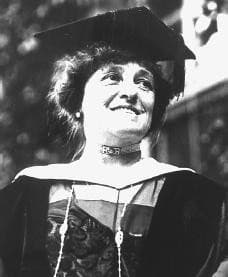
Edith Wharton was an American writer and designer. Wharton drew upon her insider's knowledge of the upper-class New York "aristocracy" to portray realistically the lives and morals of the Gilded Age. In 1921, she became the first woman to win the Pulitzer Prize in Fiction, for her novel The Age of Innocence. She was inducted into the National Women's Hall of Fame in 1996. Among her other well known works are The House of Mirth, the novella Ethan Frome, and several notable ghost stories.
Similar books
- The Age of Innocence
Edith Wharton
4.0 (139k) average on GoodreadsHistorical Fiction"The Custom of the Country" shares Wharton's characteristic exploration of New York society and its rigid customs, but it offers a starker, more cynical view. While "The Age of Innocence" focuses on the subtle nuances and tragic sacrifices within a more established, albeit stifling, aristocratic world, "The Custom of the Country" directly confronts the disruptive force of the 'new money' and the overt ruthlessness of social climbers like Undine. "The Age of Innocence" elicits more sympathy for its constrained protagonists, whereas "The Custom of the Country" is a more biting satire, with Undine serving as a less sympathetic, more purely ambition-driven figure. Both showcase Wharton's mastery of social commentary, but "Custom" is arguably the more abrasive and less romanticized portrayal of the era.
- Sister Carrie
Theodore Dreiser
3.8 (37k) average on GoodreadsLiterary FictionBoth "The Custom of the Country" and "Sister Carrie" examine the rise of an ambitious young woman from humble beginnings in the late 19th/early 20th century, seeking to improve her station through relationships and material acquisition. However, their tones and narrative approaches differ significantly. Dreiser's Carrie Meeber is more of a passive recipient of circumstances, often driven by a yearning for comfort and beauty, and her moral compromises are presented with a degree of naturalism and even pity. In contrast, Wharton's Undine Spragg is an active, calculating, and almost predatory force, fully aware of her manipulations and driven by a relentless, almost soulless ambition. While both novels critique the allure of material wealth in America, "Sister Carrie" is often more empathetic to its protagonist's struggles, whereas "The Custom of the Country" is a colder, more satirical dissection of its anti-heroine's machinations and the society that enables them.
- The Old Man and the Sea
Ernest Hemingway
3.8 (831k) average on GoodreadsLiterary FictionA Cuban fisherman's long struggle with a giant marlin becomes a story of endurance and dignity, now retold for young adults with illustrations, phonetic guides, and writing prompts in Traditional Chinese.
- One Hundred Years of Solitude
Gabriel García Márquez
4.1 (753k) average on GoodreadsLiterary FictionThrough the multi-generational story of the Buendía family, a mythical town deals with the repeating patterns of time, love, and solitude, as the extraordinary mixes with the ordinary.
- The Goldfinch
Donna Tartt
3.9 (720k) average on GoodreadsLiterary FictionHaunted by a tragic explosion and clutching a stolen Dutch masterpiece, a young orphan navigates the opulent drawing rooms of New York and the gritty underbelly of the art world, desperately seeking connection and redemption amidst a life spiraling into crime and obsession.
- Little Fires Everywhere
Celeste Ng
4.1 (713k) average on GoodreadsLiterary FictionIn Shaker Heights, an artist and her daughter move in, and their free-spirited lives clash with a rule-bound matriarch, revealing hidden conflicts beneath a perfect surface.






Enjoyed the summary?
A summary gives you the shape of the book. The book itself has the detail, the examples and the voice.
Find The Custom of the Country on AmazonAs an Amazon Associate, BookBrief earns from qualifying purchases. How we're funded