

Synopsis
Covers the whole plot, including the ending.
- Difficulty
- Medium
- Pacing
- Moderate
- Mood
- Reflective, Irony, Political, Character-focused
- Read it if
- You enjoy character-driven historical fiction that blends personal stories with significant political events in a concise format.
- Skip it if
- You prefer fast-paced thrillers or stories with a clear, singular plot instead of multiple perspectives and a focus on internal lives.
The Day the Leader Was Killed Plot Summary
Covers the whole plot, including the ending.
A Glimpse of Daily Life and Discontent
The novel opens with Elwan, a young man from a traditional Cairene family, narrating his daily routines and anxieties about the future. He loves his cousin Randa, but their engagement faces financial difficulties and differing family aspirations. Elwan works a modest job, feeling the weight of societal expectations and economic pressures in Sadat's Egypt. He sees the growing gap between rich and poor, the rise of consumerism, and political tensions beneath the surface of daily life. His grandfather, Muhtashimi Zayed, a devout and traditional man, often gives him advice rooted in a bygone era, which Elwan finds hard to reconcile with modern realities.
Muhtashimi's Musings and Traditional Values
Muhtashimi Zayed, Elwan's grandfather, offers his religious and traditional worldview. He regrets the moral decay he sees in modern society, the abandonment of Islamic principles, and the younger generation's superficiality. He often references the Quran and the Prophet's teachings, believing that faith leads to happiness and order. He focuses on family, respect for elders, and life's simple pleasures, often clashing with Elwan and Randa's more materialistic and secular aspirations. He views the political climate as a symptom of this moral decline, though he rarely discusses politics directly.
Randa's Ambitions and Modern Aspirations
Randa, Elwan's fiancée, offers her perspective, showing a modern, independent spirit that often clashes with her family's traditional values and Elwan's cautious nature. She dreams of a comfortable life, free from the financial struggles many Cairene families face. She is pragmatic and ambitious, pushing Elwan to secure a better future for them. Her love for Elwan is genuine, but she also recognizes the limits imposed by their circumstances. She is frustrated by slow change and societal constraints on women, wanting more freedom and opportunities than her grandmother or Muhtashimi ever had.
Financial Strain and Family Dynamics
Financial struggles for both Elwan's and Randa's families cause tension. Elwan's modest income makes it difficult to afford a home and marriage expenses. Randa's family, while not poor, also faces economic pressures, making them question Elwan's ability to provide. These financial anxieties create friction between Elwan and Randa, and between their families, who have different views on what makes a suitable marriage and a stable future. Societal pressure to keep up appearances and follow traditional wedding customs worsens their financial problems, making a simple, happy union seem out of reach.
The Shadow of Political Discontent
Throughout the narratives, there are subtle allusions to Egypt's political climate under President Sadat. While direct political commentary is sparse, the characters' anxieties about inflation, corruption, and perceived moral decline indirectly reflect broader political discontent. Muhtashimi occasionally criticizes government policies from a religious standpoint, while Elwan and Randa care more about how these policies affect their personal lives and economic prospects. The growing divide between secular and religious, rich and poor, and traditional and modern points to unrest that foreshadows larger societal upheaval, though the characters largely focus on their personal struggles.
Elwan's Despair and Search for Meaning
Elwan often expresses feelings of inadequacy and despair. He feels trapped between his love for Randa and his inability to provide for her as he wishes. He is disillusioned with his opportunities and often questions his worth. He struggles to reconcile his traditional upbringing with modern life's demands, feeling lost in a rapidly changing world. His internal monologues show a young man searching for meaning beyond his mundane existence, often finding solace in dreams of a future with Randa, despite obstacles. He longs for a sense of belonging and stability that seems elusive.
Randa's Frustration and Resolve
Randa's narrative often highlights her frustration with the status quo and her determination to build a better life. She is not content to passively accept her circumstances and actively pushes Elwan to be more ambitious. She challenges traditional expectations for women, advocating for her desires and a more comfortable future. Despite financial difficulties and differing family opinions, Randa remains resolute in her love for Elwan and her belief that they can overcome obstacles. Her modern outlook and strong will contrast with Elwan's more introspective and sometimes melancholic nature.
The Leader's Presence and Absence
President Sadat, the 'Leader,' is a pervasive but often unseen presence throughout the novel. His image appears in newspapers and on television, and characters discuss his policies with veiled criticism. His rule indirectly shapes their lives, whether through economic policies, social changes, or the general political atmosphere. While they do not interact with him directly, his leadership forms the backdrop for their personal dramas. His presence is a constant reminder of the broader political context, a silent force influencing their daily struggles and aspirations, setting the stage for the dramatic climax.
The Day of the Assassination
The narrative builds towards October 6, 1981, the day of Sadat's assassination. On this day, characters go about their normal routines, each engrossed in personal concerns. Elwan contemplates his future with Randa, Muhtashimi prays and reflects, and Randa perhaps dreams of a better life. Their mundane activities contrast sharply with the momentous event about to unfold. There is no immediate sense of impending doom in their personal lives, highlighting the sudden and shocking nature of the assassination when it occurs, catching them, and the nation, by surprise.
The News Breaks
News of President Sadat's assassination breaks, sending shockwaves through Cairo and into the characters' lives. Each reacts differently: Elwan is stunned, grappling with the event's suddenness and implications; Muhtashimi, despite earlier criticisms, expresses a solemn sense of loss and reflects on life's fragility; Randa is also shocked, perhaps thinking how this political upheaval might further affect her and Elwan's future. The assassination immediately shifts focus from personal dramas to the national crisis, forcing them to confront their world's instability. The event reminds them of history's unpredictable nature and its impact on individual lives.
Aftermath and Reflection
Immediately after the assassination, characters reflect on Sadat's death and its potential consequences for Egypt. Muhtashimi, with his historical and religious perspective, sees it as divine will or a consequence of societal transgressions. Elwan, more pragmatic, worries about the country's future stability and how it will affect his ability to build a life with Randa. Randa, ever forward-looking, considers the potential for change, both positive and negative. The event forces them to confront larger political forces, moving beyond individual concerns to a collective sense of national uncertainty and questioning Egypt's path.
Personal Lives Intertwined with History
Sadat's assassination connects the personal destinies of Elwan, Randa, and Muhtashimi with Egyptian history. Their individual struggles for love, stability, and meaning are suddenly part of a larger national upheaval and political transition. The event shows Mahfouz's central theme: that even the most personal lives connect to the broader political and social currents of their time. The future of their engagement, their family, and their nation becomes uncertain, showing the fragility of both personal and collective peace.
The Day the Leader Was Killed Characters
Elwan
Protagonist
A young, sensitive man navigating love and economic hardship in changing times.
Elwan is a young man deeply in love with his cousin Randa, striving to build a future with her amidst the economic and social challenges of 1980s Cairo. He is often introspective, sensitive, and prone to anxiety about his financial prospects and his ability to provide for Randa. He feels the weight of societal expectations and the pressure to succeed, often feeling inadequate. His character embodies the struggles of a generation caught between traditional values and the allure of modernity, yearning for stability and happiness in an increasingly unpredictable world.
Relationships: Randa (Fiancée, deep love, source of both inspiration and anxiety); Muhtashimi Zayed (Grandfather, source of traditional wisdom and occasional frustration)
Randa
Protagonist
Elwan's ambitious and modern fiancée, seeking a better life.
Randa is Elwan's fiancée, a beautiful and headstrong young woman with a clear vision for her future. Unlike Elwan, she is more pragmatic, ambitious, and less constrained by traditional expectations. She yearns for a comfortable, modern life and is not afraid to push Elwan and her family to achieve it. Her determination and modern outlook provide a strong counterpoint to Elwan's anxieties and Muhtashimi's traditionalism. She represents the aspirations of a new generation of Egyptian women seeking greater independence and opportunities.
Relationships: Elwan (Fiancée, deep love, catalyst for his ambition and sometimes the object of his anxiety); Muhtashimi Zayed (Grandfather-in-law (future), represents the traditional values she often challenges)
Muhtashimi Zayed
Supporting
Elwan's pious, traditional grandfather, a voice of the past.
Muhtashimi Zayed is Elwan's elderly grandfather, a devout and traditional man who offers his perspective on life, faith, and the changing world. He is deeply rooted in Islamic principles and laments what he perceives as the moral decay and superficiality of modern society. He often provides Elwan with wisdom drawn from the Quran and his own experiences, though his advice sometimes clashes with the realities of the younger generation. He represents the older, more conservative generation, providing a moral and historical anchor for the family.
Relationships: Elwan (Grandson, recipient of his wisdom and observations); Randa (Granddaughter-in-law (future), represents modern values that sometimes conflict with his own)
President Anwar al-Sadat
Mentioned
The Egyptian leader whose assassination forms the novel's climax.
Anwar al-Sadat is the real-life President of Egypt at the time the novel is set. While not a direct character in terms of dialogue or interaction, his presence is pervasive as the 'Leader' of the nation. His policies, both economic and political, indirectly shape the lives of the characters, influencing the societal atmosphere, the economic conditions, and the political tensions. His assassination serves as the pivotal historical event around which the fictional plot culminates, dramatically impacting the characters' world and their future.
Elwan's Father
Supporting
A pragmatic middle-class man concerned with his son's future.
Elwan's father is a practical man, concerned with the family's financial stability and Elwan's prospects. He encourages Elwan to work hard and secure a good future, often reflecting the pressures of providing for a family in a challenging economic climate. He supports Elwan's engagement to Randa but is also realistic about the financial hurdles they face, sometimes acting as a mediator between Elwan's aspirations and the family's capabilities.
Relationships: Elwan (Son, provides guidance and support); Muhtashimi Zayed (Father, respects his wisdom but lives in a more modern reality)
Randa's Father
Supporting
A traditional but somewhat flexible father, concerned for his daughter's well-being.
Randa's father, while traditional, appears somewhat more open to modern ideas than Muhtashimi. He cares deeply for Randa's happiness and future, though he also expects Elwan to be able to provide adequately for her. He is part of the negotiations surrounding the engagement, ensuring that Randa will be well-cared for. His concerns reflect the balance between adhering to customs and ensuring his daughter's prosperity in a changing world.
Relationships: Randa (Daughter, seeks her happiness and security); Elwan (Future son-in-law, evaluates his suitability as a provider)
Elwan's Mother
Supporting
A caring mother who supports Elwan's relationship with Randa.
Elwan's mother is a supportive and caring figure, deeply invested in Elwan's happiness, particularly his engagement to Randa. She often acts as a source of comfort for Elwan and helps navigate the family discussions surrounding the marriage. Her character embodies the traditional role of a mother in an Egyptian household, focused on family well-being and maintaining harmony.
Relationships: Elwan (Son, provides emotional support); Muhtashimi Zayed (Father-in-law, respects his authority)
Randa's Mother
Supporting
A practical mother who desires a secure future for her daughter.
Randa's mother is a practical woman, concerned with the financial stability of Randa's future. She supports Randa's engagement to Elwan but also ensures that all traditional expectations are met and that Elwan can provide a comfortable life for her daughter. She represents the maternal desire for security and prosperity for her children, often engaging in the practicalities of marriage arrangements.
Relationships: Randa (Daughter, seeks her well-being); Elwan (Future son-in-law, evaluates his financial capabilities)
The Day the Leader Was Killed Themes
Tradition vs. Modernity
This central theme appears in the generational divide between Muhtashimi Zayed's devout, traditional worldview and Elwan and Randa's modern aspirations. Muhtashimi regrets the moral decay and abandonment of Islamic values in contemporary Cairo. Elwan struggles to reconcile his upbringing with economic pressures and changing social norms. Randa actively embraces modern ideals, striving for a comfortable and independent life. The clash is clear in their contrasting views on marriage, finances, and societal values, highlighting Egypt's struggle to balance its heritage with modernization. For example, Elwan's anxieties over affording a modern apartment for Randa conflict with Muhtashimi's emphasis on spiritual wealth.
“The world was changing, and not always for the better, he thought, lamenting the days when faith alone guided men’s hearts.”
The Impact of Politics on Personal Lives
The novel shows how national politics, even when not directly discussed, shape characters' intimate lives. Sadat's economic policies, like inflation and the push for consumerism, directly affect Elwan's ability to secure a stable future with Randa, causing him anxiety. Underlying political tensions and societal unrest are subtly part of their daily existence. The dramatic climax, Sadat's assassination, demonstrates this theme, suddenly placing their personal struggles into a national crisis and uncertainty, altering their future perception.
“How could one plan a life when the very ground beneath one’s feet felt so uncertain?”
Love and Financial Struggle
The love story between Elwan and Randa is consistently overshadowed by financial difficulties. Elwan's modest income and Cairo's high cost of living create immense pressure on their engagement, delaying marriage and causing anxiety. Randa's desire for a comfortable life, while understandable, adds to Elwan's sense of inadequacy. Their love is genuine, but economic realities test it, showing how material circumstances can strain even deep affections. The struggle to afford a home and a wedding is a recurring element.
“Love, he realized, was a powerful force, but it rarely paid the rent.”
Disillusionment and Hope
Elwan often expresses disillusionment with his life, prospects, and society's state, reflecting wider malaise in Sadat's Egypt. He feels trapped and inadequate, struggling to find meaning. However, his love for Randa and her ambitious spirit often offer hope, pushing him to strive for a better future. Despite challenges and political upheaval, a persistent undercurrent of hope for personal happiness and societal improvement remains, even if uncertain. The characters move between despair and a quiet determination to endure and build a life.
“Perhaps, he thought, hope was not an absence of despair, but rather the courage to continue despite it.”
Plot Devices & Literary Techniques
Multiple Perspectives (Alternating Narrators)
The story is told through the alternating viewpoints of three main characters.
Mahfouz employs alternating first-person narration, primarily switching between Elwan, Randa, and Muhtashimi Zayed. This device allows for a multifaceted exploration of the novel's themes, providing diverse insights into the same events and societal conditions. Elwan offers a youthful, anxious perspective; Randa provides a modern, ambitious viewpoint; and Muhtashimi contributes a traditional, philosophical lens. This technique enriches the reader's understanding of the characters' internal worlds and the complex societal dynamics of 1980s Egypt, showing how different generations and personalities perceive and react to the same reality, especially the political climate and the assassination.
Foreshadowing (Subtle Political Unrest)
Hints of societal discontent and political instability precede the climax.
Throughout the narrative, Mahfouz subtly foreshadows the impending political upheaval, particularly the assassination of Sadat. This is achieved through the characters' anxieties about inflation, corruption, and the perceived moral decay of society, as well as occasional, veiled criticisms of the government. These hints create a pervasive atmosphere of underlying tension and instability, even as the characters focus on their personal lives. This builds anticipation and makes the eventual assassination, while shocking, feel like a culmination of the simmering discontent that has been present all along, emphasizing the interconnectedness of personal and national destinies.
Historical Event as Climax
A real-world assassination serves as the novel's dramatic turning point.
The assassination of President Anwar al-Sadat on October 6, 1981, is not merely a backdrop but the central climax of the novel. By weaving the fictional lives of his characters around this real and momentous historical event, Mahfouz grounds his narrative in a tangible reality. This device allows him to explore the profound impact of national events on individual lives, demonstrating how personal destinies are inextricably linked to the broader political landscape. The sudden, shocking nature of the assassination dramatically shifts the focus from the characters' personal struggles to a collective national crisis, underscoring the fragility of peace and the unpredictable nature of history.
The Day the Leader Was Killed Quotes
“The people are like children, easily swayed by a sweet word or a harsh one.”
“Love is a strange thing; it can bloom in the most barren of lands, and wither in the most fertile.”
“History is written by the victors, but the truth often lies buried with the vanquished.”
“Even in the darkest night, a single star can offer hope.”
“We live in a time where a man's life is worth less than a rumor.”
“The past is a phantom that haunts our present, dictating our future.”
“A leader's death is never just the death of a man; it is the death of an era.”
“The greatest prison is not made of bars, but of fear.”
“To truly know a city, you must walk its streets when it sleeps.”
“Every revolution devours its own children in the end.”
“The heart has its own reasons, which reason knows nothing of.”
“Silence can be louder than any scream, especially when it carries the weight of unspoken truths.”
“We build our lives on sand, believing it to be rock, until the tide comes in.”
“Even the mightiest tree can be felled by a single, well-aimed axe.”
Quiz
10 questions on the plot and the characters. Each answer comes with a short explanation.
Question 1
Which historical event serves as the climax of 'The Day the Leader Was Killed'?
- The Suez Crisis
- The assassination of Anwar al-Sadat
- The Camp David Accords signing
- The Six-Day War
Show answer
B. The assassination of Anwar al-Sadat The novel explicitly states that its climax is reached with the assassination of Sadat on October 6, 1981.
Question 2
Which of the following characters is NOT one of the alternating narrators in the novel?
- Muhtashimi Zayed
- Elwan
- Randa
- Anwar al-Sadat
Show answer
D. Anwar al-Sadat The story is narrated alternately by Muhtashimi Zayed, Elwan, and Randa. Sadat is a historical figure within the novel's setting, not a narrator.
Question 3
What is the primary setting of 'The Day the Leader Was Killed'?
- Alexandria, Egypt
- Cairo, Egypt
- Luxor, Egypt
- Giza, Egypt
Show answer
B. Cairo, Egypt The novel is explicitly set in Cairo, focusing on a middle-class Cairene family.
Question 4
What is Muhtashimi Zayed's defining characteristic as a narrator?
- He is intensely focused on political activism.
- He is depicted as pious and mischievous.
- He is a struggling young student.
- He is a cynical and disillusioned intellectual.
Show answer
B. He is depicted as pious and mischievous. Muhtashimi Zayed is described as the 'pious and mischievous family patriarch'.
Question 5
What role does the political backdrop of Sadat's Egypt play in the novel?
- It serves merely as a decorative setting without influencing the plot.
- It is infused with political undertones and skillfully woven into the fictional plot.
- It is the sole focus of the narrative, overshadowing the family story.
- It provides a comedic contrast to the family's struggles.
Show answer
B. It is infused with political undertones and skillfully woven into the fictional plot. The description states the novel is 'infused with political undertones' and the 'fictional plot is skillfully woven' around the historical event.
Question 6
How is Elwan generally characterized in the novel?
- As a shrewd businessman.
- As a headstrong revolutionary.
- As hapless.
- As a powerful political figure.
Show answer
C. As hapless. Elwan is specifically described as the 'hapless grandson'.
Question 7
What is a prominent stylistic feature of 'The Day the Leader Was Killed', as highlighted in the description?
- Its use of extensive historical footnotes.
- Its rich irony.
- Its experimental stream-of-consciousness narrative.
- Its reliance on magical realism.
Show answer
B. Its rich irony. The novel is described as 'Rich with irony and infused with political undertones'.
Question 8
The novel is set in 1981, a period characterized by Egypt 'lurching into the modern world.' What broader theme does this suggest Mahfouz might be exploring?
- The unchanging nature of Egyptian society.
- The challenges and tensions of modernization and tradition in Egypt.
- The complete rejection of traditional values in favor of modernity.
- The isolation of Egypt from global political trends.
Show answer
B. The challenges and tensions of modernization and tradition in Egypt. The phrase 'lurching into the modern world' implies a period of awkward transition and potential conflict between old ways and new, a common theme in literature dealing with societal change.
Question 9
Given the alternating narration by a patriarch, a grandson, and his fiancée, what narrative technique does Mahfouz likely employ to deepen the reader's understanding of events?
- An omniscient third-person perspective to provide objective facts.
- Multiple subjective viewpoints to offer varied interpretations of the same events and societal changes.
- A single unreliable narrator to create suspense.
- A chronological, documentary-style account of the historical period.
Show answer
B. Multiple subjective viewpoints to offer varied interpretations of the same events and societal changes. Alternating narrators, especially across generations and different personalities (pious/mischievous, hapless, headstrong), inherently provide multiple subjective viewpoints, allowing for a richer, more nuanced understanding of the social and political landscape.
Question 10
What does the Nobel citation's remark that Mahfouz 'has formed an Arabic narrative art that applies to all mankind' suggest about the novel's themes and appeal?
- His work is exclusively focused on uniquely Egyptian cultural issues.
- His narratives, while rooted in Arabic culture, explore universal human experiences and dilemmas.
- His writing style is easily translatable into any language without losing nuance.
- His stories are primarily historical accounts with limited contemporary relevance.
Show answer
B. His narratives, while rooted in Arabic culture, explore universal human experiences and dilemmas. The phrase 'applies to all mankind' indicates that despite being set in a specific cultural and historical context, Mahfouz's themes and characters resonate with universal human experiences, making his work accessible and meaningful to a global audience.
The Day the Leader Was Killed FAQ
What is the central historical event around which 'The Day the Leader Was Killed' revolves?
The novel's climax and central historical anchor is the assassination of Egyptian President Anwar al-Sadat on October 6, 1981. This real-world event is skillfully interwoven with the fictional plotlines of the Cairene characters, reflecting the political turmoil of the era.
Who are the primary narrators of the story, and how do their perspectives differ?
The story is alternately narrated by three characters: Muhtashimi Zayed, the pious and mischievous family patriarch; Elwan, his hapless grandson; and Randa, Elwan's headstrong and beautiful fiancée. Their differing viewpoints offer a multi-faceted look at Egyptian society, family dynamics, and the political climate of 1981.
What kind of family is depicted in the novel, and what are their struggles?
The novel depicts a middle-class Cairene family grappling with the social and political changes sweeping Egypt in the early 1980s. Their struggles include generational clashes, romantic entanglements, economic anxieties, and navigating a society lurching between tradition and modernity under Sadat's presidency.
How does the novel use irony and political undertones?
The novel is rich with irony, often stemming from the contrast between characters' personal aspirations and the broader political realities of Sadat's Egypt. Political undertones subtly critique the state of the nation, reflecting societal discontent and the anxieties leading up to the leader's assassination, even within the confines of domestic life.
What is the nature of the relationship between Elwan and Randa?
Elwan and Randa are engaged, and their relationship forms a central romantic plotline. Randa is portrayed as headstrong and beautiful, while Elwan is hapless, suggesting a dynamic where Randa might be the more dominant or pragmatic partner, navigating their future amidst societal pressures.
How does Muhtashimi Zayed's 'pious and mischievous' nature manifest in the narrative?
Muhtashimi Zayed's piety likely provides a traditional moral compass, while his mischievousness offers comic relief or subtle commentary on the changing world. This dual nature allows him to observe and perhaps gently subvert the norms around him, offering a unique perspective on his family and society.
Are there specific details or foreshadowing related to Sadat's assassination before the event itself?
While the book is fiction, Mahfouz skillfully weaves the impending assassination into the narrative's fabric by depicting the growing political unrest and societal tensions. Characters' discussions, anxieties, and the overall atmosphere of 1981 Egypt subtly foreshadow the violent climax, rather than explicit premonitions.
How does the novel connect the personal lives of the Cairene family to the grand political events?
Mahfouz masterfully links the personal and political by showing how national events, like economic shifts or political unrest, directly impact the family's daily struggles, relationships, and future prospects. The characters' individual hopes and fears become microcosms of the broader Egyptian experience, culminating in their reaction to Sadat's death.
What role does the 'modern world' play in the family's struggles?
Egypt 'lurching into the modern world' implies a clash with traditional values, affecting everything from Randa's headstrong nature to Elwan's struggles to find his footing. This modernization likely introduces new social norms, economic pressures, and political ideologies that challenge the family's established ways of life.
How does Elwan's 'hapless' nature contribute to the novel's psychological depth?
Elwan's haplessness likely reflects a sense of powerlessness or disillusionment common among a certain segment of society during times of rapid change. His struggles may symbolize the individual's difficulty in navigating a complex and often overwhelming political and social landscape, highlighting psychological vulnerability.
What psychological impact does the political climate of 1981 Egypt have on the characters?
The political climate of 1981, marked by Sadat's leadership and underlying tensions, creates a pervasive sense of anxiety, uncertainty, and sometimes even fear among the characters. This impacts their decision-making, their relationships, and their overall outlook on life, coloring their daily experiences with a national mood.
How does Randa's 'headstrong' nature challenge societal expectations for women in 1980s Egypt?
Randa's headstrong personality suggests a defiance of traditional gender roles and expectations for women in conservative Egyptian society. Her assertiveness likely creates tension within her relationship with Elwan and potentially with the broader family, symbolizing a push for greater female agency in a changing world.
What psychological coping mechanisms do the characters employ to deal with their personal and national struggles?
Characters employ various coping mechanisms, such as Muhtashimi's piety and mischievousness, Elwan's likely escapism or passive acceptance, and Randa's assertiveness. These methods reflect their individual personalities and their attempts to maintain a sense of control or stability amidst personal romantic dilemmas and national political upheaval.
Is the novel primarily a political commentary, or is the family drama its main focus?
While deeply infused with political undertones, the novel skillfully balances both. The family drama serves as a human lens through which to experience the political realities of Sadat's Egypt. The assassination acts as a catalyst and backdrop, but the intimate struggles of Muhtashimi, Elwan, and Randa are central to the narrative's emotional core.
How does Mahfouz use the alternating narration to create a comprehensive picture of Egyptian society?
The alternating narration provides multiple, often contrasting, perspectives on the same events and societal issues. Muhtashimi offers a traditional, perhaps cynical view; Elwan, a youthful, struggling one; and Randa, a modern, ambitious female voice. This tapestry of viewpoints offers a more comprehensive and nuanced understanding of Egyptian life.
What is the significance of the title, 'The Day the Leader Was Killed,' given the novel's focus on a family?
The title highlights the profound impact of a monumental political event on ordinary lives, emphasizing that even seemingly distant national tragedies reverberate intimately within families. It underscores the idea that personal narratives are inextricably linked to the broader historical currents of their time, making the leader's death a pivotal moment for all.
Does the novel offer any explicit judgment or critique of Sadat's leadership?
Rather than explicit judgment, Mahfouz's critique is often subtle and embedded in the characters' experiences and the depicted societal conditions. The 'irony' and 'political undertones' suggest a nuanced portrayal of the discontent and challenges faced by ordinary Egyptians under Sadat's rule, allowing readers to draw their own conclusions.
How does the novel's relatively compact size affect its narrative style and impact?
Its 'artfully compact' nature means that Mahfouz achieves significant depth and scope within a concise framework. This likely results in a focused narrative, relying on potent imagery, sharp characterization, and efficient plotting to convey complex themes and emotions without unnecessary exposition, enhancing its overall impact.
About the author

Naguib Mahfouz Abdelaziz Ibrahim Ahmed Al-Basha was an Egyptian writer who won the 1988 Nobel Prize in Literature. Mahfouz is regarded as one of the first contemporary writers in Arabic literature, along with Taha Hussein, to explore themes of existentialism. He is the only Egyptian to win the Nobel Prize in Literature. He published 35 novels, over 350 short stories, 26 screenplays, hundreds of op-ed columns for Egyptian newspapers, and seven plays over a 70-year career, from the 1930s until 2004. All of his novels take place in Egypt, and always mentions the lane, which equals the world. His most famous works include The Cairo Trilogy and Children of Gebelawi. Many of Mahfouz's works have been made into Egyptian and foreign films; no Arab writer exceeds Mahfouz in number of works that have been adapted for cinema and television. While Mahfouz's literature is classified as realist literature, existential themes appear in it.
Similar books
- Palace Walk
Naguib Mahfouz
4.2 (15k) average on GoodreadsHistorical FictionExplores family dynamics and societal change in Cairo with a similar literary style.
- The Yacoubian Building
Alaa Al Aswany
3.7 (18k) average on GoodreadsLiterary FictionOffers a multi-layered look at Egyptian society and politics through diverse characters.
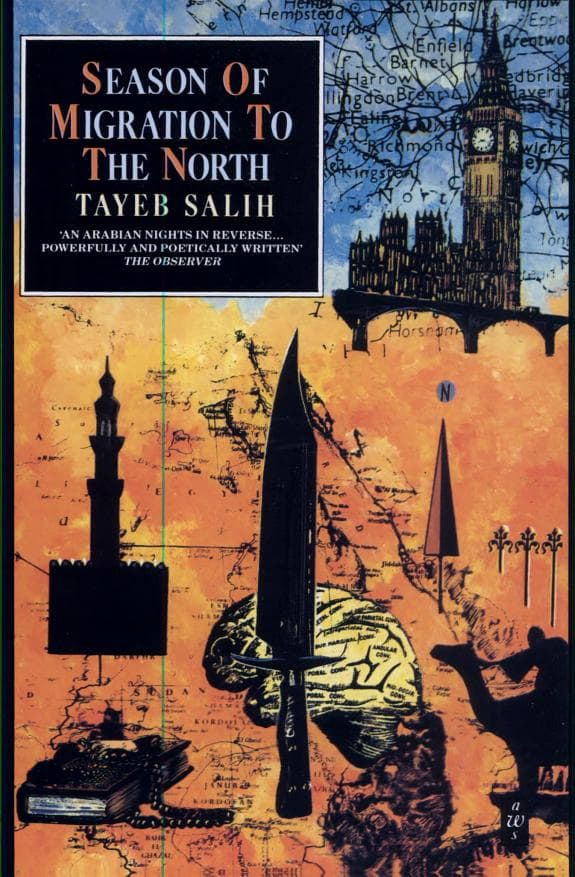
- Season of Migration to the North
Tayeb Salih
3.7 (20k) average on GoodreadsHistorical FictionSalih's novel offers a more direct and explicit critique of post-colonial identity and power dynamics, focusing on broader socio-political themes with a stronger allegorical bent. Mahfouz, in contrast, is more introspective and focuses on the micro-level impact of historical events.
- To Kill a Mockingbird
Harper Lee
4.3 (4.5M) average on GoodreadsHistorical FictionIn the 1930s Jim Crow South, Harper Lee writes about racial injustice, moral growth, and the quiet courage of a lawyer father, Atticus Finch, as seen through his young daughter's eyes.
- The Great Gatsby
F. Scott Fitzgerald
3.9 (3.8M) average on GoodreadsHistorical FictionIn the opulent Roaring Twenties, a mysterious millionaire's lavish parties hide his desperate, tragic pursuit of a lost love, exposing the emptiness within the American Dream.
- Pride and Prejudice
Jane Austen
4.3 (3M) average on GoodreadsHistorical FictionIn a society focused on status and money, Elizabeth Bennet navigates love and pride, challenging Mr. Darcy and social expectations to find true affection.





Enjoyed the summary?
A summary gives you the shape of the book. The book itself has the detail, the examples and the voice.
Find The Day the Leader Was Killed on AmazonAs an Amazon Associate, BookBrief earns from qualifying purchases. How we're funded