

Synopsis
Covers the whole plot, including the ending.
- Difficulty
- Medium
- Pacing
- Moderate
- Mood
- Evocative, melancholy, reflective, hopeful
The Distant Land of My Father Plot Summary
Covers the whole plot, including the ending.
A Golden Childhood in Shanghai
The novel begins with Anna remembering her privileged childhood in 1930s Shanghai. Her father, William 'Will' Lang, an American businessman, provides a luxurious life for his family. He often takes Anna to explore the city, sharing his love and knowledge of its culture, hidden alleys, and busy markets. Anna's mother, Elizabeth, is elegant but somewhat distant, often busy with social events. Will's business is a bit mysterious, but he is well-connected and respected internationally. Their home is a haven, with servants and comforts, seemingly untouched by Asia's growing political tensions.
The Shadow of War Approaches
As the 1930s continue, the threat of Japanese aggression becomes clear. News of the Sino-Japanese War and the occupation of Nanking reaches Shanghai, worrying the expatriate community. Despite the increasing danger, Will believes his connections and status will protect him. However, Elizabeth grows more anxious for their safety. After much convincing, and against Will's initial reluctance, he agrees to send Anna and Elizabeth to California for protection. The separation devastates Anna, who adores her father and cannot understand why he must stay.
Life in California
Anna and Elizabeth arrive in California, settling in a modest Pasadena home. The change from Shanghai's opulence to America's simplicity is stark for Anna. She struggles to adapt to American customs and misses her father terribly. Elizabeth, though relieved to be safe, constantly worries about Will. They receive occasional letters from him, full of reassurances that downplay the situation in Shanghai. Anna holds onto these letters, her childhood memories of her father, and the hope of his return, even as the war worsens and communication becomes harder.
The Internment and Silence
The attack on Pearl Harbor in December 1941 changes everything. When the United States enters World War II, all American and Allied citizens in Japanese-occupied areas are interned. Will Lang, despite his earlier confidence, is among them. Communication stops. For Anna and Elizabeth, this time is filled with uncertainty and fear. They get no news of Will. Anna grows into adolescence, haunted by her father's absence and the unanswered questions about his fate. Her memories of him become more precious and painful as years pass without word.
Post-War Hope and Disillusionment
The war ends, bringing hope for news of loved ones. Eventually, a telegram confirms Will's survival and impending return. Anna and Elizabeth are overjoyed, but their reunion is bittersweet. The man who returns is a shadow of the charismatic father Anna remembered. Emaciated, haunted, and deeply traumatized by his years in a Japanese internment camp, Will struggles to reconnect with his family and adapt to life outside the camp. He rarely speaks of his experiences, and the emotional distance between him and his family is clear. The golden image of her father is shattered, replaced by a fragile stranger.
The Journals of Suffering
Years after his return, Anna finds a hidden collection of her father's journals, detailing his experiences in the internment camp. These journals are the core of the story, giving a harrowing account of the brutality, starvation, disease, and psychological torment the prisoners endured. Through his writings, Anna learns of the physical and mental degradation, the loss of dignity, and the constant fight for survival. She also uncovers a shocking truth: her father was betrayed by someone he trusted, a betrayal that led directly to his capture and internment, adding more pain to his suffering.
Unveiling the Betrayal
The journals slowly reveal the identity of Will's betrayer: his close business associate and friend, Harry. This revelation deeply shocks Anna, who had always seen her father's friends as loyal. The betrayal was not just wartime opportunism but a calculated move that ensured Will's downfall and Harry's gain, likely for financial reasons. Will's journals meticulously detail the events leading to his capture, showing calculated deceit. This information explains why Will was so quiet and deeply wounded upon his return, carrying not only the scars of internment but also the weight of profound personal betrayal.
The Search for Closure
With the knowledge from her father's journals, Anna begins a personal quest to understand his suffering and the implications of Harry's betrayal. She confronts her mother, Elizabeth, who, though knowing some details, had also been kept mostly in the dark by Will's stoicism. Anna feels a deep need to connect with the man her father was, both before and after the war, and to reconcile the vibrant figure of her childhood memories with the broken man who returned. The journals become her way to understand, allowing her to piece together the fragmented story of his life.
Reconciliation and Forgiveness
Reading her father's journals gives Anna a deep understanding of his ordeal and the immense strength it took for him to survive. She realizes that his silence and emotional distance were not a lack of love, but a result of unspeakable trauma. This understanding allows her to move past her childhood idealization and accept the complex, flawed, yet resilient man her father became. While Harry's betrayal is never fully resolved in terms of justice, Anna finds a form of reconciliation with her father's memory, understanding his choices and the burdens he carried. She learns to forgive him, and perhaps, herself, for the pain of their separation.
Legacy and Remembrance
In the end, Anna becomes the keeper of her father's story. She understands that his 'distant land' was not just Shanghai, but also the internal world of his trauma and the secrets he held. The novel concludes with Anna reflecting on the lasting impact of her father's life and suffering on her own. She recognizes the deep love that drove his actions, even in his silence. The story shows human resilience, the lasting power of family love, and the complex ways history shapes personal lives. Anna ensures that her father's sacrifices and the Shanghai he loved will not be forgotten.
The Distant Land of My Father Characters
Anna
Protagonist
The narrator, who reconstructs her father's past.
Anna begins as a privileged and adored child in pre-war Shanghai, deeply attached to her charismatic father. Her idyllic world is shattered by the war and her father's internment, leaving her with a profound sense of loss and unanswered questions. As an adult, she is driven by a need to understand the man her father truly was, both before and after his trauma. She is intelligent, sensitive, and persistent, piecing together fragments of memory and her father's journals to reconcile her idealized image with the harsh realities of his life.
Relationships: William Lang (Father) (Deeply loving and admiring, later complex and distant due to trauma, ultimately understanding.); Elizabeth Lang (Mother) (Loving but somewhat distant, sharing a bond of concern for Will.)
William 'Will' Lang
Supporting
Anna's enigmatic and traumatized father.
Will Lang is a charming, charismatic American businessman in Shanghai, deeply connected to the city and adored by his daughter. He is initially confident and seemingly invincible, enjoying a life of wealth and influence. However, his experiences as a prisoner of war fundamentally shatter him, leaving him emotionally scarred, silent, and distant upon his return. His journals reveal a man of immense inner strength and resilience, but also one deeply wounded by betrayal and the horrors of internment.
Relationships: Anna (Daughter) (Deeply loving and protective, later distant due to trauma, but always a bond of profound affection.); Elizabeth Lang (Wife) (Loving but complex, marked by shared history and the strain of his trauma.); Harry (Business Associate) (Initially close friend and business partner, later revealed as a betrayer.)
Elizabeth Lang
Supporting
Anna's elegant, worried mother.
Elizabeth is Anna's elegant and somewhat reserved mother. She initially enjoys the luxurious expatriate life in Shanghai but becomes increasingly anxious about the escalating war, ultimately advocating for their return to California. She carries the burden of worry for Will during his internment and struggles to cope with the changed man who returns. While supportive, she also maintains a certain emotional distance, perhaps as a coping mechanism for the trauma they collectively endure.
Relationships: William Lang (Husband) (Loving, concerned, and enduring relationship, strained by war and trauma.); Anna (Daughter) (Loving and protective, sharing the experience of waiting and grieving for Will.)
Harry
Antagonist
Will Lang's betraying business partner.
Harry is initially presented as Will Lang's trusted business associate and friend in Shanghai. He is part of Will's social and professional circle. However, Will's journals reveal him to be the orchestrator of Will's betrayal, leading to his capture and internment by the Japanese. His motives appear to be rooted in greed and opportunism, exploiting the chaos of war for personal gain. He represents the darker side of human nature and the capacity for deceit, even among supposed friends.
Relationships: William Lang (Betraying former business partner and friend.)
Mr. Chen
Supporting
Will's loyal Chinese employee.
Mr. Chen is Will Lang's loyal and long-serving Chinese employee, often acting as a house manager or trusted aide. He represents the deep connections Will had with the local Shanghai community. His steadfastness and quiet dedication stand in stark contrast to the betrayal of Harry. He provides a glimpse into the respectful relationships Will cultivated with the local population, further emphasizing Will's integration into Shanghai life.
Relationships: William Lang (Loyal employee and trusted associate.)
The Distant Land of My Father Themes
The Enduring Power of Memory and Storytelling
The novel uses Anna's childhood memories and her father's journals to show how personal stories shape our understanding of the past and ourselves. Memory is both a comfort and a pain, a way to keep loved ones alive, and a tool for uncovering hidden truths. Reading and interpreting her father's story allows Anna to piece together a fragmented history and find meaning in his suffering, emphasizing how individual stories affect family identity.
“My father's journals were a distant land, a landscape of suffering and survival I had to learn to navigate.”
Loss, Trauma, and Resilience
The novel explores the impact of war and internment on individuals and families. Will Lang's change from a vibrant figure to a traumatized survivor illustrates the lasting scars of extreme suffering. The story examines how trauma can appear as silence and emotional distance, and the great resilience needed to endure and rebuild. Anna and Elizabeth also experience their own losses and trauma, living with uncertainty and their family's changed reality, showing how historical events affect personal lives.
“He returned, but not all of him. A part, a crucial, vital part, had been left behind in that camp, or perhaps taken from him.”
Betrayal and Forgiveness
A central theme is the impact of betrayal, specifically Will's betrayal by a trusted friend. This act of deceit not only leads to his capture but also adds an emotional wound deeper than the physical suffering of internment. The novel explores the difficulty of processing such a betrayal and its long shadow. Forgiveness, while not explicitly directed at the betrayer, is explored through Anna's journey to understand and ultimately forgive her father for his silence and the shattered ideal, finding peace in acceptance.
“The greater wound was not the hunger or the beatings, but the knowledge that one of my own had sold me into this.”
The Allure and Loss of a Bygone Era
The novel portrays the Shanghai of the 1930s, a 'storybook world' that serves as a backdrop for Anna's golden childhood. This idyllic setting contrasts sharply with the encroaching war and subsequent devastation, symbolizing the loss of innocence and a bygone era. The city itself becomes a character, representing both a place of adventure and a place altered by history. The longing for this distant land reflects a yearning for a lost past and the impact of historical change on individual lives and memories.
“Shanghai, in my memory, was a city of endless possibilities, a place where even the shadows held secrets worth discovering.”
Plot Devices & Literary Techniques
First-Person Narration
Anna's subjective lens shapes the entire story.
The entire novel is narrated by Anna, providing a deeply personal and subjective perspective. This allows the reader to experience her childhood innocence, her subsequent confusion and pain, and her adult quest for understanding. The first-person narration emphasizes the emotional impact of events on Anna and her journey of discovery, creating an intimate connection with her internal world. It also highlights the fragmented nature of memory and the challenge of reconstructing a past that was partially hidden from her.
Journals as a Narrative Device
Will Lang's journals reveal hidden truths and provide a dual perspective.
Will Lang's hidden journals serve as a crucial narrative device, providing a second, more objective (though still personal) perspective on the events of the war and his internment. They allow the author to convey the brutal realities of his suffering and the details of his betrayal, information that Anna could not have known otherwise. This device creates a powerful contrast between Anna's idealized childhood memories and the harsh truths contained within her father's writings, driving the plot and deepening the emotional resonance of the story.
Flashbacks and Non-Linear Structure
Interweaving past and present to reveal a complete picture.
The novel employs a non-linear narrative, frequently shifting between Anna's present-day reflections as an adult and her vivid memories of childhood in Shanghai, interspersed with excerpts from her father's journals. This structure mirrors the process of memory and discovery, gradually piecing together a complex past. Flashbacks allow the reader to experience the idyllic pre-war life before descending into the harsh realities revealed by the journals, creating a powerful sense of loss and the gradual unveiling of truth.
Quiz
10 questions on the plot and the characters. Each answer comes with a short explanation.
Question 1
What is the primary setting of the early part of the novel?
- California
- Pre-World War II Shanghai
- Occupied Shanghai
- A storybook world
Show answer
B. Pre-World War II Shanghai The novel begins by describing Anna's life in 'exotic pre-World War II Shanghai'.
Question 2
Who is the narrator of the novel?
- Anna's father
- Anna's mother
- Anna
- Bo Caldwell
Show answer
C. Anna The text explicitly states, 'Anna, the narrator of this riveting first novel...'.
Question 3
Why does Anna's father stay behind in Shanghai when Anna and her mother leave?
- He is captured by the Japanese.
- He believes his connections and luck will keep him safe.
- He wants to protect his family.
- He has secret business to attend to.
Show answer
B. He believes his connections and luck will keep him safe. The summary states, '...he stays behind, believing his connections and a little bit of luck will keep him safe.'
Question 4
What event causes Anna's father to fall from 'charismatic millionaire' to 'tortured prisoner'?
- The Japanese occupation of Shanghai
- A betrayal by his business partners
- His inability to escape Shanghai
- A personal tragedy unrelated to the war
Show answer
A. The Japanese occupation of Shanghai The text links his fall to the events in Shanghai, mentioning the 'Japanese-occupied Shanghai' and his subsequent imprisonment.
Question 5
How is the story of Anna's father's experiences told?
- Solely through Anna's memories
- Through Anna's memories and her father's journals
- Through letters exchanged between Anna and her father
- Through historical records and interviews
Show answer
B. Through Anna's memories and her father's journals The summary states, 'Through Anna's memories and her father's journals we learn of his fall...'.
Question 6
What themes are highlighted in the description of the novel?
- Adventure and survival
- Betrayal and forgiveness
- Family love and reconciliation
- Cultural clashes and political intrigue
Show answer
C. Family love and reconciliation The description mentions 'betrayal and reconciliation' and concludes with 'an enduring family love through tragic circumstances'.
Question 7
What does the phrase 'storybook world' used to describe Anna's early life in Shanghai suggest?
- That Shanghai was a fictional place.
- That Anna's early life was idyllic and perhaps a bit naive.
- That her father told her fairy tales.
- That the world was about to change drastically.
Show answer
B. That Anna's early life was idyllic and perhaps a bit naive. The phrase 'storybook world' implies a life of privilege, comfort, and perhaps a lack of awareness of harsher realities, fitting the description of her early life.
Question 8
The novel spans two continents. Which continents are implied by the narrative?
- Asia and Europe
- Asia and North America
- Africa and Asia
- Europe and North America
Show answer
B. Asia and North America The narrative begins in Shanghai (Asia) and Anna and her mother return to California (North America), and the father's story unfolds across these locations.
Question 9
What is the significance of Anna's father being the 'son of missionaries'?
- It explains his wealth and connections in Shanghai.
- It suggests a potential conflict between his upbringing and his later life.
- It implies he was always destined for a difficult life.
- It is a minor detail with no bearing on the plot.
Show answer
B. It suggests a potential conflict between his upbringing and his later life. Being the son of missionaries might imply a background of piety or service, which could create an interesting contrast or internal conflict with his later life as a 'secretive' and 'charmed' millionaire who falls into imprisonment.
Question 10
The description calls the novel a 'breathtaking and richly lyrical debut'. What does this suggest about the author's writing style?
- The author uses simple and direct language.
- The author's prose is likely to be evocative, descriptive, and possibly poetic.
- The author focuses heavily on plot over character development.
- The novel is likely to be fast-paced and action-oriented.
Show answer
B. The author's prose is likely to be evocative, descriptive, and possibly poetic. 'Breathtaking' and 'richly lyrical' imply a style that is beautiful, moving, and uses language in an artistic, perhaps poetic, way.
The Distant Land of My Father FAQ
What is 'The Distant Land of My Father' about?
'The Distant Land of My Father' is a historical fiction novel that tells the story of Anna, who grows up in pre-World War II Shanghai. The narrative explores her father's secret life, his transformation from a wealthy man to a prisoner during the Japanese occupation, and the enduring family love that survives tragic circumstances.
Who is the main character in 'The Distant Land of My Father'?
The primary narrator is Anna, who recounts her childhood experiences in Shanghai and her father's story. The novel also delves into the perspective of her father through his journals.
What historical period does 'The Distant Land of My Father' cover?
The novel is set in Shanghai during the period leading up to and during World War II, specifically focusing on the Japanese occupation of the city.
What themes are explored in 'The Distant Land of My Father'?
Key themes include family love, betrayal, reconciliation, the impact of war on individuals and families, and the contrast between a seemingly idyllic life and harsh reality.
Is 'The Distant Land of My Father' based on a true story?
While the book is historical fiction and draws on the historical context of Shanghai during WWII, it is presented as a fictional narrative inspired by the author's family history and experiences.
What is the setting of 'The Distant Land of My Father'?
The story is primarily set in two locations: the vibrant, exotic pre-war Shanghai and later, California, after the narrator and her mother flee the occupied city.
What makes the father's character complex in the novel?
Anna's father leads a dual life, appearing as a charismatic millionaire to his daughter but harboring secrets that lead to his downfall during the war. His story is one of both charm and deep struggle.
What is the tone of 'The Distant Land of My Father'?
The novel is described as riveting, richly lyrical, and breathtaking, conveying a sense of enduring family love even through tragic circumstances.
Similar books
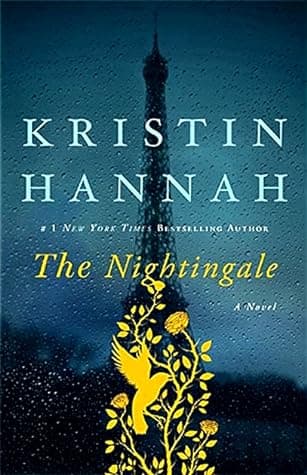
- The Nightingale
Kristin Hannah
4.6 (698k) average on GoodreadsHistorical Fiction"The Distant Land of My Father" shares with "The Nightingale" a focus on women's experiences during WWII and the moral compromises made for survival and resistance. However, Caldwell's narrative feels more introspective and less action-driven, delving deeper into the psychological impact of war on an individual's sense of self and family secrets, whereas Hannah's often emphasizes overt acts of heroism and sisterly bonds. Caldwell's portrayal of Italy also offers a distinct geographical and political context compared to Hannah's France.
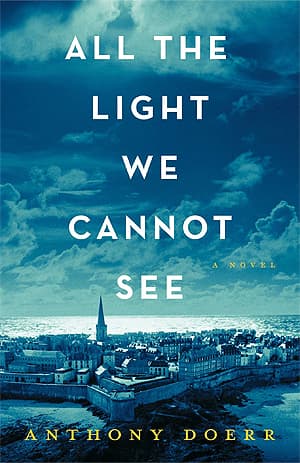
- All the Light We Cannot See
Anthony Doerr
4.3 (1M) average on GoodreadsHistorical FictionBoth Caldwell's novel and "All the Light We Cannot See" excel in their exquisite prose and their ability to immerse the reader in the atmosphere of WWII. Doerr's novel, however, employs a dual narrative structure and a more poetic, almost fable-like quality, often focusing on the sensory details and the extraordinary connections between disparate lives. Caldwell's approach is more grounded in traditional historical fiction, with a singular protagonist's journey of discovery and a more direct exploration of espionage and family legacy within a specific historical framework, making it feel slightly less experimental in its storytelling but equally profound in its emotional resonance.
- To Kill a Mockingbird
Harper Lee
4.3 (4.5M) average on GoodreadsHistorical FictionIn the 1930s Jim Crow South, Harper Lee writes about racial injustice, moral growth, and the quiet courage of a lawyer father, Atticus Finch, as seen through his young daughter's eyes.
- The Great Gatsby
F. Scott Fitzgerald
3.9 (3.8M) average on GoodreadsHistorical FictionIn the opulent Roaring Twenties, a mysterious millionaire's lavish parties hide his desperate, tragic pursuit of a lost love, exposing the emptiness within the American Dream.
- Pride and Prejudice
Jane Austen
4.3 (3M) average on GoodreadsHistorical FictionIn a society focused on status and money, Elizabeth Bennet navigates love and pride, challenging Mr. Darcy and social expectations to find true affection.
- Angels & Demons
Dan Brown
3.9 (2.7M) average on GoodreadsThrillerA Harvard symbologist races through Rome's ancient sites, deciphering cryptic clues to unmask the Illuminati and stop a vengeful plot to destroy the Vatican with a stolen antimatter weapon.




Enjoyed the summary?
A summary gives you the shape of the book. The book itself has the detail, the examples and the voice.
Find The Distant Land of My Father on AmazonAs an Amazon Associate, BookBrief earns from qualifying purchases. How we're funded