
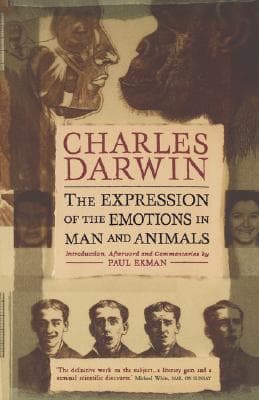
Core Idea
- Difficulty
- Hard
- Read it if
- You are interested in the evolutionary origins of human behavior, the universality of emotions, or the historical foundations of psychology and ethology. This book is essential for understanding Darwin's influence beyond natural selection, particularly in the study of non-verbal communication and comparative psychology.
- Skip it if
- You prefer modern, accessible introductions to emotion theory and are not comfortable with 19th-century scientific prose, or if you are looking for a purely contemporary psychological framework without historical context. The book can be dense and detailed, reflecting the scientific style of its era.
Key Takeaways from The Expression of the Emotions in Man and Animals
Universality of Emotion
Emotional expressions are shared across cultures and species, suggesting a common evolutionary origin.
Darwin's work suggests that many emotional expressions are not learned from culture but are natural and universal. They appear in different human groups, no matter their location or customs. He also details how similar expressions can be seen in various animal species, from dogs showing teeth when aggressive to cats bristling their fur when afraid. This universality supports the idea of a shared evolutionary history. These expressions developed as useful behaviors over thousands of years, helping with communication and survival long before complex human societies existed. It challenges the idea that human emotions are only a product of unique human thought, instead placing them firmly in our biological and animal past.
“He who admits, on general grounds, that the structure and habits of all animals have been gradually evolved, will look at the whole subject of Expression in a new and interesting light.”
In the book: Darwin's extensive collection of observations from missionaries, travelers, and his own studies of children and patients with mental disorders across various cultures (e.g., Kaffirs, Australians, Malays, Americans) showing consistent facial expressions for joy, sorrow, anger, fear, and surprise. He also compares these directly to the expressions of domestic and wild animals.
Try this: When encountering unfamiliar cultures, recognize that basic emotional signals like a smile or a frown are likely to be understood, fostering initial connection. In interspecies interactions, understanding common expressions (e.g., a dog's tail wag, a cat's arched back) can improve communication and safety.
Related ideas: evolutionary-psychology, cross-cultural-psychology, innate-behavior
Principles of Expression
Emotional expressions are governed by three core evolutionary principles: serviceable habits, antithesis, and direct action.
Darwin organizes emotional expressions into three main principles. The Principle of Serviceable Associated Habits says that actions originally useful for survival (e.g., baring teeth before biting, pulling back limbs to protect oneself) become routine. They are expressed even when they no longer serve their original purpose, simply because of the associated emotional state. The Principle of Antithesis suggests that when one state of mind is the opposite of another, the expressions are also opposite, even if the latter serves no direct purpose (e.g., a proud, expanded posture versus a humble, contracted posture). Finally, the Principle of the Direct Action of the Nervous System explains expressions that are direct physical results of an excited nervous system, such as trembling from fear or sweating from worry, often without any specific will or habit. These principles offer a clear way to understand the many forms of emotional display.
“Certain complex actions are of direct or indirect service under certain states of the mind, in order to relieve or gratify certain sensations, desires, etc.; and whenever the same state of mind is induced, however feebly, there is a tendency through the force of habit and association for the same movements to be performed, though they may not then be of the least use.”
In the book: For serviceable habits: The clenching of fists and baring of teeth in anger, even when no physical attack is intended. For antithesis: The contrasting postures of a confident, dominant dog (tail up, head high, stiff legs) versus a submissive, fearful dog (tail down, body crouched, ears back). For direct action: The dilation of pupils in surprise or fear, the rapid heartbeat, and skin flushing under strong emotion.
Try this: When observing emotional displays, consider which of Darwin's principles might be at play. This can help decipher the underlying biological and evolutionary roots of human and animal behavior, moving beyond purely psychological interpretations to a more holistic understanding. For instance, recognizing a 'serviceable habit' in an aggressive posture can help de-escalate by understanding its ancient roots rather than purely intentional malice.
Related ideas: behavioral-evolution, nervous-system, ethology
Vestiges of Our Past
Many human emotional expressions are evolutionary remnants, no longer serving their original purpose but persisting through habit and heredity.
Darwin argues that many of our common emotional expressions are not chosen consciously or even very useful today. Instead, they are 'leftovers'—behaviors that were once very helpful for our ancestors or for other animals, but have become ingrained through habit and passed down through generations. For example, a sneer, which involves raising the upper lip to show a canine tooth, is a clear remnant of an old threat display. Similarly, goosebumps on our skin when cold or frightened are a leftover from a time when our ancestors had more fur, which would have made them look bigger to predators. This idea shows the deep biological roots of our emotional lives, demonstrating that our bodies carry a living history of our evolutionary journey, often overriding our conscious control.
“The power of voluntarily suppressing expressions differs much in different individuals; but the most sensitive of men can not, I presume, command their muscles so perfectly as to conceal all traces of strong emotion.”
In the book: The involuntary 'goosebumps' response (horripilation) in humans when experiencing fear or cold, which in furrier animals makes them appear larger and insulated. The baring of teeth (sneer) in anger, a clear relic of an aggressive display common in many mammals. The tendency to cover the eyes in shame, resembling a protective, self-effacing posture.
Try this: Reflect on your own involuntary emotional reactions (e.g., blushing, trembling, specific facial twitches). Understanding them as evolutionary vestiges can provide a sense of connection to our deep past and other species, and help us accept these 'uncontrollable' aspects of our emotional selves rather than judging them as weaknesses. It also adds a layer of depth when interpreting the non-verbal cues of others.
Related ideas: atavism, inherited-traits, nonverbal-communication
The Role of Habit and Association
Repeated actions under certain emotional states become habitual, leading to their expression even when no longer useful.
Darwin stresses the power of habit and association in shaping emotional expression. He argues that actions first done with conscious intent or as a direct physical response, if consistently linked with a certain emotional state, eventually become habitual and automatic. This means the emotion itself, even in a weaker form, can trigger the associated expression, regardless of whether that expression serves any immediate purpose. This principle explains why we might furrow our brows when concentrating, even if it doesn't directly help us think, or why we might wring our hands when worried, a behavior that might stem from an old self-soothing or displacement activity. It shows how deeply embedded these patterns are, working below conscious thought and choice.
“When any sensation or emotion is repeatedly and strongly experienced, the corresponding movements tend to become involuntary.”
In the book: The repeated clenching of fists in anger, even when no physical action is taken. The act of shrugging the shoulders as a sign of helplessness, which may have originated from a protective posture but now serves as a purely communicative gesture. Darwin also discusses how habitual expressions can become permanent features, like the wrinkles around the eyes from frequent smiling or frowning.
Try this: Become more aware of your own habitual emotional expressions. Do you bite your lip when nervous? Do you tap your foot when impatient? Recognizing these deeply ingrained habits can offer insights into your underlying emotional states and potentially allow for more conscious management or mitigation if desired. It also highlights the power of repetition in forming both useful and less useful behaviors.
Related ideas: habit-formation, classical-conditioning, unconscious-behavior
Emotional Expression as Communication
Expressions evolved primarily for communication, conveying internal states to others for social cohesion and survival.
While some expressions are direct physical outputs, Darwin strongly emphasizes their role in communication. He argues that being able to express and understand emotions gave an important evolutionary advantage. It helped build social connections, warn of danger, and make cooperation easier within groups. A snarl communicates aggression, deterring threats without physical conflict. A smile signals friendliness, inviting interaction. These non-verbal cues are often more honest and immediate than spoken language, which can be manipulated. This communicative aspect highlights the social part of evolution, where an individual's survival is often tied to navigating complex social situations. Emotional expressions are the main tools for this. It is a reminder that we are social creatures, naturally wired to send and receive emotional signals.
“The movements of expression in the face and body, whatever their origin, are of importance, because they serve as the first means of communication between the mother and her infant; and they are almost equally important between members of the same community, as they reveal the thoughts and intentions of others more truly than words, which may be falsified.”
In the book: The warning calls and postures of animals that signal danger to their group. The reciprocal nature of a mother's smile to her infant's gurgle. The universal understanding of a fearful expression, which can prompt others to seek safety. Darwin also notes how animals use expressions to signal submission or dominance, regulating social hierarchies without constant physical conflict.
Try this: Pay closer attention to non-verbal cues in your daily interactions. Recognize that often, what someone's body language or facial expression conveys is more truthful than their spoken words. Cultivate empathy by actively observing and interpreting these signals, which can improve your relationships and help you better understand the unspoken needs and intentions of others.
Related ideas: social-cognition, empathy, interpersonal-communication
The Power of Involuntary Expression
Many emotional expressions are beyond conscious control, revealing genuine internal states despite attempts at concealment.
A key idea from Darwin's work is how automatic our emotional expressions are. Even very composed people find it hard to completely hide strong emotions. This 'leakage' of true feeling happens because many facial muscles and physical responses work on reflex, bypassing conscious thought. Blushing, trembling, pupil changes, and micro-expressions are all examples of signals that reveal our inner states, often against our will. This automatic nature shows the deep biological wiring of our emotional system. It suggests that our bodies are constantly communicating, whether we mean them to or not. It implies a basic honesty in our biology, making it very hard, if not impossible, to fully deceive about our feelings for long periods.
“The power of voluntarily suppressing expressions differs much in different individuals; but the most sensitive of men can not, I presume, command their muscles so perfectly as to conceal all traces of strong emotion.”
In the book: Darwin discusses the difficulty actors have in perfectly simulating genuine emotion. He also notes how children, the insane, and those in extreme pain exhibit expressions with less conscious control. The involuntary clenching of throat muscles during grief, or the rapid fluttering of eyelids during intense surprise, are physiological examples.
Try this: Be mindful that your own true emotions are often more visible than you realize, even if you try to suppress them. This can encourage authenticity in your interactions. When observing others, look for these involuntary cues – micro-expressions, changes in skin tone, subtle shifts in posture – as they often provide a more reliable indicator of a person's actual feelings than their verbal statements.
Related ideas: microexpressions, nonverbal-leakage, emotional-regulation
Developmental Origins in Childhood
The study of infant expressions provides crucial evidence for the innate and evolutionary basis of emotions.
Darwin understood the value of studying infants to grasp the natural nature of emotional expression. Unlike adults, infants have not yet been heavily influenced by cultural learning or social rules about showing emotions. Their natural expressions of joy, anger, fear, and surprise are strong signs of an unlearned, inherited basis. Importantly, Darwin also saw similar expressions in children born blind. These children, never having seen others' emotional displays, could not have learned them by copying. This evidence strongly supports the idea that the ability to make certain emotional expressions is part of our biology, developing naturally as part of our growth, rather than being only learned socially. It highlights the deep biological foundation of our emotional life, present from our earliest moments.
“I have been much struck with the fact that the most expressive movements, such as the frowning of a child when displeased, are performed by infants at a very early age, and by the blind.”
In the book: Observations of infants frowning when displeased, smiling when content, and showing surprise with wide eyes, often within the first few months of life. His detailed notes on blind children exhibiting the same expressions, such as sadness (down-turned mouth, tears) or joy (smiles), without visual input.
Try this: When interacting with infants and young children, observe their emotional expressions closely, recognizing them as fundamental, unadulterated signals. This can help you better understand their needs and develop a deeper, more intuitive connection. It also offers a reminder of the universality of human experience, even at the earliest stages of life.
Related ideas: developmental-psychology, innate-knowledge, child-development
The Interconnectedness of Mind and Body
Emotional states are inextricably linked to physical expressions, challenging dualistic views of mind and body.
Darwin's work implicitly argues against a strict separation of mind and body. It shows how deeply linked our mental and physical states are. Emotions are not just abstract psychological events; they appear physically through specific muscle contractions, physical changes (like heart rate, breathing, sweating), and even long-term changes to our features (e.g., 'lines of care'). The act of expressing an emotion can, in turn, affect the internal feeling of that emotion, creating a feedback loop. This connection suggests that our emotional life is deeply physical, a product of our biological machinery, rather than a separate, non-physical 'mind.' It sets the stage for later theories emphasizing the physical markers of emotion and the importance of physical feedback in emotional experience. It shows that our feelings are not just 'in our heads' but spread throughout our entire being.
“The mind, when strongly affected, not only excites the various movements of expression, but reacts on the whole body, causing various physiological changes.”
In the book: The physical effects of strong emotions: blushing from shame, trembling from fear, increased heart rate and respiration during excitement. Darwin also notes how suppressing an expression can sometimes lessen the associated emotion, and conversely, feigning an expression can sometimes evoke the corresponding feeling.
Try this: Practice 'embodied awareness' by noticing how your emotions manifest physically in your body. If you feel anxious, where do you feel it? What are your muscles doing? This can help you recognize and process emotions more effectively. Conversely, intentionally adopting certain postures or expressions (e.g., a power pose, a smile) can subtly influence your mood, leveraging this mind-body connection.
Related ideas: embodied-cognition, psychophysiology, somatic-psychology
Individual Variation and Temperament
While universal, the intensity and manifestation of emotional expressions vary significantly between individuals.
Despite arguing for the universality of emotional expressions, Darwin also acknowledges important individual differences in how strong and how they appear. He observes that some people are naturally more expressive, while others are more reserved, even when feeling the same emotion. This variation can come from differences in temperament, upbringing, and the learned ability (or inability) to hide or change natural expressions. While the underlying biological mechanisms might be universal, the outward display is a complex mix of nature and nurture. This detail prevents a simple understanding of emotional expression, recognizing that while the 'language' is shared, the 'dialect' and 'volume' can differ greatly from person to person. It highlights the rich complexity of human personality within a shared biological framework.
“The power of voluntarily suppressing expressions differs much in different individuals; but the most sensitive of men can not, I presume, command their muscles so perfectly as to conceal all traces of strong emotion.”
In the book: Darwin's observations on the differing abilities of individuals to suppress their emotions, noting that some people are naturally more 'sensitive' and thus more expressive. He also implicitly touches on cultural differences in the 'rules' of emotional display, though his primary focus remains on the biological underpinnings.
Try this: Avoid making hasty judgments about someone's emotional state based solely on their outward expression. Recognize that some individuals may feel deeply but show little, while others may be highly expressive. Cultivate patience and a nuanced understanding of individual differences in emotional communication, especially in close relationships, to avoid misinterpretations.
Related ideas: temperament, personality-traits, emotional-intelligence
Evolutionary Ethics and Empathy
The capacity for shared emotional expression underpins our moral and empathetic faculties.
While not directly a book on ethics, Darwin's work on emotional expression provides a basic argument for the evolutionary roots of morality and empathy. The ability to recognize and share others' emotional states—to literally 'read' their joy, sorrow, fear, or anger—is necessary for developing social instincts, cooperation, and kindness. If we could not see distress in another, it would be hard to feel sympathy. If we could not recognize pleasure, it would be hard to share happiness. So, the very ways we express emotions, refined over ages for communication and survival, are the foundation upon which our most valued human qualities like compassion and moral judgment are built. This view firmly places human morality not in divine command or pure reason, but in our shared biological and evolutionary heritage, making it a natural extension of our animal past.
“The community of feeling, which is so important to the social instincts, and which makes us sympathise with the distress and feel pleasure with the happiness of others, would hardly have been acquired, if we had been unable to perceive the expressions of others.”
In the book: Darwin discusses how the 'social instincts' are crucial for group survival. The capacity for sympathy, he argues, is strengthened by our ability to perceive expressions of suffering or joy. He notes how even animals can show rudimentary forms of empathy (e.g., a dog comforting a distressed owner), suggesting its deep evolutionary history.
Try this: Actively cultivate empathy by observing and responding to the emotional expressions of those around you. Recognize that your capacity for compassion is a deeply evolved trait, and engaging with others' feelings is not just a 'nice' thing to do, but fundamental to human connection and a well-functioning society. Support initiatives that foster emotional literacy and understanding.
Related ideas: moral-philosophy, altruism, social-evolution
The Expression of the Emotions in Man and Animals Quotes
“The free expression by outward signs of an emotion intensifies it. On the other hand, the repression, as far as this is possible, of all outward signs softens our emotions.”
“He who has a dog, and has watched him, may perceive that when he is pleased, he barks in a peculiar manner, and wags his tail with a rapid movement.”
“With all the races of man, the expression of good temper and kind feelings is shown by the corners of the mouth being drawn a little upwards and simultaneously a little backwards.”
“We have seen that the study of the movements of expression, while it is interesting in itself, as leading us to a better understanding of the mind of man, will likewise throw some light on the origin of species.”
“The fact that the same movements of expression are so generally employed by all the races of man, and by animals, is a strong argument in favour of the belief that they are inherited.”
“Terror acts in a most peculiar manner on the heart, causing it to beat with violence, or to flutter in a very feeble and irregular manner.”
“When a man is indignant or defiant, he frowns; when he is surprised, he raises his eyebrows.”
“We can hardly avoid the conclusion that the various movements of expression must have been of some service to man in his primordial condition.”
“The power of communication, which is so important to social animals, is largely dependent on the power of expressing feelings.”
“Children, when they are pleased, often clap their hands; and this is probably a natural expression, as it is common to so many races.”
“The great principle of the direct action of the excited nervous system on the body, independently of the will, or in opposition to it.”
“The principle of antithesis is that when an emotion is excited, the corresponding habitual movement is performed; and when a directly opposite state of mind is induced, there is a strong and involuntary tendency to perform movements of a directly opposite nature.”
“The principle of serviceable associated habits states that certain complex actions are of direct or indirect service under certain states of mind, in order to relieve or gratify certain sensations, desires, etc.”
“It is not the eye alone, but the whole face, which is concerned in the expression of the emotions.”
“We have seen that man, and the lower animals, express their emotions in various ways, partly by the same movements in all the races of man and in some of the lower animals, and partly by movements which are peculiar to each species.”
Quiz
10 questions on the main ideas. Each answer comes with a short explanation.
Question 1
Which of the following best describes Darwin's primary goal in writing 'The Expression of the Emotions in Man and Animals'?
- To catalogue all known human and animal emotions.
- To demonstrate the power of his evolutionary theories in explaining human qualities like morality and intellect.
- To argue against the idea that emotions have any evolutionary basis.
- To provide a medical guide for diagnosing emotional disorders.
Show answer
B. To demonstrate the power of his evolutionary theories in explaining human qualities like morality and intellect. As stated in the synopsis, Darwin's goal was to 'demonstrate the power of his theories for explaining the origin of our most cherished human qualities: morality and intellect.'
Question 2
When was 'The Expression of the Emotions in Man and Animals' first published?
- 1859
- 1872
- 1882
- 1890
Show answer
B. 1872 The synopsis clearly states that the book was 'Published in 1872'.
Question 3
Darwin viewed the subject of 'Expression' through the lens of gradual evolution. What new perspective did this offer, according to the synopsis?
- It made the subject seem less interesting and more mundane.
- It highlighted the purely cultural origins of all expressions.
- It offered a 'new and interesting light' on the whole subject.
- It suggested that expression was an entirely unique human trait, unconnected to animals.
Show answer
C. It offered a 'new and interesting light' on the whole subject. Darwin stated, 'He who admits, on general grounds, that the structure and habits of all animals have been gradually evolved, will look at the whole subject of Expression in a new and interesting light.'
Question 4
The synopsis refers to 'The Expression of the Emotions in Man and Animals' as a 'central pillar of his 'human' series.' What does this imply about its significance within Darwin's broader work?
- It was a minor work that Darwin considered unimportant.
- It was one of several key texts dedicated to understanding human evolution and behavior.
- It was Darwin's only book that focused on human subjects.
- It served as a prequel to 'On the Origin of Species'.
Show answer
B. It was one of several key texts dedicated to understanding human evolution and behavior. Describing it as a 'central pillar of his 'human' series' indicates its crucial role alongside other works exploring human evolution, suggesting it was not an isolated study.
Question 5
The synopsis mentions that the book showed 'the ever-cautious Darwin at his boldest.' What aspect of the book likely contributed to this assessment?
- His detailed descriptions of animal anatomy.
- His willingness to tackle complex questions about the evolutionary origins of human morality and intellect.
- His extensive use of illustrations.
- His simple and straightforward writing style.
Show answer
B. His willingness to tackle complex questions about the evolutionary origins of human morality and intellect. The synopsis highlights that the book 'engaged some of the hardest questions in the evolution debate' concerning 'the origin of our most cherished human qualities: morality and intellect,' which would require a bold intellectual approach for a typically cautious scientist.
Question 6
Which of the following appendices is included in 'The Expression of the Emotions in Man and Animals'?
- Appendix 1: Darwin's geological field notes
- Appendix 2: List of plant species observed
- Appendix 2: Darwin's 'Queries About Expression'
- Appendix 3: Glossary of anatomical terms
Show answer
C. Appendix 2: Darwin's 'Queries About Expression' The Table of Contents lists 'Appendix 2: Darwin's 'Queries About Expression'' as part of the book's structure.
Question 7
The synopsis describes 'The Expression of the Emotions in Man and Animals' as being 'at the very heart of Darwin's research interests'. What does this imply about the book's relationship to his overall scientific agenda?
- It was a tangential project that Darwin pursued out of curiosity, unrelated to his main theories.
- It represented a core application and extension of his evolutionary framework to a complex biological and psychological phenomenon.
- It was a commissioned work that diverted him from his preferred research topics.
- It was an early work that Darwin later disavowed.
Show answer
B. It represented a core application and extension of his evolutionary framework to a complex biological and psychological phenomenon. Being 'at the very heart of Darwin's research interests' means it was central to his scientific pursuits, directly applying and reinforcing his core evolutionary theories to human and animal behavior.
Question 8
Given the book's focus and the context of Darwin's work, what philosophical implication might arise from demonstrating the evolutionary origin of human emotions and intellect?
- It would suggest that human emotions are entirely unique and have no biological basis.
- It could challenge anthropocentric views by linking human mental and emotional states to those of other animals through shared evolutionary pathways.
- It would support the idea that emotions are purely a product of divine creation, separate from natural processes.
- It would prove that human intellect is a static, unchanging trait.
Show answer
B. It could challenge anthropocentric views by linking human mental and emotional states to those of other animals through shared evolutionary pathways. By applying evolutionary theory to 'cherished human qualities' like morality and intellect, Darwin implicitly argued for continuity between humans and animals, challenging the idea of humans as fundamentally separate or divinely created, and thereby supporting a more naturalistic, less anthropocentric view.
Question 9
The book is described as engaging 'some of the hardest questions in the evolution debate'. What kind of questions, specifically, would be considered 'hard' in the context of evolutionary theory at that time?
- Questions about the physical mechanisms of genetic inheritance.
- Questions about the age of the Earth and geological strata.
- Questions concerning the evolutionary origins of complex, seemingly non-material human attributes like consciousness, morality, and sophisticated emotional expression.
- Questions regarding the classification of newly discovered plant species.
Show answer
C. Questions concerning the evolutionary origins of complex, seemingly non-material human attributes like consciousness, morality, and sophisticated emotional expression. The 'hardest questions' would likely revolve around how complex, often uniquely human, traits that were traditionally attributed to non-material or divine origins could be explained by natural selection and gradual evolution, especially given the limitations of understanding genetics at the time.
Question 10
Considering the structure provided in the Table of Contents, what type of supplementary material would a reader expect to find regarding Darwin's original research process for this book?
- Detailed anatomical diagrams of the human brain.
- A list of Darwin's personal correspondence with fellow naturalists about the Galapagos finches.
- Darwin's 'Queries About Expression,' which likely details his investigative questions or methodology.
- A comprehensive index of all animal species mentioned in his other works.
Show answer
C. Darwin's 'Queries About Expression,' which likely details his investigative questions or methodology. The Table of Contents explicitly lists 'Appendix 2: Darwin's 'Queries About Expression',' which strongly suggests it contains his original questions or framework for investigating emotional expression, thereby offering insight into his research process.
The Expression of the Emotions in Man and Animals FAQ
What is 'The Expression of the Emotions in Man and Animals' about?
Charles Darwin's 1872 book explores the evolutionary origins and universality of emotional expressions in both humans and various animal species. It aims to demonstrate how his theories of evolution can explain fundamental human qualities like morality and intellect through the lens of emotional display.
Does the theory of natural selection apply to human emotions?
Yes, Darwin argues that emotional expressions, like physical traits, have evolved over time through natural selection and other mechanisms. He posits that many expressions serve adaptive purposes, conveying internal states and intentions, which would have been beneficial for survival and social interaction.
What is Darwin's 'principle of serviceable associated habits'?
This principle suggests that certain habitual actions, originally performed for a direct purpose (e.g., baring teeth in aggression), become associated with a state of mind and are then expressed even when the original purpose is no longer necessary, simply as a sign of that emotion.
How did Darwin collect data for his observations on emotional expression?
Darwin gathered extensive data through direct observation of humans (including infants and people with mental disabilities), various animal species, and by distributing questionnaires ('Queries About Expression') to missionaries and naturalists worldwide to gather cross-cultural insights.
What is the significance of comparing human and animal emotions in the book?
By comparing emotional expressions across species, Darwin aimed to show the continuity of mental and emotional life between humans and animals. This provided strong evidence for his evolutionary theory, suggesting a shared ancestry and common mechanisms underlying emotional display.
How does Darwin's work on emotions differ from later psychological theories?
While Darwin laid foundational groundwork for evolutionary psychology and the universality of emotions, later theories like those by Paul Ekman further refined and empirically tested the concept of universal basic emotions. Darwin's approach was more observational and synthetic, preceding modern experimental psychology.
Does 'The Expression of the Emotions' argue for universal human emotions?
Yes, a central tenet of Darwin's work is the argument for the universality of many emotional expressions across different human cultures and even in some animals. He believed these expressions were innate and biologically determined, rather than solely learned.
Why is this book considered a 'central pillar' of Darwin's 'human' series?
It directly addressed the evolutionary origins of complex human behaviors and mental states, which were often seen as uniquely human and difficult to explain by natural selection. By showing emotions evolve, Darwin strengthened his argument for humanity's place within the natural world and evolutionary framework.
About the author
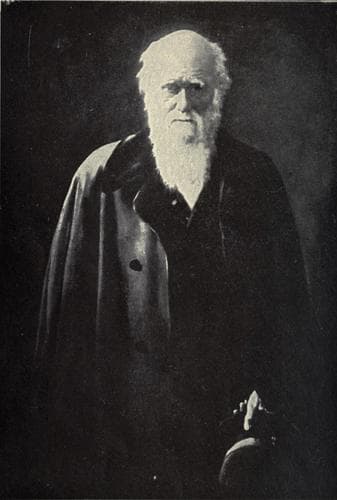
Charles Darwin was a renowned English naturalist and geologist, best known for his groundbreaking work 'On the Origin of Species.' His extensive research and observations during the voyage of the HMS Beagle led to his theory of evolution by natural selection. Darwin's other notable works include 'The Descent of Man' and 'The Expression of the Emotions in Man and Animals,' which profoundly influenced scientific thought.
Similar books
- The Perks of Being a Wallflower
Stephen Chbosky
4.2 (1.3M) average on GoodreadsPsychologyThrough letters, a shy high school freshman learns to navigate first love, trauma, and self-discovery, stepping off the sidelines and into life.
- Eleanor Oliphant Is Completely Fine
Gail Honeyman
4.3 (708k) average on GoodreadsLiterary FictionA lonely woman's structured life changes when an IT guy and an elderly man help her learn to open her heart.
- One Flew Over the Cuckoo's Nest
Ken Kesey
4.2 (631k) average on GoodreadsPsychologyIn a mind-bending asylum, the boisterous Randle McMurphy wages a defiant war against the tyrannical Nurse Ratched, inspiring his fellow inmates, including the seemingly catatonic Chief Bromden, to reclaim their lost humanity.
- The Bell Jar
Sylvia Plath
4.0 (591k) average on GoodreadsPsychologyIn the suffocating grip of 1950s expectations, a brilliant young woman's descent into mental illness is painted with such vivid, internal clarity that her 'insanity' feels terrifyingly rational and inevitable.
- The Subtle Art of Not Giving a F*ck: A Counterintuitive Approach to Living a Good Life
Mark Manson
3.9 (530k) average on GoodreadsBusinessEmbrace your flaws and stomach life's lemons, because true happiness isn't about relentless positivity, but about choosing what truly matters to give a f*ck about.
- Sapiens: A Brief History of Humankind
Yuval Noah Harari
4.4 (502k) average on GoodreadsPsychologySapiens tells the story of Homo sapiens, showing how our ability to create shared fictions helped us go from an ordinary ape to the planet's main species, changing Earth and our future.






Enjoyed the summary?
A summary gives you the shape of the book. The book itself has the detail, the examples and the voice.
Find The Expression of the Emotions in Man and Animals on AmazonAs an Amazon Associate, BookBrief earns from qualifying purchases. How we're funded