
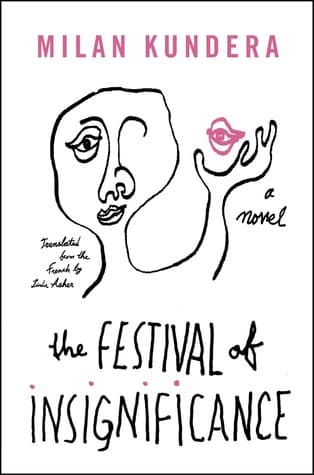
Synopsis
Covers the whole plot, including the ending.
- Difficulty
- Medium
- Pacing
- Moderate
- Mood
- Philosophical, Witty, Absurdist, Reflective, Humorous
- Read it if
- You enjoy philosophical musings disguised as a lighthearted narrative, with a focus on human absurdity and the nature of existence.
- Skip it if
- You prefer a strong, linear plot with clear character arcs and realistic dialogue, or are averse to abstract philosophical discussions.
The Festival of Insignificance Plot Summary
Covers the whole plot, including the ending.
The Birthday Party Invitation
Alain, a man who thinks a lot about women's navels, gets a birthday party invitation from his friend Ramon. Alain thinks about how real beauty is gone and how modern life is crude, focusing on the lost art of the navel. He remembers his mother leaving him as a child and how much this affected his view of female beauty and absence. Ramon's invitation is for his own birthday, which he says is a necessary act of self-worth in a world that makes individuals feel less important. Alain, despite his philosophical thoughts, decides to go.
Ramon's Philosophical Delusions
Ramon is at a café, trying to practice a speech for his birthday party. It is full of big, self-important statements about how important it is to celebrate oneself. He struggles to find the right words, constantly changing and discarding his ideas. This shows his deep insecurities and his wish to seem profound. Meanwhile, Charles, another friend, is busy making food for the party. He plans a cooking performance with ducks, intending to present them in a way that is both nice to look at and conceptually important, though his artistic vision's details remain unclear and strange.
Caliban's Fictional Pakistani
Caliban, an out-of-work actor, is working as a waiter at a cocktail party, a job he hates. To ease his boredom and perhaps to mock the snobby guests, he invents a character: a Pakistani man who speaks a made-up language. Caliban acts as this character, pretending to translate the Pakistani's profound, but entirely fake, observations about life, love, and existence. The guests, wanting to seem cultured and open-minded, are fascinated by this act, completely unaware they are being subtly made fun of. Caliban finds a strange satisfaction in their gullibility, showing how superficial their intellectual interests are.
The Stalin Anecdote
Queenie, a friend of the group, shares a story she says she heard about Joseph Stalin. The story involves Stalin's hunting trips and how he would purposely miss his shots to let his subordinates catch the game. This made them feel important and secured their loyalty. This story, which Queenie later reveals to be completely made up, comments on power, manipulation, and the human need for recognition, even if it is based on a lie. The friends discuss how believable and what the story means, blurring the lines between historical truth and convenient fiction.
D'Ardelo's Pursuit of Significance
D'Ardelo, a man obsessed with his own importance and wanting to be noticed, tries to pretend to have a serious illness. He believes that by appearing very sick, he will get sympathy and attention from others, thereby proving his existence. He carefully plans his performance, practicing his coughs and expressions of suffering. His efforts are clumsy and obvious, however, showing his deep loneliness and desperate need for outside approval. This event highlights how silly it is to seek importance through fake suffering and the common human desire to be seen and cared for.
The Navel's Return
Alain, still dealing with his childhood abandonment and his mother's absent navel, finally faces his past. He meets his mother again, and in their talk, he begins to understand the deeper meaning behind his lifelong obsession. It is not just about the physical absence of a navel but the emotional emptiness left by her leaving. Through this confrontation, Alain starts to come to terms with his past, moving beyond his focus on the superficial to a deeper understanding of connection, loss, and the lasting presence of the past in the present. He realizes that true beauty is more than just physical traits.
Ramon's Birthday Party Begins
Ramon's long-awaited birthday party begins. His friends, Alain, Charles, Caliban, and Queenie, gather, expecting an evening of philosophical talk and celebration. Ramon, still nervous, tries to give his carefully prepared speech about the importance of celebrating unimportance. However, his delivery is awkward, his words stumble, and his grand statements fail. The speech, meant to be profound, instead shows his own self-consciousness and the basic absurdity of trying to make the ordinary meaningful. The guests politely sit through his performance, showing the social customs of politeness and the underlying triviality of their gathering.
The Duck Performance
Charles reveals his elaborate cooking creation: the ducks he had carefully prepared. His artistic vision, however, does not quite work. The presentation is more strange than beautiful, and the conceptual meaning he intended is lost on the guests. The ducks become another part of the evening's general unimportance, adding to the feeling of mild chaos and the failure of grand plans. This event further shows the novel's main idea: that trying to give life deep meaning often results in comical failure, and that real joy might come from accepting how trivial existence is.
Caliban's Pakistani Returns
During the party, Caliban, still acting as the waiter, subtly continues his performance as the translator for the fictional Pakistani. He interjects his made-up statements, watching the guests and their reactions. His ongoing act comments on the entire gathering, where everyone is, in a way, playing a role. The guests continue to fall for his act, eager to engage with what they see as exotic wisdom. This shows how humans tend to look for meaning and truth in superficial presentations, and Caliban's detached amusement at their gullibility.
The Confession of the Stalin Anecdote
As the party goes on, Queenie, perhaps prompted by the playful deception in the air, confesses that her story about Stalin purposely missing his shots was completely made up. This revelation, instead of causing anger, is met with a mix of amusement and understanding by her friends. It supports the novel's look at truth and fiction, and how stories, even fake ones, can have power and show deeper truths about human nature and the desire for myth-making. The friends acknowledge how common invented stories are in shaping perceptions.
Embracing Insignificance
As the party ends, the characters find a unique closeness in their shared experiences of triviality and failed grandness. Ramon's speech, Charles's ducks, Caliban's Pakistani, and Queenie's made-up history all lead to a shared understanding that life, at its core, is often unimportant, and that trying to force meaning onto it is often pointless and funny. Instead of sadness, there is a sense of freedom in this realization. They find a quiet joy in how unimportant things are, accepting that life's real charm is in its fleeting, unpretentious moments. This shows a shift from looking for meaning to accepting the lack of it.
The Quiet Aftermath
The party ends, and the friends go their separate ways into the night. They carry with them not deep revelations or life-changing insights, but a subtle, shared understanding of the beauty in unimportance. Alain continues his thoughts, but with a lighter touch; Ramon accepts the failure of his grand speech with a quiet smile. The novel ends not with a dramatic peak, but with a gentle, lasting sense of acceptance and the quiet joy of ordinary existence. The characters have, in their own ways, come to terms with the unimportance of things, finding freedom in not having to be important.
The Festival of Insignificance Characters
Alain
Protagonist
A man obsessed with women's navels and the absence of his mother's.
Alain is a contemplative and somewhat melancholic man, deeply introspective and prone to philosophical musings. His obsession with women's navels stems from the childhood trauma of his mother's abandonment and the perceived absence of her navel in his memory. He seeks beauty and meaning in the world, often finding it lacking, and his internal struggles drive much of the narrative's reflective tone. He is an observer, a thinker, constantly trying to decode the world around him.
Relationships: Ramon (Friend, fellow philosopher-observer); His Mother (Source of childhood trauma and his navel obsession)
Ramon
Protagonist/Organizer
The host of the birthday party, striving for self-affirmation through celebration.
Ramon is a man deeply concerned with his own significance, or rather, the lack thereof in the modern world. He organizes his own birthday party as an act of rebellion against insignificance, yet his attempts to deliver a profound speech reveal his own insecurities and the inherent absurdity of his quest. He is a blend of vanity and vulnerability, a figure who tries to impose meaning but ultimately succumbs to the comedic reality of his efforts.
Relationships: Alain (Friend, intellectual companion); Charles (Friend, co-conspirator in the party's absurdity); Caliban (Friend, fellow observer of human folly)
Charles
Supporting
A culinary artist with an absurd vision for his duck presentation.
Charles is a friend of Ramon and Alain, characterized by his artistic pretensions, particularly in the culinary realm. He approaches food preparation with a serious, almost philosophical intent, aiming to create dishes that are not just sustenance but statements. His efforts, however, often lean towards the absurd and fail to achieve their intended profundity, making him a source of gentle comedy. He represents the human desire to elevate the mundane through art, even when the art itself is a bit ridiculous.
Caliban
Supporting
An out-of-work actor who invents a fictional Pakistani.
Caliban is a cynical and observant character, using his acting skills to mock the pretensions of others. Working as a waiter, he invents a fictional Pakistani character to entertain himself and subtly ridicule the guests who eagerly embrace his charade. He embodies the theme of performance and the construction of reality, finding amusement in human gullibility and the desire for exotic wisdom. His actions are a quiet rebellion against the banality of his circumstances.
Relationships: Ramon (Friend)
Queenie
Supporting
The creator of the fabricated Stalin anecdote.
Queenie is a character who delights in storytelling, even when those stories are entirely fabricated. Her anecdote about Stalin serves as a commentary on power, manipulation, and the human need for recognition. She represents the idea that narratives, whether true or false, shape our understanding of the world and each other. Her eventual confession about the story's fabrication underscores the novel's playful approach to truth and fiction.
D'Ardelo
Supporting
A man who feigns illness to gain attention.
D'Ardelo is a figure of pathos and absurdity, driven by a desperate need for attention and validation. His attempt to feign a serious illness is a transparent and clumsy effort to solicit sympathy and prove his own importance. He represents the human desire to be seen and cared for, even if it means resorting to deceit. His character highlights the loneliness that can drive individuals to theatrical extremes.
Stalin (mentioned)
Mentioned
The subject of Queenie's fabricated anecdote.
Joseph Stalin, the Soviet dictator, appears only as the subject of Queenie's fabricated story. In the anecdote, he is portrayed as a manipulator who deliberately misses his hunting shots to make his subordinates feel important. This fictionalized version of Stalin serves as a symbolic figure, representing the nature of power, control, and the theatricality of leadership, even in its most sinister forms. His presence, though indirect, adds a layer of historical and political commentary to the novel's themes.
The Festival of Insignificance Themes
The Insignificance of Existence
The main theme of the novel is how unimportant human existence is and how pointless it is to try to give it grand meaning. Characters like Ramon want to be important, while D'Ardelo fakes illness for attention. Yet, their efforts are always undercut by the ordinary and the absurd. The novel suggests that real freedom comes from accepting this unimportance, as seen when the friends find joy in their party's triviality rather than its intended depth. This theme is a playful contrast to existential sadness, suggesting that meaninglessness can be a source of lightness.
“What more can we say? Nothing. Just read.”
The Art of Deception and Performance
Deception and acting are common in the characters' interactions, showing how reality and identity are constructed. Caliban invents a fictional Pakistani to mock social pretenses, while Queenie makes up a story about Stalin to entertain and provoke. D'Ardelo's fake illness is another act, seeking to manipulate how others see him. These deceptions, though often funny, reveal a deeper truth about human behavior: that we constantly play roles and create stories, both for ourselves and for others, blurring the lines between what is real and what is artificial, as seen throughout Ramon's party.
“To be fascinated by the reality of the contemporary world, and at the same time completely avoiding realism...”
The Search for Meaning in the Mundane
Characters in the novel are always looking for meaning, often in the most ordinary or even absurd parts of life. Alain's focus on navels, Ramon's big birthday speech, and Charles's artistic duck presentation are all attempts to make the ordinary profound. The irony is that these attempts often fail, showing how reality resists such efforts. The novel playfully suggests that meaning is not something to be found or created, but rather something that disappears when examined, leaving behind a delightful, if slightly sad, unimportance.
“He knew that the wish to incorporate an element of the 'unserious' in a novel is not at all unexpected of him.”
Memory, Absence, and the Past
The past, especially Alain's childhood trauma of his mother leaving, deeply affects the characters' present lives. Alain's focus on navels comes directly from his mother's perceived absence and the emotional void it created. The novel explores how memory shapes identity and how the past, even when incomplete or distorted, continues to matter. Queenie's made-up Stalin story also touches on how historical stories, whether true or false, become part of our collective memory and understanding of power. The past is not fixed but a changing, often elusive, presence.
“He saw himself as an archaeologist of the human body, digging for the lost meaning of the navel.”
Plot Devices & Literary Techniques
Philosophical Monologues
Characters engage in lengthy internal or external philosophical reflections.
Kundera uses extensive philosophical monologues, particularly by Alain and Ramon, to explore the novel's themes directly. These internal reflections, often presented as stream-of-consciousness, delve into concepts like insignificance, beauty, memory, and the nature of existence. They serve not only to advance the characters' internal states but also to provide direct exposition of the novel's philosophical underpinnings, often with a humorous or ironic tone, blurring the line between character thought and authorial commentary.
Interwoven Narratives
Multiple character perspectives and storylines converge at a central event.
The novel employs an interwoven narrative structure, presenting the stories and perspectives of several characters (Alain, Ramon, Charles, Caliban, Queenie, D'Ardelo) in separate, yet ultimately connected, threads. These individual narratives converge at Ramon's birthday party, serving as a unifying event. This device allows Kundera to explore diverse facets of the central themes from various angles, creating a mosaic of human experience and demonstrating how individual preoccupations contribute to a collective sense of insignificance and absurdity.
Absurdist Humor
Situations and character actions are presented with a comedic, often ironic, detachment.
Absurdist humor is a pervasive plot device, manifesting in situations like Charles's artistic duck presentation, Caliban's fictional Pakistani, and D'Ardelo's feigned illness. Kundera uses this humor to highlight the inherent ridiculousness of human attempts to find profound meaning or assert significance in a world that often defies such efforts. The humor is often gentle and intellectual, inviting the reader to laugh at the characters' predicaments while simultaneously recognizing the universal human traits they embody, thereby softening the potentially nihilistic implications of the theme of insignificance.
Metafiction
The narrative occasionally comments on its own nature as a story.
Kundera subtly employs metafiction, particularly through the narrator's voice, which occasionally steps back to comment on the act of storytelling itself or the author's intentions. References to Kundera's own previous works or his stated desire to write a book without a single serious word blur the boundaries between author, narrator, and text. This device invites the reader to consider the novel not just as a story, but as a deliberate artistic creation, reflecting on the nature of fiction and its relationship to reality.
The Festival of Insignificance Quotes
“The feeling of insignificance, which for so long had been a source of torment to Alain, had suddenly become his most precious possession.”
“Humor is the divine spark that makes us human. Without it, we're just animals.”
“The festival of insignificance is always going on. It is always and everywhere. You just have to open your eyes to it.”
“Every man is a god for himself, and a clown for others.”
“What is serious is always insignificant, and what is insignificant is always serious.”
“Life is a joke that is not funny.”
“The desire to be noticed, to be seen, is a ridiculous and pathetic human weakness.”
“Boredom is the feeling that everything is insignificant, and insignificance is the feeling that everything is boring.”
“To be happy, one must be able to laugh at oneself, at one's own insignificance.”
“The greatest freedom is to be free from the need to be important.”
“We are all puppets, but some of us are aware of our strings.”
“The only way to endure the absurdity of life is to embrace it with a smile.”
“The longing for paradise is man's most beautiful and most dangerous dream.”
“In the end, all that matters is that we have laughed, even if the laughter was at ourselves.”
Quiz
10 questions on the plot and the characters. Each answer comes with a short explanation.
Question 1
Which character in 'The Festival of Insignificance' invents a story about Stalin confessing to a crime, specifically the murder of Kirov?
- Alain
- Ramon
- Charles
- Caliban
Show answer
B. Ramon Ramon invents the story about Stalin confessing to the murder of Kirov, a fabrication he tells to D'Ardelo.
Question 2
What is the primary theme explored through the character of Charles and his reflections on the navel?
- The pursuit of political power
- The insignificance of human existence and the beauty of the trivial
- The complexities of romantic relationships
- The struggle against totalitarianism
Show answer
B. The insignificance of human existence and the beauty of the trivial Charles's fascination with the navel, and his later 'exhibition' of it, symbolizes the embrace of the insignificant and the trivial as a counterpoint to grand narratives.
Question 3
Which character is often observed walking through Paris, pondering observations about women and their allure?
- Ramon
- Charles
- Alain
- Caliban
Show answer
C. Alain Alain is the character who frequently walks through Paris, observing women and contemplating the mystery of their attraction, particularly focusing on the navel.
Question 4
What is the profession of the character D'Ardelo?
- A writer
- A diplomat
- A painter
- A musician
Show answer
B. A diplomat D'Ardelo is a diplomat, known for his social connections and for being the recipient of Ramon's fabricated story about Stalin.
Question 5
What does Caliban, a character who works as a waiter, pretend to speak?
- Latin
- A made-up language of his own invention
- Urdu
- Pakistani
Show answer
D. Pakistani Caliban pretends to speak 'Pakistani' to the guests at the party, creating a performance that underscores the theme of playful deception and insignificance.
Question 6
How does the novel generally treat 'seriousness' as a concept?
- It champions seriousness as essential for understanding life.
- It critiques and subverts seriousness, celebrating insignificance.
- It maintains a neutral stance, neither endorsing nor rejecting seriousness.
- It argues that seriousness is a modern invention with no historical precedent.
Show answer
B. It critiques and subverts seriousness, celebrating insignificance. The novel, as its title suggests and as described in the introductory text, is a culmination of Kundera's desire to write a book 'that would have not a single serious word in it,' actively subverting seriousness.
Question 7
The characters frequently gather at a specific location that serves as a central meeting point. What type of place is it?
- A library
- A cafe or restaurant
- A private club
- A park bench
Show answer
B. A cafe or restaurant The characters, particularly Ramon, Charles, Alain, and Caliban, often meet and converse at a cafe or restaurant, which serves as a key setting for their philosophical discussions and observations.
Question 8
What historical figure's 'confession' is fabricated by one of the characters, leading to a discussion about truth and lies?
- Lenin
- Trotsky
- Stalin
- Khrushchev
Show answer
C. Stalin Ramon invents a story about Stalin confessing to the murder of Kirov, which becomes a central point for discussion about the nature of truth and the power of fabricated narratives.
Question 9
Which of the following best describes the narrative style of 'The Festival of Insignificance'?
- Strictly linear and realistic
- Fragmented, philosophical, and anti-realist
- A traditional third-person omniscient narrative
- First-person memoir with historical accuracy
Show answer
B. Fragmented, philosophical, and anti-realist The introductory text explicitly states the novel 'completely avoiding realism' and its nature as a 'strange sort of summation,' reflecting a fragmented, philosophical, and anti-realist approach typical of Kundera.
Question 10
The novel connects the 'insignificance' it celebrates to a broader idea about the contemporary world. What is this idea?
- That modern society is overly complex and requires serious analysis.
- That the contemporary world has lost its sense of humor, making its seriousness comical.
- That historical events have lost their meaning in the present.
- That individual actions no longer have any impact on global events.
Show answer
B. That the contemporary world has lost its sense of humor, making its seriousness comical. The introductory text states the novel is 'inspired by our time, which is comical because it has lost all sense of humor,' directly linking the celebration of insignificance to this observation about the contemporary world.
The Festival of Insignificance FAQ
What is the central premise of 'The Festival of Insignificance' and how does it relate to Kundera's previous works?
The novel explores the pervasive insignificance of modern life through the interwoven narratives of several Parisian men, notably Alain, Ramon, Charles, and Caliban. It serves as a culmination of Kundera's long-held aesthetic desire to write a book without a single serious word, yet still address profound philosophical questions, echoing his playful metafiction in 'Immortality' and 'Slowness'.
Who are the main characters and what are their primary concerns or quirks?
The main characters include Ramon, an aging intellectual observing the world; Charles, who plans a puppet show; Alain, obsessed with his mother's navel; and Caliban, a waiter who pretends to speak Pakistani. Their individual quirks, like Caliban's invented language or Alain's navel-gazing, are presented as avenues to explore deeper themes of identity, performance, and the search for meaning.
How does the concept of 'insignificance' manifest in the characters' daily lives?
Insignificance manifests through their mundane conversations, trivial pursuits, and their inability to find profound meaning in their existence. For instance, Charles's elaborate puppet show for a non-existent audience or Caliban's elaborate charade of a foreign language are presented as both absurd and deeply human attempts to cope with this pervasive insignificance.
What role does humor play in conveying the novel's philosophical message?
Humor is central, acting as the primary vehicle for philosophical inquiry. Kundera uses lighthearted dialogue, absurd situations, and ironic observations to discuss serious topics like death, aging, and the human condition without ever being overtly serious. This 'unserious' approach allows for a unique, detached perspective on profound truths.
How does the character of Stalin appear, and what is the significance of his presence?
Stalin appears as a phantom or a topic of discussion, particularly in Ramon's musings about the nature of power and the historical absurdities of the 20th century. His presence serves to highlight the contrast between historical 'greatness' and the modern sense of meaninglessness, suggesting that even monumental figures eventually fade into insignificance.
What is the 'festival' alluded to in the title, and is it a literal event?
The 'festival' is not a literal event but rather a metaphorical celebration of the pervasive insignificance that permeates contemporary life. It represents the characters' collective embrace, conscious or unconscious, of the trivial and the absurd as a way of navigating existence, suggesting that finding joy in insignificance is its own form of celebration.
Are there any subtle connections to Kundera's earlier characters or themes in this novel?
Yes, the novel subtly echoes themes of memory, identity, and the elusive nature of truth found in works like 'The Unbearable Lightness of Being.' The characters' philosophical debates and their struggles with meaning recall the intellectual quests of Tomas or Tereza, while the metafictional elements directly link to 'Immortality' and 'Slowness.'
What is the significance of Alain's obsession with his mother's navel?
Alain's obsession with his mother's navel symbolizes a yearning for origins, connection, and a primal sense of belonging in a world that often feels disconnected. It represents a search for a fundamental truth or an anchor point, even if that search manifests in an unconventional and somewhat absurd manner.
How do the characters cope with feelings of aging and mortality?
The characters cope with aging and mortality primarily through a detached, often humorous, acceptance of their decline. Ramon, for instance, observes his own aging with a philosophical distance, while others find solace in their mundane routines or their playful deceptions, effectively sidestepping the gravity of their finite existence with levity.
What psychological need does Caliban fulfill by pretending to speak Pakistani?
Caliban's pretense of speaking Pakistani fulfills a psychological need for attention, uniqueness, and control over his identity. By inventing a persona and a language, he creates a world where he is special and enigmatic, escaping the anonymity of his role as a waiter and asserting his individuality in a seemingly insignificant existence.
To what extent can the characters be seen as archetypes of modern man?
The characters can be seen as archetypes representing different facets of modern man's struggle with meaning in a post-ideological, often trivialized world. Ramon embodies the reflective intellectual, Charles the frustrated artist, Alain the seeker of primal truths, and Caliban the performer of identity, all grappling with the 'festival of insignificance' in their own ways.
Is the novel ultimately pessimistic or optimistic about the human condition?
The novel is neither purely pessimistic nor optimistic. It presents a nuanced view, acknowledging the pervasive insignificance and absurdities of life but also finding a certain joy and freedom in this realization. By embracing the 'unserious,' Kundera suggests a path to liberation from the burdens of seeking grand meaning, offering a form of detached contentment.
How does Kundera challenge traditional notions of realism in literature with this book?
Kundera explicitly avoids realism by creating a narrative where events are often surreal, characters' motivations are philosophical rather than strictly psychological, and the author's voice frequently intervenes. He prioritizes ideas and playful experimentation over faithful representation of reality, demonstrating that profound truths can be explored outside of conventional realistic frameworks.
What is the significance of the epigraph from 'Slowness' about writing a book without a single serious word?
The epigraph from 'Slowness' is significant because it directly frames 'The Festival of Insignificance' as the fulfillment of Kundera's long-standing aesthetic ambition. It signals to the reader that the novel's seemingly lighthearted tone is a deliberate artistic choice, a culmination of his philosophical and literary journey to explore deep themes through an 'unserious' lens.
Could 'The Festival of Insignificance' be considered a 'summation' or 'epilogue' to Kundera's entire body of work?
Yes, the novel can be viewed as a 'summation' or 'epilogue' because it revisits and refines many of Kundera's enduring themes—memory, identity, history, the nature of art, and the search for meaning—but distills them into their most 'unserious' and playful form. It feels like a final, knowing chuckle from an author who has spent a lifetime dissecting the human condition.
How does the setting of Paris contribute to the novel's atmosphere and themes?
The Parisian setting, with its cafes, parks, and intellectual history, provides a sophisticated yet mundane backdrop for the characters' philosophical meanderings. It evokes a sense of timeless European intellectualism, which then contrasts sharply with the novel's focus on contemporary insignificance, highlighting the irony of profound thought occurring amidst triviality.
What is the role of the duck hunt story in Ramon's reflections?
The duck hunt story, recounted by Ramon, is a seemingly trivial anecdote that paradoxically becomes a vehicle for deeper philosophical contemplation on historical memory, the absurdity of human actions, and the construction of narratives. It illustrates how even minor events can be imbued with meaning, or lack thereof, depending on one's perspective.
How does the novel explore the concept of performance in daily life?
The novel extensively explores performance through characters like Caliban, who meticulously crafts a false identity, and Charles, who stages a puppet show. It suggests that much of human interaction and self-presentation is a form of performance, where individuals create roles and narratives to navigate their existence and make sense of their insignificance.
What is Kundera's implied criticism of contemporary society in the novel?
Kundera's implied criticism of contemporary society lies in its loss of a sense of humor, its obsession with seriousness, and its inability to acknowledge or embrace its own insignificance. He suggests that this denial leads to a superficial existence, where genuine understanding is obscured by the relentless pursuit of false profundity.
About the author
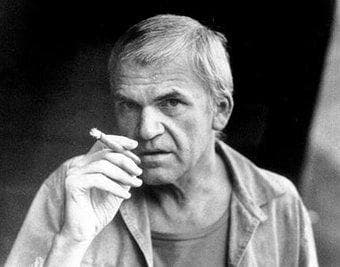
Milan Kundera is a Czech-born French writer. Kundera went into exile in France in 1975, acquiring citizenship in 1981. His Czech citizenship was revoked in 1979 and restored in 2019. He "sees himself as a French writer and insists his work should be studied as French literature and classified as such in book stores".
Similar books
- The Unbearable Lightness of Being
Milan Kundera
4.1 (342k) average on GoodreadsLiterary FictionExplores philosophical themes and human relationships with a similar blend of seriousness and irony.
- Waiting for Godot
Samuel Beckett
3.8 (160k) average on GoodreadsPhilosophyFeatures existential themes, absurd situations, and characters engaged in seemingly meaningless dialogue.
- The Stranger
Albert Camus
4.1 (3k) average on GoodreadsFantasyDeals with the philosophy of absurdism and an individual's detachment from conventional societal norms.
- The Old Man and the Sea
Ernest Hemingway
3.8 (831k) average on GoodreadsLiterary FictionA Cuban fisherman's long struggle with a giant marlin becomes a story of endurance and dignity, now retold for young adults with illustrations, phonetic guides, and writing prompts in Traditional Chinese.
- One Hundred Years of Solitude
Gabriel García Márquez
4.1 (753k) average on GoodreadsLiterary FictionThrough the multi-generational story of the Buendía family, a mythical town deals with the repeating patterns of time, love, and solitude, as the extraordinary mixes with the ordinary.
- The Goldfinch
Donna Tartt
3.9 (720k) average on GoodreadsLiterary FictionHaunted by a tragic explosion and clutching a stolen Dutch masterpiece, a young orphan navigates the opulent drawing rooms of New York and the gritty underbelly of the art world, desperately seeking connection and redemption amidst a life spiraling into crime and obsession.





Enjoyed the summary?
A summary gives you the shape of the book. The book itself has the detail, the examples and the voice.
Find The Festival of Insignificance on AmazonAs an Amazon Associate, BookBrief earns from qualifying purchases. How we're funded