
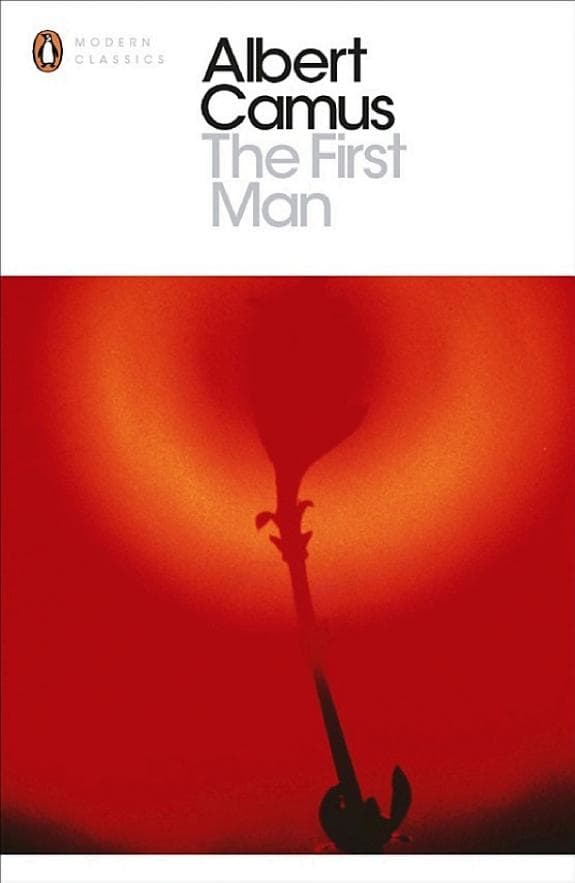
Synopsis
Covers the whole plot, including the ending.
- Difficulty
- Medium
- Read it if
- You are a fan of Albert Camus and want to understand the deeply personal and autobiographical roots of his philosophy, or if you are interested in post-colonial literature and the psychological impact of poverty and absence on identity.
- Skip it if
- You are looking for a complete, polished novel with a clear narrative arc, as this is an unfinished work that can feel fragmented and intensely introspective, or if you prefer purely philosophical essays over autobiographical fiction.
The First Man Quotes
“Each man is a first man.”
“The past is an island, and we are all its castaways.”
“One does not live in Algeria as one lives elsewhere.”
“What is called a reason for living is also an excellent reason for dying.”
“He was learning that the world was not a simple place, and that even love could be complicated.”
“Poverty had taught him to live in the present, to seize the fleeting moment.”
“The truth is that there is no truth, or rather, that the truth is what we make it.”
“To be happy, one must forget oneself.”
“He knew now that his mother was a stranger to him, as he was to her, despite their blood.”
“There is always a first time for everything, even for dying.”
“The sun was a god, and the sea its temple.”
“His life had been a long walk toward a truth he could not name.”
“Silence is the only language left when words fail.”
“He learned that the greatest freedom was not to be free from anything, but to be free to choose.”
Quiz
10 questions on the plot and the characters. Each answer comes with a short explanation.
Question 1
What is the primary reason 'The First Man' remained unpublished for over thirty years after Albert Camus's death?
- Camus had explicitly requested it not be published.
- It was lost and only rediscovered much later.
- It was an unfinished manuscript found after his fatal car accident.
- His family withheld publication due to its controversial content.
Show answer
C. It was an unfinished manuscript found after his fatal car accident. 'The First Man' was an unfinished manuscript discovered in the wreckage of the car accident that killed Camus in 1960, which explains its delayed publication.
Question 2
Who is the 'first man' in the novel, and what is his relationship to Albert Camus?
- Pierre Cormery, a fictionalized version of Camus's father.
- Jacques Cormery, a highly autobiographical character representing Camus himself.
- Marcel Cormery, a symbolic figure representing the working class of Algiers.
- Jean Cormery, a philosophical alter-ego exploring themes of the absurd.
Show answer
B. Jacques Cormery, a highly autobiographical character representing Camus himself. The 'first man' is Jacques Cormery, who is widely recognized as the most autobiographical character Camus created, deeply reflecting his own life experiences.
Question 3
Which two figures are highlighted as making Jacques Cormery's poverty-stricken childhood in Algiers bearable?
- His distant father and a local priest.
- His silent, illiterate mother and a transformative teacher.
- His grandmother and a childhood friend.
- A wealthy patron and a political activist.
Show answer
B. His silent, illiterate mother and a transformative teacher. The text explicitly states that Jacques Cormery's childhood was made bearable by his love for his silent and illiterate mother, and by the teacher who transformed his view of the world.
Question 4
What significant impact did the teacher have on Jacques Cormery's life?
- He provided financial support for Jacques's family.
- He taught Jacques to play a musical instrument, offering an escape.
- He transformed Jacques's view of the world, opening new intellectual horizons.
- He introduced Jacques to political activism and social justice.
Show answer
C. He transformed Jacques's view of the world, opening new intellectual horizons. The book states that the teacher 'transforms his view of the world,' indicating a profound intellectual and personal impact on young Jacques.
Question 5
How does 'The First Man' stand out among Camus's other works, according to the description?
- It is his only novel set outside of France.
- It is the most experimental in its narrative structure.
- It is the most autobiographical of his novels, offering insights into his life.
- It is the only one to directly address the Algerian War.
Show answer
C. It is the most autobiographical of his novels, offering insights into his life. The description highlights 'The First Man' as 'the most autobiographical of Camus's novels,' providing direct insights into his life.
Question 6
What is implied about the 'powerful themes underlying his work' that are given profound insights into in 'The First Man'?
- A shift towards optimistic existentialism.
- A deeper exploration of the impact of poverty, identity, and the search for meaning in a seemingly indifferent world.
- A focus on the absurd nature of totalitarian regimes.
- An analysis of the role of religion in post-war society.
Show answer
B. A deeper exploration of the impact of poverty, identity, and the search for meaning in a seemingly indifferent world. Given the description of Cormery's 'poverty-stricken childhood' and the novel's autobiographical nature, it implicitly delves into themes like the struggle against poverty, the formation of identity, and the search for meaning, which are central to Camus's broader philosophical concerns.
Question 7
Despite being an unfinished manuscript, what was the reception of 'The First Man' when it was finally published in 1994?
- It received mixed reviews due to its incomplete nature.
- It was largely ignored by the public and critics.
- It was an instant bestseller.
- It caused significant controversy and was temporarily banned.
Show answer
C. It was an instant bestseller. The provided text clearly states that 'it was an instant bestseller when it finally appeared in 1994,' highlighting its significant impact upon publication.
Question 8
How does Jacques Cormery's love for his 'silent and illiterate mother' contribute to the novel's themes, particularly in the context of Camus's philosophy?
- It represents a rejection of intellectual pursuits in favor of emotional bonds.
- It symbolizes the search for meaning and dignity in the face of hardship and the 'absurd' conditions of life.
- It critiques the limitations placed upon women in Algerian society.
- It foreshadows Jacques's own eventual illiteracy despite his education.
Show answer
B. It symbolizes the search for meaning and dignity in the face of hardship and the 'absurd' conditions of life. Camus often explored the dignity of ordinary life and finding meaning in simple human connections despite the harsh realities (the 'absurd'). His mother, silent and illiterate, represents a foundational, unadorned love and a connection to his roots, which aligns with his philosophical pursuit of authenticity and resilience.
Question 9
Considering 'The First Man' is the 'most autobiographical' of Camus's novels, what might a reader expect to learn about Camus himself through Jacques Cormery's experiences?
- Details about his political affiliations and involvement in the French Resistance.
- Insights into his early struggles with poverty, the profound influence of education, and his deep connection to his Algerian origins.
- Specific philosophical arguments and theories he developed later in life.
- His personal relationships with other prominent writers and intellectuals.
Show answer
B. Insights into his early struggles with poverty, the profound influence of education, and his deep connection to his Algerian origins. As the most autobiographical, and focusing on a 'poverty-stricken childhood' and a 'teacher who transforms his view of the world,' the novel directly reflects Camus's own experiences of growing up poor in Algiers and the crucial role education played in his life.
Question 10
The fact that 'The First Man' was published posthumously and unfinished but became an instant bestseller suggests what about Camus's enduring legacy?
- His legacy is primarily based on the novelty of discovering lost works.
- His work, even incomplete, holds significant intrinsic value and public interest due to his established philosophical and literary importance.
- The public's interest was mainly in the tragic circumstances of his death.
- It demonstrated a shift in literary tastes towards unfinished manuscripts.
Show answer
B. His work, even incomplete, holds significant intrinsic value and public interest due to his established philosophical and literary importance. An unfinished work becoming an instant bestseller decades after an author's death strongly indicates that the author's established reputation and the profound nature of their themes resonate deeply with readers, regardless of the work's completion status.
The First Man FAQ
What is 'The First Man' about?
'The First Man' is Albert Camus's unfinished autobiographical novel, chronicling the poverty-stricken childhood of Jacques Cormery in colonial Algeria. It explores themes of identity, the search for a father figure, the profound impact of his illiterate mother, and the transformative power of education amidst hardship.
Does 'The First Man' offer insights into Albert Camus's own life?
Yes, 'The First Man' is considered Camus's most autobiographical novel, with the protagonist Jacques Cormery closely mirroring Camus's own early life experiences in Algeria. It provides profound insights into his personal history, his relationship with his family, and the origins of many philosophical themes present in his other works.
What is the significance of the title 'The First Man'?
The title 'The First Man' refers to Jacques Cormery's experience as a child growing up in a largely uneducated and impoverished environment, often feeling like he is the first of his kind to navigate intellectual and societal complexities. It also alludes to his search for a lost father and his own journey of self-discovery and creation in a world that often feels alien.
What themes are explored in 'The First Man'?
Key themes include the search for identity, the impact of poverty and colonialism, the complex love for a silent mother, the transformative power of education, the absence of a father, and the struggle to reconcile one's origins with intellectual growth. It also delves into the nature of memory and autobiography.
How does 'The First Man' differ from Camus's other famous works like 'The Stranger'?
While 'The Stranger' presents a more detached and existentialist view of an alienated individual, 'The First Man' is deeply personal and autobiographical, offering a raw exploration of Camus's own roots and the formative experiences of childhood. It's less about the absurd hero and more about the human condition rooted in a specific historical and personal context.
Is 'The First Man' a complete novel?
No, 'The First Man' is an unfinished manuscript, discovered in the wreckage of the car accident that killed Camus in 1960. It was published posthumously in 1994, presenting the text as it was found, with Camus's notes and corrections.
Does 'The First Man' offer a hopeful perspective despite its themes of poverty and loss?
Despite the depictions of poverty and the absence of a father, the novel is imbued with a deep sense of love and gratitude, particularly for his mother and his teacher. It finds hope in the transformative power of education and the enduring strength of human connection, even amid hardship.
Why was 'The First Man' not published until 1994?
'The First Man' was an unfinished manuscript found after Albert Camus's death in 1960. His family initially delayed its publication due to its incomplete nature and deeply personal content. It was finally published over thirty years later, after much deliberation.
What role does the teacher play in Jacques Cormery's life in 'The First Man'?
The teacher plays a pivotal, transformative role in Jacques Cormery's life, opening his eyes to the world of knowledge and intellectual possibilities beyond his impoverished upbringing. He serves as a crucial mentor and a surrogate father figure, significantly shaping young Jacques's view of himself and his future.
About the author

Albert Camus was a French-Algerian philosopher, author, dramatist, and journalist. He was the recipient of the 1957 Nobel Prize in Literature at the age of 44, the second-youngest recipient in history. His works include The Stranger, The Plague, The Myth of Sisyphus, The Fall, and The Rebel.
Similar books
- The Stranger
Albert Camus
4.1 (3k) average on GoodreadsFantasyExplores themes of absurdity and alienation, though 'The First Man' provides the personal context for these ideas.
- Brave New World
Aldous Huxley
4.0 (1.4M) average on GoodreadsFantasyIn a future where happiness comes from chemicals and individuality is gone, one man's desire for real experience threatens the calm, controlled society.
- Life of Pi
Yann Martel
3.9 (1.3M) average on GoodreadsFantasyStranded in the vast Pacific, a young Indian boy forms an unlikely bond with a Bengal tiger, questioning belief and survival.
- The Picture of Dorian Gray
Oscar Wilde
4.1 (966k) average on GoodreadsFantasyA beautiful young man's soul decays within a cursed portrait, mirroring the grotesque cost of his hedonistic pursuit of eternal youth and illicit pleasure.
- Tuesdays with Morrie
Mitch Albom
4.1 (782k) average on GoodreadsBiographyA dying professor's weekly lessons from his bedside change a former student, giving him ideas on life, love, and letting go.
- The Tipping Point: How Little Things Can Make a Big Difference
Malcolm Gladwell
4.0 (690k) average on GoodreadsBusinessMalcolm Gladwell explains how small, targeted actions can start widespread changes in trends, behaviors, and ideas.


Enjoyed the summary?
A summary gives you the shape of the book. The book itself has the detail, the examples and the voice.
Find The First Man on AmazonAs an Amazon Associate, BookBrief earns from qualifying purchases. How we're funded