

Synopsis
Covers the whole plot, including the ending.
- Difficulty
- Medium
- Pacing
- Moderate
- Mood
- Philosophical, Romantic, Spiritual, Reflective, Lyrical
- Read it if
- You enjoy intertwining historical and contemporary narratives, are interested in Sufi mysticism, philosophy, and the transformative power of love, or appreciate a story about self-discovery and breaking free from societal expectations.
- Skip it if
- You prefer fast-paced thrillers, dislike spiritual or philosophical discourse, or are not interested in stories with a strong romantic and introspective element.
The Forty Rules of Love Plot Summary
Covers the whole plot, including the ending.
Ella's Stagnant Life and a New Assignment
Ella Rubenstein is a forty-year-old Jewish-American housewife in Northampton, Massachusetts. Her life feels empty, even with a family and a successful husband, David. She feels distant from David, who is having an affair, though she hasn't mentioned it. To escape her routine, Ella takes a job reading for a literary agency. Her first task is to review 'Sweet Blasphemy' by an unknown author, Aziz Zahara. The novel is a fictional account of the thirteenth-century meeting between the Persian poet Rumi and the dervish, Shams of Tabriz. Ella's initial doubt quickly turns into interest as she reads the story.
Shams's Quest for Rumi and the Forty Rules
The 'Sweet Blasphemy' story begins in 1244, introducing Shams of Tabriz, a wandering dervish. Shams gets a vision telling him to find his spiritual partner, a scholar who will show divine love. He travels from Tabriz, facing hardships, guided by his inner voice and his master, Baba-Zaman. Shams is known for his unusual way of approaching spirituality, challenging religious norms. During his journey, he creates his 'Forty Rules of Love,' which are the main philosophy of his teachings. His final stop is Konya, in present-day Turkey, where he believes he will find Rumi.
The First Encounter and Growing Bond
Shams arrives in Konya and finds Rumi, a respected but traditional Islamic scholar. Their first meeting is dramatic: Shams interrupts Rumi's lecture, asking a question that challenges Rumi's understanding of religion. This immediately interests Rumi, pulling him away from his traditional life. Shams becomes Rumi's spiritual guide, helping him leave his academic life and embrace love and mysticism. Their bond grows quickly, marked by deep talks and mutual understanding. Rumi's family and the townspeople, however, become wary of Shams's influence, as Rumi neglects his duties and spends all his time with the dervish.
Ella's Correspondence with Aziz
As Ella reads 'Sweet Blasphemy,' she is affected by Shams's philosophy and Rumi's change. The story connects with her own feelings of stagnation. She likes the 'Forty Rules of Love,' finding them useful in her own life. Driven by curiosity, Ella emails the author, Aziz Zahara, as the manuscript instructed. Aziz replies, starting a correspondence that becomes personal. Through their emails, Ella shares her struggles, and Aziz shares insights into his book and his own spiritual journey, similar to Shams and Rumi.
Konya's Growing Resentment and Shams's Departure
The strong bond between Shams and Rumi separates Rumi from his family, students, and the conservative community of Konya. Rumi's wife, Kerra, and his son, Alaeddin, dislike Shams, feeling he has charmed Rumi and broken up their family. The town's religious scholars and people see Shams as a dangerous heretic, fearing his teachings and Rumi's change. The hostility grows, making Konya difficult for Shams. Feeling his presence harms Rumi, and perhaps to test Rumi's new spiritual strength, Shams disappears from Konya, leaving Rumi heartbroken.
Rumi's Despair and Search for Shams
Shams's disappearance makes Rumi deeply sad. He is inconsolable, not eating or sleeping, his joy replaced by grief. His family, at first relieved, becomes worried by Rumi's decline. Rumi sends his son, Sultan Veled, and others to find Shams, eventually hearing he might be in Damascus. Rumi's longing and pain become the source of his most profound poems. His grief turns into mystical verse, forming his Divan and Masnavi, as he channels his longing for Shams into a quest for the Divine Beloved.
Shams's Return and Renewed Conflict
Through Sultan Veled's efforts, Shams is found in Damascus and convinced to return to Konya. Rumi is happy, and their spiritual connection becomes stronger. However, the community's dislike has grown. Shams, aware of the dangers, tries to teach Rumi about detachment and that physical presence is temporary. The townspeople, especially Alaeddin, who deeply dislikes Shams, continue to plot against him. Shams, knowing his time is short and his mission ending, prepares for his final departure, understanding that his absence will allow Rumi's spiritual light to shine alone.
The Tragic End of Shams
The hostility towards Shams reaches its end. One night, Shams is led out of Rumi's house by plotters, including Rumi's son, Alaeddin, and others who dislike his influence. Shams is murdered and his body is hidden, the exact details becoming a legend. His death is a sacrifice, meant to fully awaken Rumi's spiritual potential and ensure his legacy of love and poetry. Rumi is again devastated, but this time, his grief becomes a deeper spiritual awakening, making him the 'Sun' (Shams) of mystical poetry, forever remembering his companion through his verses and the tradition of the whirling dervishes.
Ella's Awakening and Decision
At the same time as the 13th-century story, Ella's emails with Aziz Zahara become more intense. She finds herself falling in love with Aziz, who, like Shams, encourages her to break free from her limits. The 'Forty Rules of Love' guide her, helping her embrace change and face her fears. She finally talks to David about his infidelity and their empty marriage. Realizing she cannot live without passion, Ella decides to leave her husband and her comfortable, but restrictive, suburban life. She plans to meet Aziz, driven by new courage and a desire to follow her own spiritual path, much like Rumi after Shams's departure.
A New Beginning in Konya
Ella travels to Konya, where Rumi and Shams's story happened. She finally meets Aziz Zahara, finding he has a terminal illness. Despite this, Ella feels a strong connection with him, one that goes beyond physical limits and mirrors Rumi and Shams's spiritual bond. She decides to stay with Aziz in Konya, caring for him in his final days. This decision shows Ella's complete change; she has found her own path to love, meaning, and self-discovery, embracing life's uncertainties, much like the message in the 'Forty Rules of Love.' She finds peace in her new life, having broken free from her past.
Principal Figures
Ella Rubenstein
Protagonist
A forty-year-old unhappily married American housewife who embarks on a journey of self-discovery.
Ella is initially depicted as a woman trapped in a life of domestic drudgery and emotional emptiness. Despite her seemingly perfect suburban existence with a successful husband and three children, she feels unfulfilled and disconnected. Her husband's affair and her own lack of passion highlight her stagnant state. Reading 'Sweet Blasphemy' by Aziz Zahara acts as a catalyst for her awakening. She is intelligent and sensitive, deeply affected by the spiritual teachings of Shams of Tabriz. Her journey is one of radical transformation, moving from conformity to authenticity.
Relationships: David Rubenstein (Husband, emotionally distant, having an affair); Aziz Zahara (Author and love interest, spiritual guide); Children (Mother, cares for them but feels disconnected from her role)
Shams of Tabriz
Major Character (13th Century)
A wandering dervish and mystic, Rumi's spiritual mentor and soulmate.
Shams is an enigmatic, provocative, and unconventional figure. He embodies radical love and divine wisdom, challenging religious dogma and societal norms. He is a seeker of truth, guided by divine visions, on a quest to find his spiritual counterpart. His teachings, encapsulated in the 'Forty Rules of Love,' emphasize unity, compassion, and the transcendence of ego. He is fiercely independent and unafraid to provoke. His mission is to ignite the spiritual fire within Rumi, even if it means sacrificing his own life. He is a catalyst for profound transformation, both for Rumi and, indirectly, for Ella.
Relationships: Rumi (Spiritual mentor and soulmate); Baba-Zaman (His own spiritual master); Kimya (Adopted daughter, later marries her)
Rumi (Mawlana Jalaluddin Rumi)
Major Character (13th Century)
A respected Islamic scholar and cleric who transforms into a passionate mystic and poet.
Initially, Rumi is a conventional, highly esteemed scholar and preacher in Konya, deeply learned in Islamic law and theology. He is respected but lacking true spiritual fire. His encounter with Shams of Tabriz shatters his ordered world, leading him on a path of ecstatic love, poetry, and mysticism. Rumi is a sensitive and passionate soul, capable of immense love and profound grief. His transformation is central to the 13th-century narrative, illustrating the power of spiritual mentorship and the journey from intellectual understanding to heartfelt experience. His poetry becomes the eternal testament to his love for Shams and the Divine.
Relationships: Shams of Tabriz (Spiritual student, later an equal, soulmate); Kerra (Wife, feels neglected); Sultan Veled (Devoted son, helps find Shams); Alaeddin (Resentful son, involved in Shams's murder)
Aziz Zahara
Supporting Character (Contemporary)
The mysterious author of 'Sweet Blasphemy' and Ella's contemporary spiritual guide and love interest.
Aziz is a Sufi living in Konya, the author of the manuscript Ella reviews. He is a contemporary embodiment of Shams's spirit, guiding Ella towards her own spiritual awakening through his writing and their email correspondence. He is wise, compassionate, and deeply spiritual, sharing the 'Forty Rules of Love' and encouraging Ella to break free from her unfulfilling life. Despite his terminal illness, he radiates an inner peace and a profound understanding of love and impermanence. He serves as the modern-day catalyst for Ella's transformation, much as Shams did for Rumi.
Relationships: Ella Rubenstein (Love interest and spiritual mentee)
Kerra (Rumi's Wife)
Supporting Character (13th Century)
Rumi's devoted but traditional wife, who resents Shams's influence.
Kerra is Rumi's wife and the mother of his children. She represents the conventional, familial aspect of Rumi's life that is disrupted by Shams. She loves Rumi deeply but cannot comprehend his spiritual transformation and feels threatened by Shams's presence, seeing him as a rival for Rumi's affection and attention. Her perspective highlights the societal and familial challenges posed by radical spiritual pursuits. She is a practical woman, focused on her family and community standing, and struggles to understand the profound, unconventional bond between Rumi and Shams.
Relationships: Rumi (Wife, feels neglected and jealous); Shams of Tabriz (Resents him deeply); Sultan Veled (Son); Alaeddin (Son)
Sultan Veled
Supporting Character (13th Century)
Rumi's devoted and understanding son, who becomes a loyal follower.
Sultan Veled is Rumi's eldest son, who, unlike his brother, eventually embraces and understands Shams's influence on his father. He initially shares some of the family's reservations but quickly recognizes the profound spiritual growth in Rumi. He becomes a loyal disciple of both Rumi and Shams, actively participating in the search for Shams after his first disappearance. Sultan Veled is instrumental in establishing the Mevlevi Order (whirling dervishes) after Rumi's death, ensuring the continuation of his father's spiritual legacy. He represents devotion, understanding, and the continuation of the Sufi path.
Relationships: Rumi (Son, devoted disciple); Shams of Tabriz (Disciple, respects him); Alaeddin (Brother, often at odds)
Alaeddin
Supporting Character (13th Century)
Rumi's resentful and jealous son, who plays a tragic role in Shams's fate.
Alaeddin is Rumi's younger son, characterized by his deep-seated jealousy, anger, and resentment towards Shams of Tabriz. He feels abandoned by his father and believes Shams has corrupted Rumi and destroyed their family's reputation and stability. His emotions are fueled by a sense of injustice and a desire to restore his father to his previous scholarly life. Alaeddin's character highlights the destructive power of envy and misunderstanding in the face of radical spiritual transformation. He ultimately becomes involved in the tragic murder of Shams, a pivotal moment in the narrative and Rumi's life.
Relationships: Rumi (Son, feels neglected); Shams of Tabriz (Deeply resents and hates him); Sultan Veled (Brother, often at odds)
Desert Rose
Supporting Character (13th Century)
A humble prostitute in Konya who finds spiritual solace through Shams.
Desert Rose is a kind-hearted prostitute in Konya who, despite her societal standing, possesses an open heart and a seeking spirit. She is one of the few individuals in Konya who recognizes Shams's spiritual wisdom and treats him with respect and kindness. Shams offers her spiritual comfort and an alternative perspective on her life, seeing beyond her profession to her inner goodness. Her character challenges societal judgments and highlights Shams's universal message of love and acceptance, which extends to the marginalized and outcast. She finds a sense of dignity and purpose through Shams's teachings.
Relationships: Shams of Tabriz (Spiritual mentee, finds solace in his presence)
Kimya
Supporting Character (13th Century)
Shams's adopted daughter, who falls in love with him and becomes his wife.
Kimya is a young woman who is taken in by Shams and becomes his adopted daughter. She is a gentle, sensitive soul who falls deeply in love with Shams, despite the age difference and his unconventional nature. Their marriage is a testament to Shams's ability to love in many forms, though it is ultimately a challenging union. Kimya struggles with Shams's constant spiritual quest and his emotional unavailability, but she remains devoted to him. Her character explores themes of devotion, sacrifice, and the complexities of human love in the shadow of divine love.
Relationships: Shams of Tabriz (Adopted daughter, then wife); Rumi (Respects him as her adopted father's closest friend)
Themes & Insights
Love as a Transformative Force
The novel's main theme is love's power, both human and divine. Shams's 'Forty Rules of Love' say that love is essential to existence and a way to spiritual awakening. This is clear in Rumi's change from scholar to mystic and poet after meeting Shams. His love for Shams represents his love for the Divine. In the modern story, Ella's love for Aziz and her use of Shams's rules cause her own personal change, leading her to leave her marriage and seek an authentic life. Love is shown as a spiritual practice and a force that removes barriers.
“How can there be a love that is not divine? Every love, every heartbeat, every breath, every glance, every touch, every kiss, every longing, every tear, every smile, every word, every silence, every moment, every being, every thing, every cell, every molecule, every atom, is a love that is divine.”
Identity and Self-Discovery
Ella and Rumi both go through journeys of self-discovery. Ella, initially defined by her roles, feels unfulfilled and questions who she is. By reading 'Sweet Blasphemy' and writing to Aziz, she starts to shed expectations and embrace her true self, making big choices for her own happiness. Rumi also redefines his identity. He goes from a celebrated scholar bound by tradition to a dervish and poet, guided by his heart and Shams's teachings. Their journeys show the courage needed to leave a comfortable but inauthentic life for one's true calling.
“Every true love and friendship is a story of unexpected transformation. If we are the same person before and after we loved, that means we haven't loved enough.”
The Nature of Spirituality and Religion
The novel explores spirituality beyond strict religious rules, suggesting a more inclusive, heart-centered approach. Shams of Tabriz often challenges traditional interpretations of Islam and religious law, stressing the unity of all religions and inner faith over outward rituals. He provokes those who hold onto superficial religion, urging them to find the divine within. This is clear in Rumi's shift from a traditional cleric to a mystic who uses music, dance, and poetry to worship. The book suggests that true spirituality goes beyond institutions and is found in universal love and compassion.
“God is a meticulous accountant. He registers every deed, every word, every thought....So don't worry. Not a single deed, not a single word, not a single thought will be overlooked.”
The Mentor-Disciple Relationship
A main dynamic in both stories is how a spiritual mentor affects a student. Shams of Tabriz guides Rumi, pushing him beyond his intellectual understanding to experience divine love directly. Their intense, unusual bond helps Rumi change. Similarly, Aziz Zahara, through his novel and emails, mentors Ella, inspiring her to question her life and start her own self-discovery. This relationship shows that true guidance often comes from unexpected places and involves challenging norms, leading to personal and spiritual growth.
“The path to Truth is a labor of the heart, not of the head. Make your heart your primary guide! Not your mind. Meet, challenge and ultimately prevail over your nafs (ego) with your heart. To know your Nafs is to know your God.”
Destiny and Free Will
The novel often deals with destiny (kismet) and free will. Shams believes he is divinely guided to find Rumi, fulfilling a predetermined spiritual destiny. Yet, he also says individual choice is important in accepting or rejecting that path. Ella's journey also explores this: she feels a fated connection to Aziz and Rumi's story, but her decision to leave her life and travel to Konya is an act of free will. The book suggests that while some events might be fated, our choices and reactions to them shape our spiritual journey and personal growth.
“Whatever you do in life, make sure you do it with all your heart. Don't be afraid of anything you might lose if you follow your heart. If you're afraid, that means you're not living fully.”
Plot Devices & Literary Techniques
Dual Narrative / Parallel Timelines
Two stories, one contemporary and one historical, unfold simultaneously and mirror each other.
The novel employs a dual narrative structure, alternating between Ella Rubenstein's modern-day story in Northampton and the 13th-century tale of Rumi and Shams of Tabriz. This device allows Shafak to draw powerful parallels between the characters' spiritual journeys and the themes of love and transformation across different eras. The historical narrative of 'Sweet Blasphemy' acts as a catalyst for Ella's contemporary awakening, demonstrating the timeless relevance of Shams's teachings. The alternating chapters create suspense and allow readers to see the direct impact of the past on the present.
The Forty Rules of Love
A collection of spiritual principles guiding Shams and inspiring Ella.
The 'Forty Rules of Love' are a central literary and philosophical device. These rules, attributed to Shams of Tabriz, are interspersed throughout the novel, each offering a profound insight into Sufi philosophy, love, and spiritual living. They serve as a moral and spiritual compass for Shams, a guide for Rumi's transformation, and a source of inspiration and challenge for Ella. Each rule encapsulates a key theme, such as the nature of God, the importance of the heart, the illusion of self, and the unity of all beings. They are both a plot element and a thematic summary, driving character action and providing spiritual commentary.
The Manuscript ('Sweet Blasphemy')
A novel-within-a-novel that acts as a catalyst for the protagonist's transformation.
The manuscript 'Sweet Blasphemy' is a crucial plot device. It is the narrative that Ella is assigned to read, and it contains the entire 13th-century story of Rumi and Shams. This 'book within a book' serves as the primary mechanism through which Ella's transformation begins. It introduces her to the 'Forty Rules of Love' and the profound spiritual journey of Rumi, directly mirroring her own nascent desires for change and deeper meaning. The manuscript is not just a story; it's a living text that impacts the reader (Ella) and, by extension, the external reader of 'The Forty Rules of Love'.
Symbolism of Names (Rumi/Shams)
Character names carrying symbolic meaning related to light and spirituality.
The names of the central 13th-century characters hold significant symbolic weight. 'Shams' means 'Sun' in Arabic, symbolizing the radiant, illuminating force that awakens Rumi's spiritual potential. 'Rumi' means 'of Rome' or 'Anatolian,' indicating his earthly origin, but through Shams, he becomes the vessel for the divine 'Sun.' This symbolism underscores their profound connection and Shams's role as the catalyst for Rumi's enlightenment. Rumi, after Shams's death, often signed his poems 'Shams,' indicating that he had fully absorbed and embodied the sun's light, becoming Shams himself.
The Forty Rules of Love Quotes
“Every true love and friendship is a story of unexpected transformation. If we are the same person before and after we loved, that means we haven't loved enough.”
“The quest for love changes us. There is no seeker among those who search for love who has not matured on the way.”
“Patience does not mean to passively endure. It means to be farsighted enough to trust the end result of a process.”
“Fret not where the road will take you. Instead concentrate on the first step. That is the hardest part and that is what you are responsible for.”
“The universe is one being. Everything and everyone is interconnected through an invisible web of stories.”
“How we see God is a direct reflection of how we see ourselves. If God brings to mind mostly fear and blame, it means there is too much fear and blame welled inside us.”
“Intellect and love are made of different materials. Intellect ties people in knots and risks nothing, but love dissolves all tangles and risks everything.”
“East, west, south, or north makes little difference. No matter what your destination, just be sure to make every journey a journey within. If you travel within, you'll travel the whole wide world and beyond.”
“Try not to resist the changes that come your way. Instead let life live through you. And do not worry that your life is turning upside down. How do you know that the side you are used to is better than the one to come?”
“Whatever happens in your life, no matter how troubling things might seem, do not enter the neighborhood of despair. Even when all doors remain closed, God will open up a new path only for you.”
“Loneliness and solitude are two different things. When you are lonely, it is easy to delude yourself into believing that you are on the right path. Solitude is better for us, as it means being alone without feeling lonely.”
“The path to the Truth is a labor of the heart, not of the head. Make your heart your primary guide! Not your mind. Meet, challenge and ultimately prevail over your nafs with your heart.”
“Where there is a wound in the soul, there will be a scar upon the sacred texts.”
“Real filth is the one inside. The rest simply washes off. There is only one type of dirt that cannot be cleansed with pure waters, and that is the stain of hatred and bigotry contaminating the soul.”
Quiz
10 questions on the plot and the characters. Each answer comes with a short explanation.
Question 1
What is the name of the novel Ella Rubenstein reads as part of her job as a reader for a literary agent?
- The Bastard of Istanbul
- Sweet Blasphemy
- The Forty Rules of Love
- Rumi's Whispers
Show answer
B. Sweet Blasphemy Ella's first assignment is to read 'Sweet Blasphemy,' a novel by Aziz Zahara that tells the story of Shams of Tabriz and Rumi, which becomes central to her personal transformation.
Question 2
Who is the spiritual mentor that transforms Rumi from a cleric into a mystic and poet in the thirteenth-century narrative?
- Aziz Zahara
- Ella Rubenstein
- Shams of Tabriz
- Jalal ad-Din Rumi
Show answer
C. Shams of Tabriz Shams of Tabriz, a whirling dervish, is the spiritual mentor who encounters Rumi and plays a pivotal role in his transformation, as depicted in the historical narrative of the book.
Question 3
How old is Ella Rubenstein at the beginning of the contemporary narrative?
- Thirty years old
- Forty years old
- Fifty years old
- Twenty-five years old
Show answer
B. Forty years old The book states that Ella is forty years old and unhappily married when she starts her job as a reader, setting the stage for her journey of self-discovery.
Question 4
What role does Aziz Zahara play in Ella's life, mirroring the historical narrative?
- He is her literary agent who assigns her the book.
- He is a distant relative who sends her the novel.
- He is the author of 'Sweet Blasphemy' who, like Shams, comes to set her free.
- He is a therapist who recommends the book for her personal growth.
Show answer
C. He is the author of 'Sweet Blasphemy' who, like Shams, comes to set her free. Aziz Zahara is the author of the novel Ella reads, and through his story and correspondence, he becomes a transformative figure in her life, similar to how Shams influenced Rumi.
Question 5
Which of the following best describes a central theme explored through both narratives in the book?
- The pursuit of wealth and social status in modern society.
- The conflict between science and religion in historical contexts.
- The transformative power of love and spirituality across time.
- The importance of political revolutions in shaping cultures.
Show answer
C. The transformative power of love and spirituality across time. The book intertwines the thirteenth-century story of Rumi and Shams with Ella's contemporary life to highlight themes of love, spirituality, and personal transformation that transcend time.
Question 6
What is the primary setting for the historical narrative involving Rumi and Shams?
- Modern-day Turkey and the United States.
- Thirteenth-century Persia (modern-day Iran).
- Ancient Greece during the Hellenistic period.
- Medieval Europe during the Crusades.
Show answer
B. Thirteenth-century Persia (modern-day Iran). The historical narrative is set in the thirteenth century in Persia, where Rumi, a cleric in Konya (part of the Seljuk Empire, now Turkey), meets Shams of Tabriz, who is from Persia (modern-day Iran).
Question 7
How does Ella's personal life parallel Rumi's story in 'Sweet Blasphemy'?
- Both are successful poets seeking fame and recognition.
- Both are unhappy in their current roles and experience spiritual awakening through a mentor.
- Both travel extensively to find ancient manuscripts.
- Both are involved in political activism for religious unity.
Show answer
B. Both are unhappy in their current roles and experience spiritual awakening through a mentor. Ella, unhappy in her marriage and life, finds resonance in Rumi's transformation from an unhappy cleric to a mystic through Shams' guidance, mirroring her own journey via Aziz Zahara's influence.
Question 8
What philosophical insight do Shams's rules primarily offer, as highlighted in the book?
- Strategies for achieving material success and power.
- The importance of strict adherence to religious dogma.
- The unity of all people and religions, and the presence of love in everyone.
- Scientific explanations for natural phenomena in the medieval world.
Show answer
C. The unity of all people and religions, and the presence of love in everyone. Shams's rules, central to the book, emphasize an ancient philosophy based on the unity of all people and religions, and the idea that love exists within each individual, guiding both Rumi's and Ella's transformations.
Question 9
In what way does the structure of 'The Forty Rules of Love' enhance its thematic message?
- By using a single linear narrative to simplify the historical events.
- By alternating between two parallel narratives to show timeless relevance of love and spirituality.
- By focusing solely on Ella's modern story to make it more relatable.
- By presenting the rules as standalone essays without character development.
Show answer
B. By alternating between two parallel narratives to show timeless relevance of love and spirituality. The book uses parallel narratives—one contemporary (Ella's) and one historical (Rumi and Shams's)—to illustrate how the themes of love and spirituality are universal and transcend time, enriching the overall message.
Question 10
What is the significance of the title 'Sweet Blasphemy' within the context of the book?
- It refers to a controversial political manifesto in the historical narrative.
- It describes Ella's act of reading the novel against her husband's wishes.
- It symbolizes the provocative yet transformative ideas of Shams that challenge orthodox views.
- It is the name of a secret society Rumi joins in the story.
Show answer
C. It symbolizes the provocative yet transformative ideas of Shams that challenge orthodox views. 'Sweet Blasphemy' is the novel within the book that tells Shams and Rumi's story; the title reflects Shams's teachings, which are seen as blasphemous by some for challenging traditional religious norms but are ultimately sweet and liberating in their message of love.
The Forty Rules of Love FAQ
What is 'The Forty Rules of Love' about?
The novel interweaves two parallel narratives: a contemporary story about Ella Rubenstein, a 40-year-old unhappily married woman who reads a manuscript called 'Sweet Blasphemy,' and a 13th-century historical story about Shams of Tabriz's spiritual mentorship of Rumi. Through Shams' forty rules of love, both Ella and Rumi undergo profound transformations, discovering love's unifying power across time and personal circumstances.
Why should I read 'The Forty Rules of Love'?
This book offers a rich exploration of spirituality, love, and self-discovery through dual timelines that mirror each other. It delves into Sufi philosophy via Shams' forty rules, providing timeless wisdom on unity, passion, and personal freedom, while the contemporary narrative makes these ancient teachings accessible and relevant to modern readers.
What is the background/setting of 'The Forty Rules of Love'?
The novel alternates between two settings: modern-day North America, where Ella lives a stifled suburban life, and 13th-century Konya (in present-day Turkey), where Rumi, a respected cleric, meets the wandering dervish Shams of Tabriz. The historical setting immerses readers in the cultural and religious milieu of the Seljuk Empire, contrasting with Ella's contemporary world of emotional isolation.
What are the most memorable quotes from the book?
Key quotes include Shams' rules such as 'The path to the Truth is a labor of the heart, not of the head' and 'How we see God is a direct reflection of how we see ourselves.' Another poignant line is Rumi's realization: 'Love is the water of life. And a lover is a soul of fire!' These encapsulate the novel's themes of spiritual awakening and inner transformation.
What writing style does Elif Shafak use in this book?
Shafak employs a lyrical and exuberant style, blending poetic prose with philosophical depth. She uses alternating first-person narratives from multiple characters (including Ella, Aziz, Shams, and Rumi) to create an intimate, multi-perspective story that mirrors the interconnectedness central to Sufi teachings.
What minor details add significant meaning to the story?
Small details like Ella's red hair (symbolizing her suppressed passion) and Shams' constant whirling (representing spiritual ecstasy) enrich the narrative. The manuscript's title, 'Sweet Blasphemy,' hints at the challenging of orthodox beliefs, while Aziz's emails to Ella mirror Shams' letters to Rumi, subtly linking the timelines.
What are some subtle foreshadowing moments in the novel?
Early in Ella's story, her dissatisfaction with her marriage foreshadows her eventual liberation. In the historical narrative, Shams' mysterious arrival and immediate impact on Rumi foreshadow both Rumi's poetic awakening and the tragic jealousy that leads to Shams' disappearance, echoing themes of sacrifice and transformation.
What unexpected character connections exist between the two timelines?
Aziz Zahara, the author of 'Sweet Blasphemy,' is revealed to be a modern-day dervish figure who, like Shams, seeks to awaken Ella spiritually. Their email correspondence parallels Shams' mentorship of Rumi, creating a mystical link where Aziz embodies Shams' role, guiding Ella toward self-discovery and love across centuries.
What are the unspoken motivations driving Ella's actions?
Ella is motivated by a deep-seated yearning for meaning and passion, unspoken due to her societal role as a wife and mother. Her initial reluctance to change stems from fear of upheaval, but as she reads Aziz's manuscript, her hidden desire for spiritual and emotional freedom becomes the driving force behind her eventual transformation.
What psychological complexities do Shams and Rumi exhibit?
Shams displays a complex blend of wisdom and provocativeness, using his forty rules to challenge Rumi's ego and comfort. Rumi grapples with internal conflict between his clerical duties and his awakening passion, showing a psychological journey from intellectual rigidity to emotional and mystical openness, fueled by love and loss.
What are the major emotional turning points for Ella?
Key emotional turning points include Ella's first contact with Aziz, which sparks curiosity; her realization that Rumi's story mirrors her own, leading to self-reflection; and her decision to leave her husband after internalizing Shams' rules, culminating in a journey to meet Aziz and embrace a new life of love and freedom.
How do the relationship dynamics between Shams and Rumi evolve?
Their relationship evolves from initial skepticism and resistance (with Rumi's family and community wary of Shams) to a deep, transformative bond where Shams becomes Rumi's spiritual mirror. This dynamic shifts Rumi from a respected cleric to a passionate poet and mystic, though it also incites jealousy that ultimately leads to Shams' mysterious departure.
Which parts of the novel remain ambiguous or open-ended?
The fate of Shams after his disappearance is left ambiguous, reflecting historical mysteries. Ella's future with Aziz is open-ended, emphasizing her journey's ongoing nature rather than a fixed conclusion. The interpretation of some rules, like those on suffering and unity, invites personal reflection without definitive answers.
What are controversial scenes or decisions in the book?
Shams' provocative teachings often challenge religious orthodoxy, sparking controversy among Rumi's followers. Ella's decision to abandon her family for spiritual pursuit can be debated as selfish or liberating. The blending of Sufi mysticism with modern secular life may also stir discussion on the relevance of ancient rules in contemporary settings.
How does 'The Forty Rules of Love' end, and what does it mean?
The novel ends with Ella traveling to meet Aziz, embracing a new path of love and self-discovery, while the historical narrative concludes with Rumi transformed into a poet after Shams' disappearance. This dual ending symbolizes that love's journey is continuous and transcendent, with both timelines illustrating how spiritual mentorship can lead to personal awakening across ages.
How do the forty rules themselves function within the narrative?
The forty rules serve as a structural and thematic backbone, interwoven through Shams' teachings to Rumi and Aziz's correspondence with Ella. Each rule, such as 'Patience does not mean to passively endure,' acts as a catalyst for character growth, pushing both Rumi and Ella toward deeper understanding and breaking free from societal or personal constraints.
What role does the theme of 'blasphemy' play in the story?
The theme of blasphemy, highlighted in the manuscript title 'Sweet Blasphemy,' represents the challenging of rigid beliefs to embrace a more inclusive, love-centered spirituality. Shams' teachings are seen as blasphemous by orthodox figures, just as Ella's pursuit of passion defies conventional marital norms, underscoring the novel's message that true love often requires breaking taboos.
About the author

Elif Shafak is a Turkish-British author known for her fiction that often explores themes of identity, culture, and love. Among her notable works are "The Forty Rules of Love," which intertwines a contemporary narrative with the life of Rumi, and "Honor," a story addressing issues of family and honor in a multicultural context.
Similar books
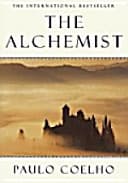
- THE ALCHEMIST
Paulo Coelho
3.6 (3k) average on GoodreadsFictionExplores themes of destiny, spirituality, and finding one's true path through a philosophical lens.
- A Thousand Splendid Suns
Khaled Hosseini
4.4 (1.2M) average on GoodreadsHistorical FictionOffers a rich, emotionally resonant narrative set in a different cultural context, with strong character development and themes of resilience.
- To Kill a Mockingbird
Harper Lee
4.3 (4.5M) average on GoodreadsHistorical FictionIn the 1930s Jim Crow South, Harper Lee writes about racial injustice, moral growth, and the quiet courage of a lawyer father, Atticus Finch, as seen through his young daughter's eyes.
- The Great Gatsby
F. Scott Fitzgerald
3.9 (3.8M) average on GoodreadsHistorical FictionIn the opulent Roaring Twenties, a mysterious millionaire's lavish parties hide his desperate, tragic pursuit of a lost love, exposing the emptiness within the American Dream.
- Pride and Prejudice
Jane Austen
4.3 (3M) average on GoodreadsHistorical FictionIn a society focused on status and money, Elizabeth Bennet navigates love and pride, challenging Mr. Darcy and social expectations to find true affection.
- Angels & Demons
Dan Brown
3.9 (2.7M) average on GoodreadsThrillerA Harvard symbologist races through Rome's ancient sites, deciphering cryptic clues to unmask the Illuminati and stop a vengeful plot to destroy the Vatican with a stolen antimatter weapon.





Enjoyed the summary?
A summary gives you the shape of the book. The book itself has the detail, the examples and the voice.
Find The Forty Rules of Love on AmazonAs an Amazon Associate, BookBrief earns from qualifying purchases. How we're funded