
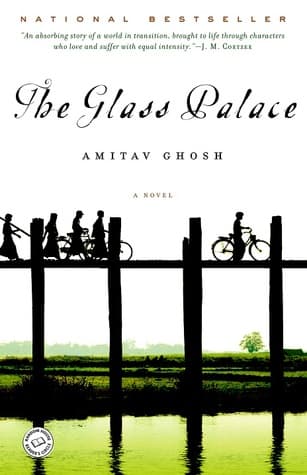
Synopsis
Covers the whole plot, including the ending.
- Difficulty
- Medium
- Pacing
- Moderate
- Mood
- Epic, Historical, Reflective, Melancholy, Ambitious
- Read it if
- You enjoy sweeping historical sagas that explore the impact of colonialism, war, and political upheaval on multiple generations of a family across diverse cultures.
- Skip it if
- You prefer fast-paced plots and shy away from detailed historical and cultural exposition.
The Glass Palace Plot Summary
Covers the whole plot, including the ending.
The Fall of Mandalay and a Boy's Fortune
In 1885, Rajkumar, an eleven-year-old orphan from Ratnagiri, works for Ma Cho, a food stall owner in Mandalay, Burma. He is there when British forces, led by General Prendergast, invade and capture King Theebaw and Queen Supayalat. During the occupation of the Glass Palace, Rajkumar sees the royal family forced into exile. He notices Dolly, a young attendant to the Queen, and is immediately drawn to her. This brief meeting leaves a lasting impression. As the British take control, Rajkumar, clever and ambitious, takes a job with Saya John, a successful Indian merchant in the teak trade. This starts his rise from poverty, driven by the political changes.
Exile in Ratnagiri
The deposed King Theebaw, Queen Supayalat, and their daughters, along with their attendants, including Dolly, travel by ship to Ratnagiri, a small coastal town in British India. Their new home is a simple bungalow, very different from the Glass Palace. The royal family struggles to adjust to their limited life, cut off from their former power. Dolly, though a servant, feels the weight of their loss and the boredom of their isolation. She serves the royal family, especially the Queen, while quietly watching their relationships change and despair grow. This time is marked by a strong sense of displacement and cultural difference.
Rajkumar's Teak Empire
Working for Saya John, Rajkumar becomes a sharp businessman. He learns the teak trade, mastering logging, transport, and market sales. He soon surpasses his mentor, starting his own logging operations deep in the Burmese forests. Rajkumar's ambition is vast; he expands his business, gaining wealth and influence. Despite his success, he often thinks of the young woman he saw during Mandalay's fall. Dolly remains a powerful image in his memory, a symbol of a past he wants to reconnect with. His success is driven by profit, but also by a deeper, unspoken wish to be worthy of her.
The Search for Dolly
Years later, after building his teak empire, Rajkumar decides to find Dolly. He travels to India, to Ratnagiri, the rumored place of exile for the Burmese royal family. His search is hard; the royal family lives quietly, and information is scarce. He eventually finds their home and, with persistence and luck, makes contact. When he finally sees Dolly again, she is no longer the girl he remembered but a woman changed by hardship and service. Despite the years, his feelings for her are strong, and he is determined to win her affection and offer her a new life.
A New Life and New Challenges
Rajkumar proposes to Dolly, and after some thought, she accepts, leaving her service to the exiled Queen. They marry, and Dolly moves to Burma, into Rajkumar's grand home. Their first years together have both joy and challenges in blending two different lives. Dolly, used to court life and then Ratnagiri's quiet routine, finds herself the mistress of a large household and part of a busy business. Rajkumar, though deeply in love, sometimes struggles to understand Dolly's quiet nature and her lingering connection to her past. They start a family, their children bridging their different origins.
The Next Generation: Uma and Neel
Rajkumar and Dolly have two children: a daughter, Uma, and a son, Neel. Uma grows up independent, eventually studying in India. Neel, initially closer to his father's business, becomes interested in the nationalist movements in British India and Burma. The children represent a new generation, living between multiple cultures and identities. Their lives are shaped by their parents' experiences and the changing politics of the early 20th century. Uma's schooling in India exposes her to new ideas, while Neel's political awakening marks a shift from his father's business goals.
Revolutionary Fervor: Arjun and the Indian Army
The story then focuses on Arjun, a young Indian man from a military family, who joins the British Indian Army. He is stationed in Burma during World War II, fighting the Japanese invasion. Arjun's experiences show the complex loyalties and sacrifices of the war and the British Empire. He meets members of the Azad Hind Fauj (Indian National Army), led by Subhas Chandra Bose, who want to free India with Japanese help. This meeting makes Arjun question his identity and service. His story connects with the larger fight for Indian independence, reflecting the difficult era and the moral choices many faced.
Neel's Political Awakening and the INA
Neel, Rajkumar and Dolly's son, gets more involved in the nationalist movement. Inspired by Subhas Chandra Bose's words and the promise of Indian independence, he decides to join the Indian National Army (INA). This decision deeply worries his parents, especially Rajkumar, who values stability and his business. Neel's commitment leads him to fight alongside the Japanese against the British, a choice that puts him against the British Raj and endangers his family. His journey reflects the strong desire for self-rule that spread across the subcontinent, forcing people to choose sides in a global conflict.
The War's Devastation and Family Loss
World War II devastates Burma and India. Rajkumar's teak business suffers greatly, and the family faces hardship and displacement. The war also brings personal tragedy. Neel's involvement with the INA leads to his capture and imprisonment by the British. The family faces constant violence and uncertainty about their loved ones. Dolly, always strong, works to keep her family together amid the chaos. The war changes their lives, destroying their security and making them face the brutal realities of imperial conflict and the fight for national identity. The loss and suffering from this time leave deep, lasting scars.
Post-War Realities and New Beginnings
After the war, with India and Burma nearing independence, the surviving members of Rajkumar and Dolly's family face new challenges. Neel is eventually freed from prison, but the experience has changed him. Uma, back from India, actively helps rebuild their lives. The family deals with the loss of their wealth and the need to adjust to a rapidly changing political and social world. The end of colonial rule brings both hope and uncertainty, as new nations are formed. The family's story continues, reflecting the wider story of post-colonial rebuilding and the search for identity in a fragmented world.
The Legacy of the Glass Palace
In their later years, Rajkumar and Dolly reflect on their long lives. Rajkumar's empire is mostly gone, but their family endures. The story often returns to memory and how the past shapes the present. Dolly, especially, carries the weight of the Glass Palace's fall and her connection to the exiled royal family. The children and grandchildren, spread across Burma, India, and beyond, embody their ancestors' diverse legacies. The novel ends with a sense of history's repeating nature, the strength of human connection, and the quiet dignity in surviving and adapting amid historical changes, leaving a strong impression of how lives are connected across generations and nations.
The Glass Palace Characters
Rajkumar
Protagonist
An orphaned boy who builds a vast teak empire in Burma.
Rajkumar is a resourceful, ambitious, and determined orphan who rises from poverty to become a wealthy teak merchant. He is driven by a powerful desire for success and stability, coupled with a deep, enduring love for Dolly. Though he can be pragmatic and focused on business, he possesses an underlying romanticism that fuels his quest to find Dolly. He is a self-made man who adapts readily to changing circumstances, but his focus on material success sometimes blinds him to the emotional needs and political aspirations of his family.
Relationships: Dolly (His lifelong love and wife, whom he pursues relentlessly.); Saya John (His mentor in the teak trade and an early father figure.); Uma (His strong-willed daughter.); Neel (His son, whose political aspirations clash with Rajkumar's business focus.)
Dolly
Protagonist
A quiet, resilient attendant to the Burmese Queen who becomes Rajkumar's wife.
Dolly is a gentle yet incredibly resilient woman. Initially an attendant in the Burmese royal court, she experiences the trauma of exile with King Theebaw and Queen Supayalat. She embodies grace under pressure and a quiet strength, adapting to hardship without losing her dignity. Her love for Rajkumar is deep but often expressed through quiet devotion rather than overt passion. She maintains a strong connection to her Burmese heritage and the memory of the Glass Palace, even as she builds a new life with Rajkumar.
Relationships: Rajkumar (Her husband, whom she deeply loves and supports.); Queen Supayalat (Her former mistress, to whom she remains loyal even in exile.); Uma (Her daughter, with whom she shares a close bond.); Neel (Her son, whose political choices worry her deeply.)
Uma
Supporting
Rajkumar and Dolly's intelligent and independent daughter.
Uma is Rajkumar and Dolly's eldest child, characterized by her intelligence, strong will, and independent spirit. She is educated in India and is exposed to modern ideas and the burgeoning nationalist movement. Unlike her father, she is less focused on material wealth and more on personal growth and social awareness. She acts as a bridge between her parents' traditional world and the rapidly changing world around them, often questioning conventions and seeking her own path. She represents the new generation, educated and globally aware.
Relationships: Rajkumar (Her father, whose business acumen she respects but whose traditional views she sometimes challenges.); Dolly (Her mother, with whom she shares a strong emotional bond.); Neel (Her brother, with whom she shares a close, supportive relationship.)
Neel
Supporting
Rajkumar and Dolly's son, drawn to the Indian nationalist movement.
Neel is the son of Rajkumar and Dolly, initially groomed to follow in his father's business footsteps. However, he becomes deeply involved in the Indian nationalist movement, eventually joining Subhas Chandra Bose's Indian National Army. He is idealistic, passionate, and willing to sacrifice personal comfort for the cause of freedom. His journey highlights the political turmoil of the era and the difficult choices individuals faced when confronted with colonial rule and the fight for independence. His actions cause great concern for his parents but reflect his unwavering commitment to his ideals.
Relationships: Rajkumar (His father, whose business-mindedness he ultimately rejects for political ideals.); Dolly (His mother, who worries about his safety and choices.); Uma (His sister, who supports him despite his dangerous path.)
Saya John
Supporting
A shrewd Indian merchant who mentors young Rajkumar in the teak trade.
Saya John is Rajkumar's first employer and mentor in Burma. He is a pragmatic and successful Indian merchant, well-established in the teak trade. He sees potential in young Rajkumar and teaches him the intricacies of the business, from logging to market dynamics. Saya John is a figure of stability and practical wisdom, representing the established Indian diaspora in Burma. He provides Rajkumar with the foundation for his future empire, embodying the entrepreneurial spirit that flourished under British colonial rule, albeit with its own challenges.
Relationships: Rajkumar (His protégé and later competitor, whom he initially guides.)
Queen Supayalat
Supporting
The deposed Queen of Burma, living in exile in India.
Queen Supayalat is the formidable and proud queen of Burma, who is forced into exile by the British. She struggles deeply with the loss of her kingdom and her confinement in Ratnagiri. Despite her reduced circumstances, she retains a regal bearing and a sense of dignity, though her spirit is often consumed by bitterness and longing for her former life. She represents the tragic end of an era and the human cost of imperial conquest, embodying the collective grief and cultural displacement of the Burmese people.
Relationships: Dolly (Her loyal attendant, who remains by her side through exile.)
Arjun
Supporting
An Indian soldier in the British Army during World War II, grappling with divided loyalties.
Arjun is a young Indian man from a family with a tradition of military service. He joins the British Indian Army and fights in World War II, primarily in Burma. His character explores the complex loyalties of Indian soldiers serving the British Empire during a time of burgeoning nationalism. He is a brave and dutiful soldier, but his encounters with the Indian National Army force him to question his allegiance and the nature of his identity. He represents the many individuals caught between duty, empire, and the emerging call for national freedom.
Relationships: Alison (A British nurse he develops a relationship with.)
Alison
Supporting
A British nurse in Burma during World War II, who falls in love with Arjun.
Alison is a compassionate and principled British nurse serving in Burma during World War II. She is dedicated to her work and deeply affected by the suffering she witnesses. She develops a relationship with Arjun, an Indian soldier, which highlights the racial and social barriers of the colonial era. Her character offers an outsider's perspective on the war and the complexities of British rule, challenging some of the prevailing attitudes of her time. She represents a more empathetic and open-minded aspect of the British presence.
Relationships: Arjun (An Indian soldier with whom she forms a deep romantic connection.)
The Glass Palace Themes
Colonialism and its Aftermath
The novel deeply explores the effects of British colonialism on Burma, India, and Malaya. It shows the invasion of Burma, the forced exile of its royal family, and the economic exploitation, such as Rajkumar's teak trade. The theme also covers the cultural displacement felt by the Burmese royals in India and the political awakening of characters like Neel and Arjun, who struggle with serving or fighting the colonial power. The story highlights the lasting impact of imperial rule, shaping national identities and individual lives across generations, seen in the fragmented loyalties and varied paths of the family members.
“History, as they say, is written by the victors. But the vanquished too have a story to tell.”
Love and Longing Across Divides
At its core, 'The Glass Palace' is a story of lasting love and longing. Rajkumar's lifelong devotion to Dolly, sparked by a quick glimpse in Mandalay, drives much of his ambition and search. Their love story crosses social barriers and the vast distances created by colonialism. This theme also appears in the quieter, more complex family relationships, such as Dolly's connection to the exiled Queen or the forbidden love between Arjun and Alison. It explores how love can both support and complicate lives during political turmoil, acting as a strong force for connection in a fragmented world.
“He knew then that his life would never be complete until he found her again.”
Identity and Belonging
The characters in 'The Glass Palace' constantly deal with identity and belonging, often caught between multiple cultures and nations. Rajkumar, an Indian in Burma, builds his life there but keeps parts of his Indian heritage. Dolly, a Burmese woman, is exiled to India and then returns to Burma as an Indian's wife, always remembering her royal past. Their children, Uma and Neel, navigate their mixed heritage and the conflicting demands of Burmese, Indian, and British influences. The theme is especially clear in the context of the Indian diaspora and the formation of new national identities after colonialism, showing how fluid and complex belonging is in a globalized world.
“We are all exiles, even in our own homes, if the heart is not there.”
The Cycles of History and Memory
The novel spans generations and historical events, emphasizing history's repeating nature and memory's power. The fall of the Glass Palace is a foundational memory that shapes Dolly's life and the family's story. The rise and fall of empires, fights for independence, and war's destruction are shown as recurring patterns. Characters often think about the past, using memory to understand their present and connect with their heritage. The story suggests that while circumstances change, certain human experiences and historical forces repeat, leaving marks on generations and influencing their choices.
“The past is not dead. It is not even past.”
Ambition and Enterprise
Rajkumar's story shows the power of ambition and entrepreneurship. From a poor orphan, he builds a large teak empire, showing sharp business sense and drive. His success comes from his ability to use opportunities from the colonial economy, through hard work and risk. This theme explores the moral questions of getting rich within a colonial system and contrasts Rajkumar's material goals with his children's political and idealistic aims, especially Neel. It highlights the tension between individual success and wider societal changes.
“He knew that opportunities were like trees, they grew tall for those who knew how to plant them.”
Plot Devices & Literary Techniques
The Glass Palace (Metaphor)
A symbol of lost grandeur, colonial conquest, and the fragility of power.
The Glass Palace initially represents the opulent power of the Burmese monarchy. Its fall symbolizes the violent end of an era and the onset of British colonial rule. Throughout the novel, it serves as a recurring motif, a memory of a lost world that haunts Dolly and influences her family. It also functions as a metaphor for any fragile structure of power or happiness that can be shattered by external forces, connecting the personal lives of the characters to grand historical events and reminding them of what was lost.
Intergenerational Saga
A narrative structure that follows a family across multiple generations, connecting personal lives to historical events.
The novel's plot unfolds across several generations of Rajkumar and Dolly's family, spanning from the late 19th century to the mid-20th century. This allows Ghosh to explore the long-term impacts of colonialism, war, and social change on individual lives and family dynamics. By tracing the lives of children and grandchildren, the device illustrates how historical forces shape identity, loyalty, and destiny, showing both continuity and rupture within the family's experiences and perspectives across different eras and nations.
Multiple Perspectives
Shifting narrative viewpoints to offer a comprehensive understanding of historical events and personal experiences.
Ghosh employs a shifting narrative perspective, allowing the reader to experience events through the eyes of various characters—Rajkumar, Dolly, Uma, Neel, Arjun, and Alison. This device enriches the story by presenting diverse viewpoints on colonialism, war, and national identity. It prevents a singular, biased interpretation of events, instead offering a nuanced, multifaceted understanding of the complex historical period and the personal dilemmas faced by individuals caught in its sweep, highlighting the subjective nature of truth and experience.
The Teak Trade
A central economic activity that drives Rajkumar's ambition and symbolizes colonial exploitation.
The teak trade is not merely a backdrop but a crucial plot device. It forms the foundation of Rajkumar's immense wealth and symbolizes the economic exploitation inherent in colonialism, where natural resources of the colonized land are extracted for the benefit of imperial powers and ambitious individuals like Rajkumar. It connects Burma's natural landscape to global markets and underscores the entrepreneurial spirit, as well as the environmental impact, of the era. The rise and fall of Rajkumar's teak empire mirrors the broader economic and political shifts in the region.
The Glass Palace Quotes
“The past is not a foreign country; it is a country that we carry within us, in our memories, in our blood, in the very air we breathe.”
“Change, when it comes, comes not in a single sweep but in a series of small, almost imperceptible shifts.”
“There are some things that even time cannot erase, some scars that remain etched on the soul forever.”
“For what is a kingdom, if not the people who live within its borders, their stories, their dreams, their sorrows?”
“To live is to remember, and to forget is to die.”
“The greatest empires are not built on land, but on the shifting sands of human desire.”
“Sometimes the greatest journeys are the ones we undertake within ourselves.”
“History is not just a sequence of events; it is a living, breathing entity that shapes us all.”
“The world is a tapestry woven from countless threads, each one a life, a story, a dream.”
“Love, like a river, finds its way through the most impossible terrains.”
“Even in exile, there is a kind of freedom – the freedom to reimagine oneself, to rebuild a life from the fragments of the past.”
“The true measure of a man is not in his possessions, but in the kindness he shows to others.”
“Every border is an imaginary line, drawn by humans, often with blood.”
“The silence between words is often more eloquent than the words themselves.”
Quiz
10 questions on the plot and the characters. Each answer comes with a short explanation.
Question 1
Which historical event primarily sets the initial stage for the story of 'The Glass Palace'?
- The Sepoy Mutiny in India
- The British invasion of Burma in 1885
- The Opium Wars in China
- The partition of India and Pakistan
Show answer
B. The British invasion of Burma in 1885 The novel explicitly begins with the British invasion of Burma in 1885, leading to the exile of the royal family and setting the stage for Rajkumar's early life.
Question 2
What is Rajkumar's initial social standing when he first appears in the novel?
- He is a wealthy merchant's son.
- He is a poor, orphaned boy.
- He is a member of the Burmese royal court.
- He is a British colonial administrator.
Show answer
B. He is a poor, orphaned boy. The synopsis describes Rajkumar as 'a poor boy lifted on the tides of political and social chaos,' indicating his humble beginnings.
Question 3
Which industry does Rajkumar establish his empire in, becoming a rich man?
- Textile manufacturing
- Spice trading
- Teak forest exploitation
- Shipping and port management
Show answer
C. Teak forest exploitation The synopsis clearly states that Rajkumar 'goes on to create an empire in the Burmese teak forest.'
Question 4
Where is the Burmese royal family exiled to after being forced out of the Glass Palace?
- Calcutta, India
- Ratnagiri, India
- Singapore, Malaya
- London, England
Show answer
B. Ratnagiri, India The royal family, including King Thibaw and Queen Supayalat, are exiled to Ratnagiri, a small coastal town in western India, a significant plot point in the novel.
Question 5
Who is Dolly, and what is her initial connection to Rajkumar?
- She is Rajkumar's sister, separated during the invasion.
- She is a young woman from the Burmese Queen's court, whom Rajkumar befriends.
- She is a British officer's daughter whom Rajkumar meets in Mandalay.
- She is a fellow teak worker who helps Rajkumar start his business.
Show answer
B. She is a young woman from the Burmese Queen's court, whom Rajkumar befriends. The synopsis states, 'Rajkumar befriends Dolly, a young woman in the court of the Burmese Queen, whose love will shape his life.'
Question 6
What is a central theme explored through the multi-generational narrative of 'The Glass Palace'?
- The futility of war and revolution.
- The enduring power of family, love, and the impact of colonialism across generations.
- The inevitable decline of traditional monarchies.
- The conflict between religious fundamentalism and modernity.
Show answer
B. The enduring power of family, love, and the impact of colonialism across generations. The novel spans several generations and locations (Burma, India, Malaya), consistently exploring how historical events, particularly colonialism, shape individual lives, family bonds, and enduring love.
Question 7
Which character is a close confidante and later a key figure in the exiled royal family's household in India, often acting as a bridge between their past and present?
- Saya John
- U Win
- Dolly
- Neel
Show answer
C. Dolly Dolly, after being taken into the royal household in exile, serves the Queen and later her daughter, becoming an integral part of their lives and a witness to their struggles in India.
Question 8
How does the 'Glass Palace' itself serve as a symbolic element in the novel, beyond its literal role as the royal residence?
- It symbolizes the transparency and openness of the Burmese monarchy.
- It represents the fragile, vulnerable nature of power and tradition in the face of colonial aggression.
- It signifies the British aspiration to modernize Burma.
- It is a metaphor for the clear, unburdened future of the characters.
Show answer
B. It represents the fragile, vulnerable nature of power and tradition in the face of colonial aggression. The Glass Palace, with its delicate beauty and eventual abandonment, symbolizes the fragility of the Burmese kingdom and its traditions, easily shattered by the British invasion.
Question 9
Which of the following characters is NOT a direct descendant or closely related member of Rajkumar and Dolly's family, but plays a significant role in their extended network?
- Uma
- Alison
- Neel
- Jaya
Show answer
B. Alison Alison is an English photographer and journalist who becomes involved with the family through her connection to Uma and the broader political landscape, rather than being a blood relative.
Question 10
The novel extensively covers the impact of which major 20th-century global conflict on its characters across Burma, India, and Malaya?
- The First World War
- The Second World War
- The Vietnam War
- The Korean War
Show answer
B. The Second World War A significant portion of the novel delves into the impact of World War II, particularly the Japanese invasion of Burma and its effects on the characters, including the experiences of Arjun and other family members.
The Glass Palace FAQ
What is the central premise of 'The Glass Palace'?
The novel primarily follows the journey of Rajkumar, an impoverished orphan who witnesses the British annexation of Burma and the exile of its royal family. He builds a vast teak empire, while simultaneously pursuing his love for Dolly, a former attendant to the Burmese Queen, against a backdrop of sweeping historical changes across Burma, India, and Malaya.
Who are the main characters and how do their lives intersect?
The main characters include Rajkumar, the ambitious Burmese-Indian entrepreneur; Dolly, the queen's attendant who later becomes Rajkumar's wife; Uma, Dolly's mistress and later a prominent figure in the Indian independence movement; and their descendants, such as Neel, Jaya, and Alison, whose lives are shaped by colonial history and personal choices across generations and continents.
What historical events are central to the narrative?
The novel spans the British annexation of Burma in 1885, the exile of King Thebaw and Queen Supayalat, the rise of Indian nationalism, the two World Wars (especially the Japanese invasion of Burma during WWII), and the subsequent struggles for independence in India and Burma. These events directly impact the characters' fortunes and destinies.
How does the teak industry play a role in Rajkumar's story?
The teak industry is the foundation of Rajkumar's immense wealth and power. He starts as a laborer in a rice mill and through shrewd business acumen, he leverages the colonial economy to establish a vast teak logging and milling operation, symbolizing both exploitation and opportunity within the British Empire. His business connects him to various parts of Burma and India.
What is the significance of the Glass Palace itself?
The Glass Palace initially represents the lost sovereignty and grandeur of the Burmese monarchy, being the royal residence from which King Thebaw and Queen Supayalat are exiled. Later, it becomes a symbol of memory and a point of origin for the intertwined destinies of Rajkumar, Dolly, and their descendants, even as it falls into disrepair.
Are there any subtle connections between characters that are revealed later in the book?
Yes, for instance, Uma's family in India, specifically her brother's connection to the Indian nationalist movement, subtly foreshadows the larger political landscape that will later influence her and Dolly's lives. Also, the seemingly random encounters in childhood, like Rajkumar's glimpse of Dolly, become foundational to his life's pursuit.
What is the significance of the character of Uma, Dolly's mistress?
Uma serves as a crucial link between the royal court and the wider world, particularly the burgeoning Indian nationalist movement. Her intelligence and independence allow her to adapt to exile in Ratnagiri, where she becomes a confidante to the Queen and later a mentor to Dolly. She symbolizes the resilience and intellectual spirit of women navigating colonial upheaval.
How does photography function as a thematic element?
Photography, particularly through the character of Neel and his son Dinu, serves as a powerful metaphor for memory, history, and the act of looking. It captures fleeting moments, documents historical events, and provides a means for characters to connect with their past and understand their identity across generations and geographical divides, often revealing uncomfortable truths.
How does the novel explore the psychology of displacement and exile?
The novel deeply explores the psychological toll of displacement through characters like King Thebaw and Queen Supayalat, who languish in exile, and Dolly, who adapts but never fully forgets her past. Their experiences highlight the loss of identity, status, and homeland, and the constant negotiation between holding onto memory and forging a new life.
What motivates Rajkumar's relentless ambition?
Rajkumar's ambition is fueled by a combination of his impoverished origins, the trauma of witnessing the fall of the Burmese monarchy, and his deep-seated desire for control and security in a chaotic world. His love for Dolly also serves as a powerful motivator, driving him to achieve success so he can offer her a stable and prosperous life.
How do the female characters, particularly Dolly and Uma, cope with patriarchal societal norms and historical upheavals?
Dolly and Uma exhibit remarkable resilience. Dolly adapts to her life in exile and later as Rajkumar's wife, finding strength in domesticity and motherhood while retaining her inner grace. Uma, through her intellect and involvement in the nationalist movement, transcends traditional roles, demonstrating agency and a commitment to broader social change despite societal constraints.
How does the novel portray the complexities of identity in a colonial context?
The novel vividly portrays the fluid and often conflicted identities of its characters. Rajkumar, an Indian in Burma, navigates both colonial hierarchies and local customs. Characters like Dolly, Uma, and their descendants struggle with their Burmese, Indian, and later, more globalized identities, constantly questioning belonging and heritage in a world shaped by shifting borders and allegiances.
Is 'The Glass Palace' primarily a love story or a historical epic?
While the love story between Rajkumar and Dolly is a central thread, 'The Glass Palace' is more accurately described as a sprawling historical epic. Their romance serves as a personal anchor within a much larger narrative that meticulously chronicles the political, social, and economic transformations of an entire region over several generations, using their lives to illuminate historical forces.
How does the book's ending reflect its overall themes?
The ending, particularly the later generations' struggles and Dinu's photographic work, emphasizes themes of memory, the enduring impact of history, and the search for identity. It suggests that while empires rise and fall, human connections and the echoes of past events continue to shape the present, urging characters to confront their heritage and find their place in a fragmented world.
Does the novel offer a clear moral judgment on colonialism?
The novel presents a nuanced view of colonialism rather than a simplistic moral judgment. While it clearly depicts the destructive impacts of British rule, such as the dispossession of the Burmese monarchy and exploitation, it also shows how individuals like Rajkumar exploited opportunities within the colonial framework. It highlights the complex legacy, including both suffering and incidental development.
What is the significance of the multi-generational narrative structure?
The multi-generational structure allows Ghosh to explore the long-term consequences of historical events and personal choices across different eras. It shows how the initial trauma of exile and the pursuit of wealth ripple through successive generations, influencing their relationships, careers, and sense of belonging, creating a rich tapestry of interwoven destinies.
How does the novel depict the impact of World War II on the characters?
WWII profoundly impacts the characters, particularly through the Japanese invasion of Burma, forcing many, including some of Rajkumar's family, to flee. It highlights the fragility of established lives and the arbitrary nature of conflict. Neel's experiences as a soldier and Dinu's later work with photography capture the personal cost and the collective memory of this devastating period.
What role does the character of Jaya play in the latter half of the book?
Jaya, Rajkumar's granddaughter, represents a new generation grappling with the legacies of colonialism and family history. Her journey from Burma to America and her eventual return to India symbolize the diasporic experience and the ongoing search for roots and identity in a globalized world. She helps bridge the past and the present through her evolving understanding of her family's story.
About the author
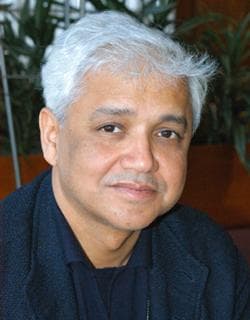
Amitav Ghosh is an Indian author known for his fiction that often explores themes of history, culture, and identity. His notable works include "Sea of Poppies," "The Glass Palace," "The Hungry Tide," "The Shadow Lines," and "In an Antique Land." Ghosh's writing frequently reflects his interest in the complexities of colonialism and migration.
Similar books
- The House of the Spirits
Isabel Allende
4.2 (190k) average on GoodreadsFantasySpanning generations of a family against a backdrop of political turmoil and historical events.
- Pachinko
Min Jin Lee
4.3 (208k) average on GoodreadsLiterary FictionEpic family saga spanning decades, focusing on identity and resilience amidst historical oppression.
- The Old Man and the Sea
Ernest Hemingway
3.8 (831k) average on GoodreadsLiterary FictionA Cuban fisherman's long struggle with a giant marlin becomes a story of endurance and dignity, now retold for young adults with illustrations, phonetic guides, and writing prompts in Traditional Chinese.
- One Hundred Years of Solitude
Gabriel García Márquez
4.1 (753k) average on GoodreadsLiterary FictionThrough the multi-generational story of the Buendía family, a mythical town deals with the repeating patterns of time, love, and solitude, as the extraordinary mixes with the ordinary.
- The Goldfinch
Donna Tartt
3.9 (720k) average on GoodreadsLiterary FictionHaunted by a tragic explosion and clutching a stolen Dutch masterpiece, a young orphan navigates the opulent drawing rooms of New York and the gritty underbelly of the art world, desperately seeking connection and redemption amidst a life spiraling into crime and obsession.
- Little Fires Everywhere
Celeste Ng
4.1 (713k) average on GoodreadsLiterary FictionIn Shaker Heights, an artist and her daughter move in, and their free-spirited lives clash with a rule-bound matriarch, revealing hidden conflicts beneath a perfect surface.






Enjoyed the summary?
A summary gives you the shape of the book. The book itself has the detail, the examples and the voice.
Find The Glass Palace on AmazonAs an Amazon Associate, BookBrief earns from qualifying purchases. How we're funded