
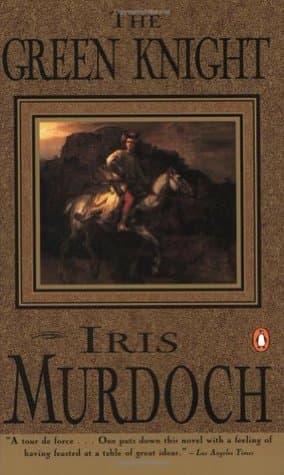
Synopsis
Covers the whole plot, including the ending.
- Difficulty
- Hard
- Pacing
- Variable
- Mood
- Philosophical, Suspenseful, Symbolic, Introspective, Darkly Humorous
- Read it if
- You enjoy complex literary fiction with philosophical depth, symbolic elements, and a blend of the mundane and the mystical set in a contemporary urban environment.
- Skip it if
- You prefer fast-paced, straightforward plots without extensive philosophical musings or symbolic interpretation.
The Green Knight Plot Summary
Covers the whole plot, including the ending.
The Attempted Murder and the Stranger's Intervention
The novel begins with Lucas Graffe, consumed by jealousy and resentment toward his half-brother Clement. Lucas ambushes Clement in a London park, intending to kill him. Lucas sees Clement as charming but self-absorbed, always overshadowing him. As Lucas prepares the fatal blow, a large, mysterious man intervenes. Startled, Lucas hits the stranger, leaves him for dead, and flees. Clement, unharmed but shaken, reports an unknown attacker to the police, not naming Lucas. This act starts a series of events that will disrupt the Graffe family and their friends.
The Stranger's Return and Demands
To Lucas's horror and Clement's surprise, the stranger, Peter Mir, reappears alive and unharmed days later. Mir, with his imposing and mysterious presence, confronts Lucas and Clement. He doesn't demand justice or revenge, but rather a series of odd and intrusive 'reparations.' These initially include a room in their shared house and his integration into their lives. Mir's calm, almost otherworldly insistence, combined with the brothers' guilt and confusion, forces them to agree, setting the stage for his influence on their household and social circle.
Mir's Integration into the Graffe Household
Peter Mir quickly becomes an unsettling yet compelling presence in the Graffe household. He observes everyone with unnerving intensity and begins to involve himself in the lives of the family and their close friends. Mir's demands grow beyond lodging; he starts to dictate parts of their daily routines, offer cryptic advice, and subtly expose hidden truths and unspoken desires. His presence makes characters like Bellamy, Louise, and Aleph face their moral flaws, repressed emotions, and complex relationships, creating growing tension and psychological unease.
Unveiling Past Secrets and Relationships
As Peter Mir's influence grows, the complex relationships among the Graffe family and friends unravel, revealing long-held secrets and conflicts. Many characters are caught in unrequited loves, hidden jealousies, and moral compromises. Mir's questions and insights expose the romantic ties between Clement and Louise, Lucas's unacknowledged feelings for Louise, and the history involving their deceased mother figure, Mrs. Graffe. Bellamy's quiet devotion to Clement and Aleph's cautious affection for Lucas also become clearer, creating a volatile emotional scene that Mir seems to control.
The Quest for the Green Knight
The novel's title and Mir's nature increasingly link to the legend of Sir Gawain and the Green Knight. Mir, with his strange demands and apparent resilience, acts like the Green Knight, challenging the established order and testing moral strength. Lucas, tormented by his violence and Mir's presence, finds himself in a modern Gawain-like situation, forced to face his honor, courage, and the results of his actions. Clement also must look beyond his charm and confront his own moral ambiguities, as Mir's game of reparation becomes a deep test for everyone involved.
The Escalation of Demands and Moral Dilemmas
Peter Mir's demands escalate, becoming more bizarre and morally challenging. He manipulates characters into uncomfortable situations, making them make hard choices that show their true selves. For example, he might make one character confess a secret, another give up a cherished item, or another perform an act of public shame. These growing challenges create great psychological pressure, especially on Lucas, who feels trapped by his crime and Mir's relentless, almost spiritual, pursuit of amends. The characters struggle with forgiveness, redemption, and the true cost of their past wrongs, under Mir's watchful eye.
The Role of Art and Spirituality
Art, especially music and literature, plays a role in the story, expressing and reflecting the characters' inner lives. Bellamy, the musician, struggles with his artistic integrity and unrequited love for Clement, finding solace or frustration in his music. References to classical literature and philosophy are in the dialogue, showing the intellectual and spiritual currents of the characters' struggles. Mir himself often speaks in riddles and parables, raising everyday conflicts to a more symbolic, spiritual level, echoing the allegorical nature of the Green Knight legend. Art also offers a temporary escape from the growing tension for some.
The Climax of Mir's Game
The climax of Mir's game comes when he makes his most profound and unsettling demand, which directly confronts Lucas and Clement with the seriousness of Lucas's attempted murder. This demand forces the brothers to acknowledge their deep animosity and the potential for violence in their complex relationship. The specifics of Mir's final challenge are highly symbolic, meant to test their ability for true reconciliation, self-sacrifice, and forgiveness. It brings to a head all the unresolved tensions, hidden truths, and moral ambiguities Mir has exposed, pushing both brothers to their psychological and emotional limits.
Tragedy and Resolution
The growing tensions and Mir's final demand lead to a tragic event. This event, whether directly or indirectly caused by Mir, marks a turning point for the characters, especially Lucas and Clement. It forces the surviving characters to re-evaluate their lives, relationships, and understanding of morality and justice. While not all issues are resolved, a form of resolution is reached for some, though it is tinged with sorrow and the lasting impact of Mir's intervention. The characters are changed forever by the unsettling experience of the 'Green Knight's' visit.
Aftermath and Reflection
After the tragic climax, the surviving characters piece together their disrupted lives. Lucas, Clement, Louise, Bellamy, and Aleph must deal with the psychological and emotional scars left by Peter Mir and the subsequent events. The novel ends with a sense of lasting change and introspection. Characters must confront their own involvement, their capacity for both good and evil, and the lasting power of love, jealousy, and forgiveness. The experience is a transformative, if painful, passage for many, leaving them with a deeper, though more somber, understanding of themselves and human nature.
The Green Knight Characters
Lucas Graffe
Protagonist/Antagonist
The jealous, intelligent half-brother who attempts murder and is forced into reparation.
Lucas is the sharp, introspective, and intensely jealous half-brother of Clement. He is intelligent and articulate but struggles with a deep-seated resentment towards Clement, whom he perceives as effortlessly charming and beloved. His initial act of attempted murder stems from this profound envy and a sense of being perpetually overshadowed. Lucas is driven by a desire for recognition and a longing for affection, particularly from Louise, which he feels Clement effortlessly commands. He is burdened by guilt and a complex moral compass, making him a tormented and often sympathetic figure despite his dark actions.
Relationships: Clement Graffe (Half-brothers, intense rivalry and jealousy leading to attempted murder); Peter Mir (Victim of Lucas's attack, then his enigmatic tormentor and catalyst for change); Louise Anderson (Unrequited love and longing); Aleph (Complex, cautious affection and intellectual sparring partner)
Clement Graffe
Protagonist
The charismatic, sensual half-brother, initially unaware of Lucas's malice.
Clement is Lucas's charismatic and sensual half-brother, possessing an undeniable charm that attracts others. He is outwardly successful and well-liked, but beneath the surface, he can be self-absorbed and somewhat oblivious to the deeper emotional currents around him. Clement is initially a victim of Lucas's jealousy but becomes a key player in Mir's game of reparation. He is driven by a desire for pleasure and affection, often avoiding confrontation and deeper introspection. Mir's arrival forces him to confront his own superficiality and the consequences of his actions, or inactions, on those around him.
Relationships: Lucas Graffe (Half-brothers, target of Lucas's jealousy and violence); Peter Mir (Enigmatic figure who challenges Clement's moral complacency); Louise Anderson (Romantic interest, often taken for granted); Bellamy (Object of Bellamy's unrequited devotion)
Peter Mir
Antagonist/Catalyst
The mysterious stranger, embodying the Green Knight, who demands reparation.
Peter Mir is the enigmatic and imposing stranger who interrupts Lucas's attempted murder and miraculously reappears unharmed. He embodies the titular 'Green Knight' figure, acting as a catalyst for moral introspection and retribution. Mir is calm, wise, and possesses an almost supernatural understanding of the characters' inner lives and hidden histories. He is driven by a mysterious sense of justice and reparation, not for personal revenge, but to force the Graffe family and their circle to confront their moral failings. His demands are bizarre and intrusive, designed to unearth truths and test the limits of their integrity, leading to profound and often tragic consequences.
Relationships: Lucas Graffe (His 'challenger,' forced into a moral game); Clement Graffe (His 'challenger,' forced into moral introspection); All other characters (Observer, interrogator, and orchestrator of their moral tests)
Louise Anderson
Supporting
The kind, somewhat naive woman caught between Lucas and Clement.
Louise is a kind-hearted and somewhat naive young woman, deeply entangled in the lives of the Graffe brothers. She is the object of both Lucas's unrequited affection and Clement's more casual romantic interest. Louise often acts as a moral compass or a voice of innocence amidst the complex machinations of the other characters. She struggles with her own desires and loyalties, often being manipulated or hurt by the emotional turbulence around her. Mir's presence forces her to confront her own passivity and the true nature of the men she cares for, leading to a painful awakening.
Relationships: Lucas Graffe (Object of his unrequited love); Clement Graffe (Romantic interest, often taken for granted); Peter Mir (Subject of Mir's observations and subtle manipulations)
Bellamy
Supporting
The quiet, artistic musician devoted to Clement.
Bellamy is a sensitive and artistic musician, deeply devoted to Clement, though his affection is largely unrequited. He is often an observer, quietly absorbing the emotional turmoil around him and channeling it into his music. Bellamy represents the artistic temperament and a certain kind of selfless, if sometimes melancholic, love. He struggles with his own artistic integrity and the pain of his unacknowledged feelings. Mir's arrival subtly affects Bellamy, forcing him to confront the nature of his devotion and the reality of his relationships, particularly with Clement.
Relationships: Clement Graffe (Unrequited romantic devotion); Lucas Graffe (Acquaintance, part of the social circle); Peter Mir (Subject of Mir's observations)
Aleph
Supporting
The strong-willed, independent woman with a complex past.
Aleph is a strong-willed, independent, and intellectually sharp woman within the Graffe's social circle. She is portrayed as having a complex past and a cautious, almost cynical, view of human nature. Aleph is one of the few characters who initially resists Mir's influence, attempting to understand his motivations through reason and logic. She has a complicated relationship with Lucas, characterized by intellectual sparring and a subtle, unacknowledged affection. Aleph represents a more grounded, rational perspective, but even she is ultimately drawn into the profound moral questions posed by Mir's presence, challenging her carefully constructed worldview.
Relationships: Lucas Graffe (Complex, intellectual connection with underlying affection); Clement Graffe (Acquaintance, part of the social circle); Peter Mir (Attempts to rationally understand and resist his influence)
Mrs. Graffe (mentioned)
Mentioned
The deceased mother figure whose legacy influences the brothers' relationship.
Mrs. Graffe is Clement and Lucas's deceased mother. Though never physically present, her memory and legacy profoundly influence the brothers' relationship and the dynamics within their household. She is often referred to as a benevolent but perhaps overly indulgent figure, whose favoritism towards Clement may have contributed to Lucas's deep-seated resentment. Her absence creates a void and a source of unresolved emotional issues for both brothers, particularly Lucas, who feels her love was unequally distributed. Her past actions and personality are pieced together through the characters' recollections and interpretations, shaping their current struggles.
Relationships: Lucas Graffe (Mother, perceived as favoring Clement); Clement Graffe (Mother, perceived as favored son)
The Dog (unnamed)
Mentioned
A minor character symbolizing innocence and later, vulnerability.
The unnamed dog belonging to the Graffe household serves as a minor but symbolic character. Initially, it represents a semblance of normalcy and companionship within the otherwise tense household. Its presence highlights the domestic setting and the illusion of a peaceful life before Mir's arrival. Later, the dog's fate or treatment can reflect the growing disruption and moral decay within the house, or even become a pawn in Mir's psychological games, symbolizing vulnerability and the potential for innocent casualties in the face of human conflict and moral testing.
The Green Knight Themes
Jealousy and Resentment
Jealousy is central to the novel, mainly seen in Lucas's deep resentment toward his charismatic half-brother Clement. This envy drives Lucas's attempted murder, an act born from feeling constantly overshadowed and unloved. Mir's intervention makes Lucas face the destructive nature of these emotions, showing how they poison relationships and lead to extreme acts. The theme also explores how unacknowledged resentment can fester in a family, creating unspoken tension and potential violence, as seen in the subtle dynamics between the brothers before the attack.
“Jealousy is a terrible thing, Lucas. It eats you up, it makes you blind.”
Moral Responsibility and Reparation
The novel explores moral responsibility and reparation, especially through Peter Mir. Mir's demands are not for typical justice but for a deep, existential 'reparation' that makes characters face their past actions, hidden motives, and moral flaws. This theme questions what true atonement means, suggesting it goes beyond legal consequences to a painful process of self-reckoning and real change. Lucas, in particular, must deal with his attempted murder and the complex, often uncomfortable, steps needed for true amends, affecting him and his entire social circle.
“You struck me, Lucas. And the wound requires more than a simple apology. It requires... reparation.”
The Nature of Good and Evil
Murdoch explores the unclear lines between good and evil, suggesting these are not simple categories but complex parts of human nature. Lucas, despite his violent act, is shown with psychological depth, making him sometimes sympathetic. Clement, outwardly charming, has his own self-absorption and moral complacency. Mir, while acting as a moral judge, uses intrusive and even cruel methods, blurring the lines between helpful intervention and manipulative torment. The novel suggests that evil can be in both overt violence and subtle neglect or self-deception, making characters face the 'darkness' within themselves.
“We are all capable of terrible things, given the right circumstances. And the wrong ones.”
Love, Desire, and Unrequited Affection
The novel's complex relationships are driven by various forms of love, desire, and unrequited affection. Lucas's unacknowledged love for Louise and his view of Clement's easy charm with women fuel his jealousy. Bellamy's quiet devotion to Clement shows the pain of unreturned love. The interactions between Clement and Louise, though seemingly normal, are tinged with Clement's casual disregard. Mir's presence makes these hidden desires and emotional imbalances public, forcing characters to face the true nature of their affections and the results of their emotional choices, often leading to heartbreak or painful revelations.
“Love, when it is unreturned, is a kind of torment, isn't it? A private, consuming fire.”
Spirituality and Modernity
The novel skillfully reuses biblical and medieval themes in a modern London setting, exploring how spiritual questions persist in a secular world. Peter Mir, as the 'Green Knight,' embodies an ancient, mystical force that challenges the characters' rational, modern existence. His demands and pronouncements often carry spiritual weight, prompting introspection on sin, redemption, and moral truth. The characters, despite their intelligence, grapple with ideas of divine judgment or karma, suggesting that fundamental spiritual dilemmas remain relevant even in a world that tries to explain everything through psychology or science. The novel uses old stories to illuminate timeless human struggles.
“The old stories still have power, Lucas. More power than you imagine. They tell us who we are.”
Plot Devices & Literary Techniques
The Green Knight Motif
A direct allegorical parallel to the medieval Arthurian legend.
The novel explicitly uses the 'Green Knight' motif from the Arthurian legend of Sir Gawain and the Green Knight. Peter Mir embodies the enigmatic Green Knight, appearing miraculously after a seemingly fatal blow and demanding a 'return' of the initial violence. This device elevates the contemporary plot to an allegorical level, transforming Lucas's attempted murder into a modern-day test of honor, courage, and moral integrity. It provides a framework for Mir's bizarre demands, which serve as tests of character, forcing Lucas and Clement, and by extension their circle, to confront their moral failings and the consequences of their actions, just as Gawain was tested by the Green Knight.
The Unreliable Narrator (Subtle)
While largely third-person, the narrative often filters events through subjective character perceptions.
While the novel generally employs a third-person omniscient perspective, it subtly incorporates elements of an unreliable narrator by frequently filtering events and character motivations through the highly subjective and often biased perceptions of characters like Lucas. Lucas's intense jealousy and resentment color his interpretation of Clement's actions and the world around him. This device creates ambiguity, making the reader question the true nature of events and characters, particularly Clement's perceived charm or Mir's true intentions. It emphasizes the theme that truth is often subjective and shaped by individual psychology, adding layers of complexity to the moral dilemmas presented.
Symbolic Setting (London Park)
The urban park as a modern 'wilderness' for moral confrontation.
The London park where Lucas attempts to murder Clement and where Mir first appears serves as a crucial symbolic setting. In contrast to the domestic intimacy of the Graffe house, the park functions as a modern 'wilderness' or a liminal space where civilized rules break down and primal instincts emerge. It is a place of both natural beauty and hidden danger, mirroring the internal landscapes of the characters. This setting establishes the initial act of violence as outside the bounds of conventional society, setting the stage for Mir's unconventional 'justice' to unfold, blurring the lines between the wild and the civilized, the ancient and the contemporary.
The Catalyst Character
Peter Mir acts as a disruptive force that unearths hidden truths.
Peter Mir functions as a classic catalyst character. His unexpected arrival and peculiar demands are the primary drivers of the plot, disrupting the established equilibrium of the Graffe family and their friends. He doesn't necessarily undergo significant personal change himself, but his presence forces every other character to confront their own moral failings, repressed desires, and unresolved conflicts. Mir's uncanny ability to see through pretenses and expose hidden truths accelerates the unraveling of relationships and the revelation of long-buried secrets, acting as an external force that initiates profound internal transformations within the other characters, leading to the novel's dramatic conclusion.
The Green Knight Quotes
“Human beings are essentially moral beings, and that means they are beings who are capable of good and evil.”
“Love is not a feeling, it is a capacity to see.”
“The world is full of signs and wonders, if only we have the eyes to see them.”
“To be good is to be able to imagine the reality of other people.”
“We live in a world of illusion, but the illusions are often more real than reality itself.”
“Art is the attempt to create a perfect object in an imperfect world.”
“Every life is a mystery, even to the one who lives it.”
“The greatest freedom is the freedom to choose what is good.”
“There are some things that cannot be explained, only experienced.”
“The past is not dead, it is not even past.”
“We are all seeking something, a meaning, a pattern, a truth.”
“Happiness is a by-product of attention.”
“The soul is a dark forest where good and evil battle.”
“To be truly alive is to be aware of the precariousness of life.”
Quiz
10 questions on the plot and the characters. Each answer comes with a short explanation.
Question 1
What is the initial crime Lucas Graffe attempts to commit against his half-brother Clement?
- He attempts to rob Clement's house.
- He attempts to murder Clement.
- He attempts to kidnap Clement.
- He attempts to blackmail Clement.
Show answer
B. He attempts to murder Clement. The book description clearly states Lucas Graffe's initial intention was to murder his half-brother Clement.
Question 2
Who interrupts Lucas's initial crime, leading to Lucas striking and leaving them for dead?
- Clement's wife, Louise
- A police officer
- A stranger
- One of Clement's friends
Show answer
C. A stranger The synopsis states that Lucas's attempt to murder Clement is interrupted by a stranger, whom Lucas then strikes.
Question 3
What is the primary characteristic used to describe Clement Graffe?
- Shy and reclusive
- Sensual and charismatic
- Ruthless and calculating
- Intellectual and detached
Show answer
B. Sensual and charismatic The description characterizes Clement as 'sensual and charismatic,' contrasting him with Lucas.
Question 4
What is the nature of the stranger's demands upon his reappearance?
- They are simple, straightforward, and easily fulfilled.
- They are bizarre, intrusive, and ultimately fatal.
- They are financial, seeking monetary compensation for the assault.
- They are legal, seeking justice through the courts.
Show answer
B. They are bizarre, intrusive, and ultimately fatal. The synopsis explicitly states the stranger's demands for reparation are 'bizarre, intrusive, and ultimately fatal.'
Question 5
Which of the following describes Lucas Graffe's intelligence and temperament?
- Mild-mannered and average intelligence
- Sharp, feral, and uncommonly intelligent
- Naive and easily manipulated
- Calm and logical, despite his actions
Show answer
B. Sharp, feral, and uncommonly intelligent Lucas is described as 'sharp, feral, and uncommonly intelligent,' highlighting his complex and dangerous nature.
Question 6
How does the stranger's reappearance affect the Graffes' circle of family and friends?
- It unites them against a common enemy.
- It disrupts them due to the stranger's bizarre demands.
- It has no significant impact on their lives.
- It leads to a peaceful resolution of old conflicts.
Show answer
B. It disrupts them due to the stranger's bizarre demands. The description states the stranger's reappearance and demands 'disrupt' the Graffes’ circle of idiosyncratic family and friends.
Question 7
What kind of themes does 'The Green Knight' primarily replay?
- Historical and scientific themes
- Modern political and economic themes
- Biblical and medieval themes
- Post-apocalyptic and dystopian themes
Show answer
C. Biblical and medieval themes The book is described as replaying 'biblical and medieval themes in contemporary London.'
Question 8
In which contemporary city is the novel 'The Green Knight' set?
- Paris
- New York
- London
- Rome
Show answer
C. London The setting is explicitly mentioned as 'contemporary London' where the biblical and medieval themes are replayed.
Question 9
What literary style is 'The Green Knight' classified under?
- Science Fiction and Romance
- Literary Fiction and Fantasy
- Mystery and Thriller
- Historical Fiction and Biography
Show answer
B. Literary Fiction and Fantasy The genre is listed as 'Literary Fiction, Fantasy' in the provided book information.
Question 10
Beyond the plot, what qualities are mentioned that make 'The Green Knight' a 'magnificently crafted' novel?
- Its detailed historical accuracy and academic research.
- Its focus on psychological realism and minimalist prose.
- Its suspense, humor, and symbolism.
- Its groundbreaking use of stream-of-consciousness narrative.
Show answer
C. Its suspense, humor, and symbolism. The description highlights the novel's 'suspense, humor, and symbolism' as contributing to its magnificence.
The Green Knight FAQ
What is the central conflict that sets the plot in motion?
The central conflict begins when Lucas Graffe attempts to murder his half-brother, Clement, but is interrupted by a stranger. Lucas strikes this stranger and leaves him for dead, believing he has committed a homicide, which then sets off a chain of bizarre events when the stranger miraculously reappears with specific demands for reparation.
Who is Clement and what is his relationship to Lucas?
Clement is Lucas Graffe's sensual and charismatic half-brother, the intended victim of Lucas's initial murder attempt. Their relationship is fraught with intense sibling rivalry, jealousy, and a complex dynamic that drives much of Lucas's actions and motivations throughout the novel.
Who is the 'stranger' and what are his initial demands?
The 'stranger' is Peter Mir, who mysteriously reappears after being struck by Lucas, claiming to be dead. His initial demands are for reparation, specifically requiring Lucas to 'give himself' to Mir and for the Graffe family to accommodate him, disrupting their lives with his intrusive presence and bizarre requests.
How does the reappearance of Peter Mir affect the Graffe family and their friends?
Peter Mir's reappearance throws the entire Graffe circle into chaos, forcing them to confront their own moral failings and hidden desires. His demands are deeply intrusive, disrupting their routines, relationships, and sense of security, ultimately leading to profound changes and fatal consequences for some.
What role does the character of Louise play in the unfolding drama?
Louise is a key figure in the Graffe circle, often acting as a grounding or mediating presence, though she too is drawn into the escalating bizarre events. Her relationships with both Lucas and Clement, and her attempts to understand or control the situation, highlight the moral quandaries faced by the characters.
What is the significance of the novel's title, 'The Green Knight,' in relation to the plot?
The title directly references the medieval Arthurian legend of Sir Gawain and the Green Knight, mirroring the central challenge and moral test presented to Lucas. Peter Mir embodies the enigmatic Green Knight, demanding a 'blow for a blow' and forcing Lucas to confront his own mortality and moral debt, echoing the themes of sacrifice and redemption.
Are there any specific biblical allusions or parallels evident in the story?
Yes, the novel replays biblical themes, particularly those of sacrifice, resurrection, and judgment. Peter Mir's mysterious reappearance and demands for atonement evoke Christ-like figures, while Lucas's initial act of violence and subsequent penance parallel biblical narratives of sin and redemption, often with an ironic twist.
How does the setting of contemporary London contribute to the 'magical' and symbolic elements?
The mundane, recognizable setting of contemporary London creates a stark contrast with the fantastical and symbolic events, enhancing their 'magical' quality. This juxtaposition emphasizes how ancient myths and moral dilemmas can manifest in modern life, making the extraordinary intrusions into the ordinary all the more unsettling and profound.
What is the implied fate of Lucas after the climax of the story?
While not explicitly stated in simplistic terms, Lucas's implied fate is one of profound transformation and a form of spiritual or moral redemption, albeit a harsh one. He is forced to confront the consequences of his actions and undergo a severe penance, suggesting a future irrevocably altered by his ordeal and the demands of Peter Mir.
How does Lucas Graffe's intelligence and 'feral' nature contribute to his psychological profile?
Lucas's sharp intelligence and feral nature contribute to a complex psychological profile of a man driven by primal urges and a keen intellect used for both manipulation and self-justification. This combination makes him capable of both great cruelty and profound introspection, but often leads him to rationalise his darker impulses, particularly his jealousy of Clement.
What psychological impact does Peter Mir's reappearance have on Lucas?
Peter Mir's reappearance shatters Lucas's reality and forces him into an existential crisis. He is tormented by guilt, fear, and confusion, as his rational mind struggles to comprehend Mir's impossible survival. This psychological pressure drives Lucas to confront his deepest moral failings and the absurdity of his own actions.
How does the novel explore the psychology of guilt and atonement?
The novel deeply explores the psychology of guilt through Lucas's internal torment and his external actions to atone for striking Mir. It questions whether true atonement is possible through forced penance or if it requires genuine internal transformation, examining the psychological burden and the various ways characters react to their own moral failings.
In what ways do other characters, like Clement, display their own psychological complexities?
Clement, despite his charisma, displays a complex psychology marked by a certain self-absorption and perhaps an unconscious manipulation of others, contributing to Lucas's resentment. The other characters also reveal their own neuroses, hidden desires, and fears as Mir's presence forces them to confront uncomfortable truths about themselves and their relationships.
Is Peter Mir a literal supernatural being or a symbolic representation of Lucas's conscience?
This is a central interpretive debate. Mir could be seen as a literal supernatural entity, given his impossible survival, or as a powerful symbolic manifestation of Lucas's guilt, conscience, and the moral order demanding justice. The ambiguity allows for both interpretations, deepening the novel's philosophical layers.
How does the novel challenge traditional notions of justice and forgiveness?
The novel challenges traditional notions of justice by presenting Mir's demands as bizarre and disproportionate, yet ultimately transformative. It questions whether justice must be retributive or can be redemptive, and whether forgiveness is earned through suffering or freely given, often blurring these lines in unexpected ways.
What is the ultimate message or moral lesson about human nature conveyed by the book?
The book suggests that human nature is inherently flawed, capable of both great malice and the potential for profound, albeit painful, transformation. It conveys that individuals often need external, sometimes 'magical' or shocking, forces to confront their true selves and the moral consequences of their actions, highlighting the struggle for goodness.
Does the novel offer a hopeful or pessimistic view of humanity's capacity for change?
The novel offers a complex view, leaning towards a cautiously hopeful but often brutal assessment of humanity's capacity for change. While characters undergo immense suffering, the possibility of redemption and moral growth is present, suggesting that change is possible, but often requires extreme catalysts and profound personal sacrifice.
How does the humor in the novel interact with its darker, more symbolic themes?
The humor in the novel often serves as a counterpoint to its darker themes, providing moments of levity or ironic observation amidst the suspense and symbolism. This blend prevents the narrative from becoming overly heavy, while also highlighting the absurdity of human behavior and the unexpected ways profound events can unfold in mundane settings.
About the author
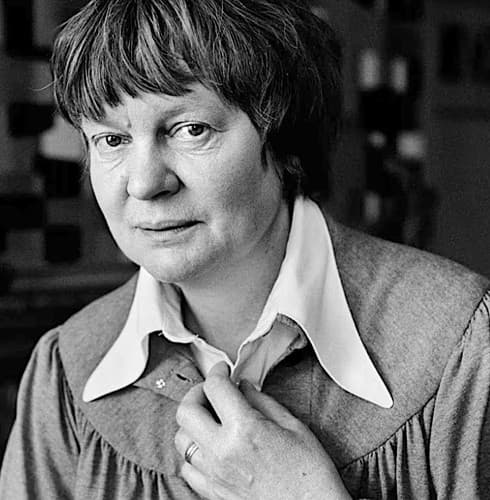
Dame Jean Iris Murdoch was an Irish and British novelist and philosopher. Murdoch is best known for her novels about good and evil, sexual relationships, morality, and the power of the unconscious. Her first published novel, Under the Net (1954), was selected in 1998 as one of Modern Library's 100 best English-language novels of the 20th century. Her 1978 novel The Sea, the Sea won the Booker Prize. In 1987, she was made a Dame by Queen Elizabeth II for services to literature. In 2008, The Times ranked Murdoch twelfth on a list of "The 50 greatest British writers since 1945".
Similar books
- A Severed Head
Iris Murdoch
3.8 (7k) average on GoodreadsFictionExplores complex, often morally ambiguous relationships and intellectual themes within a British upper-class setting.
- The Magus
John Fowles
4.0 (48k) average on GoodreadsLiterary FictionFeatures a mysterious, manipulative figure who orchestrates elaborate games to challenge and transform others, blending reality and illusion.
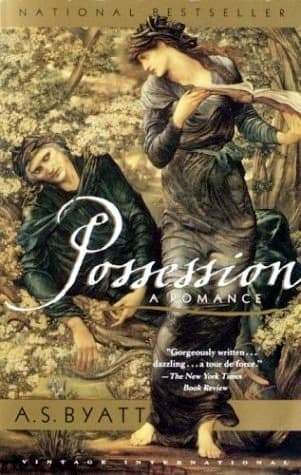
- Possession
A.S. Byatt
4.3 (13k) average on GoodreadsRomanceA.S. Byatt's Possession (1990) also explores literary quests, intricate relationships, and the unveiling of past secrets, often with a similar intellectual rigor. While both authors draw on literary heritage, Byatt's novel often feels more meticulously constructed in its dual narrative structure and its 'detective story' aspect, providing a clear external goal for the protagonists. The Green Knight, in contrast, focuses more on internal, moral quests, which can feel less tangible and thus less immediately engaging for readers seeking a clearer narrative trajectory. Byatt's historical research also grounds her novel in a way that The Green Knight's more allegorical approach doesn't aim for.
- The Old Man and the Sea
Ernest Hemingway
3.8 (831k) average on GoodreadsLiterary FictionA Cuban fisherman's long struggle with a giant marlin becomes a story of endurance and dignity, now retold for young adults with illustrations, phonetic guides, and writing prompts in Traditional Chinese.
- One Hundred Years of Solitude
Gabriel García Márquez
4.1 (753k) average on GoodreadsLiterary FictionThrough the multi-generational story of the Buendía family, a mythical town deals with the repeating patterns of time, love, and solitude, as the extraordinary mixes with the ordinary.
- The Goldfinch
Donna Tartt
3.9 (720k) average on GoodreadsLiterary FictionHaunted by a tragic explosion and clutching a stolen Dutch masterpiece, a young orphan navigates the opulent drawing rooms of New York and the gritty underbelly of the art world, desperately seeking connection and redemption amidst a life spiraling into crime and obsession.



Enjoyed the summary?
A summary gives you the shape of the book. The book itself has the detail, the examples and the voice.
Find The Green Knight on AmazonAs an Amazon Associate, BookBrief earns from qualifying purchases. How we're funded