
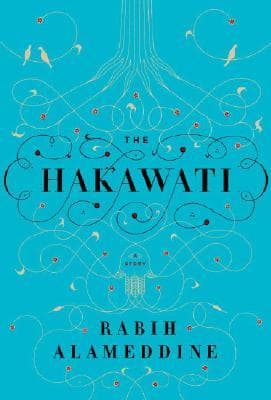
Synopsis
Covers the whole plot, including the ending.
- Difficulty
- Medium
- Pacing
- Variable
- Mood
- Epic, Mythic, Reflective, Humorous, Melancholy
- Read it if
- You enjoy complex, multi-layered narratives that blend historical fiction, fantasy, and literary storytelling with a strong sense of place and culture.
- Skip it if
- You prefer linear plots, fast-paced action, or shy away from stories that delve deeply into Middle Eastern history and folklore.
The Hakawati Plot Summary
Covers the whole plot, including the ending.
Return to Beirut
In 2003, Osama al-Kharrat, an academic living in America, returns to Beirut, Lebanon, after many years. His father, Sayyid, is dying, and the family gathers in their old house. The city, still showing signs of civil war, feels both familiar and strange to Osama. As he keeps vigil, surrounded by his mother, sister Lina, and various relatives and friends, the house becomes a center of activity, filled with conversations, memories, and, most importantly, stories. This return brings back many memories and pulls him into the family's storytelling tradition, which will help them cope with Sayyid's approaching death.
The Grandfather's Legacy: Hakawati
Osama thinks about his grandfather, also named Sayyid al-Kharrat, a well-known hakawati (storyteller) in Beirut. He remembers his childhood, spent listening to his grandfather perform in coffeehouses and at family gatherings. The elder Sayyid's stories were more than just entertainment; they were a way of life, a way to preserve history, morality, and identity. Osama recounts how his grandfather, an orphan from the Turkish wars, arrived in Lebanon and earned the name 'al-Kharrat'—the fibster—because of his storytelling skill. This tradition of oral narrative shaped Osama's understanding of his family and heritage, mixing personal history with mythical tales.
The Tale of Baybars
As the family gathers, one main story that appears, both from the past and retold in the present, is the epic saga of Baybars. This is not just a historical account but a fantastical retelling of the Mamluk Sultan who defeated the Crusaders and the Mongols. The narrative describes Baybars's beginnings as a slave, his rise through military ranks, his cleverness, and his eventual ascent to power. This tale, full of magic, betrayals, and heroic deeds, mirrors the family's own struggles and endurance. It provides a way to understand their history and Lebanon's lasting spirit.
Fatima the Coppersmith
Another important narrative is the story of Fatima, the legendary Coppersmith. This character is a powerful, ancient figure, sometimes a djinn, sometimes a wise woman, who influences events and characters throughout history, including Baybars himself. She represents wisdom, magic, and a timeless feminine power. Her story often crosses with more masculine-focused tales, offering a different view on power, fate, and the human condition. Fatima's presence highlights the mystical and mythical elements in the al-Kharrat family's storytelling, blurring the lines between reality and legend.
Abraham, Isaac, and Ishmael
The al-Kharrat family's storytelling also reinterprets classic religious narratives, especially those about Abraham, Isaac, and Ishmael. These foundational stories of monotheistic faiths appear with a distinct Lebanese, and often humorous, twist. The focus shifts, questioning traditional interpretations and highlighting the human aspects of these divine figures. For example, the sacrifice of Isaac is explored from different angles, and the lineage of Ishmael, father of the Arab tribes, is emphasized. These retellings connect the family's present experiences with ancient origins, showing the shared heritage and ongoing conflicts of the region.
Sayyid al-Kharrat the Elder's Origin
Osama's grandfather, the first Sayyid al-Kharrat, was an orphan who fled the Turkish wars. His personal history is a compelling story itself, describing his journey to Beirut, his struggles, and his eventual rise as a celebrated hakawati. This story explains how he got the surname 'al-Kharrat,' which means 'fibster' or 'storyteller,' acknowledging his talent for weaving tales that often mixed truth and embellishment. His life story shows how narrative shapes identity and legacy, demonstrating how even a humble beginning can have a lasting impact through storytelling.
The War's Scars
Throughout the novel, the magical stories appear alongside the realities of modern-day Lebanon, especially the lingering effects of the civil war. Osama sees the physical and emotional scars on the city and its people. The family's conversations often turn to memories of bombings, displacements, and loss. This contrast shows how storytelling helps people cope, find beauty and meaning amid destruction, and preserve cultural identity in constant conflict. The past's epic battles echo the present's ongoing struggles.
Family Dynamics and Gossip
The al-Kharrat family is a lively, often boisterous group. Osama's mother, sister Lina, and various aunts, uncles, and cousins create a rich network of relationships. Their interactions are full of typical family arguments, affectionate teasing, and much gossip. These everyday human dramas provide humor and grounding amid the fantastical tales. The personal stories and anecdotes shared among them, often embellished and retold, show that storytelling is deeply ingrained in their daily lives, not just for formal hakawati performances.
Sayyid's Final Days
As Osama's father, Sayyid, nears his end, the atmosphere in the house becomes more emotional. The storytelling intensifies. It becomes a collective act of remembrance, a way to honor the dying man and ensure his spirit and the family's legacy continue. The ancient tales, family histories, and personal anecdotes all intertwine, creating a narrative that goes beyond individual lives. The stories offer comfort, a sense of continuity, and a way for the family to process their grief and celebrate the life that is passing.
The Power of Narrative
Through his return to Beirut and the vigil by his father's side, Osama learns about the power of stories. He understands that the fantastical tales and family histories are not just entertainment but are fundamental to their identity, endurance, and survival. Listening, telling, and retelling connects generations, preserves culture, and provides meaning in a world often marked by chaos and violence. He sees himself as an inheritor of this tradition, even if in a different form, realizing that the stories are a living thing that will continue long after individuals are gone.
The Lion and the Unicorn
Throughout the various narratives, both historical and mythical, the Lion and the Unicorn appear repeatedly. These two creatures often represent opposing forces: strength and purity, violence and innocence, masculine and feminine, or different factions in conflicts. Their interactions and symbolism are woven into the tales of Baybars, Fatima, and even the family's personal histories, suggesting a constant interplay of opposing forces that shape destiny and character. This motif adds symbolic depth to the stories, inviting readers to consider the complexities and dualities in human experience and history.
The Story of Adnan and the Djinn
Among the many stories shared, one emotional tale is that of Adnan, a young man who falls in love with a djinn, a supernatural being. This story explores themes of forbidden love, the allure of the otherworldly, and the consequences of crossing boundaries between human and spirit realms. It examines the depths of human emotion and the often-difficult choices dictated by fate and circumstance. This narrative, rich in magical realism, highlights how the mundane and the miraculous are interwoven in the al-Kharrat family's worldview, showing how myths and legends inform their understanding of love and loss.
The Legacy of the Hakawati
As Sayyid's life ends, Osama thinks about his own relationship with the family's storytelling legacy. Having lived in the West for so long, he initially felt somewhat detached from the oral tradition. However, through the shared stories and the emotional intensity of his father's passing, he reclaims his connection to his roots. He understands that the 'hakawati' is not just a profession but a spirit that lives within the family, ensuring their history and culture endure. Osama realizes that he, too, is a product of these stories, and that their continuation, even in new forms, is important.
The Enduring City
The novel ends with a sense of Beirut and its people's enduring nature. Despite the wars, destruction, and personal losses, the city, like the al-Kharrat family, continues. The stories, both ancient and contemporary, provide continuity, endurance, and hope. The narrative suggests that as long as there are people to tell and listen to stories, the spirit of Lebanon and its cultural heritage will persist. Osama's return, his father's death, and the many narratives ultimately reinforce the idea that life, like a story, constantly unfolds, adapts, and renews itself.
The Hakawati Characters
Osama al-Kharrat
Protagonist
The estranged son returning to Beirut for his father's deathbed vigil.
Osama is a Lebanese academic living in America, somewhat detached from his cultural roots due to his long absence. He is intelligent, observant, and initially a bit cynical. His return to Beirut forces him to confront his family's history, the scars of war, and his own identity. He serves as the primary lens through which the reader experiences both the contemporary family drama and the fantastical stories.
Relationships: Sayyid al-Kharrat (father) (Distant but loving; Osama's return is for his father.); Lina al-Kharrat (Sister; close bond, often teasing and supportive.); Sayyid al-Kharrat (grandfather) (Revered figure; the source of Osama's understanding of storytelling.)
Sayyid al-Kharrat (father)
Central figure (dying)
Osama's dying father, whose impending death triggers the family's gathering and storytelling.
Osama's father is a quiet, dignified man, whose illness brings the family together. While he doesn't actively tell many stories in the present, his life and impending death are the catalyst for the entire narrative. He represents the living link to the family's past and the reason for Osama's return, embodying the vulnerability and strength of the family's current generation.
Relationships: Osama al-Kharrat (Son, whose return offers a chance for reconciliation.); Lina al-Kharrat (Daughter, who cares for him.); Mother (Osama's) (Wife, who grieves and reminisces.)
Sayyid al-Kharrat (grandfather)
Legendary figure
The renowned hakawati whose stories form the foundation of the family's heritage.
The grandfather, also named Sayyid al-Kharrat, is a legendary storyteller, the original 'fibster' (al-Kharrat). He is a charismatic and wise figure, an orphan who found his calling in weaving tales. His stories are not just entertainment but a means of teaching, preserving history, and making sense of the world. He is the patriarch whose legacy of storytelling deeply influences Osama and the entire family.
Relationships: Osama al-Kharrat (Grandson, deeply influenced by his storytelling.); Family (Patriarch and cultural anchor.)
Lina al-Kharrat
Supporting
Osama's spirited sister, who maintains the family home and traditions.
Lina is Osama's sister, a lively and outspoken woman who has remained in Beirut. She is practical, caring, and deeply involved in the daily life of the family, including the care of their dying father. She often teases Osama but also provides him with crucial context and emotional support, acting as a bridge between his Westernized perspective and their Lebanese roots. She embodies the resilience and warmth of Beirut women.
Relationships: Osama al-Kharrat (Brother; close, often bickering yet supportive.); Sayyid al-Kharrat (father) (Devoted daughter, caring for him in his final days.)
Baybars
Mythical hero
The legendary Mamluk Sultan whose epic story is a central narrative.
Baybars is a historical figure transformed into a mythical hero within the family's stories. He is depicted as a slave prince who rises to become a powerful Sultan, defeating Crusaders and Mongols. His character embodies ambition, cunning, courage, and a touch of ruthlessness. His story is filled with fantastical elements, magic, and political intrigue, serving as a grand metaphor for resilience and triumph against overwhelming odds.
Relationships: Fatima (Often interacts with or is influenced by her wisdom/magic.); Enemies (Crusaders, Mongols) (His primary antagonists.)
Fatima
Mythical figure
An ancient, powerful, and often magical woman who influences historical events.
Fatima is a mysterious and powerful figure, sometimes a djinn, sometimes a wise woman or coppersmith, who appears throughout the historical and mythical tales. She represents ancient wisdom, feminine power, and often acts as a catalyst or guide in the stories of heroes like Baybars. She embodies the magical realism inherent in the hakawati tradition, blurring the lines between human and supernatural, and providing a counterbalance to male-dominated narratives.
Relationships: Baybars (Adviser or influencer in his saga.); Various historical figures (Her presence subtly shapes their destinies.)
Adnan
Fictional character within a story
A young man who falls in love with a djinn, symbolizing tragic, otherworldly love.
Adnan is a character from one of the embedded stories, a young man who experiences a profound and ultimately tragic love affair with a djinn. His story explores themes of forbidden love, the mystical, and the human capacity for both joy and sorrow when encountering the supernatural. He represents the vulnerability of humans when faced with forces beyond their control, and the enduring power of love even in impossible circumstances.
Relationships: The Djinn (His beloved, with whom he shares a doomed romance.)
Mother (Osama's)
Supporting
The matriarch of the family, providing comfort and stability.
Osama's mother is a central figure in the family home, providing the emotional anchor during Sayyid's illness. She is a source of strength, warmth, and traditional Lebanese hospitality. While she doesn't tell grand tales like the hakawati, her everyday stories, gossip, and memories contribute to the rich tapestry of the family's oral tradition. She embodies the nurturing spirit of the Lebanese matriarch.
Relationships: Sayyid al-Kharrat (father) (Wife, grieving her husband.); Osama al-Kharrat (Son, whom she welcomes home.); Lina al-Kharrat (Daughter, with whom she shares daily life and responsibilities.)
The Hakawati Themes
The Power of Storytelling (Hakawati Tradition)
The novel's main theme is the lasting power and need for storytelling. The hakawati tradition, shown through Osama's grandfather, is not just entertainment but a way to preserve history, cultural identity, and sanity in chaos. Stories offer comfort, meaning, and a way for people and communities to connect across generations. They help characters process grief, understand their past, and imagine their future, blurring the lines between myth and reality. This is clear in how the family copes with Sayyid's death by immersing themselves in tales, both ancient and personal.
“Listen. Let me take you on a journey beyond imagining. Let me tell you a story.”
Identity and Belonging
The novel explores how personal and cultural identity are shaped by narratives and a sense of place. Osama's return to Beirut makes him confront his Lebanese heritage after years in the West. His journey is about rediscovering his roots through family stories, understanding how these tales define them as individuals and as a group. The book also examines Lebanon's complex identity—a country with ancient history and myth, yet scarred by modern conflict, always balancing its place between East and West. The stories of Abraham, Isaac, and Ishmael highlight the intertwined religious and ethnic identities of the region.
“We are all the children of stories, born of the words and images that were spoken to us as children.”
War and Resilience
The novel is set in a war-torn Beirut, and the theme of war and its aftermath is always present. The stories, both ancient (Baybars's battles) and contemporary (family members' experiences during the civil war), show the cyclical nature of conflict in the region. However, the focus is less on the violence itself and more on human endurance. Storytelling becomes a main coping mechanism, a way for the Lebanese people to endure, remember, and find hope and humor amid destruction. The family's ability to laugh, gossip, and tell tales even as their patriarch is dying shows a strong spirit of survival.
“The past is never dead. It's not even past.”
The Interweaving of Myth and Reality
Alameddine skillfully blurs the lines between myth, legend, and historical fact. The fantastical elements of the ancient tales (djinn, magic, legendary heroes) are presented with the same narrative weight as the contemporary family's struggles. This interweaving suggests that myth is not just a separate realm but a part of understanding reality, shaping perceptions, and providing meaning. The past is alive in the present, and the fantastical informs the mundane. This is especially clear in the character of Fatima, who moves through time and genre, appearing in various forms throughout history.
“Truth, my children, is a story that has been told and retold so many times that it has become real.”
Family and Legacy
The novel is deeply rooted in the al-Kharrat family's dynamics, exploring the bonds of kinship, the weight of expectation, and the inheritance of tradition. Osama's return is prompted by his father's approaching death, which forces him to confront his family's legacy. The stories passed down through generations—both grand epics and personal anecdotes—are the family's most cherished inheritance. They define who the al-Kharrats are and connect them to a long line of storytellers. The novel emphasizes that family is a living narrative, constantly being written and rewritten by its members.
“A family is a story that never ends.”
Plot Devices & Literary Techniques
Frame Narrative
The contemporary story of Osama's return frames the embedded historical and mythical tales.
The novel employs a frame narrative structure. The primary narrative is Osama al-Kharrat's return to Beirut to be with his dying father. This contemporary story provides the emotional and temporal context. Within this frame, numerous other stories are embedded, told by various family members or by the omniscient narrator. These embedded stories include the epic of Baybars, the tales of Fatima, and religious narratives like Abraham and Isaac. This structure allows for a fluid movement between different time periods, genres, and narrative voices, mimicking the oral tradition of the hakawati and highlighting the interconnectedness of past and present.
Metafiction
The novel frequently comments on its own nature as a story.
The Hakawati is highly metafictional, constantly drawing attention to the act of storytelling itself. The narrator frequently addresses the reader directly, using phrases like 'Listen' or 'Let me tell you a story,' explicitly inviting participation in the narrative act. The characters within the story also discuss the nature and power of stories, their truthfulness, and their purpose. This device emphasizes the central theme of storytelling, reminding the reader that they are engaging with a constructed narrative, and blurring the lines between the author, the narrator, and the characters, all of whom are 'hakawatis' in their own way.
Intertextuality
The novel heavily references and reinterprets classic Middle Eastern and religious narratives.
Alameddine extensively uses intertextuality, weaving in and reinterpreting well-known stories from Middle Eastern folklore, the Quran, and the Bible. Tales of Abraham, Isaac, Ishmael, and figures like Baybars and Fatima are not just retold but often subverted, questioned, or given new perspectives. This device enriches the narrative by connecting it to a vast cultural and literary heritage, allowing for layers of meaning and commentary. It also demonstrates how stories evolve and adapt over time, and how different cultures interpret shared foundational narratives, highlighting the richness and complexity of the region's cultural tapestry.
Magic Realism
Supernatural and fantastical elements are seamlessly integrated into the realistic setting.
Magic realism is a prominent device, especially in the embedded stories. Elements like djinns, magical transformations, and improbable coincidences are presented as natural occurrences within the narrative, without explanation or explicit wonder from the characters. This blending of the fantastic with the mundane creates a rich, dreamlike atmosphere that reflects the hakawati tradition, where the line between what is real and what is imagined is intentionally blurred. It allows the novel to explore deeper truths and emotional realities through symbolic and allegorical means, making the fantastical feel profoundly human and relatable.
The Hakawati Quotes
“Every story is a journey, and every journey is a story. The trick is to find the beginning and the end, and the courage to tell what happens in between.”
“The past is a foreign country; they do things differently there. But the past is also a mirror, and sometimes, if you look closely enough, you can see your own reflection staring back.”
“We are all made of stories. Some we tell, some we live, some we hide. But they are always there, weaving themselves into the fabric of who we are.”
“Love, like a story, is never simple. It has its heroes and villains, its twists and turns, its moments of joy and its moments of despair. But the best ones, the true ones, are always worth the telling.”
“The truth is a tricky thing. It hides in plain sight, it whispers in the dark, it changes its shape depending on who is looking. And sometimes, the most beautiful truths are found in the most elaborate lies.”
“To be a storyteller is to be a god, for a brief moment. To create worlds, to breathe life into characters, to decide their fates. It is a heavy burden, but a glorious one.”
“Memory is a mischievous beast. It distorts, it embellishes, it forgets. But it also preserves, it cherishes, it reminds us of who we were and who we might still become.”
“Every family has its secrets, its ghosts, its legends. And sometimes, the greatest act of love is to finally speak their names aloud.”
“The world is full of wonders, if only we take the time to see them. And sometimes, the greatest wonders are not in distant lands, but in the stories we carry within us.”
“Fear is a powerful storyteller. It can conjure monsters out of shadows, create prisons out of open spaces, and silence the bravest of voices. But courage, too, has its own tales to tell.”
“Life is a tapestry woven with countless threads, some bright, some dark, some strong, some frayed. And it is the pattern, the design, that truly tells the story.”
“To truly listen is to open oneself to another world, to another's pain and joy, to another's truth. It is an act of profound empathy, and the beginning of all understanding.”
“Sometimes, the most important stories are not the ones we hear, but the ones we imagine. For imagination is the bridge between what is and what could be.”
“The greatest magic is not in spells or potions, but in the human heart, in its capacity for love, for resilience, for endless invention. It is the magic of being alive.”
Quiz
10 questions on the plot and the characters. Each answer comes with a short explanation.
Question 1
In what year does Osama al-Kharrat return to Beirut to be with his dying father?
- 1990
- 2003
- 1975
- 2010
Show answer
B. 2003 The novel explicitly states that Osama al-Kharrat returns to Beirut in 2003.
Question 2
What is the profession of Osama's grandfather, which gives the novel its title?
- A merchant
- A calligrapher
- A hakawati (storyteller)
- A physician
Show answer
C. A hakawati (storyteller) Osama's grandfather was a hakawati, or storyteller, a central concept to the book's narrative structure and title.
Question 3
From what conflict was Osama's grandfather an orphan when he arrived in Lebanon?
- The Crusades
- The Lebanese Civil War
- The Turkish wars
- World War II
Show answer
C. The Turkish wars The grandfather's backstory includes his arrival in Lebanon as an orphan of the Turkish wars.
Question 4
Which of the following historical/mythological figures is NOT explicitly mentioned as being reimagined in the interwoven classic tales?
- Abraham and Isaac
- Suleiman the Magnificent
- Ishmael, father of the Arab tribes
- Baybars, the slave prince
Show answer
B. Suleiman the Magnificent While Abraham, Isaac, Ishmael, Fatima, and Baybars are mentioned as characters in the reimagined tales, Suleiman the Magnificent is not listed.
Question 5
What is the significance of the family name 'al-Kharrat' for Osama's grandfather?
- It signifies his skill as a carpenter.
- It means 'the honest one'.
- It means 'the fibster', earned through his storytelling.
- It indicates he was a traveler from a distant land.
Show answer
C. It means 'the fibster', earned through his storytelling. The grandfather earned the name al-Kharrat, 'the fibster,' highlighting his talent for crafting stories and embellishing truths.
Question 6
The novel's structure, with its interwoven tales, is compared to what classic Middle Eastern collection of stories?
- The Epic of Gilgamesh
- One Thousand and One Nights (Arabian Nights)
- The Rubaiyat of Omar Khayyam
- The Quran
Show answer
B. One Thousand and One Nights (Arabian Nights) The book is described as 'an Arabian Nights for this century,' emphasizing its similar episodic and storytelling structure.
Question 7
What primary solace do Osama and his family find in war-torn Beirut?
- Political activism and protests
- Material wealth and luxury
- Gossip, laughter, and stories
- Religious rituals and solitude
Show answer
C. Gossip, laughter, and stories The text explicitly states that they 'take solace in the things that have always sustained them: gossip, laughter, and, above all, stories.'
Question 8
The novel presents a 'heartbreaking tale' of seemingly endless war in contemporary Lebanon. Which of the following best describes the contrasting theme presented alongside this war?
- The futility of all human endeavor
- The triumph of technology over tradition
- The resilience of human survival and storytelling
- The inevitable decline of cultural heritage
Show answer
C. The resilience of human survival and storytelling The novel tells a 'heartbreaking tale of seemingly endless war—and of survival,' positioning survival and the enduring power of stories as a counterpoint to the conflict.
Question 9
The opening lines, 'Listen. Let me take you on a journey beyond imagining. Let me tell you a story,' serve what primary narrative function?
- To establish Osama's personal journal entries.
- To mimic the direct address of a traditional storyteller (hakawati).
- To provide a historical overview of Beirut's past.
- To foreshadow a specific magical realism event.
Show answer
B. To mimic the direct address of a traditional storyteller (hakawati). These lines directly evoke the oral tradition of a hakawati, inviting the reader into the narrative just as a storyteller would engage an audience.
Question 10
How does the novel depict Beirut in 2003, upon Osama's return?
- As a bustling, newly modernized metropolis.
- As a vibrant cultural hub, unchanged by conflict.
- As a shell of the city Osama remembers, marked by war.
- As a deserted wasteland with no signs of life.
Show answer
C. As a shell of the city Osama remembers, marked by war. The text states that 'The city is a shell of the Beirut Osama remembers,' indicating the impact of war and change.
The Hakawati FAQ
What is the central premise of 'The Hakawati'?
The novel centers on Osama al-Kharrat's return to Beirut in 2003 to be with his dying father, Baybars. While there, the narrative weaves together Osama's contemporary experiences with his family's history and the ancient Middle Eastern tales his grandfather, a hakawati, used to tell, creating a tapestry of storytelling across generations and cultures.
Who is Osama al-Kharrat, and what is his role in the story?
Osama al-Kharrat is the main contemporary protagonist, returning to Beirut from America. He acts as a modern-day listener and a conduit for the family's stories, reflecting on his past, his family's struggles, and the changing landscape of Lebanon, while also navigating his own identity amidst the rich narrative heritage.
What is the significance of the term 'hakawati' in the book?
'Hakawati' refers to a traditional storyteller, and Osama's grandfather held this revered role. The term signifies not just a profession but a powerful cultural tradition of oral storytelling that preserves history, entertains, and offers solace, directly influencing the novel's structure and thematic core.
How does the novel blend historical and contemporary narratives?
The novel seamlessly interlaces Osama's present-day experiences in war-torn Beirut with the historical tales told by his grandfather, which include both family lore and reimagined classic Middle Eastern myths. This blending highlights the enduring power of stories and how past narratives continue to shape present realities and identities.
Which specific ancient tales are reimagined within the narrative?
The novel reimagines several classic Middle Eastern tales, including the stories of Abraham and Isaac, Ishmael (father of the Arab tribes), the fabled Fatima, and Baybars, the slave prince who defeated the Crusaders. These tales are often given a unique, sometimes subversive, twist by the hakawati, connecting them to the al-Kharrat family's own history.
What is the true origin of the al-Kharrat family name, 'the fibster'?
The al-Kharrat family name, meaning 'the fibster,' is revealed through the grandfather's stories. It originated from an incident where the grandfather, as an orphan, cleverly manipulated events and spun tales to survive and establish himself in Lebanon, showcasing the intertwined nature of storytelling, deception, and identity.
Are there any subtle connections between the ancient characters and the modern al-Kharrat family members?
Yes, there are often subtle thematic and sometimes literal connections. For instance, Osama's father is named Baybars, echoing the slave prince from the ancient tales, suggesting a lineage of resilience and even a shared destiny. The struggles and triumphs of the mythical figures often parallel those of the contemporary family.
How does the author use humor amidst the serious themes of war and loss?
Alameddine injects humor through the characters' witty banter, sarcastic observations about life in Beirut, and the often mischievous nature of the hakawati's storytelling. This humor serves as a coping mechanism for the characters facing conflict and loss, highlighting their resilience and the enduring human spirit.
What is the significance of the recurring motif of 'truth' versus 'fiction' in the novel?
The novel constantly blurs the lines between truth and fiction, suggesting that stories, even those embellished or invented, carry a profound truth about human experience and cultural identity. The grandfather, a 'fibster,' uses his tales to convey deeper realities about survival, legacy, and the meaning of home, making fiction a powerful vehicle for understanding.
How does Osama's American experience influence his perception of Beirut and his family?
Osama's years in America provide him with an outsider's perspective, allowing him to observe the changes in Beirut and his family with a critical yet nostalgic eye. He grapples with a sense of displacement and a longing for belonging, which is intensified by his exposure to both American individualism and Lebanese communal identity.
What psychological impact does the constant presence of war have on the characters?
The constant presence of war, specifically the Lebanese Civil War, deeply scars the characters, leading to trauma, displacement, and a pervasive sense of loss. However, it also fosters incredible resilience, a reliance on community, and a profound appreciation for the ephemeral joys of life, such as storytelling and shared meals.
How do the female characters, particularly Fatima, contribute to the narrative's depth?
The female characters, particularly the ancient Fatima and the contemporary women in Osama's family, are depicted as strong, wise, and often the keepers of family history and tradition. They challenge patriarchal norms, offer critical perspectives, and provide emotional anchors, showcasing their vital role in survival and cultural continuity.
What role does memory play in the construction of identity within the novel?
Memory is central to identity in 'The Hakawati,' both individual and collective. The act of remembering and retelling stories, even those that are painful or embellished, allows the characters to connect with their past, understand their present, and forge a sense of self rooted in their heritage and shared experiences.
How does the novel explore the theme of exile and return?
The novel explores exile through Osama's long absence from Beirut and his subsequent return. This journey highlights the complexities of belonging, the emotional toll of leaving one's homeland, and the challenge of reintegrating into a place that has changed, while also finding comfort in the enduring aspects of family and culture.
Is 'The Hakawati' ultimately a hopeful or a melancholic novel?
While tinged with melancholy due to themes of war, loss, and displacement, 'The Hakawati' is ultimately a hopeful novel. It celebrates the enduring power of storytelling, family bonds, and the human spirit to find joy, resilience, and meaning even in the face of immense suffering, suggesting that stories offer a path to survival.
What is the author's message about the power of storytelling?
Alameddine conveys that storytelling is not merely entertainment but a fundamental human need and a powerful tool for survival, identity formation, and cultural preservation. Stories connect generations, interpret history, offer solace, and provide a means to transcend hardship, making them essential for both individuals and societies.
How does the novel's structure, with its interwoven tales, enhance its themes?
The novel's non-linear, interwoven structure, mirroring the oral tradition of the hakawati, enhances its themes by demonstrating how past and present are constantly in dialogue. This narrative style emphasizes the cyclical nature of history, the enduring impact of myths, and the seamless flow of life and story across time and space.
Does the novel offer any commentary on the political situation in Lebanon?
While not explicitly a political treatise, the novel offers poignant commentary on the political situation in Lebanon through the characters' daily lives, their experiences with war, and their resilience. It showcases the devastating human cost of conflict and the enduring spirit of a people who find ways to survive and thrive amidst constant turmoil.
About the author

Rabih Alameddine is a Lebanese-American author known for his fiction that often explores themes of identity and culture. His notable works include "An Unnecessary Woman," which delves into the life of a reclusive woman in Beirut, and "The Hakawati," a narrative that intertwines storytelling traditions. Alameddine's writing reflects his rich cultural heritage and has garnered attention for its depth and complexity.
Similar books
- One Hundred Years of Solitude
Gabriel García Márquez
4.1 (753k) average on GoodreadsLiterary FictionFeatures multi-generational family saga, magical realism, and a rich, intricate narrative style.
- The Arabian Nights
Anonymous
4.0 (61k) average on GoodreadsFantasyDirectly references and reimagines classic Middle Eastern folklore and the tradition of storytelling.
- A Thousand Splendid Suns
Khaled Hosseini
4.4 (1.2M) average on GoodreadsHistorical FictionExplores the impact of war and history on a family in the Middle East, though with a more grounded approach.
- My Name Is Red
Orhan Pamuk
3.9 (45k) average on GoodreadsHistorical FictionBoth novels utilize multiple narrators and historical settings to explore art, identity, and the clash of traditions. However, Pamuk's novel centers on the art of miniature painting and philosophical debates in Ottoman Istanbul, whereas 'The Hakawati' is deeply rooted in the oral tradition of storytelling (hakawati) and explores the impact of narrative on Lebanese identity and the aftermath of war. Alameddine's novel has a more pronounced fantastical element intertwined with family history.
- The Old Man and the Sea
Ernest Hemingway
3.8 (831k) average on GoodreadsLiterary FictionA Cuban fisherman's long struggle with a giant marlin becomes a story of endurance and dignity, now retold for young adults with illustrations, phonetic guides, and writing prompts in Traditional Chinese.
- The Goldfinch
Donna Tartt
3.9 (720k) average on GoodreadsLiterary FictionHaunted by a tragic explosion and clutching a stolen Dutch masterpiece, a young orphan navigates the opulent drawing rooms of New York and the gritty underbelly of the art world, desperately seeking connection and redemption amidst a life spiraling into crime and obsession.




Enjoyed the summary?
A summary gives you the shape of the book. The book itself has the detail, the examples and the voice.
Find The Hakawati on AmazonAs an Amazon Associate, BookBrief earns from qualifying purchases. How we're funded