
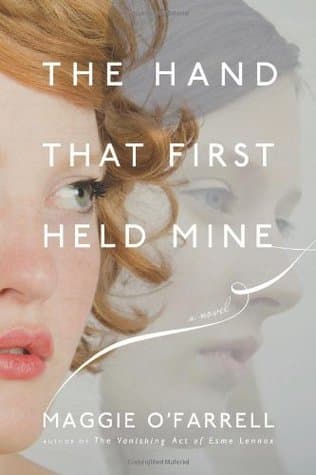
Synopsis
Covers the whole plot, including the ending.
- Difficulty
- Medium
- Pacing
- Moderate
- Mood
- Atmospheric, Reflective, Emotional, Mysterious
- Read it if
- You enjoy richly drawn characters, dual timelines, and a mystery that unfolds through the exploration of memory, art, and the complexities of motherhood across generations.
- Skip it if
- You prefer fast-paced thrillers or straightforward narratives without much introspection or historical detail.
The Hand That First Held Mine Plot Summary
Covers the whole plot, including the ending.
Lexie's Escape to London
In 1950s rural England, Lexie Sinclair, constrained by her parents' expectations and the quiet countryside, wants a life of adventure and intellectual stimulation. She plans her escape, driven to break free from the conventional path. In London, she quickly joins the unconventional Soho artistic and literary scene. She finds work at a small, avant-garde magazine, marking her break from the past and the start of her self-reinvention in the city. This move sets the stage for her independent life.
Elina's Disorientation
In contemporary London, Elina, a painter, experiences the bewildering first weeks of motherhood. She finds herself in an emotional and cognitive fog, struggling with basic tasks and having memory gaps, especially around her son Jonah's birth. Her mental state is fragile, marked by instances like wandering outside barefoot or mistaking the time of day for meals. This disassociation and the pressure of new motherhood make her feel alienated from her former self and concerned about connecting with her baby, contrasting with her partner Ted's more grounded experience.
Lexie Meets Innes Kent
Lexie's sharp wit and talent quickly catch the eye of Innes Kent, the charismatic editor of a progressive London magazine. Innes, with his distinctive style, becomes important in Lexie's life. He offers her a job as a reporter and introduces her to his circle of artists, writers, and free-thinkers in Soho. This new environment exposes Lexie to unconventional ideas, passionate discussions, and artistic expression, shaping her worldview and speeding her transformation into an independent, modern woman, far from her rural origins.
Ted's Fragmented Memories
As Elina struggles with postpartum issues, her partner Ted, a supportive presence, begins to have a series of unsettling and vivid memories. These are intense, sensory flashbacks to places and people he does not consciously recognize. The memories are fragmented and disorienting, often triggered by everyday events. He sees images of a different time, a different house, and a woman he cannot place, causing him increasing distress and a sense that a part of his past is missing, prompting him to understand these visions.
Lexie's Love and Pregnancy
Lexie's relationship with Innes Kent deepens into a passionate love affair that defines her life in Soho. Their connection is intellectual, artistic, and emotional. However, their bohemian lifestyle leads Lexie to discover she is pregnant. Faced with the societal pressures of the era and her relationship with Innes, Lexie makes the decision to raise the child on her own, embracing single motherhood as an act of independence and a commitment to living life on her own terms, regardless of judgment.
The Mysterious Photograph
Ted's fragmented memories increase, becoming more insistent. During this time, he finds an old photograph among inherited family belongings. The image shows a woman who seems familiar, standing in front of a house that resonates with his recurring visions. This physical evidence acts as a catalyst, confirming his belief that these are not random thoughts but echoes of a forgotten history. The photograph increases his need to understand his past and the identity of the woman and the place it shows, driving him to seek answers.
Lexie's New Life and Motherhood
Embracing her decision, Lexie establishes a new life for herself and her son, Elijah. She moves out of the immediate Soho scene to create a stable environment, while keeping her independent spirit. Lexie takes on various jobs, including working for an art gallery and continuing her writing, showing her resilience and determination to provide for her child without compromising her identity. She experiences the joys and challenges of single motherhood, cherishing her son while navigating her unconventional path, proving her strength and adaptability.
Ted's Investigation and Breakthrough
Driven by the photograph and his memories, Ted investigates his family history. He speaks with relatives, sifts through old documents, and pieces together clues, slowly uncovering details about his early life that contradict what he has always believed. His search leads to a breakthrough: the realization that he was adopted. This revelation shatters his understanding of his identity and family, opening new questions about his biological parents and the circumstances of his adoption, impacting his sense of self and his family relationships.
Lexie's Disappearance
Years after establishing her life as a single mother and professional, Lexie's story takes a dramatic and mysterious turn. Following an event, she suddenly disappears without a trace, leaving behind her son, Elijah, and a bewildered Innes. Her abrupt vanishing creates a lasting void and unanswered questions for those who loved her, especially Innes, who searches for her, haunted by her absence. The circumstances of her disappearance remain ambiguous, contributing to the novel's central mystery and impacting the lives of those she left behind.
The Intertwined Destinies Revealed
As Ted explores his past, the connection between his family and Lexie Sinclair's life is revealed. He discovers that he is Lexie's son, Elijah, adopted after her disappearance. The fragmented memories he experienced were echoes of his early childhood with Lexie. Elina's severe postpartum depression is subtly linked to the emotional trauma of childbirth, which triggers Ted's buried memories. The novel ends with the revelation of how Lexie's choices, sacrifices, and fate shaped the lives of Ted and Elina, connecting them across decades through motherhood, love, and loss.
Principal Figures
Lexie Sinclair
Protagonist
A spirited, independent woman who forges an unconventional life in post-war London.
Lexie is intelligent, ambitious, and fiercely independent, determined to escape the confines of her rural upbringing. She embraces the bohemian lifestyle of Soho, becoming a journalist and an art enthusiast. Lexie is passionate, artistic, and unafraid to challenge societal norms, making radical choices like single motherhood. She possesses a keen observational eye and a strong will, but her impulsiveness and desire for freedom also lead her down complex paths. She is driven by a quest for an authentic, meaningful life, even if it means sacrificing conventional happiness.
Relationships: Innes Kent (Passionate, intellectual love affair and professional mentorship.); Elijah (Ted) (Her beloved son, whom she raises independently before her disappearance.)
Elina
Protagonist
A young painter struggling with severe postpartum depression and memory loss after giving birth.
Elina is an artist, initially depicted as vibrant and creative, but is profoundly altered by the experience of childbirth. She battles severe postpartum disassociation, memory loss, and a deep sense of unreality, feeling disconnected from her baby and her former self. Her struggle highlights the often-unseen challenges of new motherhood and mental health. She is loving but overwhelmed, seeking to reconnect with her identity and her child amidst a haze of confusion and anxiety.
Relationships: Ted (Her loving, supportive partner and father of her child.); Jonah (Her infant son, with whom she struggles to bond due to her condition.)
Ted
Protagonist
Elina's partner, who experiences fragmented memories of a forgotten past after becoming a father.
Ted is initially portrayed as a grounded, pragmatic, and supportive partner to Elina, trying to navigate the challenges of new parenthood. However, fatherhood triggers a series of unsettling, vivid memories and visions from his early childhood that he cannot place. He is driven by a deep-seated need to understand these fragments, leading him on a quest to uncover his true origins. Ted is persistent and empathetic, his journey of self-discovery becoming a central thread connecting the past and present narratives.
Relationships: Elina (His partner and mother of his child, whom he deeply cares for.); Jonah (His infant son, whose birth triggers his repressed memories.); Lexie Sinclair (His biological mother, whose story he unknowingly inherits.)
Innes Kent
Supporting
A charismatic magazine editor who mentors Lexie and becomes her lover.
Innes is an influential figure in London's bohemian scene, a sophisticated and intellectual magazine editor. He is a patron of the arts, with a keen eye for talent, which he recognizes in Lexie. He is charming, worldly, and passionate, drawing Lexie into his vibrant circle and becoming her lover and professional guide. Innes represents the allure and excitement of post-war London's artistic underground, but also carries a certain emotional complexity and possessiveness, deeply affected by Lexie's ultimate disappearance.
Relationships: Lexie Sinclair (Her lover, mentor, and the father of her child (initially believed).)
Elijah
Mentioned
Lexie's son, later revealed to be Ted.
Elijah is Lexie's beloved son, whom she raises independently in the 1950s. He is depicted as a happy, curious child in Lexie's memories. His early life with his mother is filled with love and unconventional experiences. After Lexie's disappearance, he is adopted and grows up as Ted, with no conscious memory of his birth mother or early childhood. His identity as Elijah forms the crucial link between the two timelines.
Relationships: Lexie Sinclair (His biological mother.); Innes Kent (Believed to be his father for a time.)
Jonah
Supporting
Elina and Ted's infant son.
Jonah is Elina and Ted's newborn son. He represents the catalyst for both Elina's postpartum struggles and Ted's awakening memories. While mostly an infant, his presence underscores the themes of motherhood, legacy, and the profound impact a new life has on a family. He is the physical manifestation of the connection between the past and present, a symbol of hope and the future, despite the traumatic circumstances surrounding his parents' journey.
Relationships: Elina (His mother, with whom she struggles to bond.); Ted (His father, whose memories are triggered by his birth.)
Themes & Insights
Motherhood and Identity
The novel explores how motherhood shapes and challenges a woman's sense of self. Lexie embraces single motherhood as an act of defiance, forging an independent path. In contrast, Elina's experience of motherhood is marked by disassociation and a loss of her former identity, showing the overwhelming impact of childbirth and postpartum mental health. Both women grapple with what it means to be a mother and how it redefines them, often forcing them to confront their deepest fears and strengths. The legacy of motherhood is also central, as Lexie's choices as a mother directly impact Ted's life decades later.
“Motherhood was a country she hadn't known existed, a land of bewildering customs and a language she didn't speak.”
The Power of Memory and Trauma
Memory, both conscious and repressed, drives the narrative. Ted's fragmented, vivid memories of a past he does not consciously recall propel the contemporary storyline, revealing the lasting impact of early childhood trauma and adoption. Elina's postpartum amnesia and disassociation also speak to how the mind copes with overwhelming experiences. The novel suggests that the past is never truly forgotten, but rather lies dormant, waiting for a trigger to resurface. These memories serve as clues, slowly piecing together a hidden history and showing how past events continue to shape present realities and identities, often through subconscious echoes.
“Sometimes he felt as if his past were a house with many rooms, and he only had the key to a few of them.”
Freedom vs. Convention
Lexie's story is about the struggle between societal expectations and the desire for personal freedom. She rejects the conventional path laid out for her in rural England, choosing an unconventional life in bohemian London, pursuing a career, and raising a child outside of marriage. Her choices are acts of rebellion against the restrictive norms of the 1950s. The novel examines the allure and cost of such freedom, showing that while it offers self-determination, it can also lead to isolation, judgment, and unforeseen consequences. This theme highlights the enduring human desire to live authentically, even with significant societal pressure.
“She wanted a life that was hers, entirely hers, forged from her own decisions, not inherited, not bestowed.”
Art and Expression
Art, in its various forms, is a backdrop and a means of expression for the characters. Lexie's involvement in the Soho art world, her work as a journalist, and her appreciation for artists reflect her intellectual and aesthetic awakening. Elina is a painter, and her art is linked to her identity, though her postpartum state initially hinders her ability to create. The novel uses art as a metaphor for self-discovery, a way to interpret the world, and a vehicle for connection. It shows how creative pursuits can offer solace, meaning, and a means of communication when words fail, especially in times of emotional turmoil.
“Art was a language she understood, a conversation she could join, even if she only listened.”
Plot Devices & Literary Techniques
Dual Narrative Structure
Alternating chapters between two timelines and perspectives.
The novel employs a dual narrative, switching between Lexie Sinclair's story in 1950s London and Elina and Ted's story in present-day London. This structure creates suspense and intrigue as the reader gradually uncovers the connections between the seemingly disparate lives. It allows for a rich exploration of themes across different eras and highlights how past events profoundly influence the present, building towards a climactic revelation where the two timelines converge.
Fragmented Memories/Amnesia
Ted's and Elina's experiences with memory loss and sudden flashbacks.
Both Ted and Elina suffer from forms of memory disruption. Elina experiences severe postpartum amnesia and disassociation, struggling to recall recent events and feeling disconnected from her identity. Ted is plagued by vivid, fragmented memories of an unknown past. This device creates a central mystery, compelling the characters (and the reader) to piece together clues, revealing the traumatic events that caused these memory gaps and ultimately linking their stories to Lexie's past.
The Unreliable Narrator (Elina)
Elina's perspective is clouded by her postpartum mental state.
Elina's narrative is, at times, unreliable due to her severe postpartum disassociation and memory loss. Her confusion, disorientation, and inability to distinguish reality from delusion mean that her perceptions of events are often skewed. This device effectively conveys the debilitating nature of her condition and adds a layer of psychological complexity, forcing the reader to question what is real and what is a product of her troubled mind, while also emphasizing her vulnerability and isolation.
Symbolic Objects (The Photograph)
A physical object that serves as a crucial link to the past.
The old, faded photograph discovered by Ted acts as a powerful symbolic object and a key plot driver. It provides a tangible piece of evidence that validates his fragmented memories and fuels his investigation into his past. The photograph represents a hidden history, a visual clue that connects him directly to Lexie Sinclair and the circumstances of his early life, serving as a catalyst for the final unraveling of the novel's central mystery and the convergence of the timelines.
The Hand That First Held Mine Quotes
“The past is not a foreign country; it is a room in your own house, and the door is always ajar.”
“There are some things, some people, you never forget, no matter how hard you try.”
“Love, she thought, was like a fragile piece of glass. Beautiful, but so easily shattered.”
“Every life leaves a trace, a faint outline in the air, a whisper of what was.”
“Sometimes the greatest betrayals are not deliberate acts, but omissions, things left unsaid.”
“The city held its breath, a thousand untold stories tucked away behind its brick facades.”
“You can never truly know someone until you've seen them at their most vulnerable.”
“What is a secret, after all, but a truth that hasn't found its moment?”
“There are moments in life when everything shifts, when the ground beneath you changes, and you're never quite the same again.”
“The past is not dead. It is not even past.”
“She felt like a detective, piecing together fragments of a life that wasn't hers, but which felt intimately connected.”
“Every choice, however small, branches off into a thousand possible futures.”
“Grief, she learned, was not a singular event, but a landscape you had to learn to navigate.”
“Some stories, once begun, demand to be finished, no matter the cost.”
Quiz
10 questions on the plot and the characters. Each answer comes with a short explanation.
Question 1
What is Lexie Sinclair's initial plan to escape her parents' genteel country life?
- To become a governess in a wealthy family
- To move to London and pursue a career in journalism
- To marry a man from a prominent city family
- To travel abroad and live a bohemian lifestyle
Show answer
B. To move to London and pursue a career in journalism Lexie plans her escape to London, where she takes up with Innes Kent and learns to be a reporter.
Question 2
Who is Innes Kent in Lexie's storyline?
- A famous artist she interviews for a story
- Her estranged brother who lives in London
- A magazine editor who introduces her to post-war Soho
- A fellow reporter she meets at her first job
Show answer
C. A magazine editor who introduces her to post-war Soho Innes Kent is described as a magazine editor who introduces Lexie to the thrilling, underground world of bohemian, post-war Soho.
Question 3
What significant life choice does Lexie make when she finds herself pregnant?
- She returns to her parents' home for support.
- She marries Innes Kent to legitimize the child.
- She decides to have the baby on her own.
- She gives the baby up for adoption.
Show answer
C. She decides to have the baby on her own. The synopsis states that when Lexie finds herself pregnant, she doesn't hesitate to have the baby on her own.
Question 4
What is Elina's profession in present-day London?
- A journalist
- A magazine editor
- A painter
- A historian
Show answer
C. A painter Elina is identified as a young painter in present-day London.
Question 5
What are some of the unusual behaviors Elina exhibits in the first weeks of motherhood?
- She starts taking long, solitary walks in the countryside.
- She finds herself walking outside with no shoes and going to lunch at 9 AM.
- She constantly redecorates the nursery and buys excessive baby items.
- She begins speaking in a language unfamiliar to her boyfriend.
Show answer
B. She finds herself walking outside with no shoes and going to lunch at 9 AM. Elina dizzily navigates motherhood, walking outside with no shoes, and going to the restaurant for lunch at nine in the morning.
Question 6
What specific detail about Innes Kent's attire is mentioned in the description?
- He always wears a tailored suit.
- He wears duck-egg blue ties.
- He has a distinctive fedora hat.
- He prefers casual, artistic clothing.
Show answer
B. He wears duck-egg blue ties. Innes Kent is described as a magazine editor who 'wears duck-egg blue ties'.
Question 7
What literary work is mentioned as a comparison to 'The Hand That First Held Mine'?
- The Time Traveler's Wife
- Atonement
- The Vanishing Act of Esme Lennox
- Life of Pi
Show answer
C. The Vanishing Act of Esme Lennox The synopsis compares the novel to Maggie O'Farrell's 'The Vanishing Act of Esme Lennox'.
Question 8
What is the primary catalyst for Ted's increasing disconcerting memories?
- Elina's erratic behavior during postpartum.
- His own experience of fatherhood.
- An old photograph he finds in their attic.
- A conversation he overhears about a past event.
Show answer
B. His own experience of fatherhood. For Elina's boyfriend, Ted, fatherhood is calling up lost memories, with images he cannot place.
Question 9
What overarching theme connects the two women's stories across fifty years?
- A shared passion for travel and adventure.
- Their involvement in political activism.
- Art, love, betrayals, secrets, and motherhood.
- A mysterious illness that affects both their families.
Show answer
C. Art, love, betrayals, secrets, and motherhood. The novel is described as 'a spellbinding novel of two women connected across fifty years by art, love, betrayals, secrets, and motherhood.'
Question 10
What is Elina's significant memory lapse related to her recent experience?
- She cannot recall her wedding day.
- She can't recall the small matter of giving birth.
- She forgets where she put her painting supplies.
- She doesn't remember meeting her boyfriend, Ted.
Show answer
B. She can't recall the small matter of giving birth. Elina 'can't recall the small matter of giving birth' in her dazed state of new motherhood.
The Hand That First Held Mine FAQ
What is the central premise of 'The Hand That First Held Mine'?
The novel interweaves two narratives: Lexie Sinclair's journey as an ambitious young woman in post-war Soho, navigating a bohemian life and single motherhood, and Elina's struggles with new motherhood in present-day London, alongside her boyfriend Ted's unsettling resurfacing memories. The core premise explores how these two seemingly disparate stories are deeply connected across fifty years through art, love, and a shared, hidden past.
Who is Lexie Sinclair and what are her aspirations?
Lexie Sinclair is a young woman from a genteel country background who yearns for an unconventional life in London. She aspires to be a reporter, immerse herself in the vibrant art scene of post-war Soho, and live life fully on her own terms, embracing independence and love without societal constraints, even choosing to raise her child alone.
How does Lexie's relationship with Innes Kent influence her life?
Innes Kent, a magazine editor, is pivotal in Lexie's transformation. He introduces her to the thrilling, underground world of bohemian Soho, mentors her in journalism, and becomes a central figure in her emotional and professional development. Their relationship forms the core of her early adult life, shaping her understanding of love, art, and independence.
What challenges does Elina face in the present-day narrative?
Elina is a young painter grappling with the disorienting early weeks of motherhood. She experiences significant memory loss and a profound sense of not recognizing herself, exhibiting strange behaviors like walking barefoot outside or misjudging meal times. Her struggles highlight the overwhelming and sometimes alienating experience of becoming a new mother.
What role do Ted's memories play in the unfolding plot?
Ted, Elina's boyfriend and the baby's father, begins to experience disconcerting and frequent lost memories from his own childhood. These fragmented images and sensations, which he cannot place, serve as the primary catalyst for uncovering the connection between Elina's present and Lexie's past, driving the novel towards its central revelation.
What is the significance of the duck-egg blue ties worn by Innes Kent?
The duck-egg blue ties are a subtle but recurring detail that signifies Innes Kent's distinctive style and his role as an arbiter of taste and sophistication in Lexie's world. They are a visual marker of his character and the specific bohemian aesthetic of post-war Soho that Lexie is drawn into.
How do the themes of art and creativity connect Lexie and Elina?
Art and creativity are fundamental to both women's identities. Lexie becomes involved with artists and the art scene as a reporter and lover, while Elina is a painter. This shared connection to the creative world subtly links their paths, suggesting a lineage or a common thread in their ways of seeing and interpreting life, even before the direct family connection is revealed.
What is the 'small matter of giving birth' that Elina cannot recall?
Elina's inability to recall the 'small matter of giving birth' is a key indicator of her severe disorientation and potentially postpartum amnesia or trauma. This specific memory gap is crucial because it highlights the profound mental and emotional toll motherhood has taken on her, and later, it hints at a deeper, possibly traumatic, connection to her past.
How does the novel explore the concept of 'making and unmaking our lives'?
The novel delves into how both Lexie and Elina actively construct and deconstruct their identities and life paths. Lexie deliberately sheds her conventional background to forge an independent, bohemian existence, while Elina's sense of self is 'unmade' by the overwhelming experience of new motherhood, forcing her to redefine who she is. This theme underscores their agency and vulnerability.
What psychological impact does single motherhood have on Lexie?
Single motherhood profoundly shapes Lexie, reinforcing her independence and resilience, but also isolating her in some ways. While she embraces the challenge, it forces her to make difficult choices and face societal judgment, contributing to her complex emotional landscape and her determination to protect her child and her unconventional life at all costs.
How does Ted's repressed childhood memories affect his present-day relationship with Elina and their child?
Ted's resurfacing repressed memories create a sense of unease and mystery, subtly affecting his emotional state and his new role as a father. While he is supportive of Elina, his internal struggle with these fragmented images indicates a deeper psychological burden that he must confront, and it ultimately leads to the revelation that connects their family to Lexie's past.
In what ways do both women experience a loss of self or identity?
Lexie experiences a loss of her 'old' self as she sheds her country upbringing for a new bohemian identity, a deliberate transformation. Elina, however, experiences a more involuntary and distressing loss of self, where she literally doesn't recognize who she is after childbirth, highlighting the profound and sometimes disorienting impact of new motherhood on identity.
What is the primary debate or interpretation surrounding the novel's ending?
The primary interpretation often centers on the nature of memory, legacy, and the enduring impact of choices made generations ago. Readers often debate the extent to which fate versus free will dictates the characters' paths, and how the 'accidental legacies' profoundly shape lives, even when the connections remain hidden for decades.
How does the novel challenge traditional notions of family and motherhood?
The novel challenges traditional notions by portraying Lexie's choice of single motherhood in a post-war era, defying societal expectations. It also explores the raw, unfiltered, and sometimes traumatic aspects of motherhood through Elina's experience, moving beyond romanticized portrayals to show its disorienting and identity-altering power. The eventual familial connections also redefine what constitutes a 'family.'
What is the significance of the title, 'The Hand That First Held Mine'?
The title is highly symbolic, referring to the profound, initial bond between mother and child, but also hinting at the literal and metaphorical hands that guide, betray, and connect individuals across time. It suggests the enduring legacy of early relationships and the unseen threads that link generations, ultimately revealed to be a direct familial connection.
How does the non-linear narrative structure contribute to the novel's impact?
The non-linear structure, alternating between Lexie's past and Elina's present, builds suspense and allows O'Farrell to slowly unveil the intricate connections between the two timelines. It heightens the mystery of Ted's memories and Elina's disorientation, making the eventual revelation of their shared history more impactful and emotionally resonant.
Could Lexie be considered a feminist character for her time?
Yes, Lexie can be considered a feminist character. She actively rejects the conventional expectations for women of her era, pursuing a career, embracing bohemian freedom, and choosing single motherhood. Her determination to live life on her own terms and her independence in personal and professional spheres align strongly with feminist ideals.
What role does betrayal play in connecting the two narratives?
Betrayal is a crucial element that links the narratives. While not explicitly detailed in the synopsis, the mention of 'betrayals' suggests that critical acts of deception or broken trust in Lexie's past have long-lasting repercussions that ripple through time, ultimately influencing the circumstances that bring Elina and Ted into their current situation and reveal the hidden connections.
About the author

Maggie O'Farrell is a British author known for her fiction, including "The Vanishing Act of Esme Lennox" and "The Hand That First Held Mine." Her works often explore themes of memory, identity, and the complexities of human relationships. O'Farrell has received various accolades for her writing, contributing to her recognition in contemporary literature.
Similar books
- The Vanishing Act of Esme Lennox
Maggie O'Farrell
3.9 (26k) average on GoodreadsHistorical FictionFeatures dual timelines, family secrets, and a focus on female experience and memory.
- Fingersmith
Sarah Waters
4.0 (81k) average on GoodreadsHistorical FictionRich historical detail, strong female characters, and complex plot twists.
- Possession
A.S. Byatt
4.3 (13k) average on GoodreadsRomanceWhile both novels use dual timelines to uncover historical mysteries, Byatt's Possession is more academically focused, involving literary scholars piecing together a poetic romance, offering a more intellectual puzzle. O'Farrell's novel, in contrast, prioritizes emotional resonance and personal drama, particularly around themes of motherhood and identity, rather than a broad scholarly pursuit.
- The Old Man and the Sea
Ernest Hemingway
3.8 (831k) average on GoodreadsLiterary FictionA Cuban fisherman's long struggle with a giant marlin becomes a story of endurance and dignity, now retold for young adults with illustrations, phonetic guides, and writing prompts in Traditional Chinese.
- One Hundred Years of Solitude
Gabriel García Márquez
4.1 (753k) average on GoodreadsLiterary FictionThrough the multi-generational story of the Buendía family, a mythical town deals with the repeating patterns of time, love, and solitude, as the extraordinary mixes with the ordinary.
- The Goldfinch
Donna Tartt
3.9 (720k) average on GoodreadsLiterary FictionHaunted by a tragic explosion and clutching a stolen Dutch masterpiece, a young orphan navigates the opulent drawing rooms of New York and the gritty underbelly of the art world, desperately seeking connection and redemption amidst a life spiraling into crime and obsession.





Enjoyed the summary?
A summary gives you the shape of the book. The book itself has the detail, the examples and the voice.
Find The Hand That First Held Mine on AmazonAs an Amazon Associate, BookBrief earns from qualifying purchases. How we're funded