
Core Idea
- Difficulty
- Easy
Key Takeaways from The Happiness Project
The Power of a Happiness Project
Conscious pursuit of happiness through structured experimentation yields tangible results.
Rubin's main idea is that happiness is not just a passive state but an active, ongoing effort. Her realization on a city bus—that time was passing quickly and she wasn't prioritizing what truly mattered—led to a year-long experiment. This structured approach, which included research, goal-setting, and consistent action in areas like work, relationships, and self-care, shows that intention drives well-being. By calling happiness a 'project,' she makes the pursuit practical instead of an elusive ideal. This framework encourages readers to find their own areas for improvement and make changes systematically, proving that even small, deliberate actions lead to significant increases in contentment.
“The days are long, but the years are short.”
In the book: Rubin's entire year-long narrative serves as evidence, particularly her monthly themes and the concrete changes she implemented (e.g., 'Boost Energy,' 'Make Time for Friends').
Try this: Define your own 'happiness project' by setting specific, measurable goals related to aspects of your life you wish to improve. Break it down into monthly or weekly themes.
Outer Order, Inner Calm
Decluttering physical spaces significantly reduces mental clutter and stress.
One of Rubin's most important ideas is the strong connection between our physical surroundings and our mental state. She spends a lot of time on 'making time for outer order,' understanding that a messy desk or closet is not just a visual problem; it constantly drains mental energy and causes subtle stress. Decluttering, organizing, and keeping a tidy space frees up mental resources, reduces decision fatigue, and creates a sense of control and calm. This is not about perfection, but about creating an environment that supports inner peace. This idea may not apply to everyone, especially those who thrive in creative disorder, but it holds true for most.
“For most people, outer order contributes to inner calm.”
In the book: Rubin's personal experience with clearing out her closet, organizing her office, and the subsequent feeling of lightness and improved focus.
Try this: Start with one small, persistently messy area in your home or workspace. Dedicate 15 minutes to decluttering and organizing it daily for a week, observing the impact on your mood.
Novelty and Challenge Boost Happiness
Engaging in new experiences and overcoming difficulties stimulates joy and growth.
Rubin finds that routines, while comfortable, can lead to stagnation. Actively seeking new experiences—learning a new skill, visiting a new place, trying a new hobby—adds excitement and fresh perspectives to life. Similarly, taking on challenges, even small ones, provides a sense of accomplishment and ability that boosts happiness. The brain thrives on learning and growth, and consciously stepping outside one's comfort zone, whether by singing in the morning or reading a difficult book, activates these reward pathways. This insight offers a direct way to combat boredom and encourage personal development, linking effort to emotional reward.
“Novelty and challenge are powerful sources of happiness.”
In the book: Rubin's experiences trying new things like learning to sing, reading Aristotle, or exploring new neighborhoods, and the resulting feelings of engagement and pleasure.
Try this: Identify one new skill you've always wanted to learn or a new experience you've been putting off. Commit to trying it for a month, regardless of initial proficiency.
The Importance of Small Changes
Incremental adjustments to daily habits can lead to significant long-term happiness.
Rubin emphasizes that a happiness project does not require major life changes. Instead, it is often the collection of small, consistent positive habits that creates the biggest effect. Whether it's making her bed every morning, giving a genuine compliment, or taking a few minutes to walk outside, these seemingly minor actions build momentum and reinforce a positive self-image. This approach makes pursuing happiness less daunting and more accessible. It encourages people to start immediately with achievable steps, rather than waiting for ideal circumstances, showing the power of daily discipline in shaping one's emotional state.
“The very smallest of changes can make the biggest difference.”
In the book: Rubin's numerous examples of minor habit shifts throughout the year, such as consistently going to bed earlier, exercising for short periods, or taking time for small acts of kindness.
Try this: Choose one tiny habit you want to incorporate into your day (e.g., drink a glass of water first thing, read one page of a book). Stick to it for 30 days and observe its ripple effects.
Money Can Buy Happiness (When Spent Wisely)
Spending on experiences, others, and time-saving services enhances well-being more than material possessions.
Contrary to popular belief, Rubin finds that money can contribute to happiness, but how it's spent is key. Her observations match psychological research: spending on experiences (like vacations or concerts) creates lasting memories and strengthens relationships, while spending on others (gifts, donations) builds social connection and altruistic joy. Investing in time-saving services (like house cleaning or meal delivery) reduces daily stress and frees up time for more meaningful activities. This idea challenges the consumerist notion that more 'stuff' equals more happiness, instead promoting thoughtful, value-driven spending that aligns with personal priorities and improves life quality.
“Money can help buy happiness, when spent wisely.”
In the book: Rubin's reflections on the joy derived from family trips, charitable giving, or hiring help to free up her time, contrasted with the fleeting satisfaction of material purchases.
Try this: Before a significant purchase, consider if it's an experience, a gift for someone else, or a time-saving service. Prioritize these categories over pure material acquisition.
The Importance of Fighting Right
Constructive conflict resolution strengthens relationships and prevents bitterness.
Rubin dedicates a month to 'fighting right' with her husband, understanding that conflict is unavoidable but managing it is essential for relationship happiness. She learns that airing grievances constructively, avoiding personal attacks, and focusing on solutions rather than blame prevents resentment. This involves active listening, validating the other person's feelings, and knowing when to let go of minor irritations. Her look into this often-overlooked aspect of relationships shows that true intimacy is not the absence of conflict, but the ability to navigate it in a way that deepens understanding and connection. This is a particularly strong insight, as relationship satisfaction is a main driver of overall happiness.
“The secret to a happy marriage is to fight right.”
In the book: Rubin's specific rules for fighting right with her husband, such as 'don't save up grievances,' 'don't expect praise or appreciation for doing something that needs to be done,' and 'don't make fun of other people's pleasures.'
Try this: Establish 'fighting rules' with your partner or close family members. Agree to focus on the issue, not the person, and to seek understanding before resolution.
Cultivating an Atmosphere of Fun and Humor
Deliberately seeking out joy and laughter enriches daily life and reduces stress.
Rubin intentionally includes 'fun' in her happiness project, recognizing that it is often overlooked in adulthood. This is not about grand gestures, but about finding small, regular opportunities for lightheartedness, play, and humor. This might involve revisiting childhood hobbies, engaging in silly activities with family, or simply finding reasons to laugh. She observes that an atmosphere of fun reduces tension, encourages creativity, and strengthens social bonds. Her experience shows that fun is not a frivolous indulgence but a vital part of well-being, actively chosen rather than passively awaited. This takeaway offers a refreshing contrast to the often-serious tone of self-improvement.
“Fun is a feeling of carefree playfulness.”
In the book: Rubin's efforts to 'sing in the morning,' engage in spontaneous play with her children, or deliberately seek out funny content, and the resulting boost in her mood.
Try this: Schedule a weekly 'fun activity' – something purely for enjoyment, with no productive goal. This could be playing a board game, watching a comedy, or trying a new playful hobby.
The Importance of Self-Knowledge
Understanding one's own nature is crucial for designing an effective happiness strategy.
A main theme throughout Rubin's project is the need for self-awareness. She learns what truly makes her happy, not what society or self-help books suggest. This involves recognizing her own tendencies (e.g., her love for order, her tendency to be an 'Upholder'), her natural inclinations, and her unique sources of joy and drain. Trying to force herself into an unfitting mold would be counterproductive. This insight is important because it highlights the personalized nature of happiness; what works for one person may not work for another. The book encourages readers to undertake their own journey of self-discovery to find their authentic path to contentment.
“We can build our lives around our own nature, not around what we think we 'should' be doing.”
In the book: Rubin's reflections on her own personality traits, such as her 'Upholder' tendency (meeting both inner and outer expectations) and how understanding this helped her stick to her resolutions.
Try this: Reflect on your own 'tendencies' (e.g., are you a 'Rebel,' 'Questioner,' 'Obliger,' or 'Upholder' as per Rubin's later work?). Use this self-knowledge to tailor happiness strategies that genuinely resonate with you.
The Role of Gratitude and Mindfulness
Appreciating the present moment and expressing thanks enhances overall well-being.
While not explicitly a 'mindfulness' book, Rubin's journey shows the power of appreciating the present and expressing gratitude. Her focus on small joys, connecting with loved ones, and savoring everyday moments shows the importance of being fully engaged in life rather than constantly striving for future happiness. Her efforts to make others happy, whether through acts of kindness or simply being a better friend, also show the reciprocal nature of well-being. This suggests that happiness is not just an internal state, but also a product of our interactions with the world and our ability to acknowledge and appreciate the good within it.
“One of the best ways to make yourself happy is to make other people happy.”
In the book: Rubin's monthly themes like 'Remember to Be Grateful' and 'Lighten Up' involve conscious efforts to notice positive aspects of her life and engage more fully with her surroundings and relationships.
Try this: Keep a gratitude journal for a week, listing three new things you are grateful for each day. Practice savoring one everyday moment fully, without distraction.
No Perfect Solution, Just Ongoing Effort
Happiness is a continuous process of learning, adjusting, and recommitting.
Rubin's year-long project is presented not as a definitive end-point to her happiness journey, but rather a starting point. She does not claim to have 'solved' happiness, but rather to have developed a strong framework and tools for its ongoing pursuit. This takeaway is crucial because it manages reader expectations, emphasizing that happiness is not a destination but a dynamic process. Life will always present challenges, and maintaining well-being requires continuous effort, self-reflection, and adaptation. The book advocates for resilience and a willingness to continually learn and adjust one's approach to life's inevitable ups and downs.
“I wasn't happy at all, but I wasn't unhappy either. I was just… not happy.”
In the book: The cyclical nature of her monthly themes, and her concluding reflections that the project fundamentally changed her but didn't make her perpetually blissful, rather equipped her better for life.
Try this: Instead of viewing happiness goals as one-time achievements, commit to regular 'check-ins' with yourself (e.g., quarterly) to assess your well-being and adjust your happiness strategies as needed.
Quiz
10 questions on the main ideas. Each answer comes with a short explanation.
Question 1
What event triggered Gretchen Rubin's "Happiness Project"?
- Reading a self-help book
- An epiphany on a city bus
- A conversation with a friend
- Attending a happiness seminar
Show answer
B. An epiphany on a city bus Gretchen Rubin had her realization about the passage of time and the need to focus on what matters while on a city bus.
Question 2
What is the central theme of Gretchen Rubin's "The Happiness Project"?
- Achieving financial independence
- Finding happiness through a year-long personal experiment
- Improving career prospects
- Exploring philosophical concepts
Show answer
B. Finding happiness through a year-long personal experiment The book details Rubin's year-long effort to actively pursue and cultivate happiness through various experiments and changes.
Question 3
According to the book's summary, what did Rubin discover about novelty and challenge?
- They are detrimental to happiness
- They have no impact on happiness
- They are powerful sources of happiness
- They only contribute to happiness if they are expensive
Show answer
C. They are powerful sources of happiness The summary explicitly states that 'novelty and challenge are powerful sources of happiness.'
Question 4
What did Rubin find regarding the relationship between money and happiness?
- Money cannot buy happiness at all
- Money can buy happiness, but only if spent on luxury items
- Money can help buy happiness, provided it is spent wisely
- The amount of money one has is the sole determinant of happiness
Show answer
C. Money can help buy happiness, provided it is spent wisely The text mentions that 'money can help buy happiness, when spent wisely.'
Question 5
What connection did Rubin observe between external environment and internal state?
- A chaotic environment leads to inner peace
- Outer order contributes to inner calm
- The external environment has no bearing on inner feelings
- Inner calm is only achievable through meditation, not external factors
Show answer
B. Outer order contributes to inner calm The summary states that 'outer order contributes to inner calm.'
Question 6
Which of the following is NOT mentioned as a source of wisdom Rubin tested during her project?
- The wisdom of the ages
- Current scientific research
- Pop culture
- Ancient philosophical texts exclusively
Show answer
D. Ancient philosophical texts exclusively The book draws from 'the wisdom of the ages, current scientific research, and lessons from popular culture.' While Aristotle is mentioned, it's not implied that only ancient philosophical texts were used.
Question 7
What did Rubin conclude about the impact of small changes?
- Small changes are insignificant
- Small changes can lead to significant outcomes
- Only large, drastic changes affect happiness
- Small changes are too difficult to implement consistently
Show answer
B. Small changes can lead to significant outcomes The summary highlights that 'the very smallest of changes can make the biggest difference.'
Question 8
The phrase 'The days are long, but the years are short' implies a feeling of:
- Imminent success
- Urgency to seize the moment
- Time passing quickly despite daily monotony
- Contentment with the present
Show answer
C. Time passing quickly despite daily monotony This well-known saying suggests that while individual days can feel long and slow, the overall years pass by with surprising speed, often leading to a realization that time is slipping away.
Question 9
Gretchen Rubin's "Happiness Project" can be best categorized as which genre(s)?
- Science Fiction and Fantasy
- Historical Fiction and Romance
- Psychology, Biography, Memoir, Self-Help
- Mystery and Thriller
Show answer
C. Psychology, Biography, Memoir, Self-Help The provided text explicitly lists the genres as Psychology, Biography, Memoir, and Self-Help.
Question 10
The structure of the "Happiness Project" implies a methodology that is:
- Purely theoretical and introspective
- Experimental and action-oriented
- Passive and observational
- Solely reliant on external advice
Show answer
B. Experimental and action-oriented Rubin's project involved 'test-driving the wisdom of the ages, current scientific research, and lessons from popular culture' and implementing changes, indicating an experimental and action-oriented approach rather than purely theoretical or passive observation.
The Happiness Project FAQ
What is The Happiness Project about?
The Happiness Project is a memoir by Gretchen Rubin detailing her year-long experiment to become happier. She dedicates each month to a specific theme, like 'Boost Energy' or 'Simplify,' and tries various strategies to improve her well-being.
What inspired Gretchen Rubin to start The Happiness Project?
Gretchen Rubin had an epiphany on a city bus, realizing that 'the days are long, but the years are short.' She felt time was passing without her focusing on what truly mattered, prompting her to dedicate a year to actively pursuing happiness.
What are some of the key takeaways from The Happiness Project?
Rubin discovered that novelty and challenge are significant happiness boosters, that money can contribute to happiness when spent thoughtfully, and that creating outer order can lead to inner calm. She also found that small changes can have a big impact.
Is The Happiness Project a self-help book?
Yes, while it's also a memoir, The Happiness Project functions as a self-help book by offering practical strategies and insights derived from Rubin's personal journey that readers can adapt to their own lives.
What kind of 'happiness strategies' did Gretchen Rubin try?
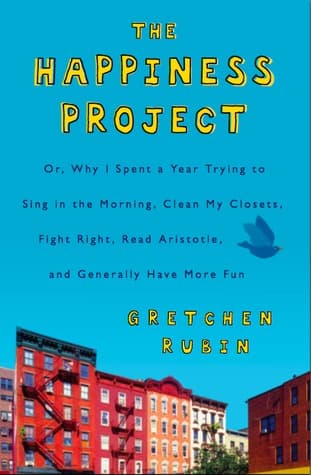
Rubin experimented with a wide range of strategies, including singing in the morning, cleaning her closets, improving her arguments, reading philosophical texts like Aristotle, and generally seeking more fun and joy in her daily life.
Does The Happiness Project suggest expensive ways to be happy?
Not necessarily. While Rubin touches on how money can help when spent wisely, the project emphasizes that many happiness-boosting activities are free or low-cost, focusing on personal habits, mindset, and small changes.
Can I do my own 'Happiness Project' after reading the book?
Absolutely. The book is designed to inspire readers to undertake their own happiness projects, encouraging them to identify their own priorities and experiment with strategies that resonate with them.
What is the main message of The Happiness Project?
The central message is that happiness is a choice and a pursuit that requires conscious effort and experimentation. It highlights that by focusing on specific areas and making small, consistent changes, one can significantly improve their overall sense of well-being.
Is The Happiness Project based on scientific research?
Yes, Gretchen Rubin draws upon current scientific research in psychology and happiness studies, as well as wisdom from popular culture and philosophy, to inform her experiments and findings.
What's the difference between The Happiness Project and other happiness books?
The Happiness Project stands out by combining a personal, engaging memoir with actionable advice. It's not just theoretical; it's a detailed account of one person's year-long, month-by-month journey of trying different happiness strategies.
About the author

Gretchen Rubin is an American author known for her exploration of happiness and human behavior. Her notable works include "The Happiness Project," where she chronicles her year-long quest to enhance her happiness through various personal experiments. Rubin's writing often combines insights from psychology with practical advice, making her a prominent voice in the field of self-improvement.
Similar books
- Atomic Habits: An Easy & Proven Way to Build Good Habits & Break Bad Ones
James Clear
4.3 (126k) average on GoodreadsBusinessWhile "The Happiness Project" explores a broader pursuit of happiness through various strategies, James Clear's "Atomic Habits" offers a more focused and systematic framework for habit formation. Rubin's book is more of a narrative memoir with embedded advice, whereas Clear's is a direct instruction manual. "Atomic Habits" provides detailed, evidence-based mechanisms for habit change (make it obvious, attractive, easy, satisfying), which Rubin touches upon implicitly but doesn't explicitly dissect with the same level of scientific rigor. Clear's approach is arguably more universally applicable for anyone looking to implement any new behavior, while Rubin's is tailored to her personal happiness quest.
- The Perks of Being a Wallflower
Stephen Chbosky
4.2 (1.3M) average on GoodreadsPsychologyThrough letters, a shy high school freshman learns to navigate first love, trauma, and self-discovery, stepping off the sidelines and into life.
- Eleanor Oliphant Is Completely Fine
Gail Honeyman
4.3 (708k) average on GoodreadsLiterary FictionA lonely woman's structured life changes when an IT guy and an elderly man help her learn to open her heart.
- One Flew Over the Cuckoo's Nest
Ken Kesey
4.2 (631k) average on GoodreadsPsychologyIn a mind-bending asylum, the boisterous Randle McMurphy wages a defiant war against the tyrannical Nurse Ratched, inspiring his fellow inmates, including the seemingly catatonic Chief Bromden, to reclaim their lost humanity.
- The Bell Jar
Sylvia Plath
4.0 (591k) average on GoodreadsPsychologyIn the suffocating grip of 1950s expectations, a brilliant young woman's descent into mental illness is painted with such vivid, internal clarity that her 'insanity' feels terrifyingly rational and inevitable.
- The Subtle Art of Not Giving a F*ck: A Counterintuitive Approach to Living a Good Life
Mark Manson
3.9 (530k) average on GoodreadsBusinessEmbrace your flaws and stomach life's lemons, because true happiness isn't about relentless positivity, but about choosing what truly matters to give a f*ck about.






Enjoyed the summary?
A summary gives you the shape of the book. The book itself has the detail, the examples and the voice.
Find The Happiness Project on AmazonAs an Amazon Associate, BookBrief earns from qualifying purchases. How we're funded