
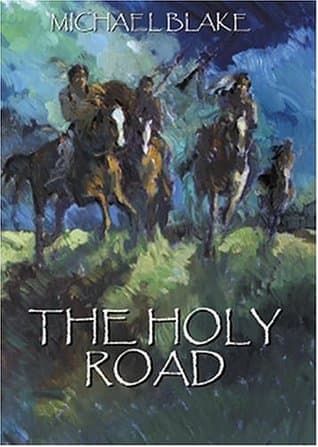
Synopsis
Covers the whole plot, including the ending.
- Difficulty
- Medium
- Pacing
- Moderate
- Mood
- Epic, Tragic, Resilient, Suspenseful, Adventurous
- Read it if
- You loved "Dances With Wolves" and want to continue the epic saga of John Dunbar and Stands With A Fist, experiencing the harsh realities of the American West.
- Skip it if
- You prefer lighthearted stories or are not interested in historical fiction depicting the brutal conflicts between Native American tribes and encroaching white settlers.
The Holy Road Plot Summary
Covers the whole plot, including the ending.
A Decade of Peace Shattered
Eleven years have passed since John Dunbar, now known as Dances With Wolves, joined the Comanche tribe. He lives a peaceful life with his wife, Stands With A Fist, and their three children: Christine, Emily, and the infant, John. They live in the village of the elder, Ten Bears, keeping a traditional Comanche way of life. However, the presence of white settlers and soldiers causes constant anxiety. Reports of violent clashes and demands for the Comanche to move onto reservations grow more frequent, signaling an inevitable conflict. Despite the looming threat, Dances With Wolves and his family value their peaceful life, unaware of the horrific events about to happen that will change their world and test their bonds.
The Ranger Attack and Abduction
The peace of Ten Bears' village is broken by a sudden, unprovoked attack by a band of white rangers. The rangers, wanting land and hating Native Americans, attack the unsuspecting village with force. The massacre is swift and horrific, leaving many Comanche dead, including children and elders. During the chaos, Stands With A Fist and her infant daughter, John, are captured and taken away by the rangers. Dances With Wolves, along with the warriors Wind In His Hair and Kicking Bird, survive the attack but are left to mourn the devastation and the loss of their loved ones.
The Vow of Vengeance and Rescue
After the raid, grief and rage grip the surviving Comanche. Dances With Wolves, Wind In His Hair, and Kicking Bird, the warriors, gather to decide what to do. The tribe is reeling, but they agree they must fight back against the white invaders to protect their people and their way of life. For Dances With Wolves, the immediate goal is to rescue Stands With A Fist and their infant daughter. He knows that because of his background, he is the only one who can navigate both worlds and successfully retrieve his family from the rangers, even as the tribe prepares for wider conflict.
Tracking the Abductors
Driven by love for his wife and child, Dances With Wolves begins a solitary and dangerous quest to track the rangers. Using his knowledge of the land and tracking skills, he follows the trail left by the abductors, a path marked by destruction and despair. His journey takes him through harsh landscapes, across rivers, and over plains, constantly avoiding other white patrols and hostile groups. He endures hunger, thirst, and fear of what might be happening to Stands With A Fist and little John. His determination comes from the hope of reunion and the desire for justice against those who shattered his family's peace.
Stands With A Fist's Ordeal
Meanwhile, Stands With A Fist and her infant daughter, John, endure a difficult captivity. The rangers treat her with brutality and contempt, seeing her as a 'white squaw' who has betrayed her race. She suffers abuse, constantly fearing for her life and, more importantly, for the safety of her baby. Despite the hardship, Stands With A Fist remains strong, using her Comanche strength and her mother's instinct to protect her child. She watches her captors, gathering information and looking for any chance to escape or to send a signal, all while trying to keep her daughter alive and nourished under dire circumstances.
The Wider Conflict Escalates
As Dances With Wolves pursues his mission, the conflict between the Comanche and the white soldiers grows. Wind In His Hair and Kicking Bird, leading the remaining warriors, engage in skirmishes and raids against military outposts and supply trains. These actions are revenge for the massacre and strategic attempts to disrupt the white advance and protect their diminishing territory. The Comanche warriors show their bravery and tactical skill, but they are increasingly outnumbered and outgunned by the technologically superior and expanding white forces. The war for their land and their way of life becomes a desperate struggle for survival.
A Glimmer of Hope and a Desperate Plan
After weeks of pursuit, Dances With Wolves finally finds the ranger camp where Stands With A Fist and his daughter are held. He watches the camp from a distance, studying the rangers' routines, their defenses, and his family's location. The sight of Stands With A Fist, battered but alive, renews his resolve. He sees the danger of a direct assault and begins to form a plan for their rescue. His strategy uses stealth, surprise, and his ability to understand both Comanche and white military tactics, knowing that one wrong move could cost him everything and condemn his family to an even worse fate.
The Rescue and Flight
Under the cover of darkness, Dances With Wolves enters the ranger camp. He moves with the silent precision of a warrior, past sentries and through the sleeping camp. He reaches Stands With A Fist and their daughter, who are overjoyed and relieved to see him. The reunion is brief, filled with quiet urgency. Dances With Wolves quickly cuts their bonds and, with Stands With A Fist clutching their baby, they escape. Their flight is dangerous, as they must avoid the roused rangers who quickly discover their absence. They rely on Dances With Wolves' knowledge of the terrain and Stands With A Fist's strength to get away from their pursuers.
Reunion and Retreat
After a difficult escape, Dances With Wolves, Stands With A Fist, and their infant daughter manage to evade their pursuers and eventually reunite with the Comanche tribe, led by Wind In His Hair and Kicking Bird. The reunion is emotional, a bittersweet moment of joy amidst the ongoing tragedy. Stands With A Fist is welcomed back, and her ordeal strengthens the tribe's resolve. However, the future remains uncertain. The Comanche realize that their traditional way of life is under threat, and their lands are shrinking rapidly. They face the reality of their diminishing numbers and the power of white expansion, leading to discussions about their next steps.
The Holy Road
With their numbers depleted, their lands taken, and their hunting grounds destroyed, the Comanche leaders, including Ten Bears, Wind In His Hair, and Kicking Bird, face a difficult decision. The 'Holy Road,' the white man's term for the reservation, seems the only option for survival, despite their resistance to abandoning their freedom. Dances With Wolves, having seen the white world firsthand, understands that continued armed resistance against such odds is futile. The book ends with the Comanche confronting this devastating choice, a path that means the end of an era and forced assimilation into a world they do not understand, leaving their future uncertain but their spirit unbroken.
Principal Figures
Dances With Wolves (John Dunbar)
Protagonist
Former U.S. Lieutenant, now a Comanche warrior and devoted family man.
Dances With Wolves, originally Lieutenant John Dunbar, has fully embraced his life as a Comanche warrior. He is fiercely loyal to his adopted tribe and deeply in love with his wife, Stands With A Fist, and their three children. He is courageous, resourceful, and possesses a unique understanding of both Comanche and white cultures, which proves invaluable. His primary motivation is the protection and well-being of his family and tribe, leading him on a desperate mission to rescue Stands With A Fist and their infant daughter. He embodies the tragic clash of cultures and the enduring human spirit in the face of overwhelming adversity.
Relationships: Stands With A Fist (Wife, deep love and partnership); Wind In His Hair (Brother-in-arms, close friend); Kicking Bird (Brother-in-arms, respected elder and friend); Ten Bears (Respected elder, tribal leader)
Stands With A Fist
Major Supporting
White-born woman raised Comanche, wife of Dances With Wolves, abducted by rangers.
Stands With A Fist is a white woman raised entirely within the Comanche tribe, making her a bridge between two worlds, though her loyalty is unequivocally with the Comanche. She is strong, resilient, and deeply devoted to Dances With Wolves and their children. Her abduction by white rangers subjects her to immense physical and emotional trauma, yet she displays remarkable fortitude, focusing on protecting her infant daughter. Her ordeal highlights the brutality of the conflict and the profound cultural divide. She represents the strength of Comanche women and the enduring power of motherhood amidst extreme hardship.
Relationships: Dances With Wolves (Husband, deep love and partnership); Ten Bears (Respected elder, tribal leader)
Wind In His Hair
Major Supporting
Proud Comanche warrior and close friend to Dances With Wolves.
Wind In His Hair is a proud, fierce, and honorable Comanche warrior. He is a loyal friend to Dances With Wolves and a respected leader within the tribe. Following the ranger attack, he is consumed by a desire for vengeance and is instrumental in leading the Comanche warriors in retaliatory strikes against the white soldiers. He embodies the traditional Comanche spirit of bravery and resistance, even in the face of insurmountable odds. His actions reflect the tribe's collective rage and determination to fight for their land and their dignity, despite the increasing futility of their struggle.
Relationships: Dances With Wolves (Brother-in-arms, close friend); Kicking Bird (Brother-in-arms, fellow leader); Ten Bears (Respected elder, tribal leader)
Kicking Bird
Major Supporting
Wise Comanche holy man and trusted friend to Dances With Wolves.
Kicking Bird is the respected holy man and spiritual leader of the Comanche tribe. He is known for his wisdom, foresight, and calm demeanor, even in times of crisis. He is a trusted advisor to Ten Bears and a close friend to Dances With Wolves. While a spiritual leader, he also participates in the war councils and supports the tribe's decision to fight back against the white invaders. He struggles with the spiritual implications of the conflict and the inevitable changes facing his people, often contemplating the deeper meaning of their suffering and their future. He represents the spiritual heart of the Comanche.
Relationships: Dances With Wolves (Brother-in-arms, close friend); Wind In His Hair (Brother-in-arms, fellow leader); Ten Bears (Respected elder, tribal leader)
Ten Bears
Supporting
Elderly and wise Comanche chief, providing guidance to his people.
Ten Bears is the venerable and wise chief of the Comanche tribe. Despite his advanced age, he commands immense respect and provides sagely counsel to his people. He understands the gravity of the white encroachment and the existential threat it poses to the Comanche way of life. While advocating for peace when possible, he also recognizes the necessity of fighting for their survival. He represents the historical memory and traditional wisdom of the Comanche, struggling to lead his people through an impossible period of transition and loss. His decisions often weigh the future of his entire tribe.
Relationships: Dances With Wolves (Respected adopted son); Wind In His Hair (Tribal warrior, leader); Kicking Bird (Spiritual advisor, trusted confidant)
Christine
Mentioned
Dances With Wolves' and Stands With A Fist's eldest child.
Christine is the eldest daughter of Dances With Wolves and Stands With A Fist. She is a young Comanche girl, growing up within the traditions of the tribe. While not a central figure in the immediate action of the abduction and rescue, her presence as one of the children left behind with the tribe underscores the stakes for her parents and the devastating impact of the white invasion on Comanche families. Her survival represents a future, albeit uncertain, for the Comanche people.
Relationships: Dances With Wolves (Father); Stands With A Fist (Mother)
Emily
Mentioned
Dances With Wolves' and Stands With A Fist's middle child.
Emily is the middle child of Dances With Wolves and Stands With A Fist. Like her sister Christine, she is a young Comanche girl whose life is shaped by the escalating conflict between her people and the white settlers. Her safety, along with Christine's, is a constant concern for her parents, even as they endure their own individual struggles. Her role highlights the vulnerability of the next generation of Comanche amidst the violence and displacement.
Relationships: Dances With Wolves (Father); Stands With A Fist (Mother)
Infant John
Supporting
Dances With Wolves' and Stands With A Fist's infant son, abducted with his mother.
Infant John is the youngest child of Dances With Wolves and Stands With A Fist, named after his father's original identity. He is a vulnerable infant, entirely dependent on his mother for survival. His abduction alongside Stands With A Fist is a central catalyst for Dances With Wolves' desperate rescue mission. His presence during Stands With A Fist's captivity underscores her immense suffering and her unwavering maternal protectiveness. He symbolizes the innocence caught in the crossfire of cultural conflict and the future generation the Comanche are fighting to preserve.
Relationships: Dances With Wolves (Father); Stands With A Fist (Mother)
White Rangers
Antagonist
Brutal and ruthless white soldiers responsible for the massacre and abduction.
The white rangers are a group of brutal and merciless soldiers who attack Ten Bears' village, slaughtering many Comanche and abducting Stands With A Fist and her infant daughter. They embody the aggressive, prejudiced, and destructive aspects of white expansion into Native American territories. Their actions are driven by a mix of racism, land greed, and a desire to eradicate or subjugate the Comanche. They serve as the immediate antagonists, representing the violent forces that threaten the Comanche way of life and the family of Dances With Wolves.
Relationships: Dances With Wolves (Antagonistic); Stands With A Fist (Captors)
Themes & Insights
Survival and Resilience
Survival is a main theme in 'The Holy Road,' as the Comanche tribe faces a threat from white settlers and soldiers. Characters like Stands With A Fist show resilience during her captivity, enduring abuse while protecting her infant. Dances With Wolves' relentless pursuit of his family is an act of survival, not just for them, but for the hope of his adopted culture. The tribe's decision to consider the 'Holy Road' (reservations) is a desperate measure for collective survival, showing their determination to endure even as their traditional way of life crumbles.
“The white man's road was a road of sorrow, but it was a road they might have to take to live.”
The Clash of Cultures
The novel shows the clash between Comanche culture and expanding white civilization. Dances With Wolves, as a man who has lived in both worlds, understands the differences and the inevitability of conflict. The ranger attack on Ten Bears' village shows the disregard for indigenous life and tradition. The Comanche's struggle to maintain their identity, their land, and their spiritual beliefs against a technologically superior and expansionist force is a core conflict, illustrating the consequences of cultural collision and forced assimilation.
“He knew the white man's heart, and he knew the Comanche heart, and they were two different things, two different rivers that would never meet.”
Love and Family Loyalty
At the heart of 'The Holy Road' is the theme of love and family loyalty. Dances With Wolves' journey is driven by his love for Stands With A Fist and their children. His desperate, solitary quest to rescue his wife and infant son shows his commitment. Stands With A Fist's resilience during captivity comes from her maternal instinct to protect her baby, infant John. This personal bond is like the larger tribal loyalty, as the Comanche fight to protect their extended family and their way of life, showing that even amidst historical conflict, individual love remains a strong force.
“His heart beat only for her, and for the small ones she carried.”
Loss and Grief
The novel has themes of loss and grief. The massacre of Ten Bears' village, with its heavy toll of lives, sets a somber tone for the narrative. The Comanche experience the loss of their people, their homes, and their traditional lands and way of life. Dances With Wolves' initial grief over his abducted family fuels his rage and determination. The eventual realization that they may have to abandon their ancestral lands for reservations is a collective act of mourning for an entire culture. The book explores how individuals and a community cope with overwhelming and continuous loss.
“The wind carried the cries of the dead, and the living could only listen and weep.”
Justice and Vengeance
Justice and vengeance are strong motivating forces for the Comanche after the ranger attack. Wind In His Hair, especially, shows the tribe's desire for retribution, leading warriors in retaliatory raids against white soldiers. Dances With Wolves' rescue mission, while driven by love, also has an undercurrent of seeking justice for the wrongs committed against his family. However, the novel also explores the futility of vengeance against an overwhelming power, suggesting that while justice is desired, it is often unattainable in the face of historical forces, leading to the painful consideration of surrender for survival.
“The blood of their brothers cried out for justice, and the warriors would answer.”
Plot Devices & Literary Techniques
Dual Perspective (Implied)
Shifting between Comanche and white perspectives to highlight cultural conflict.
While primarily told from Dances With Wolves' perspective, the narrative implicitly shifts between the Comanche viewpoint and glimpses into the brutal mindset of the white rangers and soldiers. This device allows the reader to understand the motivations and fears of both sides, though heavily weighted towards the Comanche experience. It underscores the tragic misunderstanding and prejudice that fuel the conflict, showing the Comanche as complex individuals fighting for their survival, while the white antagonists are often depicted through their destructive actions, creating a stark contrast and emphasizing the cultural chasm. This contrast deepens the emotional impact of the story.
The Rescue Mission
A classic quest narrative structure for the central plot.
The entire second act of the novel is structured as a classic rescue mission. Dances With Wolves embarks on a hero's journey, driven by a clear objective: to find and free Stands With A Fist and their infant son. This device provides a focused, high-stakes plotline that allows for suspense, tracking sequences, infiltration, and escape. It grounds the larger historical conflict in a deeply personal narrative, making the abstract 'war' tangible through one man's desperate fight for his family. The success of the rescue provides a moment of triumph amidst the overarching tragedy.
Symbolism of 'The Holy Road'
Metaphor for the forced assimilation and loss of traditional life.
'The Holy Road' is a powerful symbol throughout the narrative. Initially, it refers to the path white settlers take, signifying their relentless advance and disruption. By the end, it explicitly refers to the reservations, representing the ultimate, tragic choice for the Comanche: a path of forced relocation, cultural subjugation, and the abandonment of their free, traditional way of life. It symbolizes the end of an era, the loss of sovereignty, and the painful sacrifice of identity for the sake of physical survival. The irony of calling it 'holy' by the white men highlights the cultural insensitivity and hypocrisy.
Flashbacks/Memory (Implied)
Brief recollections of past peace to highlight current loss.
Although not explicitly structured as formal flashbacks, Dances With Wolves often reflects on the peaceful eleven years he spent with Stands With A Fist and their children before the ranger attack. These brief mental recollections of domestic bliss and tribal harmony serve to highlight the profound loss and trauma inflicted by the violence. They contrast sharply with the grim reality of their current struggle, intensifying the emotional stakes and reminding both characters and readers of what has been irrevocably taken away. This device deepens the sense of tragedy and the longing for a past that can never be fully recovered.
The Wilderness as a Character
The natural environment as a source of challenge and refuge.
The vast American wilderness acts almost as a character in itself. For the Comanche, it is their home, their provider, and their spiritual sanctuary. It offers refuge and concealment for Dances With Wolves during his tracking and escape. Conversely, it presents immense challenges: harsh weather, difficult terrain, and the constant need for survival skills. The changing landscape, increasingly encroached upon by white settlements, mirrors the diminishing world of the Comanche. It is a place of both beauty and danger, reflecting the struggle for existence and the deep connection the Comanche have to their land.
The Holy Road Quotes
“He knew it for a certainty, he had lived too long.”
“The wind was a god, and the earth was a god, and the sky was a god. All were alive, and all were holy.”
“It was not a good way to live, always looking over your shoulder, always wondering when the next trouble would come.”
“The past was a stone around his neck, dragging him down.”
“A man could only stand so much, and then he broke.”
“There was a hunger in him, a great emptiness that nothing seemed to fill.”
“The world was a cruel place, and only the strong survived.”
“Sometimes, the hardest thing to do was to let go of what you thought you knew.”
“History was written by the victors, but the truth lived in the hearts of the vanquished.”
“He had seen too many good men die for nothing.”
“The land remembered. It always remembered.”
“Freedom was a dream, a whisper on the wind, always just out of reach.”
“There were no easy answers, only choices, and every choice had a price.”
“The world was shrinking, and there was nowhere left to run.”
Quiz
10 questions on the plot and the characters. Each answer comes with a short explanation.
Question 1
How many years have passed between the events of 'Dances With Wolves' and the beginning of 'The Holy Road'?
- Five years
- Seven years
- Eleven years
- Fifteen years
Show answer
C. Eleven years The book explicitly states that 'Eleven years have passed since Lieutenant John Dunbar became the Comanche warrior Dances With Wolves'.
Question 2
What is the name of the Comanche village where Dances With Wolves and his family live?
- Standing Rock
- Ten Bears
- Whispering Pines
- Red Cloud
Show answer
B. Ten Bears Dances With Wolves and his family 'live peacefully in the village of Ten Bears', indicating their home.
Question 3
Who are the three surviving great warriors who decide to go to war with the white invaders?
- Ten Bears, Stands With A Fist, and Kicking Bird
- Dances With Wolves, Wind In His Hair, and Kicking Bird
- Wind In His Hair, Ten Bears, and Dances With Wolves
- Kicking Bird, Stands With A Fist, and Wind In His Hair
Show answer
B. Dances With Wolves, Wind In His Hair, and Kicking Bird The text states, 'The three surviving great warriors—Wind In His Hair, Kicking Bird, and Dances With Wolves—decide they must go to war'.
Question 4
What primary conflict is causing 'unease in the air' for the Comanche people?
- Inter-tribal disputes over hunting grounds
- A severe drought impacting their food supply
- Increased reports of violent confrontations with white soldiers wanting to drive them onto reservations
- An epidemic of disease spreading through the village
Show answer
C. Increased reports of violent confrontations with white soldiers wanting to drive them onto reservations The 'unease in the air' is directly attributed to 'increased reports of violent confrontations with white soldiers, who want to drive the Comanche onto reservations'.
Question 5
What happened to Stands With A Fist and her infant daughter during the raid on Ten Bears' village?
- They were killed in the attack.
- They managed to escape with other villagers.
- They were abducted by the white rangers.
- They were left behind but later found by Dances With Wolves.
Show answer
C. They were abducted by the white rangers. The passage clearly states that 'a band of white rangers descend on Ten Bears' village... abducting Stands With A Fist and her infant daughter'.
Question 6
Besides their marriage, what is significant about Stands With A Fist's background?
- She was a former white soldier who deserted.
- She was an influential Comanche shaman.
- She was a white-born woman raised as a Comanche from early childhood.
- She was a captive from a rival Native American tribe.
Show answer
C. She was a white-born woman raised as a Comanche from early childhood. Stands With A Fist is described as 'a white-born woman raised as a Comanche from early childhood', which is a key aspect of her character and connection to both worlds.
Question 7
What is Dances With Wolves' dual realization after the attack on the village?
- He must lead his people to a new land and seek peace with the white soldiers.
- He must go to war with the white invaders, and only he can rescue his wife and child.
- He must abandon his family to protect the remaining villagers, and seek help from other tribes.
- He must avenge the slaughter by himself and then retreat into hiding.
Show answer
B. He must go to war with the white invaders, and only he can rescue his wife and child. The text states, 'At the same time, Dances With Wolves realizes that only he can rescue his wife and child', alongside the decision of the warriors to go to war.
Question 8
What is the primary motivation for the white soldiers' actions against the Comanche?
- Revenge for past Comanche raids.
- Desire for the Comanche's hunting grounds.
- To drive the Comanche onto reservations.
- To capture Dances With Wolves specifically.
Show answer
C. To drive the Comanche onto reservations. The narrative explicitly states the white soldiers 'want to drive the Comanche onto reservations', which is the underlying cause of the conflict.
Question 9
How many children do Dances With Wolves and Stands With A Fist have at the beginning of 'The Holy Road'?
- One child
- Two children
- Three children
- Four children
Show answer
C. Three children The book mentions, 'With their three children, they live peacefully in the village of Ten Bears'.
Question 10
The description of 'The Holy Road' emphasizes its connection to 'Dances With Wolves' through which literary qualities?
- Its focus on individual romance and isolated adventure.
- Its intimate character studies and minimalist plot.
- The same sweep, insight, and majesty that made 'Dances With Wolves' a worldwide phenomenon.
- Its gritty realism and stark portrayal of historical events.
Show answer
C. The same sweep, insight, and majesty that made 'Dances With Wolves' a worldwide phenomenon. The description highlights that 'The Holy Road is told with the same sweep, insight, and majesty that have made Dances With Wolves a worldwide phenomenon', directly linking its narrative style and impact.
The Holy Road FAQ
What is The Holy Road about?
The Holy Road continues the saga of John Dunbar, now the Comanche warrior Dances With Wolves, eleven years after the events of Dances With Wolves. He lives peacefully with his wife, Stands With A Fist, and their three children in Ten Bears' village. The story escalates when white rangers attack their village, slaughtering many and abducting Stands With A Fist and her infant daughter, forcing Dances With Wolves and the remaining warriors into a desperate conflict and rescue mission.
Why should I read The Holy Road?
You should read The Holy Road to delve deeper into the beloved world and characters established in Dances With Wolves. It offers a powerful continuation of Dances With Wolves's story, exploring themes of family, war, and cultural clash with the same sweeping narrative and insight. It's a compelling read for those who enjoyed the original's historical detail and emotional depth.
What is the background/setting of The Holy Road?
The Holy Road is set eleven years after Dances With Wolves, in the American West during a period of escalating conflict between Native American tribes, specifically the Comanche, and encroaching white soldiers and settlers. The story primarily unfolds around Ten Bears' Comanche village and the territories they traverse while pursuing Stands With A Fist and fighting the white invaders, reflecting the historical pressures on tribes to move onto reservations.
What writing style does the author use?
Michael Blake employs a sweeping, insightful, and majestic storytelling style, consistent with his work in Dances With Wolves. His prose is rich in descriptive detail, immersing the reader in the landscape and the Comanche way of life, while also providing deep emotional access to the characters' struggles and motivations. The narrative balances action, cultural observation, and profound character development.
What minor details add significant meaning?
The specific details of the Comanche rituals and daily life, such as their approach to war councils or their family dynamics, provide a deeper understanding of the culture Dances With Wolves has embraced. These details highlight the profound loss and disruption caused by the white invasion, making the stakes of Stands With A Fist's abduction even more poignant as it threatens not just a family, but a way of life.
What are some subtle foreshadowing moments?
Early reports of increased violent confrontations with white soldiers, initially dismissed as distant threats, subtly foreshadow the devastating raid on Ten Bears' village. The growing unease in the air, mentioned before the attack, builds tension and hints at the inevitable clash that will shatter the peace Dances With Wolves and his family have found.
What unexpected character connections exist?
While the primary focus is on the established connections, the shared trauma experienced by Dances With Wolves, Wind In His Hair, and Kicking Bird after the village massacre forges an even deeper bond between them. This shared grief and determination to rescue Stands With A Fist and avenge their people solidifies their roles as a formidable trio, highlighting an enduring loyalty beyond initial alliances.
What are unspoken character motivations?
Dances With Wolves's unspoken motivation extends beyond merely rescuing Stands With A Fist and his daughter; it's also a desperate fight to preserve the remnants of his adopted Comanche family and way of life. His actions are driven by a profound loyalty to a people who accepted him, and a fierce rejection of the destructive 'white' world he once belonged to.
What psychological complexities do characters exhibit?
Dances With Wolves grapples with the complexity of his dual identity – a white man by birth, a Comanche by choice – which intensifies his internal conflict when facing white soldiers. He must reconcile his past with his present, using his knowledge of both worlds to strategize, while simultaneously battling the rage and grief that threaten to consume him after the attack on his village.
What are the major emotional turning points?
The most significant emotional turning point is the brutal massacre of Ten Bears' village and the abduction of Stands With A Fist and her infant daughter. This event shatters the fragile peace, transforming the story from one of quiet family life into a desperate mission of vengeance and rescue, forcing Dances With Wolves and the other warriors to confront their deepest fears and resolve.
How do relationship dynamics evolve?
The relationship between Dances With Wolves and Stands With A Fist, previously one of established love and partnership, is tested and deepened by the abduction. His relentless pursuit to rescue her highlights the unbreakable bond of their marriage and family, transforming his love into a fierce, unwavering determination that drives the entire narrative. Similarly, the bond between Dances With Wolves, Wind In His Hair, and Kicking Bird is forged into an even stronger brotherhood through shared grief and common purpose.
Which parts remain ambiguous or open-ended?
The ultimate long-term fate of the Comanche people and their struggle against the encroaching white civilization remains open-ended, reflecting the historical reality. While the immediate rescue mission for Stands With A Fist might find resolution, the larger conflict and the future of their way of life are left with a sense of ongoing struggle, hinting at the relentless pressures they face.
What are controversial scenes or decisions?
The brutal depiction of the white rangers' attack on Ten Bears' village, including the slaughter of women and children and the abduction, is a controversial scene due to its graphic violence and profound emotional impact. While historically relevant, it forces readers to confront the harsh realities of frontier warfare and the atrocities committed, eliciting strong emotional responses.
The Holy Road ending explained: how it ends & what it means
The ending of The Holy Road culminates in Dances With Wolves's desperate and heroic efforts to rescue Stands With A Fist and their infant daughter from their captors. While the immediate outcome of the rescue mission provides a resolution for his family, the larger conflict between the Comanche and the white invaders remains an ongoing struggle, signifying that their 'holy road' is one of continued resistance and perseverance in the face of overwhelming odds. It means that while individual battles can be won, the war for their survival and way of life continues.
About the author

Michael Blake is an American author best known for his fiction, including the novel "The Holy Road." This work serves as a sequel to his earlier novel, "Dances with Wolves," which gained significant recognition and was adapted into an Academy Award-winning film. Blake's writing often explores themes of Native American culture and history.
Similar books
- Lonesome Dove
Larry McMurtry
4.5 (149k) average on GoodreadsHistorical FictionBoth are expansive Western epics with strong character focus and a blend of adventure and historical realism.
- The Son
Philipp Meyer
4.1 (17k) average on GoodreadsFantasyExplores the multi-generational conflicts and cultural clashes on the American frontier with a raw, unflinching style.
- To Kill a Mockingbird
Harper Lee
4.3 (4.5M) average on GoodreadsHistorical FictionIn the 1930s Jim Crow South, Harper Lee writes about racial injustice, moral growth, and the quiet courage of a lawyer father, Atticus Finch, as seen through his young daughter's eyes.
- The Great Gatsby
F. Scott Fitzgerald
3.9 (3.8M) average on GoodreadsHistorical FictionIn the opulent Roaring Twenties, a mysterious millionaire's lavish parties hide his desperate, tragic pursuit of a lost love, exposing the emptiness within the American Dream.
- Pride and Prejudice
Jane Austen
4.3 (3M) average on GoodreadsHistorical FictionIn a society focused on status and money, Elizabeth Bennet navigates love and pride, challenging Mr. Darcy and social expectations to find true affection.
- Angels & Demons
Dan Brown
3.9 (2.7M) average on GoodreadsThrillerA Harvard symbologist races through Rome's ancient sites, deciphering cryptic clues to unmask the Illuminati and stop a vengeful plot to destroy the Vatican with a stolen antimatter weapon.





Enjoyed the summary?
A summary gives you the shape of the book. The book itself has the detail, the examples and the voice.
Find The Holy Road on AmazonAs an Amazon Associate, BookBrief earns from qualifying purchases. How we're funded