

Synopsis
Covers the whole plot, including the ending.
- Difficulty
- Medium
- Pacing
- Slow
- Mood
- Atmospheric, Melancholy, Poignant, Reflective
- Read it if
- You appreciate deeply psychological, symbolic, and atmospheric literary fiction with a focus on grief, isolation, and coming-of-age.
- Skip it if
- You prefer fast-paced plots, explicit explanations of events, or stories with clear, definitive resolutions.
The Ice Palace Plot Summary
Covers the whole plot, including the ending.
The First Meeting
Nine-year-old Siss, a natural leader among her peers, feels a strong pull towards Unn, a new girl in the village who lives with her aunt. Despite their differences, Siss invites Unn to her house, but Unn declines, inviting Siss to hers instead. That evening, Siss visits Unn. During their time together, a deep, unspoken bond forms between them. Unn, usually withdrawn, reveals a secret to Siss, something she describes as a 'sin' or 'shame' that she cannot fully articulate but implies is related to her origins or a past transgression. The conversation grows intense, almost mystical, and they undress, not out of any sexual intent, but as a symbolic act of vulnerability and closeness. They do not touch, but their shared intimacy is profound and unsettling.
Unn's Disappearance
The morning after their intense encounter, Unn wakes up feeling a strange compulsion. Instead of going to school, she is drawn to the magnificent 'Ice Palace', a frozen waterfall that has transformed into an elaborate, shimmering structure of ice caves and chambers. The village children, including Siss, often visit it, but Unn feels a unique pull. She embarks on her journey alone, drawn by an irresistible curiosity and perhaps a desire to escape the weight of her shared secret with Siss. She enters the intricate labyrinth of ice, leaving behind the warmth of human connection and the expectations of her new friendship.
Lost in the Palace
Unn ventures deeper into the Ice Palace. Each chamber she discovers is more breathtaking than the last, with ice formations resembling fantastic sculptures, and light filtering through the frozen walls in an ethereal glow. She is captivated by the silence and the cold beauty, losing all sense of time and direction. The palace becomes a metaphor for her internal state, beautiful, cold, and isolating. She tries to find her way out but becomes increasingly disoriented, the labyrinthine structure trapping her not just physically, but also psychologically. Her initial wonder turns into a growing sense of fear and resignation as the cold begins to take its toll.
The Village Waits
When Unn doesn't return home or appear at school, the villagers become concerned. A search party is organized, focusing on the woods and the area around the Ice Palace. Siss, though outwardly participating in the search, is overwhelmed by a private, intense dread. She knows, with an almost supernatural certainty, that Unn is in the Ice Palace, and she feels a crushing responsibility for their shared secret and Unn's subsequent disappearance. The bond they forged the previous night makes Unn's absence unbearable for Siss, who feels an unspoken connection to Unn's fate that no one else in the village can comprehend. The search continues, but hope dwindles with each passing hour.
Siss's Vow
As the days turn into a week and Unn is still missing, presumed lost in the Ice Palace, Siss makes an internal vow. She decides that she must 'lock up' her heart, to prevent herself from experiencing such intense sorrow and vulnerability again. This vow is not just about mourning Unn, but about protecting herself from the overwhelming emotions that their brief, intense friendship evoked. She resolves to not allow any other child to replace Unn in her heart or affections, effectively isolating herself emotionally from her peers. This internal commitment shapes her behavior and relationships for the remainder of the winter.
The Winter of Isolation
Following Unn's disappearance, Siss, once the lively leader, becomes withdrawn and distant. She avoids playing with her friends, feeling a barrier between herself and the other children. Her classmates notice her change, and while they initially try to draw her back into their games, Siss subtly pushes them away. She feels an immense, private burden, the unspoken secret shared with Unn and the knowledge of Unn's ultimate fate in the Ice Palace. This emotional isolation is her way of honoring her vow and preserving the unique bond she had with Unn, but it also makes her profoundly lonely and misunderstood.
The Thaw Begins
Months pass, and the long, harsh winter begins to show signs of relenting. The sun grows stronger, and the days lengthen. The magnificent Ice Palace, once a symbol of frozen beauty and Unn's fate, starts to show signs of melting. Water drips from its crystalline structures, and its formidable form slowly begins to soften and shrink. This natural process mirrors the gradual thawing of Siss's own emotional defenses, though she resists it fiercely. The impending destruction of the Ice Palace signifies an end to the physical manifestation of Unn's resting place and a challenge to Siss's internal vow.
The Challenge to Siss's Vow
As the ice thaws and the village returns to a semblance of normal life, Siss finds it increasingly difficult to uphold her vow of emotional isolation. The other children, sensing her deep sorrow, try to reach out to her in their own ways, offering comfort and companionship. Siss, however, remains rigid, believing that any concession would be a betrayal of Unn's memory. She experiences an internal conflict between her desire to connect and her fierce loyalty to her lost friend. The thawing of the natural world challenges the frozen state of her own heart, making her feel trapped between two worlds.
The Children's Plea
One day, a group of children, including some of Siss's former playmates, approach her directly, urging her to join them in their games. They miss her leadership and her presence. They don't fully understand the depth of her grief or her self-imposed isolation, but they instinctively know something is wrong. Their innocent invitations and pleas create immense pressure on Siss. She feels their genuine desire for her company, and it chips away at the resolve she built to protect herself. This interaction highlights her struggle between her private world of grief and the communal world of childhood.
The Discovery
As the Ice Palace continues its rapid thaw, its structure becomes unstable and dangerous. Eventually, a villager discovers Unn's body, preserved by the ice, within one of the melting chambers. The news spreads quickly through the village, bringing a definitive, tragic closure to Unn's disappearance. For Siss, this discovery is both a confirmation of her deepest fears and a release from the agonizing uncertainty. It makes Unn's absence concrete and real for everyone, not just for Siss. The finding of the body marks the literal end of Unn's physical presence and a turning point for Siss's grief.
Siss's Breakthrough
The discovery of Unn's body, while devastating, finally allows Siss to release the pent-up emotions she had been suppressing for months. She experiences an emotional breakthrough, weeping openly and allowing herself to fully mourn her friend. The rigid walls she had built around her heart begin to crumble. This moment of catharsis is crucial for her healing process. It signifies the end of her self-imposed isolation and the beginning of her journey back to connection with the world around her, symbolizing the thawing of her own internal 'ice palace'.
Rejoining Life
Following her emotional release, Siss slowly begins to reconnect with her peers. She joins them in their games, though still marked by her experience. The barrier she had erected between herself and others starts to dissolve. While the memory of Unn and the lessons learned from their intense friendship remain with her, Siss is no longer consumed by grief or bound by her vow of isolation. She learns to carry her sorrow without letting it define her entirely, finding a way to integrate her loss into her ongoing life and to embrace human connection once more. The story ends with Siss tentatively stepping back into the flow of life, forever changed but not broken.
The Ice Palace Characters
Siss
Protagonist
A strong-willed, sensitive girl who experiences profound grief and isolation.
Siss is initially portrayed as a leader among her peers, confident and outgoing. She possesses a deep capacity for empathy and an intense emotional core, which is revealed through her profound connection with Unn. After Unn's disappearance, Siss becomes withdrawn and isolates herself, burdened by her secret knowledge and immense grief. She is fiercely loyal and determined, even in her sorrow, making a vow to keep Unn's memory sacred and her heart closed off from others. Her journey is one of learning to process loss and find a way back to connection.
Relationships: Unn (Intense, intimate, and short-lived friendship that profoundly impacts Siss.); Villagers/Schoolmates (Initially a leader among them; later isolates herself from them due to grief.)
Unn
Catalyst/Supporting
A mysterious, vulnerable new girl whose disappearance drives the plot.
Unn is a new arrival in the village, living with her aunt. She is quiet, reserved, and carries a sense of hidden vulnerability. Her character is largely defined by her mysterious 'secret' or 'sin,' which she confides to Siss, and her subsequent irresistible pull towards the Ice Palace. She represents innocence, fragility, and the unknown. Her brief, intense connection with Siss and her tragic fate in the Ice Palace serve as the central catalyst for Siss's emotional journey and the exploration of themes like grief, isolation, and the power of nature.
Relationships: Siss (Forms an intense, almost spiritual bond during their single evening together.); Aunt (Her guardian in the village, though their relationship is not deeply explored.)
The Children of the Village
Supporting/Collective
Siss's peers who represent the normalcy and community she withdraws from.
This collective character represents the typical childhood community and the social world from which Siss isolates herself. They are initially accepting of Siss as their leader and are concerned by Unn's disappearance. They try to draw Siss back into their games and activities, demonstrating a childlike understanding of loss and the desire for companionship. Their attempts to reach Siss highlight her self-imposed barrier and serve as a contrast to her internal struggle. They embody the warmth and connection that Siss temporarily forsakes.
Relationships: Siss (Siss's former playmates and followers; later, they are puzzled and concerned by her withdrawal.); Unn (Initially curious about the new girl; later participate in the search for her.)
Unn's Aunt
Mentioned
Unn's guardian, who represents the adult world's limited understanding of the children's experiences.
Unn's aunt is a minor character, primarily serving as Unn's guardian. She is concerned by Unn's disappearance and participates in the search efforts. Her presence grounds Unn's situation in the adult world, but she, like other adults, cannot fully grasp the depth of the children's emotional experiences or the specific nature of Siss and Unn's bond. She represents the limitations of adult perception in understanding the intense, often unspoken, world of childhood emotions.
Relationships: Unn (Unn's guardian; concerned by her disappearance.)
The Villagers
Collective/Supporting
The community that provides the setting and reacts to the central tragedy.
The villagers represent the broader human community, their reactions to Unn's disappearance reflecting collective grief, concern, and the practicalities of a search. They organize search parties and eventually discover Unn's body. Their presence emphasizes the communal impact of tragedy, even as Siss experiences her grief in a uniquely personal and isolated way. They embody the natural cycle of life and death, and their eventual discovery of Unn's body brings a necessary closure to the mystery for the community.
Relationships: Siss (Part of the community Siss lives in, but largely unaware of her specific internal turmoil.); Unn (The community that searches for and eventually finds Unn.)
The Ice Palace Themes
Grief and Loss
The novel explores the nature of grief, particularly in childhood. Siss's reaction to Unn's disappearance goes beyond typical sadness; it's a deep, isolating sorrow that compels her to withdraw from the world. Her vow to 'lock up' her heart and her emotional paralysis illustrate the destructive power of unresolved grief. The thawing of the Ice Palace mirrors the gradual, painful process of Siss's own emotional thawing, culminating in her cathartic breakdown and eventual reintegration into life. This shows that grief is a process that can ultimately lead to healing.
“What was it that was so hard to understand, so that she had to keep it locked away inside her? It was not Unn, it was something in Unn, something that passed from Unn to her, a kind of knowledge.”
Isolation and Connection
The theme of isolation is central, contrasting the spiritual connection Siss and Unn share with Siss's subsequent self-imposed solitude. Their single evening together is an intense, vulnerable moment of deep connection, but it also sets the stage for Siss's extreme isolation after Unn's disappearance. Siss deliberately pushes away her friends, feeling an insurmountable barrier between herself and others. The Ice Palace itself is a symbol of both Unn's physical isolation and Siss's emotional withdrawal. The narrative suggests that true healing requires breaking down these walls and re-establishing connection with the world.
“She stood alone, completely alone, as if she had been left standing in the middle of a great wide field. And it was exactly as she had wanted it to be.”
Nature as a Mirror of Human Emotion
The natural world, particularly the Ice Palace, is not merely a setting but a reflection and amplifier of the characters' internal states. The magnificent, yet cold and treacherous Ice Palace embodies Unn's mysterious allure and eventual fate, and later, Siss's frozen grief and emotional isolation. Its thawing symbolizes the slow, inevitable process of healing and the breaking down of Siss's emotional barriers. The harsh winter and the eventual arrival of spring parallel the cycle of Siss's intense sorrow giving way to a tentative return to warmth and life. The natural elements externalize the inner world of the characters.
“The Ice Palace stood there now, like a dream, like a fairy tale, like a cold, shining miracle that drew everything into itself.”
The Vulnerability and Intensity of Childhood
The novel portrays the raw, unfiltered emotions and experiences unique to childhood. Siss and Unn's intense, unspoken bond, formed in a single evening, highlights the capacity of children for deep connection and vulnerability, unburdened by adult conventions. Unn's 'secret' and Siss's subsequent vow of silence and isolation demonstrate the weight of responsibility and guilt that children can carry, often in silence. The narrative emphasizes that childhood experiences, even brief ones, can leave indelible marks and shape an individual's emotional world, often in ways adults struggle to comprehend.
“Something had happened between them that could never be undone. Something had been given, and something had been taken.”
Plot Devices & Literary Techniques
The Ice Palace
A literal and symbolic setting that represents beauty, danger, and emotional states.
The Ice Palace is a central plot device, serving both as the physical location of Unn's disappearance and a powerful symbol. Literally, it's a frozen waterfall that becomes a labyrinthine structure of ice caves. Symbolically, it represents Unn's mysterious, cold, and beautiful inner world, her detachment, and ultimately her tomb. For Siss, it becomes a metaphor for her own frozen grief and emotional isolation. Its eventual thawing mirrors the breaking down of Siss's emotional barriers and the slow process of healing. It is a place of both wonder and death, drawing characters in with its beauty while posing an existential threat.
Unn's 'Secret'
An ambiguous, unspoken confession that creates a powerful, binding intimacy between Siss and Unn.
Unn's 'secret' is a crucial plot device because its ambiguity heightens the mystery and emotional intensity of her connection with Siss. Never explicitly revealed, it is described as something shameful or a 'sin' that Unn feels compelled to share. This unspoken confession creates an incredibly deep and vulnerable bond between the two girls, making Siss feel uniquely responsible for Unn. The ambiguity allows readers to project their own interpretations onto it, making it more universally resonant as a symbol of hidden burdens and the weight of shared intimacy. It is the catalyst for Unn's flight and Siss's subsequent internal struggle.
The Vow of Silence/Isolation
Siss's self-imposed emotional barrier as a response to grief and loyalty.
Siss's internal vow to 'lock up' her heart and not allow anyone to replace Unn is a significant plot device. It drives her behavior for the majority of the novel, explaining her withdrawal from her friends and her resistance to comforting gestures. This vow serves as a tangible manifestation of her grief and her intense loyalty to Unn's memory. It highlights the destructive nature of unprocessed sorrow and the struggle to move forward after a profound loss. The eventual breaking of this vow, catalyzed by the discovery of Unn's body and the warmth of spring, marks Siss's journey towards healing and reconnection.
The Ice Palace Quotes
“The air was thin and sharp now, with a hint of something else, something dangerous and beautiful.”
“She had gone in. That was the main thing. Gone in, and not come out.”
“It was as if the world had frozen over inside her, too.”
“The ice palace stood there, white and glittering, an enormous, silent challenge.”
“There was a secret between them, a secret that no one else knew, and it was a warm secret.”
“But the ice palace was not something you could simply go into and then come out of again.”
“She felt a longing for the one who was gone, a longing that was like a physical pain.”
“The silence was so thick that it seemed to have weight.”
“She wanted to throw herself into the cold, cold water, to follow her.”
“The world was full of eyes, watching her, waiting for her to break.”
“She had to go through the winter herself, alone, without Unn.”
“The ice palace was still there, but it was no longer as beautiful as it had been.”
“Something had broken, and it could not be mended.”
Quiz
10 questions on the plot and the characters. Each answer comes with a short explanation.
Question 1
What is the name of the girl who disappears into the ice palace?
- Siss
- Unn
- Ingrid
- Karen
Show answer
B. Unn Unn is the girl who disappears after her profound evening with Siss, venturing into the ice palace.
Question 2
What natural formation is the 'ice palace' in the story?
- An elaborate man-made structure
- A frozen waterfall transformed by winter
- A cave filled with stalactites and stalagmites
- A section of a glacier
Show answer
B. A frozen waterfall transformed by winter The 'ice palace' is described as a frozen waterfall, intricately formed by the winter's cold, creating various chambers and passages.
Question 3
What is the primary reason Unn feels she cannot go to school the morning after her night with Siss?
- She is physically ill.
- She feels profoundly changed and separated from her previous life.
- She has a secret appointment.
- She is afraid of Siss.
Show answer
B. She feels profoundly changed and separated from her previous life. Unn feels an overwhelming sense of change and a barrier between herself and the ordinary world after her intimate evening with Siss, making her unable to face school.
Question 4
What promise does Siss make to herself after Unn's disappearance?
- To find Unn at all costs.
- To never speak of Unn again.
- To keep Unn's memory alive and not let anyone forget her.
- To avoid the ice palace forever.
Show answer
C. To keep Unn's memory alive and not let anyone forget her. Siss takes on the profound responsibility of remembering Unn and ensuring her memory is honored, feeling a deep connection and duty.
Question 5
How do Siss's friends react to her grief and her continued focus on Unn?
- They are supportive and join her in mourning.
- They try to distract her and help her move on.
- They become angry and distant.
- They also become obsessed with Unn's disappearance.
Show answer
B. They try to distract her and help her move on. Siss's friends, uncomfortable with her prolonged and intense grief, attempt to draw her back into normal life, often trying to make her forget or move past Unn.
Question 6
What symbolic significance does the ice palace hold for Unn?
- It represents a challenge to be conquered.
- It symbolizes a retreat from the world and a place of self-discovery or oblivion.
- It is merely a beautiful natural wonder.
- It is a place where she hopes to meet Siss again.
Show answer
B. It symbolizes a retreat from the world and a place of self-discovery or oblivion. For Unn, the ice palace becomes a profound, almost spiritual destination, representing a separation from her previous life and a journey into herself, ultimately leading to her death.
Question 7
What is the primary theme explored through the intense, brief friendship between Siss and Unn?
- The fleeting nature of childhood friendships.
- The power of unspoken connection and the intensity of first love/intimacy.
- The dangers of isolation.
- The importance of communication.
Show answer
B. The power of unspoken connection and the intensity of first love/intimacy. The bond between Siss and Unn, despite its brevity and lack of explicit declarations, is depicted as incredibly powerful and transformative, highlighting the profound impact of deep, unspoken emotional connection, often interpreted as a nascent form of love or intense intimacy.
Question 8
What is Siss's internal struggle after Unn's disappearance?
- Whether to tell the adults about Unn's secret.
- Balancing her loyalty to Unn's memory with the need to rejoin the living world.
- Her guilt over not preventing Unn from going to the ice palace.
- Finding a new best friend.
Show answer
B. Balancing her loyalty to Unn's memory with the need to rejoin the living world. Siss grapples with the tension between her profound grief and commitment to Unn's memory and the natural human desire to connect with her peers and participate in life, represented by the 'chain' she must form with others.
Question 9
What is the ultimate fate of Unn in the ice palace?
- She is rescued by Siss.
- She escapes and returns much later.
- She freezes to death.
- She is never found.
Show answer
C. She freezes to death. Unn, lost in the intricate and chilling beauty of the ice palace, ultimately succumbs to the cold and freezes to death, her body later discovered.
Question 10
How does the novel use the natural setting, particularly winter and the ice palace, to reflect the characters' internal states?
- The harshness of winter mirrors the villagers' indifference.
- The cold and isolation of the landscape parallel the girls' emotional states and the profound, often chilling, nature of their bond and grief.
- The beauty of the ice palace distracts from the underlying sadness.
- The thaw of spring symbolizes the community's eventual healing.
Show answer
B. The cold and isolation of the landscape parallel the girls' emotional states and the profound, often chilling, nature of their bond and grief. The stark, beautiful, and perilous winter landscape, especially the ice palace, serves as a powerful metaphor for the girls' inner worlds—Unn's profound introspection and ultimate retreat, and Siss's isolating grief and the chilling responsibility she feels.
The Ice Palace FAQ
What is the central premise of 'The Ice Palace'?
'The Ice Palace' explores the intense, almost mystical bond that forms between two young girls, Siss and Unn, after a single evening together. When Unn mysteriously vanishes into a frozen waterfall, the story delves into Siss's profound grief, her struggle with the unspoken pact they made, and the impact of loss on a close-knit community.
Who are Siss and Unn, and what is the nature of their relationship?
Siss is a vibrant, natural leader among her peers, while Unn is portrayed as more introspective and solitary, an outsider new to the village. Their relationship, though brief in direct interaction, is one of deep, immediate intimacy and unspoken understanding, bordering on a spiritual or premonitory connection that transcends typical childhood friendship.
What is the significance of the 'Ice Palace' itself?
The Ice Palace is a magnificent, dangerous structure formed by a frozen waterfall, representing both natural beauty and an alluring, deadly trap. For Unn, it symbolizes a place of escape, wonder, and ultimate self-confrontation, and for Siss, it becomes a powerful, haunting symbol of Unn's disappearance and her own unresolved grief.
How does Unn's disappearance impact the village and Siss specifically?
Unn's disappearance casts a pall of sorrow and mystery over the entire village, disrupting its natural rhythm. For Siss, it's a cataclysmic event that shatters her sense of self and responsibility, leading her to withdraw from her friends and duties, consumed by a silent, internal struggle.
What is the 'secret' shared between Siss and Unn that evening?
During their single night together, Unn reveals to Siss that she has never seen her own reflection, implying a deeper, perhaps spiritual, emptiness or lack of self-knowledge. This revelation, coupled with a powerful, almost erotic intimacy, creates an unspoken pact and a profound sense of shared vulnerability that binds them.
Are there any subtle clues about Unn's fate before she enters the Ice Palace?
Yes, Unn's dialogue and behavior hint at her internal turmoil and a longing for something beyond ordinary life. Her fascination with the Ice Palace, her feeling of being 'different,' and her need for solitude after the intense evening with Siss subtly foreshadow her eventual decision to enter the frozen structure.
How does the natural environment, particularly winter, contribute to the story's atmosphere?
The harsh, beautiful winter landscape is central to the novel's atmosphere, reflecting the characters' emotional states and the story's themes of isolation and death. The snow, ice, and cold create a stark, almost otherworldly setting that emphasizes the fragility of life and the immense power of nature.
What role do the other children in the village play in Siss's journey?
The other children represent the community Siss is expected to lead and eventually returns to. Their attempts to draw Siss back into their games and their unspoken concern for her highlight her isolation and the burden of her grief, while also offering a path back to normalcy and connection.
How does Siss's grief manifest psychologically?
Siss's grief is deeply internalized, manifesting as a profound withdrawal from her friends, family, and daily life. She experiences a sense of paralysis and a heavy burden of responsibility, struggling with guilt and the inability to articulate her intense sorrow, which isolates her further.
What psychological significance does Unn's desire to enter the Ice Palace hold?
Unn's decision to enter the Ice Palace can be interpreted as a psychological quest for self-discovery or an escape from the complexities of human connection. It might represent a longing for purity, a confrontation with her own identity (or lack thereof), or a subconscious desire for oblivion after the intense vulnerability shared with Siss.
How does the novel explore themes of responsibility and guilt through Siss?
Siss feels an immense burden of responsibility for Unn's fate due to their shared secret and the intensity of their bond. Her guilt stems from the unspoken pact and her inability to prevent Unn's disappearance, leading to a profound internal struggle and a sense of having failed her friend.
What is the psychological impact of the 'unspoken' in the novel?
The 'unspoken' is a powerful psychological force throughout the novel, creating tension and depth. The intimate secrets between Siss and Unn, the villagers' hesitant silence around Siss's grief, and Siss's own inability to articulate her feelings all contribute to a sense of profound isolation and internal struggle, making unspoken emotions more potent than words.
Is 'The Ice Palace' a fantasy novel, or is the 'fantasy' element purely metaphorical?
While it contains elements of the fantastical (the almost magical bond, the personified Ice Palace), 'The Ice Palace' is primarily literary fiction. The 'fantasy' elements are largely metaphorical, exploring the heightened reality of childhood emotion, the power of nature, and the psychological landscape of grief rather than literal magic.
What could Unn's 'never having seen her own reflection' symbolize?
This could symbolize Unn's lack of a formed identity, a feeling of being incomplete, or a spiritual purity that avoids self-absorption. It suggests she lacks a clear sense of self or is perhaps seeking one, making her susceptible to the allure of the Ice Palace as a place of ultimate self-confrontation or dissolution.
How does the ending, with Siss finally breaking the ice, signify her personal growth?
Siss's act of finally breaking the ice, traditionally a ritual of mourning and release, signifies her acceptance of Unn's death and her own profound grief. It marks a crucial step in her healing process, allowing her to move past paralysis and reintegrate into life, embracing her role and responsibilities once more.
Is there a religious or spiritual undertone to the girls' relationship or Unn's fate?
Many readers interpret a spiritual or mystical dimension to the girls' bond, seeing it as an almost sacred connection. Unn's journey into the Ice Palace can be viewed as a spiritual pilgrimage or a form of ascetic withdrawal, hinting at themes of purity, sacrifice, and transcendence beyond the mundane world.
What is the significance of the shift in narrative focus from Unn to Siss after the first chapter?
The shift emphasizes that while Unn's disappearance is the catalyst, the core of the story is Siss's internal journey of grief and recovery. It explores the enduring impact of loss on the living, making Siss's psychological landscape and her struggle to come to terms with absence the central narrative.
Can 'The Ice Palace' be read as an allegory for coming-of-age or loss of innocence?
Absolutely. The intense, almost forbidden intimacy between Siss and Unn, followed by Unn's disappearance and Siss's subsequent grief, can be seen as a profound allegory for the painful transition from childhood innocence to the harsh realities of loss, responsibility, and the complexities of human emotion.
About the author
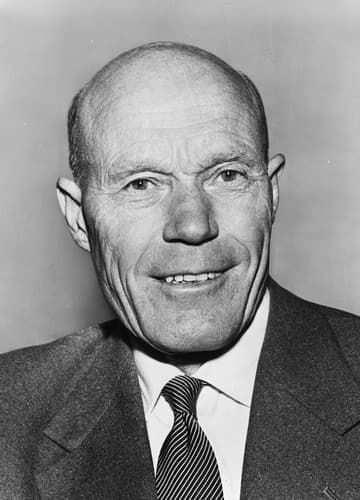
Tarjei Vesaas was a Norwegian author known for his contributions to fiction in the 20th century. His notable work, The Ice Palace, explores themes of isolation and the human experience. Vesaas's writing often reflects the landscapes and culture of Norway, earning him recognition in literary circles.
Similar books
- A High Wind in Jamaica
Richard Hughes
3.8 (9k) average on GoodreadsChildren'sExplores the complex, often unsettling inner lives of children in unusual circumstances.
- The Road
Cormac McCarthy
4.0 (716k) average on GoodreadsScience FictionFeatures sparse, poetic prose and focuses on profound human connection amidst a stark, unforgiving landscape.
- Stoner
John Williams
4.3 (103k) average on GoodreadsLiterary FictionKnown for its quiet, introspective style and deep dive into the inner life of a seemingly ordinary individual.
- Lord of the Flies
William Golding
3.7 (2.3M) average on GoodreadsYoung AdultWhile both explore darker aspects of childhood and the breakdown of order, Vesaas's novel focuses on internal psychological struggle and grief, whereas Golding's delves into primal savagery and societal collapse among children. 'The Ice Palace' is more introspective and less overtly violent.
- The Summer Book
Tove Jansson
4.1 (21k) average on GoodreadsLiterary FictionBoth novels share a quiet introspection and a strong connection to nature in their exploration of human experience. However, Vesaas's tone is significantly more melancholic and focused on profound loss and isolation, while Jansson's is often more whimsical, warm, and centered on intergenerational relationships and the simple joys of life.
- The Old Man and the Sea
Ernest Hemingway
3.8 (831k) average on GoodreadsLiterary FictionA Cuban fisherman's long struggle with a giant marlin becomes a story of endurance and dignity, now retold for young adults with illustrations, phonetic guides, and writing prompts in Traditional Chinese.






Enjoyed the summary?
A summary gives you the shape of the book. The book itself has the detail, the examples and the voice.
Find The Ice Palace on AmazonAs an Amazon Associate, BookBrief earns from qualifying purchases. How we're funded