

Core Idea
- Difficulty
- Medium
- Read it if
- You are fascinated by the human brain's capacity for adaptation, sensory perception, and the intersection of biology, culture, and unique neurological conditions. Ideal for those interested in medical anthropology, neurology, and the subjective experience of reality.
- Skip it if
- You prefer practical self-help or business books, or if you are not interested in detailed scientific and anthropological explorations of specific medical conditions and isolated cultures.
Key Takeaways from The Island of the Colorblind
A World Without Color
Total achromatopsia reveals the profound impact of color on perception and cognition.
Sacks's trip to Pingelap and Pohnpei clearly shows the reality of total achromatopsia, a rare genetic condition causing complete color blindness. For the islanders, their world is in shades of grey, black, and white. This is not just a visual problem; it changes their connection to the environment, art, and even memory. They develop stronger senses of smell, hearing, and night vision, adapting to their monochromatic life. This shows that our perception of color is not just an aesthetic luxury but a key part of how we categorize, understand, and move through the world. It offers a unique way to appreciate the richness of typical human vision.
“To be deprived of color is to be deprived of something fundamental to human experience, to lose a dimension of reality itself.”
In the book: The detailed accounts of the Pingelapese and Pohnpeian achromatopes, particularly their descriptions of seeing the world in 'shades of grey' and their superior night vision, are central. Sacks describes how they learn to distinguish objects by texture and luminance differences rather than hue.
Try this: Reflect on how much information we glean from color daily. Try spending a day consciously ignoring color cues, focusing instead on shape, texture, and luminance to understand the world differently. This can enhance appreciation for the complexity of typical vision.
Related ideas: achromatopsia, color-perception, sensory-adaptation
The Price of Genetic Isolation
Island communities, while culturally rich, can amplify rare genetic conditions.
The high rate of achromatopsia on Pingelap is a clear example of a founder effect combined with genetic isolation. After a devastating typhoon in 1775, a small group of survivors, one of whom carried the achromatopsia gene, repopulated the island. Over generations of intermarriage within this closed community, the recessive gene became much more common, leading to a higher incidence of the condition than in the global population. This shows how geographical and social isolation, while preserving unique cultures, can also create genetic bottlenecks that have serious health effects for future generations. It highlights the delicate balance of evolution and population genetics.
“Genetic drift and founder effects, intensified by isolation, can make a rare condition common.”
In the book: Sacks details the history of Pingelap, tracing the lineage back to the typhoon of 1775 and the subsequent genetic bottleneck. He discusses the specific recessive gene responsible for achromatopsia (CNGB3 gene mutation) and its high frequency among the islanders.
Try this: Understand the importance of genetic diversity within populations and the implications of historical events on current health profiles. This can inform discussions around genetic counseling and the benefits of diverse gene pools for long-term population health.
Related ideas: founder-effect, genetic-isolation, population-genetics
Sensory Compensation and Adaptation
When one sense diminishes, others often sharpen to compensate.
The achromatopes of Pingelap show remarkable sensory compensation. Without color vision, they develop sharp acuity in their other senses, especially night vision, hearing, and smell. They can navigate their environment confidently in near-total darkness, notice subtle sounds others miss, and identify plants and animals by scent alone. This is not just about 'trying harder'; it suggests a neurological change where parts of the brain typically used for color processing are repurposed or given more weight to enhance other sensory inputs. It shows the brain's plasticity and its ability to adapt and improve function under difficult conditions, revealing how dynamic and connected our sensory systems are.
“The brain, deprived of one modality, often reorganizes itself to enhance others, demonstrating a remarkable plasticity.”
In the book: Sacks recounts numerous anecdotes of the islanders' superior night vision, their ability to identify fish by their sound in the water, and their acute sense of smell for plants. He cites neurological theories about cross-modal plasticity and brain reorganization.
Try this: If one sense is impaired (temporarily or permanently), consciously try to engage and rely more on your other senses. For example, blindfold yourself for a short period and try to navigate a familiar room, focusing on sound, touch, and smell.
Related ideas: sensory-adaptation, neuroplasticity, cross-modal-perception
The Coconut Crab's Enigma
The unique ecosystem of an isolated island fosters unusual life forms and behaviors.
Beyond human achromatopsia, Sacks looks at the islands' unique natural history, focusing on the coconut crab (Birgus latro). These large land crabs, which can climb trees and crack coconuts with their strong claws, are an interesting example of insular gigantism and adaptation. Their nocturnal habits and reliance on smell are especially interesting given the context of achromatopsia on the islands. Sacks explores how specific environmental pressures and a lack of predators in isolated island ecosystems allow certain species to evolve in remarkable ways. This shows how distinct ecological niches can drive extreme evolutionary paths, creating biodiversity found nowhere else.
“On these islands, evolution has taken its own peculiar turns, creating creatures exquisitely adapted to their insular worlds.”
In the book: Sacks provides detailed descriptions of the coconut crab's behavior, size, diet, and its nocturnal nature. He discusses its evolutionary adaptations to an island environment, including its unique lung-like organs for breathing air.
Try this: When visiting unique ecosystems, pay close attention to the specific adaptations of local flora and fauna. Consider how the environment (e.g., isolation, limited resources, specific predators) might have shaped their evolution.
Related ideas: insular-gigantism, evolutionary-adaptation, island-ecology
Navigating a World Without Light
The blind and colorblind often develop exceptional navigational skills through other senses.
Sacks observes that many achromatopes, despite their lack of color vision and often photophobia (extreme light sensitivity), show impressive navigational skills, especially at night. They rely heavily on sounds, the feel of the ground, subtle air currents, and an internal spatial map built from years of experience. This mirrors the sophisticated navigational skills often seen in blind individuals. It shows that 'seeing' the world is not just a visual thing but a complex combination of all sensory inputs, processed and represented internally. Their ability to move confidently in environments that would confuse a sighted person highlights the brain's capacity to build rich, multi-sensory representations of space.
“For those without sight or color, the world is mapped by sound, scent, and memory, creating an inner geography of astonishing detail.”
In the book: Sacks recounts stories of achromatopes navigating the complex jungle paths and coral reefs at night with ease, often guiding sighted individuals. He discusses their use of echoes, the feel of the terrain, and their highly developed spatial memory.
Try this: Practice navigating familiar spaces with your eyes closed or at night without artificial light. Focus on using sound, touch, and memory to build a stronger internal map of your surroundings. This can improve spatial awareness and memory.
Related ideas: spatial-navigation, multi-sensory-integration, cognitive-mapping
The Aesthetics of Achromatopsia
Even without color, art and beauty find unique expressions.
An interesting part of Sacks's exploration is how achromatopes perceive and create beauty. While their world lacks color, they develop a deep appreciation for form, texture, light, and shadow. Their art, if any, might focus on intricate patterns, contrasts, and the nuances of light and dark. Sacks describes their heightened sensitivity to the brightness of objects and the subtle shades of grey. This challenges the common idea that color is essential for aesthetic experience, showing that the human capacity for appreciating beauty is more flexible and adaptable than often thought. It makes us consider the many ways we get pleasure and meaning from our sensory world, even when certain senses are missing.
“Beauty is not solely dependent on color; it can reside in form, texture, light, and the subtle interplay of luminance.”
In the book: Sacks notes the achromatopes' meticulous attention to detail, form, and texture in their observations of nature. He discusses their unique visual world, highlighting their appreciation for light and shadow rather than color.
Try this: Engage in an art form (drawing, photography, sculpture) using only black, white, and shades of grey. Focus on composition, texture, light, and shadow to create a compelling piece. This can broaden your understanding of visual aesthetics.
Related ideas: aesthetics, art-perception, monochromatic-vision
The Gift of the Night
Achromatopsia, while a deficit, can also confer unique advantages.
While achromatopsia presents challenges, especially in bright daylight where severe photophobia can be debilitating, it also provides a unique advantage: superior night vision. The rods in their retinas, which are responsible for low-light vision, are highly developed and uninhibited by cone activity. This allows the Pingelapese achromatopes to navigate, fish, and hunt with skill in near-total darkness, a valuable skill in their traditional island life. Sacks points out that 'disability' often depends on context; what is a disadvantage in a modern, brightly lit world can be a significant asset in a more natural or traditional setting. This challenges simple views of genetic conditions and encourages a nuanced understanding of human variation.
“What appears a disability in one context may become an advantage in another.”
In the book: The islanders' ability to fish at night, often catching more than their sighted counterparts, is a key example. Sacks explains the physiological basis of their enhanced rod function and the absence of cone interference.
Try this: Consider how different environments or situations might alter the perceived 'advantage' or 'disadvantage' of certain traits. Challenge your own assumptions about what constitutes a 'normal' or 'ideal' human characteristic.
Related ideas: night-vision, adaptive-traits, disability-studies
The Anthropologist's Empathy
Sacks exemplifies profound empathy and respect in his scientific explorations.
Throughout the book, Sacks's approach shows deep empathy and respect for the people he studies. He does not just present clinical case studies; he tries to understand the lived experience of achromatopsia from the islanders' perspective. He engages with their culture, their stories, and their unique adaptations, never reducing them to their condition. This humanistic approach, a hallmark of his work, turns scientific inquiry into a deep exploration of human existence. It reminds us that behind every rare condition or neurological anomaly is a unique individual with a rich inner life, deserving of dignity and understanding, emphasizing the ethical imperative in medical and scientific research.
“To understand another's world, one must not only observe but also attempt, however imperfectly, to enter into their experience.”
In the book: Sacks's personal interactions with the islanders, his attempts to learn their language, his participation in their daily life, and his detailed descriptions of their individual personalities and coping mechanisms are central to this theme.
Try this: When encountering individuals with different abilities or conditions, strive to understand their perspective and lived experience rather than imposing your own assumptions. Practice active listening and seek to learn from their unique adaptations.
Related ideas: medical-humanities, empathy, patient-narratives
Beyond the Five Senses
Our perception of reality is far more complex and malleable than commonly assumed.
Sacks's journey to the 'Island of the Colorblind' is a deep reflection on the nature of perception itself. By placing us in a world without color, he makes us confront the arbitrary yet fundamental role our senses play in building our reality. The achromatopes' world is not 'lesser' but simply different, showing that there is not one objective reality, but multiple realities shaped by our sensory apparatus and neurological processing. This pushes us to question our assumptions about 'normal' perception and appreciate the vast range of human experience. It suggests that our understanding of the world is always a subjective construction, filtered and interpreted by our unique biological and cognitive frameworks.
“The world as we know it is but one of countless possible worlds, each shaped by the unique constitution of our senses and our minds.”
In the book: The entire narrative serves as evidence, particularly the stark contrast between the islanders' monochromatic world and a sighted person's colorful experience. Sacks often reflects philosophically on the implications for understanding reality.
Try this: Challenge your own sensory biases. Try to imagine how an animal (e.g., a bat, a bee) perceives the world. This exercise can expand your understanding of diverse forms of perception and the subjective nature of reality.
Related ideas: perception, reality-construction, sensory-philosophy
The Resilience of Culture
Despite unique challenges, communities maintain distinct cultural identities.
Despite the high rate of achromatopsia and its challenges, the Pingelapese and Pohnpeian communities maintain rich cultures. Their traditional fishing practices, social structures, and oral histories continue, often adapting to accommodate the unique abilities and needs of their achromatopic members. For instance, their superior night vision might be used for nocturnal activities important to the community. Sacks shows how culture is not fixed but changes and incorporates new realities, including genetic conditions, into its fabric. This demonstrates the strength of human communities to maintain identity and unity even when facing extraordinary circumstances, showing the powerful connection between biology, environment, and cultural practices.
“Even in the face of profound biological difference, culture persists, adapts, and defines identity.”
In the book: Sacks describes the islanders' continued adherence to traditional fishing and farming methods, their social organization, and the way achromatopes are integrated into community life, often taking on roles where their abilities are an asset.
Try this: When studying or interacting with different cultures, look beyond surface-level differences to understand the underlying values, adaptations, and resilience that define them. Appreciate how communities creatively respond to their unique circumstances.
Related ideas: cultural-adaptation, community-resilience, ethnography
The Island of the Colorblind Quotes
“One cannot go on indefinitely being an island. What makes us human is that we are part of the continent, part of the main.”
“The most fundamental of all human needs is the need for meaning. And the only way to find meaning is to create it.”
“To be ourselves we must have a sense of our own past, our own history, and to have a good sense of our own history we must have a good sense of our own present.”
“The human brain is a most extraordinary, indeed almost magical organ. It is a world of its own, a cosmos in miniature.”
“We are all patients, or potential patients, and the line between health and disease is often blurred.”
“The capacity to wonder, to be amazed, is a precious gift, and one that we should never lose.”
“Every life is a story, and every story is a life, full of its own unique joys and sorrows, triumphs and tragedies.”
“There are no 'normal' people, only people with different constitutions, different gifts, different challenges.”
“The islanders had developed an extraordinary adaptation, a way of living with and even thriving with their achromatopsia.”
“To understand a disease, one must understand the person who has it, not just the disease itself.”
“The world of the achromatopes, though colorless, was not without its own richness and beauty, perceived through other senses.”
“We are all, in a sense, on an island, isolated by our unique perceptions and experiences, yet yearning for connection.”
“The quest for knowledge is an endless journey, and every discovery opens up new vistas, new questions.”
Quiz
10 questions on the main ideas. Each answer comes with a short explanation.
Question 1
Which specific islands are the primary focus of Oliver Sacks's investigation into colorblindness in 'The Island of the Colorblind'?
- Fiji and Tonga
- Pingelap and Pohnpei
- Samoa and Vanuatu
- Guam and Saipan
Show answer
B. Pingelap and Pohnpei Sacks primarily investigates the islands of Pingelap and Pohnpei, where a high incidence of achromatopsia is found, particularly on Pingelap.
Question 2
What is the specific medical term for the complete colorblindness experienced by many inhabitants of Pingelap, as described by Sacks?
- Deuteranomaly
- Protanopia
- Achromatopsia
- Tritanopia
Show answer
C. Achromatopsia Achromatopsia is the medical term for complete colorblindness, a condition characterized by the absence of cone cells in the retina, leading to a world perceived in shades of grey and severe photophobia.
Question 3
Besides colorblindness, what other significant health issue does Sacks investigate on Guam in the second part of the book?
- A novel form of scurvy
- Lytico-bodig disease (a neurological disorder)
- An endemic fungal infection
- A rare genetic blood disorder
Show answer
B. Lytico-bodig disease (a neurological disorder) The second part of the book shifts focus to Guam and the Chamorro people, investigating lytico-bodig disease, a devastating neurodegenerative disorder with similarities to ALS, Parkinson's, and Alzheimer's.
Question 4
What is the historical event that is believed to have led to the high prevalence of achromatopsia on Pingelap?
- A volcanic eruption that isolated the population
- A severe typhoon in the late 18th century that decimated the population, creating a genetic bottleneck
- A period of colonial warfare that reduced the gene pool
- Mass migration to the island by a specific ethnic group
Show answer
B. A severe typhoon in the late 18th century that decimated the population, creating a genetic bottleneck A severe typhoon in 1775, which left only about 20 survivors, including a chief who was a carrier of the achromatopsia gene, created a genetic bottleneck that amplified the condition in subsequent generations.
Question 5
How do some achromatopes on Pingelap demonstrate a unique adaptation to their condition, particularly in fishing?
- They use advanced sonar technology developed locally.
- They rely on acute night vision and sensitivity to subtle light variations to spot fish that are invisible to color-sighted people.
- They employ a specific type of bioluminescent bait.
- They use specialized nets designed to capture fish without visual cues.
Show answer
B. They rely on acute night vision and sensitivity to subtle light variations to spot fish that are invisible to color-sighted people. Sacks describes how many achromatopes, especially the elders, possess extraordinary night vision and an ability to discern minute variations in light and shadow, allowing them to excel at night fishing where color vision is irrelevant.
Question 6
What is Sacks's broader philosophical argument regarding the achromatopes' experience of the world?
- Their condition is purely a deficit with no compensatory advantages.
- Their unique sensory world, while different, offers its own richness and adaptive strengths, challenging conventional notions of 'normal' vision.
- Genetic engineering is the only viable solution to improve their quality of life.
- Their condition is a direct result of environmental factors rather than genetics.
Show answer
B. Their unique sensory world, while different, offers its own richness and adaptive strengths, challenging conventional notions of 'normal' vision. Sacks emphasizes that while achromatopsia presents challenges, the Pingelapese have developed unique perceptual and cultural adaptations, suggesting that their way of seeing is not merely a deficit but a different, sometimes advantageous, mode of experiencing the world.
Question 7
Sacks discusses the role of cycad seeds in the diet of the Chamorro people on Guam. How are these seeds linked to lytico-bodig disease?
- They are a primary source of a protective neurotoxin.
- They contain a neurotoxin (BMAA) that, despite traditional preparation methods, accumulates in the food chain and is implicated in the disease.
- They are a crucial nutrient that, when deficient, causes the disease.
- They act as a potent antidote to the disease's progression.
Show answer
B. They contain a neurotoxin (BMAA) that, despite traditional preparation methods, accumulates in the food chain and is implicated in the disease. Sacks explores the hypothesis that the neurotoxin BMAA, found in cycad seeds (a traditional food source, especially after being eaten by fruit bats which were then consumed by humans), may play a significant role in the etiology of lytico-bodig disease, even after extensive traditional processing.
Question 8
What is the significance of the term 'mankono' in the context of Pingelapese achromatopsia?
- It refers to a traditional healing ceremony for the colorblind.
- It is the Pingelapese word for 'colorblind person' or 'colorblindness,' indicating a recognized and integrated aspect of their community.
- It describes a specific type of fish only visible to achromatopes.
- It is the name of the typhoon that caused the genetic bottleneck.
Show answer
B. It is the Pingelapese word for 'colorblind person' or 'colorblindness,' indicating a recognized and integrated aspect of their community. 'Mankono' is the Pingelapese term for achromatopsia, highlighting how the condition is culturally recognized and not necessarily seen as a purely negative affliction, but rather a distinct way of being within their society.
Question 9
Sacks often draws parallels between the isolated populations he studies and 'natural experiments.' What is the primary implication of this approach?
- It suggests that these populations are inferior subjects for medical study.
- It allows for the study of rare genetic conditions and their complex interactions with culture and environment in a way that controlled lab experiments cannot.
- It implies that these communities are deliberately altering their genetics.
- It is a metaphor for the unpredictability of human biology.
Show answer
B. It allows for the study of rare genetic conditions and their complex interactions with culture and environment in a way that controlled lab experiments cannot. Sacks views these isolated communities as 'natural experiments' because their unique genetic profiles and environmental circumstances allow for the observation of conditions like achromatopsia and lytico-bodig in a concentrated form, revealing insights into human adaptation and disease that might be obscured in larger, more diverse populations.
Question 10
What is a recurring theme in Sacks's work, prominently featured in 'The Island of the Colorblind,' regarding the relationship between affliction and identity?
- Afflictions always diminish an individual's sense of self and capabilities.
- While challenging, afflictions can sometimes lead to unique adaptations, heightened senses, or a distinct way of perceiving the world, becoming an integral part of one's identity and culture.
- The only way to cope with severe afflictions is through complete medical intervention.
- Identity is entirely separate from any physical or neurological condition.
Show answer
B. While challenging, afflictions can sometimes lead to unique adaptations, heightened senses, or a distinct way of perceiving the world, becoming an integral part of one's identity and culture. Sacks consistently explores how neurological conditions, while presenting challenges, often lead to profound adaptations and can become deeply interwoven with an individual's identity, perceptions, and even cultural practices, as seen with the achromatopes' unique visual world and the cultural integration of 'mankono'.
The Island of the Colorblind FAQ
What is 'The Island of the Colorblind' about?
Oliver Sacks's 'The Island of the Colorblind' chronicles his journey to Pingelap and Pohnpei, two remote Pacific islands where a significant portion of the population suffers from a rare form of complete colorblindness (achromatopsia), often accompanied by severe nearsightedness and nystagmus. Sacks explores the scientific and human aspects of living without color perception and other unique neurological conditions.
Does achromatopsia described in the book affect vision beyond color perception?
Yes, the form of achromatopsia prevalent on Pingelap and Pohnpei, known as rod monochromacy, significantly impacts vision beyond just color perception. Individuals often experience severe photophobia (light sensitivity), nystagmus (involuntary eye movements), and very poor visual acuity, making it difficult to see clearly even in bright light.
What is lytico-bodig disease, and how does it relate to the book?
Lytico-bodig is a devastating neurodegenerative disease, similar to ALS, Parkinson's, and Alzheimer's, that Sacks also investigates during his travels to Guam. The book explores the potential environmental and dietary factors contributing to this mysterious illness, particularly the consumption of cycad seeds, and its impact on the Chamorro people.
How do the islanders with achromatopsia adapt to their unique visual world?
The book details various adaptations, including remarkable night vision, as their rod cells are highly functional. Islanders often develop acute sensitivity to shades of gray, textures, and subtle movements, and their society has often adapted to accommodate their visual differences, sometimes even finding advantages in certain tasks.
How is 'The Island of the Colorblind' different from Sacks's other works like 'The Man Who Mistook His Wife for a Hat'?
While both books explore neurological conditions through case studies, 'The Island of the Colorblind' has a stronger ethnographic and travelogue element, focusing on entire communities and their cultural adaptations to widespread conditions. It delves into the genetics and historical context of these conditions on isolated islands, giving it a broader scientific and anthropological scope than the more individually focused case studies in his earlier works.
What scientific insights does the book offer about genetics and isolated populations?
'The Island of the Colorblind' provides a compelling real-world example of the founder effect and genetic drift in isolated populations. The high prevalence of achromatopsia on Pingelap is traced back to a bottleneck event from a typhoon in the 18th century, demonstrating how rare genetic traits can become common in a small, closed gene pool.
Does the book offer practical advice for people living with achromatopsia?
While not a self-help guide, the book offers profound insights into the lived experience of achromatopsia, showcasing various coping mechanisms and societal adaptations. It implicitly provides a deeper understanding that could inform support strategies, but its primary aim is observational and explanatory rather than prescriptive.
What role does cultural context play in understanding these conditions?
Sacks emphasizes how cultural context profoundly shapes the experience and perception of these conditions. For example, on Pingelap, achromatopsia is not seen as a disability but rather a natural variation, with some individuals even revered for their exceptional night vision, demonstrating how societal attitudes can influence the impact of a condition.
Is 'The Island of the Colorblind' accessible to readers without a science background?
Yes, Oliver Sacks is renowned for his ability to make complex neurological and scientific concepts engaging and understandable for a general audience. His compassionate storytelling and vivid descriptions ensure that the book is accessible and fascinating even for readers without a specialized science background.
About the author
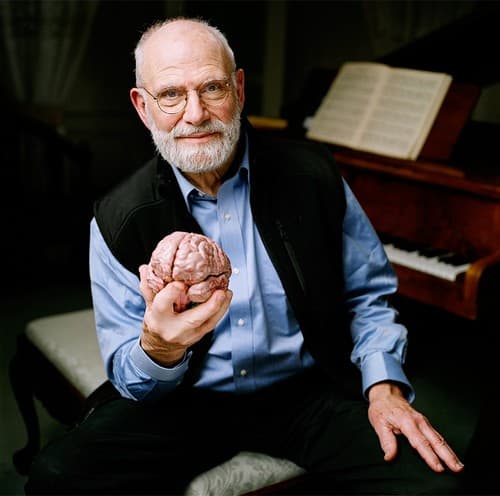
Oliver Sacks was a British neurologist and author known for his explorations of the human brain and its complexities. His notable works include "The Man Who Mistook His Wife for a Hat and Other Clinical Tales," "Awakenings," and "Uncle Tungsten," which blend medical case studies with personal narrative. Sacks's writing often reflects on the intersection of neurology and human experience.
Similar books
- The Perks of Being a Wallflower
Stephen Chbosky
4.2 (1.3M) average on GoodreadsPsychologyThrough letters, a shy high school freshman learns to navigate first love, trauma, and self-discovery, stepping off the sidelines and into life.
- Eleanor Oliphant Is Completely Fine
Gail Honeyman
4.3 (708k) average on GoodreadsLiterary FictionA lonely woman's structured life changes when an IT guy and an elderly man help her learn to open her heart.
- One Flew Over the Cuckoo's Nest
Ken Kesey
4.2 (631k) average on GoodreadsPsychologyIn a mind-bending asylum, the boisterous Randle McMurphy wages a defiant war against the tyrannical Nurse Ratched, inspiring his fellow inmates, including the seemingly catatonic Chief Bromden, to reclaim their lost humanity.
- The Bell Jar
Sylvia Plath
4.0 (591k) average on GoodreadsPsychologyIn the suffocating grip of 1950s expectations, a brilliant young woman's descent into mental illness is painted with such vivid, internal clarity that her 'insanity' feels terrifyingly rational and inevitable.
- The Subtle Art of Not Giving a F*ck: A Counterintuitive Approach to Living a Good Life
Mark Manson
3.9 (530k) average on GoodreadsBusinessEmbrace your flaws and stomach life's lemons, because true happiness isn't about relentless positivity, but about choosing what truly matters to give a f*ck about.
- Sapiens: A Brief History of Humankind
Yuval Noah Harari
4.4 (502k) average on GoodreadsPsychologySapiens tells the story of Homo sapiens, showing how our ability to create shared fictions helped us go from an ordinary ape to the planet's main species, changing Earth and our future.






Enjoyed the summary?
A summary gives you the shape of the book. The book itself has the detail, the examples and the voice.
Find The Island of the Colorblind on AmazonAs an Amazon Associate, BookBrief earns from qualifying purchases. How we're funded