
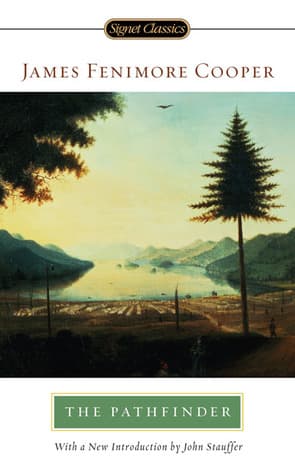
Synopsis
Covers the whole plot, including the ending.
- Difficulty
- Medium
- Pacing
- Moderate
- Mood
- Epic, Adventurous, Reflective, Moralistic
- Read it if
- You enjoy classic historical adventure, wilderness settings, and explorations of honor and duty.
- Skip it if
- You prefer fast-paced plots, modern prose, or less didactic storytelling.
The Pathfinder Plot Summary
Covers the whole plot, including the ending.
The Rendezvous in the Wilderness
The story begins in the wilderness of upstate New York during the French and Indian War. Jasper Western, a young, skilled Great Lakes sailor, guides a small party toward Fort Oswego. His companions are Mabel Dunham, a young woman traveling to meet her father, Sergeant Dunham; Arrowhead, a Tuscarora warrior; and his wife, Dew-of-June. Their journey is dangerous, with constant threats of French and Indian attacks. Jasper shows his knowledge of the forest and courage, guiding them through the terrain, though they see signs of hostile activity.
Encountering the Pathfinder
As the party continues, Natty Bumppo, the Pathfinder, and his Mohican friend, Chingachgook, join them. Natty is a frontiersman known for his tracking skills and understanding of the wilderness. His presence brings security to Mabel and her companions, as he can read the forest and anticipate danger. The group's journey to Oswego continues, with Natty and Chingachgook leading, their experience helping them avoid ambushes and keep Mabel and the others safe.
Arrival at Oswego and First Impressions
At Fort Oswego, Mabel Dunham reunites with her father, Sergeant Dunham. The fort is a busy military outpost, and Mabel meets various officers and soldiers, including Lieutenant Muir, a Scottish officer, and Captain Charles Cap, Mabel's eccentric naval uncle. The Pathfinder, despite his rough appearance, is impressed by Mabel's beauty and spirit. He feels drawn to her but struggles to express his feelings. Mabel sees him as a respected, older friend.
The Sergeant's Ambition for Mabel
Sergeant Dunham, a loving but practical father, worries about Mabel's future. He believes she should marry someone who can offer security. He sees potential husbands in Jasper Western, Lieutenant Muir, and even the Pathfinder, whom he respects. The sergeant encourages Mabel to consider these men, trying to guide her toward a choice he thinks best for her, which creates romantic tension among the characters.
The Mission to the French Camp
A mission is planned to investigate a suspected French and Indian camp on an island in Lake Ontario. The Pathfinder, with his tracking skills, is chosen to lead a scouting party. Jasper Western, Sergeant Dunham, Mabel, Chingachgook, and Arrowhead join this dangerous trip. The lake journey is constantly threatened by enemy patrols. The Pathfinder's leadership and sharp senses are tested as they navigate the waters and approach the enemy's likely position, showing his command of both land and water.
The Skirmish and Revelation
The scouting party is ambushed by French and hostile Indians. During the fight, Arrowhead is revealed as a traitor, working with the French. His betrayal endangers everyone, putting Mabel and Sergeant Dunham in danger. The Pathfinder, Jasper, and Chingachgook fight to protect their friends. The battle is fierce, showing the realities of frontier war and the constant threat of deception. Dew-of-June, Arrowhead's wife, dies in the chaos.
The Trial of Jasper Western
After the ambush and Arrowhead's betrayal, suspicion falls on Jasper Western. Circumstantial evidence, including his role as the original guide and past connections, is used by Lieutenant Muir and others who are jealous of Jasper or his affection for Mabel. Jasper is accused of treason and arrested. Despite the Pathfinder's defense and Mabel's belief in Jasper's innocence, military authorities are swayed by the evidence. This accusation causes distress, especially for Mabel, who feels a strong connection to Jasper.
The Pathfinder's Proposal
Believing it his duty and encouraged by Sergeant Dunham, the Pathfinder proposes marriage to Mabel. He expresses his admiration and love, noting his ability to care for her in the wilderness. However, Mabel, while respecting Natty as a friend, gently declines. Her heart belongs to Jasper Western. This moment is painful for Natty, who accepts her decision with stoicism, showing his respect for Mabel's feelings and his goodness, despite his heartbreak.
The Rescue and Vindication
The truth about Arrowhead's treachery eventually comes out, clearing Jasper Western's name. Jasper is then free to act. He leads a successful mission to rescue Sergeant Dunham and Mabel, who have again been captured by French and Indians. This heroic act confirms his innocence and establishes him as a brave and trustworthy leader. His actions during the rescue show his skill and courage, proving him worthy of Mabel's affection and everyone's respect. The Pathfinder, despite his personal feelings, helps Jasper, prioritizing Mabel's safety.
A New Beginning
With Jasper's name cleared and his bravery proven, Mabel Dunham and Jasper Western marry. Their union is happy, symbolizing a new beginning on the frontier. The Pathfinder, though saddened by Mabel's choice, accepts it with his usual grace. He realizes his place is in the wilderness, not in settled society. He says goodbye to Mabel and Jasper, returning to the forests with Chingachgook, continuing his life as a solitary hunter and scout, a true pathfinder of the American wilderness, committed to its wild beauty and freedom.
Principal Figures
Natty Bumppo (The Pathfinder)
Protagonist
A skilled frontiersman and scout, embodying the ideals of the wilderness.
Natty Bumppo is a man of the wilderness, possessing unparalleled tracking, hunting, and fighting skills. He lives by a strict moral code, valuing truth, honesty, and justice above all else. He has a deep respect for nature and the native peoples, particularly his Mohican companion, Chingachgook. Despite his rough exterior and lack of formal education, he is intelligent, observant, and profoundly philosophical. He struggles with expressing his emotions, especially his love for Mabel Dunham, and feels out of place in settled society.
Relationships: Mabel Dunham (Deep, unrequited love and paternal affection); Chingachgook (Lifelong, loyal friendship and brotherhood); Jasper Western (Friendship and respect, initially a rival for Mabel's affection); Sergeant Dunham (Mutual respect and camaraderie)
Mabel Dunham
Protagonist
A spirited and beautiful young woman, the object of affection for several men.
Mabel Dunham is introduced as a beautiful, innocent, and spirited young woman. She is intelligent, kind, and possesses a strong moral compass. Though initially somewhat naive to the dangers of the frontier, she quickly adapts, showing resilience and courage. She values sincerity and honor, and her heart is drawn to those who exhibit true bravery and goodness. She is loyal to her father but ultimately makes her own choices regarding love and her future, navigating the complex social dynamics of the fort and the wilderness.
Relationships: Natty Bumppo (Deep respect and affection, but not romantic love); Jasper Western (Romantic love and eventual wife); Sergeant Dunham (Loving daughter-father relationship); Captain Charles Cap (Niece-uncle relationship)
Jasper Western
Supporting/Love Interest
A courageous and skilled Great Lakes sailor, falsely accused but ultimately heroic.
Jasper Western is a young, brave, and highly skilled sailor on the Great Lakes. He is known for his integrity, cool head under pressure, and exceptional abilities in navigating the waters. He is deeply in love with Mabel Dunham and proves his worth through his actions rather than words. Despite being falsely accused of treason, he maintains his dignity and courage, eventually vindicating himself through heroic deeds. He represents a different kind of frontiersman than Natty, one tied to the burgeoning naval power on the lakes.
Relationships: Mabel Dunham (Romantic love and eventual husband); Natty Bumppo (Friendship and respect, initially a rival for Mabel's affection); Sergeant Dunham (Respected suitor for his daughter)
Sergeant Dunham
Supporting
Mabel's pragmatic father, a veteran soldier concerned for her future.
Sergeant Dunham is a seasoned and respected soldier, a veteran of frontier warfare. He is a loving and protective father to Mabel, whose primary concern is her security and happiness. He is pragmatic and believes in finding a suitable husband who can provide for her. He respects the Pathfinder immensely for his skills and character, but also recognizes the value of men like Jasper and Lieutenant Muir. His actions are always driven by what he perceives as Mabel's best interest, sometimes leading to misunderstandings with her.
Relationships: Mabel Dunham (Loving father-daughter relationship); Natty Bumppo (Mutual respect and camaraderie); Jasper Western (Respects his abilities, later accepts him as a son-in-law)
Chingachgook
Supporting
A wise and loyal Mohican chief, Natty's lifelong companion.
Chingachgook is a noble and wise Mohican chief, the last of his tribe, and Natty Bumppo's lifelong companion and blood brother. He is a skilled warrior, tracker, and hunter, embodying the dignity and resilience of his people. He rarely speaks but his actions and presence convey deep loyalty, courage, and understanding. He represents the fading era of untouched wilderness and native culture, a poignant figure who shares Natty's connection to the natural world and his moral code.
Relationships: Natty Bumppo (Lifelong, loyal friendship and brotherhood)
Captain Charles Cap
Supporting
Mabel's eccentric naval uncle, whose limited understanding of the wilderness provides comic relief.
Captain Charles Cap is Mabel's uncle and a career naval officer. He is a good-natured but somewhat pompous and opinionated man, whose worldview is strictly confined to the sea. He has a limited understanding of the wilderness and often makes comical observations or pronouncements that highlight his ignorance of frontier life. Despite his eccentricities, he cares for Mabel and attempts to provide advice, though it is often impractical for the setting. He serves as a contrast to the frontiersmen and a source of lighthearted moments.
Relationships: Mabel Dunham (Uncle-niece relationship)
Lieutenant Muir
Supporting/Antagonist
A Scottish officer, jealous of Jasper and a rival for Mabel's affection.
Lieutenant Muir is a Scottish officer stationed at Fort Oswego. He is somewhat arrogant, ambitious, and calculating. He is drawn to Mabel Dunham, but his affections seem more rooted in her beauty and potential status than genuine love. He is jealous of Jasper Western's skills and popularity, and he plays a role in fostering suspicion against Jasper, making him a minor antagonist in the story. His character highlights the class distinctions and rivalries within the military hierarchy.
Relationships: Mabel Dunham (Unsuccessful suitor); Jasper Western (Rival and accuser)
Arrowhead
Antagonist
A treacherous Tuscarora warrior who betrays the English.
Arrowhead is a Tuscarora warrior who initially appears as a guide for Mabel's party. However, his loyalty is ultimately revealed to be false. He is a cunning and treacherous individual, secretly aligned with the French and their Indian allies. His betrayal leads to a dangerous ambush and poses a significant threat to the protagonists. He represents the darker side of frontier conflict, where deception and shifting allegiances were common and deadly.
Relationships: Dew-of-June (Husband-wife relationship); Mabel Dunham (Initial guide, later betrayer)
Dew-of-June
Mentioned
Arrowhead's wife, a gentle Indian woman caught in the conflict.
Dew-of-June is Arrowhead's wife, a quiet and gentle Indian woman. She initially travels with Mabel and her party but is largely a passive figure. She is loyal to her husband, despite his questionable actions, and is ultimately a tragic figure, caught in the crossfire of the conflict and her husband's betrayal. Her death during the ambush serves as a stark reminder of the brutal realities of the frontier.
Relationships: Arrowhead (Wife)
Themes & Insights
The Conflict Between Wilderness and Civilization
This theme is central to the novel, shown most clearly by Natty Bumppo. Natty represents the wilderness, with his understanding of nature, his moral code from natural law, and his unease with society's rules. In contrast, characters like Captain Cap represent the rigid rules of civilization. Mabel Dunham stands between these two worlds. Fort Oswego, with its military hierarchy, contrasts with the freedom and danger of the surrounding forests and lakes, showing the tension between these ways of life.
“The earth is the Lord’s, and the fullness thereof; but the wilderness is man’s, to be improved and tilled by the sweat of his brow, and not to be left a waste and a desert, for the beasts of the field and the wild savage to roam over.”
Unrequited Love and Selfless Sacrifice
The theme of unrequited love is explored through Natty Bumppo's affection for Mabel Dunham. Despite his love and desire to care for her, Mabel loves Jasper Western. Natty's reaction to this rejection is not bitter, but shows his noble character. He accepts her decision with dignity, putting her happiness first. His selfless actions, such as helping Jasper in the rescue after his heartbreak, show a deep capacity for love and sacrifice, highlighting his moral integrity.
“I am not the man for you, Mabel. I am a creature of the woods, and you are a child of the settlements. Our paths would never lie together.”
Honor, Integrity, and Justice
The novel explores honor and integrity, often contrasting true moral character with appearances or social status. Jasper Western's unjust accusation of treason is an example; despite the evidence, his honor and courage are revealed through his actions. The Pathfinder, with his commitment to truth and justice, is the story's moral guide, always speaking his mind and defending the innocent. Conversely, characters like Arrowhead represent betrayal, emphasizing the importance of genuine moral uprightness in a world of deception.
“There is a law in the woods, as well as in the settlements, though it may not be printed in books, or expounded by them that wear gowns.”
The Nature of Heroism
The Pathfinder shows different kinds of heroism. Natty Bumppo's heroism comes from skill, knowledge of nature, moral strength, and selflessness. His bravery is quiet but deep, shown by his ability to navigate danger and protect others. Jasper Western, on the other hand, shows a more traditional heroism, defined by daring acts, leadership in battle, and decisive action, especially in rescuing Mabel and Sergeant Dunham. The novel suggests that true heroism is not just physical strength but also character, loyalty, and willingness to sacrifice for others, whether in the wilderness or in society.
“A man is known by his acts, and not by his words.”
Plot Devices & Literary Techniques
The Love Triangle
A romantic rivalry between Natty, Jasper, and Lieutenant Muir for Mabel's affection.
The love triangle between Natty Bumppo, Jasper Western, and Lieutenant Muir, all vying for Mabel Dunham's hand, drives much of the novel's romantic tension and character development. It highlights the different qualities each man possesses and forces Mabel to confront her own desires and values. For Natty, it's a test of his ability to integrate into society and his personal desires. For Jasper, it's a motivation to prove his worth. For Lieutenant Muir, it exposes his less honorable intentions. Ultimately, it serves to clarify Mabel's affections and solidify the heroic status of her chosen suitor.
The Perilous Journey
The journey through the wilderness and across the Great Lakes, fraught with danger.
The perilous journey is a recurring plot device, beginning with Mabel's initial travel to Oswego and continuing with the various scouting missions and rescue attempts. These journeys are not merely means of transportation but are crucial for developing character, showcasing the protagonists' skills (especially Natty's and Jasper's), and creating suspense. The constant threat of ambush by French and Indian forces, the challenges of navigating the unforgiving terrain and waters, and the need for constant vigilance all serve to heighten the stakes and demonstrate the brutal realities of frontier life during wartime.
The False Accusation
Jasper Western is falsely accused of treason, creating a dramatic conflict.
The false accusation of treason against Jasper Western is a key plot device that generates significant conflict and suspense. It allows for a dramatic test of Jasper's character and the loyalty of his friends, particularly Natty and Mabel. This device highlights the dangers of circumstantial evidence and prejudice, while also providing an opportunity for Jasper to heroically clear his name. It ultimately serves to separate the true villains (Arrowhead) from the honorable characters and reinforces the themes of justice and integrity within the narrative.
The Native American Guide/Scout
Native characters like Chingachgook and Arrowhead provide crucial wilderness expertise or act as antagonists.
The inclusion of Native American characters as guides and scouts is a significant plot device. Chingachgook, as Natty's loyal companion, provides invaluable tracking and fighting skills essential for survival and navigation. He embodies a noble and wise connection to the land. Conversely, Arrowhead's role as a treacherous guide subverts this expectation, introducing an element of betrayal and danger. These characters not only offer practical assistance or opposition but also serve to highlight the complex and often brutal realities of inter-cultural relations during the French and Indian War, and the profound knowledge of the land held by its indigenous inhabitants.
The Pathfinder Quotes
“Human natur' is a fittin' name for a creatur' that is half devil and half angel.”
“The greatest enemy of truth is very often not the lie—deliberate, contrived and dishonest—but the myth—persistent, persuasive and unrealistic.”
“There is a great difference between a man's being able to do a thing, and his knowing how to do it.”
“The creatur' that is made for the woods, loves the woods, and finds his comforts in the woods.”
“It's a gift to be able to read the signs of the forest, and a greater gift to be able to act on them.”
“The best path is often the one that seems most difficult at first.”
“A man's word is his bond, especially when given in the face of danger.”
“There's a Providence that watches over the innocent, even in the heart of the wilderness.”
“The eye of the woodsman sees what the common eye overlooks.”
“It is not always by the strength of the arm that battles are won, but by the cunning of the mind.”
“The heart has reasons that reason knows not of.”
“Silence is often the best answer to a fool.”
“The frontier is a place where a man must depend on himself, and on God.”
“True courage is not the absence of fear, but the triumph over it.”
Quiz
10 questions on the plot and the characters. Each answer comes with a short explanation.
Question 1
What is the primary setting for the majority of the events in 'The Pathfinder'?
- The dense forests of Pennsylvania
- The shores and waters of Lake Ontario
- The bustling streets of colonial New York City
- A remote frontier fort in the Appalachian Mountains
Show answer
B. The shores and waters of Lake Ontario The Pathfinder is largely set on or around Lake Ontario, reflecting Cooper's own experiences and the novel's focus on naval action.
Question 2
What is the name of Natty Bumppo's adopted daughter, who is a central character in 'The Pathfinder'?
- Alice Munro
- Mabel Dunham
- Cora Munro
- Judith Hutter
Show answer
B. Mabel Dunham Mabel Dunham is the niece of Sergeant Dunham and the primary female protagonist, whose journey and relationships drive much of the plot.
Question 3
What is the specific military rank and branch of Jasper Western, one of the suitors for Mabel's hand?
- Captain of a British infantry regiment
- Sergeant in the colonial militia
- Master of a British naval schooner
- Scout for the provincial forces
Show answer
C. Master of a British naval schooner Jasper Western is known as 'Hard-Heart' and is a skilled master of a British naval schooner on Lake Ontario, crucial for the lake-based action.
Question 4
Which of the following best describes Natty Bumppo's primary internal conflict regarding Mabel Dunham?
- His struggle to teach her the ways of the wilderness
- His desire to protect her versus his realization that he is too old to be a suitable husband
- His jealousy of her affection for other men
- His uncertainty about her true identity as his adopted daughter
Show answer
B. His desire to protect her versus his realization that he is too old to be a suitable husband Natty Bumppo develops a deep affection for Mabel and initially considers marrying her, but ultimately realizes his age and wild nature make him unsuitable, leading to a poignant self-sacrifice.
Question 5
What role does the character Arrowhead play in the narrative?
- He is a loyal Huron scout allied with the British.
- He is a treacherous Tuscarora warrior who betrays the British.
- He is a friendly Oneida guide for Mabel Dunham.
- He is a Mohawk chief who mediates between tribes.
Show answer
B. He is a treacherous Tuscarora warrior who betrays the British. Arrowhead is a deceptive Tuscarora who, along with his wife Dew-of-June, acts as a guide but ultimately betrays the British party to the French and their Indian allies.
Question 6
Which of the following is a significant plot event that occurs during a storm on Lake Ontario?
- Mabel Dunham is rescued from a shipwreck by Natty Bumppo.
- Jasper Western's schooner is used to outmaneuver and defeat a French vessel.
- The British fort is attacked by French forces during a heavy downpour.
- Pathfinder is captured by the Hurons while attempting to scout in the rain.
Show answer
B. Jasper Western's schooner is used to outmaneuver and defeat a French vessel. A major naval battle takes place during a storm on Lake Ontario, where Jasper Western's skill as a sailor is crucial in defeating a French brig, showcasing the 'naval story' aspect of the novel.
Question 7
What is the primary reason Sergeant Dunham brings Mabel to the frontier?
- To serve as a nurse for wounded soldiers at the fort.
- To reunite her with her father, who is stationed there.
- To help establish a new settlement for British colonists.
- To act as a diplomatic envoy to the local Native American tribes.
Show answer
B. To reunite her with her father, who is stationed there. Mabel is brought to the frontier by her uncle, Sergeant Dunham, to be reunited with her father, who is also a sergeant in the British army at Oswego.
Question 8
How does the character of Charles Cap, the quartermaster, contribute to the novel's thematic exploration of social development?
- He represents the adaptability of the common man to the wilderness.
- His rigid adherence to naval discipline and formal manners highlights the contrast with frontier life and natural law.
- He embodies the corruption and inefficiency of the British military hierarchy.
- His mixed heritage symbolizes the blending of European and Native American cultures.
Show answer
B. His rigid adherence to naval discipline and formal manners highlights the contrast with frontier life and natural law. Charles Cap, with his unwavering commitment to naval decorum and his inability to adapt to the wilderness, serves as a foil to Natty Bumppo, emphasizing the clash between European societal structures and the natural world, a key aspect of Cooper's concern for social development.
Question 9
What specific incident leads to Pathfinder being temporarily suspected of treason?
- He is found communicating with a French spy in the forest.
- He is discovered attempting to sabotage a British supply convoy.
- He returns with the treacherous Tuscarora, Arrowhead, after a failed scouting mission, leading to misunderstandings.
- He refuses to follow a direct order from his commanding officer during a critical battle.
Show answer
C. He returns with the treacherous Tuscarora, Arrowhead, after a failed scouting mission, leading to misunderstandings. Pathfinder is briefly suspected of treason when he returns from a scouting mission with Arrowhead, who is known to be a turncoat. His association with the traitor creates suspicion among the British officers, despite his proven loyalty.
Question 10
Which of the following best encapsulates the novel's portrayal of the 'noble savage' archetype through Natty Bumppo in 'The Pathfinder'?
- His unyielding belief in Christian doctrine over Native American spirituality.
- His innate moral compass, deep respect for nature, and adherence to a personal code of honor, despite his lack of formal education.
- His violent and vengeful nature when provoked by injustices against his adopted people.
- His desire to abandon the wilderness for a more civilized life among the colonists.
Show answer
B. His innate moral compass, deep respect for nature, and adherence to a personal code of honor, despite his lack of formal education. In 'The Pathfinder,' Natty Bumppo embodies the noble savage through his profound connection to nature, his pure moral sense, his honesty, and his inherent justice, which are often contrasted with the perceived artificiality of civilized society, even as he is a white man living by Native American principles.
The Pathfinder FAQ
What is the central conflict driving the plot of 'The Pathfinder'?
The central conflict revolves around the ongoing French and Indian War, specifically the struggle for control of Lake Ontario and its strategic outposts. This larger conflict directly impacts the personal journeys and loyalties of the characters, as they navigate military operations, ambushes, and the constant threat of enemy forces.
Who is Mabel Dunham and what is her role in the story?
Mabel Dunham is the niece of Sergeant Dunham and a young, innocent woman who travels to the frontier to join her father. She becomes the object of affection for several key characters, including Jasper Western, Charles Cap, and Natty Bumppo, and her presence introduces a romantic element and a contrast to the rugged wilderness setting.
Describe the character of The Pathfinder (Natty Bumppo) in this novel.
In 'The Pathfinder,' Natty Bumppo is portrayed as a skilled scout, a master woodsman, and a man of unblemished integrity and moral purity. He is deeply connected to nature and serves as a guide and protector for the English forces, embodying the idealized frontiersman caught between civilization and the wilderness.
What is the significance of Lake Ontario as a setting in 'The Pathfinder'?
Lake Ontario is not merely a backdrop but a crucial element, serving as the primary theater of operations for naval battles and strategic maneuvers during the French and Indian War. Its vastness and unpredictable nature provide both opportunities for travel and perilous challenges for the characters, highlighting the unique maritime frontier.
What is the relationship between Natty Bumppo and Chingachgook in this novel?
Natty Bumppo and Chingachgook share a profound and enduring friendship, a bond forged through years of shared experiences in the wilderness. Chingachgook, the sagacious Delaware chief, acts as Natty's loyal companion and fellow warrior, their mutual respect and understanding transcending cultural differences.
How does the novel subtly hint at Natty Bumppo's age and past experiences, despite his vigor?
The novel subtly hints at Natty's accumulated wisdom and a certain weariness through his philosophical reflections on the changing frontier and his occasional references to past events. While still agile, his deep understanding of life's transience and his role as a 'pathfinder' for civilization suggest a long history of observation and endurance.
Are there any foreshadowing elements regarding the 'treachery' that occurs later in the story?
Yes, there are subtle hints of potential treachery, particularly through the suspicious behavior and ambiguous allegiances of certain characters like Arrowhead and his wife, Dew-of-June. Their interactions and movements often suggest a divided loyalty or a hidden agenda, setting the stage for later betrayals.
What is the implied fate or future of the native characters like Chingachgook and his son, Uncas, in the broader Leatherstocking Tales context?
While 'The Pathfinder' does not explicitly detail their ultimate fates, the broader Leatherstocking Tales saga implies the eventual decline and disappearance of the native way of life. Chingachgook's deep connection to his traditions and the wilderness foreshadows the tragic end of his people, as seen in 'The Last of the Mohicans'.
How does Mabel Dunham's character represent societal expectations for women in the 18th century?
Mabel Dunham embodies the societal expectations for women in the 18th century through her initial naivety, her emphasis on domesticity, and her ultimate desire for a protective husband. Her initial discomfort with the wilderness and her dependence on male figures reflect the limited roles and sheltered lives often prescribed for women of her era.
Analyze Natty Bumppo's internal conflict regarding his feelings for Mabel Dunham.
Natty Bumppo experiences a profound internal conflict regarding his affection for Mabel Dunham, torn between his deep love for her and his self-awareness of his own age, lack of formal education, and 'wilderness' nature. He struggles with the idea of being a suitable partner for a young, refined woman, ultimately prioritizing her happiness over his own desires.
How does the frontier environment influence the psychological states of the characters, particularly those new to it?
The frontier environment significantly impacts the psychological states of characters new to it, often inducing fear, anxiety, and a sense of vulnerability. Mabel, for instance, initially finds the wilderness overwhelming and dangerous, highlighting the psychological toll of adapting to an unfamiliar and hostile natural world.
What psychological impact does the constant threat of war have on the soldiers and civilians in the story?
The constant threat of war induces a pervasive sense of vigilance, paranoia, and a hardening of spirit among both soldiers and civilians. Characters like Sergeant Dunham are driven by duty and a grim determination, while even those less directly involved live with an underlying current of fear and uncertainty, shaping their interactions and decisions.
Is Natty Bumppo's decision to step aside for Jasper Western a sign of self-sacrifice or a pragmatic recognition of his own limitations?
Natty Bumppo's decision is arguably a blend of both self-sacrifice and pragmatic recognition. While he genuinely loves Mabel, he also realistically assesses his own age and 'wild' nature against Jasper's youth, education, and social standing, concluding that Jasper is a more suitable match for Mabel's future happiness, demonstrating profound selflessness.
How does Cooper use the character of Charles Cap to comment on the clash between land-based and sea-based military strategies?
Cooper uses Charles Cap, a former seaman, to humorously but pointedly comment on the clash between land-based and sea-based military strategies. Cap's insistence on naval tactics even in woodland settings, and his disdain for 'land-lubberly' approaches, highlights the distinct mindsets and challenges of adapting military doctrine to different environments.
To what extent does 'The Pathfinder' romanticize or realistically portray the lives of Native Americans during the French and Indian War?
While 'The Pathfinder' attempts to portray Native Americans with some dignity and skill through characters like Chingachgook, it often veers towards romanticizing their connection to nature and their 'noble savage' stereotype. However, it also acknowledges the brutal realities of intertribal conflict and their complex position amidst European colonial wars, offering a mixed portrayal.
Does the novel suggest an inevitable triumph of 'civilization' over the wilderness, or does it lament the loss of the frontier?
The novel subtly laments the inevitable loss of the pristine wilderness as 'civilization' encroaches. While acknowledging the advancements of settlement, Natty Bumppo's character and his reflections often express a deep sadness for the vanishing frontier and the displacement of its original inhabitants, highlighting a tension between progress and preservation.
How does the concept of 'natural law' versus 'man-made law' play out through Natty Bumppo's actions and philosophy?
Natty Bumppo consistently prioritizes 'natural law' – a moral code derived from God and nature – over 'man-made law.' His actions are guided by principles of justice, honesty, and respect for the wilderness, often leading him to question or disregard arbitrary human rules that he deems unjust or contrary to the greater good.
What is the significance of the trial scene for the overall themes of justice and prejudice in the book?
The trial scene is significant as it exposes themes of justice, prejudice, and the fallibility of human judgment. It highlights how appearances and circumstantial evidence can lead to wrongful accusations, particularly against those perceived as 'outsiders' like Jasper Western, underscoring the dangers of bias and the importance of true character.
About the author
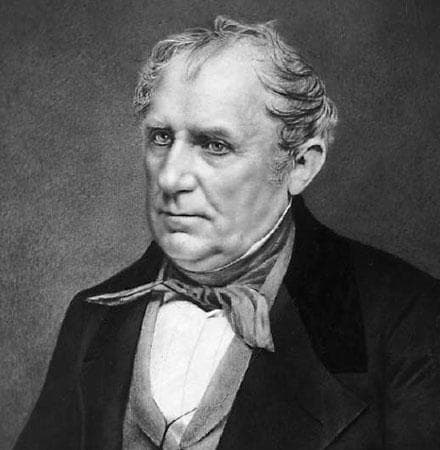
James Fenimore Cooper was an American writer of the first half of the 19th century, whose historical romances depicting colonial and indigenous characters from the 17th to the 19th centuries brought him fame and fortune. He lived much of his boyhood and the last fifteen years of life in Cooperstown, New York, which was founded by his father William Cooper on property that he owned. Cooper became a member of the Episcopal Church shortly before his death and contributed generously to it. He attended Yale University for three years, where he was a member of the Linonian Society.
Similar books
- The Last of the Mohicans
James Fenimore Cooper
3.7 (89k) average on GoodreadsHistorical FictionAnother Leatherstocking Tale featuring Natty Bumppo and similar themes of frontier life and conflict.
- Kidnapped
Robert Louis Stevenson
3.8 (58k) average on GoodreadsHistorical FictionA classic adventure novel with a focus on travel, danger, and moral dilemmas in a historical setting.
- Ivanhoe
Walter Scott
3.8 (87k) average on GoodreadsHistorical FictionA foundational historical novel with grand adventures, chivalry, and a strong sense of period.
- To Kill a Mockingbird
Harper Lee
4.3 (4.5M) average on GoodreadsHistorical FictionIn the 1930s Jim Crow South, Harper Lee writes about racial injustice, moral growth, and the quiet courage of a lawyer father, Atticus Finch, as seen through his young daughter's eyes.
- The Great Gatsby
F. Scott Fitzgerald
3.9 (3.8M) average on GoodreadsHistorical FictionIn the opulent Roaring Twenties, a mysterious millionaire's lavish parties hide his desperate, tragic pursuit of a lost love, exposing the emptiness within the American Dream.
- Pride and Prejudice
Jane Austen
4.3 (3M) average on GoodreadsHistorical FictionIn a society focused on status and money, Elizabeth Bennet navigates love and pride, challenging Mr. Darcy and social expectations to find true affection.



Enjoyed the summary?
A summary gives you the shape of the book. The book itself has the detail, the examples and the voice.
Find The Pathfinder on AmazonAs an Amazon Associate, BookBrief earns from qualifying purchases. How we're funded