
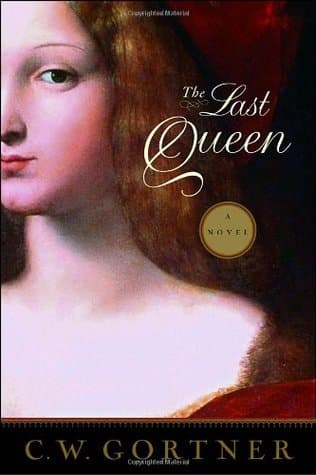
Synopsis
Covers the whole plot, including the ending.
- Difficulty
- Medium
- Pacing
- Moderate
- Mood
- Dramatic, Historical, Romantic, Tragic, Resilient
- Read it if
- You enjoy historical fiction about powerful, often maligned, female figures and the political intrigues of European royalty, especially the Spanish and Habsburg courts.
- Skip it if
- You prefer fast-paced thrillers or are not interested in detailed historical accounts of royal succession and political maneuvering.
The Last Queen Plot Summary
Covers the whole plot, including the ending.
A Princess in Castile
Born the third child of Queen Isabel and King Ferdinand of Spain, Juana grows up in a politically charged world. She watches her parents' campaign to unite Spain, ending with the fall of Granada and the expulsion of Jews and Moors. These events influence her deeply, giving her a sense of duty but also a critical view of power. She sees Christopher Columbus return and understands the implications of the New World. Despite her royal birth, Juana is often overshadowed by her older siblings, especially Isabel. She struggles with strict court life, wanting intellectual pursuits and real connection more than political games. Her parents, especially Isabel, are stern, stressing piety and obedience above all, preparing Juana for a strategic marriage.
A Strategic Betrothal and Journey to Flanders
As part of her parents' plan to secure Spain's place in Europe, Juana is betrothed to Philip the Handsome, Archduke of Flanders, heir to the vast Habsburg Empire. This marriage is a key political alliance, like her younger sister Catherine of Aragon's betrothal to Arthur, Prince of Wales. Juana, though initially worried about leaving home and marrying a stranger, accepts her duty. Her journey to Flanders is long and difficult, a big cultural change from the strict Spanish court to the more liberal, opulent, and often wild court of the Low Countries. She arrives with a small group, including her trusted lady-in-waiting, Inés, feeling the weight of her family's expectations and her uncertain future.
Love and Passion in Flanders
When Juana meets Philip, his charm, good looks, and lively personality immediately captivate her, a sharp contrast to her own reserved nature. Their initial connection quickly turns into a passionate and intense love affair, going against the expectations of a purely political marriage. Juana falls deeply in love, experiencing a physical and emotional closeness she never expected. They have several children, and for a time, Juana finds happiness in her new life in Flanders, away from the rigid Spanish court. However, Philip's unfaithfulness and love for hunting and parties often upset Juana, leading to fierce arguments and periods of intense jealousy, hinting at future conflicts.
Tragedy Strikes: Heir to the Throne
A series of devastating tragedies quickly changes Juana's fate. First, her older brother Juan, the heir, dies shortly after his marriage. Then, her older sister Isabel, Queen of Portugal, also dies, followed by Isabel's infant son, Miguel, who was briefly the heir. These deaths leave Juana, once a minor figure, as the direct heir to the crowns of Castile and Aragon. This sudden shift thrusts her into a world of great responsibility and political intrigue, ending her quiet life in Flanders and forcing her to face a future she never wanted. Her parents, especially her mother Isabel, now scrutinize her, judging her fitness to rule.
Return to Spain and Mounting Tensions
At her mother's insistence, Juana and Philip travel to Spain to be recognized as the legitimate heirs. The difference between their Flemish lifestyle and the strict Spanish court creates immediate tension. Philip struggles to adapt to Spanish customs and resents what he sees as subservience to Isabel and Ferdinand. Juana, caught between her husband and her parents, feels her loyalty divided. Philip's ambition to rule Spain with Juana, and his dislike for Spanish traditions, directly clash with Isabel and Ferdinand's desire to keep control and ensure a smooth succession. These tensions create a hostile environment, with Juana often at the center of the political maneuvering.
Isabel's Death and Juana's Ascension
Queen Isabel's health worsens, and she dies, making Juana the undisputed Queen of Castile. However, Isabel, wary of Philip's influence and Juana's perceived emotional instability, includes clauses in her will that reduce Juana's full authority, allowing Ferdinand to act as regent. This fuels Philip's ambition even more, as he sees it as a direct challenge to his power. Juana, overwhelmed by grief for her mother and the huge burden of her new role, struggles to assert her authority. Her emotional outbursts, often caused by Philip's infidelities and political schemes, are increasingly seen by those around her, including her own father, as signs of madness, making her vulnerable.
The Struggle for Castile
With Isabel's death, the fight for control of Castile grows. Philip, eager to secure the regency for himself, actively undermines Juana's authority and spreads rumors of her instability. Ferdinand, equally determined to keep power, opposes Philip, seeking to maintain his own regency. Juana, caught between these two powerful men, finds herself a pawn in their game. She tries to assert her rights as queen, showing moments of clear resolve and political skill, but her emotional vulnerability, made worse by Philip's betrayals, is constantly used against her. The Castilian nobility is divided, further complicating the political situation and making Juana's position unsure.
Philip's Sudden Death
Just as the power struggle peaks, Philip suddenly dies, likely from fever, though some suspect poisoning. His death devastates Juana, plunging her into deep grief and despair. Her already fragile emotional state worsens, leading to erratic behavior, including her refusal to bury Philip's body for long periods, traveling with his coffin. This extreme display of grief, though perhaps understandable given her deep love for him, is used by her father, Ferdinand, and other political rivals as proof of her madness, justifying their attempts to remove her from power and secure the regency. She is pregnant with their sixth child at the time of his death.
The Confinement of Tordesillas
After Philip's death, Ferdinand consolidates his power. He, along with leading nobles, arranges Juana's confinement in the remote castle of Tordesillas. She is declared 'incapable' of ruling, effectively stripped of her queenship, and her young children are taken from her, except for her youngest daughter, Catalina, who stays with her for a time. Juana resists fiercely, asserting her sanity and her rights as queen, but her protests are dismissed as more evidence of her derangement. This imprisonment marks the start of her long and tragic isolation, where she remains for decades, a queen in name only, while her father and later her son, Charles V, rule Spain.
Decades of Isolation and Resistance
For over forty years, Juana stays imprisoned in Tordesillas. Despite her confinement, she never formally gives up her throne, maintaining her belief in her rightful queenship. She endures psychological torment, neglect, and constant surveillance by her captors, including the Marquis of Denia and his wife. Her son, Charles, visits her sometimes, but mostly ignores her pleas for freedom, finding it politically useful to keep her confined. The Comuneros Revolt briefly offers hope for her release, as the rebels try to restore her to power, but the revolt is crushed. Juana's spirit, though tested, remains unbroken in her quiet defiance, showing her strength and the injustice of her fate.
A Life's End
After decades of imprisonment, Juana dies in Tordesillas on Good Friday, 1555, at age seventy-five. Her death ends a long and tragic reign, spent almost entirely in confinement. Though she never truly ruled, she remained the Queen of Castile and Aragon, her name used by others for their own political gains. Her life story, as told by Gortner, challenges the historical narrative of 'Juana the Mad,' instead showing a passionate, intelligent, and strong-willed woman whose emotional vulnerabilities were exploited and whose power was systematically taken by the men around her. Her legacy is that of a queen denied her birthright and a woman ahead of her time, misunderstood and unjustly imprisoned.
The Last Queen Characters
Juana of Castile
Protagonist
The passionate and intelligent Spanish princess who becomes Queen of Castile.
Juana is a complex and deeply emotional woman, initially overshadowed by her siblings but possessing a keen intellect and a strong will. She yearns for genuine connection and intellectual pursuits, often feeling stifled by the rigid Spanish court. Her passionate nature makes her vulnerable to intense love and equally intense grief and jealousy, particularly in her relationship with Philip. She is fiercely proud of her Spanish heritage and her rightful claim to the throne, but her emotional struggles are exploited by those seeking to control her. Despite decades of imprisonment, she never truly relinquishes her identity as queen.
Relationships: Philip the Handsome (Intense, passionate, and tumultuous love, marked by infidelity and power struggles.); Queen Isabel (Respectful but strained daughter-mother relationship, with Isabel often critical and controlling.); King Ferdinand (Initially dutiful daughter-father, evolving into bitter rivalry and betrayal over the throne.); Inés (Loyal and trusted lady-in-waiting and confidante.); Charles V (Distant and politically motivated mother-son relationship, with Charles maintaining her imprisonment.)
Philip the Handsome
Antagonist/Supporting
Archduke of Flanders and Juana's charming, ambitious, and unfaithful husband.
Philip is a charismatic, handsome, and pleasure-loving man, accustomed to the more liberal courts of Flanders. He possesses a strong ambition for power and resents any perceived challenge to his authority. While he genuinely loves Juana, his philandering nature and political aspirations often lead him to betray her trust and undermine her position. He is dismissive of Spanish customs and views Juana's emotional displays as weaknesses to be exploited for his own gain. His sudden death leaves Juana utterly bereft and further isolates her.
Relationships: Juana of Castile (Intense, passionate, and tumultuous love, marked by infidelity and power struggles.); King Ferdinand (Rivalry and antagonism over the regency of Castile.); Queen Isabel (Mutual distrust and political opposition.)
Queen Isabel of Castile
Supporting
Juana's formidable and devout mother, who unified Spain.
Isabel is a powerful, intelligent, and deeply religious monarch, fiercely devoted to the unification and Catholic identity of Spain. She is a stern and demanding mother, valuing duty and piety above personal happiness. While she loves Juana, she views her daughter's emotional and intellectual independence with suspicion, always prioritizing the stability of her kingdom. Her will, which empowers Ferdinand as regent, reflects her distrust of Philip and her concern for Juana's perceived instability, ultimately contributing to Juana's tragic fate.
Relationships: Juana of Castile (Respectful but strained daughter-mother relationship, with Isabel often critical and controlling.); King Ferdinand (Strong and effective political partnership, though with underlying power dynamics.); Catherine of Aragon (Doting mother to her youngest daughter, whom she prepares for a strategic marriage.)
King Ferdinand of Aragon
Antagonist/Supporting
Juana's cunning and ambitious father, who becomes her chief oppressor.
Ferdinand is a shrewd and opportunistic politician, driven by a relentless desire to expand and consolidate his power. After Isabel's death, he becomes Juana's primary antagonist, using her perceived emotional instability and Philip's death to justify his own regency and eventual imprisonment of his daughter. He is masterful at political manipulation, often feigning concern while working to undermine Juana's authority. His actions are motivated by self-interest and the ambition to rule Spain, even at the cost of his daughter's freedom and happiness.
Relationships: Juana of Castile (Initially dutiful daughter-father, evolving into bitter rivalry and betrayal over the throne.); Queen Isabel (Strong and effective political partnership, though with underlying power dynamics.); Philip the Handsome (Rivalry and antagonism over the regency of Castile.)
Inés
Supporting
Juana's loyal lady-in-waiting and closest confidante.
Inés is a steadfast and devoted companion to Juana, accompanying her from Spain to Flanders and remaining with her through her confinement. She provides Juana with emotional support, practical assistance, and a rare source of genuine affection and understanding in a world filled with political adversaries. Inés often acts as a voice of reason and a witness to Juana's struggles, offering unwavering loyalty even when Juana's behavior becomes erratic. She represents the few individuals who genuinely care for Juana's well-being.
Relationships: Juana of Castile (Loyal and trusted lady-in-waiting and confidante.)
Charles V (Carlos)
Supporting
Juana's eldest son, who becomes Holy Roman Emperor and King of Spain.
Charles is Juana's eldest son, born in Flanders and raised largely by his aunt, Margaret of Austria. He inherits the vast Habsburg Empire and eventually the Spanish crowns. While he visits his mother in Tordesillas, he ultimately prioritizes political stability and his own power over her freedom. He maintains her imprisonment, finding it expedient for his rule, and is often portrayed as distant and pragmatic, rather than emotionally connected to his mother's suffering. He represents the continued exploitation of Juana's situation for political gain.
Relationships: Juana of Castile (Distant and politically motivated mother-son relationship, with Charles maintaining her imprisonment.)
Catherine of Aragon (Catalina)
Supporting
Juana's youngest sister, who becomes Queen of England.
Catherine is Juana's youngest sister, sent to England to marry Prince Arthur and later Henry VIII. Though her direct appearances in Juana's story are limited, her presence highlights the shared fate of royal princesses as political pawns. She represents a different path, one of duty and eventual tragedy in a foreign court. Juana often reflects on Catherine's fate, drawing parallels to her own experiences of being used for political alliance.
Relationships: Juana of Castile (Sisterly bond, though separated by distance and differing fates.)
Catalina (Juana's daughter)
Supporting
Juana's youngest daughter, who remains with her in confinement for a period.
Catalina is Juana's youngest child, who stays with her in Tordesillas for many years. Her presence provides Juana with some comfort and a reason to maintain her sanity, but she eventually becomes a pawn in the political games played by Ferdinand and Charles. Her removal from Juana's care further highlights the cruelty of Juana's imprisonment and the complete isolation imposed upon her.
Relationships: Juana of Castile (Mother-daughter bond, providing Juana with comfort and purpose during her confinement.)
The Last Queen Themes
The Price of Power and Gender
The novel explores how Juana's gender, combined with her position as heir, makes her open to manipulation and leads to her downfall. Her emotional responses, which might be accepted in a man, are used against her, called 'madness' to justify removing her from power. Her father and husband both try to control her and her kingdom, highlighting the patriarchal systems that denied women true power, even queens. Juana's struggle shows how power dynamics and gender roles combined to strip a woman of her birthright. This is clear in Isabel's will, which lessens Juana's authority, and Philip and Ferdinand's efforts to declare her insane.
“A woman's passion, when it flares too brightly, is always deemed madness. A man's, merely ambition.”
Love, Betrayal, and Grief
Juana's life is shaped by intense emotional experiences, especially her passionate love for Philip, which becomes a source of deep suffering and betrayal. His unfaithfulness and political manipulations hurt her deeply, adding to her emotional instability. Her overwhelming grief after his sudden death, shown by her refusal to bury his body, is then used as 'proof' of her madness. The novel portrays grief not as a weakness, but as a natural human response, sadly exploited by those trying to control her. This theme helps explain why Juana's emotional reactions were so extreme.
“To love so fiercely is to invite a wound that never truly heals.”
Identity vs. Duty
From a young age, Juana deals with the conflict between her personal desires for intellectual freedom and real connection, and the strict duties placed on her as a royal princess. She struggles to balance her passionate nature with expectations of piety and political advantage. Her journey to Flanders and her later rise to the throne force her to face this conflict directly. Even in confinement, she holds onto her identity as Queen of Castile, refusing to give up her throne, showing a deep inner resistance against those who would strip her of her selfhood and birthright. Her refusal to conform to societal and political expectations for a queen ultimately contributes to her tragic fate.
“They wished for a queen made of stone, but I was made of flesh and blood, with a heart that felt too much.”
The Subjectivity of Truth and History
The novel questions the historical narrative of 'Juana the Mad' by telling her story from her own viewpoint. It shows how her actions and emotions were interpreted and manipulated by those around her – her parents, her husband, and later her son – to serve their own political goals. The 'truth' of her mental state becomes a shifting idea, shaped by power struggles and propaganda. Gortner carefully reconstructs events to suggest that Juana was not inherently mad, but rather a passionate, intelligent woman whose emotional weaknesses were cruelly exploited, urging the reader to question official historical accounts. This is seen in the differing stories of her behavior and how quickly she was declared 'incapable'.
“History, I have learned, is written by the victors. And the mad have no voice.”
Plot Devices & Literary Techniques
First-Person Narrative
The story is told entirely from Juana's perspective.
This device is crucial for challenging the historical narrative of 'Juana the Mad.' By allowing the reader direct access to Juana's thoughts, feelings, and interpretations of events, the novel humanizes her and provides context for her emotional responses. It enables the reader to empathize with her struggles, understand her motivations, and see the political machinations through her eyes, thereby questioning the official accounts of her 'madness.' This perspective is vital for portraying her as a complex, intelligent woman rather than a caricature.
Dramatic Irony
The reader is aware of historical outcomes and future betrayals that Juana is not.
Dramatic irony is used to heighten the tragedy of Juana's story. The reader, knowing the historical fate of 'Juana the Mad,' can foresee the dangers and betrayals that Juana herself cannot fully grasp in the moment. This creates a sense of foreboding and amplifies the pathos of her situation, particularly as she falls deeper in love with Philip or trusts her father. This device underscores the inevitability of her tragic end, even as she fights against it, making her struggle all the more poignant.
Symbolism of Philip's Coffin
Philip's unburied coffin symbolizes Juana's unaddressed grief and political vulnerability.
The prolonged journey with Philip's unburied coffin is a powerful symbol. On one level, it represents Juana's profound, unmanageable grief and her refusal to let go of her beloved. On another, it is a highly visible act that her enemies exploit as definitive proof of her 'madness.' The coffin becomes a physical manifestation of her emotional state, her defiance, and her ultimate vulnerability, serving as a constant reminder of both her love and her political demise. It is a tangible object around which much of the immediate post-Philip narrative revolves.
Letters and Wills
Official documents used to convey and manipulate power.
Letters, particularly those from Queen Isabel and Juana's responses, and Isabel's will, serve as critical plot devices. These documents are not merely communications but instruments of power and control. Isabel's will, with its specific clauses regarding the regency, directly undermines Juana's authority, while letters from her father or son often convey politically motivated messages that ignore her pleas. They highlight the formal mechanisms through which Juana's power was diminished and her confinement justified, illustrating the bureaucratic aspect of her oppression.
The Last Queen Quotes
“France will never have a queen like me again.”
“Power is a fickle mistress, demanding everything and giving little in return.”
“A woman's greatest weapon is her mind, not her beauty.”
“Love, like loyalty, is a fragile thing, easily broken by ambition.”
“To be a queen is to be a symbol, and symbols must be flawless, even if the woman beneath is not.”
“The past is a chain, binding us to what was, but the future is an open door.”
“Even in the grandest palaces, loneliness can be the most constant companion.”
“A true queen rules not just with a crown, but with her heart and her will.”
“There are some battles a woman must fight alone, even if she is a queen.”
“History remembers the victors, but it often forgets the price they paid.”
“Sometimes, the greatest strength lies in knowing when to yield, and when to stand firm.”
“A crown is a heavy burden, but heavier still is the knowledge of what it cost to wear it.”
“They say God chooses kings, but it is often men who choose queens.”
Quiz
10 questions on the plot and the characters. Each answer comes with a short explanation.
Question 1
Which historical event did Juana of Castile witness during her childhood in Spain, as mentioned in the book's description?
- The signing of the Treaty of Tordesillas
- The fall of Granada
- The unification of Aragon and Castile through her parents' marriage
- The Spanish Armada's defeat
Show answer
B. The fall of Granada The description states Juana bore witness to 'the fall of Granada and Columbus’s discoveries' during her parents' struggle to unify their kingdom.
Question 2
Who was Juana of Castile sent to marry as part of her parents' strategy to strengthen Spain?
- King Henry VIII of England
- Philip, the archduke of Flanders
- Francis I of France
- Manuel I of Portugal
Show answer
B. Philip, the archduke of Flanders The text explicitly states, 'At the age of sixteen, she is sent to wed Philip, the archduke of Flanders, as part of her parents’ strategy to strengthen Spain.'
Question 3
What is the primary conflict Juana faces after inheriting the Spanish throne?
- A battle against Moorish invaders
- A religious war against Protestants
- A battle for power against her husband
- An economic crisis threatening Spain's stability
Show answer
C. A battle for power against her husband The description highlights, 'But when tragedy strikes and she inherits the Spanish throne, Juana finds herself plunged into a battle for power against her husband that grows to involve the major monarchs of Europe.'
Question 4
How does the book challenge the traditional historical portrayal of Juana of Castile?
- It argues she was a ruthless tyrant, not a mad queen.
- It portrays her as a brave, determined woman who was ahead of her time, rather than merely a mad widow.
- It suggests she willingly gave up her throne for love.
- It claims she was a puppet queen controlled entirely by her parents.
Show answer
B. It portrays her as a brave, determined woman who was ahead of her time, rather than merely a mad widow. The summary states Gortner 'challenges the myths about Queen Juana, unraveling the mystery surrounding her to reveal a brave, determined woman we can only now begin to fully understand,' contrasting with the 'bereft widow of legend who was driven mad.'
Question 5
Which other royal figure, related to Juana, is mentioned as marrying Henry VIII of England?
- Her older sister, Isabella
- Her mother, Queen Isabel
- Her youngest sister, Catherine of Aragon
- Her daughter, Eleanor
Show answer
C. Her youngest sister, Catherine of Aragon The text explicitly states: 'just as her youngest sister, Catherine of Aragon, is sent to England to become the first wife of Henry VIII.'
Question 6
What is the primary means by which C. W. Gortner conjures Juana's character in 'The Last Queen'?
- Through extensive third-person narration and historical documents.
- Through the perspectives of her family members and courtiers.
- Through her own words, providing an intimate first-person perspective.
- Through a series of newly discovered letters and diaries.
Show answer
C. Through her own words, providing an intimate first-person perspective. The description states: 'C. W. Gortner conjures Juana through her own words, taking the reader from the somber majesty of Spain to the glittering and lethal courts...'
Question 7
What is Philip, Juana's husband, the sole heir to?
- The French monarchy
- The Tudor dynasty
- The Habsburg Empire
- The Holy Roman Empire
Show answer
C. The Habsburg Empire The text mentions Juana 'finds unexpected love and passion with her handsome young husband, the sole heir to the Habsburg Empire.'
Question 8
What specific accusation or weapon is used against Juana during her struggle for the throne?
- Her lack of political experience
- Her foreign birth and allegiances
- Her intelligence and pride
- Her inability to produce an heir
Show answer
C. Her intelligence and pride The summary states, 'Besieged by foes on all sides, her intelligence and pride used as weapons against her, Juana vows to secure her crown...'
Question 9
The book description implies Juana's historical image as 'mad' might be a misinterpretation. What characteristic does the novel suggest she possessed instead?
- Political shrewdness and manipulative tendencies
- A strong religious devotion that bordered on fanaticism
- Being a woman ahead of her time, brave and determined
- A deep melancholy stemming from her isolated childhood
Show answer
C. Being a woman ahead of her time, brave and determined The text asks if she was 'the bereft widow of legend who was driven mad by her loss, or has history misjudged a woman who was ahead of her time?' and concludes by revealing her as 'a brave, determined woman'.
Question 10
Which of the following courts is NOT explicitly mentioned as a setting or influence in Juana's story?
- Spain
- Flanders
- Tudor England
- The Ottoman Empire
Show answer
D. The Ottoman Empire The description mentions 'the somber majesty of Spain to the glittering and lethal courts of Flanders, France, and Tudor England.' The Ottoman Empire is not listed.
The Last Queen FAQ
What is the central historical mystery surrounding Juana of Castile that the book aims to address?
The book challenges the long-held myth that Juana was driven mad by grief after her husband Philip's death. Instead, it proposes that she was a strong, intelligent woman whose intelligence and pride were weaponized against her by those seeking to usurp her power.
How does Juana's early life in Spain, particularly her parents' rule, prepare her for future challenges?
Juana witnesses her parents, Queen Isabel and King Ferdinand, ruthlessly unify their kingdom, including the fall of Granada and Columbus's discoveries. This exposure to political maneuvering and the harsh realities of power likely instilled in her a sense of determination, though she initially found solace in Flanders.
What role does Juana's marriage to Philip, Archduke of Flanders, play in her personal and political development?
Her marriage to Philip, initially a political alliance, unexpectedly blossoms into passionate love, giving her children and a period of contentment. However, it later becomes a battleground for power when she inherits the Spanish throne, forcing her to confront his ambitions and the complexities of her dual loyalties.
How does the book portray Juana's relationship with her younger sister, Catherine of Aragon?
The book mentions Catherine of Aragon being sent to England to marry Henry VIII, highlighting the shared experience of royal sisters used for political alliances. While not a central focus, it subtly underscores the sacrifices and expectations placed upon all royal women of the era.
What is the primary conflict Juana faces once she inherits the Spanish throne?
Upon inheriting the throne, Juana is plunged into a fierce power struggle, primarily against her husband Philip, but also involving other major monarchs of Europe. She must fight to secure her crown and prevent Spain from ruin, often finding her own strengths used against her.
Are there any subtle foreshadowing elements in Juana's youth that hint at her future struggles for power?
Her witnessing her parents' 'ruthless struggle to unify their kingdom' and the political maneuvering involved in her own arranged marriage to Philip could be seen as subtle foreshadowing. These events expose her to the cutthroat nature of royal politics, which she would later have to navigate herself.
How does the author use Juana's 'own words' to offer a unique perspective on her story?
By conjuring Juana 'through her own words,' the author likely provides an intimate, first-person narrative or employs a narrative style that deeply immerses the reader in her thoughts and feelings. This allows for a direct challenge to the historical myths by presenting her internal experience and rationale.
What specific historical events or figures, beyond Juana's immediate family, are subtly woven into the narrative to provide context?
The novel mentions the fall of Granada and Columbus's discoveries as events Juana witnesses, grounding her personal story within the broader context of Spain's Golden Age. The involvement of 'major monarchs of Europe' in her power struggle also hints at the extensive political landscape she navigated.
How does the novel subtly connect Juana's story to the broader struggles of women in positions of power during this era?
The book highlights how Juana's 'intelligence and pride' were 'used as weapons against her,' a common tactic to undermine powerful women. Her fight to claim her birthright, despite being a woman, reflects the systemic challenges faced by female rulers in a male-dominated world.
How does Juana's passionate love for Philip contribute to both her strength and her vulnerability?
Her unexpected love for Philip provides her with personal happiness and a sense of purpose beyond politics, initially making her 'content.' However, this deep emotional attachment also makes her vulnerable to his ambitions and manipulations when he seeks to gain power over Spain, leading to profound conflict.
In what ways does Juana's 'pride' serve as both a defense mechanism and a potential liability?
Juana's pride likely fuels her determination to secure her crown and fight for her birthright, acting as a powerful defense against those who seek to diminish her. However, it can also be perceived as stubbornness or arrogance by her enemies, who then exploit it to paint her as unstable or 'mad.'
How does the psychological toll of constant betrayal and power struggles manifest in Juana?
Besieged by foes on all sides, Juana's fight to secure her crown and save Spain, knowing it could 'cost her everything,' suggests immense psychological strain. The narrative implies she had to maintain her resolve and intelligence despite constant attempts to break her spirit or question her sanity.
What is the psychological impact of being misjudged and having one's intelligence questioned, as Juana experiences?
Being misjudged and having her intelligence and pride 'used as weapons against her' must have been profoundly isolating and frustrating for Juana. This constant invalidation could lead to deep resentment and a fierce determination to prove her detractors wrong, even at great personal cost.
Does the novel suggest that Juana's 'madness' was entirely fabricated, or could there have been elements of deep grief or stress misinterpreted by her contemporaries?
The book 'challenges the myths about Queen Juana, unraveling the mystery surrounding her to reveal a brave, determined woman.' This strongly implies that her 'madness' was largely a fabrication or extreme misinterpretation, rather than an accurate diagnosis of her mental state, though immense grief and stress were undoubtedly real.
How does the portrayal of Juana's relationship with her parents, Isabel and Ferdinand, influence our understanding of her later struggles?
Her parents' 'ruthless struggle to unify their kingdom' suggests a formidable and politically astute upbringing. While Juana initially finds 'unexpected love and passion' with Philip, her parents' legacy of strategic alliances and power-grabbing likely equipped her with a foundation for understanding the political landscape, even if she initially preferred a different path.
To what extent does the novel argue that Juana was 'ahead of her time'?
The synopsis explicitly states the book questions if she was 'a woman who was ahead of her time.' This suggests that her intelligence, determination, and perhaps her refusal to conform to traditional female roles or yield her power easily, were qualities that were not understood or accepted in her era, leading to her being mislabeled.
What message about historical revisionism or the rewriting of history does 'The Last Queen' convey?
By 'challenging the myths' and 'unraveling the mystery' to reveal a 'brave, determined woman,' the novel strongly advocates for historical revisionism. It emphasizes that history, particularly concerning powerful women, can be distorted by those in power and encourages readers to question long-held narratives.
How does the book balance historical accuracy with dramatic license to create a compelling narrative?
As a work of historical fiction, it uses 'brilliant, lyrical prose' and Gortner's background as a 'novelist and historian' to suggest a blend of factual research with imaginative storytelling. It likely adheres to major historical events but delves into Juana's internal world and motivations to fill in the gaps where historical records are sparse or biased, making her story relatable and dramatic.
About the author

C.W. Gortner is a historical fiction author known for his meticulously researched novels that bring the past to life. His works, including the acclaimed "The Last Queen," often focus on strong female figures and the intricate politics of their eras. Gortner's passion for history and compelling storytelling has earned him a dedicated readership.
Similar books
- The Other Boleyn Girl
Philippa Gregory
4.1 (456k) average on GoodreadsHistorical FictionExplores the lives of strong women in royal courts, focusing on personal drama amidst political upheaval.
- The Red Queen
Philippa Gregory
3.8 (63k) average on GoodreadsHistorical FictionFeatures a powerful and determined queen navigating complex political landscapes to secure her lineage and crown.
- The Constant Princess
Philippa Gregory
3.9 (150k) average on GoodreadsHistorical FictionGregory's novel, focusing on Catherine of Aragon, shares a strong female protagonist and historical setting but generally prioritizes political intrigue and dynastic power struggles over the intense romantic focus seen in Gortner's work. Gregory often delves deeper into the strategic maneuvering within royal courts, while Gortner emphasizes Juana's personal emotional journey.
- To Kill a Mockingbird
Harper Lee
4.3 (4.5M) average on GoodreadsHistorical FictionIn the 1930s Jim Crow South, Harper Lee writes about racial injustice, moral growth, and the quiet courage of a lawyer father, Atticus Finch, as seen through his young daughter's eyes.
- The Great Gatsby
F. Scott Fitzgerald
3.9 (3.8M) average on GoodreadsHistorical FictionIn the opulent Roaring Twenties, a mysterious millionaire's lavish parties hide his desperate, tragic pursuit of a lost love, exposing the emptiness within the American Dream.
- Pride and Prejudice
Jane Austen
4.3 (3M) average on GoodreadsHistorical FictionIn a society focused on status and money, Elizabeth Bennet navigates love and pride, challenging Mr. Darcy and social expectations to find true affection.



Enjoyed the summary?
A summary gives you the shape of the book. The book itself has the detail, the examples and the voice.
Find The Last Queen on AmazonAs an Amazon Associate, BookBrief earns from qualifying purchases. How we're funded