
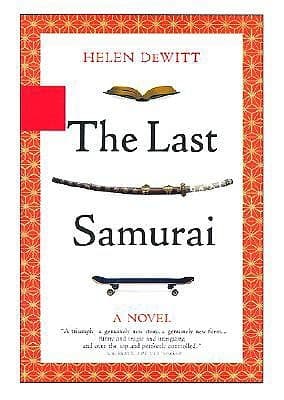
Synopsis
Covers the whole plot, including the ending.
- Difficulty
- Hard
- Pacing
- Variable
- Mood
- Intellectual, Witty, Quirky, Philosophical, Melancholy
- Read it if
- You enjoy intellectually stimulating literary fiction with a unique narrative voice, a blend of humor and profound insight, and a deep dive into language, philosophy, and the complexities of human relationships.
- Skip it if
- You prefer fast-paced, plot-driven narratives, or find extensive intellectual digressions and unconventional formatting distracting.
The Last Samurai Plot Summary
Covers the whole plot, including the ending.
Sibylla's Bohemian Life and Ludo's Early Education
Sibylla, an American living in London, is an intelligent but struggling writer. She raises her son, Ludo, alone, keeping his father's identity a secret. From a young age, Ludo shows extraordinary language and intellectual abilities. Sibylla, not liking conventional education, creates a rigorous, unconventional curriculum for him. It focuses on classical languages like Ancient Greek and Hebrew, advanced mathematics, and, importantly, repeated viewings and analyses of Akira Kurosawa's film, 'Seven Samurai'. Their home is chaotic but intellectually stimulating, filled with books and Sibylla's attempts to write, often under financial pressure.
The Seven Samurai as Moral Compass
Sibylla believes that 'Seven Samurai' provides ideal male role models and a way to understand human nature, which Ludo's absent biological father cannot. They watch the film many times, discussing its characters, themes, and story in detail. Ludo internalizes the samurai's codes of honor, courage, and self-sacrifice, seeing the world through the film's moral universe. This film immersion replaces a traditional father figure, shaping Ludo's view of masculinity and heroism, and fueling his growing intellectual curiosity about the world beyond their flat.
Ludo's Linguistic and Mathematical Prowess
Ludo's intellectual development speeds up. By age four, he reads Homer in the original Greek. He quickly moves on to Hebrew, Japanese, Old Norse, and Inuit, showing an innate talent for language structures. At the same time, Sibylla introduces him to advanced mathematics, including Fourier analysis and Laplace transformations, which he understands easily. His learning often surpasses Sibylla's teaching ability, forcing her to constantly find new materials and methods. This intense intellectual focus isolates Ludo from typical childhood experiences but gives him a vast, if unconventional, body of knowledge.
The Question of the Father
As Ludo grows, his questions about his father become more frequent. Sibylla avoids the topic, offering vague or philosophical responses, often linking fatherhood to the heroic figures in 'Seven Samurai'. She believes that focusing on ideal figures is better than revealing a potentially disappointing reality. However, Ludo's logical mind, trained to seek answers and connections, finds this paternal void increasingly unsatisfying. His intellectual pursuits, while rich, cannot fully substitute for the basic human curiosity about his origins, starting his eventual quest.
Ludo's Growing Discontent and Search for Paternity
Around age eight, Ludo's frustration with Sibylla's evasiveness peaks. He realizes that his vast knowledge of languages and mathematics does not provide the answer to this personal mystery. Using his intellect and observation skills, he starts to piece together clues from Sibylla's casual remarks, old letters, and photographs. He deduces that his father is likely one of several men Sibylla knew during her time at Oxford or in her early writing career. This marks a shift, as Ludo moves from passive learning to active, independent investigation, driven by a personal quest.
The First Potential Father: Professor Bennington
Ludo's initial investigations lead him to Professor Bennington, a scholar Sibylla often mentioned from her Oxford days. He finds an old photograph and some correspondence that suggest a past relationship. Ludo, with his directness, plans to meet Bennington. He sends him a sophisticated letter, seemingly seeking academic advice, but subtly designed to reveal his precocity and draw attention. His hope is that Bennington, recognizing Sibylla's intellect in his own, might confirm his paternity or at least offer a lead, pushing Ludo further into the complex adult world.
Encounters with Unsuitable Candidates
Ludo's quest leads him to a series of men, each identified as a possible father based on the few clues he has. These men are often academics, writers, or intellectuals who had some past connection with Sibylla. However, each encounter proves disappointing. The men are often self-absorbed, emotionally stunted, or simply not the heroic figures Ludo has imagined from 'Seven Samurai'. He meets a pretentious poet, a jaded academic, and other individuals who do not live up to the idealized image of a father, forcing Ludo to confront the messy realities of human character.
The Discrepancy Between Ideal and Reality
As Ludo meets more potential fathers, the gap between his idealized vision of masculinity, shaped by Kurosawa's film, and the flawed, ordinary men he encounters widens. The samurai were noble, courageous, and committed; the men he finds are often petty, self-involved, or unremarkable. This difference forces Ludo to confront the complexities of the real world, where heroism is rare and people are rarely as grand as the characters in his beloved film. This realization is both painful and an important part of his growing up, moving him beyond purely intellectual understanding to emotional experience.
Sibylla's Own Unresolved Past
Ludo's pursuit of his father indirectly forces Sibylla to confront her own past. His questions and actions bring up memories of her relationships, her intellectual ambitions, and the compromises she made. Her reluctance to name Ludo's father comes from a mix of protecting him from a disappointing truth, her own unresolved feelings, and a desire to maintain her unconventional educational philosophy. As Ludo pushes further, Sibylla's carefully constructed world of intellectual isolation begins to crack, revealing her vulnerabilities and the emotional weight of her choices.
The Revelation and Acceptance
After many dead ends and emotional disappointments, Ludo eventually uncovers the truth about his biological father. The revelation is not a grand, heroic moment but a quiet, often anticlimactic one, reflecting the mundane reality of his origins rather than the epic scale of his intellectual journey. The man is not a samurai, nor a genius, but an ordinary individual. This discovery, while perhaps not what he initially hoped for, brings closure. Ludo begins to understand that identity is not solely defined by genetics or idealized figures but by one's own experiences and choices, accepting the complexity of his parentage and moving forward.
The Last Samurai Characters
Sibylla
Protagonist/Mother
A brilliant but unconventional single mother who educates her son, Ludo, in a unique and rigorous manner.
Sibylla is an American expatriate in London, a highly intelligent and fiercely independent woman with a formidable intellect and a passion for languages and ideas. She struggles financially but dedicates herself entirely to Ludo's education, creating an unconventional curriculum that prioritizes classical languages, mathematics, and the analysis of 'Seven Samurai'. She is deeply protective of Ludo and guards the secret of his father's identity, believing that an idealized male archetype is more beneficial than a potentially disappointing reality. Her own past is marked by academic brilliance and romantic disappointments.
Relationships: Ludo (Mother-son, teacher-student, intellectual companion, but also a source of conflict over his father's identity.); Potential Fathers (Past romantic interests, often intellectual peers, whose identities Sibylla guards.)
Ludo
Protagonist/Son
A child prodigy with extraordinary linguistic and mathematical abilities, who embarks on a quest to find his absent father.
Ludo is Sibylla's exceptionally intelligent son, demonstrating prodigious talents from a very young age. He reads Homer in Greek at four and rapidly masters multiple languages and advanced mathematical concepts. His worldview is heavily influenced by 'Seven Samurai', which he studies with his mother, internalizing its lessons on heroism and morality. Despite his vast intellectual knowledge, he yearns for the practical, emotional answer to his father's identity. He is logical, determined, and possesses a remarkable ability to process information and make deductions.
Relationships: Sibylla (Son-mother, student-teacher, intellectual partner, but also a source of frustration due to her secrecy.); Potential Fathers (Figures he actively seeks out, hoping to find his biological father, leading to a series of disillusioning encounters.)
Professor Bennington
Supporting/Potential Father
An academic from Sibylla's past, targeted by Ludo as a potential father figure.
Professor Bennington is an older academic whom Sibylla knew during her time at Oxford. He is a scholar of some repute, representing the kind of intellectual circle Sibylla moved in. Ludo identifies him as a strong possibility for his father based on Sibylla's past remarks and a photograph. Bennington embodies a certain type of academic masculinity, refined but also potentially detached. His interaction with Ludo is brief but significant, as he is one of the first 'candidates' Ludo actively pursues, setting the tone for subsequent encounters.
Relationships: Sibylla (Former academic acquaintance/possible romantic interest.); Ludo (Unknowing target of Ludo's paternal investigation.)
Kanbei Shimada
Mentioned/Archetype
The wise, veteran leader of the samurai in 'Seven Samurai', serving as Ludo's primary idealized male role model.
Kanbei Shimada is the central samurai figure in Akira Kurosawa's 'Seven Samurai', the film that forms the bedrock of Ludo's moral and ethical education. He is depicted as a pragmatic, wise, and courageous leader, embodying honor, strategic thinking, and a profound sense of duty. For Ludo, Kanbei represents the ultimate male ideal – a figure of integrity, self-sacrifice, and effective leadership. He is the standard against which Ludo implicitly measures all potential real-world father figures, highlighting the chasm between cinematic heroism and everyday reality.
Relationships: Ludo (Idealized father figure and moral compass.); Sibylla (A tool for Sibylla's pedagogical and philosophical teachings.)
Kikuchiyo
Mentioned/Archetype
The boisterous, aspiring samurai in 'Seven Samurai', representing a more flawed but passionate form of masculinity.
Kikuchiyo is another prominent samurai from 'Seven Samurai', a peasant masquerading as a samurai, full of ambition, raw emotion, and a fierce desire to prove himself. He is a foil to Kanbei's stoicism, representing the untamed, passionate, and sometimes reckless aspects of heroism. Ludo and Sibylla analyze Kikuchiyo's journey extensively, understanding his growth and the complexities he brings to the group. He offers a different, more relatable, and ultimately more human male archetype for Ludo to consider, one that acknowledges imperfection and strong emotion.
Relationships: Ludo (An archetypal figure representing a different aspect of masculinity and heroism.); Sibylla (A pedagogical tool for discussing human nature and character flaws.)
Various Potential Fathers
Supporting/Mentioned
A series of male academics, writers, and intellectuals from Sibylla's past, whom Ludo investigates.
These are a collection of unnamed or briefly named male characters, often academics or writers, with whom Sibylla had past relationships or connections. Ludo identifies them through clues and seeks them out as potential biological fathers. They are generally portrayed as self-absorbed, intellectually detached, or simply ordinary men, failing to live up to Ludo's idealized expectations. Each encounter serves to further Ludo's disillusionment with the romanticized notion of a father figure and contributes to his understanding of the complexities and banalities of adult relationships.
Relationships: Sibylla (Past romantic or intellectual connections.); Ludo (Subjects of Ludo's paternal investigation, often unaware of his true intentions.)
The Last Samurai Themes
The Nature of Education and Prodigy
The novel explores the benefits and drawbacks of a highly unconventional, self-directed education. Sibylla's intense teaching of Ludo, focusing on classical languages, advanced mathematics, and film analysis, creates a brilliant mind but also isolates him. The theme questions whether such an intense curriculum truly prepares a child for the 'messy world of adults' or merely gives them a vast, yet sometimes impractical, body of knowledge. It also shows the intellectual joy and freedom that can come from learning outside rigid systems, as seen in Ludo's quick mastery of complex subjects.
“The problem with conventional education was that it trained you to answer questions, not to ask them.”
The Quest for Identity and Paternity
Ludo's search for his biological father drives the second half of the novel. This quest is not just about finding a name but about understanding his origins, his place in the world, and reconciling his idealized notions of fatherhood (shaped by 'Seven Samurai') with the reality of flawed human beings. The absence of a father creates a void that even Ludo's vast intellectual ability cannot fill, pushing him to seek emotional and familial truths beyond pure knowledge. His journey is a classic coming-of-age arc, moving from intellectual certainty to emotional complexity.
“He knew Homer, he knew Hebrew, he knew Japanese. But he didn't know who his father was.”
Idealism vs. Reality
A main theme is the tension between idealized concepts and messy reality. Ludo's understanding of heroism, morality, and masculinity is largely shaped by the noble samurai of Kurosawa's film. When he looks for his father, he meets a series of men who are ordinary, flawed, and often disappointing, sharply contrasting with his cinematic heroes. This forces Ludo, and implicitly Sibylla, to deal with the limitations of intellectual ideals when faced with the complexities of human nature, relationships, and the mundane aspects of life. The novel suggests that true understanding comes from combining both perspectives.
“The world, Ludo was discovering, was not a Kurosawa film. It was less heroic, less grand, and considerably more ambiguous.”
The Role of Language and Logic
Language is not just a subject of study but a way Ludo and Sibylla understand the world. Ludo's mastery of many languages, from ancient Greek to Japanese, shows a deep appreciation for structure, nuance, and different ways of seeing reality. Logic and analysis are central to their intellectual approach, allowing Ludo to deconstruct complex texts and mathematical problems. However, the novel also questions the limits of pure logic when faced with emotional truths and the irrationalities of human behavior, showing how language can both clarify and obscure.
“Every language was a universe, a different way of ordering the chaos.”
Parental Influence and Legacy
The novel explores how parents, through their choices and philosophies, shape their children. Sibylla's deliberate, unconventional education greatly influences Ludo's intellectual development and worldview. Her secrecy about his father also directly causes his quest, showing how unresolved parental issues can impact a child's search for identity. The book examines the legacy parents pass on, whether through intentional teaching, withheld information, or the environment they create, and how children deal with and ultimately move beyond these influences to forge their own paths.
“She had given him the world, but not his place in it.”
Plot Devices & Literary Techniques
The Absent Father
A classic literary trope driving the protagonist's quest for identity and origin.
The absent father is the central mystery and primary plot catalyst. Sibylla's refusal to name Ludo's biological father creates a void that Ludo, despite his vast intellectual knowledge, feels compelled to fill. This absence sparks his journey of discovery, forcing him out of his intellectual bubble and into the complexities of human relationships and the real world. It serves as a powerful symbol for the incompleteness of knowledge without personal connection, and the fundamental human need for origin and belonging.
The 'Seven Samurai' Motif
Akira Kurosawa's film serves as a recurring symbol, a moral compass, and a lens through which Ludo understands the world.
'Seven Samurai' is more than just a film; it is a foundational text in Ludo's education. Sibylla uses it to teach him about heroism, morality, leadership, and the complexities of human nature. The film's characters, particularly Kanbei and Kikuchiyo, become archetypes against which Ludo measures potential father figures and the world around him. This motif highlights the contrast between idealized cinematic narratives and messy reality, and acts as a constant reference point for Ludo's ethical and emotional development throughout his quest.
The Prodigy/Hothousing Narrative
The extreme intellectual development of Ludo, shaped by Sibylla's unconventional educational methods.
This device focuses on Ludo's extraordinary intelligence and the unique, intense educational environment Sibylla creates for him. It allows the novel to explore themes of genius, the nature of learning, and the potential isolation that can come with being intellectually exceptional. The hothousing narrative sets Ludo apart, explaining his unique worldview and his ability to pursue his quest with remarkable analytical skill. It also raises questions about the balance between intellectual development and emotional, social integration, and the potential pitfalls of an education detached from conventional experiences.
Epistolary Elements
The use of letters and written communication to advance the plot and reveal character.
While not solely an epistolary novel, letters play a crucial role, particularly in Ludo's quest. Ludo writes highly sophisticated letters to potential fathers, ostensibly seeking academic advice but subtly designed to reveal his precocity and elicit responses that might confirm paternity. These letters showcase his formidable intellect and his strategic approach to his personal mission. They also serve as a narrative device to introduce new characters and propel the plot forward, bridging the gap between Ludo's isolated world and the external one he seeks to penetrate.
The Last Samurai Quotes
“When you have a child, you are yourself reborn. You become a child again, and everything is new.”
“The greatest gift a parent can give their child is not to protect them from the world, but to teach them how to live in it.”
“Language is not just words; it is a way of seeing the world, a way of thinking, a way of being.”
“To truly understand someone, you must try to see the world through their eyes, even if their world is vastly different from your own.”
“Mathematics is not just numbers; it is a language, a poetry of logic and reason.”
“The world is full of wonders, but you have to know how to look for them.”
“Every answer only leads to more questions, and that is the true joy of learning.”
“Sometimes the most profound truths are found in the simplest things.”
“To be truly free, you must first free your mind from the constraints of convention.”
“The past is not a burden, but a foundation on which we build our future.”
“Love is not about possession, but about allowing the other to be fully themselves.”
“The search for meaning is a journey, not a destination.”
“It is not enough to know; you must also apply what you know.”
“The greatest adventures are often found within the pages of a book.”
Quiz
10 questions on the plot and the characters. Each answer comes with a short explanation.
Question 1
At what age does Ludo begin reading Homer in the original Greek?
- 2
- 4
- 6
- 8
Show answer
B. 4 The book description explicitly states that Ludo reads Homer in the original Greek at age 4.
Question 2
Which Akira Kurosawa film does Ludo endlessly watch and analyze?
- Rashomon
- Yojimbo
- The Seven Samurai
- Ran
Show answer
C. The Seven Samurai The title of the book, 'The Last Samurai', hints at Ludo's fascination with Akira Kurosawa's masterpiece, 'The Seven Samurai'.
Question 3
What is Sibylla's primary reason for refusing to tell Ludo the identity of his father?
- She has forgotten who he is.
- She believes the film 'The Seven Samurai' provides the necessary male role models.
- She wants him to focus solely on his studies.
- She fears the father will take Ludo away from her.
Show answer
B. She believes the film 'The Seven Samurai' provides the necessary male role models. Sibylla 'believes the film obliquely provides the male role models that Ludo's genetic father cannot,' which is why she refuses to discuss paternal identity.
Question 4
Which of the following advanced mathematical techniques does Ludo study?
- Calculus and Algebra
- Fourier analysis and Laplace transformations
- Geometry and Trigonometry
- Statistics and Probability
Show answer
B. Fourier analysis and Laplace transformations The description specifies Ludo 'studying advanced mathematical techniques (Fourier analysis and Laplace transformations)'.
Question 5
The novel is divided into two halves. What is the primary focus of the second half?
- Sibylla's backstory and her own education.
- Ludo's search for his father and father figures.
- A detailed analysis of 'The Seven Samurai'.
- Sibylla and Ludo's travels around the world.
Show answer
B. Ludo's search for his father and father figures. The novel 'divides itself into two halves: the first describes Ludo's education, the second follows him in his search for his father and father figures.'
Question 6
The first half of the novel is characterized by an 'Apollonian pursuit' of what?
- Emotional fulfillment and human connection.
- Logic, precise erudition, and the architecture of languages.
- Financial stability and material possessions.
- Physical strength and martial arts training.
Show answer
B. Logic, precise erudition, and the architecture of languages. The first half 'stresses a sacred, Apollonian pursuit of logic, precise (if wayward) erudition, and the erratic and endlessly fascinating architecture of languages'.
Question 7
Beyond Greek, which of these languages is Ludo NOT mentioned as studying?
- Hebrew
- Spanish
- Old Norse
- Inuit
Show answer
B. Spanish Ludo moves on to Hebrew, Japanese, Old Norse, and Inuit, but Spanish is not listed among the languages he studies.
Question 8
The novel explores the balance between which two opposing concepts?
- Wealth and poverty.
- War and peace.
- The structures we make of the world and the chaos it proffers.
- Youth and old age.
Show answer
C. The structures we make of the world and the chaos it proffers. The novel is 'ultimately, about the balance between the structures we make of the world and the chaos that it proffers in return.'
Question 9
How does the novel's prose style mirror its thematic ambivalence?
- It is consistently straightforward and linear.
- It uses only short, declarative sentences.
- It follows the shifts and breaks of human consciousness and memory.
- It strictly adheres to a single narrative voice.
Show answer
C. It follows the shifts and breaks of human consciousness and memory. Stylistically, 'DeWitt's remarkable prose follows the shifts and breaks of human consciousness and memory, capturing the intrusions of unspoken thought'.
Question 10
Which phrase best describes the transition from the first half to the second half of the novel in terms of knowledge and emotion?
- From emotion to logic.
- From practical application to theoretical study.
- From Apollonian pursuit of logic to knowledge in the world of emotion and human ambitions.
- From failures and frustrations to certainties and success.
Show answer
C. From Apollonian pursuit of logic to knowledge in the world of emotion and human ambitions. The first half 'stresses a sacred, Apollonian pursuit of logic,' while the second 'moves this knowledge into the world of emotion, human ambitions, and their attendant frustrations and failures.'
The Last Samurai FAQ
What is the central premise of 'The Last Samurai'?
The novel centers on Sibylla, a highly intelligent single mother, and her prodigy son, Ludo. Sibylla rigorously educates Ludo in various languages and advanced mathematics, while he also obsessively studies Akira Kurosawa's 'The Seven Samurai'. The core conflict arises from Sibylla's refusal to reveal Ludo's father's identity, prompting Ludo to embark on a quest to find him.
How does Ludo's education differ from a conventional upbringing?
Ludo's education is entirely unconventional, curated by Sibylla. He reads Homer in Greek at four, progresses through Hebrew, Japanese, Old Norse, and Inuit, and masters advanced mathematics like Fourier analysis. This 'hothousing' approach prioritizes intense intellectual development over typical social or emotional learning, isolating him in a world of pure knowledge.
What role does Akira Kurosawa's 'The Seven Samurai' play in the story?
'The Seven Samurai' is a foundational text for Ludo, who watches and analyzes it endlessly. Sibylla believes the film provides the male role models and a moral framework that Ludo's absent genetic father cannot. Ludo, however, views it as a puzzle, a source of potential clues, and a constant companion in his intellectual and emotional development.
What motivates Ludo's search for his father?
Ludo's quest is driven by a profound need to understand his origins and to fill the 'gap' left by his unknown father. Despite his vast intellectual knowledge, the absence of this fundamental personal detail becomes an insurmountable intellectual and emotional problem he feels compelled to solve, leading him beyond theoretical certainties into real-world complexities.
How is the novel structured into two distinct halves?
The first half meticulously details Ludo's extraordinary, intellectually focused education under Sibylla's guidance, emphasizing logic and erudition. The second half shifts to Ludo's active search for his father and other male figures, moving from the abstract world of knowledge into the emotional, messy, and often frustrating realities of human relationships and ambitions.
Are there any subtle recurring motifs related to language or linguistics?
Yes, the novel frequently delves into the intricacies of various languages, such as Japanese grammar or the structures of Old Norse. These disquisitions are not mere academic asides but reflect Sibylla's and Ludo's deep engagement with language as a system of thought and meaning, often paralleling the structural puzzles they attempt to solve in their lives.
Does Sibylla's refusal to name Ludo's father have a deeper, symbolic meaning beyond mere secrecy?
Sibylla's refusal is deeply symbolic, representing her attempt to control Ludo's reality and to substitute intellectual constructs (like the samurai from the film) for messy human connections. It's an assertion of her intellectual and maternal power, but also a denial of a crucial piece of Ludo's identity, ultimately fueling his quest.
How do the 'Apollonian' and 'Dionysian' concepts manifest in the novel?
The first half, with Ludo's rigorous, logical, and structured education, embodies the Apollonian pursuit of order and knowledge. The second half, as Ludo ventures into the chaotic, emotional, and unpredictable search for his father and confronts human frailties, leans into the Dionysian, representing the messy, irrational aspects of life.
What is the significance of the title 'The Last Samurai' beyond the film reference?
Beyond referencing Kurosawa's film, the title could subtly hint at Ludo himself as a 'last samurai' – a figure embodying a rigorous, almost anachronistic code of honor and pursuit of truth, albeit intellectual rather than martial. It also suggests a lone, perhaps anachronistic, adherence to a demanding ideal in a less principled world.
How does Ludo's extreme intelligence impact his emotional and social development?
Ludo's prodigious intellect, while astounding, creates significant emotional and social deficits. His world is primarily one of ideas and systems, making it difficult for him to navigate the nuances of human emotion, social cues, and the unpredictable nature of adult relationships. He struggles to translate his vast knowledge into practical wisdom about people.
Analyze Sibylla's psychological motivations for her unique parenting style.
Sibylla is driven by a desire to cultivate extreme intellectual potential in Ludo, perhaps as a personal project or a rebellion against conventional norms. Her refusal to name the father might stem from a protective instinct, a desire for sole control over Ludo's development, or a belief that abstract ideals are superior to flawed human connections. She seeks to create a perfect intellectual being.
How does the novel explore the concept of 'father figures' versus a biological father?
The novel delves deeply into this distinction. Sibylla attempts to provide 'father figures' through the samurai in the film, offering ideals of heroism and honor. However, Ludo's quest reveals his need for a tangible, biological father, or at least a real-world male presence, exposing the limitations of purely intellectual or idealized substitutes for human connection.
What psychological impact does the 'quest' have on Ludo?
The quest forces Ludo out of his intellectual comfort zone and into the real world, challenging his Apollonian worldview. He encounters disappointment, ambiguity, and the messy realities of human nature, which are alien to his ordered mind. This journey is crucial for his psychological growth, as he begins to integrate emotion and experience with his vast knowledge.
Is Sibylla ultimately a good mother, despite her unconventional methods?
This is debatable. While Sibylla fosters Ludo's incredible intellect, she arguably neglects his emotional and social development, isolating him and creating a fundamental void regarding his paternal identity. Her methods, while producing a prodigy, also leave him ill-equipped for the complexities of human interaction, prompting his difficult quest for self-discovery.
Does the novel suggest a definitive answer to the nature vs. nurture debate regarding Ludo's genius?
The novel leans heavily towards nurture, showcasing Sibylla's deliberate and intense cultivation of Ludo's mind. While his inherent intelligence is undoubtedly high, his specific and extreme erudition is a direct result of her singular educational philosophy. However, his innate curiosity and drive also play a significant role, suggesting a complex interplay.
What is the ultimate 'balance' the book seeks between 'structures we make of the world and the chaos that it proffers'?
The novel suggests that while intellectual structures and systems (languages, mathematics, film analysis) provide comfort and understanding, life inevitably presents chaos, emotion, and unpredictability. The balance lies in integrating both: using our intellect to navigate the world, but also accepting and engaging with its inherent messiness and human fallibility, as Ludo learns during his quest.
How does the novel's 'remarkable prose' contribute to its themes?
DeWitt's prose mirrors the novel's thematic tension between order and chaos. Its shifts and breaks reflect human consciousness, while tantalizing disquisitions on complex topics demonstrate the power of structured thought. This stylistic choice immerses the reader in Ludo's and Sibylla's intellectual worlds, while also capturing the fragmented nature of memory and unspoken thought.
What larger statement does 'The Last Samurai' make about the pursuit of knowledge?
The novel suggests that while knowledge is immensely pleasurable and powerful, it is not sufficient for a complete human experience. Pure intellect, disconnected from emotional reality and human connection, can be isolating. True wisdom, the book implies, comes from applying knowledge to understand the complexities of life and embracing both its intellectual structures and its emotional chaos.
About the author

Helen DeWitt is an author known for her fiction, particularly her novel "The Last Samurai." The book explores themes of language, culture, and the complexities of human relationships, showcasing her distinctive narrative style. DeWitt's work has garnered attention for its intellectual depth and innovative storytelling.
Similar books
- A Heartbreaking Work of Staggering Genius
Dave Eggers
3.7 (171k) average on GoodreadsLiterary FictionFeatures a precocious protagonist and an unconventional narrative style blending humor with deep emotional exploration.
- House of Leaves
Mark Z. Danielewski
4.1 (131k) average on GoodreadsThrillerKnown for its experimental structure, intellectual density, and unique typographical elements.
- Gilead (Oprah's Book Club)
Marilynne Robinson
3.9 (126k) average on GoodreadsFictionExplores profound philosophical and personal questions through a highly intellectual and introspective narrative voice.
- The Secret History
Donna Tartt
3.9 (2k) average on GoodreadsPoliticsBoth novels delve into intellectual elitism and the pursuit of knowledge. However, Tartt's 'The Secret History' primarily explores the darker consequences of such pursuits and moral ambiguity within an academic setting. DeWitt's 'The Last Samurai,' while acknowledging the challenges, focuses more on the transformative power of knowledge and the individual's quest for authentic connection and self-discovery, rather than a critique of the system itself.
- The Old Man and the Sea
Ernest Hemingway
3.8 (831k) average on GoodreadsLiterary FictionA Cuban fisherman's long struggle with a giant marlin becomes a story of endurance and dignity, now retold for young adults with illustrations, phonetic guides, and writing prompts in Traditional Chinese.
- One Hundred Years of Solitude
Gabriel García Márquez
4.1 (753k) average on GoodreadsLiterary FictionThrough the multi-generational story of the Buendía family, a mythical town deals with the repeating patterns of time, love, and solitude, as the extraordinary mixes with the ordinary.



Enjoyed the summary?
A summary gives you the shape of the book. The book itself has the detail, the examples and the voice.
Find The Last Samurai on AmazonAs an Amazon Associate, BookBrief earns from qualifying purchases. How we're funded