
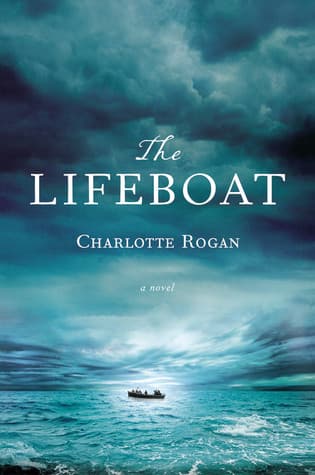
Synopsis
Covers the whole plot, including the ending.
- Difficulty
- Medium
- Pacing
- Moderate
- Mood
- Suspenseful, Claustrophobic, Morally Complex, Reflective
- Read it if
- You enjoy historical fiction with a strong moral dilemma, psychological tension, and a unreliable narrator.
- Skip it if
- You prefer fast-paced action over introspective character studies and moral ambiguity, or find stories about survival at sea too claustrophobic.
The Lifeboat Plot Summary
Covers the whole plot, including the ending.
The Sinking of the Empress Alexandra
In July 1914, Grace Winter, recently married to Henry C. Winter, is on the luxury liner *Empress Alexandra* heading to New York. The ship explodes, causing panic. Henry ensures Grace gets a spot on Lifeboat 14 during the frantic evacuation. Grace remembers her last moments with Henry, who promises to find another boat. As Lifeboat 14 leaves, Grace watches the *Empress Alexandra* tilt and sink into the Atlantic, taking Henry and many others with it. This traumatic event begins Grace's ordeal at sea.
Overcrowded Lifeboat and Initial Survival
Lifeboat 14, meant for 30 passengers, holds 39 people, including Grace. The survivors, a mix of first-class passengers, crew, and steerage, quickly grasp their dangerous situation. John Hardie, a seasoned sailor, takes charge, trying to keep order and ration the few supplies. Among the survivors are Mrs. Higgins, a strong older woman, and Mr. Smith, a quiet, observant man. The first days involve shock, seasickness, and the growing realization that rescue is unlikely. The close quarters and shared trauma begin to create uneasy alliances and reveal tensions among the group.
The First Deaths and Moral Dilemmas
As days become a week, the harsh realities of survival set in. Supplies decrease, and the weak begin to die. Hardie, asserting his authority, implements strict rationing and insists on discipline. The first deaths happen naturally, but the idea of reducing the boat's burden becomes clear. Mrs. Higgins, with her strong will and practical approach, starts to challenge Hardie's authority. She argues for more drastic measures to help the strongest survive. Grace, watching these power struggles, starts to understand the brutal choices they face, seeing civility disappear and basic instincts emerge.
The Power Struggle: Hardie vs. Higgins
A clear power struggle develops between John Hardie and Mrs. Higgins. Hardie, a professional sailor, believes in following maritime rules and a more humane approach, focusing on shared suffering and discipline. Mrs. Higgins, however, is a clever and manipulative woman who believes in ruthless practicality. She subtly undermines Hardie's authority, suggesting that some, especially the very ill or weak, are a burden on resources. She gains influence over some passengers, including Grace, by offering small comforts or promises of protection. Grace, seeing Mrs. Higgins's influence, begins to align herself, though reluctantly, with the older woman's group.
Grace's Past: Meeting Henry
Amid the horrors on the lifeboat, Grace often thinks about her past and her relationship with Henry. She reveals she was not from a rich background and worked as a stenographer. She met Henry, a much older and wealthy man, through her job. Their courtship was unusual, driven by Grace's ambition and Henry's wish for a young, beautiful wife who could fit into his social circle. Grace admits she deliberately cultivated Henry's affection, seeing him as her way to a comfortable and secure life. These flashbacks show Grace's calculating nature and her deep desire to escape her humble beginnings.
The 'Accidents' and Hardie's Demise
The situation on Lifeboat 14 worsens. Several passengers die under suspicious circumstances, often at night or during rough weather. Though never called murder, the implication of foul play, orchestrated by Mrs. Higgins's group, is strong. Hardie, increasingly desperate and conflicted, tries to maintain order, but his authority fades. Eventually, Hardie himself is found dead, having fallen overboard during a storm, or so it is claimed. His death removes the last voice of moral restraint and allows Mrs. Higgins to take full control, creating a new, ruthless order on the lifeboat.
Mrs. Higgins's Reign and Ruthless Decisions
With Hardie gone, Mrs. Higgins has undisputed control of Lifeboat 14. She implements a much harsher rationing system and makes it clear that the weak will not be tolerated. Her decisions are cold and calculated, driven only by the goal of ensuring the survival of a select few. Grace, now part of Mrs. Higgins's inner circle, sees and participates in these harsh realities. The remaining survivors are reduced to a basic existence, their humanity gone due to hunger, thirst, and the constant threat of being called 'expendable' by Mrs. Higgins.
Rescue and the Aftermath
After weeks adrift, when hope seems almost gone, Lifeboat 14 is spotted and rescued by a passing ship. Only a few of the original 39 passengers remain. Grace, Mrs. Higgins, and a few others are brought to safety, physically thin but psychologically scarred. Upon their arrival, an inquiry into the sinking of the *Empress Alexandra* and the events on the lifeboat begins immediately. Grace, knowing the truth of what happened, starts to carefully build her story, understanding that her survival now depends on her ability to control the narrative and present herself as an innocent victim.
The Inquiry and Grace's Testimony
Grace testifies at the official inquiry. She gives a convincing, but carefully chosen, account of the events on Lifeboat 14. She portrays Hardie as a good leader, Mrs. Higgins as strong but ultimately mistaken, and herself as a traumatized, passive observer. She leaves out any mention of the suspicious deaths or her own involvement in Mrs. Higgins's ruthless decisions. Her testimony is persuasive, helped by her appearance as a grieving widow and her seemingly fragile state. She strategically downplays her own actions and emphasizes the overwhelming circumstances that led to their desperate choices.
The Revelation of Henry's Will
During the inquiry, a key detail emerges: Henry's will. It is revealed that Henry had recently changed his will, making Grace the sole heir to his large fortune, but with a significant condition: she would inherit only if she survived him by a certain period and was found to be of good moral character. This revelation sheds new light on Grace's actions and her strong will to survive. It suggests that her ambition and desire for wealth were not just for a comfortable life, but for a specific inheritance that depended on her survival and perceived innocence.
The Verdict and Grace's Future
The inquiry concludes. While the full truth of Lifeboat 14 remains unclear to the public, Grace's testimony is mostly accepted. She is not charged with any wrongdoing, and the deaths are blamed on the harsh conditions at sea. Grace, having successfully navigated the legal and moral maze, is free to inherit Henry's fortune. The novel ends with Grace thinking about her survival, her choices, and the person she has become. She has achieved the privileged life she always wanted, but at a deep personal cost, burdened by the secrets and moral compromises she made to survive.
Principal Figures
Grace Winter
Protagonist
A young, ambitious woman who survives a shipwreck and navigates a brutal struggle for survival.
Grace Winter is the narrator and central character, a woman of humble origins who married into wealth. She is intelligent, observant, and possesses a strong will to survive. Initially appearing fragile, her inner strength and calculating nature are gradually revealed through her actions on the lifeboat and her reflections on her past. She is driven by a deep-seated ambition to escape poverty and secure a life of comfort and privilege, which she believes Henry's fortune represents. Her moral compass is flexible, adapting to the extreme circumstances she faces.
Relationships: Henry C. Winter (Husband, source of wealth and ambition); John Hardie (Initial leader of the lifeboat, moral counterpoint); Mrs. Higgins (Mentor/ally in survival, manipulative older woman)
Henry C. Winter
Supporting/Mentioned
Grace's wealthy, older husband who perishes in the sinking.
Henry C. Winter is Grace's husband, a much older and affluent man from a prominent family. He is portrayed as kind, somewhat naive, and deeply devoted to Grace, securing her a place on the lifeboat before his own demise. His wealth and social standing are the primary reasons Grace married him, and his will becomes a crucial plot point, revealing the full extent of Grace's motivations. He represents the life of privilege Grace desperately seeks.
Relationships: Grace Winter (Wife, object of his affection)
John Hardie
Supporting/Antagonist (to Higgins's faction)
A professional sailor who initially takes command of Lifeboat 14.
John Hardie is a seasoned sailor and the first to assume leadership on Lifeboat 14. He is principled, disciplined, and attempts to maintain order, rationing, and a sense of humanity among the survivors. He believes in fairness and a more traditional approach to survival at sea. His moral compass is strong, making him a foil to Mrs. Higgins's ruthless pragmatism. He represents the established order and a more humane approach to crisis.
Relationships: Grace Winter (Leader to her as a passenger); Mrs. Higgins (Opposing leader, rival for control)
Mrs. Higgins
Antagonist
A formidable and manipulative older woman who challenges Hardie's leadership.
Mrs. Higgins is a shrewd, pragmatic, and utterly ruthless older woman. She quickly assesses the dire situation on the lifeboat and concludes that extreme measures are necessary for survival. She is a master manipulator, subtly undermining Hardie's authority and forming alliances, including with Grace, to consolidate her power. She embodies the 'survival of the fittest' mentality and is willing to orchestrate 'accidents' to reduce the number of mouths to feed. She represents the darker, more primal side of human nature when pushed to the brink.
Relationships: Grace Winter (Manipulative mentor/ally); John Hardie (Rival for leadership)
Mr. Smith
Supporting
A quiet, observant passenger who becomes a key witness.
Mr. Smith is a reserved and seemingly unassuming passenger on Lifeboat 14. He is largely quiet throughout the ordeal, but his presence is significant as an observant witness to the events unfolding. His silence and watchful nature make him a potential threat to Grace's carefully constructed narrative during the inquiry, as he represents an unbiased, objective perspective on the lifeboat's horrors. He serves as a symbol of the unspoken truths.
Relationships: Grace Winter (Fellow survivor, potential witness against her)
The Stewardess
Supporting
A member of the crew, representing the working class and often a target.
The Stewardess is a minor character, a member of the *Empress Alexandra*'s crew. She represents the working-class individuals on the lifeboat, often seen as less valuable or more expendable by some of the first-class passengers. She is one of the early victims of the desperate situation, highlighting the class divisions and the brutal nature of survival when resources are scarce. Her death serves as an early indicator of the breakdown of social norms.
Relationships: John Hardie (Subordinate)
Themes & Insights
Survival at Any Cost
This theme explores how far people will go to stay alive in dire situations. The novel shows how morality, civility, and human decency disappear as hunger, thirst, and fear push passengers to make unthinkable choices, including murder. Grace's strong determination to survive, driven by her ambition and the promise of Henry's inheritance, shows this theme. The 'accidents' on the lifeboat, orchestrated by Mrs. Higgins and quietly supported by others, directly show the brutal choices of survival, where the weak are sacrificed for the supposed benefit of the many (or a few).
“What do we owe the dead, when we ourselves are so close to joining them?”
The Nature of Truth and Narrative
The novel is told by Grace Winter, a survivor who is also judged by public opinion. This structure immediately makes readers question her story. Grace carefully constructs her narrative, leaving out key details and framing events to appear as an innocent victim. The difference between what 'actually' happened on the lifeboat and what Grace tells the inquiry shows how truth can be manipulated and shaped, especially when personal stakes are high. Her ability to control the story ultimately determines her freedom and future, highlighting the power of narrative in shaping reality.
“I understood then that the truth was not a single, immutable thing, but a story told by the loudest voice.”
Class and Social Hierarchy
The *Empress Alexandra* was a small version of society, with clear class divisions that initially continue onto the lifeboat. Hardie, a crew member, first takes charge, but first-class passengers like Mrs. Higgins and Grace, despite their initial helplessness, eventually assert their influence. The novel subtly explores how these hierarchies break down, change, or are re-established under pressure. The vulnerability of steerage passengers or crew members, often the first to be considered 'expendable,' shows that prejudices can persist even in life-or-death situations. Grace's own journey from stenographer to wealthy widow shows the fluidity and ambition within these social structures.
“On a lifeboat, there was no first class, no steerage, only the living and the soon-to-be dead. Or so we told ourselves.”
Ambition and Morality
Grace's character is closely tied to her ambition to escape her humble background and achieve wealth and status. Her marriage to Henry was a calculated move, and her fierce determination to survive on the lifeboat is linked to the inheritance she stands to gain. The novel forces Grace to confront the moral compromises needed to reach her ambitions. She sees and participates in terrible acts, blurring the lines between self-preservation and ruthless self-interest. The theme questions whether ambition, when unchecked by morality, can lead to monstrous acts, and if the ends justify the means.
“I had always known what I wanted. I just hadn't known what I would have to do to get it.”
Plot Devices & Literary Techniques
Unreliable Narrator
Grace Winter's first-person account is biased and strategically omits or alters details.
The entire novel is narrated by Grace Winter, who is recounting the events of the lifeboat and her past during an official inquiry. This makes her an inherently unreliable narrator. Her motivations (inheriting Henry's fortune, avoiding legal repercussions) provide strong reasons for her to shape the narrative in her favor. The reader is constantly aware that Grace is carefully constructing her story, leaving gaps, and presenting a curated version of events, forcing them to question the 'truth' of what happened on Lifeboat 14 and her own complicity.
Flashbacks
Grace's memories of her past and relationship with Henry interrupt the present narrative.
The narrative frequently intersperses Grace's present-day testimony and the harrowing events on the lifeboat with flashbacks to her life before the sinking, particularly her unconventional courtship and marriage to Henry. These flashbacks serve to reveal Grace's character, her ambition, and her motivations for survival. They provide crucial context for understanding her choices on the lifeboat, showing her as a calculating individual long before the crisis. They also build suspense regarding the nature of her relationship with Henry and the terms of his will.
Confined Setting
The small, isolated lifeboat creates intense psychological and physical pressure.
The vast majority of the novel takes place within the extremely confined space of Lifeboat 14, adrift in the open ocean. This setting is a powerful plot device, intensifying the psychological drama and physical suffering of the characters. The lack of escape, the close quarters, and the constant threat of the elements amplify the tensions between the survivors, forcing them into brutal intimacy and accelerating the breakdown of social norms. The confined space makes every decision, every death, and every interaction feel immediate and inescapable.
The Inheritance Clause
Henry's will ties Grace's inheritance directly to her survival and good character.
The revelation of Henry's will, with its specific clause requiring Grace to survive him and be deemed of 'good moral character' to inherit, is a crucial plot device. It provides a powerful, tangible motivation for Grace's ruthless determination to survive and her meticulous crafting of her testimony during the inquiry. This clause elevates her personal stakes beyond mere survival, linking her physical existence to her financial future, and adding a layer of calculated ambition to her actions on the lifeboat and in its aftermath.
The Lifeboat Quotes
“There were, after all, some things you had to do alone.”
“The sea, like life, was full of unexpected currents.”
“We were all, in our way, trying to save ourselves.”
“Hope was a dangerous thing on the open sea; it could drown you faster than despair.”
“The rules of the land did not apply on the water.”
“Memory is a treacherous thing, especially when you are trying to forget.”
“Sometimes, the hardest thing to do was to do nothing at all.”
“Survival was not about being good, it was about being smart.”
“The truth was not always a single, solid thing.”
“Fear was a constant companion, a silent passenger.”
“We were all playing a part, even if we didn't know the script.”
“The world outside the lifeboat ceased to exist.”
“Even in the darkest moments, there was always a glimmer, however faint, of something to hold on to.”
“Justice, I was learning, was a complicated and often unsatisfactory business.”
Quiz
10 questions on the plot and the characters. Each answer comes with a short explanation.
Question 1
What is the initial cause of the disaster that forces Grace Winter onto a lifeboat?
- A collision with an iceberg
- A mysterious explosion
- A massive storm
- An engine malfunction
Show answer
B. A mysterious explosion The book states that the ocean liner suffers a 'mysterious explosion,' not a collision or storm.
Question 2
Who secures Grace a place in a lifeboat?
- An experienced sailor
- Her husband, Henry
- An enigmatic matron
- She finds it herself
Show answer
B. Her husband, Henry Henry, Grace's husband, 'setting aside his own safety, secures Grace a place in a lifeboat.'
Question 3
What is the primary conflict among the survivors in the lifeboat, besides dwindling supplies?
- Debate over the ship's sinking cause
- A vicious power struggle
- Arguments about religious beliefs
- Disagreements over navigation
Show answer
B. A vicious power struggle The synopsis explicitly mentions 'a vicious power struggle between ruthless but experienced sailor and an enigmatic matron.'
Question 4
What year does the story begin?
- 1912
- 1914
- 1916
- 1918
Show answer
B. 1914 The story begins 'In the summer of 1914,' as stated in the first sentence.
Question 5
What is Grace's internal struggle primarily focused on during her time in the lifeboat?
- Regretting her marriage to Henry
- Deciding how far she will go to survive and maintain her new privileged life
- Finding a way to signal for help
- Mourning the loss of her husband
Show answer
B. Deciding how far she will go to survive and maintain her new privileged life Grace 'must now decide: Will she pay any price to keep it?' referring to the new life of privilege she found, highlighting her ambition and will to survive.
Question 6
The power struggle in the lifeboat is between which two types of individuals?
- Two rival captains
- A ruthless sailor and an enigmatic matron
- Grace and her husband Henry
- Two wealthy passengers
Show answer
B. A ruthless sailor and an enigmatic matron The text describes the struggle as 'between ruthless but experienced sailor and an enigmatic matron with surprising powers of persuasion.'
Question 7
What characteristic is Grace known for that helps her 'make her way in the world'?
- Her unwavering honesty
- Her compassion for others
- Seizing every possible advantage
- Her strong leadership skills
Show answer
C. Seizing every possible advantage The description states, 'Grace has made her way in the world by seizing every possible advantage,' indicating her opportunistic nature.
Question 8
What genre is 'The Lifeboat' categorized under?
- Romance and Thriller
- Science Fiction and Fantasy
- Historical Fiction and Mystery
- Contemporary Drama and Adventure
Show answer
C. Historical Fiction and Mystery The provided information explicitly states the book's genres as 'Historical Fiction, Mystery.'
Question 9
The synopsis implies that Grace and Henry's meeting was:
- A traditional courtship
- Arranged by their families
- Unorthodox
- Brief and unremarkable
Show answer
C. Unorthodox Grace 'recollects the unorthodox way she and Henry met,' suggesting their introduction was unusual or unconventional.
Question 10
What is a central theme explored through Grace's character and her decisions on the lifeboat?
- The importance of community and sacrifice for the greater good
- The corrupting influence of power and wealth
- Ambition and the hard choices one makes for survival and self-preservation
- The futility of human effort against the forces of nature
Show answer
C. Ambition and the hard choices one makes for survival and self-preservation The summary states it's 'a story of hard choices, ambition, and entertainment narrated by a woman as complex and unforgettable as the events she describes,' directly linking ambition and hard choices to Grace.
The Lifeboat FAQ
What is the central premise of 'The Lifeboat'?
The novel centers on Grace Winter, a young woman who survives an ocean liner explosion in 1914. She finds herself in an overcrowded lifeboat, where the dwindling supplies and harsh conditions force the survivors to make impossible choices, including deciding who lives and who dies, all while Grace navigates a power struggle between two strong personalities.
Who are the main characters vying for power on the lifeboat?
The primary figures in the power struggle are Mrs. Alice Grant, an enigmatic and persuasive matron, and Mr. Hardie, a ruthless but experienced sailor. Grace Winter finds herself caught between their opposing methods and philosophies for survival, influencing her own decisions and allegiances.
What is the significance of the novel's 1914 setting?
The 1914 setting places the story on the cusp of World War I, a period of immense social and political upheaval. This historical context subtly underscores the fragility of order and civilization, mirroring the breakdown of societal norms and morality within the confines of the lifeboat, as well as Grace's own precarious social standing.
How does Grace Winter end up on the lifeboat without her husband, Henry?
Grace's husband, Henry, ensures her a place on the lifeboat after the explosion on the ocean liner, prioritizing her safety over his own. He makes the ultimate sacrifice, staying behind on the sinking ship while Grace is among the first to be saved, a decision that profoundly impacts her guilt and survival strategy.
What is the 'mystery' element in 'The Lifeboat'?
The mystery primarily revolves around the circumstances of the ocean liner's explosion and, more significantly, the true nature of the events that transpired on the lifeboat. Grace is on trial for murder, and her reliability as a narrator is constantly questioned, making the reader piece together the truth from her often-conflicting recollections.
What is the true cause of the explosion on the ocean liner?
While the initial explosion is attributed to unknown causes, later details and Grace's own recollections hint at a more deliberate act, possibly linked to sabotage or insurance fraud. Henry's business dealings and urgent need for funds before the voyage suggest a potential motive, though the novel leaves room for ambiguity.
Were Grace and Henry's marriage truly a love match, or was there an ulterior motive?
Grace's recollections reveal their marriage was less about love and more about mutual convenience and ambition. Henry, facing financial ruin, needed her inheritance, while Grace, from a modest background, sought the social status and privilege his name offered. Their union was a calculated arrangement, which becomes crucial to understanding Grace's subsequent actions.
What is the significance of the diary found on the lifeboat, and who wrote it?
The diary belongs to Mrs. Alice Grant and details her perspective on the events and decisions made on the lifeboat, often contradicting Grace's version of events. It serves as crucial evidence in Grace's trial, providing an alternative narrative that challenges Grace's reliability and implicates her in certain actions.
How does Grace's past, particularly her upbringing, influence her survival instincts on the lifeboat?
Grace's background, marked by poverty and a need to constantly adapt and 'seize every possible advantage,' hones her survival instincts. She learned early on to manipulate situations and people to her benefit, a skill she ruthlessly employs on the lifeboat, making her highly adaptable but also morally ambiguous.
Analyze Grace Winter's psychological state as a narrator. Is she reliable?
Grace is a highly unreliable narrator. Her recollections are filtered through self-preservation, guilt, and the desire to present herself favorably during her trial. She selectively remembers, omits details, and often rationalizes her actions, making it challenging for the reader to discern the objective truth from her subjective account.
How does the extreme environment of the lifeboat affect the psychological well-being of the survivors?
The extreme environment of starvation, thirst, exposure, and constant threat of death pushes the survivors to their psychological limits. It erodes their civility, fosters paranoia and suspicion, and forces them to confront their basest instincts, leading to a breakdown of social order and the emergence of brutal decision-making.
Discuss the moral dilemmas presented by the concept of 'over capacity' on the lifeboat.
The 'over capacity' situation presents an stark moral dilemma: for any to survive, some must die. This forces the characters to make impossible choices about who is sacrificed, raising questions about the value of individual lives, the ethics of triage, and the justification of murder for collective survival.
What is the novel's stance on human nature under duress?
The novel suggests that under extreme duress, human nature can devolve into a brutal struggle for survival, where self-interest often trumps morality and compassion. However, it also shows fleeting moments of camaraderie and self-sacrifice, indicating a complex view of humanity's capacity for both good and evil.
How does the novel explore themes of class and social hierarchy, even in a survival situation?
Even on the lifeboat, remnants of class and social hierarchy persist, influencing who commands respect and who is deemed expendable. Mrs. Grant's perceived social standing gives her initial authority, while the crew's background informs their practical skills. Grace, through her marriage to Henry, tries to leverage her newfound 'privilege' for survival, highlighting how these distinctions are hard to erase.
Does Grace truly feel remorse for her actions, or is her emotional display part of her survival strategy?
Grace's remorse is ambiguous. While she experiences moments of guilt and distress, particularly regarding certain deaths, her primary motivation throughout the trial seems to be self-preservation and securing her freedom. Her emotional displays often appear calculated, suggesting that genuine remorse is intertwined with a strategic performance for the jury.
What is the significance of the ending, with Grace's verdict and her future?
The ending, where Grace receives a verdict that allows her to escape severe punishment, highlights the malleability of truth and the power of narrative. Her future, though seemingly free, is clouded by the lingering questions of her guilt and the psychological scars of her experience, suggesting that true absolution may be elusive despite legal acquittal.
How do the male characters, particularly Mr. Hardie, contribute to the power dynamics and survival efforts?
Mr. Hardie, as an experienced sailor, initially commands respect due to his practical skills and knowledge of the sea. However, his ruthless decision-making and willingness to sacrifice others for the 'greater good' put him in direct conflict with Mrs. Grant and challenge the moral compass of the group, shaping the brutal power dynamics on board.
What role does the character of Hannah, the young girl, play in the story?
Hannah represents innocence and vulnerability, serving as a moral anchor for some of the survivors. Her deteriorating health and eventual death are a stark reminder of the lifeboat's harsh realities and the impossible choices faced by the adults, often prompting moments of brief compassion amidst the desperation.
Similar books
- Lord of the Flies
William Golding
3.7 (2.3M) average on GoodreadsYoung AdultExplores human nature and the breakdown of society under extreme duress on an isolated group.
- Life of Pi
Yann Martel
3.9 (1.3M) average on GoodreadsFantasyFeatures a lone survivor adrift at sea, grappling with extraordinary circumstances and the power of narrative.
- The Perfect Storm: A True Story of Men Against the Sea
Sebastian Junger
4.1 (103k) average on GoodreadsLifestyleA non-fiction account of survival at sea against overwhelming odds, focusing on human endurance and the ocean's power.
- To Kill a Mockingbird
Harper Lee
4.3 (4.5M) average on GoodreadsHistorical FictionIn the 1930s Jim Crow South, Harper Lee writes about racial injustice, moral growth, and the quiet courage of a lawyer father, Atticus Finch, as seen through his young daughter's eyes.
- The Great Gatsby
F. Scott Fitzgerald
3.9 (3.8M) average on GoodreadsHistorical FictionIn the opulent Roaring Twenties, a mysterious millionaire's lavish parties hide his desperate, tragic pursuit of a lost love, exposing the emptiness within the American Dream.
- Pride and Prejudice
Jane Austen
4.3 (3M) average on GoodreadsHistorical FictionIn a society focused on status and money, Elizabeth Bennet navigates love and pride, challenging Mr. Darcy and social expectations to find true affection.






Enjoyed the summary?
A summary gives you the shape of the book. The book itself has the detail, the examples and the voice.
Find The Lifeboat on AmazonAs an Amazon Associate, BookBrief earns from qualifying purchases. How we're funded