

Core Idea
- Difficulty
- Medium
- Read it if
- You are interested in hidden histories of WWII resistance, particularly the roles of women, librarians, and youth, and appreciate narratives that highlight moral courage and the power of culture in dark times.
- Skip it if
- You prefer a traditional military history of WWII or are not interested in the detailed stories of civilian resistance and cultural preservation.
Key Takeaways from The Lost Book of Bonn
The Unsung Heroes of Offenbach
Cataloging the remnants of a plundered culture was a quiet, yet profound act of resistance.
While the Monuments Men became famous for recovering stolen art, the work of librarians and archivists like Emmy Clarke at the Offenbach Archival Depot was just as important. Their job was not only to catalog books but to reassemble a continent's shattered intellectual and cultural heritage. Each book, with its unique dedications and notes, represented a lost voice, a suppressed idea, or a personal connection. This detailed, often tiring work was a powerful act against the Nazi effort to destroy entire cultures, ensuring that knowledge and personal histories, even in fragments, could last and eventually be returned to their rightful owners.
“The Offenbach Archival Depot and its work may get less attention than returning art to its rightful owners, but for Emmy, who sees the personalized messages on the inside of the books and the notes in margins of pages, it feels just as important.”
In the book: Emmy Clarke's role at the Offenbach Archival Depot, where she meticulously cataloged plundered literature and recognized the personal significance within the books.
Try this: Recognize the importance of preserving cultural artifacts beyond high-value art; every piece of culture, regardless of monetary worth, holds intrinsic human value. Support libraries, archives, and historical preservation efforts.
Related ideas: cultural-preservation, post-war-reconstruction, library-of-congress
Beyond the Battlefield: The Librarian as Liberator
Librarians, not just soldiers, played a crucial role in post-war recovery, healing intellectual wounds.
The story highlights the critical, yet often unseen, contributions of non-military people like librarians after the war. Emmy Clarke shows that intellectual and cultural restoration is as essential as physical rebuilding. Her mission goes beyond just cataloging items; it is about restoring identity, memory, and the very fabric of society that the Nazis tried to tear apart. By returning books, she returns not just property, but stories, knowledge, and a sense of normalcy and continuity to a traumatized population. Her 'weapon' is organization and empathy, proving that different forms of courage are needed for different battles.
“Emmy Clarke is a librarian not a soldier. But that doesn’t stop the Library of Congress from sending her overseas to Germany to help the Monuments Men retrieve and catalog precious literature that was plundered by the Nazis.”
In the book: Emmy's deployment by the Library of Congress to Germany to work alongside the Monuments Men, focusing specifically on literature.
Try this: Appreciate the diverse skills and roles required for societal healing post-conflict. Support initiatives that restore education, culture, and information access in affected regions.
Related ideas: intellectual-freedom, post-war-aid, cultural-restitution
The Power of a Dedication
A handwritten note in a book can unravel a hidden history of extraordinary bravery.
The discovery of a dedication in a Rilke poetry collection starts Emmy's investigation. This single inscription, 'To Annelise, my brave Edelweiss Pirate,' turns a simple object into a link to a hidden past. It shows how personal items can carry great historical weight, hinting at untold stories of resistance and individual courage that might otherwise be lost. For Emmy, it is more than just a clue; it is an emotional pull that makes her uncover the human story behind the displaced literature, revealing the close connections that last even through war.
“On Emmy’s first day at work, she finds a poetry collection by Rainer Maria Rilke, and on the title page is a handwritten dedication: 'To Annelise, my brave Edelweiss Pirate.' Emmy is instantly intrigued by the story behind the dedication and becomes determined to figure out what happened.”
In the book: The specific dedication found by Emmy in the Rilke poetry collection: 'To Annelise, my brave Edelweiss Pirate.'
Try this: Pay attention to the 'small details' in historical artifacts or personal items; they often hold profound stories. Document and preserve personal anecdotes and inscriptions as they can be invaluable historical insights.
Related ideas: historical-detective, personal-history, narrative-unfolding
The Courage of the Edelweiss Pirates
Youth resistance groups challenged Nazi ideology through quiet rebellion and fierce independence.
The mention of an 'Edelweiss Pirate' immediately points to a less-known aspect of German resistance. These were loosely organized youth groups, mostly in working-class areas, who rejected Nazi conformity. While they did not always engage in obvious political acts, their very presence—their non-conformist clothes, music, and defiant attitudes—was a form of rebellion against the strict Nazi youth organizations. They offered a clear contrast to the common image of unified Nazi youth, showing that dissent, even in subtle forms, continued. Their bravery was in their refusal to be silent and their determination to keep their individuality in a totalitarian state.
“To Annelise, my brave Edelweiss Pirate.”
In the book: The dedication 'To Annelise, my brave Edelweiss Pirate' implies the existence and bravery of these youth resistance groups.
Try this: Research lesser-known resistance movements and individuals who defied oppressive regimes. Recognize that resistance takes many forms, from overt action to subtle non-conformity.
Related ideas: youth-resistance, anti-nazi-movements, civil-disobedience
The Rosenstrasse Protest: When Women Said 'No'
Hundreds of German women defied the Gestapo to save their Jewish husbands, proving the power of collective will.
The focus on the Rosenstrasse Protest is an important historical discovery. This event, where non-Jewish German women publicly protested for the release of their Jewish husbands held by the Gestapo, is one of the most significant acts of civilian resistance in Nazi Germany. Against all odds, facing Gestapo threats, freezing weather, and air raids, their collective, sustained protest led to the unprecedented release of their loved ones. It breaks the myth of universal German complicity and highlights the immense power of unified human will, even in the face of terror. It shows that even under totalitarianism, resistance is possible.
“Nearly a decade earlier, hundreds of brave women gathered in the streets after their Jewish husbands were detained by the Gestapo. Through freezing rain and RAF bombings, the women faced down certain death and did what so few others dared to do under the Third Reich. They said no.”
In the book: The specific historical event of hundreds of women protesting in Berlin after their Jewish husbands were detained by the Gestapo, leading to their release.
Try this: Study historical instances of nonviolent direct action and collective protest. Understand that even in the darkest times, individuals can challenge oppressive systems through unified action.
Related ideas: rosenstrasse-protest, women-in-resistance, civilian-resistance, nonviolent-action
The Ghosts We Carry
Post-war healing involves confronting personal trauma alongside societal reconstruction.
Emmy's struggle with her 'own ghosts' shows that the aftermath of war is not only about physical rebuilding or historical documents, but also about deep personal trauma and emotional healing. Her journey to uncover the stories of Annelise and her sister is tied to her own need for resolution. This emphasizes that survivors, even those far from the direct front lines, carry invisible wounds. Piecing together others' stories can be a way of confronting and processing one's own past, showing how individual and collective healing are connected in a post-conflict world.
“Emmy grapples with her own ghosts as she begins to wonder if she’s just chasing two more.”
In the book: Emmy's internal reflection about 'grappling with her own ghosts' while investigating the stories of Annelise and her sister.
Try this: Recognize that post-conflict aid must include psychological and emotional support for individuals. Understand that personal healing is a complex, ongoing process, often intertwined with understanding broader historical events.
Related ideas: post-traumatic-stress, emotional-healing, historical-trauma
Betrayal and Forgiveness in the Shadow of War
The extreme pressures of war force impossible choices, leading to both horrific betrayal and profound grace.
The story of two sisters intertwines 'horrific betrayal' with 'extraordinary protest,' revealing the moral complexities of surviving under totalitarianism. War often pushes people to their ethical limits, forcing choices that can lead to cruelty or sacrifice. The book explores the difficult space between judgment and understanding, looking at how fear, survival instincts, and loyalty can be twisted. Ultimately, it suggests that while betrayal leaves deep scars, the capacity for forgiveness, both personal and societal, is key for moving forward and finding hope amid the darkest memories. This nuanced exploration avoids simple heroism or villainy.
“The hunt for the rightful owner of the book leads Emmy to two sisters, a horrific betrayal, and an extraordinary protest against the Nazis that was held in Berlin at the height of the war.”
In the book: The core mystery Emmy uncovers involves 'two sisters, a horrific betrayal,' alongside the story of the protest.
Try this: Consider the ethical dilemmas faced by individuals in extreme circumstances. Practice empathy and critical thinking when evaluating historical actions, understanding the complex interplay of human motivations.
Related ideas: moral-dilemmas, human-resilience, reconciliation
Literature as a Living History
Books are not just objects; they are vessels for memory, identity, and untold stories.
The novel argues that literature is more than just text. For Emmy, each book is a living artifact, filled with the lives of its readers. The personalized messages, dedications, and notes turn them into personal historical documents, offering direct glimpses into wartime experiences. This view elevates cataloging from a bureaucratic task to an act of historical and humanistic reclamation. It emphasizes that preserving books means preserving voices, ensuring that the subjective, human experience of history is not lost to the grand narratives of war and politics.
“for Emmy, who sees the personalized messages on the inside of the books and the notes in margins of pages, it feels just as important.”
In the book: Emmy's focus on the 'personalized messages on the inside of the books and the notes in margins of pages' and her determination to find the rightful owner of the Rilke collection.
Try this: Engage with literature not just for its content, but for its historical context and the personal stories it might contain or inspire. Support efforts to digitize and preserve historical texts, including marginalia.
Related ideas: bibliotherapy, oral-history, cultural-memory
Finding Light in the Darkest Days
Even amidst post-war devastation, stories of love and courage offer enduring hope.
Despite the grim setting of post-war Germany and the Nazi regime's horrors, Emmy's investigation ultimately uncovers stories of human resilience. The book states that even in times of great destruction and despair, the human capacity for love, forgiveness, and courage lasts and shines through. These stories, often hidden beneath layers of trauma and silence, are essential for healing and rebuilding. They provide not just historical context but also a vital sense of hope, showing that the human spirit can endure and even triumph over adversity, offering a way forward out of darkness.
“What she finds instead is a powerful story of love, forgiveness, and courage that brings light to even the darkest of postwar days.”
In the book: The concluding statement that Emmy finds 'a powerful story of love, forgiveness, and courage that brings light to even the darkest of postwar days.'
Try this: Seek out and share stories of resilience, hope, and compassion during times of conflict or crisis. Understand that acknowledging suffering does not preclude finding reasons for optimism and future rebuilding.
Related ideas: hope-in-adversity, human-spirit, post-conflict-recovery
The Lost Book of Bonn Quotes
“The greatest trick the devil ever pulled was convincing the world he didn't exist.”
“Every book holds a secret, and every secret wants to be found.”
“History is not just written by the victors; it's also rewritten by the survivors.”
“Sometimes the most dangerous knowledge isn't what you seek, but what seeks you.”
“The past is never dead. It's not even past.”
“Trust is a fragile thing, easily broken, and almost impossible to repair.”
“The truth is a weapon, and like any weapon, it can be used for good or for ill.”
“Silence can be a louder lie than any spoken word.”
“To forget is to allow the darkness to win.”
“The greatest stories are not always found in the grandest libraries, but in the forgotten corners of the world.”
“Hope is a rebellion, a quiet defiance against the inevitable.”
“Some scars are not visible, but they run deeper than any wound on the skin.”
“The past is a labyrinth, and without a thread, you can be lost forever.”
“Even in the darkest of times, the light of truth can still flicker.”
Quiz
10 questions on the main ideas. Each answer comes with a short explanation.
Question 1
What is Emmy Clarke's primary role when she is sent to Germany in 1946?
- To serve as a translator for the US military.
- To help the Monuments Men retrieve and catalog plundered literature.
- To investigate war crimes committed by Nazi officials.
- To establish new libraries in war-torn German cities.
Show answer
B. To help the Monuments Men retrieve and catalog plundered literature. The synopsis clearly states Emmy is a librarian sent by the Library of Congress to help the Monuments Men retrieve and catalog literature plundered by the Nazis.
Question 2
What specific item does Emmy find that sparks her investigation into the past?
- A personal diary hidden in a stack of government documents.
- A collection of poetry by Rainer Maria Rilke with a handwritten dedication.
- A photograph album depicting a group of resistance fighters.
- A coded message inscribed on the back of a painting.
Show answer
B. A collection of poetry by Rainer Maria Rilke with a handwritten dedication. Emmy's investigation is triggered by finding a poetry collection by Rainer Maria Rilke with the dedication 'To Annelise, my brave Edelweiss Pirate.'
Question 3
What historical event, involving hundreds of women protesting, does Emmy's investigation uncover?
- The White Rose resistance movement led by students.
- A protest in Berlin by women whose Jewish husbands were detained by the Gestapo.
- A demonstration against food rationing during the war.
- The organized escape of Jewish children from Germany.
Show answer
B. A protest in Berlin by women whose Jewish husbands were detained by the Gestapo. The synopsis explicitly mentions 'hundreds of brave women gathered in the streets after their Jewish husbands were detained by the Gestapo' as the extraordinary protest Emmy uncovers.
Question 4
What is the significance of the phrase 'Edelweiss Pirate' in the dedication Emmy finds?
- It refers to a specific group of art smugglers operating in postwar Germany.
- It hints at a connection to a youth resistance movement against the Nazi regime.
- It is a code name for a secret society of librarians.
- It signifies a member of the German aristocracy who secretly opposed Hitler.
Show answer
B. It hints at a connection to a youth resistance movement against the Nazi regime. The 'Edelweiss Pirates' were known youth resistance groups against the Nazis, making the dedication 'To Annelise, my brave Edelweiss Pirate' a key clue to a resistance connection.
Question 5
What personal struggle does Emmy grapple with as she investigates the story of Annelise and her sister?
- Her inability to speak German fluently, hindering her research.
- Her own ghosts, as she wonders if she's chasing two more.
- The pressure from her superiors to close the case quickly.
- A moral dilemma about returning plundered books to former Nazis.
Show answer
B. Her own ghosts, as she wonders if she's chasing two more. The synopsis states, 'Emmy grapples with her own ghosts as she begins to wonder if she’s just chasing two more,' indicating a personal connection or reflection on her part.
Question 6
The Offenbach Archival Depot is mentioned as the location of Emmy's work. What is its significance in the context of the novel?
- It was a former Gestapo interrogation center converted into a library.
- It was a central point for processing and returning literature plundered by the Nazis.
- It served as a secret meeting place for German resistance groups.
- It was the primary publishing house for propaganda materials during the war.
Show answer
B. It was a central point for processing and returning literature plundered by the Nazis. The synopsis mentions, 'The Offenbach Archival Depot and its work may get less attention than returning art to its rightful owners, but for Emmy, who sees the personalized messages on the inside of the books and the notes in margins of pages, it feels just as important,' indicating its role in dealing with plundered literature.
Question 7
What is the overarching theme that Emmy ultimately discovers through her investigation, as described in the synopsis?
- The pervasive nature of betrayal and its lasting impact on society.
- A powerful story of love, forgiveness, and courage that brings light to even the darkest of postwar days.
- The insurmountable challenge of restoring cultural heritage after war.
- The futility of individual resistance against totalitarian regimes.
Show answer
B. A powerful story of love, forgiveness, and courage that brings light to even the darkest of postwar days. The final sentence of the synopsis explicitly states, 'What she finds instead is a powerful story of love, forgiveness, and courage that brings light to even the darkest of postwar days.'
Question 8
Considering the historical context of the Edelweiss Pirates and the women's protest, what specific characteristic defines the 'extraordinary protest against the Nazis' mentioned in the synopsis?
- It was a carefully planned military operation involving sabotage.
- It was a spontaneous, public act of defiance against Nazi authority, facing 'certain death'.
- It involved covert intelligence gathering and dissemination of anti-Nazi propaganda.
- It was a large-scale, international diplomatic effort to pressure the Nazi regime.
Show answer
B. It was a spontaneous, public act of defiance against Nazi authority, facing 'certain death'. The synopsis describes the women's protest as gathering 'in the streets' and 'faced down certain death and did what so few others dared to do under the Third Reich. They said no,' highlighting its public, spontaneous, and dangerous nature.
Question 9
The synopsis mentions 'a horrific betrayal' connected to the two sisters. What does this suggest about the challenges of resistance and survival during the Nazi era?
- That external forces were the sole cause of suffering for those in resistance.
- That even within close relationships, trust could be broken with devastating consequences under extreme pressure.
- That the primary threat to resistance movements came from foreign spies.
- That the sisters were betrayed by their own lack of commitment to the cause.
Show answer
B. That even within close relationships, trust could be broken with devastating consequences under extreme pressure. The phrase 'horrific betrayal' in the context of two sisters strongly implies a breach of trust within a personal, familial relationship, a common and tragic aspect of life under totalitarian regimes where survival often came at a high cost, even to loved ones.
Question 10
How does Emmy's work at the Offenbach Archival Depot, specifically her focus on 'personalized messages on the inside of the books and the notes in margins of pages,' reflect a key aspect of the novel's approach to history?
- It emphasizes the bureaucratic and impersonal nature of postwar reconstruction efforts.
- It highlights the importance of quantitative data in understanding historical events.
- It shows a focus on the individual human stories and emotional connections embedded within historical artifacts.
- It suggests that only officially cataloged items hold true historical value.
Show answer
C. It shows a focus on the individual human stories and emotional connections embedded within historical artifacts. Emmy's focus on 'personalized messages' and 'notes in margins' indicates a deep interest in the individual human experience and emotional resonance of the books, rather than just their monetary or historical cataloging value, aligning with the novel's promise of 'a powerful story of love, forgiveness, and courage.'
The Lost Book of Bonn FAQ
What is 'The Lost Book of Bonn' about?
Set in post-WWII Germany, the novel follows American librarian Emmy Clarke as she helps the Monuments Men catalog plundered literature. She uncovers a mysterious poetry book dedicated to an 'Edelweiss Pirate,' leading her to a powerful story of two sisters and a forgotten protest against the Nazis.
Is 'The Lost Book of Bonn' based on a true story?
While the characters and their specific journeys are fictional, the book is inspired by real historical events. It draws upon the actual work of the Monuments Men at the Offenbach Archival Depot and highlights the true story of the Rosenstrasse Protest, where German women bravely defied the Gestapo.
What is the Rosenstrasse Protest mentioned in the book?
The Rosenstrasse Protest was a real-life non-violent demonstration in Berlin in 1943, where hundreds of non-Jewish German women protested for the release of their Jewish husbands who had been rounded up by the Gestapo. Against all odds, their courage led to the release of their loved ones.
How does 'The Lost Book of Bonn' differ from 'The Rose Code' or 'The Librarian Spy'?
'The Lost Book of Bonn' shares themes of female courage and historical events with those books, but it uniquely focuses on the often-overlooked post-war efforts to recover cultural heritage and sheds light on the specific, real-life Rosenstrasse Protest, offering a distinct perspective on resistance during WWII.
Does the book feature the Monuments Men?
Yes, the protagonist Emmy Clarke works alongside the Monuments Men at the Offenbach Archival Depot, specifically focusing on the recovery and cataloging of books and other literary treasures plundered by the Nazis. Their vital work forms a significant backdrop to the story.
What role do books play in 'The Lost Book of Bonn'?
Books are central to the narrative, not just as objects to be recovered, but as conduits of history, memory, and personal stories. A specific poetry collection acts as the catalyst for Emmy's investigation, revealing hidden truths and connecting her to the past.
Is 'The Lost Book of Bonn' a standalone novel?
Yes, 'The Lost Book of Bonn' is a standalone historical novel. While it comes from the author of 'The Librarian of Burned Books,' it features new characters and a distinct story, making it accessible to new readers.
Will readers learn about the Edelweiss Pirates?
Yes, the mystery begins with a dedication to an 'Edelweiss Pirate,' which introduces readers to this real-life youth resistance group in Nazi Germany. Emmy's quest to uncover the story behind the dedication will delve into their brave, albeit lesser-known, acts of defiance.
What themes are explored in the book?
The book explores powerful themes of courage, resistance, love, forgiveness, and the enduring power of literature. It also delves into the complexities of post-war recovery, the search for truth, and the quiet heroism of ordinary people in extraordinary times.
Similar books
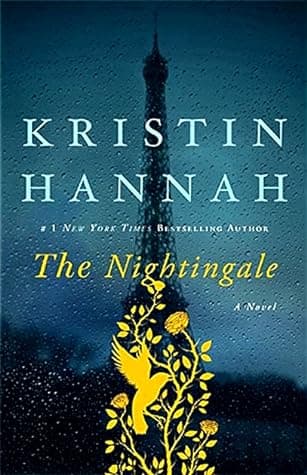
- The Nightingale
Kristin Hannah
4.6 (698k) average on GoodreadsHistorical FictionFocuses on the extraordinary acts of resistance by women in occupied France during WWII.
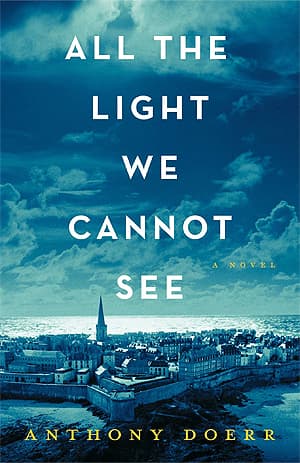
- All the Light We Cannot See
Anthony Doerr
4.3 (1M) average on GoodreadsHistorical FictionBoth books feature protagonists navigating the destruction of WWII, with a strong emphasis on the sensory details of their experiences. However, Doerr's narrative is more fragmented and poetic, exploring themes of fate and connection through less direct plotlines, often using radio and scientific curiosity as metaphors for human connection. Labuskes's narrative is more linear and direct, focusing specifically on the tangible acts of resistance and the preservation of culture through books, making its historical context more explicitly central to the plot than Doerr's more philosophical approach.
- The Diary of a Young Girl
Anne Frank
4.2 (2.7M) average on GoodreadsBiographyDuring the Nazi occupation, a teenage girl's diary, written from a secret annex, shares observations on humanity, hope, and the wait for freedom.
- Twisted 1. Twisted love
Ana Huang
3.7 (1.7M) average on GoodreadsA quiet billionaire with a difficult past finds his guarded heart opening to the woman he must protect, but their growing passion uncovers dangerous secrets and a shared, traumatic history.
- Eat, Pray, Love
Elizabeth Gilbert
3.6 (1.5M) average on GoodreadsLifestyleA heartbroken writer leaves her conventional life for a year-long global search for pleasure in Italy, spiritual devotion in India, and unexpected love and balance in Bali.
- Night
Elie Wiesel
4.3 (970k) average on GoodreadsBiographyIn the darkness of Auschwitz and Buchenwald, a teenage Elie Wiesel faces the extermination of his family, the loss of his faith, and the lasting scars of humanity's deepest cruelty.




Enjoyed the summary?
A summary gives you the shape of the book. The book itself has the detail, the examples and the voice.
Find The Lost Book of Bonn on AmazonAs an Amazon Associate, BookBrief earns from qualifying purchases. How we're funded