
Synopsis
Covers the whole plot, including the ending.
- Difficulty
- Medium
- Pacing
- Slow
- Mood
- Atmospheric, Melancholy, Reflective, Poignant
- Read it if
- You appreciate poignant, character-driven literary fiction with a strong sense of place, exploring themes of family, tradition, and the passage of time.
- Skip it if
- You prefer fast-paced plots, clear-cut resolutions, or stories with minimal introspection and detailed action.
The Lost Salt Gift of Blood Plot Summary
Covers the whole plot, including the ending.
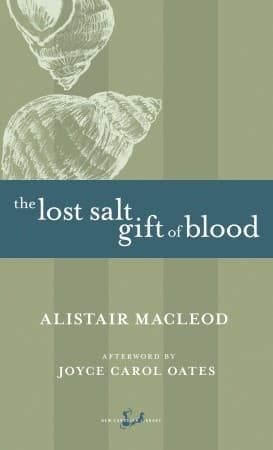
The Lost Salt Gift of Blood
The unnamed narrator, a university professor, travels to Cape Breton to visit his illegitimate son, whom he has never met. The boy lives with his grandparents, who are traditional Cape Breton Islanders. They are cautious but welcoming. The professor watches his son, fascinated by the boy's natural connection to the rugged island life and the sea, skills he lacks. He feels a deep connection to the boy, a desire for a family bond, but also a strong sense of being an outsider. His academic life contrasts sharply with the boy's rooted existence. The visit is a quiet look at regret and the chance for connection, set against the harsh, beautiful landscape.
The Vastness of the Dark
A young boy, Colin, tells about his father's death in a mining accident. His father, a coal miner, was known for his strength and ability to see in the dark, a trait that becomes almost mythical after his death. Colin struggles to understand his father's legacy and the grief that affects his mother and community. He overhears whispers about his father's true parents, a secret that complicates his understanding of his family history and his own identity. The story explores the weight of memory, the hard facts of mining life, and a child's awakening to complex adult truths.
The Road to Rankin's Point
Alexander MacDonald, an aging man with cancer, is driven by his nephew to Rankin's Point, a place important to his past. As they travel, Alexander tells his life story, especially his passionate but sad love affair with Catherine, who eventually left him. He thinks about his youth, his work in the mines, and his strong connection to the land and sea. The journey becomes a symbol for his life's end, a final thought on his joys, regrets, and the lasting power of memory and place as he faces death with quiet dignity.
The Return
An unnamed narrator returns to his family's farm on Cape Breton Island after years away. He finds his elderly, sick father still living on the land, stubbornly holding onto old ways despite modern changes and the decline of traditional farming. The narrator deals with his mixed feelings about his background: the pull of the land and family loyalty versus his desire for a different life. He thinks about the sacrifices of past generations and the changing island landscape, trying to bring together his past, present, and future.
The Boat
The narrator, a young man, tells the story of his parents' marriage and lives in a remote fishing village. His father is a fisherman, deeply connected to the sea and his boat. His mother is an educated woman who gave up her own goals to marry him. Their lives are a constant negotiation between his father's link to the ocean and his mother's intellectual world. The boat is a central part of the story, symbolizing both food and danger. The story explores the sacrifices made for love and family, and the profound, often sad, influence of the sea on their lives.
The Education of a Young Man
A young, impressionable man tells about his experiences with an older, mysterious woman named Mrs. MacDonald. She is a fascinating and wise figure who introduces him to the complexities of adult relationships, love, and life's harsh realities. Through their talks, he starts to lose his youthful innocence, learning about desire, betrayal, and the lasting nature of human connection and suffering. The story is a coming-of-age tale, exploring the emotional and intellectual awakening of a young man guided by a woman who has experienced much of life's pain and joy.
The Closing Down of Summer
A group of Cape Breton coal miners, including the narrator, are doing their last, dangerous work before the mine closes for winter. The story clearly shows the friendship, hard physical labor, and constant danger of their job. As the season ends, the miners think about their lives, families, and the uncertain future when the mine shuts down. There is a strong sense of an era ending, a way of life disappearing, as they face the economic realities and personal sacrifices of their work.
The Boat's Tragic End
In 'The Boat,' the narrator's father, despite his deep knowledge of the sea, dies during a violent storm. His death deeply affects the family, especially his mother, who is left to raise her children alone. The narrator deals with the loss, the family's money problems, and the lasting impact of his father's life and death, tied to the sea. This event makes the sea both a provider and a destroyer, shaping the family's future and the narrator's understanding of his background and his own path.
Generational Drift in 'The Return'
In 'The Return,' the narrator's visit highlights the sharp difference between his modern life and his father's firm dedication to traditional farming on Cape Breton. The father represents a dying generation, rooted in the land and its hard demands. The narrator represents the younger generation moving to cities and different jobs. This creates a moving tension as the narrator sees the old man's failing health and the inevitable end of their way of life, struggling with the mixed feelings that he cannot fully accept or leave his heritage.
Colin's Discovery in 'The Vastness of the Dark'
Young Colin, still grieving his father's death, overhears talks that reveal a family secret: his father was adopted. This changes his view of his family and his own identity. The man he admired, the strong miner, now has an even more complex past. Colin deals with this new information, trying to understand what it means for his place in the family and community, and how it reshapes the story of his father's life and death. The discovery adds another layer of sadness to the already somber mood of grief and loss.
Alexander's Final Journey in 'The Road to Rankin's Point'
As Alexander MacDonald reaches Rankin's Point with his nephew, his thoughts lead to a sense of acceptance about his life and coming death. Revisiting the places from his past, especially those linked to his love for Catherine, brings a quiet end. He understands that while life brought pain and loss, it also held deep beauty and connection. His journey is not just physical but spiritual, allowing him to make peace with his past and face the future with quiet strength, embracing life and death's cycle, much like the ocean tides.
Principal Figures
The Narrator (The Lost Salt Gift of Blood)
Protagonist
A university professor seeking connection with his estranged son.
An educated man, detached from the rugged, traditional life of Cape Breton, who carries the weight of past decisions. He is introspective and observant, struggling with a sense of regret and longing for a familial bond he never cultivated. His academic life contrasts sharply with the primal, rooted existence of the islanders, highlighting his own 'otherness.' He is driven by a quiet desire for understanding and a connection to his heritage through his son.
Relationships: His Son (Estranged but deeply desired connection); Grandparents (Wary but respectful hosts)
Colin (The Vastness of the Dark)
Protagonist
A young boy grappling with grief and family secrets.
An innocent, observant child who is forced to confront the harsh realities of death and the complexities of adult relationships at a young age. He idolizes his father and struggles to reconcile the mythical image with the man he knew, and with the shocking truth about his father's origins. Colin is sensitive and introspective, trying to make sense of the world around him, particularly the profound grief of his mother and the whispers of the community.
Relationships: His Father (Idolized figure, then a source of complex revelations); His Mother (Shared grief and emotional support)
Alexander MacDonald (The Road to Rankin's Point)
Protagonist
An aging, dying man reflecting on his life and loves.
A stoic, resilient man from Cape Breton, facing his own mortality with a quiet dignity. He has lived a life of hard labor, deeply connected to the land and his community. Alexander is a man of deep emotions, particularly evident in his enduring love for Catherine, which he recounts with both tenderness and regret. He is a repository of the island's history and traditions, embodying the spirit of a generation shaped by the mines and the sea.
Relationships: Catherine (Deep, enduring, and ultimately tragic love); Nephew (Caretaker and confidante on his final journey)
The Narrator's Father (The Return)
Supporting
An old man stubbornly clinging to traditional farming life.
A symbol of the vanishing Cape Breton farming tradition, he is old, ailing, but fiercely independent and deeply rooted in the land. He represents the older generation's unwavering connection to their heritage and their resistance to modern change. His stubbornness is both admirable and poignant, highlighting the sacrifices and hardships of his life. He embodies a quiet strength and a profound, almost spiritual, bond with the land he works.
Relationships: The Narrator (Son, representing a generational divide and complex affection)
The Narrator's Father (The Boat)
Protagonist
A dedicated fisherman, deeply connected to the sea.
A powerful, almost mythical figure, deeply intertwined with the sea and his fishing boat. He is a man of few words but profound actions, embodying the harsh beauty and inherent dangers of the maritime life. His identity is inseparable from his work and his connection to the ocean. He is dedicated to providing for his family, despite the immense risks, and represents the primal struggle of man against nature.
Relationships: The Narrator's Mother (Love and partnership, marked by mutual respect and sacrifice); The Narrator (Father figure, shaping the narrator's worldview)
The Narrator's Mother (The Boat)
Supporting
An educated woman who sacrifices her aspirations for family.
A woman of intelligence and education, who chose to marry a fisherman and live a traditional life, despite her own intellectual inclinations. She represents the sacrifices made for love and family, and the quiet strength of women in a patriarchal society. She brings a different perspective to the household, often mediating between her children's intellectual curiosities and her husband's practical, sea-bound existence. Her resilience is tested by hardship and loss.
Relationships: The Narrator's Father (Love and partnership, marked by mutual respect and sacrifice); The Narrator (Guiding figure, embodying both strength and quiet resignation)
Mrs. MacDonald (The Education of a Young Man)
Supporting
An older, enigmatic woman who guides a young man's awakening.
A complex and world-weary woman who has experienced much of life's joys and sorrows. She is an enigmatic figure, possessing a quiet wisdom and a deep understanding of human nature. She acts as a mentor and a catalyst for the young narrator's coming-of-age, introducing him to the complexities of love, desire, and the harsh realities of the adult world. She is both tender and pragmatic, a survivor who imparts valuable, if sometimes painful, lessons.
Relationships: The Young Narrator (Mentor and confidante, guiding his emotional and intellectual development)
The Miners (The Closing Down of Summer)
Collective Protagonist
A group of men facing dangerous work and an uncertain future.
A collective of working-class men bound by shared labor, danger, and a deep sense of camaraderie. They are stoic, resilient, and deeply connected to their profession and community. They embody the physical and emotional toll of mining life, facing constant risk and the looming threat of economic instability. Their conversations and actions reveal their fears, hopes, and their profound attachment to a disappearing way of life.
Relationships: Each other (Strong bonds of camaraderie and shared experience)
Themes & Insights
The Enduring Power of Place and Heritage
The stories are deeply rooted in Cape Breton Island's landscape and culture. The rugged beauty of the sea and land, fishing and mining traditions, and close-knit communities shape characters' identities and futures. Characters often feel a strong bond to their ancestral homes, even when they leave. This theme is clear in 'The Lost Salt Gift of Blood,' where the son's connection to the island shows the professor's distance, and in 'The Return,' where the old father stubbornly holds onto his farm, representing a fading way of life. The landscape is more than a setting; it is an active force, influencing choices and reflecting inner feelings.
“And it was then, I think, that I felt the first real pain, a pain that was to grow with the years and which has never really left me. It was the pain of knowing that I could never really be one of them.”
Loss and Grief
Loss, in its many forms—of loved ones, a way of life, innocence, and chances—is a common theme. Characters often deal with the aftermath of death, the pain of separation, and the sad feeling of things ending. In 'The Vastness of the Dark,' young Colin struggles with his father's death and the uncovering of family secrets. 'The Boat' explores a family's deep grief after the father is lost at sea, and 'The Road to Rankin's Point' is a dying man's thoughts on past losses. Grief is often shown as a quiet, inner process, deeply embedded in the characters' lives.
“It was as if some part of her had died with him, and the other part was slowly, quietly, following it.”
The Complexities of Family Relationships
MacLeod looks at the complex and often difficult bonds between family members. These relationships show love, duty, sacrifice, misunderstanding, and unspoken feelings. The stories explore generational differences, the weight of expectations, and the lasting, sometimes painful, connections that tie people together. 'The Lost Salt Gift of Blood' shows the professor's desire for a connection with his unknown son, while 'The Return' highlights the tension and unspoken affection between a son and his traditional father. Family is presented as both a source of strength and a burden, deeply shaping individual identities.
“You are a part of me, and I a part of you. Whether we like it or not, we are tied together.”
Man vs. Nature (The Sea and the Land)
The struggle against, and respect for, nature—especially the sea and the harsh land of Cape Breton—is central to many stories. Characters' livelihoods are often controlled by nature's forces, leading to lives of constant hard work, danger, and endurance. The sea is a provider and a destroyer, a source of both food and tragedy. In 'The Boat,' the father's life is strongly linked to the sea, which eventually takes him. The land, similarly, demands hard work and offers both food and a deep sense of belonging, as seen in 'The Return.' This theme shows humanity's smallness compared to nature's power and the deep respect it commands.
“The sea, like life itself, gives and takes away, and in the end, it always takes more than it gives.”
Memory and the Past
Memory is not just remembering events but an active force that shapes the present and affects identity. Characters often think about their past, revisiting important moments and relationships, which reveals their inner lives and reasons. The past is often shown as a living thing, constantly interacting with the present. 'The Road to Rankin's Point' is mainly Alexander MacDonald's journey through his memories of love and loss. In 'The Vastness of the Dark,' Colin's understanding of his father is continually changed by new information and the lingering presence of the past. Memories are valued, painful, and essential to understanding who one is.
“And always, as I grew, the past was there, like the wind itself, unseen but always felt, shaping the branches of our lives.”
Plot Devices & Literary Techniques
First-Person Narration
Provides intimate access to the characters' thoughts and feelings.
Most of MacLeod's stories are told from a first-person perspective, allowing readers direct access to the narrator's internal world, observations, and emotional landscape. This device fosters a deep sense of empathy and authenticity, as the reader experiences events and reflections through the character's eyes. It often creates a reflective, melancholic tone, particularly when narrators are recalling past events or grappling with complex emotions. This also lends a strong sense of oral tradition, as if the reader is being told a personal story.
Symbolism of the Sea and Land
Nature elements represent life, death, sustenance, and heritage.
The sea and the land are not merely backdrops but powerful symbols that embody life, death, struggle, and the indelible connection to heritage. The sea often symbolizes both life-giving sustenance (fishing) and destructive power (storms, drownings), reflecting the precariousness of existence. The land, particularly the farms and mines, represents tradition, hard work, and an almost spiritual bond to one's roots. These elements are deeply intertwined with the characters' identities and destinies, shaping their worldview and providing a constant, tangible presence of their heritage.
Flashbacks and Recollections
Past events are interwoven with the present to reveal character and theme.
MacLeod frequently uses flashbacks and extended recollections, where characters delve into their past to explain present circumstances or to process unresolved emotions. This device allows for a non-linear narrative structure, enriching the stories with historical context and psychological depth. It highlights the enduring impact of memory and the past on the present, demonstrating how old wounds and cherished moments continue to shape individuals. This technique is particularly prominent in stories like 'The Road to Rankin's Point' and 'The Boat,' where much of the narrative is dedicated to recounting past events.
Foreshadowing through Natural Elements
The weather and sea conditions hint at future events or emotional states.
The natural environment, especially the sea and weather, often subtly foreshadows events or reflects the emotional states of characters. A gathering storm might hint at impending tragedy or conflict, while a calm sea could signify a momentary peace. This device ties the human experience directly to the natural world, suggesting an inseparable link between personal fate and environmental forces. It imbues the landscape with a sense of agency and emotional resonance, making the setting an active participant in the unfolding drama.
Oral Storytelling Tone
Narrative style mimics the spoken tradition of recounting tales.
Many of MacLeod's stories adopt a tone reminiscent of oral storytelling, characterized by a leisurely pace, detailed descriptions, and a conversational, often reflective, voice. This style creates an intimate connection between the narrator and the reader, inviting them into a shared experience of recounting history and personal anecdotes. It evokes the cultural tradition of passing down stories through generations in close-knit communities, imbuing the narratives with a timeless, almost folkloric quality, even when dealing with contemporary issues.
The Lost Salt Gift of Blood Quotes
“All of them, then, were caught in the great web of their own family, of their own lives and of their own particular and peculiar place.”
“And it seems to me that it is always the case that when we leave, we leave a little bit of ourselves behind.”
“It was as if the sea itself had come to claim them, to take them back to the great, cold, indifferent bosom from which they had sprung.”
“There are people who can live without the land, but there are no people who can live without the sea.”
“And in the end, it is always a question of what we remember and what we choose to forget.”
“The past is never dead. It's not even past.”
“He knew that in such places, the sea was not just a thing but a presence, a living, breathing entity that shaped all lives.”
“It was the sort of silence that had been lived in for a long time, the sort that had gathered weight and meaning.”
“Sometimes it seemed to him that all life was just a series of leave-takings and partings, and that the only thing that truly remained was the memory of them.”
“The wind howled like a banshee, tearing at the windows and rattling the very foundations of the house.”
“And always, always, there was the sea, sometimes gentle and sometimes cruel, but always there, the great, unchanging witness to their lives.”
“He carried within him the weight of generations, the hopes and failures, the unspoken dreams and the quiet despairs.”
“The things that bind us are often invisible, woven into the very fabric of our being.”
“There was a certain beauty in the bleakness, a stark honesty that refused to be softened or disguised.”
Quiz
10 questions on the plot and the characters. Each answer comes with a short explanation.
Question 1
In the story 'The Lost Salt Gift of Blood,' what is the narrator's profession when he travels to Cape Breton to meet his son?
- Fisherman
- Academic (professor)
- Miner
- Lumberjack
Show answer
B. Academic (professor) The narrator, who is the biological father, is a professor living in the United States when he makes the journey to Cape Breton.
Question 2
Which recurring natural element often symbolizes the harsh beauty and enduring legacy of the Maritime landscape in MacLeod's stories?
- Forests
- Mountains
- The sea
- Rivers
Show answer
C. The sea The sea is a dominant and often symbolic presence throughout the collection, representing both livelihood and the relentless passage of time and tradition.
Question 3
In 'The Boat,' what is the father's primary desire for his son, the narrator?
- To take over the fishing boat and family business.
- To leave the island and pursue an education.
- To marry a local girl and settle down.
- To become a talented musician.
Show answer
B. To leave the island and pursue an education. Despite his own life tied to the sea, the father encourages his son to read and pursue an education, hoping for a different, perhaps easier, life for him.
Question 4
In 'The Vastness of the Dark,' what specific event marks a significant turning point for the young narrator's perception of his family's history and struggles?
- His father's return from a long journey.
- Hearing the adults discuss the historical tragedy of the miners.
- His first time working in the coal mine.
- Learning to read and write.
Show answer
B. Hearing the adults discuss the historical tragedy of the miners. The story centers on the child overhearing the somber conversations about the mining disaster, which deeply imprints upon his understanding of his family's past and the community's hardships.
Question 5
What common theme connects many of the male characters across the collection, often manifesting in their relationship with their environment and family?
- A desire for urban living and modern careers.
- A strong sense of duty, tradition, and a struggle with change.
- A consistent pursuit of wealth and material possessions.
- An eagerness to abandon their roots and heritage.
Show answer
B. A strong sense of duty, tradition, and a struggle with change. Many male characters are defined by their deep connection to their land, sea, or mines, and a profound sense of duty to family and tradition, even when it involves hardship or internal conflict.
Question 6
In 'The Road to Rankin's Point,' what is the significance of the old man's repeated attempts to fix the road?
- It's a metaphor for his futile attempts to escape his past.
- It represents his stubborn dedication to his community and a way of life that is slowly disappearing.
- He is being paid by the government to maintain the road.
- He is trying to make it easier for his estranged children to visit.
Show answer
B. It represents his stubborn dedication to his community and a way of life that is slowly disappearing. The old man's persistent, solitary work on the road symbolizes his deep connection to the land and his community, and his resistance to the inevitable changes and decline around him.
Question 7
What specific detail about the father's reading habits in 'The Boat' highlights his intellectual depth despite his demanding physical labor?
- He only reads local newspapers and fishing almanacs.
- He reads classic literature, philosophy, and history, often aloud to his family.
- He primarily reads adventure novels and dime-store Westerns.
- He struggles with reading and prefers to be read to by his wife.
Show answer
B. He reads classic literature, philosophy, and history, often aloud to his family. The father in 'The Boat' is depicted as a man of profound intellect, reading weighty tomes of history, philosophy, and literature, which he shares with his family, contrasting sharply with his physical labor.
Question 8
In 'The Lost Salt Gift of Blood,' the narrator reflects on the 'curious geometry' of his life and his son's. What does this 'geometry' primarily refer to?
- The physical layout of the land in Cape Breton.
- The complex, often intersecting and diverging paths of human relationships and heritage.
- The economic structures that shaped their lives.
- The architectural designs of the homes they lived in.
Show answer
B. The complex, often intersecting and diverging paths of human relationships and heritage. The 'curious geometry' refers to the intricate, often painful, patterns of connection and separation in families, particularly the unacknowledged bond between the narrator and his son, and the influence of shared bloodlines and diverging lives.
Question 9
The story 'The Return' explores the profound impact of a character's return to his ancestral home after a long absence. What specific internal conflict does the protagonist grapple with upon his return?
- His desire to sell the family land versus his family's wish to keep it.
- The tension between his modern, educated self and the pull of his traditional, rural roots.
- A romantic entanglement with a woman from his past.
- His struggle to forgive a family member for a past transgression.
Show answer
B. The tension between his modern, educated self and the pull of his traditional, rural roots. The protagonist in 'The Return' often feels alienated by his education and experience outside the community, yet simultaneously drawn back to the enduring, familiar customs and landscape of his origins, creating a deep internal conflict.
Question 10
Which of the following literary devices is most consistently employed by Alistair MacLeod to evoke a strong sense of place and the inner lives of his characters?
- Stream of consciousness narration.
- Extensive use of magical realism.
- Lyrical, precise prose often imbued with a melancholic tone and vivid natural imagery.
- Rapid, fragmented sentences and experimental syntax.
Show answer
C. Lyrical, precise prose often imbued with a melancholic tone and vivid natural imagery. MacLeod is renowned for his poetic, deliberate prose, which meticulously details the landscape and the emotional interiority of his characters, often with a sense of elegy for a disappearing way of life.
The Lost Salt Gift of Blood FAQ
What is the central theme explored in 'The Lost Salt Gift of Blood'?
The collection deeply explores the themes of loss, memory, and the enduring, often complex, bonds within families, particularly against the backdrop of the harsh yet beautiful Cape Breton landscape. Characters frequently grapple with past events and their impact on present relationships, highlighting the struggle to reconcile personal histories with current realities.
Which story features a character grappling with the legacy of a distant father figure?
The titular story, 'The Lost Salt Gift of Blood,' centers on a university professor from the mainland who travels to Cape Breton to meet his illegitimate son, Robert, for the first time. The narrative explores the professor's internal conflict and Robert's quiet observation of this new, unexpected connection, highlighting the weight of unacknowledged paternity.
How does the setting of Cape Breton influence the characters and their stories?
The rugged, isolated landscape of Cape Breton is more than just a backdrop; it shapes the characters' resilience, their connection to tradition, and their often stoic approach to hardship and loss. The sea, mining, and farming life dictate their livelihoods and worldview, fostering a deep sense of place and heritage that defines their identities.
What kind of relationships are typically portrayed in the stories?
The stories predominantly portray intergenerational relationships, focusing on the intricate dynamics between parents and children, and sometimes grandparents. These relationships are often characterized by unspoken understandings, inherited burdens, and the silent chasms that can exist even within close family units, reflecting the quiet struggles of the characters.
Is there a recurring symbol or motif across multiple stories?
The sea is a powerful and recurring motif, symbolizing both life and death, sustenance and danger, and the vast, unyielding forces of nature that shape human lives. It represents both the livelihood of many characters and the source of their losses, often serving as a metaphor for the unpredictable nature of existence and memory.
In 'The Boat', what is the significance of the narrator's father's love for reading?
The father's love for reading, particularly classical literature, represents a yearning for a life beyond the demanding, traditional existence of a fisherman. It highlights an intellectual and emotional depth that contrasts with his physically arduous life, creating a quiet tension between his personal desires and his familial obligations. This hidden passion underscores the sacrifices made for family.
How does the imagery of hands and physical labor connect the characters?
The detailed descriptions of hands, calloused and worn from fishing, farming, or mining, serve as a potent symbol of the characters' lives of hard labor and their deep connection to the land and sea. These hands represent their heritage, their resilience, and the physical manifestations of their struggles and enduring commitments to their traditional ways of life.
What is the subtle connection between the past and present in 'The Closing Down of Summer'?
'The Closing Down of Summer' subtly connects the past through the memories of the older miners, who recount the dangers and camaraderie of their former lives. Their shared history of working in the mines, though now closed, continues to define their identities and their bonds, illustrating how deeply past experiences shape present relationships and self-perception.
Analyze the psychological impact of unspoken grief on characters in stories like 'The Vastness of the Dark'
In 'The Vastness of the Dark,' the characters often internalize their grief and loss, leading to a profound sense of isolation and unspoken suffering. This psychological repression, common in MacLeod's work, manifests as quiet resignation or a deep melancholy that permeates their interactions, making communication difficult even among family members. Their inability to articulate pain creates emotional distance.
How does the concept of duty influence the characters' choices and emotional states?
Duty, particularly to family and tradition, is a powerful psychological driver, often compelling characters to make significant sacrifices, sometimes at the expense of their personal desires. This strong sense of obligation can lead to internal conflict, quiet resentment, or a stoic acceptance of their lot, shaping their emotional landscapes and limiting their perceived choices.
Explore the psychological significance of memory, both individual and collective, in the collection.
Memory serves as a complex psychological force, often blurring the lines between past and present, and shaping characters' identities. Individual memories of loss or love can haunt characters, while collective memories of community struggles or ancestral traditions bind them together, creating a rich tapestry of shared history that informs their present actions and emotional states.
How do the characters cope with existential loneliness despite being part of close-knit communities?
Despite living in close-knit communities where family ties are strong, many characters experience a profound existential loneliness. They often cope through stoicism, solitary reflection, or by immersing themselves in physical labor. This loneliness arises from their individual struggles with loss, unfulfilled desires, and the inherent isolation of the human condition, even amidst constant presence.
Is 'The Lost Salt Gift of Blood' ultimately a pessimistic or optimistic collection regarding human connection?
The collection leans towards a realistic, rather than strictly pessimistic or optimistic, view of human connection. While it deeply explores loss, suffering, and the chasms between people, it also subtly celebrates the enduring bonds of family, the resilience of the human spirit, and the quiet beauty found in shared heritage and landscape. It acknowledges both the pain and the persistence of connection.
What is the 'salt gift of blood' in the title, and how does it relate to the stories?
The 'salt gift of blood' can be interpreted as the inherited, often burdensome, connection to one's ancestral lineage and the sea-faring life of Cape Breton. 'Salt' refers to the sea and the tears of sorrow, while 'blood' signifies kinship and genetic ties. It represents the profound and often inescapable legacy passed down through generations, shaping identities and destinies.
How does MacLeod's use of precise language contribute to the overall impact of the stories?
MacLeod's precise and often sparse language creates a powerful, evocative atmosphere, allowing the reader to infer deep emotions and complex histories from subtle details and understated dialogue. This fidelity to reality and economy of words amplifies the emotional impact, mirroring the characters' own stoicism and their tendency to express profound feelings through action rather than overt speech.
To what extent do the characters achieve resolution or understanding by the end of their respective stories?
Characters rarely achieve definitive 'resolution' in the conventional sense; instead, they often arrive at a quiet acceptance or a deeper, albeit sometimes painful, understanding of their circumstances. Their journeys are more about coming to terms with the enduring nature of loss and the complexities of human relationships rather than finding neat solutions or dramatic closures.
Could the character of the university professor in the title story be seen as a critique of modern, detached intellectualism?
The university professor, with his mainland education and seemingly detached perspective, can be interpreted as a subtle critique of modern intellectualism when contrasted with the grounded, experiential wisdom of the Cape Bretoners. His journey to meet Robert forces him to confront a more visceral, unacademic reality of family and legacy, challenging his intellectual remove with raw human connection.
What role does the passing of time play in shaping the narrative structures?
The passing of time is crucial, often conveyed through generational spans and the cyclical nature of life and death, seasons, and work. Narratives frequently jump between past and present through memory, demonstrating how historical events and ancestral experiences continuously inform and shape the present lives of the characters, emphasizing continuity and the weight of history.
About the author

Alistair MacLeod was a celebrated Canadian author known for his evocative short stories and novels. His works, including "The Lost Salt Gift of Blood" and the award-winning "No Great Mischief," are renowned for their lyrical prose and profound explorations of Scottish-Canadian identity and life in Cape Breton. MacLeod's writing often delves into themes of family, memory, and the sea.
Similar books
- The Shipping News
Annie Proulx
3.9 (130k) average on GoodreadsLiterary FictionFeatures a strong sense of place (Newfoundland) and characters deeply tied to the sea and their environment, dealing with hardship and family.
- Dubliners
James Joyce
3.9 (123k) average on GoodreadsLiterary FictionA comparison to Joyce's "Dubliners" (1914) reveals both parallels and divergences. Both collections offer a mosaic of life in a specific place, employing a precise, almost clinical realism to depict the struggles of their respective populations. Joyce's stories often culminate in moments of 'epiphany' or paralysis, revealing the spiritual and emotional stagnation of Dubliners, as explored by critics like C.H. Peake. MacLeod's characters, while often experiencing their own forms of paralysis or resignation, are typically more rooted in a physical struggle against nature and economic hardship. While both authors use rich, descriptive language, Joyce's prose in "Dubliners" is often more detached and observational, while MacLeod's is imbued with a more overt lyrical quality and a deep, empathetic connection to his characters' emotional landscapes. MacLeod's work, arguably, carries a stronger sense of enduring dignity amidst hardship than the often-bleak portrayals in "Dubliners".
- The Old Man and the Sea
Ernest Hemingway
3.8 (831k) average on GoodreadsLiterary FictionA Cuban fisherman's long struggle with a giant marlin becomes a story of endurance and dignity, now retold for young adults with illustrations, phonetic guides, and writing prompts in Traditional Chinese.
- One Hundred Years of Solitude
Gabriel García Márquez
4.1 (753k) average on GoodreadsLiterary FictionThrough the multi-generational story of the Buendía family, a mythical town deals with the repeating patterns of time, love, and solitude, as the extraordinary mixes with the ordinary.
- The Goldfinch
Donna Tartt
3.9 (720k) average on GoodreadsLiterary FictionHaunted by a tragic explosion and clutching a stolen Dutch masterpiece, a young orphan navigates the opulent drawing rooms of New York and the gritty underbelly of the art world, desperately seeking connection and redemption amidst a life spiraling into crime and obsession.
- Little Fires Everywhere
Celeste Ng
4.1 (713k) average on GoodreadsLiterary FictionIn Shaker Heights, an artist and her daughter move in, and their free-spirited lives clash with a rule-bound matriarch, revealing hidden conflicts beneath a perfect surface.




Enjoyed the summary?
A summary gives you the shape of the book. The book itself has the detail, the examples and the voice.
Find The Lost Salt Gift of Blood on AmazonAs an Amazon Associate, BookBrief earns from qualifying purchases. How we're funded